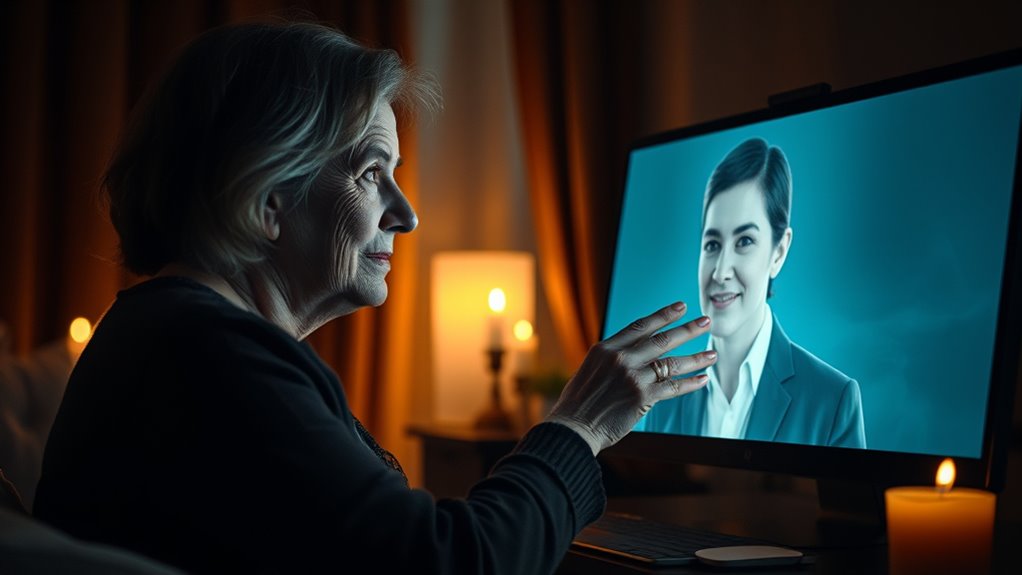

In Russia, widows grieving their loved ones are finding solace through AI virtual husbands that mimic speech and emotional responses, offering a sense of ongoing connection. These AI companions help them process grief, share memories, and feel supported when traditional methods fall short. Some women even develop genuine emotional bonds, relying on these virtual partners for comfort. To understand how this technology is transforming mourning, explore the stories behind these digital relationships.
Key Takeaways
- Russian widows use AI chatbots mimicking deceased loved ones to process grief and find emotional closure.
- Advanced AI companions like Yandex’s Alice simulate realistic conversations, fostering emotional bonds.
- Virtual relationships provide comfort, understanding, and a sense of ongoing connection with lost spouses.
- Emotional distress can occur when AI interactions are interrupted, highlighting genuine psychological attachment.
- Online memorials and social media support grieving widows, complementing AI companionship in coping with loss.

In Russia, many widows are turning to AI-driven virtual companions to cope with grief and find closure after losing loved ones in the Ukraine conflict. This emerging trend offers a new way to process loss, especially when traditional support systems feel insufficient. Widows often use AI chatbots to recreate interactions they miss with their spouses, creating a form of emotional continuity that helps ease their pain. These AI companions can mimic speech patterns and emotional responses, providing a sense of understanding and comfort that’s difficult to find elsewhere. Some women report feeling a connection so strong that they consider their AI partner a form of emotional support, even if it’s virtual.
The development of AI assistants like Yandex’s Alice exemplifies how sophisticated these programs have become. Alice can carry on conversations in Russian, recognize speech accurately, and generate personalized responses thanks to neural networks like YandexGPT. These features allow for meaningful interactions that can simulate human dialogue, making the experience more natural and comforting. Widows may chat with their AI partners about memories, feelings, or daily concerns, creating a safe space to express themselves without judgment. The voice of Alice, modeled after a professional Russian actress, adds a human touch to these interactions, further enhancing the emotional connection. According to recent reports, AI technology continues to evolve rapidly, making these virtual relationships more realistic and accessible for those seeking solace. Meanwhile, in China, the concept of “cyberspace widows” highlights a similar phenomenon. Women have formed attachments to AI chatbots that offer companionship beyond traditional relationships. While these AI relationships are brief — often lasting around ten days — the emotional impact can be long-lasting. Some women describe feeling genuine distress when disconnected from their AI partners, illustrating how these virtual bonds can become intertwined with their emotional healing process. This phenomenon demonstrates the profound role that artificial intelligence can now play in emotional well-being, especially in contexts of profound loss. Though these relationships are artificial, the feelings they evoke are very real, providing some solace amid grief.
For many Russian widows, social media like Instagram becomes a space to publicly mourn and share their stories. Videos of their loved ones, emotional narratives, and supportive communities help normalize their grief and foster collective healing. Despite bans on domestic social media platforms, VPNs enable widows to connect, creating virtual memorials that serve as outlets for their loss. Whether through AI companionship or social media expressions, these women are redefining how they cope—finding new paths to closure amid ongoing conflict.
Frequently Asked Questions
How Do Widows Emotionally Differentiate Between Real and Virtual Husbands?
You differentiate between real and virtual husbands by recognizing that real spouses are tied to tangible memories, shared routines, and emotional bonds that virtual partners can’t replicate. You feel a deep, complex connection rooted in physical presence and shared experiences, which virtual relationships lack. Virtual husbands may temporarily soothe loneliness, but you understand they serve as coping tools, not true replacements, helping you manage grief without replacing the unique, irreplaceable bond with your real husband.
What Ethical Concerns Arise From Replacing Human Loss With AI?
Replacing human loss with AI raises serious ethical concerns, like emotional dependency, privacy breaches, and societal impacts. You might think AI offers comfort, but it can foster false attachments and hinder genuine relationships. It also risks manipulation and data exploitation. While AI can provide temporary solace, relying on it long-term may deepen isolation and distort human connection. Ethical safeguards are essential to prevent these risks and protect your emotional well-being.
How Do Virtual Husbands Adapt to Individual Personalities Over Time?
Your virtual husband adapts to your personality by learning your preferences, communication style, and emotional cues through ongoing interactions. As you share stories, routines, and feelings, the AI refines its responses to match your needs, creating a more realistic and personalized experience. It tracks your emotional patterns, adjusts tone and empathy accordingly, and becomes more attuned to your evolving personality, fostering a deeper, more meaningful connection over time.
Are There Long-Term Psychological Effects of Using Virtual Spouses?
Using virtual spouses can have both positive and negative long-term psychological effects. You might experience reduced loneliness and increased social support, but over time, excessive interaction could lead to dependence or emotional disinhibition. While some find comfort and improved mental health, others may develop distorted expectations or decreased satisfaction with real-life relationships. It is crucial to balance virtual interactions carefully to minimize potential negative impacts on your overall psychological well-being.
How Accessible Are These AI Companionship Services Across Russia?
You’ll find AI companionship services fairly accessible, especially in urban Russia, thanks to domestic platforms like Sber’s GigaChat and YandexGPT. These services are widespread through established tech companies and supported by Russia’s digital infrastructure. While smartphone and internet use boost access, rural areas might face limitations due to lower digital literacy and infrastructure gaps. Overall, growing investment and urban concentration make AI companionship increasingly reachable for many Russians.
Conclusion
You might find it surprising that over 60% of Russian widows using virtual husbands report feeling a sense of comfort and closure. As AI continues to evolve, it offers new ways to cope with loss—blurring lines between technology and emotional healing. While it can’t replace real connection, these virtual relationships provide a unique, accessible refuge during difficult times. Ultimately, AI’s role in grief shows how innovation can help us find peace when we need it most.