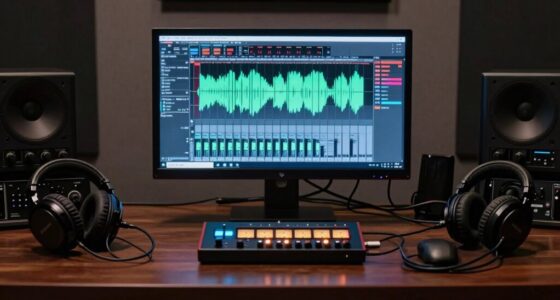

To make reverb feel expensive instead of washed out, focus on subtle adjustments like fine-tuning decay time, pre-delay, and EQ. Use vintage gear for warm, character-rich tones, and avoid overdoing it to keep clarity. Employ techniques such as high-pass filtering on the reverb return and careful placement within the mix. Small knob tweaks and precise control elevate the sound, giving it a polished, luxurious vibe—if you want to master these nuances, keep exploring the details.
Key Takeaways
- Use vintage reverb units to add warm, character-rich decay that feels refined and high-end.
- Make subtle adjustments to decay, pre-delay, and EQ to maintain clarity and prevent muddiness.
- Apply high-pass filtering on reverb returns to keep low frequencies clean and focused.
- Ensure reverb complements the original sound without overpowering it, emphasizing restraint.
- Fine-tune small details, like knob tweaks, to create a polished, luxurious reverb effect.
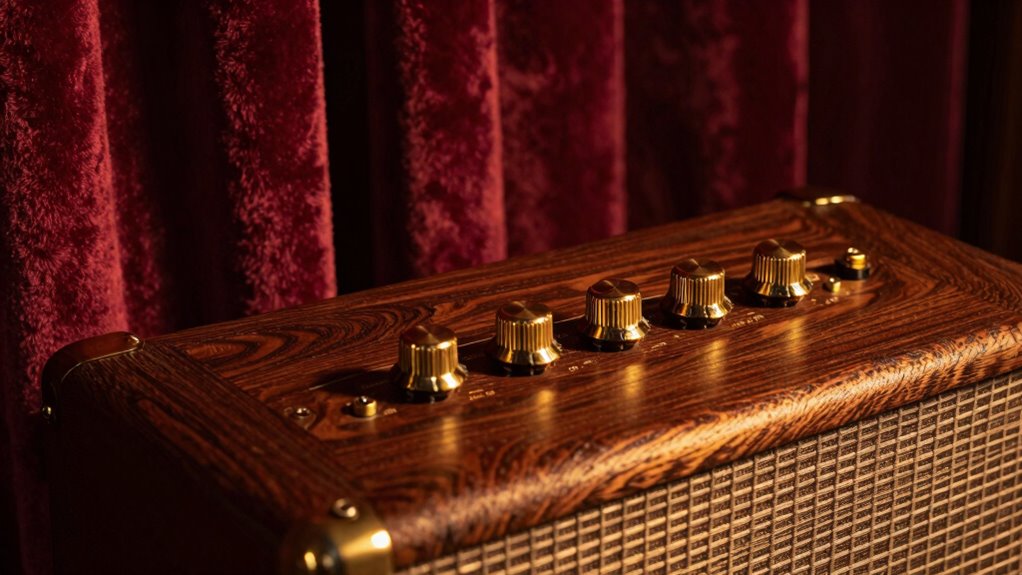
Ever wondered how some reverb sounds instantly more luxurious and polished? The secret often lies in the subtle details that elevate the sound rather than overwhelming it. One effective way to achieve this is by incorporating vintage gear into your setup. Vintage reverb units, with their warm, character-rich tones, can add a sense of depth and richness that modern digital effects sometimes lack. They tend to produce a more musical decay that, when used correctly, can make your mix feel more refined and expensive. But it’s not just about owning vintage equipment; it’s about knowing how to use it. Subtle adjustments to the controls—such as decay time, pre-delay, and EQ—are *essential*. Instead of cranking the reverb to wash out your sound, aim for small tweaks that enhance clarity while adding a touch of lushness. For instance, lowering the high frequencies slightly on the reverb tail can prevent harshness and create a smoother, more natural ambiance. Similarly, adjusting the decay so it’s long enough to add space but not so long that it becomes muddy keeps the reverb feeling controlled and intentional. Paying attention to how your reverb interacts with the original sound can make a significant difference, especially when using vintage gear that imparts unique tonal qualities. Additionally, understanding the frequency response of your gear can help you craft a more cohesive and high-end sound. Using proper EQ techniques and thinking about where the reverb sits in the mix can also make a noticeable difference. Subtlety is key—just enough to give your sound a sense of opulence without making it feel distant or washed out. Using a high-pass filter on the reverb return can help keep the low end clean, preventing the reverb from cluttering up your mix. This trick is especially useful when working with vocals or lead instruments, where clarity is essential. Remember, the goal is to enhance the core sound without overshadowing it. Experimenting with vintage gear and making subtle adjustments takes practice, but it’s worth the effort. When done right, your reverb will feel more like a refined, expensive effect rather than an afterthought. Keep your ears open for those tiny nuances—sometimes just a slight change in a knob or a different vintage device can transform your reverb from generic to luxurious. The key is restraint and precision; don’t overdo it. When you master these subtle details, you’ll find your mixes come alive with a sophisticated, polished vibe that screams high-end production.
As an affiliate, we earn on qualifying purchases.
Frequently Asked Questions
What Are the Best Reverb Plugins for a Luxury Sound?
For a luxury sound, you should try reverb plugins like Valhalla VintageVerb, which offers rich decay and warm tones. FabFilter Pro-R excels in controlling reverb decay and stereo imaging, giving your mix depth and space. Eventide Blackhole adds a lush, expansive feel perfect for high-end productions. These plugins help you craft a sophisticated reverb that feels expensive rather than washed out, elevating your overall sound quality.
How Does Room Size Affect Perceived Reverb Quality?
Room size greatly influences perceived reverb quality by altering room acoustics and listener distance. Larger spaces create more natural, expansive reverb that feels rich and luxurious, while smaller rooms produce tighter, more intimate reverb. When you adjust room size in your mix, consider how acoustics and your distance from the source affect the reverb’s clarity and depth. This balance helps make your reverb sound expensive and well-crafted, avoiding that washed-out effect.
Can Reverb Settings Improve Vocal Clarity?
Yes, reverb settings can improve vocal clarity. You should focus on adjusting reverb decay to prevent the sound from becoming muddy, and use pre-delay adjustments to create separation between vocals and the reverb. Shortening decay times and adding a slight pre-delay helps your vocals stand out, making them clearer and more intelligible. Experiment with these settings to find a balance that enhances vocals without washing out the mix.
What Are Common Mistakes That Make Reverb Sound Cheap?
You often make reverb sound cheap by overusing long reverb decay times or neglecting pre delay adjustment. Too much decay can wash out your vocals, while skipping pre delay makes the reverb clash with the dry sound, reducing clarity. To avoid this, keep decay settings moderate and tweak pre delay to create space without muddiness, ensuring your reverb feels lush and expensive rather than washed out or cheap.
How Do I Match Reverb to Different Music Genres?
To match reverb to different music genres, adjust the reverb decay to suit the style—shorter for pop, longer for ambient or jazz. Use room tone to create a natural feel, ensuring it blends seamlessly with the mix. For genres like rock, keep reverb subtle, while for electronic, experiment with spacious, lush reverb. These tweaks help your reverb complement the genre without sounding washed out or cheap.
Conclusion
So, next time your mix sounds like a washed-out karaoke night, remember: subtly wielding reverb is the real secret to luxury. Avoid drowning your sound in a cavernous echo; instead, craft a delicate, refined space that whispers class, not screams for attention. After all, who needs a reverb that screams “Look at me!” when you can have one that quietly oozes sophistication? Just a touch of finesse turns any muddy mess into sonic gold.