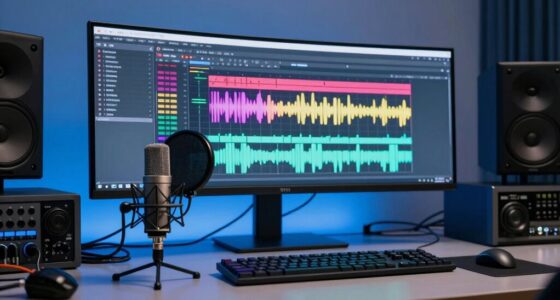
Foley sells reality by carefully recreating everyday sounds that align perfectly with on-screen actions, using props and materials that match each scene’s materials, textures, and acoustics. Skilled Foley artists layer sounds like footsteps, object interactions, or environmental noises, ensuring they sync seamlessly with visuals. They also adjust reverb and tone to match the scene’s setting, making everything feel authentic. To discover more about these techniques, keep exploring how Foley transforms virtual images into believable worlds.
Key Takeaways
- Matching on-screen actions with props that have authentic textures, materials, and resonance creates believable sound effects.
- Precise synchronization of Foley sounds with visual cues ensures seamless integration and enhances scene realism.
- Adjusting environmental acoustics through reverb and EQ replicates the scene’s physical space, boosting authenticity.
- Layering multiple sound recordings and timing adjustments evoke appropriate emotional responses and depth.
- Using creative techniques and digital tools to replicate complex textures ensures sounds convincingly mirror real-world interactions.
Foley sound effects props
As an affiliate, we earn on qualifying purchases.
As an affiliate, we earn on qualifying purchases.
What Is Foley Sound and Why Is It Essential for Realism
Have you ever wondered how movies make sounds like footsteps or rustling leaves feel so real? It all comes down to soundscape creation, where Foley artists craft specific sounds to enhance the scene. Foley sound creates an auditory illusion, making viewers believe what they see is happening in real life. Foley adds depth and authenticity, filling in the gaps that on-set recordings often miss. It’s about more than just noise; it’s about crafting a believable environment that immerses you fully in the story. By shaping the soundscape, Foley artists help filmmakers convey emotion, tension, and realism, ensuring that every footstep, object, or breeze feels genuine and convincing. The quality of Foley work can be influenced by the acoustics and soundproofing of the recording space, affecting how well these sounds blend into the final mix. Proper soundproofing techniques can greatly improve the clarity and immersion of Foley recordings, emphasizing the importance of a controlled environment.

Portable Recording Booth, Foldable with Travel Bag for Echo-Free Studio-Quality Sound, Complete Home Recording Studio Soundproof Vocal Booth Ideal for Voiceovers, Podcasts and Music
Our portable soundproof booth adapts to various settings, from compact home studios to larger spaces. It's perfect for…
As an affiliate, we earn on qualifying purchases.
As an affiliate, we earn on qualifying purchases.
The Role of Foley Artists in Film and TV Production
Foley artists play an essential role in bringing the sounds of a film or TV show to life, working behind the scenes to create the audio environment viewers experience. They craft sound effects that match every action on screen, from footsteps to object interactions, ensuring the scene feels authentic. Their work is a blend of technical skill and artistic expression, as they interpret what sounds are needed and how best to produce them. You might think of Foley artists as storytellers through sound, shaping auditory details that enhance storytelling. Without their expertise, the realism of a scene could falter, breaking the viewer’s immersion. Their contributions turn ordinary objects into crucial elements that support the narrative, making their role in production truly invaluable. Additionally, their use of sound design techniques helps to seamlessly blend these effects into the overall audio mix. Mastery of sound effects creation is fundamental to achieving believable soundscapes that resonate with audiences. Understanding the importance of accurate sound matching underscores how critical their role is in maintaining scene authenticity. Developing proficiency in sound effect techniques ensures Foley artists can adapt to a wide range of scenarios and enhance the overall production quality.

Mixing and Mastering Cheat Sheet Poster – Audio Engineering Wall Chart for Home Studios, EQ Compression Reverb Reference, Producer Gift – 24" x 36"
MIXING & MASTERING SIMPLIFIED – Instantly understand EQ, compression, and loudness with easy visual references designed for producers…
As an affiliate, we earn on qualifying purchases.
As an affiliate, we earn on qualifying purchases.
Techniques for Recreating Common Sounds in Foley
To effectively recreate common sounds, you need to select objects with the right qualities and characteristics. Matching the environment where the sound occurs is essential for authenticity. Paying attention to object choice and setting helps you produce convincing Foley effects that blend seamlessly into the scene. Incorporating creative storytelling techniques can also enhance the believability of your sound design by aligning audio cues with narrative context. Additionally, understanding digital asset management and security measures can inform how you organize and protect your sound libraries for efficient workflow. Recognizing the popularity of pinball machines in various eras can also inspire sound effects that evoke nostalgia or modern excitement, enriching the auditory experience. Moreover, being aware of Twin Flame connections and their emotional intensity can guide the tone and mood you aim to recreate, making scenes more compelling through nuanced sound choices. Incorporating auditory processing considerations ensures that your sound design accommodates diverse listener needs, increasing overall accessibility and immersion.
Object Selection Precision
Selecting the right object is crucial for accurately recreating common sounds in Foley. To achieve object authenticity, you need to carefully choose objects that closely match the sound you want to replicate. Material selection plays a significant role because different materials produce distinct acoustic properties. For example, a hollow plastic container may mimic the sound of a tin can, while a dense leather piece can recreate footsteps on a soft surface. Pay attention to texture, weight, and resonance when selecting objects, as these factors influence the final sound quality. Developing an understanding of sound absorption and reflection characteristics can further enhance the realism of Foley sounds. Additionally, understanding the acoustic properties of different materials helps in selecting objects that will produce more convincing sounds. Considering the natural environment in which the sound occurs can also guide the choice of objects to make the effect more believable. Being aware of the recording space can help you choose objects that minimize unwanted echoes and noise, resulting in cleaner sound effects. Incorporating knowledge of sound reflection can assist in creating more immersive and authentic audio experiences.
Environment Matching Techniques
Recreating authentic sounds often requires matching the environment in which the original noise occurs. To achieve this, environment matching techniques are essential. First, you focus on ambient layering—adding background sounds that set the scene, like distant traffic or rustling leaves. Second, you carefully analyze the scene’s acoustics to replicate how sound interacts with the environment, adjusting reverb and EQ accordingly. Third, you blend these elements seamlessly, ensuring the new sounds sit naturally within the scene. By paying close attention to ambient layering and environment matching, you create a convincing auditory space that enhances realism. Additionally, understanding the acoustic properties of different environments allows for more accurate sound matching, which is crucial for believability and elevating the believability of your Foley work. Incorporating knowledge of material effects can also help simulate how different surfaces influence sound reflection and absorption, further strengthening the realism.

Music Software Bundle for Recording, Editing, Beat Making & Production – DAW, VST Audio Plugins, Sounds for Mac & Windows PC
No Demos, No Subscriptions, it's All Yours for Life. Music Creator has all the tools you need to…
As an affiliate, we earn on qualifying purchases.
As an affiliate, we earn on qualifying purchases.
How Foley Synchronizes With On-Screen Actions
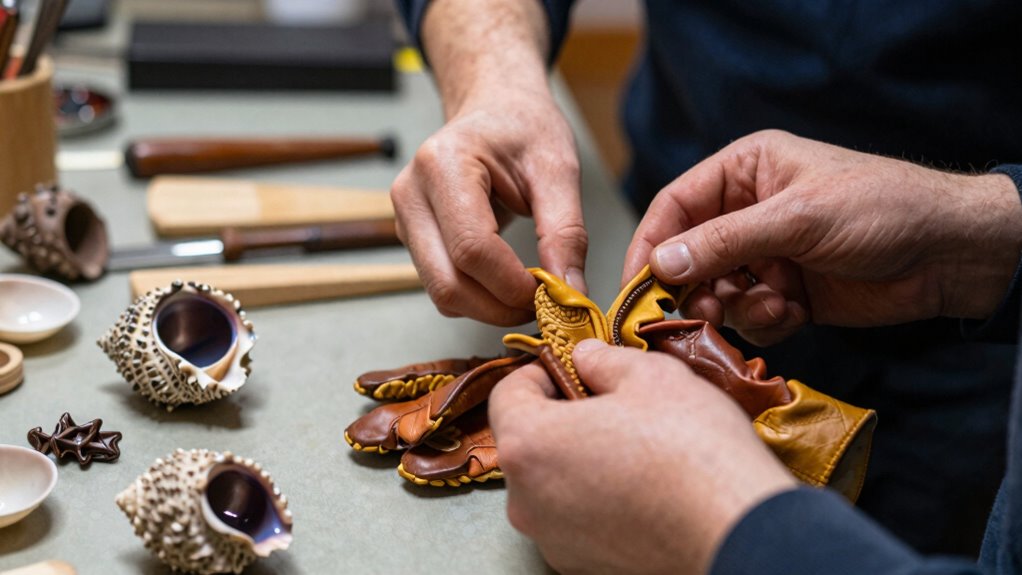
You need to match Foley sounds precisely with on-screen actions to maintain the scene’s realism. This involves aligning timing perfectly and choosing sounds that match the original qualities seen on screen. When done correctly, it makes the audience feel fully immersed in the visual experience. Paying attention to sound quality ensures that the auditory cues support the authenticity of the scene, enhancing overall immersion. Additionally, syncing techniques play a crucial role in making Foley seamlessly integrate with the visual elements. Using consistent application methods helps maintain a cohesive auditory environment that matches the scene’s context. Mastering sound matching techniques is essential to achieving a convincing and natural auditory experience.
Precise Timing Alignment
Achieving precise timing alignment is essential in Foley sound design, as it guarantees that every footstep, collision, or object movement perfectly matches the on-screen action. To assure this, you focus on timing accuracy and sync precision during recording and editing. Here are key techniques to master:
- Use visual cues like the actor’s movements or specific frame marks to guide Foley timing.
- Employ precise playback controls to match Foley sounds exactly to the scene’s rhythm.
- Rely on digital tools and markers that allow you to fine-tune sound placement for perfect sync.
Matching Sound Qualities
Matching sound qualities is about ensuring that Foley sounds blend seamlessly with the visual elements, making on-screen actions feel authentic. Sound matching requires careful attention to the tone, texture, and volume of each sound to achieve quality consistency. When a footsteps sound matches the weight and surface of the character’s movement, viewers accept it as real. You adjust the dynamics and timbre of Foley to align with the scene’s lighting, mood, and environment. Consistent sound qualities reinforce believability, preventing distractions or disbelief. Precise sound matching involves listening critically and fine-tuning each element so that it complements the visual cues. By maintaining quality consistency, you help create a cohesive audio-visual experience that immerses the audience fully in the story.
Enhancing Visual Realism
Foley plays a crucial role in enhancing visual realism by precisely synchronizing sounds with on-screen actions. This synchronization creates a seamless connection between what you see and hear, making scenes more believable. To achieve this, consider these techniques: 1. Use ambient textures that match the environment, like rustling leaves or distant city sounds, to enrich the scene’s atmosphere. 2. Sync sounds exactly with movement, such as footsteps or object interactions, to reinforce realism. 3. Incorporate emotional cues through subtle sound details that mirror the mood—like muffled sounds for sadness or sharp noises for surprise. Additionally, understanding the importance of sound synchronization helps ensure that audio cues align perfectly with visual elements, further enhancing the viewer’s immersive experience.
Selecting Props and Materials for Authentic Foley Sounds
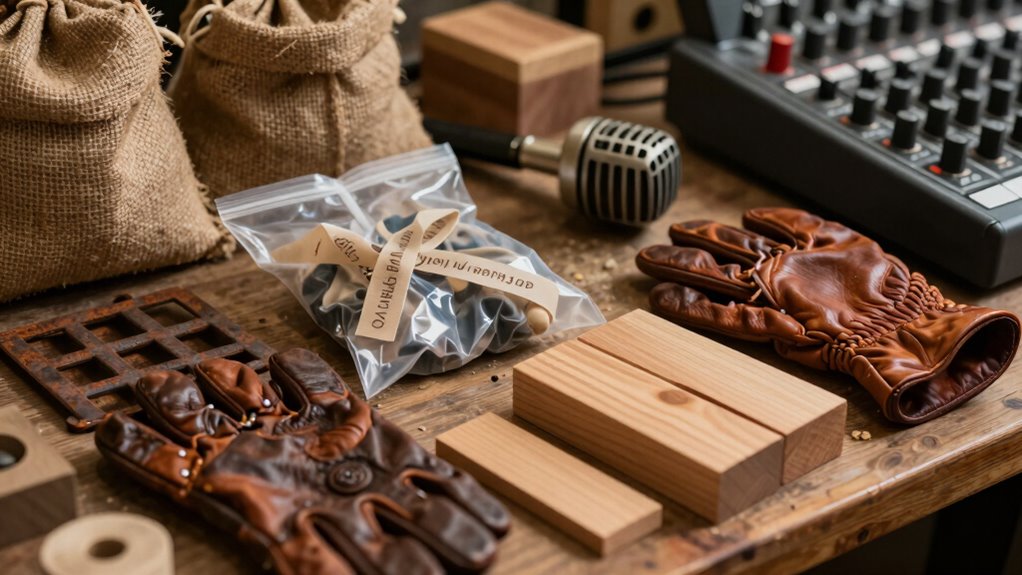
Choosing the right props and materials is essential for creating convincing Foley sounds. Your selection of prop material directly impacts sound authenticity, helping sounds match the on-screen action convincingly. For example, using different types of leather or foam can produce varied textures for footsteps or clothing rustles. It’s important to test materials in real-time to see how they sound when interacted with, ensuring they align with the scene’s context. Natural materials often yield more authentic results, but synthetic options can be effective when carefully chosen. Keep in mind that subtle differences in prop material can markedly influence the realism of your Foley. By thoughtfully selecting props and materials, you enhance the believability of your sound design and immerse viewers more deeply in the story. Additionally, understanding the science of acoustics can help in selecting materials that produce the most realistic sounds for various surfaces and actions. Exploring material properties can further improve your ability to choose the best options for different Foley needs. Incorporating knowledge of sound absorption and reflection can also aid in optimizing material choices for specific environments and effects.
Setting Up Your Foley Recording Environment
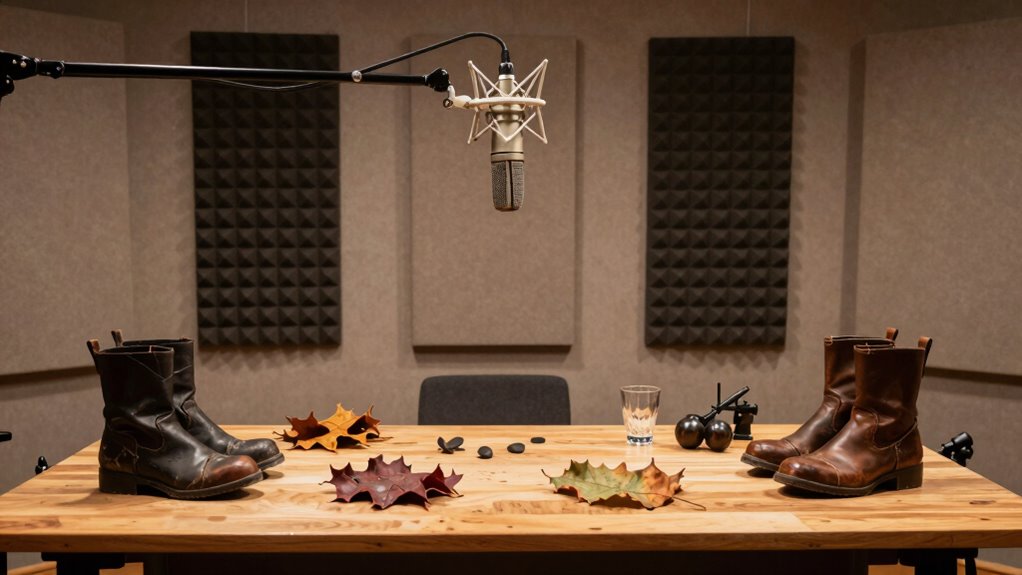
To create high-quality Foley sounds, you need a well-planned recording environment. Start by soundproofing your space to minimize unwanted noise and choosing a quiet, isolated area. Then, set up essential equipment like microphones, audio interfaces, and monitors to guarantee clear, accurate recordings. Consider incorporating acoustic treatment to further optimize sound quality and reduce reflections within your space. Additionally, ensuring proper soundproofing can significantly decrease external noise interference, resulting in cleaner recordings. Proper equipment placement also plays a crucial role in capturing the desired sound effects effectively. Incorporating local automation techniques can help manage your recording environment more efficiently, ensuring consistent results.
Soundproofing Techniques
Have you ever wondered how professionals achieve clean, noise-free Foley recordings? Effective soundproofing techniques are key to ensuring noise isolation and high-quality sound. To improve your setup, consider these methods:
- Seal gaps around doors and windows to prevent sound leaks.
- Use acoustic panels or foam to absorb ambient noise and reduce echo.
- Place heavy curtains or blankets over walls to dampen external sounds.
These simple steps create a controlled environment where unwanted noise is minimized. Proper soundproofing not only enhances the clarity of your recordings but also helps you focus on capturing precise Foley effects. Keep noise isolation at the forefront, and your recordings will sound more professional and believable. Remember, a quiet space is the foundation of great Foley work.
Choosing Recording Space
Selecting the right space for your Foley recordings sets the foundation for high-quality sound. Your environment influences the acoustic environment and shapes soundscape storytelling. Choose a space with minimal echoes and external noise, ideally one with soft surfaces that absorb sound. An ideal Foley room is quiet, controlled, and free of distractions. To visualize, consider this setup:
| Room Characteristics | Sound Qualities | Purpose |
|---|---|---|
| Soft walls, carpets | Dampens echoes | Creates clear, focused recordings |
| Isolated, away from traffic | Reduces outside noise | Maintains clean soundscape storytelling |
| Controlled acoustics | Consistent sound | Ensures reliable, high-quality sound |
This environment helps you capture authentic sounds, making your Foley blend seamlessly with the picture.
Essential Equipment Setup
Setting up your Foley recording environment begins with choosing the right equipment to guarantee clean, high-quality sound. A solid equipment setup is essential for capturing authentic sound effects that blend seamlessly into your project.
Consider these key components:
- Microphones – Use directional mics to isolate sound effects and reduce background noise.
- Audio Interface – Ensure clear conversion of analog sound to digital, preserving audio fidelity.
- Soundproofing – Incorporate acoustic panels or blankets to minimize echo and external noise interference.
These elements form the foundation of an effective equipment setup, allowing you to record precise sound effects. Properly configuring your gear guarantees your Foley sounds are believable and immersive, elevating your overall sound design quality.
Creative Foley Techniques When Props Are Unavailable
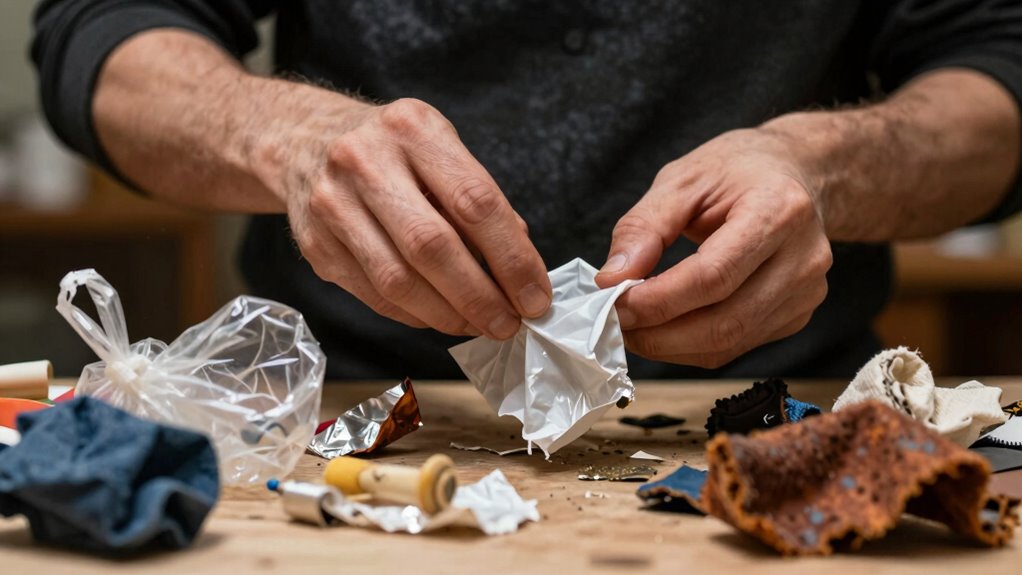
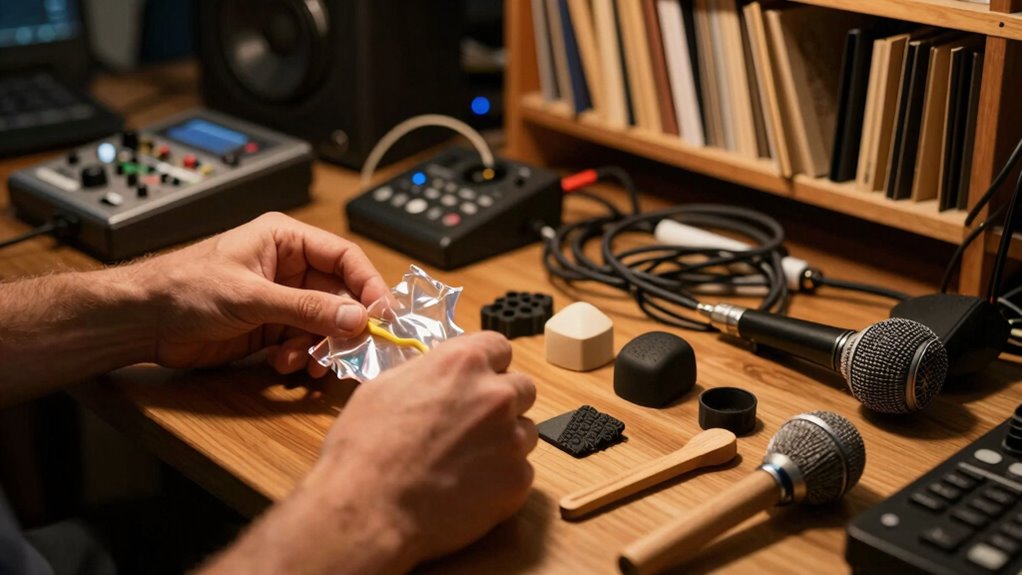
When traditional props aren’t available, you can get creative by using everyday objects to mimic sounds. Prop improvisation involves thinking outside the box and utilizing alternative materials to replicate specific noises. For example, crinkling cellophane can imitate breaking glass, while stuffing a sock with rice can mimic the sound of a squeaky toy. To help you brainstorm, here’s a quick guide:
| Object | Sound Effect | Alternative Material |
|---|---|---|
| Dry pasta | Footsteps on gravel | Small rocks or gravel |
| Cardboard tubes | Whooshing wind | Large plastic bags |
| Bubble wrap | Bouncing balls | Small rubber balls |
Using these techniques, you can craft convincing sounds even when conventional props aren’t at hand.
How to Achieve Perfect Timing and Precision in Foley

Achieving perfect timing and precision in Foley requires careful focus and disciplined practice. To master this, you need to sync sounds seamlessly with the visuals, whether you’re creating musical foley or working on foley in virtual reality. Here are three key tips:
Master Foley timing with focused practice and precise sound-visual synchronization techniques.
- Use a click track or visual cues to align sounds precisely with actions.
- Practice with metronomes or tempo guides to develop consistent timing.
- Record and analyze your sessions, adjusting your performance until every sound matches the on-screen movement.
In musical foley, timing enhances emotional impact, while in virtual reality, accuracy immerses the viewer. Developing these skills ensures your sounds feel natural, believable, and perfectly integrated into the scene.
Matching Sound Volume and Texture for Believable Effects
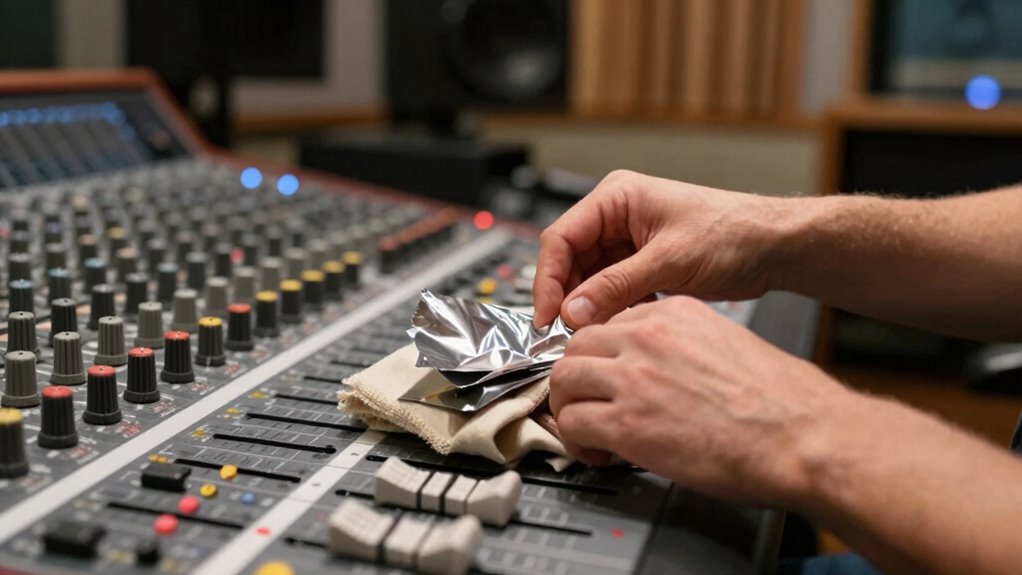
Matching sound volume and texture is essential for creating believable Foley effects that seamlessly blend into the scene. You need to carefully assess the existing audio and adjust the sound volume of your effects so they match the scene’s natural levels. Texture matching is equally important—you want the tactile quality of the Foley to replicate the real-world material accurately. For example, a soft cloth should produce a gentle swish, while metal on metal should sound sharp and crisp. By paying close attention to these details, your effects won’t stick out or feel disconnected. Consistently balancing sound volume and ensuring the textures align with the environment helps your Foley integrate smoothly, making the scene more immersive and convincing for the audience.
Common Challenges in Foley Work and How to Overcome Them
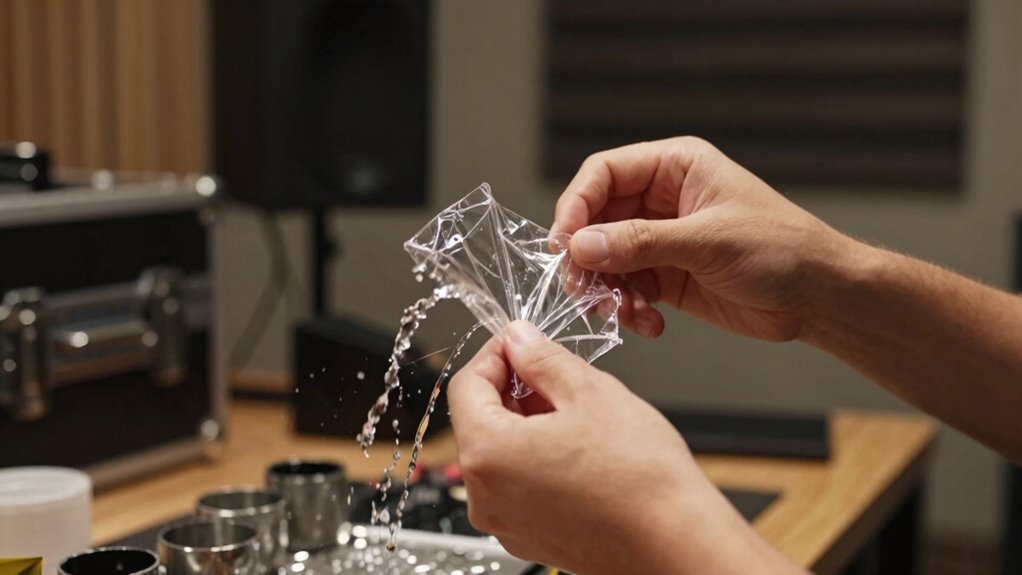
Foley artists often face challenges like capturing clean sounds in noisy environments or replicating complex textures accurately. Achieving cultural authenticity is crucial to guarantee sounds feel genuine, enhancing the scene’s emotional impact. To overcome these hurdles:
Foley artists overcome noise and texture challenges to create authentic, emotionally impactful sounds.
- Use soundproof spaces or dampening materials to minimize background noise, maintaining clarity.
- Study authentic source sounds or traditional methods to replicate textures convincingly, preserving cultural authenticity.
- Layer multiple recordings and adjust timing to evoke the intended emotional response, strengthening the scene’s realism.
Digital Technology’s Role in Modern Foley Sound Production
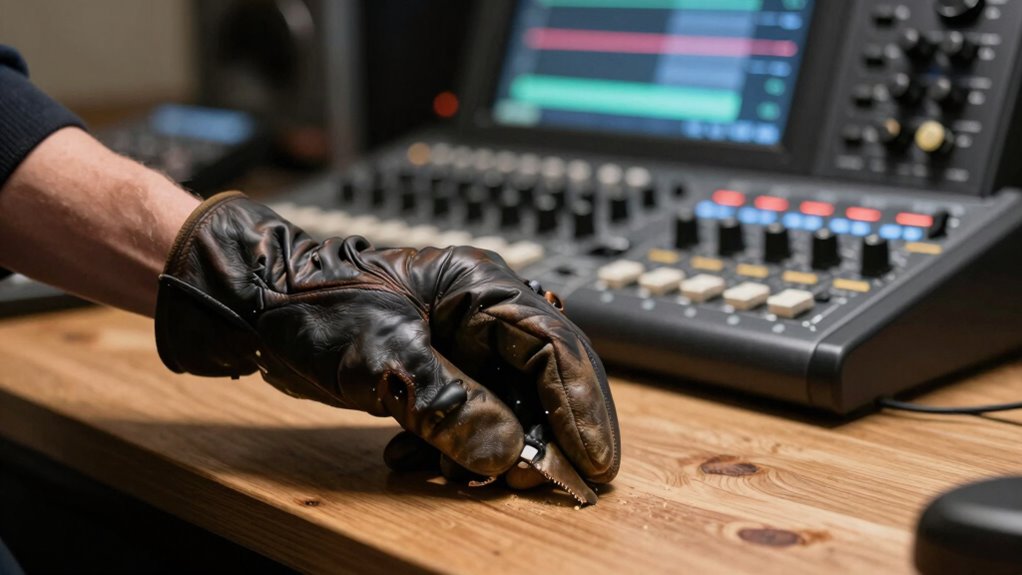
Digital technology transforms how you create Foley sounds by providing powerful tools that streamline your workflow. With virtual sound libraries expanding rapidly, you gain instant access to a vast array of realistic effects. Plus, real-time editing allows you to make quick adjustments, ensuring your sound matches your vision perfectly.
Digital Tools Enhancing Foley
As technology continues to evolve, digital tools have become essential in enhancing Foley sound production. These tools allow you to manipulate sounds more precisely and creatively than ever before. Here are three ways digital tools boost your work:
- Digital manipulation enables you to refine sounds, adjusting pitch, timing, and texture for perfect fit.
- Sound synthesis helps generate entirely new sounds, expanding your palette without recording every effect physically.
- Real-time editing allows instant modifications, saving time and increasing your ability to experiment with different auditory textures.
Virtual Sound Libraries Expansion
Have you ever wondered how modern Foley artists access such a vast range of sounds effortlessly? It’s thanks to virtual libraries and digital expansion. These virtual sound libraries provide an extensive collection of high-quality recordings, from footsteps to environmental noises, all stored digitally. With just a few clicks, you can browse, sample, and integrate sounds into your projects, saving time and expanding creative possibilities. Digital expansion continually updates these libraries, adding new sounds and specialized textures, ensuring you stay current with evolving film and game demands. This technology allows you to work more efficiently, access sounds instantly, and experiment freely without needing physical recordings or large storage spaces. Virtual libraries have revolutionized Foley, making sound design more accessible and versatile than ever before.
Real-Time Editing Capabilities
Thanks to real-time editing capabilities, Foley artists can now modify and refine sounds instantly during production, drastically reducing turnaround times. This live sound manipulation lets you see immediate results, ensuring perfect synchronization with on-screen action. With real time editing, you can:
- Make instant adjustments to pitch, volume, or timing for precise effects
- Experiment with different textures and layers on the fly
- Address issues immediately, avoiding costly re-recordings
This technology empowers you to respond dynamically, creating more authentic and immersive soundscapes. It simplifies the process by allowing live feedback and quick iterations, which enhances creativity and efficiency. As a result, modern Foley production becomes more flexible, accurate, and faster—bringing your sound design closer to reality than ever before.
Iconic Foley Sounds That Elevated Classic Movies
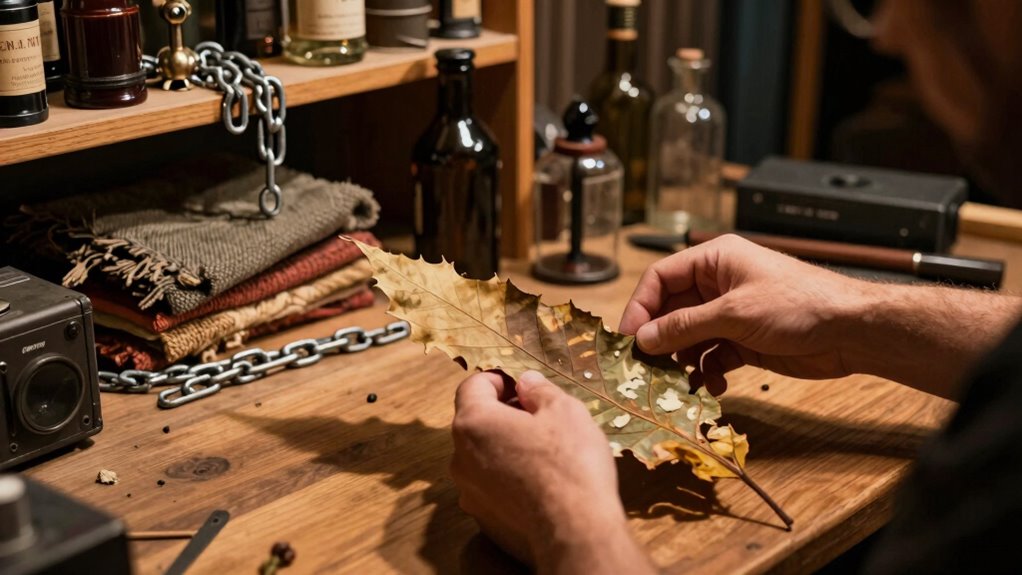
Some of the most memorable moments in classic movies owe their impact to carefully crafted Foley sounds that bring scenes to life. These sounds often utilize sound symbolism, where specific auditory cues evoke strong emotional responses. For example, the iconic roar of a T-Rex in *Jurassic Park* instantly signals danger and awe, rooted in cultural influences that shape our expectations of prehistoric monsters. Similarly, the crisp footsteps of Indiana Jones are designed to mirror his character’s ruggedness, reinforcing cultural archetypes. These Foley sounds elevate visuals by tapping into shared cultural understandings, making scenes more believable and immersive. Through precise manipulation, Foley artists create auditory cues that resonate universally, turning simple sounds into powerful storytelling tools that define the essence of these classic films.
Incorporating Foley Into Your Post-Production Workflow
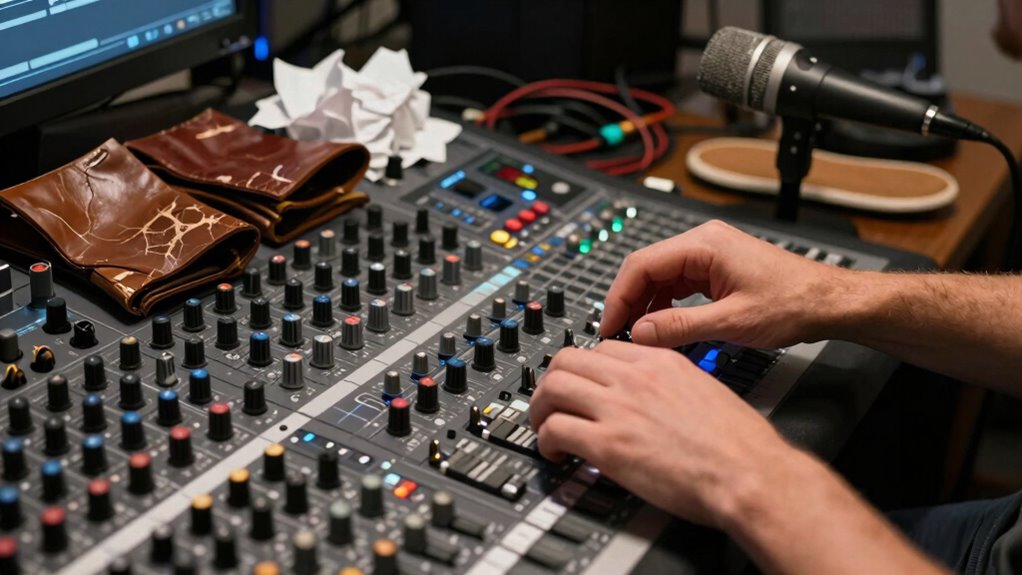
Integrating Foley sounds into your post-production process can considerably enhance the realism and emotional impact of your project. To do this effectively, focus on these key steps:
Enhance your project’s realism and emotion by thoughtfully integrating Foley sounds into your post-production workflow.
- Plan Your Soundscape Creation: Map out the scenes and identify where Foley will add depth, realism, or emotional storytelling.
- Record with Purpose: Capture Foley in isolated environments to match the scene’s context, ensuring sounds complement the visuals seamlessly.
- Layer and Mix Thoughtfully: Blend Foley with other audio elements, adjusting levels to emphasize realism or emotion without overshadowing dialogue or music.
Assessing How Well Foley Enhances Scene Immersion
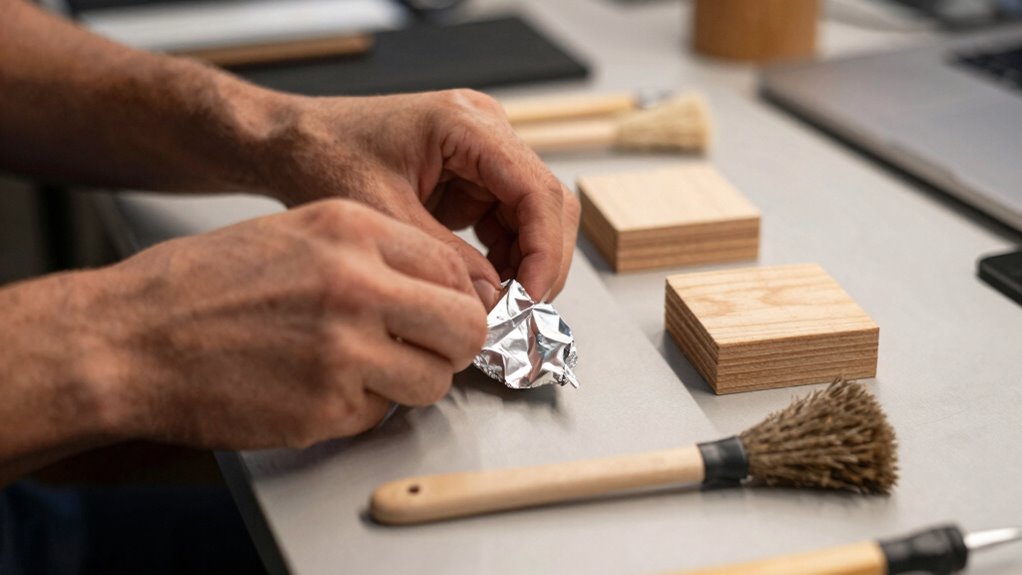
To determine how effectively Foley enhances scene immersion, you need to critically evaluate how well the sounds support the visuals and emotional tone. Pay attention to the soundscape contrast—whether the Foley seamlessly blends or intentionally stands out to shape audience perception. A cohesive soundscape deepens immersion, while jarring contrasts can break it. Consider how Foley interacts with ambient sounds and the scene’s mood, guiding emotional responses. Use this table to assess Foley’s impact:
| Aspect | Effect on Immersion |
|---|---|
| Seamless blending | Reinforces realism, enhances emotional connection |
| Deliberate contrast | Draws attention, influences audience perception |
| Context appropriateness | Supports scene’s tone and narrative intent |
| Soundscape consistency | Maintains believability |
| Emotional cue alignment | Strengthens viewer engagement |
This analysis helps you gauge whether Foley truly supports the scene’s immersive power.
Skills and Training Needed to Become a Foley Artist
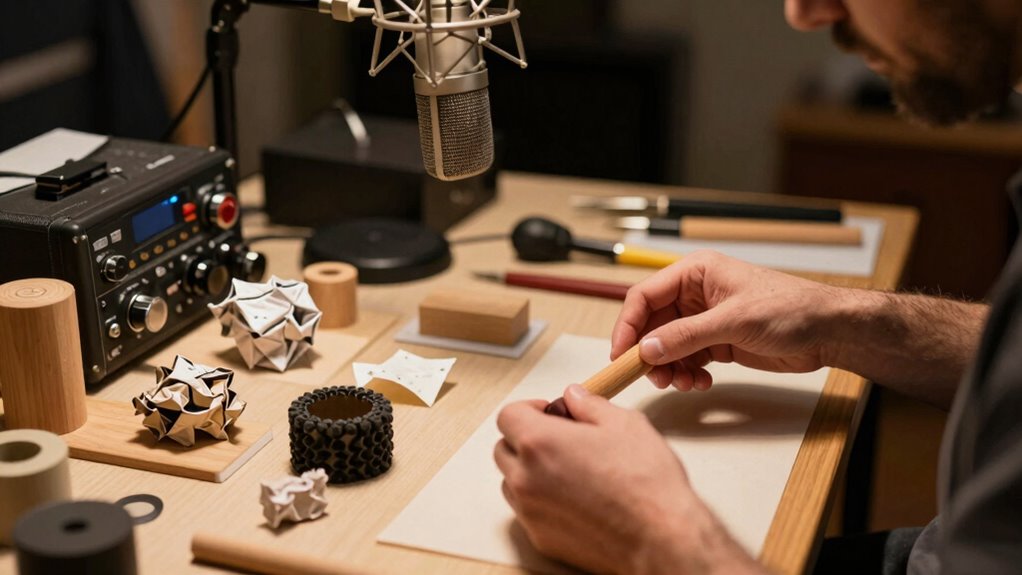
Creating convincing Foley sounds requires more than just a good ear; it demands specialized skills and training. You need to develop sharp auditory perception to distinguish subtle sound differences and understand sound symbolism, connecting sounds to their visual counterparts. To succeed, focus on these essential skills:
Master auditory perception and sound symbolism to craft authentic Foley sounds.
- Mastering auditory perception to identify and replicate sounds accurately.
- Understanding sound symbolism to create sounds that match emotional and contextual cues.
- Developing technical proficiency with Foley tools and techniques for sound creation.
Training often involves hands-on practice, learning from experienced Foley artists, and studying the psychology of sound. Your ability to manipulate everyday objects into believable sounds depends on honing these skills and understanding how sound influences perception, making scenes more immersive and authentic.
Future Trends and Innovations in Foley Sound Design
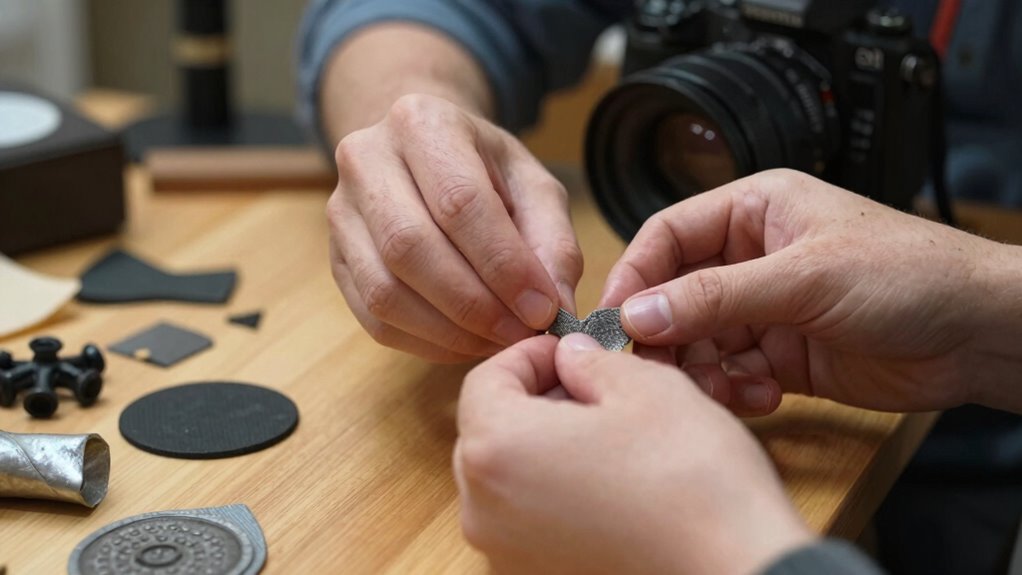
As technology continues to evolve, the future of Foley sound design is set to become more immersive and innovative. You’ll see future innovations driven by technological advancements like real-time digital manipulation, AI-driven sound matching, and spatial audio. These tools will allow you to craft more precise and dynamic sounds, enhancing the realism of your work. Virtual and augmented reality will open new dimensions for Foley, requiring you to design sounds that adapt seamlessly to immersive environments. Additionally, automation and machine learning will streamline repetitive tasks, freeing you to focus on creative problem-solving. Staying ahead means embracing these innovations, experimenting with new tools, and understanding how they can improve the believability and depth of your soundscapes. The future of Foley promises exciting possibilities for your craft.
Frequently Asked Questions
How Do Foley Artists Choose the Right Props for Specific Sounds?
You choose the right props for specific sounds through careful props selection and sound matching. You analyze the original sound, then experiment with various props that can replicate it, considering material, size, and movement. By listening closely and testing different options, you guarantee the sound aligns perfectly with the scene’s context. This process helps you create authentic, immersive audio that convincingly enhances the visual experience.
What Are Common Mistakes to Avoid in Foley Sound Design?
Think of foley sound design like painting a picture—you want every stroke to match the scene. Avoid overusing effects, which can clutter and distract, like adding too many colors. Also, neglecting context is like painting a moon in daytime; it breaks the illusion. Stay subtle, focus on the scene’s needs, and guarantee your sounds blend naturally. This keeps your audience immersed, not distracted.
How Does Digital Editing Improve Foley Sound Accuracy?
Digital editing improves Foley sound accuracy by allowing you to make precise digital enhancements. You can fine-tune sound effects for clarity, pitch, and timing, ensuring sound precision that blends seamlessly with visuals. This technology lets you correct inconsistencies, remove background noise, and add subtle layers, creating a more realistic and immersive experience. Ultimately, digital editing helps you craft sounds that feel authentic, convincing, and perfectly synchronized with the scene.
Can Foley Techniques Be Used for Virtual Reality Experiences?
Yes, Foley techniques can be effectively used for virtual reality experiences. You’ll find that they enhance virtual immersion by creating authentic sounds that boost sensory engagement. By carefully crafting Foley sounds, you make virtual environments feel more real, helping users fully immerse themselves. This use of Foley bridges the gap between the digital world and real-world perception, making virtual experiences more convincing and emotionally engaging.
What Skills Are Most Important for Aspiring Foley Artists?
To succeed as a Foley artist, you need strong skills in sound synchronization and material selection. You must precisely match sounds to visuals, ensuring everything feels natural. Attention to detail helps you choose the right materials, like different fabrics or objects, to create authentic effects. Developing a keen ear and patience also matters, so you can craft believable sounds that enhance the story and immerse viewers in the experience.
Conclusion
You might think creating believable Foley sounds is tricky or unnecessary, but it’s the secret to immersing your audience fully. With the right techniques and attention to detail, you can transform ordinary sounds into something truly convincing. Don’t let doubts hold you back—mastering Foley elevates your storytelling and makes scenes come alive. Embrace the craft, and you’ll see how powerful authentic sound can be in making your project unforgettable.