
LUFS isn’t some magic number or trick; it’s a practical tool to help you control loudness levels in your audio for streaming. By measuring perceived loudness, LUFS guarantees your tracks sound consistent and balanced across different platforms, preventing jumps in volume that annoy listeners. Understanding how LUFS works and set targets can make your music sound professional and smooth. Curious how to hit those targets? Keep exploring to get all the tips and insights you need.
Key Takeaways
- LUFS measures perceived loudness, ensuring consistent listening levels across streaming platforms without relying on raw volume.
- Loudness targets like -14 LUFS help standardize audio, preventing sudden volume jumps and listener fatigue.
- Proper calibration and dynamic range management are essential to meet loudness standards and maintain audio quality.
- LUFS isn’t a magic fix; it’s a tool that guides mastering to achieve balanced, professional sound across various devices.
- Understanding loudness, not just volume, is key to delivering a seamless, engaging listening experience.
LUFS loudness meter
As an affiliate, we earn on qualifying purchases.
As an affiliate, we earn on qualifying purchases.
What Is LUFS and Why Is It Important for Streaming?
LUFS, which stands for Loudness Units relative to Full Scale, is a standardized measurement for how loud a piece of audio sounds. It’s essential for streaming because it helps ensure consistent listening experiences across different platforms. When you apply audio compression, you reduce the dynamic range, making quiet sounds louder and loud sounds quieter, which affects loudness levels. Loudness normalization uses LUFS to adjust audio so that tracks match a target loudness, preventing sudden volume jumps. Without this standard, listeners might frequently adjust their volume or encounter inconsistent audio levels. Using LUFS in your audio production guarantees your content aligns with streaming services’ loudness targets, providing a balanced and professional sound that improves listener satisfaction and maintains audio quality. Additionally, implementing loudness standards can help content creators avoid potential issues with platform compliance and ensure their audio remains competitive in the streaming environment. Understanding loudness measurement is crucial for achieving optimal audio consistency and quality across all streaming platforms. Moreover, awareness of perceived loudness helps producers fine-tune their mixes for a more natural listening experience, and considering support for loudness across different devices ensures your audio sounds great everywhere. Recognizing the importance of loudness normalization can further enhance the end-user experience by reducing the need for manual volume adjustments.

iTunes Music: Mastering High Resolution Audio Delivery: Produce Great Sounding Music with Mastered for iTunes
As an affiliate, we earn on qualifying purchases.
As an affiliate, we earn on qualifying purchases.
Loudness vs. Volume: What’s the Difference?
While people often use “loudness” and “volume” interchangeably, they actually refer to different aspects of sound. Perceived loudness is how loud a sound feels to you, which depends on factors like frequency and duration. Volume control, on the other hand, is the physical adjustment you make on your device to change the sound level. Increasing volume control raises the sound pressure, but this doesn’t always match perceived loudness, especially with complex audio. For example, turning up the volume might not make a quiet vocal more perceptibly loud if the background music dominates. Understanding this difference helps you realize that loudness isn’t just about turning up the volume; it’s about how your brain interprets the sound, which is why loudness normalization matters for consistent listening experiences. Additionally, AI ethics professionals play a crucial role in ensuring that audio and video streaming technologies adhere to fair loudness standards to improve user experience. Recognizing how Perceived loudness varies helps content creators optimize audio to reach audiences effectively. Moreover, implementing loudness normalization techniques ensures that audio levels remain consistent across different platforms and devices, reducing listener fatigue and improving overall satisfaction. This understanding is especially important as streaming services increasingly rely on automated audio processing to deliver optimal sound quality. Being aware of auditory perception also guides developers in designing audio algorithms that better match human hearing sensitivities.

New Sony Calibration Mic Measurement Microphone ECM-AC2 Part Number 154277421 1-542-670-21 154271011 1-542-710-11 154267021 1-542-774-21, Auxiliary
Genuine SONY ECM-AC2 Calibration Microphone for SONY Audio Video Receiver Home Theater systems. Pic 2 shows common Error…
As an affiliate, we earn on qualifying purchases.
As an affiliate, we earn on qualifying purchases.
How Do Streaming Platforms Use Loudness Targets?

Streaming platforms set loudness targets to guarantee consistent playback across content. They use calibration standards to maintain uniformity and consider dynamic range to preserve audio quality. By managing these factors, they shape how you perceive loudness and clarity during listening. Additionally, understanding consumer electronics helps explain how devices automatically adjust to these standards for optimal listening experiences. The integration of audio processing technology ensures that these adjustments are seamless, enhancing overall sound quality for the listener. Moreover, these technologies often incorporate loudness normalization algorithms to fine-tune audio levels in real-time, ensuring a balanced and pleasant listening experience across various devices and environments. Proper implementation of audio standards further promotes compatibility and consistency in your listening experience. Recognizing how automatic level adjustments work can also improve your understanding of your device’s behavior during playback.
Calibration Standards and Consistency
To guarantee a consistent listening experience across various platforms, streaming services establish specific calibration standards that audio engineers must follow. These calibration standards ensure that loudness levels are measured uniformly, allowing for reliable comparisons between tracks. Consistency practices involve setting precise target levels, typically around -14 LUFS for streaming, so that content sounds balanced regardless of the source. By adhering to these standards, engineers prevent sudden volume jumps and maintain a smooth listening experience. Streaming platforms often provide detailed guidelines and tools to help content creators calibrate their mixes properly. This standardized approach reduces the need for manual adjustments and ensures that listeners encounter similar loudness levels across different services, fostering a more uniform and enjoyable streaming experience. Additionally, understanding loudness normalization helps consumers recognize why some tracks may sound louder or quieter depending on the platform.
Dynamic Range and Perception
Loudness targets influence how streaming platforms manage dynamic range to shape listener perception. By adjusting loudness levels, platforms control the dynamic perception of a track, affecting its emotional impact. This process guarantees consistent listening experiences and highlights key moments. For example:
- Quiet passages are kept audible without being overwhelmed.
- Loud sections are controlled to prevent distortion or fatigue.
- Transitions between song parts feel seamless and natural.
- Emotional peaks are emphasized without sacrificing overall clarity.
- Loudness normalization techniques help maintain a balanced sound across different tracks and devices. Understanding how dynamic range is managed allows listeners to appreciate the subtle ways streaming services shape their listening experience, including considerations like farming tips and animal management that require careful attention to detail. Additionally, managing audio quality ensures that the sound remains clear and engaging across various playback systems.
Effective management of audio processing ensures that the perceived loudness remains consistent, further enhancing the listener’s experience. This careful balancing helps you feel more connected to the music, enhancing emotional engagement. Streaming services use loudness targets to subtly shape your perception, ensuring each track maintains its intended emotional impact while fitting into a consistent listening environment.
streaming loudness compliance monitor
As an affiliate, we earn on qualifying purchases.
As an affiliate, we earn on qualifying purchases.
How Are Loudness Units Measured? A Simple Explanation
Loudness units, like LUFS, help measure how loud audio feels to listeners. You’ll see how measurement is done with specialized tools that analyze a track’s overall volume over time. Using LUFS makes it easier to compare and regulate loudness across different pieces of content. This standardized measurement supports the goal of maintaining consistent loudness levels in streaming media, ensuring a better listening experience for everyone.
What Are Loudness Units?
Ever wondered how sound levels are measured in a way that’s consistent across different platforms? Loudness Units (LU) quantify perceived loudness, aligning measurements with how you experience loudness perception. Here’s how it works:
- The audio is processed through algorithms that analyze sound energy over time.
- The system considers variations in frequency and duration.
- It calculates a number representing the loudness level relative to a reference point.
- This number, in Loudness Units, reflects how loud the audio feels to your ears, not just its raw volume.
- The measurement process often incorporates dynamic range adjustments to better match human hearing sensitivity.
Loudness Units help standardize loudness measurement, ensuring your listening experience remains consistent, regardless of the device or platform. They focus on perceived loudness, making sure content isn’t excessively loud or quiet, aligning with how you perceive sound.
How Is Measurement Done?
To measure loudness units, specialized algorithms analyze audio signals in real-time, focusing on how humans perceive sound rather than just its raw volume. These algorithms, which are calibrated to match perceived loudness, evaluate the audio’s intensity over time, smoothing out sudden spikes. This process helps determine the overall loudness level, known as LUFS. Accurate measurement calibration is essential to guarantee consistency across different devices and platforms, so the results truly reflect what listeners perceive. The algorithms consider factors like frequency response and masking effects, aligning technical measurements with human hearing. By doing so, they provide a reliable way to quantify perceived loudness, making it easier to meet loudness targets for streaming without compromising audio quality.
Why Use LUFS?
Measuring loudness accurately is key to ensuring that audio sounds consistent across different devices and platforms. LUFS helps achieve this by quantifying loudness perception, which can be affected by audio compression. Here’s how it works:
- LUFS measures the perceived loudness over time, accounting for how humans hear sounds.
- It filters out transient peaks, focusing on the overall loudness, not just volume spikes.
- The measurement considers loudness perception, making it more relevant than peak levels alone.
- This standardized approach helps you set consistent loudness targets, preventing audio from sounding too soft or too loud across various streaming services.
Using LUFS improves the listening experience by aligning loudness levels with human perception, especially in compressed audio environments.
What Are Typical LUFS Targets for Major Streaming Services?
Have you ever wondered what loudness levels streaming platforms prefer for consistent audio quality? Typically, major services target around -14 LUFS for loudness perception, ensuring a balanced listening experience across devices. You’ll find that Spotify often recommends -14 LUFS integrated, while YouTube generally aims for -14 LUFS as well. Apple Music and Amazon Music also follow similar standards, prioritizing audio calibration that maintains clarity without excessive compression. These targets help creators deliver consistent volume levels, reducing listener fatigue and improving overall quality. Knowing these LUFS goals allows you to tune your tracks accurately, ensuring your audio aligns with platform expectations. Additionally, understanding LUFS standards can assist in audio mastering to meet platform-specific loudness criteria. This knowledge of loudness normalization can also influence content delivery strategies to optimize listener engagement.
Why Maintain Consistent Loudness Across Your Tracks?

Keeping your tracks at a consistent loudness level maintains the listening experience, so listeners aren’t surprised by sudden volume changes. It also guarantees your music competes fairly with other tracks on streaming platforms. When your loudness stays steady, your audience stays engaged and satisfied. Additionally, understanding Rhythm Failure concepts like loudness standards can help you better tailor your mixes to meet streaming loudness targets. Recognizing how audio standards influence loudness can further enhance your ability to deliver well-balanced and professional-sounding tracks, ensuring your mixes align with industry loudness guidelines for optimal playback. Being aware of vetted wave and wind conditions can also help you achieve consistent sound quality during recording and production.
Enhances Listening Experience
Maintaining consistent loudness across your tracks considerably enhances the overall listening experience. When volume levels stay uniform, your audience enjoys clearer audio and fewer interruptions. This consistency reduces listener fatigue, allowing listeners to focus on the music without constant adjustments. To illustrate, consider these benefits:
- Better audio clarity, making details more audible
- Reduced fatigue, enabling longer, more enjoyable listening sessions
- Seamless shift between tracks, avoiding jarring volume jumps
- Increased listener satisfaction, encouraging repeat plays and sharing
Loudness normalization helps ensure these benefits by aligning the perceived volume levels across all your tracks.
Ensures Fair Competition
Consistent loudness across your tracks helps create a level playing field in the competitive landscape of streaming platforms. When you maintain proper loudness targets, audio normalization guarantees your music blends seamlessly with others, preventing sudden jumps in volume that can frustrate listeners. Regular loudness monitoring helps you stay within these standards, avoiding penalties or reduced visibility caused by overly loud or quiet tracks. This consistency promotes fair competition, allowing your music to be judged on quality rather than volume.
| Track A | Track B |
|---|---|
| Loud | Quiet |
| Overpowering | Subtle |
| Disruptive | Balanced |
| Unfair | Fair |
| Listener frustration | Enjoyment |
How to Measure LUFS on Your Audio Files and Mixes
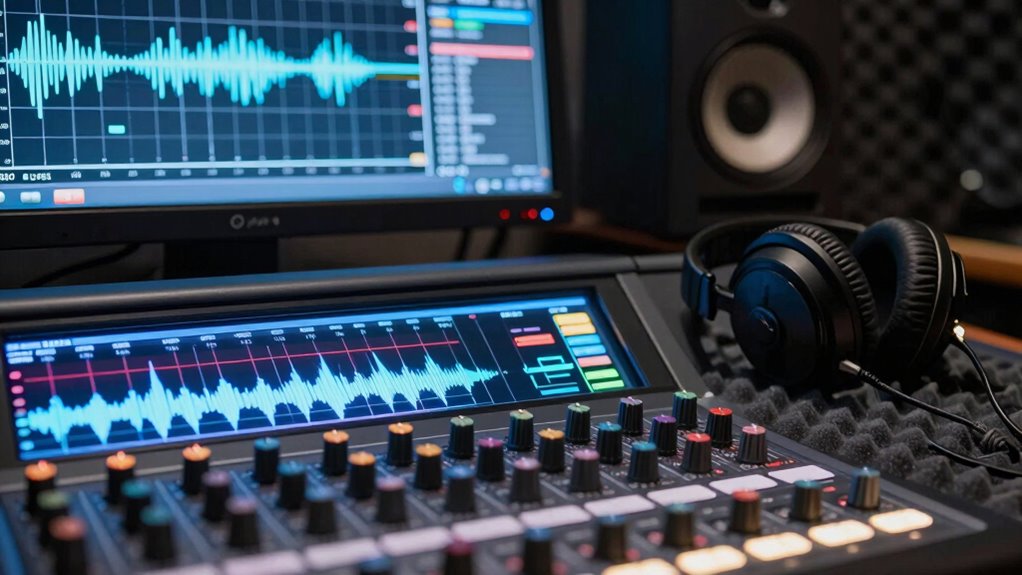
To measure LUFS on your audio files and mixes accurately, you’ll need specialized loudness meters or plugins designed for this purpose. These tools analyze the perceived loudness, accounting for dynamic compression and guaranteeing consistent levels. When measuring, consider these steps:
- Load your audio into a loudness meter plugin compatible with your DAW.
- Play the entire track to capture an accurate LUFS reading.
- Use the loudness normalization feature to compare your levels against target standards.
- Adjust your mix accordingly, focusing on reducing peaks and balancing dynamic compression.
This process helps you avoid overly loud mixes and ensures your audio meets streaming platform standards without sacrificing quality. Proper measurement is key to achieving the right loudness without unnecessary compression or loss of clarity.
How to Hit LUFS Targets Without Sacrificing Quality
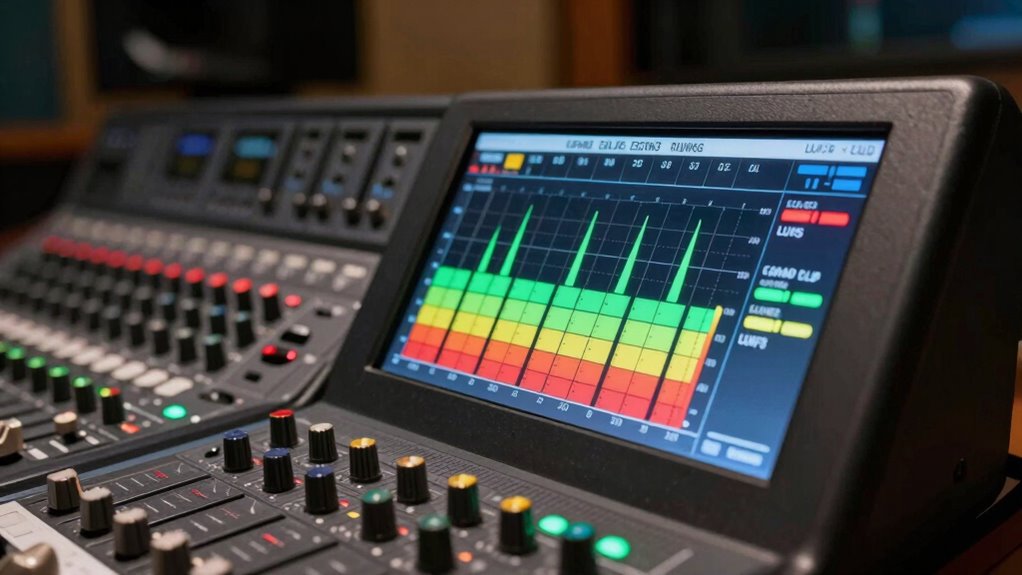
To meet LUFS targets without compromising sound quality, focus on optimizing your dynamic range so the loudest and softest parts stay balanced. Use effective limiting carefully to control peaks without squashing the overall punch and clarity. These techniques help you achieve loudness goals while preserving the integrity of your mix.
Optimize Dynamic Range
Achieving your LUFS loudness targets without sacrificing audio quality requires careful control of dynamic range. To optimize dynamic range, focus on maintaining a healthy dynamic balance, which ensures loud and quiet parts are distinct without excessive compression. This preserves audio clarity, making everything sound natural and engaging. Consider these steps:
- Use subtle compression to tame peaks without squashing the overall dynamic.
- Adjust equalization to enhance clarity without boosting harsh frequencies.
- Employ automation to manage volume variations across different sections.
- Regularly listen at different volume levels to ensure the dynamic balance feels natural.
Use Effective Limiting
Effective limiting is essential for hitting your LUFS targets without sacrificing audio quality, as it controls peaks and maintains consistent loudness levels. Using digital metering helps you accurately gauge your loudness regulation efforts, ensuring you don’t push your track too hard or leave it too soft. Proper limiting prevents clipping and distortion while maximizing loudness, making your audio loud enough for streaming platforms without compromising clarity. Focus on transparent limiting settings that tame peaks without squashing the dynamic range. Remember, the goal isn’t just to hit a target number but to preserve the integrity of your mix. With precise digital metering and careful loudness regulation, you achieve a competitive loudness level without sacrificing the natural sound and punch of your music.
Common Mistakes That Affect Your Track’s Loudness
One common mistake that can negatively impact your track’s loudness is relying too heavily on limiting without proper gain staging. This can distort audio perception and reinforce loudness myths that louder equals better. To avoid this, watch out for:
- Over-compression, which reduces dynamic range and flattens your mix.
- Excessive limiting, causing distortion and listener fatigue.
- Ignoring headroom, leading to clipping and reduced clarity.
- Misunderstanding loudness targets, leading you to chase numbers instead of audio quality.
These mistakes often stem from misconceptions about loudness and hearing perception. Remember, loudness isn’t just about volume; it’s about maintaining audio integrity. Proper gain staging and understanding loudness myths help ensure your track sounds professional and consistent across platforms.
How Dynamic Range and Compression Help Manage Loudness
Understanding how dynamic range and compression work together is essential for managing loudness effectively. Compression techniques reduce the difference between the loudest and quietest parts of your track, making it sound more consistent. Dynamic processing applies these techniques by squashing peaks and boosting softer sounds, helping your track meet streaming loudness targets. By controlling the dynamic range, you prevent sudden volume jumps that could trigger loudness normalization algorithms, ensuring your track stays within the desired LUFS level. Proper use of compression techniques allows you to maintain clarity and punch without sacrificing loudness. This balance is key to making your music sound professional and competitive across various streaming platforms. Remember, dynamic processing is a tool to shape loudness, not just to raise volume.
Using Editing Tools to Achieve the Correct LUFS Level
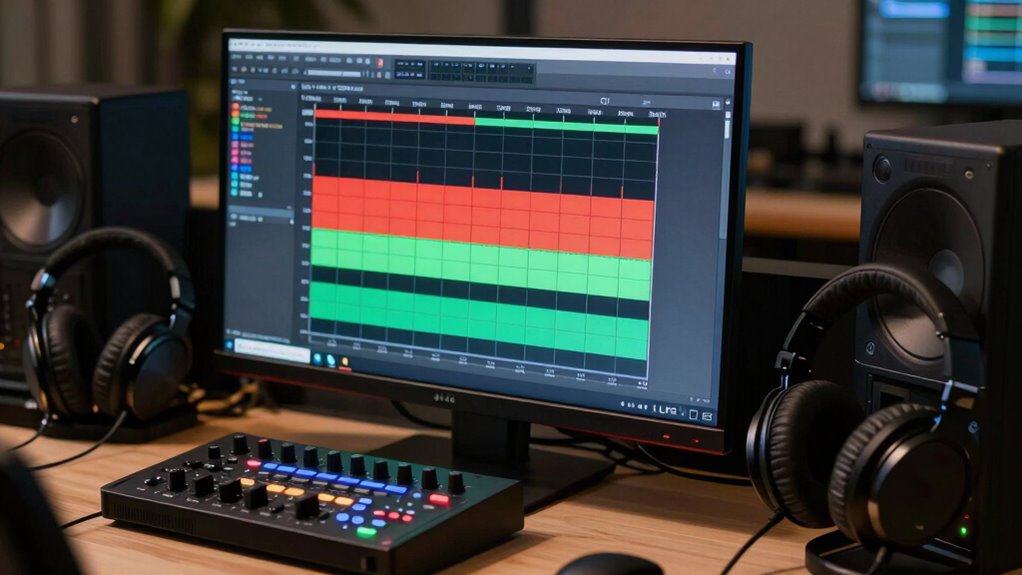
Using editing tools to achieve the correct LUFS level involves precise adjustments to your track’s gain, equalization, and metering settings. Start by using loudness meters to monitor your track’s current LUFS reading accurately. Next, apply audio normalization to set your overall loudness close to the target level, ensuring consistency across platforms. Adjust gain levels to fine-tune loudness without clipping or distortion. Finally, use equalization to shape the sound, preventing certain frequencies from becoming overly prominent after normalization.
Achieve consistent loudness by adjusting gain, equalization, and monitoring LUFS with precise tools.
Here’s what you’ll focus on:
- Monitoring loudness with loudness meters
- Applying audio normalization for initial level setting
- Tweaking gain for precise loudness control
- Refining EQ to maintain clarity and balance
These steps help you meet streaming loudness targets confidently.
Does Normalizing Loudness Impact Your Creative Intent?
While normalizing loudness guarantees your track meets streaming standards, it can also influence your creative intent. Adjusting loudness levels affects the dynamic perception of your music, potentially altering how listeners experience your work. When loudness is normalized, what once felt powerful or subtle might shift, changing the emotional impact you aimed for. Subjective loudness varies from person to person, so even if your track hits the target LUFS, it might not match your artistic vision. This process can unintentionally flatten dynamics or diminish contrast, making parts less expressive or impactful. Ultimately, normalizing loudness is a useful technical step, but it’s essential to contemplate how it might modify your creative intent and the way your audience perceives your music.
Troubleshooting Loudness Issues: How to Fix Off-Target Tracks

When your track’s loudness falls outside the desired LUFS range, it can distort the listening experience and cause issues on streaming platforms. To rectify this, you need to troubleshoot effectively. Here are four steps:
- Check your loudness perception—listen critically to identify if your track sounds too quiet or too loud.
- Use audio normalization tools to adjust your track to the target LUFS level without compromising quality.
- Analyze your dynamic range to ensure it aligns with platform standards, avoiding over-compression.
- Re-evaluate your EQ and processing to prevent artifacts that influence loudness perception negatively.
Why Consistent Loudness Enhances Listener Experience
Consistent loudness across your tracks keeps listeners engaged and prevents disruptions in their experience. When audio normalization aligns loudness levels, it guarantees each song or segment plays at a comfortable, familiar volume, making it easier for listeners to stay immersed. Sudden volume shifts can cause listeners to reach for controls or skip tracks, disrupting their enjoyment. By maintaining consistent loudness, you improve loudness perception, helping your audience perceive your content as balanced and professional. This consistency reduces the need for frequent adjustments and creates a smoother listening flow. Ultimately, it shows you care about your audience’s experience, encouraging them to listen longer and more comfortably without feeling fatigued or annoyed by unpredictable volume changes.
Future Trends in Loudness Standards and Streaming Quality
As streaming platforms continue to refine their loudness standards, future trends are likely to focus on more dynamic and transparent loudness management. You can expect advancements in audio normalization techniques that adapt in real-time, ensuring consistent loudness levels across content. Improved loudness measurement tools will provide more accurate readings, helping creators meet standards easily. Additionally, platforms might adopt smarter algorithms that consider listener context, such as device type and environment. This shift aims to enhance user experience without sacrificing audio quality. Greater transparency in loudness processing will also help content producers better understand how their work aligns with standards, reducing guesswork. Overall, these trends will make streaming audio more balanced, natural, and listener-friendly.
Quick Tips for Staying Within LUFS Targets During Mastering
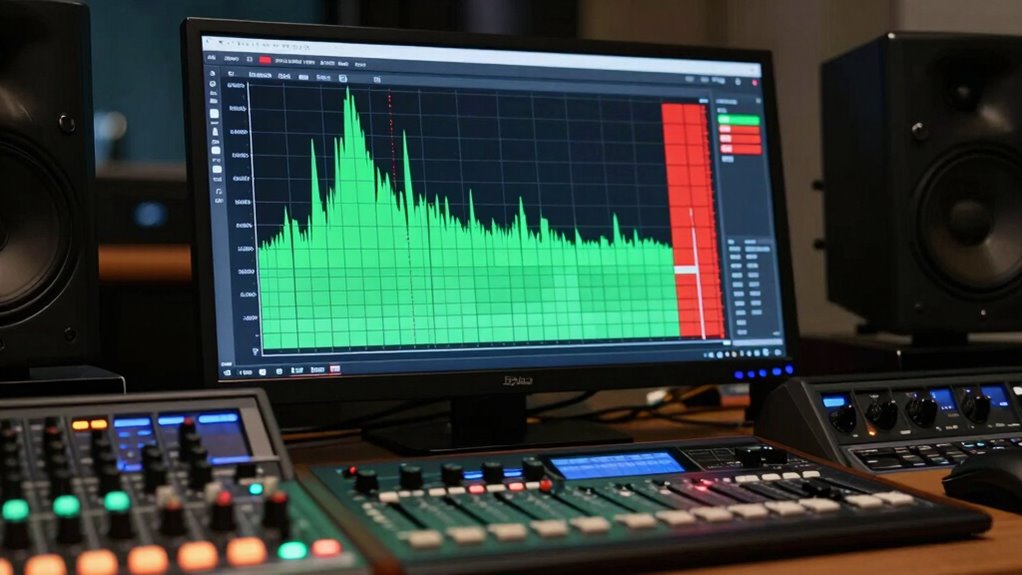
Achieving the right LUFS level during mastering is key to meeting streaming platforms’ loudness standards. To manage perceived loudness, use a loudness meter to monitor your track’s integrated LUFS in real time. Keep in mind that loudness perception varies with frequency and dynamic range, so avoid over-compression, which can make your track sound louder but reduce clarity. Aim for a balanced mix, ensuring the overall loudness stays within the target range without sacrificing dynamics. Use gentle limiting to tame peaks without squashing the track’s natural feel. Regularly compare your master to reference tracks within the same genre to gauge perceived loudness. These quick adjustments help you stay within LUFS targets, maintaining clarity and ensuring your music sounds consistent across streaming platforms.
LUFS Isn’t Magic: It’s a Tool for Better Streaming Sound
Many producers mistakenly view LUFS as a magic number that guarantees perfect streaming sound. In reality, LUFS is a valuable tool to enhance audio fidelity and boost listener engagement. It helps you create consistent loudness levels across tracks, making the listening experience smoother. Think of LUFS as a guide, not a fix-all solution. Here’s how it benefits you:
- Maintains balanced audio, preventing listener fatigue
- Ensures your mix stays within streaming platform standards
- Preserves audio clarity, avoiding over-compression
- Builds a cohesive sound that keeps listeners engaged
Frequently Asked Questions
Can Different Genres Require Different LUFS Targets?
Yes, different genres often require different LUFS targets because of genre variation and listener preferences. For example, rock and pop tracks might be mastered louder to create energy, while classical music benefits from more dynamic range. You should adjust your loudness to match the genre’s typical listening experience, ensuring your music sounds balanced and engaging for your audience. Tailoring loudness helps meet expectations and enhances overall listener satisfaction.
How Does Loudness Normalization Affect Live Recordings?
Like tuning a fine instrument, loudness normalization modifies your live recordings to match the streaming platform’s standards, impacting dynamic range and audience perception. It ensures your audience hears a consistent volume, but can also tame the natural peaks and valleys of live sound. This process helps prevent sudden volume jumps, maintaining clarity and engagement, so your audience stays immersed without distraction—much like a well-conducted orchestra.
Are There Legal Standards for Loudness in Broadcasting?
Yes, there are legal regulations and broadcast standards for loudness in broadcasting. You need to follow these guidelines to guarantee your audio complies with regional requirements, like the CALM Act in the US or EBU standards in Europe. These regulations help prevent sudden loudness changes and protect listeners from discomfort. Make sure you measure and adjust your content accordingly, so your broadcasts stay within the mandated loudness levels.
What Equipment or Software Best Measures LUFS Accurately?
You should use professional loudness meters like iZotope Insight, Nugen VisLM, or Waves WLM Plus for accurate LUFS measurement. Make certain to calibrate your meter regularly to maintain measurement accuracy, as calibration ensures consistent results. Avoid relying on basic or outdated tools, since precise loudness measurement is vital for compliance and quality. High-quality meters combined with proper calibration help you achieve reliable LUFS readings for streaming and broadcasting standards.
How Often Should I Re-Evaluate My Tracks’ Loudness Levels?
You should re-evaluate your tracks’ loudness levels after each major change in your mix or mastering process. This helps guarantee your dynamic range stays balanced and your peaks aren’t clipping due to peak normalization. Regular checks prevent your track from sounding too compressed or too soft on different platforms. Aim for consistent LUFS levels, especially before final export, to maintain a professional sound across streaming services.
Conclusion
So, while LUFS isn’t some magic fix that instantly makes your tracks sound perfect, it’s a powerful tool to keep your music consistent and listener-friendly. Ironically, chasing loudness levels might seem like a secret shortcut to greatness, but in reality, it’s about understanding the rules and playing by them. Don’t fall for the illusion—use LUFS wisely, and you’ll actually improve your sound without sacrificing quality or artistry.