To build a custom mechanical keyboard, start by choosing compatible components like a case, PCB, switches, keycaps, and stabilizers based on your size preference and aesthetic style. Gather essential tools such as screwdrivers, a soldering iron, and keycap pullers. Assemble the hardware carefully, install switches and stabilizers, then customize with lubrication and programming if desired. Test thoroughly for key functionality. Keep exploring for detailed tips to personalize your build and guarantee long-term satisfaction.

Get audio and creator gear delivered free with Prime
- Fast, free delivery on millions of items
- Prime Video, Amazon Music and more included
- Member-only deals all year
Key Takeaways
- Plan your build by selecting compatible case, PCB, switches, keycaps, and layout based on your preferences.
- Choose the appropriate switch type and stabilizers, then prepare your workspace with necessary tools.
- Solder switches to the PCB or insert them into hot-swappable sockets, ensuring proper alignment and fit.
- Customize your keyboard with lubing switches, programming firmware, and adding lighting or aesthetic elements.
- Test all keys thoroughly for proper function, troubleshoot issues, and perform maintenance for long-term performance.
Products Worth Considering
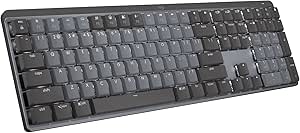
Logitech MX Mechanical Wireless Illuminated Keyboard, Tactile Quiet, Graphite

Samsung 27 Odyssey OLED G5 (G50SF) QHD QD-OLED Gaming Monitor

DJI Osmo Mobile 8 Phone Gimbal with Mic Mini Transmitter, Infinity Black
As an affiliate, we earn on qualifying purchases.
Choosing the Right Components for Your Build
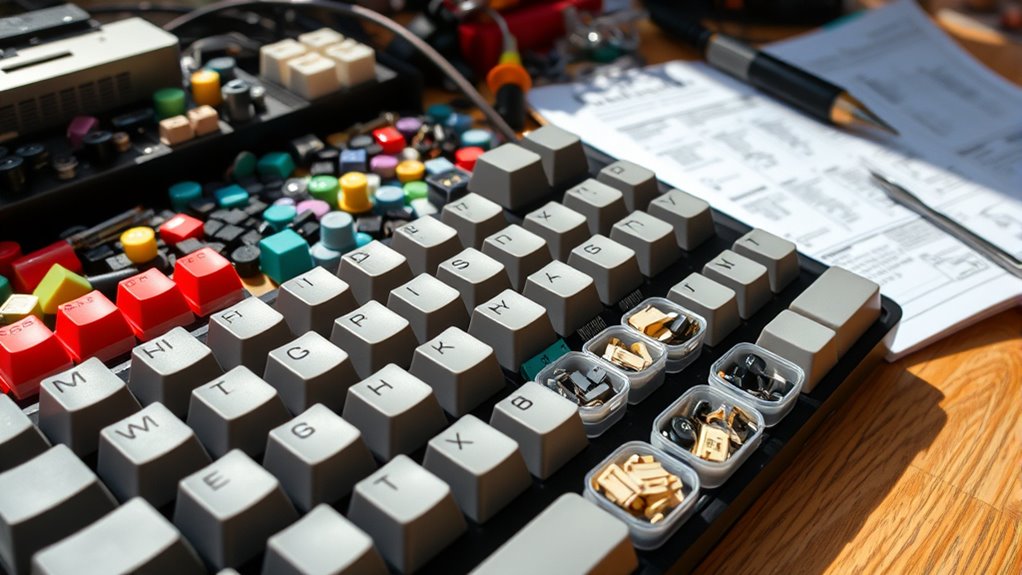
Choosing the right components is essential to building a functional and personalized mechanical keyboard. Start with the case, which provides the structural support and influences size and aesthetics. Materials like plastic, aluminum, or acrylic affect weight, durability, and look. Decide if you want a hot-swappable case for easy switch changes or a standard one that requires soldering. Next, select a PCB compatible with your case’s size—60%, TKL, or full-size—and consider features like hot-swappability or programmability for custom key functions and RGB lighting. Then, pick mechanical switches that match your preferred feel—linear, tactile, or clicky—and consider brands like Cherry MX or Gateron. Ultimately, choose keycaps made from PBT or ABS, with profiles and legends that suit your style, comfort, and durability preferences. Additionally, consider preppy dog names if you want to add a fun and personal touch to your build accessories or themed setups. Be sure to also think about component compatibility to ensure all parts work seamlessly together for a smooth building experience. Paying attention to keyboard layout options can help you customize your typing experience further, making your build truly unique. Incorporating project management techniques can also help you organize your build process efficiently.
Planning Your Layout and Design
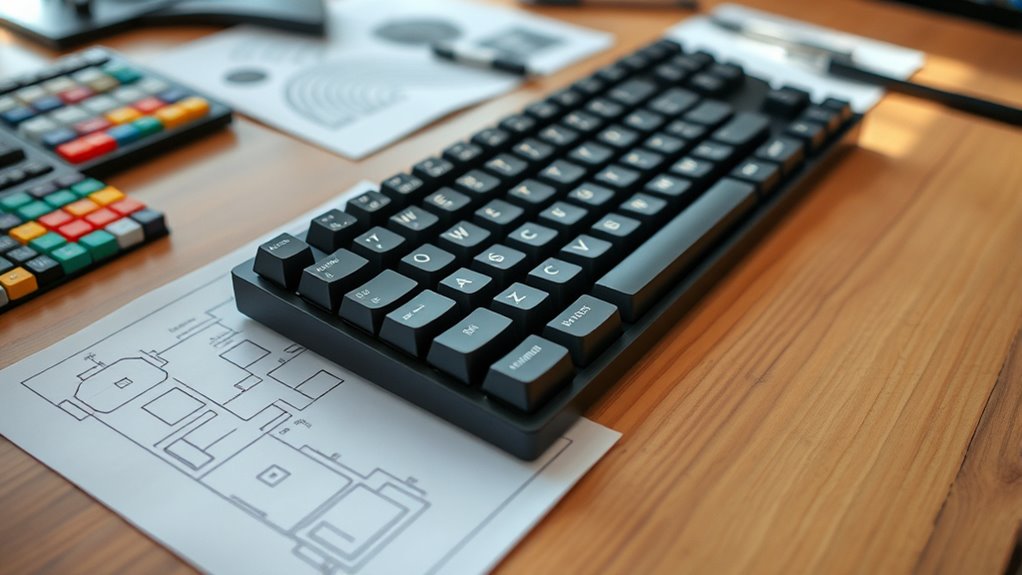
Start by choosing a keyboard size that fits your space and needs, whether it’s full-size for extra keys or a compact layout for portability. Next, select switches that match your typing preference, considering factors like actuation force and sound. Additionally, exploring design elements such as keycap styles and color schemes can further personalize your keyboard. You can also consider incorporating lighting options to enhance the aesthetic appeal of your setup. To ensure your build performs optimally, researching battery capacity and power management is important for wireless or illuminated models. Lastly, exploring hackathons can inspire innovative design ideas and custom projects for your keyboard build. Properly maintaining your setup, such as caring for your switches, can prolong the lifespan of your custom mechanical keyboard.
Choosing Keyboard Size
Selecting the right keyboard size involves balancing your workspace, portability needs, and workflow requirements. Consider these options:
- Full Size (100%): Offers all keys, including numpad, ideal for data entry or accounting, but takes up significant space and is less portable.
- Tenkeyless (TKL / 80%): Lacks a numpad, saving desk space and reducing mouse reach, perfect for gamers and office use.
- 75% Keyboards: Compact with most keys; saves space while maintaining functionality, suitable for users who want a denser layout.
- 65% and Smaller: Minimalist design with essential keys; highly portable but relies on function layers, best for travel and limited desks.
Choose based on your desk space, need for portability, and workflow preferences.
Selecting Key Switches
When planning your custom mechanical keyboard, the type of switches you choose plays a significant role in shaping your overall typing experience and layout design. You’ll decide between linear, tactile, and clicky switches, each offering different feedback and sound profiles. Linear switches, like Cherry MX Reds, provide smooth, quiet keystrokes ideal for gaming or fast typing. Tactile switches, such as Browns, give physical feedback without noise, perfect for balanced use. Clicky switches, like Kailh Gold, produce audible clicks for confirmation, suited for users who enjoy sound feedback but may be disruptive in shared spaces. Consider actuation force and travel distance—lighter switches reduce fatigue, while shorter travel allows quicker response. Compatibility with your keyboard’s plate and PCB is essential, so choose switches that fit your layout and stabilizer setup for optimal performance.
Defining Aesthetic Style
Defining your aesthetic style involves choosing color schemes, themes, and layout arrangements that reflect your personal taste and enhance your typing environment. To create a cohesive design, consider these steps:
- Select a color palette, like bright colors for vibrancy or pastels for a softer, playful look. Incorporating diverse design options can help you match your keyboard to your overall decor.
- Pick a theme—retro, minimalist, gaming—that unifies your keyboard’s appearance.
- Decide on layout size—full-size, TKL, or compact—to balance functionality and space.
- Incorporate keycap sets with icons, patterns, or custom artisan caps for artistic flair and uniqueness.
- Research trending keyboard styles to stay current and inspired in your design choices.
- Consider the visual harmony between your chosen elements to ensure your keyboard feels cohesive and inspiring.
Aligning these elements guarantees your keyboard looks intentional and feels inspiring, turning it into a personalized workspace extension.
Gathering Necessary Tools and Accessories

Gathering the right tools and accessories is vital for building a high-quality mechanical keyboard efficiently and safely. Start with a dedicated, clean workspace free from dust and clutter. Use an anti-static mat or wristband to protect sensitive components and guarantee proper lighting with an LED desk lamp to prevent mistakes. Comfortable seating helps during long sessions, and safety glasses are essential when soldering.
Here’s a quick overview of essential tools:
| Tool Type | Purpose |
|---|---|
| Precision screwdriver set | Assemble case, PCB, stabilizers |
| Soldering iron | Make electrical connections |
| Switch opener | Modify switches |
| Keycap puller | Remove keycaps safely |
Assembling the Core Hardware: Case, PCB, Plate, and Switches
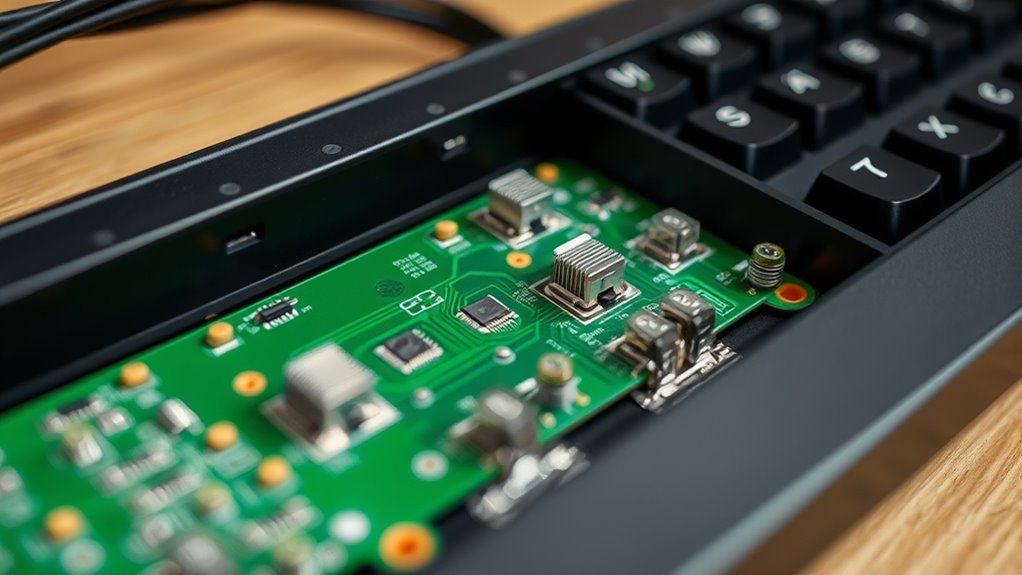
Assembling the core hardware begins with carefully installing the stabilizers on the PCB to support larger keys like the spacebar and Enter. Next, you’ll align the plate over the PCB, ensuring it locks into place securely. Then, insert the switches through the plate into the PCB, listening for a click that indicates they’re locked in. Here’s what to do:
- Install stabilizers on the PCB for stability.
- Place the plate over the PCB, aligning screw holes.
- Insert switches into the plate and PCB, pressing until they click.
- For solder PCBs, solder switches; for hot-swap, simply click them in.
Once all switches are installed and tested for connectivity, position the assembled module inside the case and secure it with screws.
Installing Stabilizers and Key Switches
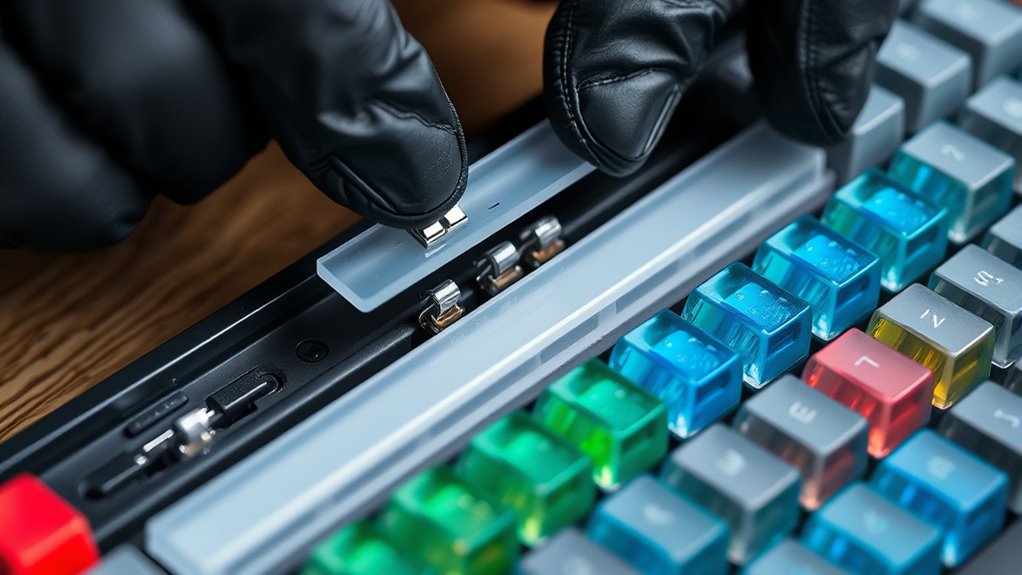
Installing stabilizers and key switches is a vital step to guarantee your keyboard feels and sounds right. Properly positioning and securing these components helps prevent rattling and wobbling during use. In the following steps, you’ll learn tips for stabilizer installation and how to mount your switches effectively. Ensuring the stability of your switches can also improve the overall sound and feel of your keyboard, similar to how juice detox can support overall wellness.
Stabilizer Installation Tips
Properly installing stabilizers is essential for a smooth and stable typing experience. To do this effectively, follow these steps:
- Assemble the stabilizer components, ensuring the housing, wire, and inserts are correctly aligned and clips snap into place.
- Check the orientation; flip the wire if needed to fit your PCB and plate layout, as there’s no universal standard.
- Firmly seat the stabilizer wires into the housing clips to prevent wobbling during typing.
- Test the stabilizers by pressing the keys; make sure they move smoothly without rattling before installing the plate.
Taking your time with assembly ensures better stability and reduces noise. Always verify that stabilizers fit through their cutouts and don’t interfere with adjacent components.
Switch Mounting Procedures
To guarantee a successful switch mounting process, start by inspecting each switch for defects or debris and confirming that the pins are straight. Align the switch pins carefully with the PCB holes, avoiding force to prevent damage. Gently insert the pins, ensuring the switch sits flush on the PCB to prevent uneven keypresses. Double-check that the orientation is correct so the stem aligns properly with the keycap profile. For hot-swappable boards, press switches firmly into sockets until fully seated and test for tactile feedback. If you’re soldering, heat your soldering iron to around 350°C, then apply solder to each pin, ensuring a solid connection without bridging. Carefully remove and reinsert switches if needed, using tools to prevent stress on the PCB. Proper switch installation can also improve overall keyboard tuning and performance. As you work through installation, keep in mind that automation in manufacturing can help streamline the process and ensure consistent quality. Additionally, familiarizing yourself with local resources and tools can provide extra support during your building process.
Customizing Your Keyboard: Lubrication, Keycaps, and Programming

Customizing your mechanical keyboard involves several key steps to enhance its feel, sound, and functionality. First, lubrication reduces friction, wear, and scratchiness, resulting in quieter, smoother keystrokes. Use light synthetic grease or oil, avoiding petroleum-based lubricants that can damage plastics. Proper application ensures optimal performance and longevity of your switches. Applying the correct amount of lubricant is crucial to prevent over-application which can cause sluggishness or dirt accumulation. Proper lubrication techniques can significantly improve the overall experience. Second, keycaps come in various materials like ABS and PBT, with different textures and durability; confirm compatibility with your switches. Choosing high-quality keycaps can also influence the sound and feel of your keyboard. Third, programming your keyboard with firmware like QMK or VIA allows remapping keys, creating layers, and customizing lighting effects. Understanding the refrigeration cycle can also inspire innovative cooling designs for custom builds. Regular maintenance—cleaning switches, re-lubricating, and testing—keeps your keyboard performing at its best. Additionally, inspecting your key switch mechanisms periodically helps prevent issues before they arise. Proper keyboard maintenance is vital for sustaining optimal performance over time. Follow these steps carefully to personalize your build, improve performance, and enjoy a tailored typing experience.
Testing Your Keyboard and Troubleshooting Common Issues

After you’ve completed the customization steps like lubing switches and choosing keycaps, it’s important to thoroughly test your keyboard to make certain everything functions correctly. Start by using a keyboard testing program or firmware to verify each key’s electrical response. Use a multimeter or specialized tool to check circuit continuity and trace resistance, ensuring no shorts or open circuits exist. Visually inspect the PCB for physical defects, such as broken components or misaligned traces. Perform a full keypress test to confirm all switches register properly without chatter or double presses. Check stabilizers for smooth operation and consistent sound across keys. Load your firmware, like QMK or VIA, to test key mappings and lighting effects. Address issues like unresponsive keys or faulty stabilizers promptly to make certain your keyboard works flawlessly. Additionally, testing for durability can help identify potential long-term issues before regular use. Conducting stress testing can simulate prolonged use and reveal hidden vulnerabilities in your build. To further ensure your keyboard’s longevity, consider monitoring for electrical stability during extended testing sessions. Proper soldering techniques are essential to prevent future connection problems and ensure reliable operation, and practicing good soldering habits can greatly improve the overall quality of your build.
Final Adjustments and Tips for Future Upgrades

Final adjustments are essential to guarantee your keyboard performs at its best and feels just right. To refine your build, start with keycap installation—mount them carefully to avoid damage or misalignment. Ensure the profiles match the row for *ideal* ergonomics. Use a keycap puller to correct any misplaced keys, maintaining consistent height and angle. Next, consider customizing keycap materials and textures for comfort and style. Regularly cleaning keycaps prevents grime buildup, preserving feel and appearance. For future upgrades, keep a backup of your firmware settings, choose hot-swappable PCBs for easy switch changes, and document modifications for quick replication. Additionally, staying informed about headphone compatibility can enhance your overall experience if you plan to use headphones with your setup. You can also explore retirement planning strategies to secure your financial future, ensuring peace of mind in your later years. Stay connected with keyboard communities to discover new mods and upgrades. Proper final adjustments and planning ensure your keyboard remains functional, comfortable, and upgrade-ready.
Frequently Asked Questions
Can I Build a Mechanical Keyboard Without Soldering Skills?
Yes, you can build a mechanical keyboard without soldering skills. With hot-swappable PCBs, you simply insert switches into sockets without soldering. This setup makes assembly easy and beginner-friendly. You only need basic tools like a screwdriver, and you can customize your keyboard by swapping switches later. Building without soldering reduces risks and simplifies the process, letting you enjoy creating your own mechanical keyboard even if you’re new to soldering or electronics.
Which Switch Type Is Best for Quiet Office Use?
Imagine a workspace where noise fades into the background, letting focus flourish. For quiet office use, linear silent switches like Cherry MX Silent Reds or Gateron Silent Blacks are your best bet—they’re designed to minimize sound with smooth keystrokes. Tactile silent switches, like ZealPC Zilents, offer a satisfying bump without noise. Pairing these switches with dampening mods creates an ultra-quiet environment, perfect for concentration and collaboration.
How Do I Choose the Right Keycap Profile?
When choosing the right keycap profile, consider your comfort, typing speed, and aesthetic preferences. You’ll want something that feels good during long sessions, like Cherry or OEM profiles, which are sculpted for ergonomic ease. Taller profiles like SA offer a vintage look but may slow you down initially. Test different options if you can, and pick one that matches your typing style and desk setup for the best experience.
Is It Necessary to Use a Specific Software for Programming?
Using programming software for your custom keyboard is like using a toolkit to fine-tune a machine; it’s essential for full control. Most keyboards need specialized software to remap keys, create macros, and customize lighting. Manufacturer apps are user-friendly, while open-source tools like QMK offer more flexibility. Without the right software, your ability to personalize your keyboard is limited, making it difficult to unlock its full potential.
What Are the Best Ways to Soundproof My Custom Keyboard?
To soundproof your custom keyboard, start by adding foam or silicone inside the case to absorb vibrations and reduce noise. Lubricate switches and stabilizers to minimize rattle and friction. Choose quieter switches like linear types, and use sound-absorbing keycaps such as PBT. Additionally, place a keyboard mat or desk pad beneath it to dampen vibrations and reflections. Combining these methods creates a markedly quieter typing experience.
Conclusion
Building your custom mechanical keyboard is like crafting a personal symphony—every component plays a essential note. With patience and passion, you’ll create a masterpiece that’s uniquely yours. Think of each switch and keycap as brushstrokes on your masterpiece canvas. As you finish, sit back and enjoy the harmonious rhythm of your handiwork. Remember, this journey is just the beginning—your keyboard is ready to grow and evolve with your skills. Happy typing!