
TL;DR

Get audio and creator gear delivered free with Prime
- Fast, free delivery on millions of items
- Prime Video, Amazon Music and more included
- Member-only deals all year
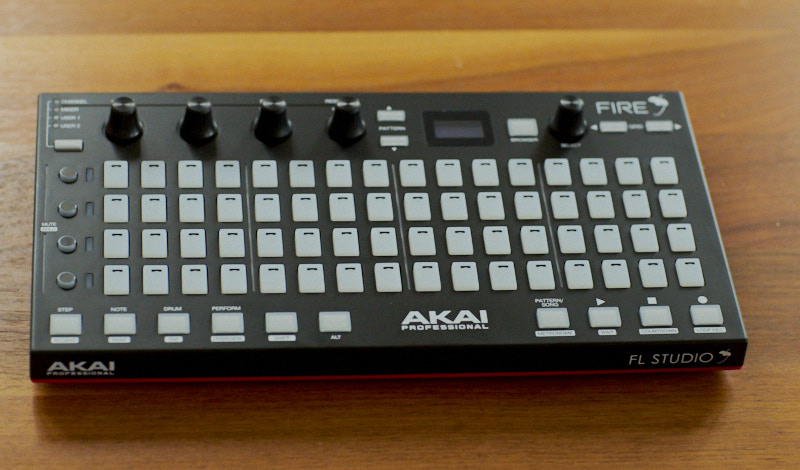
Chase Bliss has open-sourced the CHOMPI Mk1 portable sampler, publishing hardware schematics, PCB files, and all firmware including a beta wavetable synth. The release coincides with the design’s discontinuation, with no new CHOMPI models planned for the near future.
Chase Bliss has released the CHOMPI Mk1 portable sampler as an open-source project, publishing the complete hardware schematics, PCB design files, and firmware source code on GitHub. The move, announced through the CHOMPI Club website in September 2026, is explicitly framed as a discontinuation release: the company confirmed it will not manufacture any more units of this design, and no new CHOMPI models are currently in development for the near future.
The GitHub repository contains the full set of files needed to build a CHOMPI Mk1 or write custom firmware. On the hardware side, this includes the schematic, bill of materials, EAGLE PCB files, and a complete fabrication package, along with the six-PCB panel enclosure files and laser-cutting files for DIY panels. Notably, all CHOMPI artwork — the panel graphics and logos — has been excluded from the release for copyright and trademark reasons. Anyone building their own hardware is asked to name it something other than CHOMPI.
On the software side, the release includes three firmware projects: TAPE 2.0, the sampler firmware every CHOMPI ships with; TEMPO 1.0, a pattern generator described as the counterpart to TAPE; and WAVE 1.0, a new 8-voice wavetable synthesizer firmware released in beta. WAVE is positioned as both a standalone instrument and a starting point for developers writing their own firmware. The repository also holds a beta bootloader (v6.4, created to improve stability but never shipped on units, which run v6.2) and the factory microSD card contents — firmware, samples, and settings — for TAPE, TEMPO, and WAVE.
The company was direct about the release’s scope and audience. According to the CHOMPI Club page, the files are intended for developers comfortable with C++ and the Daisy embedded platform, and the project “will likely not be receiving updates.” Chase Bliss stated it will not provide customer support for open-source projects or third-party-built units. Support, repairs, and service for existing CHOMPI owners continue unchanged through the company’s normal support channels.
A Rare Full Stack Release for Hardware Hackers
Complete open-source releases of commercial music hardware remain uncommon. By publishing the PCB fabrication package, enclosure files, and firmware source rather than only documentation, Chase Bliss has made it possible for experienced developers to manufacture their own CHOMPI-compatible instrument from scratch, modify the existing firmware, or write entirely new instruments for the hardware.
The inclusion of WAVE as an open beta also gives non-developers a reason to engage: it is offered as a direct download on the company website, making it accessible to ordinary users who just want a new synthesizer mode on their existing unit. The company said it wanted WAVE available “to other users outside of the open sourcing comfort zone.”
The release also functions as a preservation measure. With the Mk1 discontinued, the repository becomes a permanent public record of how the instrument was built — valuable as the hardware ages and repairs or replacements become harder to source. Community discussion continues in a dedicated CHOMPI Open Source channel on the Chase Bliss Discord.
As an affiliate, we earn on qualifying purchases.
From Portable Sampler to Community Platform
The CHOMPI Mk1 is a handheld, playful sampler built around the Electro-Smith Daisy embedded audio platform, an open-source hardware ecosystem popular with DIY synth builders. Its stock firmware, TAPE, handles sampling and sample playback, while TEMPO added pattern-generation capabilities.
In announcing the release, team members Joel, Julian, Chelsea, and Tobias described it as “the final chapter of this version of CHOMPI” in a video overview, while opening the door for others to explore new ideas on their own. The company stated that “the spirit and ethos of CHOMPI will continue to influence future projects we work on,” even though no new CHOMPI models are planned for the near future. Existing owners retain access to the CONFIG Tool for customization, and units can be reset to factory settings via the bootloader and TAPE 2.0 card profile.
“This is a discontinuation open-source release: a permanent source for the files and documentation related to CHOMPI. To customize it, clone the repo into your own GitHub.”
— CHOMPI Club open-source announcement page
Limits of the Release and Support
Several boundaries of the release are unclear or explicitly limited. The company states the repository “will likely not be receiving updates”, meaning bugs in the published code — including the beta WAVE firmware and the never-shipped v6.4 beta bootloader — may go unaddressed officially. The specific open-source license terms governing the code and hardware files are not spelled out in the announcement page, so developers should verify licensing details in the repository before commercial use.
It is also not yet clear how much derivative work the community will produce, or whether Chase Bliss’s statement about future projects hints at a successor product later on. The company’s plans beyond the Mk1 discontinuation remain unstated.
Community Builds and Firmware Experiments
Immediate next steps center on the community rather than the company. The CHOMPI Open Source channels on the Chase Bliss Discord are the designated venue for sharing custom firmware, DIY hardware builds, and answering questions. Developers can clone the GitHub repository and begin modifying TAPE, TEMPO, or WAVE firmware, or design their own panels using the included laser-cutting files.
For Chase Bliss, the stated priorities are continued support and repairs for existing CHOMPI owners through its support page and repair hubs. Whether the company releases further firmware updates, refines the WAVE beta, or builds new hardware influenced by the CHOMPI design has not been announced.
Key Questions
Can I build and sell my own CHOMPI using the released files?
The files allow building your own hardware, but Chase Bliss states that third-party units will not be supported and “may not use the CHOMPI trademark branding/name.” All CHOMPI artwork and logos were excluded, and builders are asked to name their instruments something else.
Is the CHOMPI Mk1 still being manufactured?
No. Chase Bliss confirmed it “will not be making any more of this CHOMPI design,” and no new CHOMPI models are currently in development for the near future. The open-source release serves as a permanent archive of the design.
Will existing CHOMPI owners still get support?
Yes. Chase Bliss stated it is continuing customer support, repairs, and repairs facilitation at its hubs “as normal for all past and current CHOMPI owners” through its support page.
Do I need to be a programmer to use the open-source release?
For modifying firmware, yes — the company describes the release as aimed at developers familiar with C++ and the Daisy platform, not beginners. However, the beta WAVE wavetable synth firmware is available as a direct download for any user to install.
Will the open-source files be updated over time?
Unlikely. The company says it “won’t be doing any more file updates” and the repository “will likely not be receiving updates,” though it remains a permanent public source for the files.
Source: hn
Halloween Picks
halloween
As an affiliate, we earn on qualifying purchases.