
AFCIs and GFCIs protect against different hazards; AFCIs prevent fires caused by arc faults, while GFCIs stop shocks from ground leaks. They operate independently but can be combined into units for thorough safety. AFCIs detect irregular arc patterns, responding in about 0.2 seconds, while GFCIs trip within 25 milliseconds when they sense leakage. Understanding their interaction helps you guarantee correct usage. To learn more about their proper installation and benefits, keep exploring this important safety topic.

Get audio and creator gear delivered free with Prime
- Fast, free delivery on millions of items
- Prime Video, Amazon Music and more included
- Member-only deals all year
Key Takeaways
- AFCIs prevent fires by detecting dangerous arc faults, while GFCIs protect against electrical shocks from ground leaks.
- They operate independently but can be installed together on the same circuit for comprehensive safety.
- GFCIs respond within 25 milliseconds to leakage currents, whereas AFCIs trip within about 0.2 seconds for arc faults.
- Proper installation involves separate breakers or combined units, with correct wiring and regular testing to ensure effectiveness.
- Using both AFCIs and GFCIs in appropriate areas enhances safety by addressing both fire and shock hazards.
As an affiliate, we earn on qualifying purchases.
Understanding the Fundamental Differences Between AFCIs and GFCIs

To understand the fundamental differences between AFCIs and GFCIs, it’s important to recognize that each device is designed to protect against distinct electrical hazards. An AFCI prevents fires by detecting dangerous arc faults caused by damaged or degraded wiring, loose connections, or deteriorating insulation. It monitors for irregular arc patterns and interrupts power before a fire can start. In contrast, a GFCI protects you from electrical shock by sensing leakage currents flowing to ground, such as through a person. It detects imbalance between hot and neutral wires and responds almost instantly to prevent shocks. While both devices interrupt power when hazards are detected, AFCIs focus on fire prevention caused by arcs, and GFCIs focus on safeguarding people from electrocution. They serve complementary, but separate, safety functions** in your electrical system. Ground faults always seek a ground path, which is why GFCIs are essential in wet or outdoor areas to prevent shock hazards. Additionally, understanding the role of leakage currents** helps clarify how each device contributes to overall electrical safety.
How Do AFCIs Detect and Prevent Fires?

AFCIs continuously monitor electrical waveforms to identify dangerous arc fault patterns that pose fire risks. When they detect these hazardous arcs, they trip quickly to interrupt power and prevent fires from starting. This rapid response helps keep your home safe by stopping potential ignition sources before damage occurs. They use advanced electronics to analyze waveform patterns, ensuring even small or emerging faults are detected early. Additionally, understanding fire prevention strategies can further enhance safety measures in your home electrical system.
Detecting Arc Fault Patterns
Detecting arc fault patterns involves sophisticated analysis of electrical waveforms to identify hazardous conditions that could lead to fires. AFCIs monitor current and voltage signals, distinguishing normal arcs from dangerous ones. They analyze patterns like non-periodicity, spikes, and waveform irregularities, which signal potential hazards. By focusing on waveform signatures, AFCIs detect both series and parallel arcs early, even before insulation fails. Their sensors and algorithms filter out benign arcing, ensuring False trips don’t occur. This real-time analysis provides critical protection, preventing fires caused by deteriorating wiring or damaged insulation. Advanced waveform analysis techniques enable AFCIs to improve detection accuracy, reducing nuisance trips while maintaining safety.
Rapid Circuit Interruption
When an arc fault occurs, AFCIs respond instantly by using embedded electronics to monitor current flow and identify irregular patterns. They analyze signals at microsecond intervals, detecting high-frequency components characteristic of arcing. Once the AFCI’s algorithms recognize these signatures, they issue a trip command. The internal electronics activate a mechanical breaker that quickly opens the circuit contacts, cutting power within 0.2 seconds. This rapid response halts the flow of current and prevents high temperatures—up to 35,000°F—that could ignite nearby combustibles. The system’s speed and reliability are regulated by standards like UL1699B, ensuring timely intervention. AFCIs continuously monitor circuit activity to differentiate between normal and hazardous conditions. By swiftly disconnecting power at the first sign of a hazardous arc, AFCIs effectively prevent fires before they start, safeguarding your home and property. Additionally, advancements in circuit monitoring technology continue to enhance the detection accuracy and response times of AFCIs.
Preventing Fire Initiation
To prevent fires caused by electrical arcs, AFCIs continuously monitor current waveforms for signs of hazardous arcing conditions. They analyze waveform shape, frequency, and pattern to distinguish between normal arcs and dangerous ones caused by damaged wiring or loose connections. Advanced electronics detect specific arc fault signatures, including irregularities and discontinuities, while ignoring harmless transient arcs from household devices. When a hazardous arc is identified, the AFCI trips internal contacts, instantly cutting power and stopping the arc from generating heat that could ignite nearby materials. This rapid disconnection reduces fire risk from deteriorated wiring or insulation damage. Continuous monitoring guarantees that AFCIs can detect transient, intermittent, and persistent faults, providing a higher level of fire prevention than standard circuit breakers. Proper maintenance of AFCIs ensures they operate effectively over time, further enhancing electrical safety.
The Mechanism Behind GFCI Shock Protection

You should understand that GFCIs detect even tiny current imbalances between the hot and neutral wires, signaling a potential ground fault. Once an imbalance of about 5 milliamperes is identified, they cut off power almost instantly to prevent shocks. This quick response is especially vital in wet environments like kitchens and bathrooms, where the risk of electric shock is higher.
Detecting Current Imbalance
GFCIs detect current imbalances by continuously monitoring the flow of electricity through the hot and neutral conductors. Under normal conditions, the current entering through the hot wire should equal the current returning via the neutral wire, resulting in no net current in the sensing transformer. The GFCI uses a toroidal (differential) current transformer that both conductors pass through, measuring their combined currents. If some current leaks to ground, it bypasses the neutral, creating an imbalance detected as a non-zero vector sum. When this imbalance exceeds about 5 milliamps, the GFCI triggers a relay, quickly shutting off power. This rapid detection and response mechanism protect you from electric shock, ensuring safety even with tiny current leaks. The system is highly sensitive to small leakage currents, allowing it to trip within 25 milliseconds when leakage exceeds 4 to 6 mA for human protection. Additionally, understanding the interaction between arc-faults and GFCIs helps in designing safer electrical systems.
Rapid Power Cutoff
When a current imbalance is detected, the GFCI acts immediately to protect you from electric shock. It triggers an instant power cutoff—within as little as 0.025 seconds—stopping electricity from flowing through hazardous paths like your body. This rapid response reduces injury risk, muscle contractions, burns, or worse. The device’s electronics continually compare current in hot and neutral wires, sensing small discrepancies around 4-6 milliamps. Once a fault is identified, an internal relay opens instantly, disconnecting power downstream. This process applies to the specific outlet and all connected devices on the same circuit. The table below highlights key aspects:
| Detection Threshold | Response Time | Circuit Impact |
|---|---|---|
| 4-6 mA | 0.025 seconds | Outlets & devices |
| Continuous monitoring | Instant relay act | Automatic shutdown |
| Common in wet areas | Critical safety | Prevents shocks |
Proper maintenance ensures the GFCI continues to detect faults effectively and provides reliable protection.
Safety in Moisture
Have you ever wondered how GFCIs detect dangerous current leaks, especially in moist environments? GFCIs sense tiny current imbalances as low as 4–6 milliamperes, enough to prevent serious shocks in wet conditions. Moisture degrades insulation, increasing the risk of current leaking through water or a person to ground. The GFCI continuously compares current flowing through hot and neutral wires; any difference triggers an immediate power cutoff within 25 milliseconds. Water acts as a conductive path, making leaks more likely. Thanks to high sensitivity, GFCIs can detect and interrupt even minor leaks before they cause harm. This rapid response considerably enhances safety, especially in areas like bathrooms, kitchens, or outdoors, where moisture presence makes electrical shocks more dangerous. GFCIs are designed to trip quickly when they detect these small imbalances, providing critical protection in wet environments. Improved automation technology has also contributed to more reliable and faster detection of electrical faults, further increasing safety.
When and Where Should You Use Combination AFCI/GFCI Devices?

Combination AFCI/GFCI devices are most effectively used in areas where both fire and shock hazards are present or where access to separate protection devices is difficult. You should install these devices in bathrooms, kitchens, crawl spaces, unfinished basements, laundry, and utility rooms to guarantee thorough protection. They’re also ideal behind large appliances or in areas like guest rooms and nursing homes, where space or access issues make separate devices impractical. Outdoor receptacles, especially those servicing pools or spas, benefit from combination devices to meet code requirements. Using these devices in areas with high humidity or moisture can further enhance safety and longevity.
Do AFCIs and GFCIs Work Together or Independently?
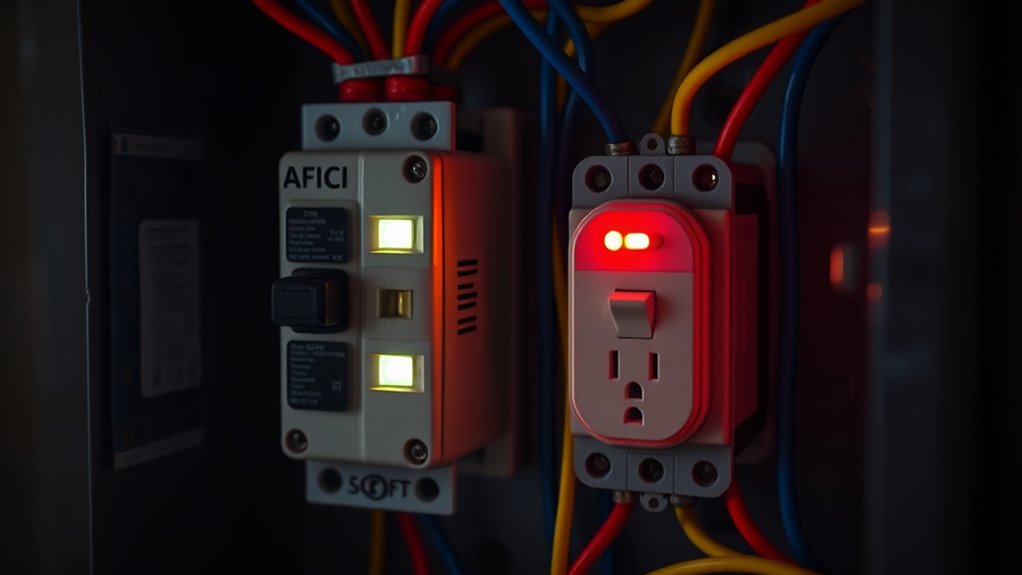
AFCIs and GFCIs are designed to protect against different electrical hazards, so they can operate independently on the same circuit. AFCIs detect and interrupt arc faults caused by wiring damage or degraded insulation, preventing fires. GFCIs, on the other hand, sense ground faults or current leaks that could pass through a person, preventing electric shocks. Because their detection criteria differ—arc patterns versus current imbalance—they function separately. You can install both devices on a single circuit, either with separate breakers or combined AFCI/GFCI units. While they operate independently, their combined use offers thorough protection against fire and shock hazards. Keep in mind that compatibility and proper installation are essential to avoid nuisance trips and ensure both devices work reliably together.
Limitations of AFCI and GFCI Devices in Home Safety
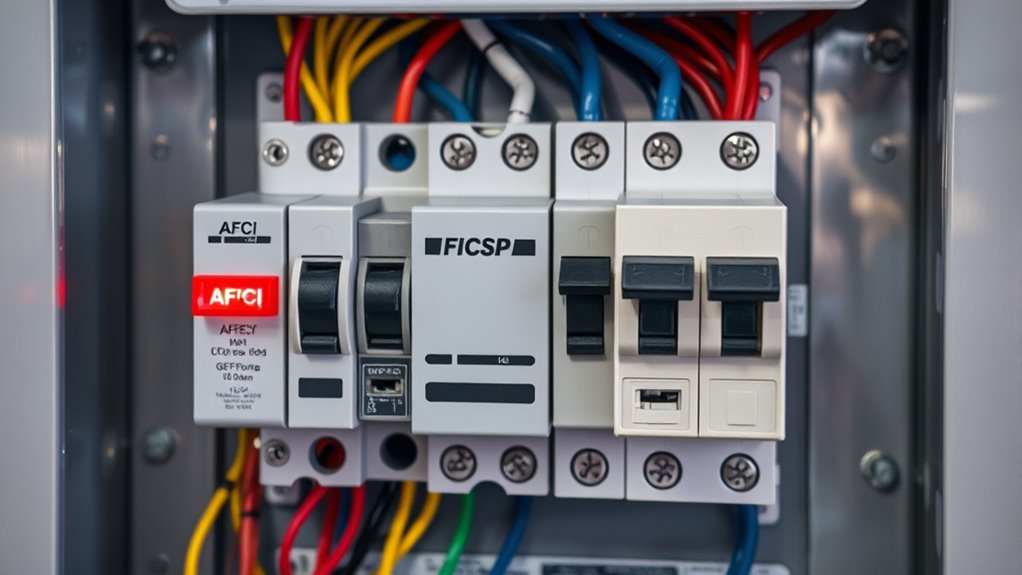
While AFCI and GFCI devices thoroughly enhance home safety, their coverage isn’t extensive. AFCIs are mainly required in living spaces like bedrooms and dining rooms but aren’t mandated in bathrooms or garages. GFCIs are essential where water is present, such as kitchens, outdoor outlets, and near sinks, but don’t protect against arc faults or fires. Neither device covers all hazards, leaving gaps depending on location and risk type. GFCIs guard against shock but not fires caused by arcing, while AFCIs detect fires but not ground faults. False trips from electrical noise can occur, reducing reliability. Additionally, regular testing and replacement are crucial because these devices have a limited lifespan, and neglecting maintenance can compromise safety. Proper installation and device maintenance are essential to maximize effectiveness, ensuring that these safety devices function correctly over time. Cost and installation complexity also impact widespread adoption.
Best Practices for Installing and Maintaining AFCI and GFCI Units

Proper installation and maintenance of AFCI and GFCI devices are key to ensuring they provide reliable protection. Install these devices as the first receptacle on the circuit to maximize downstream coverage. Connect all outlets, including lighting and receptacles, to the load terminals for proper operation. Avoid installing AFCI/GFCI units in boxes with more than four wires or cables with more than two wires; consult an electrician if needed. Clearly label line and load wires during wiring to prevent mistakes. Use electrical boxes with ample space and prefer screw terminal connections for reliability. Test devices after installation using the built-in test button, and regularly perform function checks every six months. Replace faulty or outdated units with manufacturer-approved devices to stay compliant and safe. Additionally, ensure that the devices are compatible with your circuit’s voltage and amperage ratings to prevent malfunction or damage. Maintaining proper grounding and following manufacturer instructions helps ensure the devices operate safely and effectively.
Frequently Asked Questions
Can AFCIS and GFCIS Be Installed on the Same Circuit?
Yes, you can install AFCIs and GFCIs on the same circuit, but it’s best to use dual-function breakers that combine both protections into a single device. This simplifies wiring, reduces costs, and guarantees thorough safety. Installing separate AFCI and GFCI devices is possible but can be more complex and costly. Always follow NEC codes and manufacturer instructions to ensure proper installation and safety.
Do Combination Devices Require Special Wiring or Circuit Breaker Panels?
Think of wiring a combination AFCI/GFCI device like assembling a puzzle—you follow the standard pieces first. You don’t need special wiring methods beyond typical installation, but you do need to connect the device to the correct line and load terminals. Make certain your breaker panel is compatible and listed for these devices, and verify the label or manufacturer instructions. Proper setup ensures safe, seamless protection without extra fuss.
Are There Instances Where AFCIS or GFCIS Might Interfere With Each Other?
Yes, AFCIs and GFCIs can interfere with each other, especially if the wiring isn’t proper or if there’s electrical noise. You might see nuisance tripping or false alarms due to RF interference, high inrush currents, or poor wiring practices. To avoid issues, confirm the devices are correctly installed, use approved combination units, and consider adding filtering or upgrading to newer models with better noise immunity. Always consult a professional electrician for ideal setup.
How Often Should AFCI and GFCI Devices Be Tested for Proper Operation?
You should test your AFCI and GFCI devices monthly—yes, every single month, just like the instructions say. It might seem like a chore, but it’s your best defense against electrical mishaps. Press the test button, confirm they trip, then reset them. Keep a log, and don’t forget outdoor GFCIs need testing before each use. Staying vigilant keeps your home safe and compliant—because ignoring these checks is just tempting fate.
Are There Specific Brands or Models Recommended for Combined Afci/Gfci Protection?
You should consider brands like Siemens and Leviton for combined AFCI/GFCI protection. Siemens offers dual-function circuit breakers with self-test features, while Leviton provides receptacles and breakers that combine arc-fault and ground-fault protection, often with accessible TEST and RESET buttons. Both brands meet NEC requirements, are widely available at retailers like Lowe’s, and come in various amp ratings, making them reliable choices for all-encompassing electrical safety.
Conclusion
Understanding how AFCIs and GFCIs work together can profoundly boost your home’s safety. Did you know that installation of these devices reduces electrical fires by up to 67%? By choosing the right combination and maintaining them properly, you protect your loved ones effectively. Remember, regular checks and professional installation are key. Stay proactive, stay safe—your home’s electrical health depends on it.
Fall Picks
fall essentials
As an affiliate, we earn on qualifying purchases.