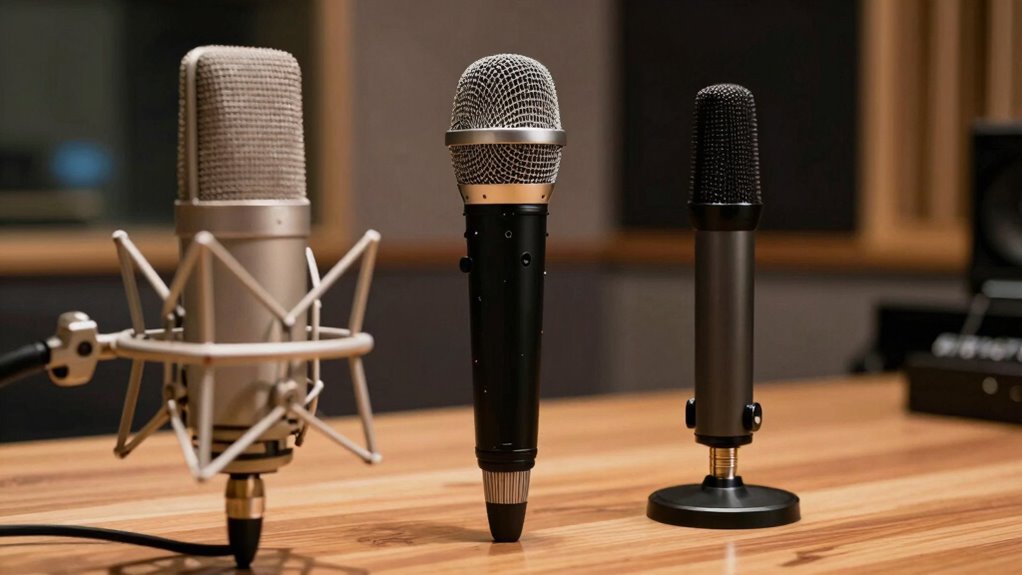
To choose the right microphone, consider your voice style, environment, and recording distance. For clear voice capture, a cardioid condenser mic is ideal in controlled spaces, while dynamic mics work better in noisy or outdoor settings. Keep in mind, placing the mic 6-12 inches from your mouth helps balance clarity and background noise. Understanding these factors helps match your setup; explore further to fine-tune your choice and improve your sound quality.

Get audio and creator gear delivered free with Prime
- Fast, free delivery on millions of items
- Prime Video, Amazon Music and more included
- Member-only deals all year
Key Takeaways
- Select cardioid microphones for focused voice capture and noise reduction in reflective or noisy environments.
- Use omnidirectional mics for natural sound in controlled, quiet spaces or when capturing multiple sources.
- Match condenser mics for studio-quality recordings requiring detailed voice reproduction, considering power needs.
- Place microphones closer (6-12 inches) to reduce room reflections and ambient noise, adjusting for proximity effects.
- Choose durable dynamic mics for outdoor or high-movement scenarios, where environmental noise and handling are concerns.
cardioid condenser microphone for voice recording
As an affiliate, we earn on qualifying purchases.
As an affiliate, we earn on qualifying purchases.
Which Microphone Types Are Best for Voice Clarity?
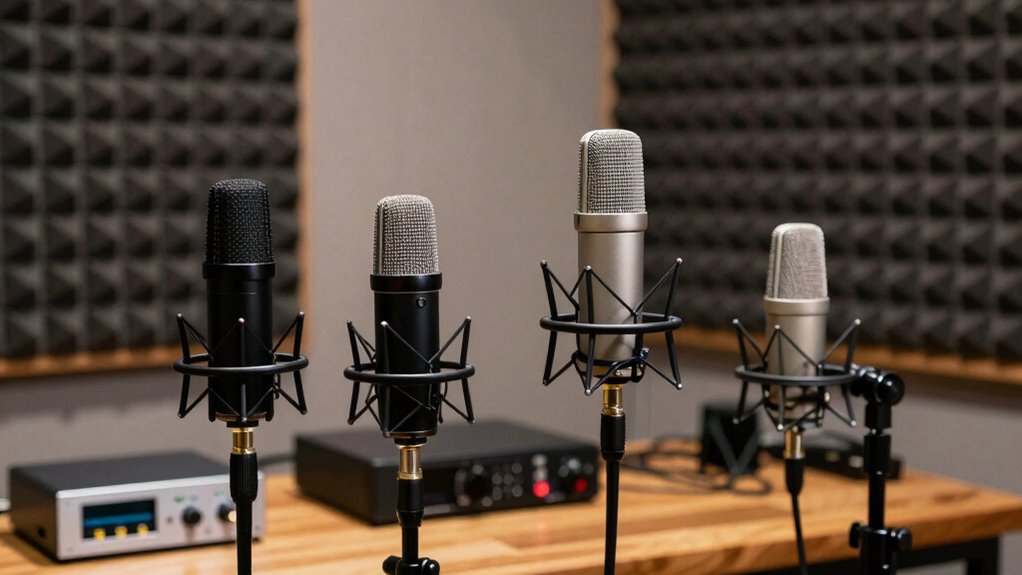
When it comes to capturing clear and natural voice recordings, choosing the right microphone type makes all the difference. Microphone polarization, like cardioid or omnidirectional, affects how well it isolates your voice from background noise, guaranteeing clarity. Cardioid mics, which pick up sound primarily from the front, are ideal for focused voice recordings, reducing room echoes. Omnidirectional microphones capture sound from all directions, suitable for capturing natural voice in a controlled environment. Additionally, consider the microphone’s frequency response; a flat response reproduces your voice accurately across the audible spectrum, while tailored responses emphasize certain frequencies for warmth or clarity. Selecting a microphone with appropriate polarization and a suitable frequency response ensures your voice sounds natural and intelligible, making your recordings professional and polished.
Choosing the Right Microphone Style for Your Space
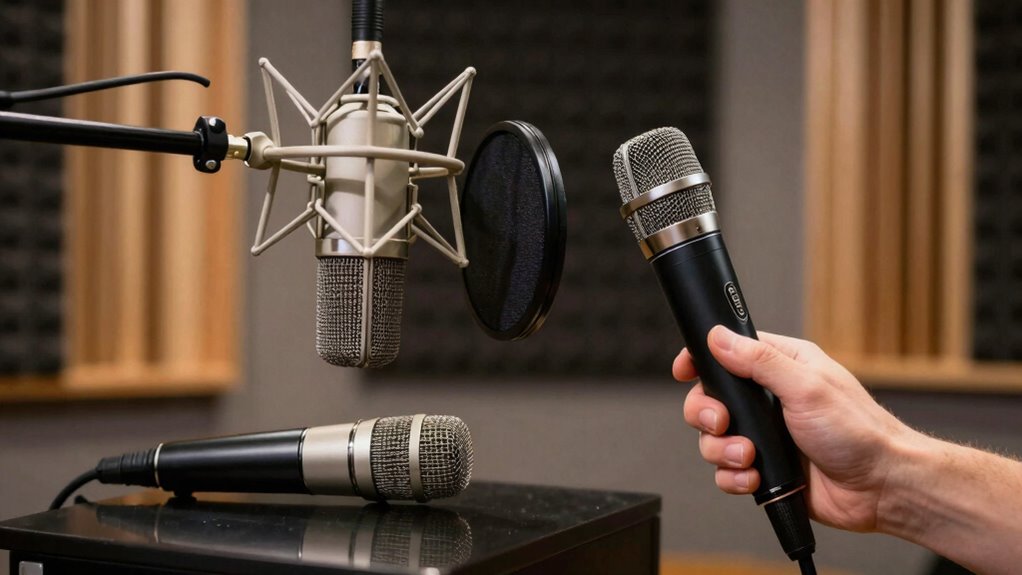
Your room’s acoustics play a big role in selecting the right microphone style, as some pick up more ambient sound than others. If you have a lively space, a directional microphone can help focus on your voice and reduce background noise. Consider your space carefully to choose a style that captures clarity without picking up unwanted echoes or room noise. Additionally, understanding how content formats are affected by acoustic conditions can help you make a more informed choice. Incorporating soundproofing techniques can further improve your recording quality by minimizing room reflections and noise interference. Being aware of room acoustics can also guide you toward the best microphone setup for your specific environment, especially in terms of how sound waves interact within your space. Recognizing how microphone polar patterns respond to different acoustic environments is crucial for optimizing sound quality.
Room Acoustics Impact
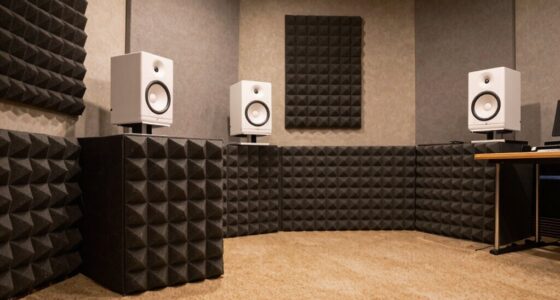
Room acoustics play a crucial role in determining the best microphone style for your space, as different environments can amplify or dampen sound in unique ways. If your room has poor acoustics, consider soundproofing techniques to reduce external noise and prevent sound reflections. Acoustic treatment, such as adding foam panels or diffusers, can help control echo and background noise, making your recordings clearer. These adjustments influence which microphone styles will perform best; for example, a highly directional mic might be more effective in a noisy or reflective environment. Understanding your space’s acoustic properties allows you to choose a microphone that minimizes unwanted sound and captures your voice accurately, ensuring professional-quality results regardless of room limitations. Room acoustics directly impact how sound waves interact within the space, influencing your microphone selection process. Additionally, understanding the sound reflection characteristics of your room can help you decide on the most suitable microphone type for optimal sound quality.
Suitable Microphone Styles
Choosing the right microphone style depends heavily on your space’s acoustics and recording needs. If aesthetics matter, pick a microphone with a sleek design that complements your environment. For a clean, professional look, condenser microphones with minimal visual distraction work well. If you prioritize mobility, consider wireless connectivity options — these eliminate cables and give you freedom of movement, especially handy in dynamic or live settings. Dynamic microphones are sturdy and less sensitive to room noise, making them ideal for noisy environments. Conversely, condenser mics excel in capturing detail but may require careful placement in less acoustically treated spaces. Ultimately, selecting a style that matches your aesthetic preferences and functional needs guarantees better sound quality and a more seamless recording experience.
How Distance Affects Microphone Placement and Sound
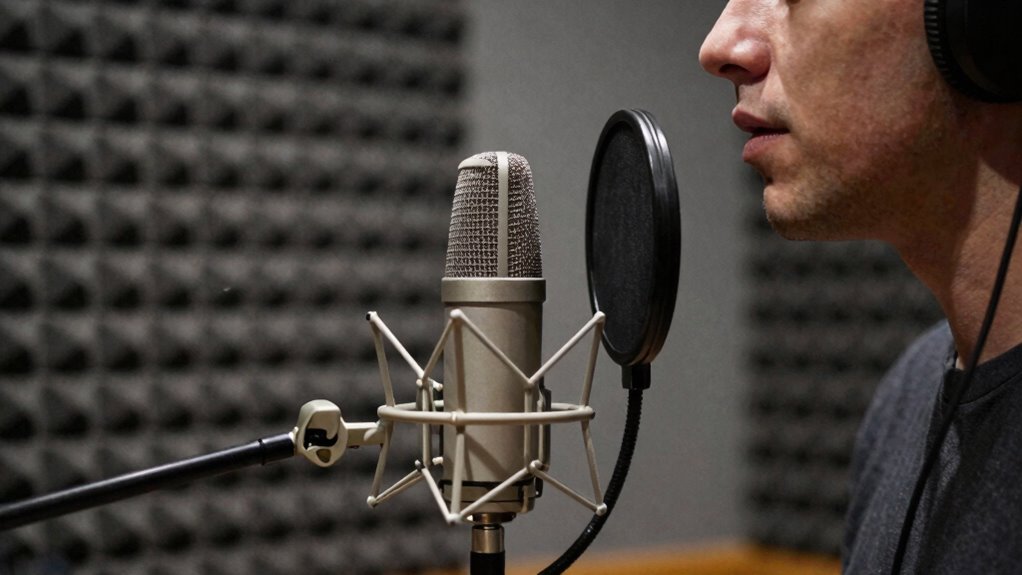
The distance between you and the microphone greatly impacts sound clarity and quality. Staying within the ideal range guarantees your voice is clear without unwanted noise or distortion. Moving closer or farther away can change the tone and volume, affecting how your sound is perceived. Additionally, understanding microphone placement is essential for capturing the best sound, much like how preserving golf heritage requires careful attention to tradition. Proper microphone positioning can help optimize sound pickup and reduce background noise, ensuring a professional-quality recording. Awareness of sound dynamics and how they shift with distance can further enhance your ability to achieve studio-like audio. Recognizing sound quality and how it varies with distance allows for more precise adjustments to improve overall recording results.
Optimal Distance for Clarity
Positioning your microphone at the right distance is crucial for capturing clear, natural sound. Ideal placement depends on your environment and the microphone type. Keep the mic close enough to pick up your voice clearly, but not so close that it causes distortion or pops. Typically, about 6 to 12 inches from your mouth works well. This distance helps minimize background noise and prevents capturing unwanted room acoustics. If you’re in a noisy setting, closer placement can help isolate your voice. However, too close can lead to muffling or proximity effects. Experiment with slight adjustments to find the sweet spot that balances clarity and background noise reduction. Proper distance ensures you get the best sound quality without sacrificing natural tone. Additionally, understanding the microphone type can help you optimize placement for different recording scenarios, ensuring optimal sound quality and clarity. Being aware of sound capture principles can further refine your setup for professional results.
Effects of Proximity Variations
When you adjust the distance between your mouth and the microphone, the sound quality changes considerably. Proximity effects cause bass boost as you move closer, making your voice richer, but too close can lead to sound distortion. Conversely, pulling back reduces bass and can make your voice sound thinner or distant. These variations impact clarity and overall sound balance. If you’re too close, you might experience unwanted low-frequency buildup, leading to muddiness. Too far, and your voice risks sounding weak or inconsistent. Understanding proximity effects helps you find the ideal distance to capture your voice naturally without distortion. Proper placement ensures your sound remains clear, balanced, and professional, regardless of how close or far you are from the mic.
Dynamic vs. Condenser Microphones: Which Is Better for You?
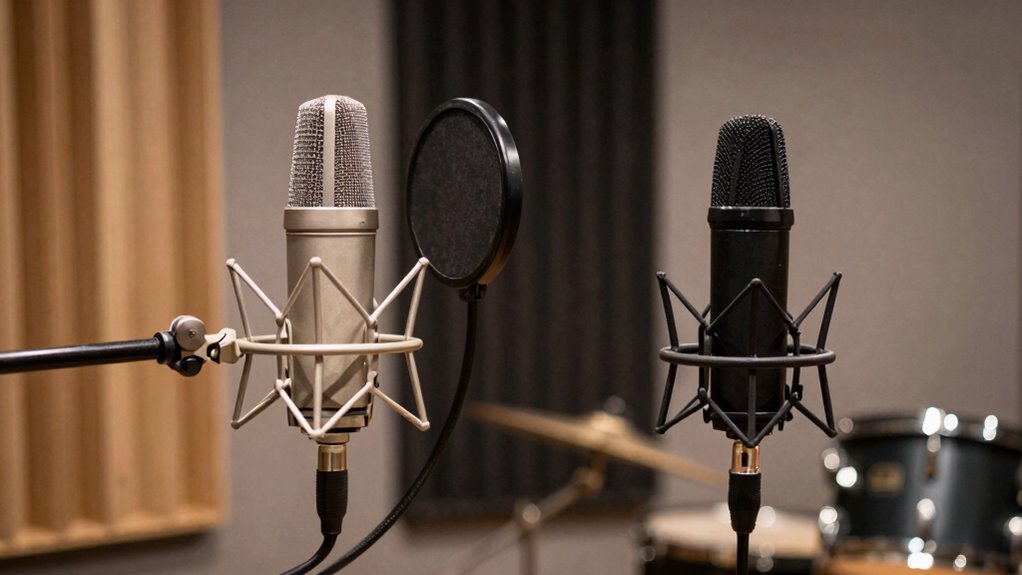
Are you trying to decide between a dynamic or condenser microphone? If you’re after durability and versatility, dynamic mics are a solid choice. They handle high sound pressure levels and are great for live performances, even with Vintage mics that have stood the test of time. Condenser mics, on the other hand, excel at capturing detail and nuance, making them ideal for studio recordings. If you’re considering Wireless options, keep in mind that many condenser mics require power, which can influence your setup. Dynamic mics tend to be more rugged and reliable for on-the-go use. Your choice depends on your environment and the sound quality you need. Both types have their benefits, so think about your specific needs before making a decision.
Key Features to Look for in a Voice Microphone

Choosing the right voice microphone involves focusing on key features that guarantee clear, natural sound quality. Look for microphones that offer good sensitivity and a flat frequency response to capture your voice accurately. Consider microphone accessories like pop filters and shock mounts, which help reduce unwanted noise and vibrations, enhancing sound clarity. Additionally, a microphone with built-in or compatible features for voice modulation techniques can give you more control over your sound. Confirm the mic has a sturdy build for durability and easy handling. Look for features like directional pickup patterns to minimize background noise. Prioritize microphones that match your voice type and environment, so you get the best possible sound without extra effort or equipment. Understanding drone bees and hive stability can also provide insights into how environmental factors impact sound quality and microphone performance in various settings. Being aware of filtration efficiency and how it relates to noise reduction can further improve your setup, especially in noisy environments. Moreover, considering the microphone placement and its influence on sound capture can make a significant difference in achieving optimal audio clarity. Proper placement, especially in outdoor environments, can help mitigate issues caused by unexpected weather changes, ensuring consistent sound quality in outdoor recordings.
Matching Your Microphone to Your Budget and Setup

Matching your microphone to your budget and setup requires balancing quality with affordability. Consider your specific needs and available resources to make informed choices. First, determine your budget range to narrow down options. Second, evaluate whether wired microphones or wireless microphone options best suit your space and mobility needs. Third, explore essential microphone accessories like stands, pop filters, or cables to enhance performance without overspending. Fourth, prioritize features aligned with your setup’s complexity—simple setups may benefit from budget-friendly models, while professional environments might justify investing in higher-end mics. By carefully appraising these factors, you can select a microphone that offers the best performance within your financial limits, ensuring your setup remains efficient and effective without unnecessary expenses.
Troubleshooting Common Microphone Problems and Improvements
Microphone problems can disrupt your recording or live sound, but many issues have straightforward fixes. Regular microphone maintenance is key—clean connectors, check cables, and guarantee the mic is properly grounded. Signal interference is a common culprit behind buzzing, static, or dropouts. To reduce interference, keep cables away from power sources and electronic devices, and use balanced cables if possible. If your microphone isn’t picking up sound, verify it’s correctly connected and that phantom power is on if needed. For persistent issues, test the mic with different equipment to isolate the problem. Addressing these common problems quickly improves sound quality and prolongs your microphone’s lifespan, making your setup more reliable and professional. Additionally, understanding microphone maintenance can help prevent issues before they arise and ensure consistent performance. Investing in quality measurement tools can also help diagnose and troubleshoot audio equipment more effectively. Proper microphone placement and setup can further minimize problems and enhance overall sound clarity. Regularly inspecting your equipment and cables ensures that minor issues are caught early, preventing larger problems down the line. Staying aware of electromagnetic interference and implementing shielding techniques can also significantly improve your audio quality.
Frequently Asked Questions
How Do Ambient Noise Levels Influence Microphone Choice?
Ambient noise levels greatly influence your microphone choice. If ambient interference is high, opt for mics with better noise isolation, like dynamic or shotgun microphones, to minimize background sounds. Lower noise environments allow more sensitive mics, like condensers, to pick up your voice clearly. By considering ambient noise levels, you guarantee your recording captures your voice accurately without unwanted background interference.
What Are the Best Microphone Options for Outdoor Recordings?
When recording outdoors, think of your microphone as a trusty compass guiding you through unpredictable terrain. Wireless microphones offer unmatched convenience, allowing freedom of movement. Opt for shotgun mics with a supercardioid or hypercardioid polar pattern to focus on your subject while rejecting background noise. These choices help you capture clear, professional sound despite wind, ambient sounds, or distance, making your outdoor recordings crisp and reliable.
How Does Microphone Impedance Affect Sound Quality?
Microphone impedance directly affects sound quality through impedance matching. If your mic’s impedance doesn’t match your audio interface, you risk signal loss, which can cause dull, weak sound. A proper match ensures efficient transfer of audio signals, maintaining clarity and detail. Low impedance mics typically offer better sound quality and less noise, making them ideal for professional recordings. Always check impedance ratings to preserve ideal sound quality and prevent signal loss.
Can Different Microphone Types Be Combined for Optimal Results?
Yes, you can combine different microphone types for ideal results, but it requires understanding microphone compatibility and applying effective mixing techniques. Use matching levels and EQ adjustments to balance the sound. Combining dynamic and condenser mics can capture a broader frequency range and add depth. Just guarantee your audio interface supports multiple mic types, and experiment with placement and settings to achieve a cohesive, high-quality mix.
What Maintenance Is Required to Keep Microphones in Top Condition?
A stitch in time saves nine, so regular maintenance keeps your microphones in top shape. You should clean the microphone capsules gently, check for dust buildup, and guarantee the connectors are free of corrosion to maintain durability. Periodic calibration isn’t always necessary but can optimize sound quality. Proper storage in a dry, safe environment also prolongs lifespan, helping your mic perform reliably, just like the day you bought it.
Conclusion
Choosing the right microphone is like finding the perfect key to open clear, authentic sound. With your space, needs, and budget in mind, you hold the power to make your voice resonate with confidence. Remember, even the finest instrument needs careful tuning—so trust your instincts, be patient, and refine your setup. Just as a master craftsman shapes their work, you can craft your ideal audio experience, transforming simple sound into compelling storytelling.
Halloween Picks
halloween
As an affiliate, we earn on qualifying purchases.