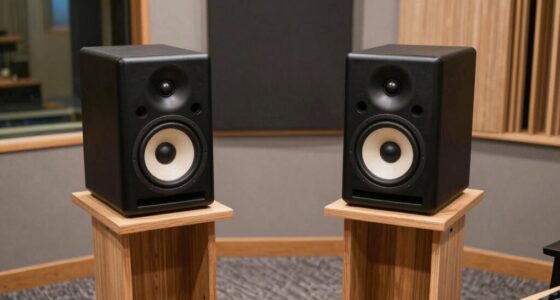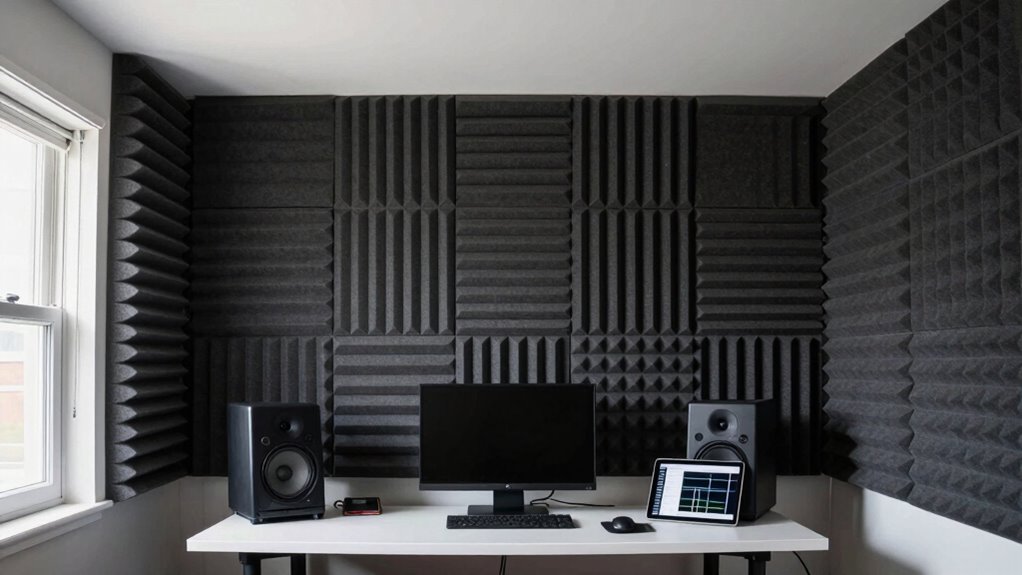

Start by installing bass traps in the corners to control low-frequency resonances and reduce room modes. Next, manage early reflections with absorbers and diffusers, which improves clarity without deadening the space. Fine-tune the placement of panels and make small adjustments until you find the best sound. Avoid common mistakes like overusing absorbers or ignoring bass traps, as this can be costly and ineffective. Keep exploring to discover how the right order saves you money and guesswork while optimizing your room.

Get audio and creator gear delivered free with Prime
- Fast, free delivery on millions of items
- Prime Video, Amazon Music and more included
- Member-only deals all year
Key Takeaways
- Start with bass traps in corners to address low-frequency issues before adding other treatments.
- Manage early reflections with absorbers and diffusers after controlling room modes.
- Fine-tune treatment placement through testing and small adjustments for optimal results.
- Avoid overusing absorbers and random placement to prevent deadening the room.
- Regularly assess acoustics with measurement tools to ensure effective, cost-efficient treatment.
Products Worth Considering

Jackery Explorer 2000 v2 Portable Power Station with Two 200W Solar Panels

Samsung 32-Inch Odyssey OLED G8 (G80SH) 4K Gaming Monitor

Apple iPad Air (4th Generation, 10.9-inch, Wi-Fi, 256GB) – Space Gray
As an affiliate, we earn on qualifying purchases.
Start With Room Reflection and Bass Traps
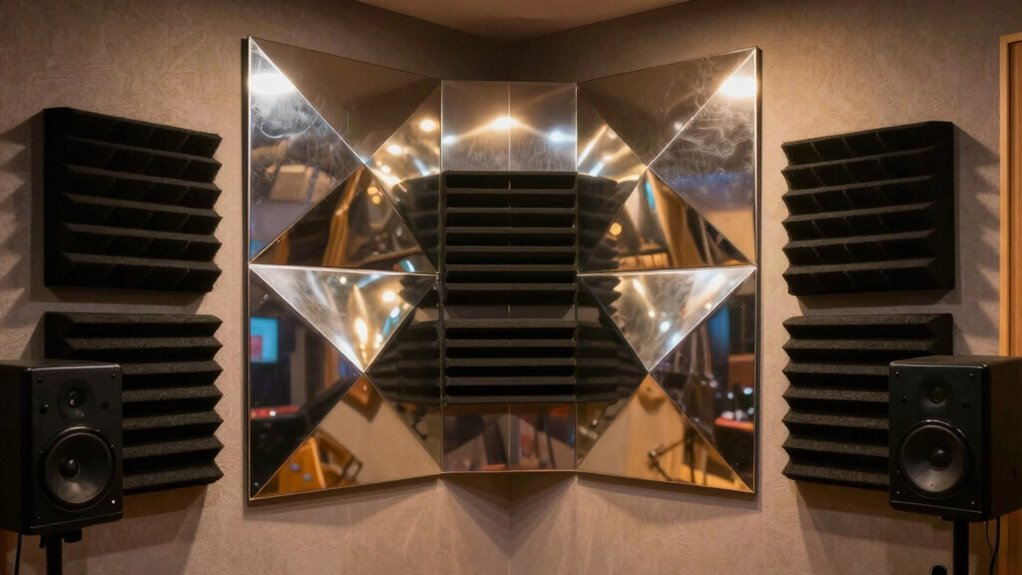
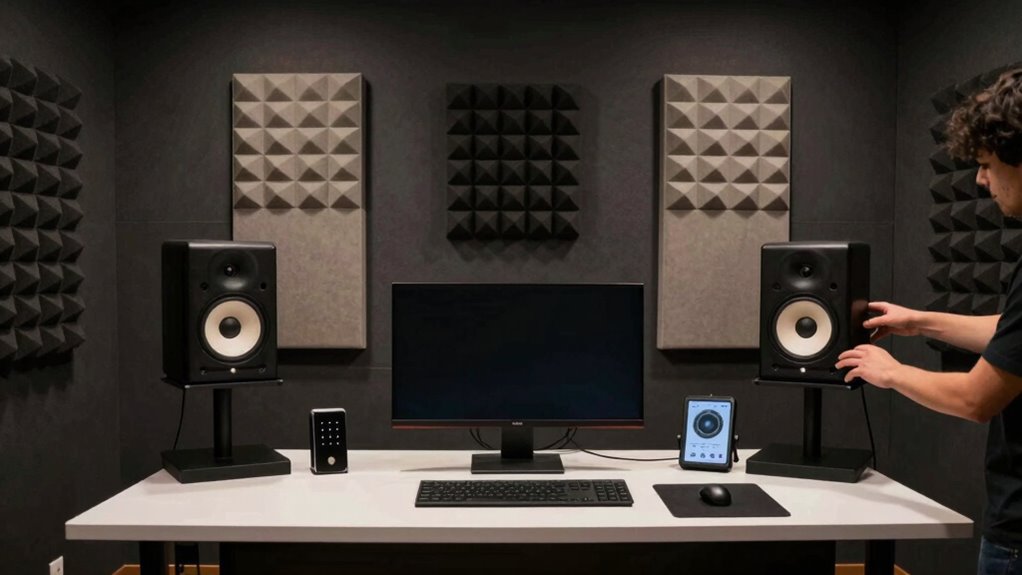
To effectively improve your room’s sound quality, you should begin by addressing reflections and bass issues. Start with bass traps to control low-frequency energy caused by room modes, which create standing waves and uneven bass response. Installing bass traps in corners helps tame these problematic frequencies, providing a solid foundation for clearer sound. A well-placed bass trap can significantly reduce room resonances, leading to more accurate bass reproduction. Next, focus on acoustic diffusion to scatter sound waves that bounce off reflective surfaces, reducing flutter echoes and early reflections. Diffusers placed strategically help distribute sound evenly, creating a more natural listening environment. Understanding sound wave behavior is essential for optimizing your acoustic treatment. By tackling both room modes and reflections early, you set the stage for more precise sound. Incorporating room acoustics strategies ensures a more balanced and accurate sound experience throughout your space. Additionally, considering acoustic treatment placement can maximize the effectiveness of your efforts and prevent unnecessary expense.
Prioritize Absorbers and Diffusers for Best Results
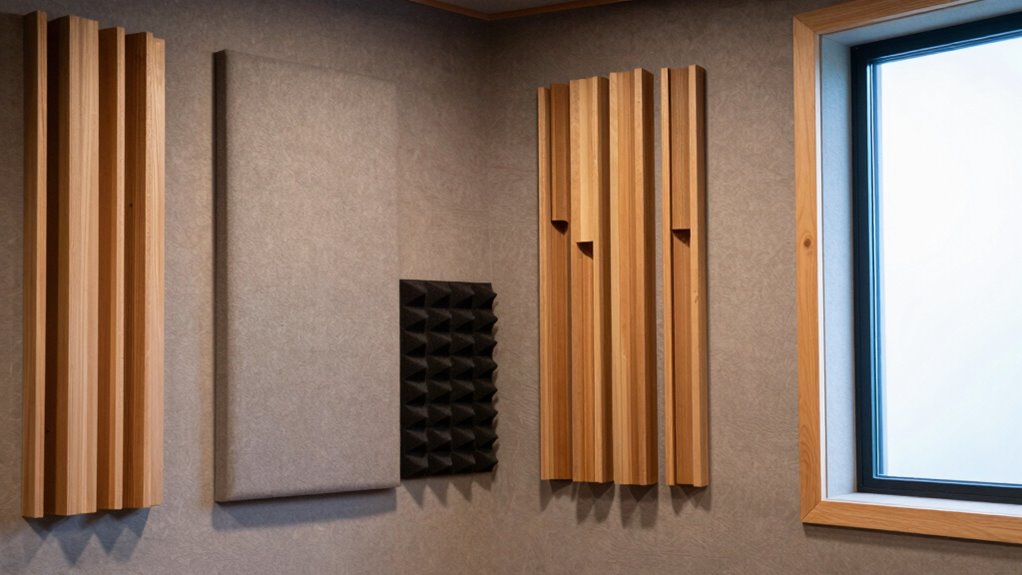
After addressing room modes and early reflections, it’s essential to prioritize the use of absorbers and diffusers to fine-tune your space’s acoustics. These treatments directly impact sound quality and can be integrated aesthetically to complement your room’s design. When selecting materials, focus on durability, effectiveness, and appearance. Proper material selection ensures your treatments blend seamlessly without sacrificing performance. Additionally, understanding the room’s acoustic characteristics can help you make more informed choices about where and what types of treatments to install. Considering material quality is crucial, as higher-quality materials often provide better sound absorption and diffusion over time. Evaluating the capacity of your treatments can also ensure they are suitable for your room size and acoustic needs, optimizing both cost and performance. Being aware of acoustic measurement techniques can further enhance your ability to select appropriate treatments, saving money while attaining excellent acoustic results. Recognizing the effectiveness of different materials can guide you in choosing the right treatments for your specific environment.
Fine-Tune Placement and Make Final Adjustments
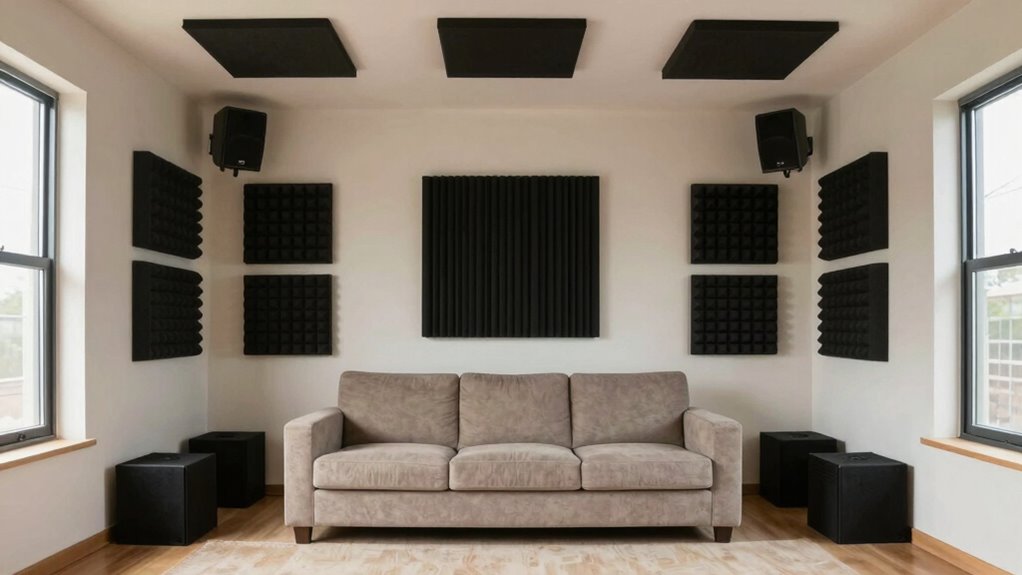
Once you’ve installed your absorbers and diffusers, the next step is to fine-tune their placement for the best results. Move your decorative panels and acoustic clouds slightly to find the most effective spots that reduce echoes and improve sound clarity. Keep testing by listening to how the room responds, making small adjustments as needed. Consider placing acoustic clouds at different heights or angles to target problem areas. Use visual cues like symmetry or focal points to guide placement, but prioritize sound quality over aesthetics. Fine-tuning may take time, but it’s essential for a balanced, professional sound. Remember, the goal is to create an even, natural acoustic environment without cluttering the space. Pay attention to room treatment order to optimize your setup efficiently. Additionally, understanding the acoustic principles behind sound absorption and diffusion can help you make more informed decisions during the adjustment process. Being aware of sound reflection patterns can further enhance your ability to position treatments effectively. Incorporating proper placement techniques can significantly impact the overall effectiveness of your acoustic treatment. Recognizing the importance of targeted sound control can streamline your efforts and lead to better room acoustics.
Avoid Common Room Treatment Mistakes

Even with the best intentions, it’s easy to fall into common room treatment mistakes that can undermine your efforts. These errors often worsen resonance issues and hinder echo reduction. To avoid them, keep these points in mind:
Avoid common room treatment mistakes that worsen resonance and echo—balance absorption, bass traps, and reflection points for optimal acoustics.
- Overusing absorptive panels, making the room too dead and dull.
- Ignoring the importance of bass traps, which are essential for controlling low-frequency resonance issues.
- Placing treatments randomly without considering reflection points.
- Relying solely on aesthetic choices instead of acoustic effectiveness.
- Not considering room treatment order, which can help optimize sound quality while saving money and reducing guesswork. Implementing a proper acoustic treatment sequence ensures that each element is strategically placed for maximum benefit. Understanding sound absorption principles can further enhance your treatment plan and prevent over-treatment. Additionally, evaluating the room’s specific acoustics can guide more targeted and cost-effective solutions. Recognizing how room dimensions influence acoustics can also lead to more effective treatment strategies.
Assess Your Room Treatment Effectiveness
Evaluating your room treatment’s effectiveness is a crucial step in ensuring your efforts are paying off. You want to know if your acoustic panels and soundproofing are reducing echoes and isolating sound properly. You can also use a sound level meter to measure decibel levels before and after treatment. Imagine the room like this:
| Sound Reflection | Absorptive Material | External Noise |
|---|---|---|
| Echoes still | Acoustic panels | Outside traffic |
| Mild reflections | Foam panels | Neighbors’ noise |
| Clear sound | Proper placement | No external sound |
| Dead zones | Seal gaps | Noise intrusion |
| Balanced acoustics | Room damping | Peaceful silence |
Additionally, evaluating your room acoustics regularly helps optimize your sound environment and maintain effective treatment. Monitoring your room’s sound absorption over time can help identify when adjustments are needed to keep your space acoustically balanced. Incorporating consistent assessment methods ensures that your acoustic improvements remain effective in the long term. As AI advancements continue to influence sound manipulation techniques, staying informed about innovative solutions can further enhance your acoustic setup. Regular sound measurement can also help you track progress and make data-driven decisions for ongoing improvements.
Frequently Asked Questions
How Do I Measure My Room’s Acoustics Accurately?
To measure your room’s acoustics accurately, start with a sound meter or a smartphone app designed for audio analysis. Focus on frequencies, especially bass, which can be improved with bass traps. Measure different spots to identify problem areas, then add soundproofing and acoustic treatments accordingly. This approach helps you understand your space better, ensuring you place bass traps and soundproofing where they’ll make the biggest difference, saving money and guesswork.
What Materials Are Best for DIY Room Treatments?
Ever wonder what materials can transform your room? For DIY treatments, you should focus on dense materials like mineral wool or fiberglass for soundproofing techniques, as they absorb sound effectively. Acoustic panel styles like foam panels or fabric-wrapped panels work well and are easy to install. Combining these materials, you’ll create a space that sounds better and saves you money, all while customizing the look with your preferred panel styles.
How Often Should I Re-Evaluate My Room Treatment Setup?
You should re-evaluate your room treatment setup every six to twelve months, especially as your room’s aesthetics or budget considerations change. Regular checks help guarantee your treatments still effectively improve sound quality without clashing with decor. If you notice sound issues or aesthetic mismatches, it’s time for adjustments. Staying proactive keeps your space both visually appealing and acoustically optimized, saving you money and guesswork in the long run.
Can I Mix Different Types of Acoustic Treatments?
Yes, you can mix different types of acoustic treatments to improve your room’s sound. Think of it like creating a balanced environment with soundproofing techniques that suit your needs and aesthetic integration. Combining diffusers, absorbers, and bass traps can target various issues, enhancing clarity while maintaining visual appeal. Just make certain they complement each other and your room’s design, making your space both functional and stylish.
What Are Signs My Room Treatment Is Overdone?
If your room feels overly dampened or sounds unnaturally dead, your treatment might be overdone. You may notice a cluttered look that clashes with your room aesthetics or feel frustrated with high cost considerations, especially if treatments dominate the space. To avoid this, balance absorption and diffusion, maintaining natural sound while preserving visual appeal. Less can be more, so adjust your treatments gradually to find the perfect mix.
Conclusion
By following this order, you build a sturdy foundation that guides your soundscape like a skilled conductor. Reflection and bass traps set the stage, while absorbers and diffusers tune the harmony. Fine-tuning and avoiding mistakes prevent discord, ensuring your room sings with clarity. Think of your space as a musical instrument—each step fine-tunes its voice. When you finish, you won’t just hear the difference; you’ll feel the music breathe, alive and perfectly balanced.