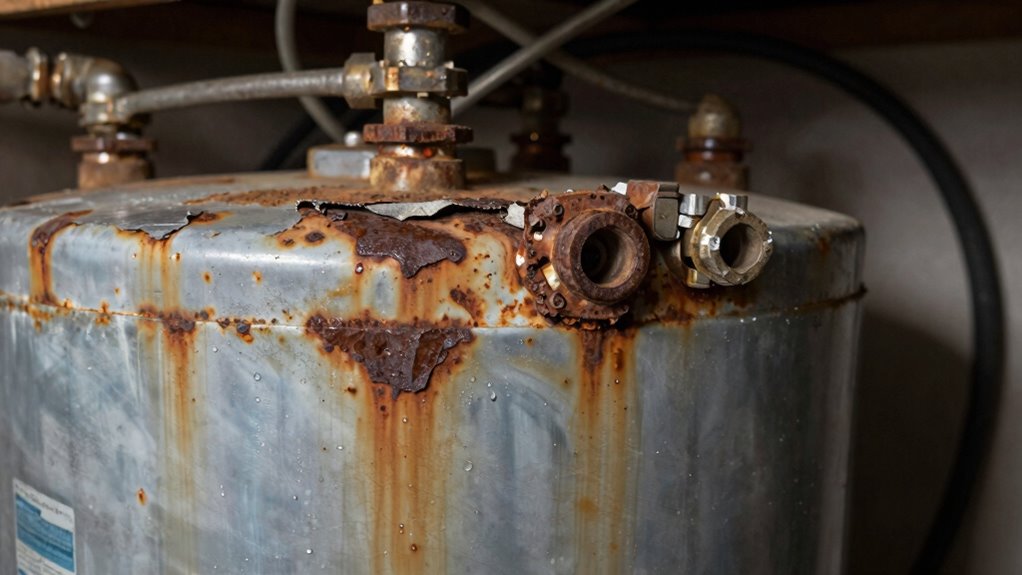

Water heaters often fail sooner than you expect because of corrosion and sediment buildup, which develop quickly if not maintained properly. Over time, rust, mineral deposits, and sediment insulate heating elements, causing them to work harder and wear out faster. Without regular maintenance like flushing and replacing anodes, these issues accelerate. Understanding how water quality impacts your heater can help delay failure—keep going to discover how you can extend its lifespan effectively.

Get audio and creator gear delivered free with Prime
- Fast, free delivery on millions of items
- Prime Video, Amazon Music and more included
- Member-only deals all year
Key Takeaways
- Sediment buildup insulates heating elements, causing inefficient operation and increased wear.
- Corrosion weakens tank walls, leading to leaks and early failure.
- Lack of regular maintenance accelerates sediment and corrosion issues.
- Poor water quality increases mineral deposits and corrosion rates.
- Age beyond 8-12 years heightens risk of unexpected failures due to accumulated damage.
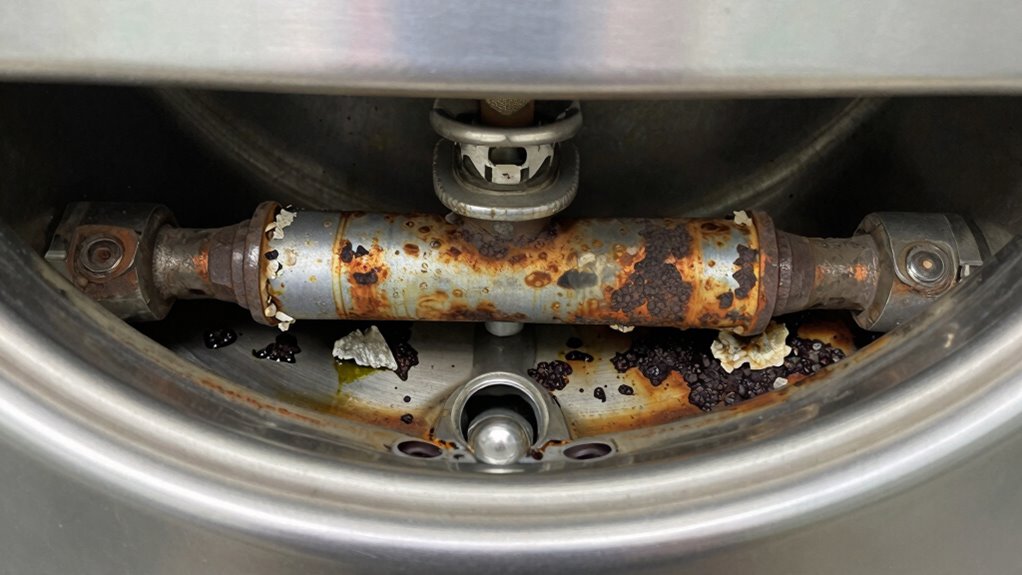
Many homeowners expect their water heater to last for years, but in reality, these appliances often fail much sooner than anticipated. One of the main culprits behind early failure is tank corrosion. Over time, the metal tank begins to weaken as it reacts with water, especially if the protective anode rod isn’t replaced regularly. When corrosion takes hold, it creates rust and pinholes that can leak or cause the tank to burst. This process may start slowly but accelerates as corrosion deepens, leading to leaks or complete tank failure sooner than you’d expect. Proper maintenance practices can significantly slow down this process and extend the lifespan of your water heater. Another common issue that shortens a water heater’s lifespan is sediment buildup. Hard water contains minerals like calcium and magnesium, which settle at the bottom of the tank over time. As sediment accumulates, it forms a layer that insulates the heating element or burner from the water. This causes the heater to work harder, increasing wear and tear on components. When sediment hardens, it can also lead to uneven heating, hot spots, and eventually damage to the tank’s interior. All these factors contribute to the premature deterioration of your water heater and often go unnoticed until a failure occurs. If you neglect regular maintenance, both tank corrosion and sediment buildup can develop unchecked. Flushing the tank annually helps remove sediment and prolongs its efficiency. Checking and replacing the anode rod prevents corrosion from eating through the tank walls. Without these simple steps, your water heater is more vulnerable to early breakdowns. When corrosion is advanced or sediment is thick, your appliance has to work much harder to provide hot water, which accelerates component failure. Small leaks or inconsistent hot water supply might seem minor at first, but they often indicate that your water heater is nearing the end of its lifespan. It’s also worth noting that age plays a role. Even with proper maintenance, most water heaters have a limited lifespan—around 8 to 12 years. As they age, corrosion and sediment buildup become inevitable, and the risk of failure increases. Regularly inspecting your water heater and understanding the signs of deterioration can help you take timely action before a complete system failure occurs. Recognizing the signs early and performing routine maintenance can help you avoid unexpected breakdowns and extend your water heater’s life, but ultimately, understanding these common issues explains why water heaters often fail faster than owners expect. Additionally, corrosion rates can vary depending on water quality, emphasizing the importance of using water treatment options if necessary. Water quality can influence the rate of corrosion and sediment accumulation, highlighting the need for proactive management of your water supply to prevent early failure. Being aware of water quality factors can help you better manage and mitigate these issues proactively.
water heater anode rod replacement kit
As an affiliate, we earn on qualifying purchases.
As an affiliate, we earn on qualifying purchases.
Frequently Asked Questions
Can Water Heater Lifespan Vary Based on Usage?
Yes, your water heater’s lifespan can vary based on usage. If you frequently set the temperature too high, it causes temperature fluctuations that stress components. Also, heavy usage accelerates sediment buildup, which can corrode parts and reduce efficiency. To extend your water heater’s life, keep the temperature stable and flush out sediment regularly. Proper maintenance helps prevent premature failures and keeps your unit running smoothly longer.
Do Water Heater Brands Differ in Durability?
Think of water heater brands as racers on a track—some finish strong, others stumble. Yes, brands differ in durability, influenced by their reputation for quality and warranty coverage. High-reputation brands often use better materials, leading to longer-lasting units. Always check warranty details, as they reflect confidence in durability. Choosing a reputable brand with solid warranty coverage can keep your hot water flowing and your worries at bay.
How Often Should I Perform Maintenance on My Water Heater?
You should perform maintenance on your water heater annually. Regular checks help prevent sediment buildup and improve efficiency. Insulating the tank reduces heat loss, saving energy and prolonging lifespan. During maintenance, flush out sediment, inspect the anode rod, and check the thermostat. Keeping up with these tasks helps avoid rapid failure, ensuring your water heater lasts longer and performs reliably. Regular maintenance is key to preventing unexpected breakdowns.
Can Water Quality Affect Heater Lifespan?
A stitch in time saves nine, and water quality plays a big role in your water heater’s lifespan. Water contaminants and mineral buildup can cause corrosion, reduce efficiency, and lead to early failure. Hard water accelerates mineral deposits, which clog and damage components. Regular maintenance, like flushing your tank, helps prevent these issues. Keep an eye on your water quality, and you’ll extend your heater’s life—saving money and hassle long-term.
What Early Signs Indicate a Water Heater Is Failing?
You’ll notice early signs like sediment buildup, which causes strange noises or inconsistent hot water, and pilot light issues, such as difficulty igniting or frequent extinguishing. These problems suggest your water heater is failing. Pay attention to these indicators, because sediment can insulate the tank and reduce efficiency, while pilot light issues can lead to failure to heat water properly. Addressing these early signs helps prolong your heater’s life.
Conclusion
Remember, a stitch in time saves nine. Regular maintenance and prompt repairs can extend your water heater’s life and prevent unexpected failures. Don’t wait until it’s too late—address issues early and keep your water heater running smoothly. By staying proactive, you’ll avoid costly repairs and inconvenient outages. Treat your water heater with care, and it’ll serve you well longer. After all, a little prevention goes a long way in avoiding bigger problems down the road.
Columbus Day / Indigenous Peoples' Day Picks
long weekend sales
As an affiliate, we earn on qualifying purchases.