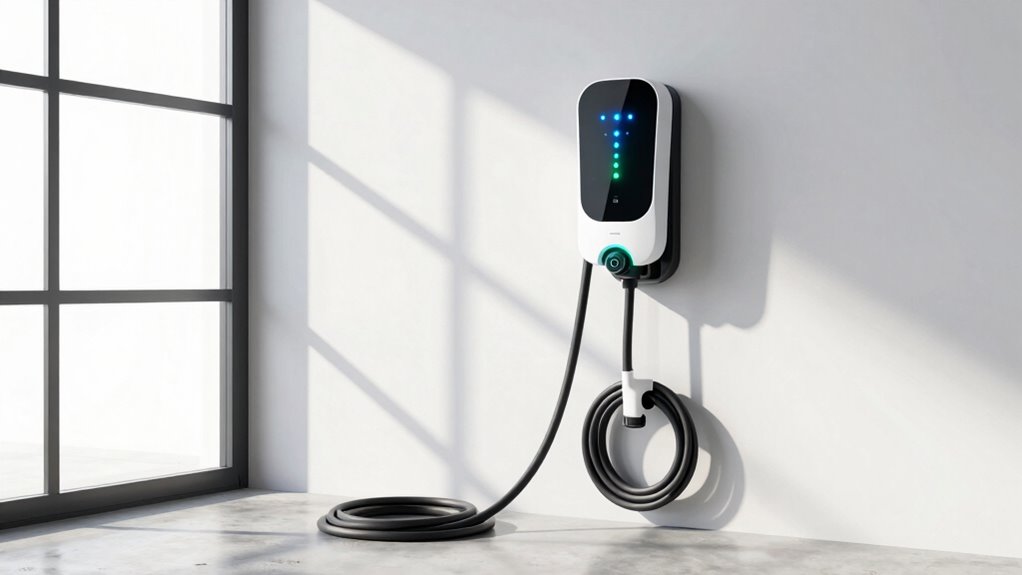

EV chargers change your daily home energy use by shifting when and how you power your electric vehicle, encouraging you to charge during off-peak hours and optimize overall energy consumption. They can integrate with solar panels, reducing reliance on the grid and lowering energy costs. These changes promote smarter energy habits and may lead you to explore home upgrades like batteries or smart systems. To see how these adjustments can transform your energy routine, continue exploring further.

Get audio and creator gear delivered free with Prime
- Fast, free delivery on millions of items
- Prime Video, Amazon Music and more included
- Member-only deals all year
Key Takeaways
- EV chargers shift household energy demands from the grid to home electrical systems, prompting efficiency evaluations.
- They encourage charging during off-peak hours to reduce costs and lessen grid stress.
- Integration of chargers promotes smarter energy management and appliance scheduling.
- Home energy infrastructure needs upgrades to support increased power loads from EV charging.
- Using solar-powered chargers reduces reliance on grid power and supports renewable energy use.
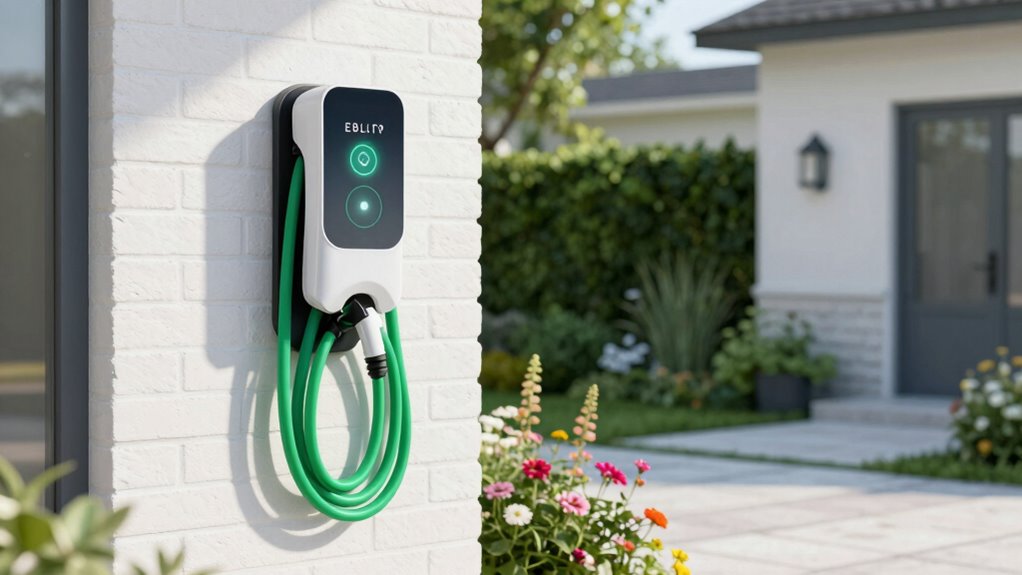
Have you ever wondered how installing an EV charger at home impacts your energy consumption? When you add an electric vehicle charger to your household, you’re fundamentally shifting some of your energy needs from the grid to your home’s electrical system. This change encourages you to think about your overall energy efficiency and how to optimize it. One way to do that is through solar integration. If you have solar panels, you can harness the sun’s power to charge your EV, reducing reliance on the grid and lowering your energy costs. This integration makes your home more sustainable, helping you generate clean energy right where you live. Plus, it maximizes the benefits of your solar investment by directly powering your vehicle, which can be more cost-effective in the long run.
Installing an EV charger often prompts you to reconsider your daily energy use patterns. Charging your vehicle during off-peak hours, for example, can help avoid high electricity rates and reduce stress on the grid. This shift not only saves you money but also encourages more mindful energy consumption. Since EV chargers typically require a substantial amount of power, you might find yourself more aware of your overall electricity use, prompting you to make other adjustments around your home to improve efficiency. For instance, you might delay running high-energy appliances until after your vehicle is fully charged or invest in smart home systems that optimize energy flow. These steps help you manage your household energy better, making your entire home more energy-efficient. Additionally, understanding your home’s energy infrastructure can help you plan for future upgrades, such as smart grid technology.
Your home’s energy landscape changes with a new EV charger, especially if you combine it with solar integration. It becomes a central part of your energy management, giving you more control over how and when you use electricity. This control promotes smarter consumption habits, like utilizing energy during times when solar power is abundant or when electricity rates are lower. The increased demand for electricity from EV charging may also motivate you to explore energy storage solutions that can further optimize your energy use. As the demand for reliable power grows, considering derating factors for your system can help ensure optimal performance at your location. Over time, this can profoundly lower your overall energy bills. Additionally, by reducing your reliance on fossil fuels and grid power, you contribute to a cleaner environment. The adoption of an EV charger is more than just a convenience; it’s a step toward a more sustainable lifestyle that emphasizes energy efficiency and renewable energy sources. In summary, it transforms your home from a passive energy consumer into an active participant in sustainable living.
home EV charger with solar integration
As an affiliate, we earn on qualifying purchases.
As an affiliate, we earn on qualifying purchases.
Frequently Asked Questions
How Do EV Chargers Impact Overall Household Energy Consumption?
EV chargers increase your household energy consumption, but they also promote better energy efficiency by allowing you to charge during off-peak hours. This helps balance your power distribution, reducing strain on the grid and lowering energy costs. You can maximize your energy use by scheduling charges at ideal times, making your home more sustainable while managing overall household energy consumption effectively.
Can EV Chargers Be Integrated With Home Solar Power Systems?
Yes, you can integrate EV chargers with your home solar power system, enhancing solar compatibility and supporting grid independence. By linking your EV charger to your solar panels, you can charge your vehicle using renewable energy, reducing reliance on the grid. This setup not only maximizes your solar investment but also promotes sustainable living, giving you a cleaner, more efficient energy solution for daily charging needs.
What Are the Cost Differences Between Different Types of EV Chargers?
The cost differences between EV chargers mainly stem from charging infrastructure and power compatibility. Level 1 chargers are the most affordable, usually under $500, offering basic power and compatibility. Level 2 chargers cost between $500 and $2,000, providing faster charging and more versatile infrastructure. DC fast chargers are the most expensive, often exceeding $10,000, due to advanced power capabilities and specialized infrastructure. Your choice depends on your energy needs and budget.
How Does Charging Time Vary With Different EV Charger Models?
Imagine your car sipping energy at a leisurely pace or gulping it down in moments—charger compatibility and charging speed determine this. Level 1 chargers take hours, ideal for overnight, while Level 2 chargers deliver faster, often in 4-8 hours. DC fast chargers, compatible with specific models, can juice up your EV in just 30 minutes. Your choice impacts how quickly your daily routine gets back on the road.
Are There Any Safety Concerns With Home EV Chargers?
You should be aware of electrical safety when installing a home EV charger, ensuring it meets grounding requirements to prevent electrical shocks or fires. Proper grounding is essential for safety, and professional installation helps verify all connections are secure. Regularly inspecting the charger and wiring minimizes risks. Following safety standards and manufacturer instructions guarantees safe, reliable charging while protecting your home and loved ones from potential electrical hazards.
Conclusion
Installing an EV charger at home can considerably shift your daily energy habits, making charging more convenient and potentially increasing your overall electricity use. Notably, a recent study found that households with EV chargers use about 50% more energy overall compared to those without, highlighting how EVs can impact your energy footprint. Embracing this change means you’re not just charging a car—you’re shaping your home’s energy future and contributing to a cleaner environment.
Fall Picks
fall essentials
As an affiliate, we earn on qualifying purchases.