
A robot vacuum suits your home when its features match your needs, like long battery life for larger spaces or quiet operation in noise-sensitive households. It’s ideal if it can handle your flooring type, whether carpets or hard floors, and manages pet hair effectively. If it doesn’t align with your routine or environment—like loud noise or short runtime—it might not be the best fit. Keep exploring to discover which features can truly make a difference in your home.

Get audio and creator gear delivered free with Prime
- Fast, free delivery on millions of items
- Prime Video, Amazon Music and more included
- Member-only deals all year
Key Takeaways
- Suitability depends on battery life and runtime to match the home’s size and cleaning needs.
- Noise levels should align with household sensitivities and routines to prevent disruption.
- Flooring type and presence of pets influence the required suction power and durability of the vacuum.
- Smart navigation features enhance efficiency and are more beneficial in complex or large home layouts.
- Compatibility with household routines and sensitivities determines if the vacuum’s operation is acceptable.
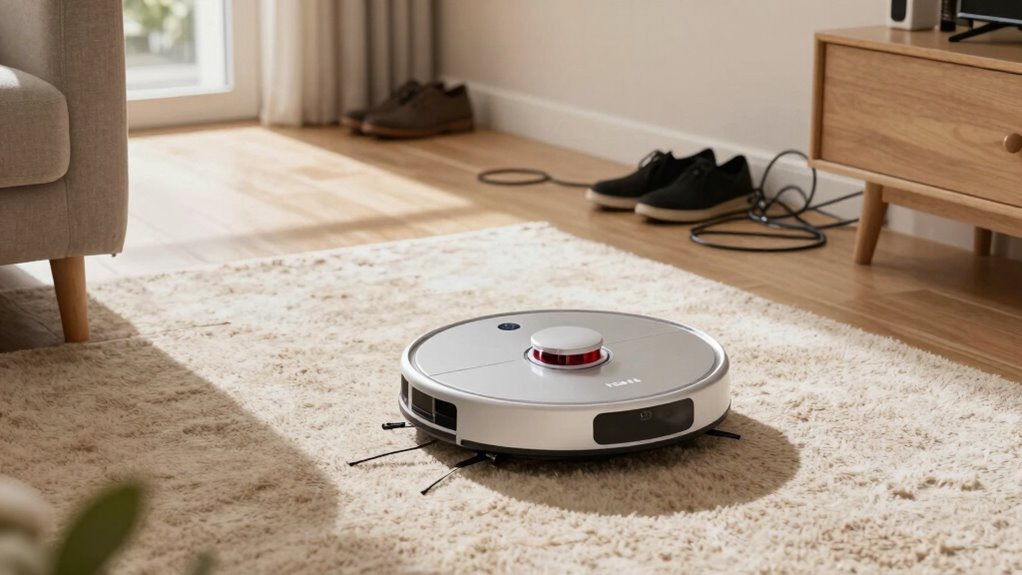
Choosing the right robot vacuum isn’t a one-size-fits-all decision because what works well in one home might fall short in another. When evaluating options, two essential factors you should consider are battery life and noise levels. These features can substantially influence how well a vacuum fits into your daily routine and living environment. A longer battery life means your vacuum can cover more ground without needing a recharge, which is especially important if you have a large home or multiple rooms. If your space is extensive, a model with a short battery span might leave some areas untouched or require frequent pauses, disrupting your cleaning schedule. Conversely, if you live in a smaller apartment, a shorter battery life might suffice, and you may not need to worry about frequent recharging.
Noise levels are equally important, especially if you share your space with others who might be sensitive to sound or if you work from home. Some robot vacuums operate quietly, barely disturbing your activities or sleep, while others can be quite loud, which might be disruptive during cleaning sessions. If noise sensitivity is a concern, look for models explicitly designed to operate at lower decibels. On the other hand, if you’re okay with a louder vacuum, you might prioritize other features, like suction power or advanced navigation, over noise considerations. Additionally, technology advancements have led to quieter motor designs that do not compromise cleaning performance. Knowing your household’s cleaning needs can help you select a model that balances these features effectively. Furthermore, considering your household’s routine—such as cleaning times—can help determine whether a quieter or more powerful vacuum would better suit your lifestyle.
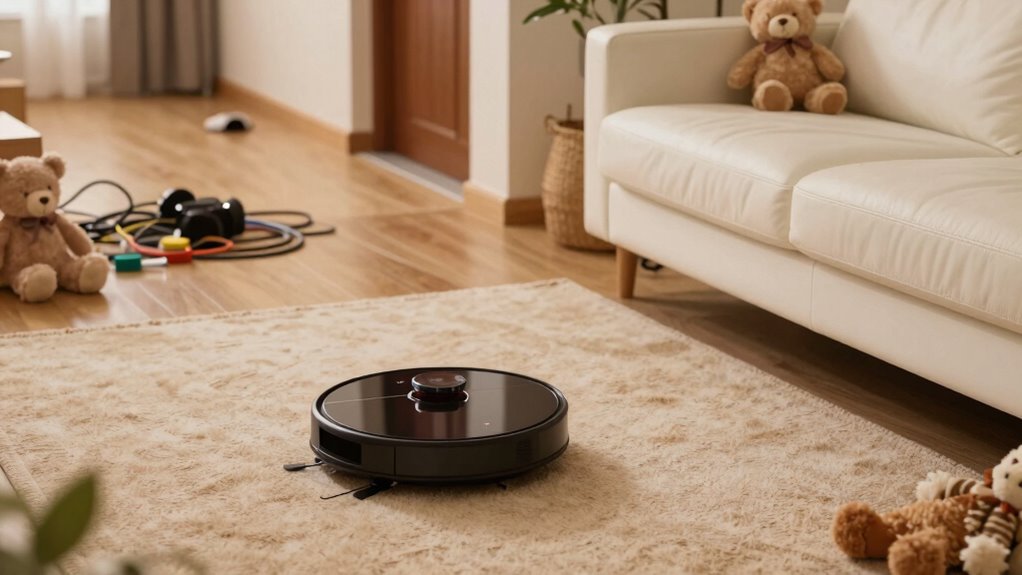
Understanding your home’s flooring type can influence which vacuum is best suited for your environment, as some models are optimized for carpets, while others excel on hard floors. The environment of your home also influences how these factors matter. For instance, if you have pets that shed hair, a vacuum with a robust motor and a good runtime becomes essential to handle fur efficiently. An extended battery life allows you to clean multiple rooms without interruption, reducing the need for recharging mid-clean. Additionally, selecting a vacuum with smart navigation technology can optimize cleaning paths, saving time and battery life. Meanwhile, noisy vacuums might startle pets, causing them to hide or become anxious, so a quieter model could be a better fit in such households.
Ultimately, understanding your home’s size, flooring type, and household sensitivities will guide you in selecting a robot vacuum whose battery life and noise levels align with your needs. A vacuum with excellent battery life can save you time and frustration, while a quieter operation can make cleaning a less intrusive part of your day. Recognizing these nuances helps you choose a model that isn’t just feature-rich but genuinely suited to your living environment, ensuring your cleaning routine is efficient, unobtrusive, and effective.
robot vacuum with long battery life
As an affiliate, we earn on qualifying purchases.
As an affiliate, we earn on qualifying purchases.
Frequently Asked Questions
How Does Pet Hair Impact Robot Vacuum Performance?
Pet hair can challenge a robot vacuum’s performance by causing vacuum clogging and reducing suction efficiency. You’ll want a vacuum designed for pet hair removal, with strong suction and a brush roll that handles fur effectively. Regularly cleaning the filters and brushes helps prevent clogging and maintains peak cleaning power. If your home has lots of pets, choosing a model made for pet hair guarantees thorough cleaning without getting bogged down.
Can Robot Vacuums Handle Multiple Floor Types Effectively?
Robot vacuums can handle multiple floor types effectively, especially models with advanced mapping obstacles and adaptive cleaning modes. Did you know that 75% of users report improved cleaning efficiency across different surfaces? These vacuums optimize battery longevity by adjusting suction power and navigation. By intelligently mapping obstacles and switching between floors, they guarantee thorough cleaning without frequent recharging, making them versatile for homes with varied flooring like tile, carpet, and hardwood.
What’s the Noise Level Difference Between Models?
The noise comparison between robot vacuum models varies considerably, with sound level differences often around 10-20 decibels. Higher-end models tend to operate quieter, usually around 60-65 dB, while budget options can reach 70-75 dB. If you have a noise-sensitive household or work from home, choose a model with a lower sound level. This way, you won’t be disturbed or disturb others during cleaning sessions.
Are Robot Vacuums Suitable for Allergy Sufferers?
Yes, robot vacuums can be suitable for allergy sufferers. Look for models with allergy filters and HEPA technology, which trap tiny allergens, dust mites, and pet dander effectively. These features help improve air quality and reduce allergy symptoms. Choose a vacuum with good filtration and easy-to-clean filters, and run it regularly to keep allergens at bay, creating a healthier environment for you.
How Often Should a Robot Vacuum Be Maintained?
You should maintain your robot vacuum weekly to keep it performing well. Regular cleaning of filters and brushes prevents dust buildup, helping with battery longevity and dustbin capacity. Empty the dustbin after each use, and check for tangled hair or debris. Replacing filters every few months guarantees maximum suction. Proper upkeep reduces strain on the motor, extends the vacuum’s lifespan, and guarantees efficient cleaning every time you run it.
Conclusion
Ultimately, choosing the right robot vacuum depends on your home’s unique needs. Did you know that homes with pets see a 30% increase in cleaning efficiency with models designed for pet hair? By understanding your space—whether it’s cluttered, has lots of stairs, or pet dander—you can pick a vacuum that truly works for you. Remember, the perfect fit makes cleaning easier and keeps your home sparkling effortlessly.
Halloween Picks
halloween
As an affiliate, we earn on qualifying purchases.