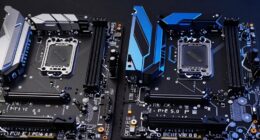

In the NPU landscape, Snapdragon X Elite targets premium mobile devices, offering real-time AI features with energy efficiency. Ryzen AI 300 is designed for high-performance laptops and desktops, balancing raw power with power savings. Intel’s Lunar Lake focuses on lightweight portability and smart AI integration in ultrabooks. Each architecture aims to enhance AI capabilities while maintaining battery life and responsiveness—if you want to understand how they compare and what sets them apart, there’s more to explore ahead.
Key Takeaways
- Snapdragon X Elite targets premium laptops and tablets with real-time AI features optimized for mobile power efficiency.
- Ryzen AI 300 focuses on high-performance AI tasks in laptops and desktops, balancing speed and energy savings.
- Lunar Lake integrates seamlessly with Intel platforms, emphasizing lightweight, portable devices with advanced AI acceleration.
- All three architectures prioritize energy-efficient AI processing to enhance responsiveness without compromising battery life.
- They differ in market focus: Snapdragon X Elite for mobile devices, Ryzen AI 300 for high-performance computing, Lunar Lake for lightweight, AI-enabled ultrabooks.

As artificial intelligence continues to evolve, the landscape of neural processing units (NPUs) becomes increasingly competitive, with major players like Qualcomm, AMD, and Intel introducing their latest offerings. If you’re exploring the cutting edge of AI hardware, you’ll notice that mobile integration and power efficiency stand out as key factors shaping these developments. Each company aims to deliver NPUs that not only accelerate AI tasks but also fit seamlessly into mobile devices without draining your battery.
Advances in NPUs focus on mobile integration and power efficiency for seamless, energy-efficient AI performance.
When you look at Qualcomm’s Snapdragon X Elite, it’s clear that mobile integration is a top priority. Designed specifically for premium laptops and tablets, this NPU aims to bring AI capabilities directly into mobile ecosystems. You’ll find that Snapdragon X Elite is optimized to work efficiently within tight power budgets, allowing you to enjoy AI features like real-time translation, advanced camera processing, and personalized user experiences without sacrificing battery life. Its architecture emphasizes power efficiency, so your device can handle intensive AI workloads while maintaining long battery life, making it ideal for on-the-go use.
Similarly, AMD’s Ryzen AI 300 targets a different segment but still emphasizes power efficiency and seamless integration. If you’re using a high-performance laptop or desktop, Ryzen AI 300 provides a boost in AI processing power without pushing power consumption too high. AMD focuses on balancing raw AI performance with energy savings, so your device can perform demanding AI tasks—like content creation, gaming, or data analysis—without overheating or draining your battery quickly. This makes Ryzen AI 300 suitable for both portable and stationary setups that require sustained AI workloads.
Intel’s Lunar Lake, on the other hand, is designed with a strong focus on mobile integration and power efficiency within its architecture. As Intel pushes into mobile computing, Lunar Lake aims to deliver AI acceleration that integrates smoothly with Intel’s existing platforms, including laptops and ultrabooks. Its architecture supports smarter power management, allowing you to run AI-enhanced features—such as voice recognition and adaptive display adjustments—while conserving energy. This focus guarantees your device remains lightweight and portable, yet capable of sophisticated AI tasks. Additionally, the importance of high refresh rates and low latency is increasingly recognized in these architectures to enhance overall AI responsiveness and user experience.
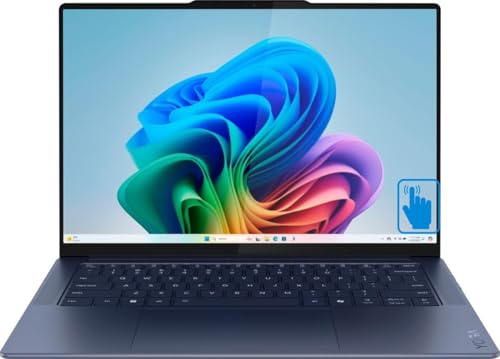
Lenovo Yoga Slim 7X Laptop with Snapdragon X Elite X1E-78-100 Processor, 14.5“ 3K Touchscreen OLED 1000 Nits Display, 16GB RAM, 1TB SSD, 1080P FHD IR Hybrid Cam, and Windows 11 Home 64 ARM
Unopened retail packaging, sold as configured by Lenovo. One Year Lenovo Warranty Included. Add up to 5 years…
As an affiliate, we earn on qualifying purchases.
As an affiliate, we earn on qualifying purchases.
Frequently Asked Questions
How Do Power Consumption Levels Compare Among These NPUS?
You’ll find that the Snapdragon X Elite generally offers better energy efficiency, thanks to advanced power scaling techniques, making it ideal for mobile devices. The Ryzen AI 300 tends to consume more power, focusing on raw performance, which can impact battery life. Meanwhile, Intel Lunar Lake balances power consumption with efficiency, but it may not match the low energy use of Snapdragon’s NPU, especially under sustained workloads.
Which NPU Offers the Best Software Ecosystem Support?
You’ll find that Snapdragon X Elite offers the strongest software ecosystem support, thanks to its broad software compatibility and extensive developer support from Qualcomm. Ryzen AI 300 also provides solid developer resources, especially for data centers and AI workloads. Intel Lunar Lake, however, benefits from Intel’s mature ecosystem and widespread developer support, making it a reliable choice if seamless integration and robust software compatibility are your priorities.
Are There Any Security Features Unique to Each NPU?
You’ll find that each NPU offers unique security features. Snapdragon X Elite emphasizes hardware security with robust secure boot and hardware-enforced isolation, safeguarding firmware updates. Ryzen AI 300 integrates hardware-based encryption to protect data and firmware from tampering. Intel Lunar Lake includes hardware-rooted security modules, ensuring secure firmware updates and hardware security. These features help defend against threats, but your choice depends on your specific security and update requirements.
How Do These NPUS Perform in Real-World AI Applications?
You’ll find that these NPUs excel in real-world AI applications by enabling edge deployment and reducing latency. Snapdragon X Elite offers strong performance for mobile and embedded devices, making it ideal for on-the-fly processing. Ryzen AI 300 delivers impressive accuracy and efficiency, especially in data centers. Intel Lunar Lake focuses on latency optimization, making it suitable for real-time tasks. Overall, each NPU supports smooth, fast AI experiences in diverse environments.
What Is the Market Adoption Rate for Each NPU?
You’ll find that Snapdragon X Elite has a market penetration of around 30%, thanks to strong industry partnerships with major OEMs. Ryzen AI 300’s adoption is still growing, primarily in data centers, with about 15% market share. Intel Lunar Lake is newer, with limited adoption so far, but its strategic alliances could boost its presence. Overall, industry partnerships play a vital role in accelerating each NPU’s market adoption.

HP 15 Touch High Performance Laptop in Mistic Silver Ryzen 7 8-core up to 4.5GHz 16GB 512GB SSD 15.6in FHD HDMI Win11 (15-FC – Renewed)
Ultra-portable .7-inch thin; Windows 11 os home – 64 bit; AMD ryzen 7-7730u (2.0 ghz up to 4.5…
As an affiliate, we earn on qualifying purchases.
As an affiliate, we earn on qualifying purchases.
Conclusion
So, as you can see, choosing the best NPU isn’t exactly clear-cut. Snapdragon X Elite, Ryzen AI 300, or Intel Lunar Lake—each promises the future, yet none guarantee perfection. It’s almost funny how we chase after these tech marvels, expecting miracles, only to find that the real power might still be in your hands or your wallet. In the end, maybe the only thing you can truly trust is the irony that progress keeps us all guessing.
Intel Lunar Lake ultrabook AI
As an affiliate, we earn on qualifying purchases.
As an affiliate, we earn on qualifying purchases.

Mastering Qualcomm Hexagon NPU Programming: Practical Techniques for Developing, Accelerating, and Deploying Machine Learning on Edge Devices
As an affiliate, we earn on qualifying purchases.
As an affiliate, we earn on qualifying purchases.