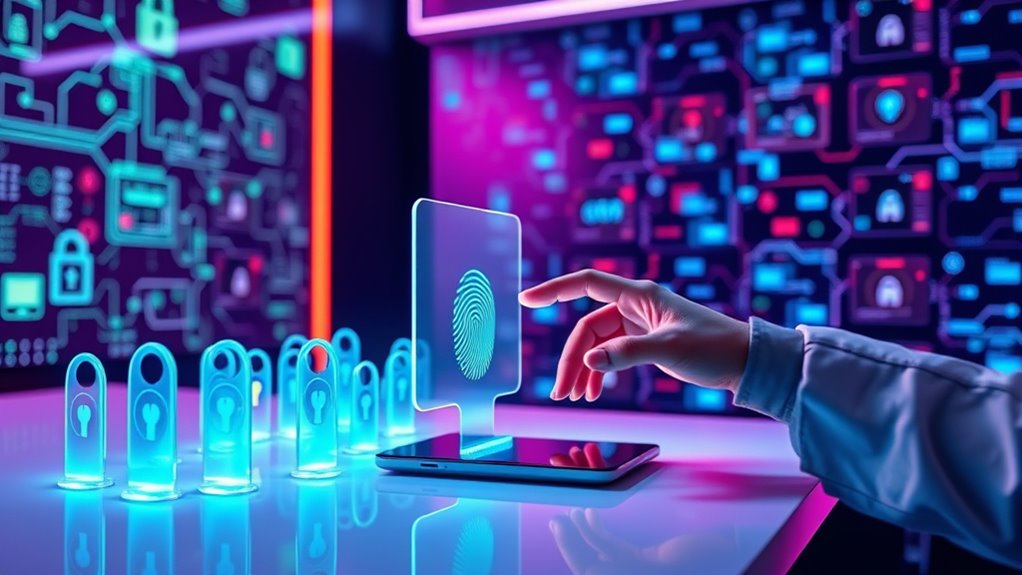

By 2025, you’ll experience passwordless MFA becoming mainstream everywhere, driven by passkeys and biometric tech like fingerprint and facial recognition. These methods make logging in faster, more secure, and easier to use across devices. They also reduce phishing risks and password management hassles. Organizations focus on privacy and security, encouraging adoption through simple, transparent processes. Stay tuned to see how this seamless, secure future unfolds and affects your digital life.
Key Takeaways
- Passkeys, based on cryptographic standards, will serve as the primary passwordless authentication method across devices and platforms.
- Widespread adoption of biometric technologies ensures seamless, secure login experiences everywhere in 2025.
- Organizations will prioritize privacy and security measures to protect biometric and passkey data at scale.
- User-friendly onboarding and education will drive mass acceptance of passkeys as the new standard.
- The shift to passkeys will significantly reduce phishing and password theft risks, enhancing overall digital security.
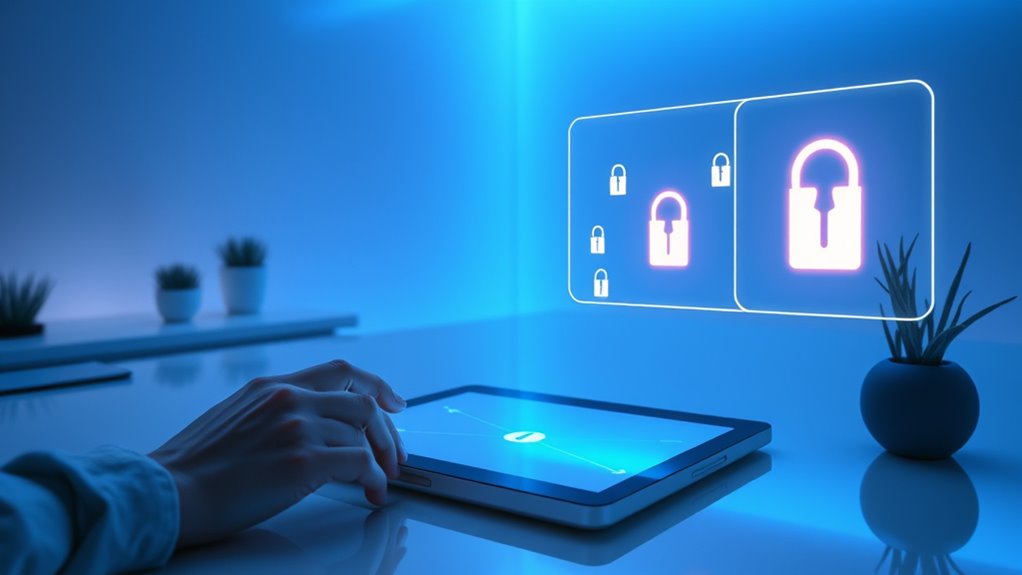
By 2025, passwordless multi-factor authentication (MFA) has become the standard for securing digital access. You no longer need to remember complex passwords or worry about phishing attacks; instead, biometric trends are leading the way. Biometrics, such as fingerprint scans, facial recognition, and iris scans, are now seamlessly integrated into everyday devices, making authentication faster and more secure. As these biometric technologies improve, they offer higher accuracy and lower false acceptance rates, making them increasingly reliable for widespread use. With biometric trends advancing steadily, you find it easier to authenticate yourself with a simple glance or touch, eliminating the need for traditional passwords that are vulnerable to theft or compromise. Additionally, regularly assessing and rotating items ensures that biometric security measures remain effective and up-to-date. Adopting passwordless MFA isn’t just about technology; it’s about understanding how to encourage user adoption strategies. You might worry about user resistance or privacy concerns, but organizations are addressing these by emphasizing convenience and security. Clear communication about how biometric data is stored and protected reassures users that their privacy is prioritized. User adoption strategies often involve providing education on the benefits of passwordless systems, such as faster login times and reduced frustration. Offering easy onboarding processes and support during the transition helps ensure that users feel confident and comfortable switching over. When users see the tangible advantages—like quick access without remembering passwords—they’re more likely to embrace the change.
biometric fingerprint scanner
As an affiliate, we earn on qualifying purchases.
As an affiliate, we earn on qualifying purchases.
Frequently Asked Questions
How Secure Are Passkeys Compared to Traditional Passwords?
Passkeys are more secure than traditional passwords because they use advanced encryption protocols and biometric authentication. You won’t need to remember complex strings or worry about phishing, as passkeys are stored securely on your device and are unique to you. Biometric data, like fingerprints or facial recognition, adds an extra layer of protection. Overall, passkeys markedly reduce the risk of hacking and unauthorized access compared to traditional passwords.
What Devices Will Support Passkeys in 2025?
By 2025, most devices will support passkeys thanks to widespread ecosystem integration. You’ll find support on smartphones, tablets, laptops, and desktops across major platforms like iOS, Android, Windows, and macOS. This compatibility guarantees seamless device interoperability, making it easier for you to adopt passwordless authentication. As ecosystem integration deepens, expect smooth, secure access across all your devices, simplifying your digital security and enhancing user experience.
How Will Passkeys Impact User Privacy?
While passkeys boost convenience, they also raise privacy concerns—especially around biometric privacy and data sovereignty. You might appreciate easier access, but you’ll want assurance your biometric data isn’t shared or stored insecurely. Passkeys prioritize security without revealing sensitive info, helping preserve your biometric privacy. This shift empowers you to control your data, fostering trust and safeguarding your digital sovereignty in an increasingly connected world.
Are Passkeys Compatible With Existing Authentication Systems?
Yes, passkeys are compatible with existing authentication systems. They’re designed for broad device compatibility and support cross-platform integration, making it easier for you to use them across different devices and operating systems. This seamless compatibility means you won’t need to overhaul your current setup. Instead, you can upgrade gradually, enjoying the enhanced security and convenience that passkeys provide without sacrificing your existing infrastructure.
What Are the Potential Challenges in Widespread Adoption?
Imagine trying to teach everyone to ride bikes differently—that’s what industry adoption faces with passkeys. Challenges include balancing enhanced security with seamless user experience, addressing legacy system compatibility, and ensuring widespread understanding. You might struggle with organizations hesitant to overhaul existing infrastructure or users wary of new tech. Overcoming these hurdles requires education and collaboration to make passkeys a smooth, trusted part of daily authentication, much like riding a familiar bike.
passwordless passkey security device
As an affiliate, we earn on qualifying purchases.
As an affiliate, we earn on qualifying purchases.
Conclusion
By 2025, passwordless MFA will feel like slipping on a pair of seamless gloves—you won’t even notice the security it provides. Imagine your morning routine: you grab your keys, but now those keys are digital passkeys that open everything effortlessly. Just like a reliable lock that never jams, this technology keeps your digital life smooth and secure. Embrace the shift, and you’ll wonder how you ever managed without it.
biometric facial recognition device
As an affiliate, we earn on qualifying purchases.
As an affiliate, we earn on qualifying purchases.
multi-factor authentication hardware
As an affiliate, we earn on qualifying purchases.
As an affiliate, we earn on qualifying purchases.