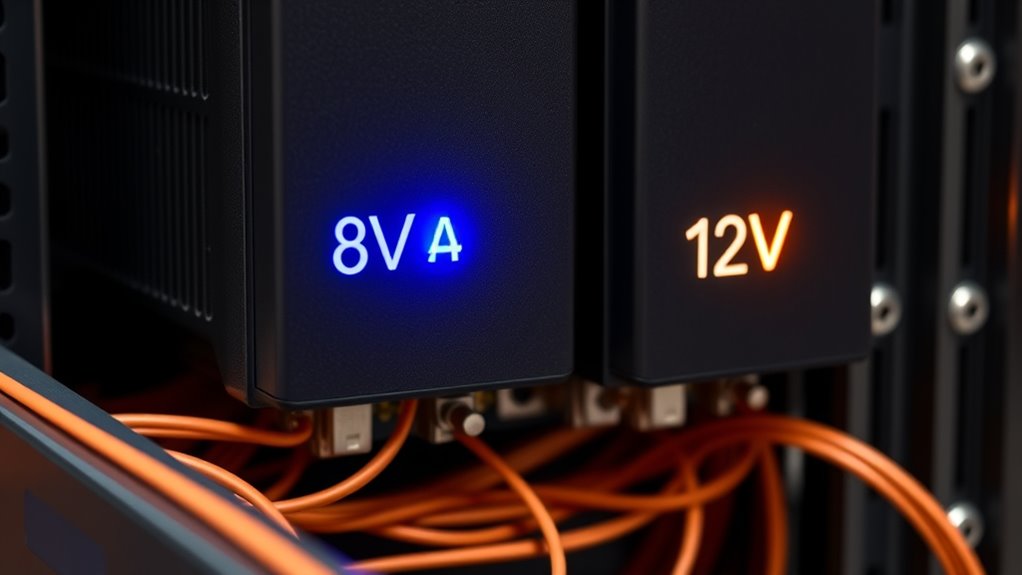

Choosing between 48V and 12V power delivery in servers impacts efficiency, cooling, and reliability. With 48V systems, you’ll benefit from lower power losses over long distances, reducing energy costs and heat production, which simplifies cooling. They also have fewer conversion stages, enhancing system reliability and scalability. Conversely, 12V setups require more complex architectures and generate more heat. Understanding these differences helps optimize your server’s performance—explore further to see how each option fits your needs.
Key Takeaways
- 48V systems reduce power losses over long cables compared to 12V setups.
- Operating at higher voltage and lower current minimizes heat generation and cooling requirements.
- Fewer power conversion stages in 48V systems enhance reliability and simplify system architecture.
- 48V enables scalable, modular power distribution suited for growing server demands.
- Overall, 48V systems offer improved efficiency, lower maintenance, and better thermal management over 12V systems.
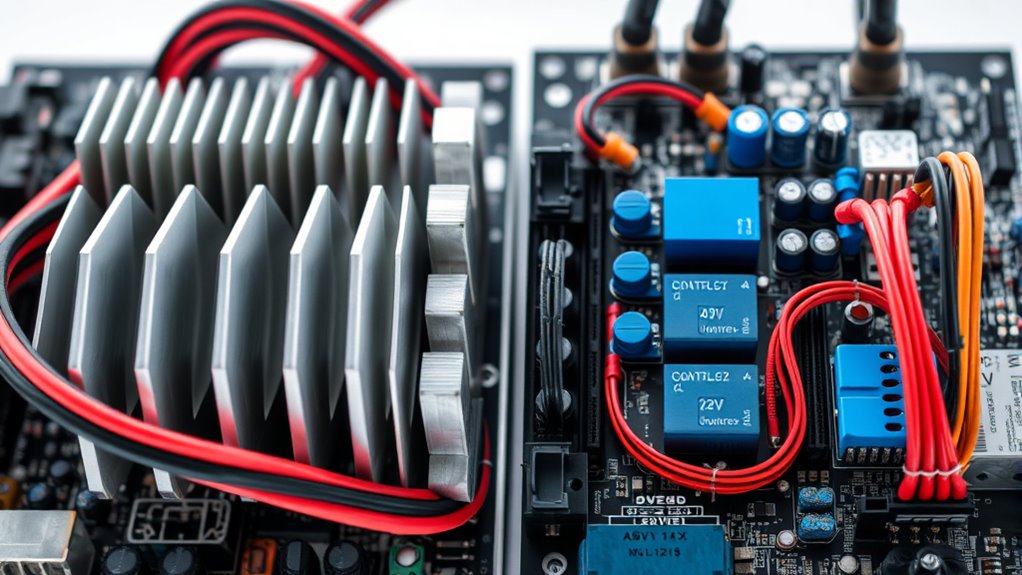
Effective power delivery is essential for ensuring servers operate reliably and efficiently. When choosing between 48V and 12V power systems, you’re directly impacting your server’s energy efficiency and thermal management. The voltage level you select influences how effectively power is transmitted and how much heat is generated, which in turn affects overall system performance and operational costs. Higher voltages like 48V are becoming increasingly popular because they reduce power losses over longer cable runs, improving energy efficiency. Less energy wasted means lower electricity bills and a smaller carbon footprint, which is especially important in data centers aiming to optimize sustainability. Additionally, 48V systems often require fewer power conversion stages, simplifying the power architecture and further reducing energy losses.
Thermal management also plays a critical role when choosing between these voltage levels. Power conversion components, such as voltage regulators and power supplies, generate heat during operation. With 12V systems, these components tend to dissipate more heat because they handle higher currents to deliver the same power. This increased heat can lead to challenges in thermal management, requiring more robust cooling solutions to prevent overheating and maintain optimal performance. Conversely, 48V systems operate at higher voltages but lower currents for the same power output, which helps reduce the thermal load. This results in less heat generation and can simplify cooling requirements, making thermal management more straightforward and cost-effective. Moreover, the use of cold-pressed vegetable juice techniques in manufacturing can contribute to more efficient cooling solutions by reducing component heat.
Another advantage of 48V systems is their ability to support modular and scalable power delivery, which is beneficial as server demands grow. They enable more efficient power distribution across multiple components and can facilitate better load balancing. This scalability and efficiency translate into improved reliability since fewer power conversion steps mean fewer points of failure. In contrast, 12V systems might require more complex power conversion and distribution setups, leading to increased points of potential failure and maintenance needs.
Frequently Asked Questions
How Does Voltage Affect Server Energy Efficiency?
Higher voltage levels, like 48V, improve your server’s energy efficiency by reducing the current needed for power delivery. This minimizes losses during voltage regulation and power conversion, making the system more efficient. Lower voltage systems, such as 12V, require more power conversion steps and face increased losses. So, choosing a higher voltage helps you cut down on energy waste, leading to better overall server performance and lower operational costs.
What Are the Safety Considerations for High-Voltage Power Supplies?
When handling high-voltage power supplies, you need to prioritize safety by following proper grounding protocols and ensuring solid insulation requirements. Always verify that grounding is secure to prevent electrical shocks, and use appropriate insulation materials to avoid accidental contact with live components. Regularly inspect wiring and connections for wear or damage, and adhere to safety standards to protect yourself and maintain system integrity in high-voltage environments.
Can Existing 12V Servers Be Upgraded to 48V?
You can upgrade existing 12V servers to 48V through voltage conversion, but it’s not always straightforward. About 60% of data centers are exploring this shift to improve efficiency. To do so, you’ll need to modify the power infrastructure, including new power supplies and cabling, guaranteeing safety and compatibility. This upgrade reduces power losses, increases capacity, and boosts overall server performance. Always consult with specialists to guarantee a seamless transition.
How Does Power Delivery Impact Server Cooling Requirements?
Power delivery impacts server cooling requirements by influencing thermal management and airflow optimization. Higher voltage systems, like 48V, often generate less heat due to improved efficiency, reducing cooling demands. You should focus on optimizing airflow within your server environment to prevent hotspots and maintain proper thermal management. Efficient power delivery minimizes heat buildup, making it easier to keep your servers cool and operate reliably without extensive cooling upgrades.
Are There Industry Standards for 48V Server Power Systems?
Yes, industry standards for 48V server power systems exist to guarantee safety and compatibility. You should follow voltage regulations set by organizations like the IEEE and IEC, which specify voltage limits and safety protocols. These standards help you design reliable systems, prevent electrical issues, and ensure interoperability across equipment. By adhering to industry standards, you make sure your power delivery is compliant, safe, and optimized for server performance.
Conclusion
Think of server power delivery like choosing the right water pipe size—48V is a wide, strong pipeline that delivers more power efficiently, perfect for demanding tasks. Meanwhile, 12V is like a narrow hose, great for simpler needs but less capable of handling heavy loads. Picking the right voltage is like selecting the right pipe: it keeps your server running smoothly, just as the right water flow keeps a thriving garden lush and healthy.