

DNS Over HTTPS (DoH) encrypts your DNS queries within regular web traffic, making it harder for others to monitor your browsing. It’s seamless and easy to use, but can limit network control for administrators. DNS Over TLS (DoT) offers a dedicated, transparent encryption layer, giving you more control and visibility for managing DNS traffic. To understand which protocol best balances your privacy and control needs, explore the details deeper ahead.
Key Takeaways
- DoH encrypts DNS queries within HTTPS traffic, enhancing privacy by hiding DNS activity from monitoring tools.
- DoT establishes a dedicated TLS connection, offering clearer control and easier enforcement of DNS policies.
- DoH’s integration with web browsers makes it harder for network administrators to monitor or block DNS traffic.
- DoT provides transparency for administrators, enabling better traffic management and policy enforcement.
- The choice depends on balancing privacy needs (favoring DoH) and control requirements (favoring DoT).
How Do DNS Over HTTPS and DNS Over TLS Work?

To understand how DNS over HTTPS (DoH) and DNS over TLS (DoT) work, it’s important to know that they both aim to protect DNS queries from eavesdropping and tampering. These protocols use encryption protocols to secure your DNS traffic, preventing outsiders from seeing which websites you visit. With DoH, DNS queries are sent over standard HTTPS connections, meaning they use the same port and encryption as regular web traffic. DoT, on the other hand, operates over a dedicated port, typically 853, establishing a secure TLS connection directly with the DNS server. Server configurations are essential for both protocols; they need to support these encryption protocols and be properly set up to handle encrypted DNS traffic, ensuring your queries stay private and protected. Innovative European Cloud Servers are increasingly supporting these protocols to promote secure and sustainable cloud solutions. Additionally, the choice between DoH and DoT can influence network performance and compatibility, depending on your specific setup and needs. Proper protocol support is crucial for effective deployment and security, and understanding how these protocols integrate with modern network infrastructure can enhance overall privacy and control. Moreover, understanding the security implications of each protocol can help users make better-informed decisions about their online privacy strategies.
What Are the Privacy Benefits of DNS Over HTTPS?
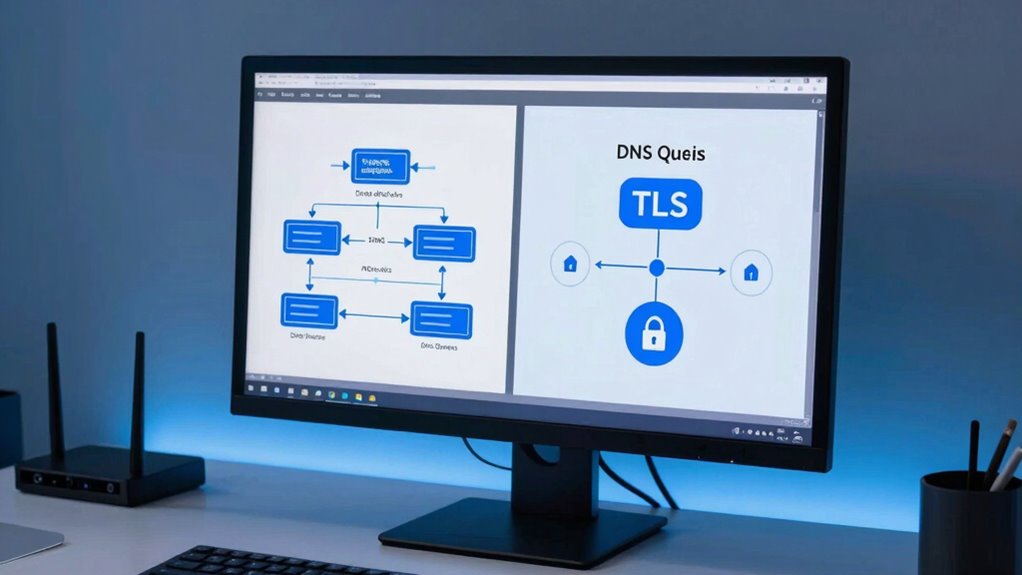
When you use DNS Over HTTPS, your queries are encrypted, preventing outsiders from easily intercepting or reading them. This encryption helps protect your privacy by stopping third parties from tracking your browsing habits. Additionally, because the queries are hidden within HTTPS traffic, it becomes harder for anyone to identify which websites you’re accessing. Using DNS Over HTTPS also supports Free Floating, making it a flexible option for maintaining privacy without relying on centralized DNS servers. Furthermore, it enhances your overall Digital Safety by reducing the risk of DNS-based attacks or surveillance. These encrypted DNS methods like DNS Over HTTPS can also mitigate eavesdropping risks on untrusted networks, providing an extra layer of security for your online activities. Implementing DNS Over HTTPS can also improve your network performance by reducing DNS lookup times in some cases. These methods also help maintain user anonymity, safeguarding your identity during online browsing.
Encrypted Data Transmission
Encrypted Data Transmission enhances your privacy by shielding DNS queries from eavesdroppers and malicious actors. This is achieved through robust encryption protocols that secure your data in transit, preventing outsiders from intercepting or tampering. With encrypted transmission, the integrity of your data remains intact, ensuring it isn’t altered during delivery. You benefit from:
- Strong encryption protocols like HTTPS that protect your requests
- Reduced risk of data leaks or man-in-the-middle attacks
- Assurance that DNS information stays confidential and unaltered
- Better overall privacy by limiting third-party tracking
- Trustworthy information helps you understand and implement these protections effectively.
- Implementing encryption protocols further enhances security by safeguarding your DNS queries against potential vulnerabilities.
- Additionally, privacy-focused protocols are continually evolving to respond to emerging threats, providing ongoing protection for your online activities.
Enhanced User Privacy
DNS Over HTTPS substantially enhances your privacy by encrypting your DNS queries, making it much harder for third parties to monitor or track your online activities. This encryption ensures that your browsing habits stay private, reducing the risk of data leaks or targeted surveillance. When paired with strong VPN security, DNS Over HTTPS adds an extra layer of protection, preventing outsiders from intercepting your DNS requests. By leveraging data encryption, this protocol safeguards sensitive information, so it’s not exposed to potential eavesdroppers on public Wi-Fi or malicious actors. Overall, DNS Over HTTPS helps you maintain greater control over your online privacy, giving you confidence that your browsing details remain confidential and secure from unwanted scrutiny. Additionally, understanding digital privacy protection can help you discover more ways to protect your digital footprint. Recognizing how encryption protocols work can further improve your overall online security. Exploring privacy-enhancing technologies can also empower you to make smarter security choices.
Obfuscation of Queries
By masking the details of your DNS queries, DNS Over HTTPS makes it considerably more difficult for outsiders to identify which websites you’re visiting. This query obfuscation enhances your privacy by encrypting the data, preventing eavesdroppers from seeing your browsing habits. Traffic masking further conceals your activity, making it harder for third parties to analyze your DNS requests. With DNS Over HTTPS, your queries blend into regular HTTPS traffic, reducing the risk of targeted monitoring. Additionally, trusted business directories can help users find reliable services without compromising their privacy. The encryption also safeguards against man-in-the-middle attacks, ensuring your DNS information remains secure from interception. Implementing DNS Over HTTPS aligns with best practices for digital privacy by minimizing data leaks and enhancing user confidentiality. Furthermore, adopting such privacy measures can contribute to overall online security by reducing exposure to potential cyber threats.
How Does DNS Over TLS Offer Greater Control for Network Administrators?

DNS Over TLS allows you to monitor traffic more effectively, giving you clearer insights into network activity. You can also set and enforce security policies tailored to your organization’s needs. This control helps you maintain a secure and efficient network environment. Additionally, network security measures can be integrated more seamlessly, helping to prevent unauthorized access and safeguard user privacy. By leveraging these protocols, network administrators can also improve traffic management and optimize overall system performance. Implementing these protocols further enhances privacy protection, ensuring user data remains confidential during transmission. Moreover, these protocols enable better policy enforcement, allowing for more precise control over DNS queries and responses. Incorporating protocol flexibility can also help adapt to evolving security challenges and organizational requirements.
Enhanced Traffic Monitoring
While encryption is often associated with privacy, DNS over TLS also enhances traffic monitoring capabilities for network administrators. It allows you to better observe and control DNS traffic without exposing data to potential eavesdroppers. With DNS over TLS, you can implement more effective traffic filtering, preventing access to malicious sites or unwanted content. It also reduces the risk of data interception, ensuring sensitive DNS queries stay protected. Additionally, the encrypted nature of DNS over TLS supports traffic visibility, enabling administrators to detect anomalies and respond swiftly to security threats. This improved visibility helps you identify suspicious activities and enforce security policies more accurately. Building a secure and reliable network is essential for effective traffic management and safeguarding sensitive information. Furthermore, DNS over TLS can facilitate compliance with security standards, helping organizations meet regulatory requirements and maintain trust.
Customizable Security Policies
DNS over TLS gives network administrators greater control over security policies by allowing precise filtering and enforcement at the transport layer. This protocol enables custom security settings tailored to your network’s needs, ensuring sensitive data is protected and unwanted traffic is blocked. With DNS over TLS, you can implement strict policy management, defining which domains are accessible or restricted, and enforce these rules consistently. Its flexibility allows you to adapt security measures quickly as threats evolve, providing a granular approach to safeguarding your infrastructure. Unlike more rigid systems, DNS over TLS offers the ability to create tailored security policies that align with your organization’s requirements, giving you better control over DNS traffic and enhancing your overall security posture. Additionally, the protocol’s compatibility with existing security frameworks makes it easier to integrate into network management systems for comprehensive oversight.
How Do DoH and DoT Compare in Privacy and Security?

When it comes to privacy and security, DoH and DoT each offer distinct advantages and challenges. DoH uses HTTPS, combining encryption methods to secure DNS queries within regular web traffic, making it harder for third parties to monitor. DoT, on the other hand, employs dedicated encryption protocols, providing a straightforward, consistent layer of protection.
- DoH’s encryption is embedded in standard web traffic, blending seamlessly for privacy but limiting user control.
- DoT offers more transparency, allowing users to choose specific DNS servers and enforce policies.
- Both protocols prevent eavesdropping and tampering, but DoH’s integration with browsers can obscure DNS activity.
- User control varies, with DoT generally providing better options for manual configuration and management.
Which Protocol Is Better for Protecting Your Browsing Privacy?

Choosing the best protocol for protecting your browsing privacy depends on how you prioritize security and control. DNS over HTTPS (DoH) generally offers stronger encryption strength, making it more resistant to eavesdropping and tampering. Its widespread protocol adoption means it’s more available across browsers and devices, providing a seamless privacy boost. On the other hand, DNS over TLS (DoT) also encrypts your DNS queries but often has less protocol adoption, which can limit its reach. If your main concern is maximum encryption strength and broad compatibility, DoH is usually the better choice. However, if you prefer more control over your network settings, especially in enterprise environments, DoT might suit you better. Ultimately, both enhance privacy, but DoH’s stronger encryption and wider adoption give it an edge for protecting your browsing privacy.
What Are the Main Challenges and Limitations of Implementing DoH and DoT?

Implementing DoH and DoT presents several challenges, primarily related to compatibility and infrastructure. You might face issues integrating these protocols with existing systems, as many network devices and software aren’t fully compatible yet. Additionally, regulatory hurdles can slow adoption, especially in regions with strict data privacy laws or censorship rules. Implementation complexity is another obstacle—setting up secure DNS servers and managing encryption adds technical difficulty. You may also encounter:
- Limited support from ISPs and device manufacturers
- Increased resource requirements for infrastructure upgrades
- Potential conflicts with traditional DNS caching and filtering
- Privacy concerns related to centralized DoH providers
These factors can hinder smooth deployment, making it essential to weigh the benefits against the challenges before adoption.
How to Choose Between DNS Over HTTPS and DNS Over TLS for Your Needs?

Deciding between DNS over HTTPS (DoH) and DNS over TLS (DoT) involves evaluating how each protocol aligns with your specific needs and infrastructure. First, consider protocol compatibility: some systems or browsers may support only one, influencing your choice. If ease of deployment matters, DoH can be simpler, especially in environments already using HTTPS, reducing deployment complexity. However, DoT offers a more straightforward setup for traditional DNS infrastructure. Think about your control needs; DoH encrypts DNS traffic within regular HTTPS traffic, making it harder to block but also harder to monitor. Conversely, DoT provides dedicated encryption, giving you more control over DNS traffic. Assess your network environment and goals to choose the protocol that best balances security, control, and deployment ease.
Frequently Asked Questions
Can DNS Over HTTPS or DNS Over TLS Be Blocked by Firewalls?
Yes, firewalls can block DNS over HTTPS or DNS over TLS through firewall detection and protocol filtering. They monitor network traffic for these protocols, especially if they’re configured to inspect encrypted data. Firewalls may block or restrict these protocols to control or prevent encrypted DNS traffic, making it harder for users to bypass network restrictions. To avoid this, some users try to mask or reroute their DNS traffic, but firewalls often adapt.
Do These Protocols Impact Internet Speed or Latency?
Yes, these protocols can impact your internet speed and latency. Protocol performance varies depending on your network setup, with DNS over HTTPS sometimes adding slight delays due to encryption overhead. However, in most cases, the latency impact is minimal and often outweighed by the privacy benefits. Keep in mind that your connection quality and server proximity also influence overall performance, so choose the protocol that best balances speed and security for you.
Are There Any Legal or Regulatory Issues With Using Doh or Dot?
You might face legal compliance and regulatory oversight when using DoH or DoT, especially if your country has strict data privacy laws or mandates surveillance. Some jurisdictions require DNS traffic to be monitored or logged, which could conflict with encrypted protocols. Always check local regulations before deploying these protocols, and confirm your usage aligns with legal standards to avoid potential fines or restrictions.
How Do Doh and Dot Affect Existing DNS Infrastructure?
Your existing DNS infrastructure faces a seismic shift with DOH and DOT. These protocols overhaul traditional systems, rendering deprecated DNS methods obsolete and challenging fallback mechanisms. You might need to upgrade or replace legacy servers, as DNS traffic now encrypts end-to-end, impacting monitoring and control. Embracing these protocols means rethinking your network architecture to guarantee seamless resolution while maintaining security and compliance.
Can These Protocols Be Combined for Enhanced Security?
Yes, you can combine Protocol integration of DNS Over HTTPS (DoH) and DNS Over TLS (DoT) for enhanced security. By implementing both, you improve your DNS privacy and resilience against eavesdropping or tampering. This dual approach guarantees that your DNS queries are encrypted through different channels, offering a layered security enhancement. Keep in mind, though, managing and configuring both protocols requires careful setup to maximize their combined benefits.
Conclusion
Choosing between DNS over HTTPS and DNS over TLS depends on your priorities. If privacy is your main concern, DoH offers better protection against surveillance. However, if you value control and manageability, DoT might be more suitable. Did you know that over 60% of internet users still rely on traditional DNS methods? Understanding these protocols helps you make informed choices to enhance your online security and privacy effectively.