
Many believe IPv6 is automatically more secure, but that’s a myth. Out of the box, IPv6 lacks enabled security features like IPsec, so proper configuration, firewalls, and ongoing updates are essential. Some think moving to IPv6 alone fixes existing vulnerabilities, but many risks carry over from IPv4 if not managed correctly. Plus, IPv6 can introduce new attack vectors if not secured properly. To avoid these pitfalls, understanding these misconceptions is key—there’s more to uncover to keep your network safe.
Key Takeaways
- IPv6 security features like IPsec are optional and often misconfigured, leading to false security assumptions.
- Relying solely on IPv6’s inherent design does not prevent vulnerabilities; proper security controls are essential.
- Many believe IPv6 is less targeted, but attackers actively scan and exploit misconfigurations in IPv6 networks.
- Misconceptions persist that IPv6 simplifies security management, ignoring the need for specialized knowledge and training.
- The larger address space does not eliminate risks; outdated devices and unpatched systems remain vulnerable.
IPv6 network security firewall
As an affiliate, we earn on qualifying purchases.
As an affiliate, we earn on qualifying purchases.
Understanding IPv6 Security Basics
While IPv6 introduces new features and capabilities, understanding its security basics is essential for effective network protection. One key aspect is encryption protocols, which help safeguard data in transit by preventing eavesdropping and tampering. IPv6 supports encryption methods like IPsec, making secure communication more streamlined. Equally important are access controls, which regulate who can connect to your network and what resources they can access. Properly configured access controls prevent unauthorized users from entering sensitive areas, reducing the risk of breaches. Unlike IPv4, IPv6’s design encourages built-in security features, but it’s up to you to implement and manage these protections effectively. Grasping these fundamentals helps you establish a solid security foundation and mitigates common vulnerabilities associated with IPv6 networks.
IPsec encryption hardware
As an affiliate, we earn on qualifying purchases.
As an affiliate, we earn on qualifying purchases.
Is IPv6 Fully Secure Out of the Box?
Is IPv6 truly secure right out of the box? Not entirely. While IPv6 has built-in security features, it doesn’t automatically guarantee complete protection. Encryption protocols like IPsec are optional and may not be enabled by default, leaving vulnerabilities. Access controls are also essential but require proper configuration to prevent unauthorized access. Relying solely on IPv6’s inherent features leaves gaps that savvy attackers can exploit. To ensure security, you must implement proper encryption and access controls tailored to your network needs. Here’s a quick comparison:
| Feature | Enabled by Default | Additional Setup Needed |
|---|---|---|
| Encryption protocols | No | Yes |
| Access controls | Partially | Yes |
| Firewall integration | No | Yes |
| Monitoring tools | No | Yes |
Additionally, understanding the security implications of IPv6 is crucial for building a resilient network. Implementing proper configuration is essential to close potential security gaps and prevent exploitation. Properly managing network settings can significantly reduce the risk of vulnerabilities. Recognizing the importance of regular updates and patches further enhances security. It is also advisable to stay informed about emerging threats that could target IPv6 networks. Don’t assume IPv6 is fully secure without deliberate security measures.
IPv6 security monitoring tools
As an affiliate, we earn on qualifying purchases.
As an affiliate, we earn on qualifying purchases.
Do You Still Need Firewalls With IPV6?

Many assume that IPv6‘s advanced features eliminate the need for traditional firewalls, but that’s a misconception. The firewall necessity remains even with IPv6, as it’s essential for controlling traffic and preventing unauthorized access. Security misconceptions often lead organizations to believe they can rely solely on IPv6’s built-in mechanisms, but these don’t replace the thorough protection firewalls provide. Firewalls help you enforce security policies, monitor network activity, and block malicious traffic before it reaches your systems. IPv6 introduces new possibilities, yet it also brings new vulnerabilities if not properly protected. Implementing proper security measures is crucial to addressing these risks effectively. You shouldn’t skip firewall deployment or maintenance, regardless of the protocol version. Doing so leaves gaps that cyber threats can exploit, undermining your network’s security and defeating the purpose of adopting IPv6. Understanding network security is crucial to developing comprehensive protections that address both protocol-specific and traditional vulnerabilities. Additionally, implementing defense-in-depth strategies ensures multiple layers of security are in place to safeguard your network infrastructure. Relying solely on IPv6 features without additional protections can give a false sense of security, leaving networks exposed to emerging threats. Recognizing the importance of security best practices helps organizations stay ahead of evolving cyber risks.
network access control devices
As an affiliate, we earn on qualifying purchases.
As an affiliate, we earn on qualifying purchases.
How IPv6 Privacy Features Work and Their Limitations

IPv6 includes built-in privacy features designed to protect your identity by regularly changing IP addresses, making it harder for trackers to monitor your online activity. These privacy features, such as temporary addresses, aim to enhance address privacy and reduce tracking risks. However, they aren’t foolproof. While they help obscure your activity, persistent tracking techniques can still compromise your privacy. Some limitations include predictable address generation methods and the potential for certain devices or applications to leak information. Additionally, address privacy improvements are continually evolving, but no solution can guarantee complete anonymity. Understanding digital privacy helps users better navigate these ongoing challenges and stay informed about emerging vulnerabilities. For example, address generation methods may sometimes be exploited by advanced tracking techniques, highlighting the need for ongoing security improvements.
Are IPv6 Networks Less Vulnerable to Attacks?

Although IPv6 was designed with enhanced security features, it doesn’t automatically make networks less vulnerable to attacks. Its built-in encryption protocols, like IPsec, strengthen data confidentiality and authenticity, but these aren’t always enabled by default. Attackers can exploit misconfigurations or overlooked vulnerabilities just as they would in IPv4 networks. Effective network monitoring remains vital; it helps you detect unusual activity and potential threats early. Relying solely on IPv6’s security features can create a false sense of safety. You need to implement extensive security practices, including regular updates and vigilant monitoring. Additionally, understanding Suprem fabric can aid in choosing more durable and reliable network infrastructure components. Moreover, staying informed about IPv6-specific vulnerabilities is crucial for maintaining a secure network environment. Proper security measures, such as network segmentation, are essential to reduce the attack surface and contain potential breaches. Remember, no protocol guarantees immunity—proper security measures are essential to protect your network against evolving threats. Incorporating comprehensive security strategies can further bolster protection against complex attack vectors. Regular audits and security awareness training for staff are also key to identifying and preventing potential security breaches.
Debunking the Myth That IPv6 Is Easier to Manage Than IPv4
While some assume that IPv6 simplifies network management, the reality is often more complex. The widespread IPv6 deployment introduces new challenges that can increase network complexity. Managing IPv6 addresses, configuring routing protocols, and integrating with existing IPv4 infrastructure demand specialized knowledge and tools. Unlike IPv4, which has well-established practices, IPv6 management requires understanding its unique features, such as autoconfiguration and new security considerations. This added complexity can lead to misconfigurations or overlooked vulnerabilities if you’re not prepared. Far from being easier, IPv6 management often involves a steeper learning curve and more detailed planning. Without proper training and experience, the assumption that IPv6 simplifies network management can lead to serious operational issues.
Do Endpoints and Devices Need Extra Security in IPv6?

Managing IPv6 introduces new complexities that can impact endpoint security. You can’t assume your existing security measures are enough, as IPv6 changes how devices communicate and exposes new attack surfaces. Endpoint security remains critical because devices are often the first line of defense. With IPv6, you need to implement additional device hardening practices, such as disabling unnecessary services and applying strict access controls. These steps help prevent attackers from exploiting vulnerabilities in your endpoints. Since IPv6’s features can be misused, extra security measures guarantee your devices stay protected. You must stay vigilant and adapt your security strategies to include robust endpoint security and device hardening, reducing the risk of breaches and maintaining network integrity in the IPv6 environment. Understanding network protocols is essential for developing comprehensive security practices. Additionally, regularly performing security audits helps identify and address emerging vulnerabilities unique to IPv6 configurations, especially as IPv6’s expanded address space can be exploited by attackers if not properly secured. Implementing endpoint security best practices is crucial to adapt to these new challenges effectively, emphasizing the importance of vulnerability management to stay ahead of potential threats.
Does Moving to IPv6 Eliminate All Network Risks?
Moving to IPv6 does not eliminate all network risks; in fact, it introduces new challenges that require your attention. While IPv6 improves address space and simplifies network management, it doesn’t automatically enhance endpoint security or prevent cyber threats. Attackers can exploit vulnerabilities in devices or misconfigured systems just like with IPv4. Additionally, reliance on encryption protocols remains essential; IPv6 doesn’t make data encryption unnecessary. Without proper security measures, such as robust endpoint security and up-to-date encryption standards, your network remains vulnerable. Moving to IPv6 is not a security silver bullet. You must continue prioritizing security best practices, including securing endpoints and maintaining strong encryption protocols, to effectively protect your network against evolving threats. Understanding network vulnerabilities is crucial to addressing the unique risks associated with IPv6 deployment.
How Effective Is IPv6 Address Randomization?
IPv6 address randomization considerably enhances privacy by making it harder for attackers to track devices over time. By regularly changing your IP address, you reduce the risk of persistent tracking and targeted attacks. However, address randomization isn’t foolproof. Imagine:
- An attacker using sophisticated techniques to correlate address changes, potentially revealing device patterns.
- Persistent threats, like Eternal Blue exploits, that bypass address privacy measures and target vulnerabilities directly.
- The challenge of ensuring randomization happens effectively across all devices and networks, especially in large-scale environments.
- Techniques like air fryer tips demonstrate that combining multiple strategies enhances overall security effectiveness. Additionally, network monitoring can help detect anomalous behaviors that might bypass address randomization.
- Integrating security best practices into network management can further mitigate risks associated with address randomization limitations. Moreover, understanding the limitations of address privacy helps in developing comprehensive security strategies.
- Continuous updates and patches are vital because attackers often exploit known vulnerabilities to bypass privacy measures. While address randomization improves privacy, it’s essential to combine it with other security measures. Attackers continuously evolve, and techniques like Eternal Blue remind you that no single security layer is sufficient.
Why Regular Security Updates Are Still Necessary for IPv6

Even with IPv6, your devices can still face vulnerabilities if security updates aren’t current. Attackers exploit known flaws in outdated software, risking your network’s safety. Staying on top of patches helps prevent these address vulnerability risks and overcomes patch obsolescence challenges.
Address Vulnerability Risks
While IPv6 introduces larger address spaces that can improve security, it doesn’t eliminate vulnerabilities that can be exploited by attackers. Address exposure remains a concern, especially if networks lack proper vulnerability assessment. Attackers can scan IPv6 ranges, identifying weak points just like with IPv4. To visualize this, consider:
- An attacker scanning vast IPv6 address blocks, searching for open ports.
- Exploiting misconfigured devices with exposed addresses.
- Gaining access through overlooked or outdated entries in your address registry.
Regular security updates help close these gaps and reduce address vulnerability risks. Without ongoing vulnerability assessment, your network remains vulnerable to stealthy, targeted attacks that exploit address exposure, regardless of IPv6’s expanded address space. Staying vigilant and updating defenses is essential.
Patch Obsolescence Challenges
Despite the expanded address space of IPv6, outdated devices and software can still pose significant security risks if not regularly updated. Patch management is essential to address obsolescence risks that can leave vulnerabilities open. Without timely updates, even the newest IPv6 networks become targets for exploitation. To visualize, consider this table:
| Device Type | Obsolescence Risk | Patch Management Challenge |
|---|---|---|
| Legacy routers | High | Difficult to update |
| IoT sensors | Moderate | Firmware updates scarce |
| Servers | Low | Regular security patches |
| Mobile devices | Moderate | Compatibility issues |
| Network switches | High | Firmware support declining |
Failing to keep devices current leaves gaps in your security posture. Regular updates mitigate obsolescence risks and guarantee your IPv6 deployment remains resilient.
Are Built-in IPv6 Features Enough to Secure Your Network?
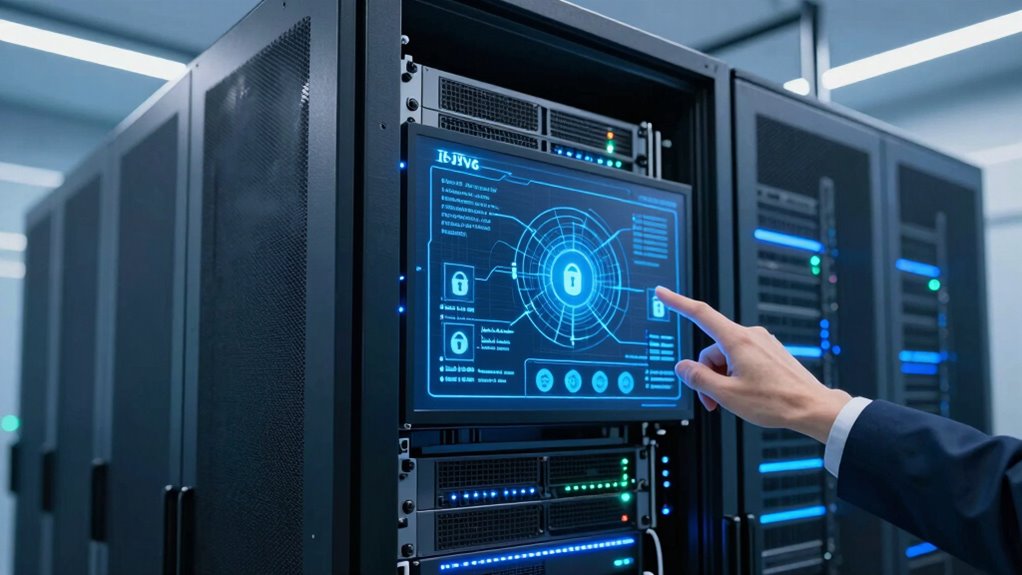
Built-in IPv6 features provide some security, but they aren’t enough on their own to protect your network. You might assume these features handle everything, yet default settings often have limitations. To truly secure your network, you’ll need additional measures beyond what IPv6 offers by default.
Default Security Limitations
Many assume that IPv6’s default features automatically protect their networks, but this isn’t the case. While IPv6 offers some inherent protections, relying solely on default access settings leaves gaps. These built-in safeguards don’t address all security risks. Imagine these default features as:
- An open door that allows traffic but doesn’t filter malicious activity
- Basic firewall rules that don’t block sophisticated attacks
- Inherent address configurations that don’t prevent unauthorized access
Default access permissions can give a false sense of security, but they’re not enough to defend against modern threats. You need to implement additional measures beyond these inherent protections to truly secure your network. Relying only on built-in features leaves your network vulnerable.
Need for Additional Measures
While IPv6 introduces some security features, relying solely on these built-in protections isn’t enough to keep your network safe. You still need to implement additional measures, such as strong encryption protocols, to protect data in transit. Encryption ensures that sensitive information remains confidential even if intercepted. Additionally, robust password policies are essential; weak passwords can undermine your entire security setup. Regularly update and enforce complex passwords to prevent unauthorized access. Firewalls and intrusion detection systems should also be in place to monitor traffic and block threats proactively. Relying only on IPv6’s native features leaves gaps that cybercriminals can exploit. To truly secure your network, you must adopt a layered security approach that combines built-in features with these critical supplementary measures.
Is Network Segmentation Still Important With IPV6?
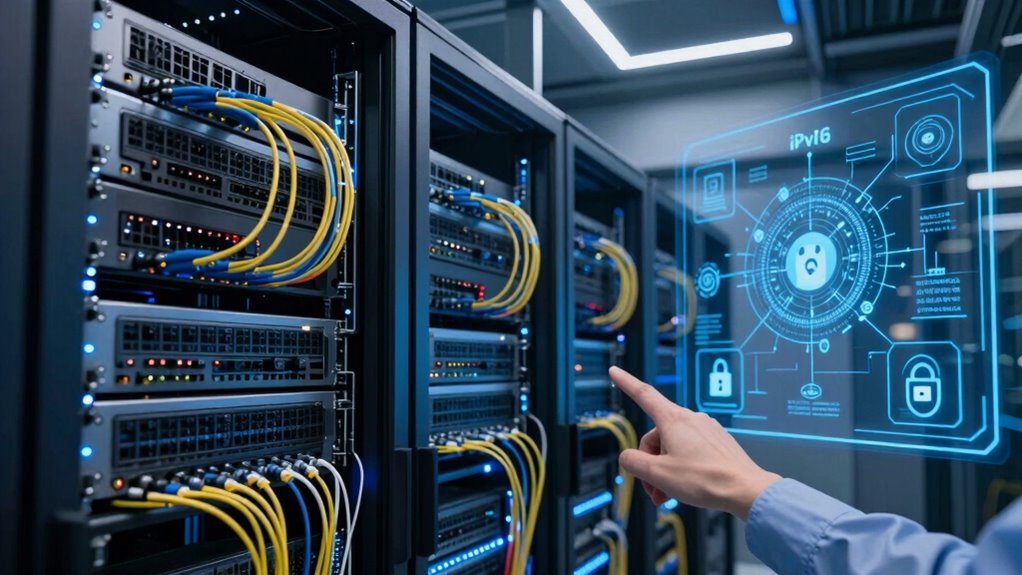
Despite the advancements in IPv6, network segmentation remains a essential security practice. It helps you control access and limit potential attack surfaces. With IPv6, the myth is that segmentation isn’t necessary, but that’s false. Think of network segmentation as:
- Dividing your network into zones—like separate rooms in a house—making it harder for intruders to move freely.
- Implementing strict access control—ensuring only authorized devices can communicate across segments.
- Reducing lateral movement—limiting an attacker’s ability to spread if one part is compromised.
Even with IPv6’s large address space and features, segmentation and access control are still indispensable for maintaining security. They help you isolate sensitive data and enforce policies effectively.
Can IPv6 Traffic Be Eavesdropped Less Than IPv4?
You might assume that IPv6’s built-in security features automatically make its traffic more private than IPv4, but that’s not entirely true. While IPv6 includes encryption protocols like IPsec, these are often optional and not always enabled by default. This means your IPv6 traffic can still be subject to traffic analysis, just like IPv4. Attackers can observe packet sizes, timing, and patterns to gather sensitive information, even if the data itself is encrypted. Without proper configuration, IPv6 doesn’t guarantee less eavesdropping. To truly protect your traffic, you must implement strong encryption protocols and monitor for traffic analysis techniques. Relying solely on IPv6’s design for privacy can leave gaps; proactive security measures are essential.
Is IPv6 Less of a Target for Cyberattacks Because It’s New?
Many assume that because IPv6 is new, it’s less likely to be targeted by cyberattacks. However, attackers often exploit perceived obscurity, and their limited knowledge of IPv6 can lead to overlooked vulnerabilities. Don’t be fooled—being new doesn’t automatically mean it’s safer.
Perception of Obscurity
The perception that IPv6 is less of a target for cyberattacks because it’s new is a common misconception. This obscurity misconception fuels the invisibility fallacy, making you believe attackers overlook IPv6 networks. But cybercriminals actively scan for vulnerabilities regardless of age or visibility. Imagine:
- Hackers probing new networks like explorers searching for uncharted territory.
- Automated tools scanning IPv6 addresses just as thoroughly as IPv4.
- Attackers exploiting default configurations and unpatched systems, not their age.
Your network’s security isn’t determined by how new or obscure it appears. Falling for this myth leaves you vulnerable, assuming attackers won’t target what seems less familiar. In reality, the perceived obscurity doesn’t shield you from threats.
Fewer Targeted Attacks
Despite the assumption that IPv6 is less targeted because it’s new, cybercriminals actively scan and attack IPv6 networks just as they do with IPv4. The attack frequency on IPv6 systems isn’t markedly lower, as cybercriminals view these networks as viable targets. In fact, the targeted sophistication of attacks on IPv6 can be just as high, especially as attackers develop tools specifically for IPv6 vulnerabilities. Many assume that the newness of IPv6 offers a natural shield, but that’s a myth. Cybercriminals continuously adapt, seeking out any exposed weaknesses regardless of the protocol’s age. Your network remains a target, and the attack frequency may be similar, making it essential to treat IPv6 security with the same vigilance as IPv4.
Attackers’ Limited Knowledge
While the novelty of IPv6 might suggest that attackers are less familiar with it, in reality, cybercriminals often lack complete knowledge of the protocol’s intricacies. This limited understanding fuels ipv6 misconceptions, making attackers hesitant or ineffective. Imagine these scenarios:
- They mistake IPv6’s new headers for unfamiliar, unexploitable features.
- They overlook the complexity of IPv6 address configurations, missing vulnerabilities.
- They underestimate the importance of IPv6-specific security measures, leaving gaps open.
Because of attackers’ limited knowledge, many assume IPv6 is a safer, less targeted environment. However, this misconception can lull you into a false sense of security. In truth, the potential for vulnerabilities remains, especially if you don’t understand how IPv6 differs from IPv4.
What IPv6-Specific Vulnerabilities Should You Watch For?
Are you aware of the unique vulnerabilities that come with IPv6 adoption? One key issue involves legacy protocols that weren’t designed for IPv6, which can create security gaps if not properly updated or replaced. These outdated protocols may be exploited by attackers to bypass security measures or gain unauthorized access. Hardware incompatibilities also pose a risk; some older devices don’t fully support IPv6, leaving blind spots or creating misconfigurations that hackers can target. Additionally, IPv6’s autoconfiguration features can be manipulated to facilitate attacks like rogue router advertisements. Being aware of these vulnerabilities allows you to implement proper controls, update or replace incompatible hardware, and guarantee legacy protocols don’t weaken your security posture as you transition to IPv6.
Does Transitioning to IPv6 Fix Your Existing IPv4 Security Gaps?
Switching to IPv6 doesn’t automatically fix your existing IPv4 security gaps. Many vulnerabilities remain, regardless of the protocol version in use. You still need to address these issues directly to keep your network secure.
IPv6 Doesn’t Address All
Many assume that moving to IPv6 automatically closes all the security gaps left by IPv4, but that’s a misconception. IPv6’s larger address scope and protocol limitations don’t eliminate vulnerabilities. You still need to secure your network against threats. Imagine:
- A vast address space that’s harder to scan but doesn’t stop targeted attacks.
- Protocol features that can be exploited if not configured correctly.
- Security policies that must be updated to cover IPv6-specific risks.
IPv6 introduces new challenges, and relying solely on its features isn’t enough. It’s imperative to understand that *progressing* doesn’t automatically fix existing vulnerabilities. You must still implement *all-encompassing* security measures tailored to IPv6’s unique aspects.
Existing Vulnerabilities Persist
Moving to IPv6 doesn’t automatically resolve the security gaps left by IPv4. Many vulnerabilities stem from legacy protocols and outdated configurations still in your network. Switching doesn’t eliminate issues like weak passwords, unpatched systems, or misconfigured firewalls that persist across both protocols. Attackers often exploit these familiar weaknesses, regardless of whether you’re using IPv4 or IPv6. Simply adopting IPv6 doesn’t automatically address the vulnerabilities that have accumulated over years of neglect. You need to proactively update your security policies, patch systems regularly, and review configurations to close existing gaps. Ignoring these persistent vulnerabilities leaves your network open, regardless of the protocol version. Switching is an opportunity, but it’s not a magic fix for the security issues you’ve already failed to address.
How IPv6 Can Introduce New Attack Vectors If Not Properly Secured
If IPv6 is not properly secured, it can introduce new attack vectors that weren’t as prevalent with IPv4. Poor IPv6 configuration can leave your network vulnerable to misconfigured routers or exposed neighbor discovery protocols, which attackers can exploit. Additionally, neglecting IPv6 encryption leaves data unprotected during transmission, making it easier for eavesdroppers to intercept sensitive information. To visualize, consider these potential risks:
Improperly secured IPv6 can expose networks to misconfigurations, data interception, and new attack vectors.
- Unauthorized access via misconfigured IPv6 routers.
- Data interception through unencrypted IPv6 traffic.
- Exploitation of IPv6-specific features like auto-configuration.
To prevent these, you must implement strict IPv6 configuration practices and ensure robust IPv6 encryption methods. Only then can you reduce the risk of attackers leveraging new attack vectors in your IPv6-enabled network.
Do IPv4 Security Tools Work Equally Well for IPv6?

While some IPv4 security tools can be adapted for IPv6, they often don’t provide the same level of protection without significant modifications. IPv6 introduces new protocols and features like IPv6 encryption and IPv6 authentication, which many traditional tools aren’t designed to handle. For example, firewalls and intrusion detection systems may not recognize IPv6 traffic patterns, leaving gaps in your security. You need tools that support native IPv6 inspection and filtering to effectively monitor and block threats. Relying solely on IPv4 security solutions can leave your network vulnerable because they might miss malicious activities targeting IPv6 traffic. To stay protected, ensure your security tools are updated or specifically built to handle IPv6’s unique protocols and security requirements.
Securing IPv6 in Cloud and IoT Environments: What You Need to Know
Securing IPv6 in cloud and IoT environments requires attention to the unique challenges these platforms present. You must guarantee robust cloud security measures and effective device authentication to prevent breaches. Imagine these scenarios:
- A smart device trying to access sensitive cloud data without proper authentication, risking exposure.
- An IoT network where multiple devices communicate over IPv6, making it essential to verify each device’s identity.
- Cloud infrastructure vulnerable to misconfigured IPv6 settings, opening attack vectors.
To protect your environment, focus on implementing strong device authentication protocols and updating security policies to address IPv6-specific risks. This ensures your cloud and IoT systems remain resilient against evolving threats and leverage IPv6’s advantages securely.
Frequently Asked Questions
How Does IPV6 Impact Compliance With Security Regulations?
IPv6 impacts your compliance with security regulations by requiring updated policies and adherence to new standards. You need to implement policy updates that address IPv6-specific risks and make certain your security measures meet current compliance standards. Moving to IPv6 can improve security, but it also demands ongoing monitoring and adjustments to stay compliant. Staying informed about evolving regulations helps you align your IPv6 deployment with security requirements and avoid penalties.
Are There Specific IPV6 Vulnerabilities Unknown in IPV4?
You should know that IPv6 vulnerabilities are still emerging, and some may be unknown in IPv4. These include issues with network segmentation, which can lead to increased attack surfaces if not properly managed. Unlike IPv4, IPv6’s larger address space and new protocols introduce unique vulnerabilities. Regularly updating your security measures and understanding these potential risks help protect your network from emerging threats specific to IPv6.
What Training Is Necessary for Effective IPV6 Security Management?
Think of securing IPv6 like building a fortress—you need the right tools and knowledge. You should pursue IPv6 certification to gain technical expertise and stay updated on latest protocols. Security awareness training is essential to recognize new threats and avoid common pitfalls. This combination guarantees you’re well-equipped to manage IPv6 security effectively, defending your network against evolving vulnerabilities and myths that could otherwise compromise your systems.
Can Ipv6’s Larger Address Space Be Exploited in New Attack Methods?
Yes, IPv6’s larger address space can be exploited in new attack methods, but it also helps prevent address exhaustion. You should implement strong network segmentation to limit attackers’ movement and reduce risks. Be aware that attackers might scan the vast address space more thoroughly, so maintaining updated security measures, monitoring for unusual activity, and applying best practices in IPv6 security are essential to protect your network effectively.
How Does IPV6 Affect Incident Response and Forensic Investigations?
You might think IPv6’s vast address space makes incident response a nightmare, but it actually streamlines forensic investigations. With IPv6 address anonymity, tracking malicious activities becomes more complex, yet IPv6 packet analysis offers detailed insights. Instead of chaos, you gain a richer data trail, helping you pinpoint threats faster. So, while it seems like a hurdle, IPv6 ultimately enhances your ability to respond and investigate security incidents effectively.
Conclusion
Don’t buy into the myth that IPv6 is inherently more secure or completely risk-free. While it offers new privacy features and benefits, it also introduces fresh vulnerabilities if not properly managed. Shifting alone won’t fix your existing security gaps, and traditional tools may need updates to handle IPv6. Stay informed, implement best practices, and treat IPv6 security as an ongoing process—because assuming it’s foolproof could leave your network exposed.