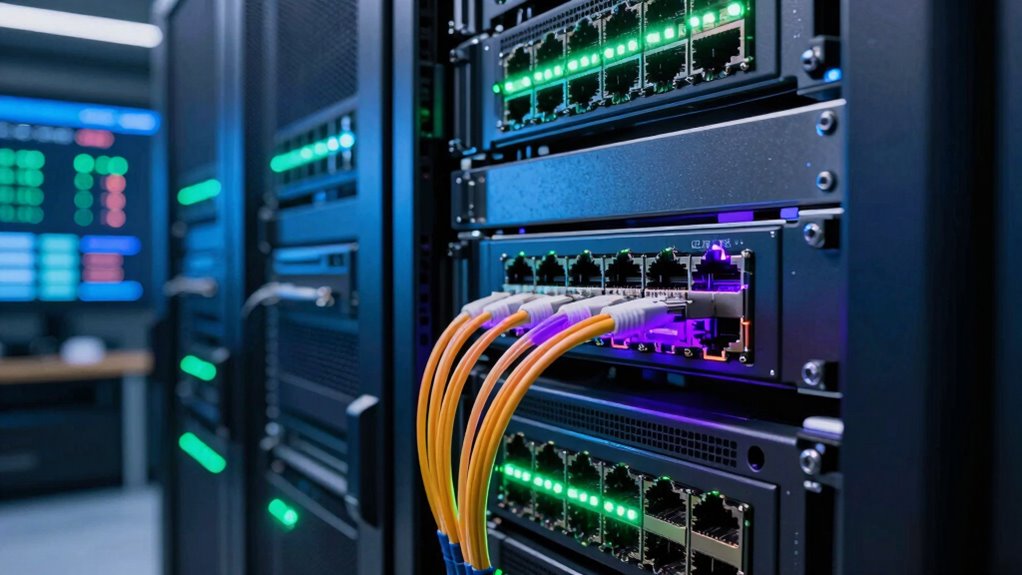
When choosing between RDMA and TCP for NVMe‑oF, consider your workload needs and existing infrastructure. RDMA offers lower latency and higher throughput, making it ideal for latency-sensitive applications like trading or real-time analytics, but requires specialized hardware. TCP is easier to deploy and compatible with standard Ethernet, suitable for general use. Understanding when each protocol shines helps optimize performance and control costs—so continue to explore how these options align with your environment.
Key Takeaways
- RDMA offers lower latency and higher throughput, ideal for latency-sensitive, high-performance workloads.
- TCP-based NVMe‑oF provides broader hardware compatibility and easier deployment, suitable for general-purpose storage needs.
- RDMA requires specialized hardware and network infrastructure, increasing initial costs but delivering superior performance.
- TCP NVMe‑oF is more adaptable to existing networks, making it preferable for environments prioritizing simplicity and cost-effectiveness.
- Choose RDMA when low latency and maximum throughput are critical; opt for TCP when ease of deployment and compatibility matter most.
What Is NVMe Over Fabrics and Why It Matters
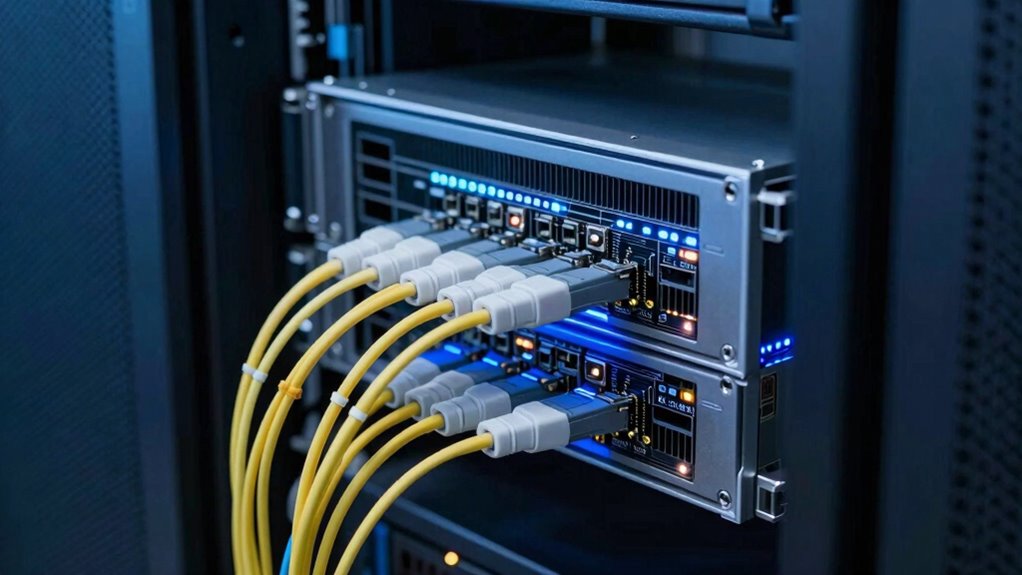
NVMe over Fabrics (NVMe-oF) is a protocol that allows you to connect high-speed NVMe storage devices over a network, enabling faster data access and better scalability. This protocol is crucial when you need to expand storage without sacrificing performance, supporting large-scale data centers. NVMe-oF reduces protocol overhead compared to traditional storage protocols, which helps maintain high throughput and low latency. By leveraging fast networks like RDMA or TCP, it ensures that data moves efficiently across the fabric, making it easier to scale storage infrastructure as your needs grow. The key advantage is seamless scalability without bottlenecks, allowing you to manage more storage devices without compromising speed or response times. This makes NVMe-oF a fundamental technology for modern, high-performance storage solutions. Additionally, the adoption of European Cloud Servers enhances data sovereignty and security, aligning with sustainable and innovative cloud strategies. Understanding the network protocols involved helps optimize performance based on specific infrastructure needs.
How Do NVMe‑oF Protocols Work? An Overview of RDMA and TCP
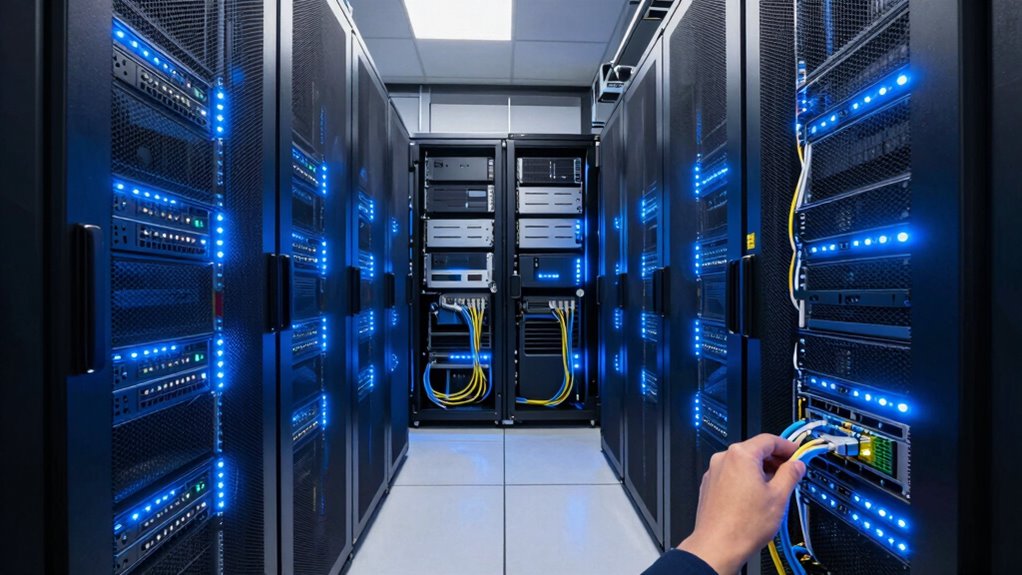
Understanding how NVMe over Fabrics protocols operate is key to appreciating their performance advantages. RDMA and TCP are the primary transport protocols, each with distinct mechanisms for data transfer. RDMA allows direct memory access between systems, offering low latency and high throughput. TCP, on the other hand, uses the well-known TCP/IP stack, providing broader compatibility but typically higher latency. Both protocols address protocol security differently; RDMA often requires careful configuration to ensure data integrity, while TCP benefits from mature security features like TLS. Additionally, your choice impacts vendor lock-in—some protocols tie you to specific hardware or vendors, affecting flexibility. Knowing how each protocol works helps you make informed decisions aligned with your data center’s performance, security, and vendor considerations. Furthermore, selecting the appropriate protocol can influence the cost-efficiency of your storage network deployment.
Key Differences Between RDMA and TCP in NVMe‑oF

When comparing RDMA and TCP in NVMe‑oF, you’ll notice differences in performance and latency, with RDMA often providing lower latency. Compatibility and complexity also vary, as RDMA typically demands specialized hardware and setup, while TCP is more straightforward but may introduce additional overhead. Understanding these key points helps you choose the right protocol for your specific storage needs.
Performance and Latency
The differences in performance and latency between RDMA and TCP in NVMe‑oF are significant and can directly impact your storage application’s responsiveness. RDMA offers lower latency and higher throughput, making it ideal for demanding workloads like storage virtualization and data deduplication, where speed matters. TCP, while more flexible, introduces more overhead, resulting in increased latency and reduced efficiency. Consider these key points:
- RDMA reduces CPU overhead, enabling faster data transfer.
- TCP’s higher latency can slow down real-time operations.
- RDMA’s efficiency benefits workloads with frequent small I/O operations, common in storage virtualization.
Choosing the right protocol depends on your application’s latency sensitivity and throughput needs, directly influencing overall performance.
Compatibility and Complexity
While RDMA and TCP differ markedly in performance and latency, their compatibility and complexity also vary, affecting how easily you can integrate them into your storage environment. RDMA requires specific hardware compatibility, such as specialized network cards and switches, which can increase setup complexity. Its protocol complexity is higher, demanding more detailed configuration and tuning. Conversely, TCP is widely supported on standard Ethernet hardware, making it easier to deploy with existing infrastructure. TCP’s protocol simplicity means less setup time and fewer compatibility issues, but it might sacrifice some performance benefits. Additionally, Free Floating environments often favor TCP for ease of integration, especially in heterogeneous networks. Ultimately, choosing between them depends on your existing hardware and your willingness to manage added complexity for potential performance gains.
How RDMA Enhances Performance and Lowers Latency
RDMA (Remote Direct Memory Access) considerably boosts performance and reduces latency by allowing direct memory access between systems without involving the CPU or operating system overhead. This hardware optimization minimizes data transfer delays and frees up CPU resources for other tasks. Your network topology plays a key role, as RDMA benefits most from a well-designed, low-latency layout.
RDMA enhances performance with direct memory access, lowering latency and CPU load for faster, more efficient data transfer.
Key advantages include:
- Reduced data movement overhead, speeding up I/O operations
- Lower CPU utilization, freeing resources for processing
- Consistent, predictable latency, vital for high-performance workloads
Why TCP Is Simpler and More Compatible for NVMe‑oF
Because TCP/IP is the most widely used and well-understood networking protocol, it offers greater simplicity and compatibility for NVMe‑oF deployments. Its widespread adoption means you’ll find extensive vendor support and established security practices, making it easier to integrate into existing infrastructure. TCP’s compatibility reduces complexity, allowing you to leverage familiar tools and management protocols, which enhances network security and simplifies troubleshooting. This broad support translates into quicker deployment and fewer compatibility issues. To illustrate, here’s a quick comparison:
| Aspect | TCP/IP | RDMA | Key Benefit |
|---|---|---|---|
| Network Security | Mature, with robust security options | Less mature, needs extra care | Easier to secure |
| Vendor Support | Extensive, with many options | Limited, specialized support | Better compatibility and support |
| Ease of Deployment | Simple, well-understood processes | More complex setup | Faster, more reliable deployment |
| Compatibility | High with existing infrastructure | Lower, specialized hardware | Seamless integration |
| Performance | Slightly higher latency, predictable | Lower latency, complex setup | Balance of simplicity and performance |
What Do You Need to Run RDMA and TCP NVMe‑oF? Network Requirements Explained
To successfully implement NVMe‑oF using RDMA or TCP, you need to guarantee your network infrastructure meets specific requirements. Your network topology must support low latency and high bandwidth, ensuring direct and efficient data paths. Additionally, robust security protocols are essential to protect data in transit, especially for sensitive workloads. Properly configured switches and network cards are critical for RDMA, while TCP requires reliable connections and proper routing. Consider these key points:
- Adequate network topology to minimize hops and latency
- Deployment of security protocols like IPsec or encryption for data protection
- Compatible network hardware that supports RDMA or TCP offload capabilities
Meeting these requirements ensures suitable performance and security for your NVMe‑oF deployment.
When Should You Use RDMA in NVMe‑oF? Best Use Cases and Benefits
If you need ultra-low latency and maximum bandwidth efficiency, RDMA is the right choice for NVMe‑oF. It excels in scenarios where speed and performance are critical, such as high-frequency trading or large-scale data analysis. By reducing CPU overhead and increasing throughput, RDMA helps you get the most out of your storage network. Additionally, responsible use and privacy are important considerations when deploying high-performance storage solutions. Understanding the net worth of key industry players can also help inform investment and deployment strategies in high-performance storage environments. The choice between RDMA and TCP should also take into account the easy setup and compatibility requirements of your infrastructure to ensure seamless integration.
Low Latency Benefits
RDMA (Remote Direct Memory Access) considerably reduces latency in NVMe-over-Fabrics (NVMe-oF) deployments, making it ideal for applications that demand rapid data access. You’ll benefit from minimized delays, enabling faster transaction processing and real-time analytics. This low latency is essential for workloads where milliseconds matter, such as financial trading or high-frequency computing. Additionally, RDMA enhances data security by transferring data directly between memory pools without involving CPU or OS layers, reducing attack surfaces. It also improves energy efficiency by lowering CPU overhead, which minimizes power consumption. Consider these key benefits:
- Faster data access for latency-sensitive apps
- Improved data security through direct memory transfers
- Reduced energy consumption via lower CPU utilization
High Bandwidth Efficiency
While low latency is vital for many NVMe‑oF applications, high bandwidth efficiency becomes increasingly important when handling large data transfers or multiple simultaneous streams. RDMA offers superior network optimization, enabling direct memory access that minimizes CPU overhead and maximizes throughput. This makes it ideal for storage innovation, where rapid, high-volume data movement is essential. When your workload involves bulk transfers or continuous data streaming, RDMA’s ability to efficiently utilize available bandwidth ensures you get the most out of your network infrastructure. By reducing protocol overhead, RDMA supports sustained high throughput, making it the best choice for environments demanding maximum bandwidth efficiency. In these scenarios, RDMA helps you access the full potential of your NVMe‑oF deployment.
Is TCP Better for Your Storage Network? Ideal Scenarios and Advantages

TCP often stands out as the preferred choice for storage networks because of its widespread compatibility and ease of deployment. It works well across diverse network topologies and benefits from hardware acceleration, which enhances its performance without complex setup. TCP’s robustness makes it suitable for environments where simplicity and reliability matter most. You’ll find that TCP can adapt easily to existing infrastructure, reducing integration time. Its compatibility with standard networking hardware and protocols ensures straightforward implementation. Consider TCP when your network relies on varied topology or prioritizes ease of management. Benefits include:
- Compatibility with diverse network topologies
- Support for hardware acceleration
- Simplified deployment and maintenance
This combination makes TCP ideal for many storage environments seeking stability and broad support. Compatibility with diverse network topologies ensures seamless integration across different system setups. Additionally, TCP’s proven track record in reliable data transfer underscores its dependability in critical storage scenarios. Its widespread adoption and established standards contribute to its reliability and ease of troubleshooting.
Performance Benchmarks: RDMA vs TCP in Real‑World Tests

Real-world performance benchmarks reveal significant differences between RDMA-based NVMe‑oF and TCP-based NVMe‑oF, especially under demanding workloads. RDMA typically delivers lower latency and higher throughput, enhancing overall user experience. However, hardware compatibility can be a challenge; not all network interface cards support RDMA, limiting its deployment options. TCP-based NVMe‑oF, while slightly slower, offers broader hardware compatibility and easier integration into existing infrastructure. In performance tests, RDMA often outperforms TCP in latency-sensitive applications, but TCP remains competitive where simplicity and cost are priorities. Your choice depends on workload demands and hardware capabilities, impacting performance and user experience. Ultimately, real-world tests demonstrate that each protocol has its strengths and ideal scenarios. Vetted
How to Implement RDMA and TCP in Your NVMe‑oF Environment
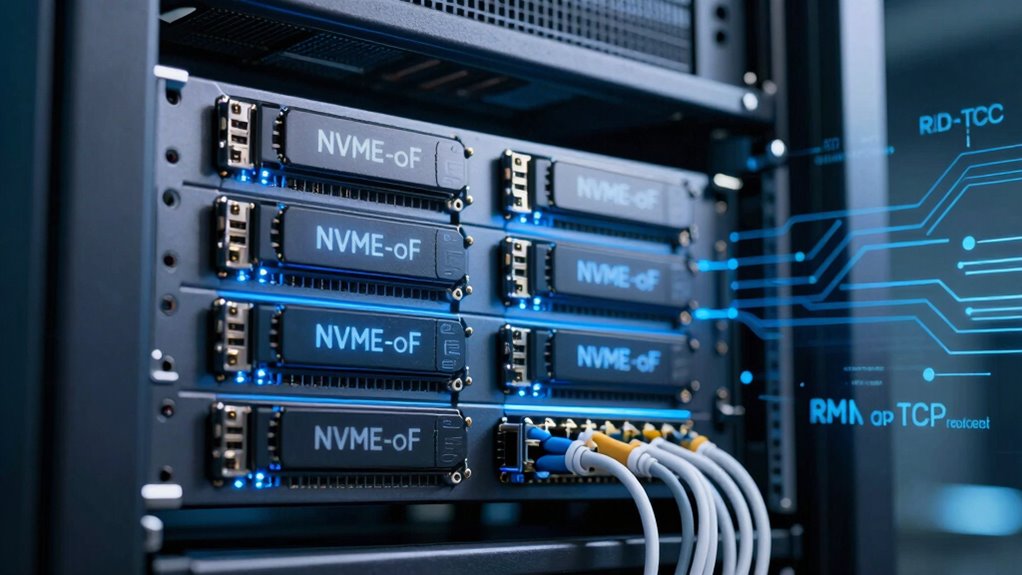
Implementing RDMA and TCP in your NVMe‑oF environment requires careful planning to guarantee compatibility and peak performance. Start by evaluating your network topology, ensuring it supports low-latency connections and sufficient bandwidth for either protocol. Next, configure security protocols such as IPsec or MACsec to protect data in transit, regardless of your choice. Consider these key steps:
- Map out your network topology to support RDMA or TCP, optimizing switch and cable choices
- Implement security protocols suited for data protection and compliance
- Adjust hardware settings and firmware to enable protocol-specific features
- Assess your network topology to ensure it aligns with protocol requirements and supports low-latency, high-bandwidth connections
- Additionally, consider interoperability aspects to avoid potential protocol conflicts and ensure seamless communication between devices. A thorough understanding of cryptid mysteries can also help in diagnosing unexpected network issues that resemble elusive or unexplained phenomena.
- Regularly testing your setup with performance benchmarks can help identify bottlenecks and ensure that your configuration maintains optimal data transfer rates. Incorporating protocol-specific optimizations can further enhance performance and reliability.
NVMe‑oF Cost Factors: Hardware, Software, and Operational Expenses
Understanding the costs of NVMe‑oF involves more than just hardware prices; software licensing and ongoing operational expenses also play significant roles. Your choice between RDMA and TCP can influence these costs differently, depending on your infrastructure. Carefully evaluating these factors helps you optimize your investment and avoid unexpected expenses. Additionally, the selection of compatible and efficient waterproof running watches can impact maintenance and replacement costs over time. When planning your deployment, factoring in these cost considerations ensures a more accurate budget and better long-term value.
Hardware Investment Impact
Investing in NVMe-oF infrastructure involves significant hardware costs, including high-speed network adapters, persistent storage devices, and switches capable of supporting RDMA or TCP protocols. Your hardware footprint directly impacts performance and scalability, making an effective investment strategy vital. You’ll need to evaluate whether your current infrastructure can handle the demands or if upgrades are necessary:
- Upgrading switches for RDMA or TCP support
- Purchasing advanced network adapters
- Expanding storage capacity for high-performance drives
These hardware components determine your overall hardware footprint and influence operational efficiency. A well-planned investment strategy balances upfront costs with long-term performance gains, ensuring your NVMe‑oF deployment is both scalable and cost-effective. Proper hardware choices set the foundation for reliable, high-speed data access.
Software Licensing Costs
Software licensing costs are a critical consideration when deploying NVMe-oF solutions, as they can substantially impact your overall budget. These costs vary depending on the software platform and licensing model you choose, affecting your total cost analysis. Some solutions require per-node licenses, while others offer enterprise-wide agreements, influencing scalability and expenses. It’s essential to evaluate the licensing terms carefully to avoid unexpected costs during deployment or expansion. The table below highlights key licensing factors:
| Licensing Model | Cost Implication | Flexibility |
|---|---|---|
| Per-node | Higher as scale increases | Less flexible |
| Subscription | Predictable, scalable | Moderate |
| Enterprise | Large upfront, fewer ongoing fees | Most flexible |
| Open source | No licensing fees | Fully flexible |
Understanding these options helps you optimize your software licensing costs during your NVMe-oF implementation.
Operational Maintenance Expenses
Have you considered how ongoing operational maintenance impacts the total cost of deploying NVMe‑oF? Operational costs can quickly add up if you don’t implement effective maintenance strategies. These costs include routine hardware checks, software updates, and troubleshooting, which are essential for system reliability. To manage expenses, consider:
- Regular hardware diagnostics to prevent unexpected failures
- Automating software patches to reduce manual effort
- Training staff on efficient maintenance practices
- Incorporating deep‑sky imaging techniques to optimize system performance and reduce downtime
Ensuring Data Integrity and Reliability in NVMe‑oF Deployments
Ensuring data integrity and reliability in NVMe‑oF deployments is critical to maintaining consistent performance and safeguarding valuable information. You should implement robust data replication strategies to prevent data loss during failures or disruptions. Regularly verify data consistency across storage nodes to detect corruption early. Security protocols are essential; encrypt data in transit using TLS or IPsec to prevent interception and tampering. Enable features like end-to-end data protection and checksum verification to catch errors before they reach storage media. Additionally, configure proper access controls and authentication to restrict unauthorized modifications. By combining these practices—data replication, security protocols, and integrity checks—you guarantee your NVMe‑oF environment remains reliable, resilient, and capable of delivering high-performance storage without compromising data safety.
Scalability and Future‑Proofing Your NVMe‑oF Network
To keep your NVMe‑oF network scalable and adaptable, you need to ensure both network architecture flexibility and protocol evolution readiness. Choosing a design that accommodates growth now ensures you won’t be limited later as demands increase. Staying aligned with protocol developments helps future-proof your infrastructure against upcoming technology shifts. Additionally, understanding the human-centered approach to art and technology can inspire innovative solutions that prioritize usability and adaptability. When planning for the future, considering protocol flexibility can help you adapt to emerging standards without costly overhauls.
Network Architecture Flexibility
Network architecture flexibility is crucial when designing an NVMe‑oF environment capable of scaling with your data growth and evolving technology. You need a setup that adapts to changing requirements without major overhauls. A flexible network allows you to modify the network topology easily, whether adding new nodes or reconfiguring existing connections. It also supports different protocol security measures, ensuring data remains protected as your infrastructure expands. Consider how your network can incorporate diverse topologies, such as leaf-spine or mesh, to optimize performance and scalability. Additionally, supporting multiple protocols enhances adaptability, future-proofing your deployment. Flexibility ensures your NVMe‑oF setup stays relevant, reliable, and secure, no matter how your data needs evolve. This approach ultimately reduces downtime and future investment costs. Incorporating standardized configurations can further streamline management and ensure compatibility across different components.
Protocol Evolution Readiness
As data demands grow and technology advances, preparing your NVMe‑oF network for future protocol developments becomes essential. Staying ahead requires monitoring protocol innovation to guarantee your infrastructure remains compatible with upcoming standards. You need to consider ecosystem readiness, making sure your hardware, software, and management tools can support evolving protocols without costly upgrades. Future-proofing involves evaluating how well your current setup can adapt to new features or performance enhancements. By choosing flexible, open standards and fostering a scalable architecture, you minimize the risk of obsolescence. This proactive approach ensures your NVMe‑oF deployment can evolve seamlessly, maintaining high performance and reliability as protocol innovations unfold. Ultimately, readiness for future protocols secures your investment and sustains your network’s growth. Additionally, understanding the protocol evolution can help you anticipate and adapt to upcoming changes more effectively.
Troubleshooting Common Issues With RDMA and TCP Nvme‑oF
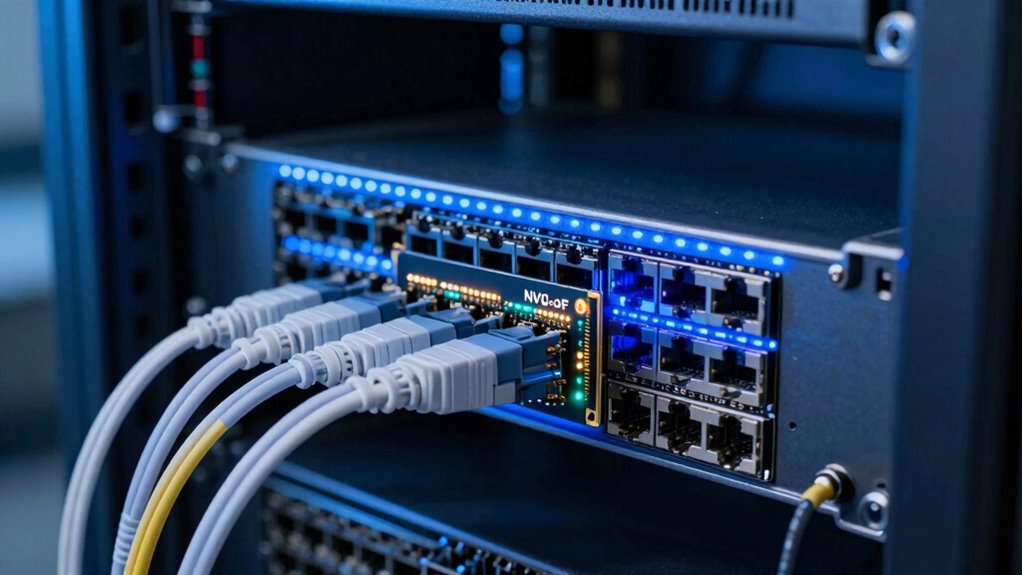
Troubleshooting common issues with RDMA and TCP NVMe-oF can be challenging because both protocols rely on complex configurations and hardware interactions. Network congestion can cause latency spikes or dropped connections, so monitoring traffic and adjusting QoS settings helps. Firmware updates are vital; outdated firmware may lead to protocol incompatibilities or performance issues. To troubleshoot effectively, consider these points:
Effective NVMe-oF troubleshooting requires monitoring network traffic, updating firmware, and verifying configurations.
- Check network congestion and optimize traffic flow.
- Ensure firmware is up to date across all hardware components.
- Validate network configurations, including VLAN and MTU settings.
Regularly updating firmware and monitoring network load are key to maintaining stability. Identifying bottlenecks or misconfigurations early prevents more significant disruptions, ensuring consistent NVMe-oF performance.
Choosing the Right NVMe‑oF Protocol: Criteria and Next Steps
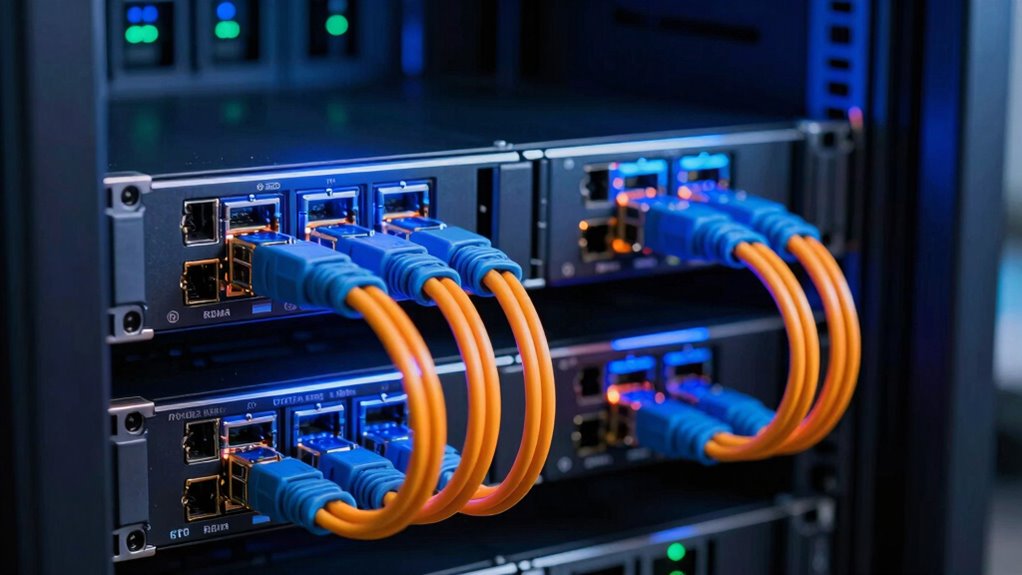
Selecting the appropriate NVMe-oF protocol is essential for optimizing storage performance and ensuring your infrastructure meets your specific needs. To do this effectively, consider protocol compatibility with your existing hardware and network environment. RDMA protocols like RoCE or InfiniBand often require specialized hardware and support from vendors, which can impact deployment complexity. TCP-based NVMe-oF offers broader compatibility and easier integration, especially if vendor support for your current infrastructure is limited. Evaluate your performance goals, latency requirements, and network topology when choosing a protocol. Next steps involve consulting with vendors to verify protocol support and compatibility, testing in a controlled environment, and ensuring your hardware can support the chosen protocol efficiently. Making an informed decision now sets the foundation for a high-performing, reliable storage network.
Final Thoughts: How to Optimize Your Storage Network Beyond the Hype
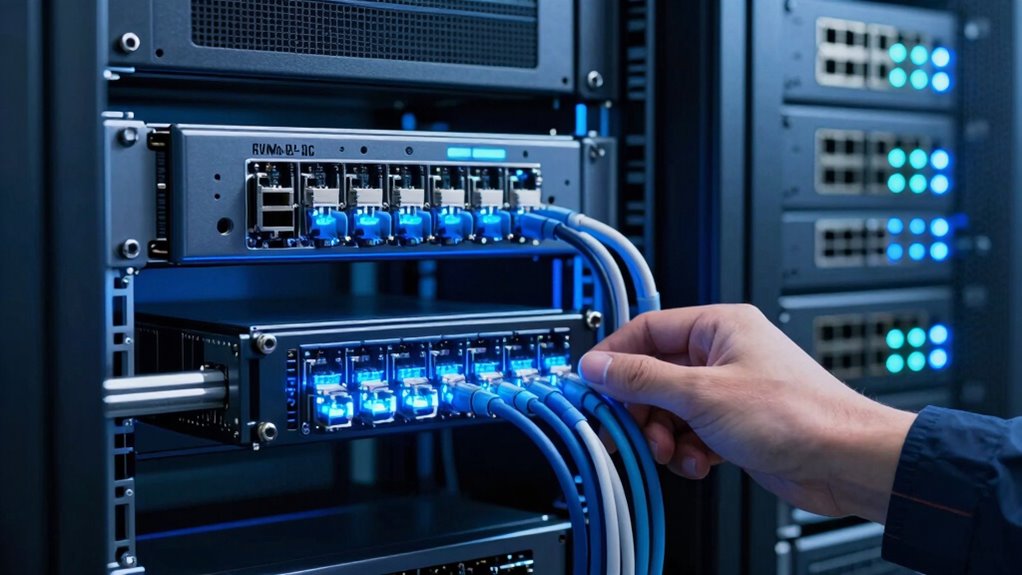
Choosing the right NVMe-oF protocol is just the beginning; truly optimizing your storage network requires looking beyond the hype and focusing on practical strategies. To maximize performance and security, consider these approaches:
Optimizing storage networks goes beyond protocols—focus on scalability, security, and performance monitoring.
- Prioritize cloud scalability to handle growing data demands efficiently
- Implement robust data encryption to protect sensitive information during transmission
- Regularly monitor network performance and adjust configurations accordingly
- Ensure your network employs vetted wave and wind techniques to mitigate latency and improve data transfer stability
Frequently Asked Questions
How Does Nvme‑oF Impact Data Security and Encryption?
NVMe‑oF enhances data security and encryption by supporting advanced encryption standards like AES-256, guaranteeing your data stays private during transmission. You can implement robust encryption protocols to protect sensitive information across the network, maintaining data privacy. RDMA and TCP options both allow secure data transfer, but RDMA often offers lower latency with encryption overhead, making it ideal for high-performance environments. Always guarantee your NVMe‑oF setup includes thorough encryption to safeguard your data.
What Are the Environmental Considerations for Deploying Nvme‑oF Networks?
When deploying NVMe‑oF networks, you should consider energy efficiency and hardware durability. Opt for energy-efficient switches and cables to reduce power consumption and cooling needs. Use durable hardware designed for high-performance data centers to guarantee longevity and reliability. Properly managing heat and airflow minimizes environmental impact, making your deployment more eco-friendly. These steps help balance performance with sustainability, ensuring your NVMe‑oF setup remains efficient and resilient over time.
Can Nvme‑oF Protocols Be Integrated With Existing Storage Solutions?
Imagine upgrading your data center by integrating NVMe-oF with existing storage. Yes, protocols like NVMe over TCP or RDMA can be compatible, but you’ll face scalability challenges. Guarantee protocol compatibility requires careful planning, especially when matching NVMe-oF with legacy systems. For example, a hybrid setup might streamline data flow, but it demands meticulous configuration to avoid bottlenecks and ensure seamless performance across your storage infrastructure.
How Does Nvme‑oF Influence Energy Consumption and Sustainability?
You’ll find that NVMe‑oF can improve energy efficiency by reducing latency and optimizing data transfer. This means less power consumption, which helps lower your overall carbon footprint. By streamlining storage access, NVMe‑oF minimizes energy waste and boosts sustainability efforts. As a result, your data center becomes more environmentally friendly while maintaining high performance. Embracing NVMe‑oF supports your goals of energy conservation and responsible technology use.
What Are the Long-Term Support and Upgrade Paths for RDMA and TCP?
Think of your upgrade path as a well-trodden trail winding through a landscape of evolving technology. For RDMA, vendor support tends to be more specialized, offering a longer upgrade lifecycle but potentially more complex updates. TCP, on the other hand, benefits from widespread support and a steady stream of upgrades, ensuring you stay current. Your choice depends on balancing long-term vendor backing with ease of future upgrades.
Conclusion
Ultimately, choosing between RDMA and TCP for NVMe‑oF depends on your specific needs and priorities. Do you need ultra-low latency and maximum performance, or is simplicity and compatibility more important? By understanding their strengths and limitations, you can make an informed decision that best suits your storage network. Don’t get caught up in the hype—focus on what truly delivers value and performance for your environment.