TLS handshakes are essential for secure internet connections, but they come with hidden costs that can slow down performance. When you reconnect to a website, session resumption helps skip many steps, speeding things up. However, factors like cryptographic algorithms, network latency, and how sessions are stored impact this process. If you’re curious about how to optimize both security and speed, there’s more to uncover below.
Key Takeaways
- TLS handshakes require cryptographic computations that increase latency and resource consumption, especially during frequent reconnections.
- Session resumption reduces handshake overhead by reusing previous cryptographic parameters, lowering latency and server load.
- Failures in session resumption can lead to full handshakes, incurring additional time and computational costs.
- Network latency and congestion amplify the hidden costs of handshakes, impacting overall connection performance.
- Proper session management and cryptographic choices optimize resumption efficiency, minimizing the hidden costs associated with TLS handshakes.
TLS session resumption tools
As an affiliate, we earn on qualifying purchases.
As an affiliate, we earn on qualifying purchases.
What’s a TLS Handshake, and Why Does It Matter?

A TLS handshake is the process that establishes a secure connection between your device and a server. It’s crucial because it guarantees the data exchanged remains private and intact. Understanding the handshake’s significance starts with cryptography history; early encryption methods laid the foundation for modern secure communication. Over time, the protocol evolution of TLS has improved security and efficiency, replacing outdated versions. During the handshake, your device and the server negotiate encryption algorithms, authenticate each other, and generate shared keys. This process might seem complex, but it’s indispensable for establishing trust and confidentiality. Without a proper handshake, sensitive information, like passwords or credit card details, could be exposed. That’s why TLS handshakes are a cornerstone of secure internet communication, making your online activities safer. Recognizing the importance of cryptographic protocols helps appreciate how these measures protect users worldwide, especially as advances in encryption technology continue to enhance security. Additionally, session resumption techniques can reduce the costs associated with repeated handshakes, thereby saving bandwidth and improving overall connection efficiency.
SSL/TLS performance optimization hardware
As an affiliate, we earn on qualifying purchases.
As an affiliate, we earn on qualifying purchases.
How Does TLS Session Resumption Work?
To speed up future connections and reduce the load on servers, TLS session resumption allows your device to reuse previously negotiated cryptographic parameters instead of performing a full handshake every time. This process relies on the evolution of cryptography, which has made it possible to securely save session details. When you reconnect to a server, your device presents a session ID or session ticket, signaling it wants to resume a prior session. The server then verifies this information within the session lifecycle, determining if the stored session can be reused. If valid, the server and your device skip many handshake steps, establishing a secure connection faster. This method maintains security while optimizing performance, streamlining repeated connections without compromising cryptography standards. This process enhances overall network efficiency by reducing latency and computational overhead.]
As an affiliate, we earn on qualifying purchases. As an affiliate, we earn on qualifying purchases.network latency reduction devices
Why Reusing TLS Sessions Speeds Up Connections

Reusing TLS sessions accelerates the connection process by eliminating the need to repeat many of the time-consuming handshake steps. This saves your device from performing full cryptographic calculations and negotiating new parameters each time, leading to faster connections. When a session is resumed, the client and server skip the exchange of certificates and key generation, relying instead on previously agreed cryptographic algorithms. This reduces latency and improves overall performance, especially on repeated connections within the same network protocols. Understanding session resumption also helps optimize overall network security by maintaining consistent cryptographic settings over multiple connections. Additionally, implementing proper session management practices ensures that session resumption remains both efficient and secure. Proper management of session lifetime ensures that sessions are reused within a secure time window, balancing performance benefits with security concerns.
TLS session management software
As an affiliate, we earn on qualifying purchases.
As an affiliate, we earn on qualifying purchases.
The Hidden Costs of TLS Handshakes During Resumption
While session resumption speeds up subsequent connections, it also introduces hidden costs during the handshake process. Despite handshake optimization improving efficiency, maintaining session persistence requires extra steps. When resuming a session, the server must verify the session credentials, which can involve additional cryptographic checks. This verification adds latency, especially if session data isn’t readily available or if security policies demand frequent re-authentication. These hidden costs can offset some of the benefits, causing delays that aren’t immediately obvious. You might think reuse eliminates overhead, but the handshake still consumes resources to ensure the session’s validity. Efficient session management plays a crucial role in balancing security and performance. Understanding these hidden costs helps you optimize your TLS setup, balancing the advantages of session persistence with the need for a swift, secure handshake.
TLS Session Resumption Types: Session IDs and Tickets
TLS session resumption relies on two main methods: session IDs and session tickets. Both aim to reduce network latency and avoid full handshakes by reusing cryptographic algorithms established previously. Session IDs store a server-generated identifier, which, if valid, allows quick resumption without renegotiating cryptographic parameters. Tickets, on the other hand, embed encrypted session data, enabling clients to resume sessions without server-side memory. Vetted understanding of these methods ensures you can implement the most secure and efficient session resumption strategies. Additionally, cryptographic algorithms play a crucial role in protecting session data during resumption, ensuring security is maintained. Proper implementation practices are essential to prevent vulnerabilities in session resumption processes. Key points include:
- Faster reconnections by bypassing full handshakes
- Reduced load on servers managing session states
- Dependence on secure cryptographic algorithms for ticket encryption
- Impact on network latency and overall performance
- Continuous security assessments are vital to adapt to emerging threats and vulnerabilities. Implementing best practices for session management helps mitigate potential risks. Understanding these types helps you optimize TLS performance while maintaining security during session resumption.
How a Full TLS Handshake Differs From Resumption

When comparing full TLS handshakes to session resumption, it’s important to understand the fundamental differences in how they establish secure connections. A full handshake involves multiple steps: negotiating encryption algorithms, exchanging keys, and verifying certificates, often using client-side caching to reduce repeated validation. This process guarantees maximum security but takes more time and resources. In contrast, resumption skips many of these steps by reusing session parameters, speeding up the connection. However, techniques like certificate pinning can complicate resumption, as they require strict validation of the server’s identity. During a full handshake, the server provides a new certificate, while in resumption, the session continues without re-verifying it, saving time but potentially impacting security policies.
What Factors Impact TLS Handshake Costs
Your TLS handshake costs are influenced by the cryptographic algorithms you choose, which can affect both security and performance. Network latency also plays a role, as longer delays mean more time spent establishing secure connections. Understanding these factors helps you optimize handshake efficiency and reduce overall costs. Additionally, implementing Free Floating techniques can help improve handshake performance by minimizing resource consumption and reducing the need for extensive cryptographic computations. Incorporating water-related optimizations can also streamline data transfer processes, further enhancing overall network efficiency. Selecting appropriate algorithms can further reduce handshake durations and improve security balances, especially when considering cryptographic algorithm efficiency in different network conditions.
Cryptographic Algorithm Choices
The choice of cryptographic algorithms directly influences the cost and efficiency of the TLS handshake process. Selecting stronger algorithms often increases computational load, affecting session management and overall handshake speed. Different algorithms require varying processing times, which impacts latency and resource use. Your decision impacts how quickly sessions can be established or resumed, especially under high traffic. Consider these factors when choosing cryptographic algorithm choices:
- Key exchange methods (e.g., RSA vs. Diffie-Hellman)
- Symmetric encryption strength
- Signature algorithms for authentication
- Compatibility with client/server capabilities
Choosing preferable algorithms balances security and performance, reducing handshake costs. Efficient cryptographic choices streamline session management, improve user experience, and lower resource consumption during the handshake process. Additionally, understanding cryptographic algorithm choices can help optimize the balance between security and handshake efficiency.
Network Latency Impact
Network latency plays a crucial role in determining the overall cost of a TLS handshake, as it directly affects how quickly handshake messages travel between client and server. Higher latency increases the time needed to establish or resume sessions, especially with cryptographic vulnerabilities that require additional validation. If sessions expire quickly, repeated handshakes become more frequent, amplifying latency effects. Factors influencing this include:
| Factor | Impact |
|---|---|
| Geographical distance | Longer distances increase message travel time |
| Network congestion | Congestion causes delays, prolonging handshakes |
| Session expiration | Short-lived sessions force more handshakes |
Understanding these factors helps optimize performance and security, balancing session expiration policies against latency costs, which can significantly impact network efficiency and user experience. Additionally, implementing session resumption techniques can mitigate some of these latency effects by reducing the need for full handshakes. Recognizing how cryptographic vulnerabilities influence handshake procedures also highlights the importance of updating security protocols to minimize unnecessary handshakes. Moreover, proactively managing session lifetime policies can help reduce the frequency of handshakes, thereby decreasing the overall latency and improving overall efficiency.
Why Some Session Resumption Attempts Fail: and What to Do
Session resumption can streamline TLS handshakes and improve performance, but it doesn’t always succeed. Failures often happen due to session timeout, where stored session data expires, or client compatibility issues, like outdated browsers or misconfigured systems. Other common reasons include server-side settings that prevent resumption, or network interruptions during handshake attempts. To improve success rates, you should:
- Check session timeout durations and adjust server settings accordingly
- Ensure clients and servers support the same session resumption protocols
- Keep client software up to date to maximize compatibility
- Monitor network stability to prevent interruptions during handshakes
- Understand the importance of session resumption protocols and ensure they are correctly implemented. Additionally, awareness of thermal behavior can inform how systems are configured to maintain stable connections under varying network conditions. Recognizing how session data management impacts handshake success can help optimize overall system performance. Moreover, configuring session ticket settings properly can reduce the likelihood of resumption failures by maintaining session state efficiently. Being mindful of connection stability and how it influences handshake success is also crucial for reliable TLS connections.
Addressing these factors helps you reduce failed attempts, ensuring smoother, faster TLS connections.
How TLS Handshake Costs Affect High-Performance Networks
While TLS handshake processes are essential for establishing secure connections, their inherent costs can substantially impact high-performance networks. Each handshake involves negotiating cipher suites, which determine encryption strength and performance, and performing key exchange operations that require computational resources. These steps introduce latency, slowing down data transfer and reducing overall throughput. In high-performance environments like data centers or content delivery networks, even milliseconds matter, and frequent handshakes can create bottlenecks. Complex cipher suites and intensive key exchange algorithms increase processing time, consuming valuable CPU cycles. Additionally, session resumption techniques can help mitigate some of these costs by reusing previous session parameters, thereby reducing the need for full handshakes. This additional overhead hampers the network’s ability to handle large volumes of traffic efficiently. To maintain ideal performance, you need to understand how handshake costs influence your infrastructure and explore strategies to mitigate their impact.
Tips to Optimize TLS Session Resumption
To improve TLS session resumption, you should enable session tickets and use session caching to reduce handshake overhead. Additionally, optimizing the timing of resumption attempts can prevent unnecessary handshakes and boost performance. Implementing these tips helps maintain quick, secure connections with less resource consumption.
Enable Session Tickets
Enabling session tickets is a straightforward way to improve TLS session resumption efficiency. By using session tickets, your server can store session state information securely, reducing handshake overhead. When a client reconnects, it presents the ticket, allowing the server to decrypt it without maintaining session data. This process relies on proper ticket encryption to guarantee security. To optimize this setup:
- Enable ticket support in your server settings
- Use strong encryption algorithms for ticket encryption
- Rotate session tickets regularly to enhance security
- Monitor ticket expiration to balance performance and security
Implementing these steps ensures faster session resumption and reduces server load. Proper management of session tickets offers a practical, effective way to improve TLS performance while maintaining security.
Use Session Caching
Building on session tickets, implementing session caching further streamlines TLS session resumption. By storing session identifiers in a session cache, you reduce the need for full handshakes, saving time and resources. When a client reconnects, it sends the session ID, allowing the server to verify and resume the previous session swiftly. Properly managing your session cache ensures quick resumption and enhances user experience. Here’s a helpful overview:
| Session Cache Strategy | Benefits |
|---|---|
| In-memory storage | Fast access, ideal for high-performance |
| Persistent storage | Maintains sessions across restarts |
| Session timeout | Prevents stale sessions, saves memory |
| Cache size | Balances memory use and hit rate |
| Expiration policies | Ensures security and efficiency |
Using session identifiers effectively keeps your TLS connections efficient and secure.
Optimize Resumption Timing
Optimizing the timing of your TLS session resumption can considerably reduce connection setup delays and improve overall performance. By adjusting session lifetime and managing handshake frequency, you can strike a balance between security and efficiency. Shorter session lifetimes decrease the risk of session hijacking but may increase handshake frequency, leading to more overhead. Conversely, longer session lifetimes reduce handshake frequency but can pose security risks if sessions are compromised. To optimize resumption timing:
- Set appropriate session timeout values based on your traffic patterns
- Use session tickets to enable faster resumptions without storing server state
- Balance session lifetime to minimize handshake frequency while maintaining security
- Monitor handshake patterns to adjust session settings dynamically
This approach guarantees smoother connections and better resource management.
How Hardware and Software Impact TLS Efficiency
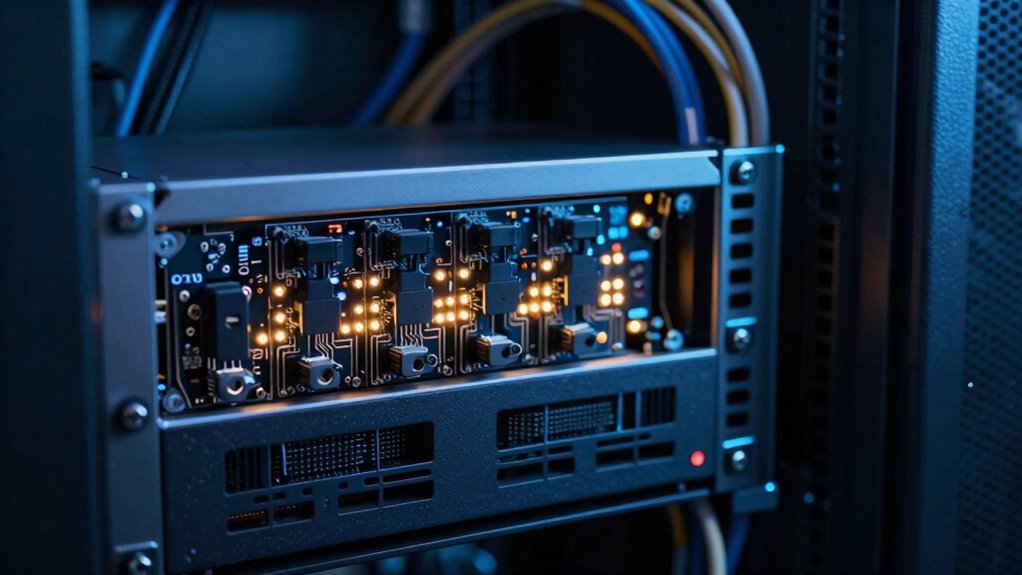
Hardware and software choices play a crucial role in determining TLS efficiency. Your hardware impact includes processor speed, memory capacity, and network interfaces, which influence how quickly encryption and decryption processes occur. Faster CPUs and dedicated hardware accelerators reduce latency during handshake operations. On the software side, optimization techniques like streamlined cryptographic libraries and efficient TLS implementations can notably improve performance. Proper configuration of your servers and clients ensures minimal overhead and quicker session resumption. Additionally, using hardware that supports features like TLS offloading can offload intensive tasks from the CPU, boosting throughput. By focusing on hardware impact and software optimization, you can reduce handshake times, enhance overall TLS efficiency, and provide a smoother, faster experience for users connecting to your services.
Best Practices for Secure TLS Session Resumption

Implementing secure and efficient TLS session resumption techniques can substantially reduce handshake overhead and improve user experience. To achieve this, adopt cryptography patterns that prioritize stateless resumption methods, like session tickets, which minimize server load. Use session identifiers wisely to prevent unnecessary network congestion during repeated connections. Regularly update your TLS configurations to align with current security standards, ensuring session secrets remain protected. Additionally, leverage hardware acceleration where possible to optimize cryptographic operations. These best practices help balance security and performance, reducing latency and resource consumption.
- Use session tickets for stateless resumption
- Limit session lifetime to prevent stale sessions
- Employ hardware acceleration for cryptography
- Monitor network traffic to avoid congestion
Troubleshooting Common TLS Session Resumption Issues

When troubleshooting TLS session resumption issues, pinpointing where the process is breaking down is vital. Start by verifying certificate validation; if certificates are expired, revoked, or misconfigured, session resumption will fail. Check the server’s certificate chain and ensure proper validation on the client side. Next, examine cipher negotiation—if the client and server can’t agree on a compatible cipher suite, resumption won’t occur. Review server and client configurations to confirm supported cipher suites and protocol versions align. Also, verify that session tickets or IDs are correctly stored and reused; misconfigured session caches can disrupt resumption. By systematically analyzing certificate validation steps and cipher negotiation processes, you can identify and resolve common issues preventing successful TLS session resumption.
Emerging Technologies to Reduce TLS Handshake Costs

Emerging technologies like Zero Round-Trip Resumption, Pre-Shared Key methods, and session ticket optimization are changing how we reduce TLS handshake costs. These innovations aim to speed up connections and lower latency by minimizing the number of exchanges needed. Understanding these approaches can help you improve security and performance in your systems.
Zero Round-Trip Resumption
Zero Round-Trip Resumption (0-RTT) is a promising technology that aims to drastically cut the latency associated with TLS handshakes. By allowing data to be sent during the initial connection, it reduces the need for a full cryptographic handshake, minimizing network latency. This speeds up secure communications, especially for repeated connections. However, 0-RTT introduces risks like replay attacks, which need mitigation strategies. Its implementation relies on storing session secrets securely. As a result, you’ll experience faster reconnections and improved user experience. Key points include:
- Eliminates the need for a second round-trip during handshake
- Enables immediate data transfer with session resumption
- Reduces overall connection setup time
- Requires careful handling of security risks and session secrets
Pre-Shared Key Methods
Pre-Shared Key (PSK) methods are gaining attention as a way to considerably reduce TLS handshake times by bypassing some of the traditional cryptographic exchanges. Instead of negotiating session keys during the handshake, you use a pre-established secret, which streamlines the connection process. This approach maintains cryptographic strength through carefully managed keys, ensuring security isn’t compromised. Proper key management is vital here, as it involves securely distributing and rotating PSKs to prevent potential vulnerabilities. By eliminating the need for full key exchanges each time, PSK methods cut down latency and computational overhead. These innovations are especially beneficial in environments with low latency requirements or constrained resources, where rapid, secure connections are essential.
Session Ticket Optimization
Have you considered how session tickets can streamline TLS handshakes? They enable faster session resumption by allowing clients to store encrypted session data issued by the server. Instead of performing a full handshake, clients present the session ticket during reconnection, reducing latency and computational load. This optimization minimizes the time and resources needed for secure connections, especially during frequent reconnections.
- Eliminates the need for server-side session state storage
- Speeds up session resumption process
- Reduces handshake latency considerably
- Enhances scalability for high-traffic websites
Frequently Asked Questions
How Does TLS Session Resumption Impact Server Scalability?
TLS session resumption substantially boosts your server’s scalability by reducing the need for full handshakes, saving resources, and maintaining session persistence. This means your server handles fewer computationally intensive operations, freeing up resources for other tasks. As a result, you can support more concurrent connections, improve response times, and optimize resource management, ultimately enhancing overall performance without sacrificing security or user experience.
Can Session Tickets Improve TLS Handshake Performance?
Yes, session tickets can improve TLS handshake performance. By using a session ticket, you avoid the need for a full handshake, which speeds up the connection process. When you reconnect to a server, the session ticket allows you to resume a previous session quickly, reducing latency and server load. This performance enhancement helps deliver faster, more efficient secure connections, especially during frequent reconnects or high traffic.
What Are the Security Risks Associated With Session Resumption?
You should know that session resumption can pose security risks like session fixation and session hijacking. Attackers might exploit stored session data to take control of your secure connection or impersonate you. While session tickets and IDs improve performance, they can also be vulnerable if not managed properly. Always guarantee proper safeguards are in place, such as secure storage and validation, to prevent malicious actors from hijacking or fixing sessions.
How Do Different Browser Behaviors Influence TLS Session Reuse?
Your browser’s behavior markedly influences TLS session reuse through cookie persistence and browser caching. If cookies are stored persistently, they help maintain session states, enabling quicker resumption. Likewise, effective browser caching retains session data, reducing handshake frequency. However, some browsers may reset sessions more often for security, decreasing reuse opportunities. By understanding these behaviors, you can optimize your connection speed while balancing security considerations.
Are There Limitations to TLS Session Resumption on Mobile Devices?
Yes, there are limitations to TLS session resumption on mobile devices. You might encounter issues due to session expiration, which can force a full handshake, increasing latency. Additionally, device compatibility varies; some older or less capable devices may not support session resumption features effectively. These factors can impact your browsing experience, especially on networks with unstable connections or when sessions expire frequently.
Conclusion
Understanding TLS session resumption is like knowing the secret handshake to faster, secure connections. By grasping its costs and best practices, you can keep your data flowing smoothly without getting caught in the handshake hustle. Remember, optimizing TLS isn’t just about speed; it’s about building trust that’s as solid as a fortress. So, keep these insights in mind, and turn your server’s handshake into a well-choreographed dance rather than a clumsy stumble.