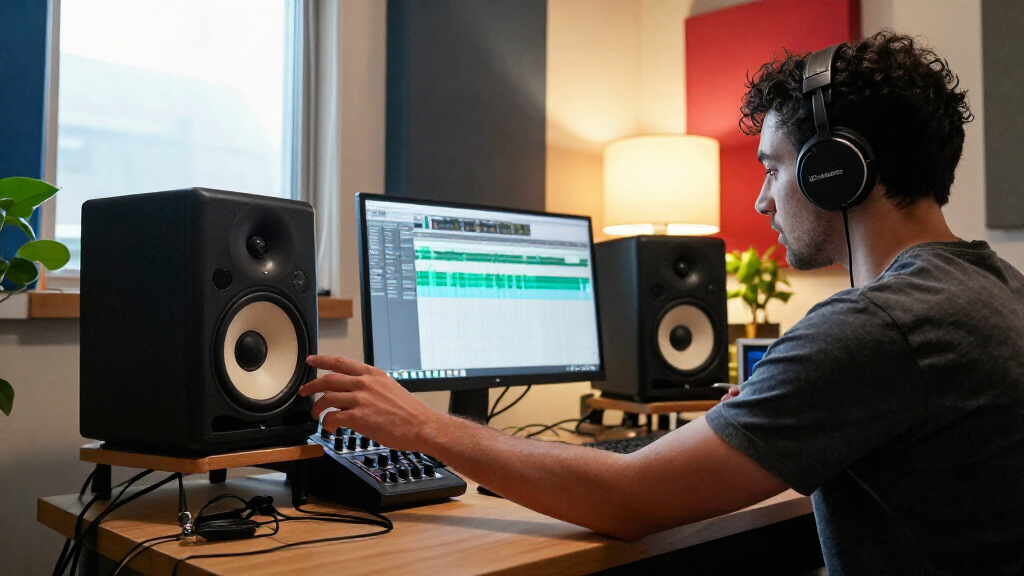

For Black Friday studio monitor speakers, my best overall pick is the JBL Professional 305P MkII, whose 5-inch format offers a useful balance of near-field monitoring and room-friendly size. The Yamaha HS4 suits buyers who want a compact pair, while the KRK Rokit 7 G4 is the larger choice for listeners who need more low-frequency reach. The main tradeoffs are speaker size, placement space, connectivity, and whether you need a matched pair or a single monitor. Smaller models fit desks more easily but have less bass extension; larger speakers need more room and careful placement. Read on for my full breakdown and buying advice.

Get audio and creator gear delivered free with Prime
- Fast, free delivery on millions of items
- Prime Video, Amazon Music and more included
- Member-only deals all year
Complete the kit


Key Takeaways
- The JBL 305P MkII earns the overall lead by pairing a practical 5-inch size with a purpose-built near-field design; the larger KRK Rokit 7 G4 is a better fit when bass reach and output take priority.
- Compact options serve different workflows. Yamaha HS4 and PreSonus Eris 3.5 are small near-field pairs, while Edifier MR3 adds Bluetooth for flexible desktop listening.
- Several listings are single speakers, not pairs. The Mackie MR524 and JBL 308P MkII require a second unit for stereo monitoring, which affects setup planning.
- Room size should guide woofer size. The 8-inch JBL 308P MkII and 7-inch KRK Rokit 7 G4 need more space and placement care than the compact desktop models.
- Connectivity is a meaningful separator. Bluetooth on the Edifier MR3 favors convenience, while buyers choosing studio-focused models should check their audio interface outputs and cable needs.
| Yamaha HS4 Powered Studio Monitor in Black, Pair (HS4 B) |  | Best for Small Editing Desks | Included: Pair | Woofer: 4.5-inch cone | Tweeter: 1-inch dome | VIEW LATEST PRICE | See Our Full Breakdown |
| Edifier MR4.5 Bi-Amped Studio Monitor Speakers, 80W RMS, Black |  | Best for Flexible Connectivity | Power: 80 W RMS total (30 W × 2 + 10 W × 2) | Drivers: 4.5-inch mid-bass drivers and 1-inch silk dome tweeters | Frequency response: 50 Hz–40 kHz | VIEW LATEST PRICE | See Our Full Breakdown |
| Edifier MR3 Powered Studio Monitor Speakers with Bluetooth |  | Best Budget-Friendly Desktop Pick | Power output: 18 W × 2 RMS; 36 W maximum | Drivers: 3.5-inch mid-low drivers and 1-inch tweeters | Frequency response: 52 Hz–40 kHz | VIEW LATEST PRICE | See Our Full Breakdown |
| KRK Rokit 7 G4 Powered Studio Monitor Pair, Black |  | Best for Larger Mixing Rooms | Included: Pair | Woofer: 7-inch Kevlar | Tweeter: 1-inch Kevlar | VIEW LATEST PRICE | See Our Full Breakdown |
| JBL Professional 305P MkII 5-Inch Powered Studio Monitor Speakers, Pair, Black |  | Best Overall for Nearfield Mixing | Included: Pair | Woofer: 5 inches | Tweeter: 1 inch (25 mm) | VIEW LATEST PRICE | See Our Full Breakdown |
| Mackie MR524 5-Inch Powered Studio Monitor, Single, Black |  | Best for Room Adjustment | Speaker type: Powered studio monitor | Woofer: 5-inch polypropylene | Tweeter: 1-inch silk dome | VIEW LATEST PRICE | See Our Full Breakdown |
| JBL Professional 308P MkII 8-Inch Powered Studio Monitor Speaker, Black (Single) |  | Best for Bass Reach | Speaker type: Powered studio monitor | Woofer: 8 inches | Tweeter: 1 inch | VIEW LATEST PRICE | See Our Full Breakdown |
| KRK Kreate 3 Powered Studio Monitors (Pair) |  | Best Compact Wireless Pair | Speaker type: Monitor | Woofer: 3.5-inch woven glass fiber composite | Tweeter: 1-inch textile dome | VIEW LATEST PRICE | See Our Full Breakdown |
| Ortizan C7 Powered Studio Monitors Pair, Black |  | Best for Flexible Desktop Connections | Speaker type: Monitor | Woofer: 3.5-inch carbon fiber | Tweeter: 0.75-inch silk dome | VIEW LATEST PRICE | See Our Full Breakdown |
| PreSonus Eris 3.5 Powered Studio Monitors, Pair — 3.5” Active Near |  | Best for Beginners | Speaker type: Active near-field studio monitors | Woofer: 3.5-inch woven composite | Tweeter: 1-inch silk dome | VIEW LATEST PRICE | See Our Full Breakdown |
| ADAM Audio D3V Active Desktop Studio Monitor Speakers, Black |  | Best Compact USB-C Pick | Woofer: 3.5-inch aluminum | Tweeter: 1.5-inch D-ART | Frequency extension: Down to 45 Hz | VIEW LATEST PRICE | See Our Full Breakdown |
| Pioneer DJ DM-40D 4-inch Active Desktop Monitor Speakers, Pair, Black |  | Best for Home DJs | Woofer: 4 inches | Tweeter: 19 mm | Audio modes: DJ; Production | VIEW LATEST PRICE | See Our Full Breakdown |
| Edifier MR4 4-Inch Active Near-Field Studio Monitor Speakers | 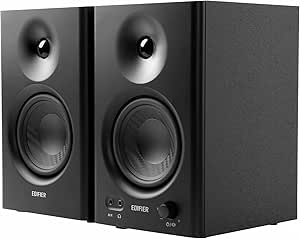 | Best for Studio and Everyday Listening | Woofer: 4-inch composite | Tweeter: 1-inch silk dome | Maximum output power: 42 W | VIEW LATEST PRICE | See Our Full Breakdown |
| Black Friday studio monitor speaker | Woofer | Tweeter | Inputs |
|---|---|---|---|
| Yamaha HS4 Powered Studio Moni | 4.5-inch cone | 1-inch dome | XLR/TRS combo, RCA, stereo mini |
| Edifier MR4.5 Bi-Amped Studio | — | — | XLR, TRS, RCA, AUX |
| Edifier MR3 Powered Studio Mon | — | — | — |
| KRK Rokit 7 G4 Powered Studio | 7-inch Kevlar | 1-inch Kevlar | — |
| JBL Professional 305P MkII 5-I | 5 inches | 1 inch (25 mm) | Balanced XLR and 1/4-inch TRS |
| Mackie MR524 5-Inch Powered St | 5-inch polypropylene | 1-inch silk dome | — |
| JBL Professional 308P MkII 8-I | 8 inches | 1 inch | Balanced XLR and 1/4-inch TRS |
| KRK Kreate 3 Powered Studio Mo | 3.5-inch woven glass fiber composite | 1-inch textile dome | — |
| Ortizan C7 Powered Studio Moni | 3.5-inch carbon fiber | 0.75-inch silk dome | — |
| PreSonus Eris 3.5 Powered Stud | 3.5-inch woven composite | 1-inch silk dome | Balanced TRS, RCA, front-panel AUX |
| ADAM Audio D3V Active Desktop | 3.5-inch aluminum | 1.5-inch D-ART | USB-C; balanced 1/4-inch TRS |
| Pioneer DJ DM-40D 4-inch Activ | 4 inches | 19 mm | RCA; mini-jack |
| Edifier MR4 4-Inch Active Near | 4-inch composite | 1-inch silk dome | 1/4-inch balanced TRS; RCA; AUX |
More Details on Our Top Picks
Yamaha HS4 Powered Studio Monitor in Black, Pair (HS4 B)
The Yamaha HS4 suits a small music or video workspace where I want a pair of monitors without giving up room for larger cabinets. Its 4.5-inch woofer and 26-watt output are a more restrained fit than the JBL 305P MkII, which has a larger 5-inch woofer and higher stated power. Room Control and High Trim give me some adjustment for placement, while the XLR/TRS combo, RCA, and stereo mini inputs make it easy to connect different sources. Yamaha includes the cables and pads needed for a basic setup. The tradeoff is limited low-end reach: the stated response starts at 60 Hz, so producers who need to judge deep bass may prefer a larger option. This pair makes more sense for nearfield editing and compact rooms than for bass-heavy mixing.
Pros:- Compact 4.5-inch woofer design for space-limited desks
- Room Control and High Trim allow basic sound adjustment
- XLR/TRS combo, RCA, and stereo mini inputs
- Pair includes speaker cable, stereo mini-to-RCA cable, and anti-slip pads
Cons:- 26-watt output is less suited to loud listening than the JBL 305P MkII
- 60 Hz stated low-frequency limit leaves deep bass less represented
- No Bluetooth connectivity is listed
Best for: Video editors and music makers who need a compact stereo pair for a small desk and mostly moderate listening levels.
Not ideal for: Bass-focused producers or users who need strong low-frequency monitoring, since the stated response begins at 60 Hz and the output is modest.
- Included:Pair
- Woofer:4.5-inch cone
- Tweeter:1-inch dome
- Frequency response:60 Hz–22 kHz (-10 dB)
- Output power:26 W and above 26 W
- Inputs:XLR/TRS combo, RCA, stereo mini
- Controls:Room Control and High Trim
- Included accessories:Speaker cable, stereo mini-to-RCA cable, anti-slip pads
Our verdict“Choose the Yamaha HS4 if you need a compact wired pair for editing or light production in a small room.”
Edifier MR4.5 Bi-Amped Studio Monitor Speakers, 80W RMS, Black
The Edifier MR4.5 is the most flexible pick here for a desk that serves both a studio setup and everyday listening. Its XLR, TRS, RCA, AUX, and Bluetooth 6.0 connections cover balanced gear, consumer sources, and wireless playback; LDAC and multipoint pairing add convenience beyond the wired focus of the Yamaha HS4. For sound shaping, I get high and low controls, room compensation, and a 9-band EQ, so placement and personal preferences are easier to accommodate. The 4.5-inch drivers keep it closer to the HS4 in scale than to the larger KRK Rokit 7 G4. The tradeoff is that wireless convenience and extensive EQ do not make it a substitute for a larger monitor when deep bass or higher output is the priority. Its listed Bluetooth range is 10 meters.
Pros:- Balanced XLR and TRS inputs plus RCA and AUX
- Bluetooth 6.0 with LDAC and multipoint pairing
- 9-band customizable EQ with room compensation
- Independent high and low controls
Cons:- 4.5-inch mid-bass drivers offer less scale than the KRK Rokit 7 G4’s 7-inch woofers
- Listed Bluetooth range is 10 meters
- Room or desktop placement may call for bass adjustment
Best for: Desktop producers and hybrid work-from-home users who want balanced studio inputs alongside Bluetooth playback and adjustable EQ.
Not ideal for: Mixers who need larger woofers and stronger low-frequency presentation, or listeners who will place the speakers beyond the listed 10-meter Bluetooth range.
- Power:80 W RMS total (30 W × 2 + 10 W × 2)
- Drivers:4.5-inch mid-bass drivers and 1-inch silk dome tweeters
- Frequency response:50 Hz–40 kHz
- Inputs:XLR, TRS, RCA, AUX
- Bluetooth:Version 6.0, LDAC, multipoint pairing
- Bluetooth range:10 meters
- DSP:24-bit/96 kHz
- EQ:9-band customizable EQ
- Warranty:2 years
Our verdict“Pick the MR4.5 if you want one compact pair for wired production connections, wireless playback, and hands-on EQ shaping.”
Edifier MR3 Powered Studio Monitor Speakers with Bluetooth
The Edifier MR3 is aimed at listeners who want monitor-style connections and sound options in a smaller desktop pair. Its 3.5-inch drivers make it more space-conscious than the Edifier MR4.5’s 4.5-inch drivers, while Bluetooth 5.4, balanced TRS, RCA, AUX, and headphone output let it handle a mix of production and casual playback sources. Music, Monitor, and Custom modes provide a quick way to change the presentation, with app-based EQ for more adjustment. Compared with the Yamaha HS4, the MR3 adds wireless listening and app control, but its lower stated power and smaller drivers make it less suited to filling a room or judging bass-heavy mixes. The corded power requirement and 10-meter Bluetooth range also shape where it fits best.
Pros:- Compact 3.5-inch driver format for desktop placement
- Bluetooth 5.4 plus balanced TRS, RCA, and AUX inputs
- Music, Monitor, and Custom sound modes with app EQ
- MDF cabinet material
Cons:- Smaller drivers and lower power than the Edifier MR4.5
- Requires corded power
- Listed Bluetooth range is 10 meters
Best for: New producers, students, and desktop editors who need compact speakers with both wired monitor connections and Bluetooth.
Not ideal for: Producers working on bass-heavy material or users who need high output across a larger room; the 3.5-inch drivers and 18 W-per-channel rating are modest.
- Power output:18 W × 2 RMS; 36 W maximum
- Drivers:3.5-inch mid-low drivers and 1-inch tweeters
- Frequency response:52 Hz–40 kHz
- Peak SPL:92.5 dB
- Connectivity:Bluetooth 5.4, balanced TRS, RCA, AUX, headphone output
- Sound modes:Music, Monitor, Custom
- Cabinet material:MDF
- Dimensions:6.9 × 12.1 × 16.2 inches
- Warranty:2 years
Our verdict“The MR3 fits a compact beginner or editing desk where wireless playback and multiple sound modes matter more than room-filling output.”
KRK Rokit 7 G4 Powered Studio Monitor Pair, Black
The KRK Rokit 7 G4 is the larger-format choice for a studio where a 7-inch woofer can provide more scale than compact pairs like the Yamaha HS4 or Edifier MR3. Its bi-amped Class D design and Kevlar woofer and tweeter are specified for studio, broadcast, and mixing work, while the onboard LCD-driven EQ gives me a way to shape the sound for the room. That makes it a stronger fit for producers who need more output and cabinet size than the smaller desktop options offer. The tradeoff is space: these monitors need room on the desk or stands and are less suited to close, cramped setups. The supplied data lists Bluetooth and optical connectivity but does not specify XLR or TRS inputs, so buyers should check the exact connection needs of their interface.
Pros:- 7-inch Kevlar woofer for greater scale than the Yamaha HS4
- Bi-amped Class D amplification
- Onboard LCD-driven EQ
- Designed for studio, broadcast, and mixing applications
Cons:- Larger cabinet is a poor fit for crowded desktop setups
- Listed connectivity is Bluetooth and optical, with no XLR/TRS inputs specified
- Corded power is required
Best for: Mixers and broadcast creators with a dedicated room, space for larger monitors, and a need for more output than compact desktop pairs provide.
Not ideal for: Small-desk users or producers who need clearly specified balanced XLR/TRS connections, since this model is physically larger and the listed connectivity is Bluetooth and optical.
- Included:Pair
- Woofer:7-inch Kevlar
- Tweeter:1-inch Kevlar
- Amplifier:Built-in Class D, bi-amped
- Maximum output power:100 watts
- Connectivity:Bluetooth, optical
- EQ:Onboard LCD-driven EQ
- Warranty:3 years on parts and labor
Our verdict“Choose the Rokit 7 G4 if your dedicated studio can accommodate larger monitors and you want onboard EQ with a 7-inch woofer.”
JBL Professional 305P MkII 5-Inch Powered Studio Monitor Speakers, Pair, Black
The JBL Professional 305P MkII earns the broadest nearfield role in this group by pairing a 5-inch woofer and 82 watts of amplification with placement controls that help adapt the sound to a room. Boundary EQ is useful when the monitors sit near a wall, while HF Trim lets me adjust high-frequency output; balanced XLR and TRS inputs suit a standard interface setup. It offers more stated power and a larger woofer than the Yamaha HS4, without the larger 7-inch footprint of the KRK Rokit 7 G4. That middle-ground size is its main advantage. The tradeoff is that deep bass still calls for a separate subwoofer, and the supplied inputs are wired only. For a pair intended to handle everyday mixing in a home studio, its mix of scale and room controls is the most versatile here.
Pros:- 5-inch woofer and 82-watt amplification give it more scale than the Yamaha HS4
- Boundary EQ and HF Trim support room and placement adjustment
- Balanced XLR and 1/4-inch TRS inputs
- Wide sweet spot supports off-axis listening
Cons:- Subwoofer is sold separately for extended low-frequency output
- No Bluetooth connectivity is listed
- At 10.4 pounds per speaker, it is less portable than compact desktop options
Best for: Home-studio producers who want a wired 5-inch nearfield pair with room-placement controls for mixing at a desk or on stands.
Not ideal for: Bass-heavy producers seeking full low-end extension from the monitors alone, or listeners who need Bluetooth playback.
- Included:Pair
- Woofer:5 inches
- Tweeter:1 inch (25 mm)
- Amplifier power:82 watts
- Peak SPL:108 dB
- Inputs:Balanced XLR and 1/4-inch TRS
- Controls:Boundary EQ, HF Trim, adjustable volume, input sensitivity switch
- Dimensions per speaker:11.75 × 7.3 × 9.9 inches
- Weight per speaker:10.4 pounds
Our verdict“The JBL 305P MkII is the best fit for producers who want a versatile wired nearfield pair with room controls and more scale than compact monitors.”
Mackie MR524 5-Inch Powered Studio Monitor, Single, Black
The Mackie MR524 is a practical pick for a small production room where speaker placement is less than ideal. Its Acoustic Space controls let me adjust the response to the room, while the logarithmic waveguide is designed to keep imaging consistent across a wider listening area. Compared with the JBL 308P MkII, the MR524’s 5-inch woofer takes up less space but offers less low-frequency reach. Its 65-watt bi-amplified Class AB design and XLR connection suit a conventional interface-based setup. The main catch is that this listing is for one monitor, so stereo monitoring requires a second unit. I’d skip it if I need a complete stereo pair out of the box or stronger bass for low-end-heavy production.
Pros:- Acoustic Space controls help adapt response to room placement.
- Logarithmic waveguide is designed for broad listening coverage and stable imaging.
- Bi-amplified 65-watt Class AB design.
- XLR connectivity suits common studio interfaces.
Cons:- Sold as a single monitor, so a stereo setup requires another unit.
- 5-inch woofer offers less low-frequency reach than the JBL 308P MkII’s 8-inch driver.
Best for: Producers with an audio interface who need one compact monitor with controls for adapting to a challenging room.
Not ideal for: Buyers setting up stereo monitoring in one purchase, or producers who need substantial bass extension from the speakers.
- Speaker type:Powered studio monitor
- Woofer:5-inch polypropylene
- Tweeter:1-inch silk dome
- Amplification:65 watts, bi-amplified Class AB
- Frequency response:45 Hz–20 kHz
- Connectivity:XLR
- Dimensions:12.4 × 9.7 × 14 inches (D × W × H)
- Quantity:1
Our verdict“Choose the MR524 if room-response adjustment and a compact 5-inch format matter more than buying a stereo pair or getting deeper bass.”
JBL Professional 308P MkII 8-Inch Powered Studio Monitor Speaker, Black (Single)
When low frequencies are a priority, the JBL 308P MkII stands apart from smaller monitors in this group. Its 8-inch woofer and Slip Stream port are designed to extend bass response, giving producers more low-end information than the 5-inch Mackie MR524 or the compact PreSonus Eris 3.5. JBL’s Image Control Waveguide supports a broad listening area, and Boundary EQ helps compensate when the speaker sits near a wall or on a work surface. Balanced XLR and 1/4-inch TRS inputs also make it easier to connect studio gear. That larger cabinet needs desk or stand space, and this listing contains only one speaker. It makes the most sense for a room that can accommodate it and a buyer prepared to source a second monitor.
Pros:- 8-inch woofer and Slip Stream port support deeper bass response than the smaller monitors here.
- Boundary EQ helps adapt low frequencies to wall or desktop placement.
- Balanced XLR and 1/4-inch TRS inputs accommodate common studio connections.
- High-frequency trim allows adjustment for room acoustics or listening preference.
Cons:- Sold individually, so a stereo setup requires a second speaker.
- Larger cabinet takes more desk or stand space than the Mackie MR524 or PreSonus Eris 3.5.
Best for: Mixers working on bass-rich material who have room for a larger monitor and are building a studio setup one speaker at a time.
Not ideal for: Desk-based beginners who need a ready-made stereo pair or have limited space for a 16.5-inch-tall speaker.
- Speaker type:Powered studio monitor
- Woofer:8 inches
- Tweeter:1 inch
- Amplifier power:112 watts
- Inputs:Balanced XLR and 1/4-inch TRS
- Controls:Adjustable volume and high-frequency trim
- Dimensions:12.1 × 10 × 16.5 inches
- Quantity:1 speaker
Our verdict“Pick the JBL 308P MkII if you need stronger bass reach and have the space to accommodate a large monitor, with a second unit for stereo.”
KRK Kreate 3 Powered Studio Monitors (Pair)
The KRK Kreate 3 is a stereo pair for creators who want speakers small enough for a crowded desk, with Bluetooth for quick playback from a phone or tablet. Its 3.5-inch woven glass fiber woofer and textile dome tweeter are designed to keep midrange and treble detail in focus, useful for editing dialogue or balancing a compact mix. Compared with the PreSonus Eris 3.5, the Kreate 3 also offers Bluetooth and multiple audio inputs, making it more flexible for switching between studio work and casual listening. The small woofer limits how much low-end detail it can reproduce, however, so the JBL 308P MkII is a stronger fit for bass-focused work. This is a corded, non-waterproof setup, and the supplied details don’t specify its input types.
Pros:- Sold as a pair for stereo monitoring in one purchase.
- Bluetooth supports wireless playback from compatible devices.
- Multiple audio inputs support varied desktop setups.
- Woven glass fiber woofer and textile dome tweeter are designed for clear mids and detailed highs.
Cons:- 3.5-inch woofer limits low-frequency reach compared with the JBL 308P MkII.
- Requires corded electric power and is not waterproof.
- Provided product data does not identify the specific audio input types.
Best for: Desktop creators who want a complete compact stereo setup with Bluetooth for casual playback alongside production work.
Not ideal for: Bass-focused producers who need low-frequency reach, or buyers who need monitors for a wet or outdoor space.
- Speaker type:Monitor
- Woofer:3.5-inch woven glass fiber composite
- Tweeter:1-inch textile dome
- Connectivity:Bluetooth and multiple audio inputs
- Audio output mode:Stereo
- Mounting type:Tabletop
- Weight:12 pounds
- Warranty:3 years
Our verdict“Choose the Kreate 3 if desk space, a ready-made stereo pair, and Bluetooth matter more than deep bass or a specified professional input set.”
Ortizan C7 Powered Studio Monitors Pair, Black
The Ortizan C7 suits a desktop setup that needs to serve several sources, from an audio interface to a phone or television. Its balanced 6.35mm TRS input supports studio gear, while USB, RCA, AUX, Bluetooth 5.3, and a front headphone output make source switching more convenient than on the XLR-only Mackie MR524. The 3.5-inch carbon fiber driver and 0.75-inch silk dome tweeter are compact, so this pair is better suited to near-field listening than filling a larger room; the JBL 308P MkII offers a more substantial woofer for bass-heavy work. The listing describes a built-in DAC and flat-response tuning, but gives inconsistent device weight and dimensions. I’d treat those details cautiously and choose this mainly for its connection options.
Pros:- Balanced TRS input supports connection to compatible studio equipment.
- USB, RCA, AUX, and Bluetooth 5.3 accommodate multiple audio sources.
- Front headphone output supports convenient private monitoring.
- Sold as a pair for stereo listening.
Cons:- 3.5-inch drivers are less suited to bass-heavy work than the JBL 308P MkII’s 8-inch woofer.
- Product data gives conflicting weight and dimension information.
- Requires corded electric power and is not waterproof.
Best for: Desktop creators and home users who switch among an interface, computer, phone, and other sources and want headphone monitoring at the speaker.
Not ideal for: Producers mixing bass-heavy material in a larger room, or buyers who need clearly consistent size and weight specifications.
- Speaker type:Monitor
- Woofer:3.5-inch carbon fiber
- Tweeter:0.75-inch silk dome
- Inputs and connectivity:6.35mm balanced TRS, USB, RCA, 3.5mm AUX, Bluetooth 5.3
- Audio output mode:Surround (as listed)
- Headphone output:Front panel
- Dimensions:5.11 × 5.9 × 7.67 inches (D × W × H; as listed)
- Quantity:Pair
Our verdict“Pick the Ortizan C7 for a compact desktop where broad connectivity and headphone access outweigh low-end extension and spec-sheet clarity.”
PreSonus Eris 3.5 Powered Studio Monitors, Pair — 3.5” Active Near
For a first desk-based production setup, the PreSonus Eris 3.5 keeps the essentials together: a stereo pair, several wired inputs, room-tuning controls, and a headphone output. The 50-watt amplification and 3.5-inch woven-composite woofers suit close listening for editing, gaming, and small-scale mixing. Compared with the KRK Kreate 3, the Eris provides specified balanced TRS, RCA, and front AUX connections, but the supplied data does not list Bluetooth. Its 80 Hz low-frequency limit also means less bass reach than the 5-inch Mackie MR524 or 8-inch JBL 308P MkII. Acoustic tuning can help adapt the response to a desk or room, though it cannot make these compact drivers reproduce the lowest notes. This is a straightforward starter pair for modest spaces, not a substitute for larger monitors when low-end decisions matter.
Pros:- Complete stereo pair with 50 watts of built-in amplification.
- Balanced TRS, RCA, and front AUX inputs support common desktop sources.
- High- and low-frequency controls help tune output to the listening space.
- Front headphone output allows private listening.
Cons:- 3.5-inch woofers and an 80 Hz low-frequency limit restrict bass reach compared with the Mackie MR524 and JBL 308P MkII.
- Product data lists wired connections but no Bluetooth.
Best for: New producers, streamers, and gamers setting up a small desk who want a complete wired stereo pair with room controls and headphone listening.
Not ideal for: Mixers who need deep bass extension, Bluetooth playback, or monitors to cover a larger room.
- Speaker type:Active near-field studio monitors
- Woofer:3.5-inch woven composite
- Tweeter:1-inch silk dome
- Amplification:50 watts, Class AB
- Frequency response:80 Hz–20 kHz
- Inputs:Balanced TRS, RCA, front-panel AUX
- Headphone output:Front panel
- Quantity:2 speakers
Our verdict“Choose the Eris 3.5 for an easy-to-connect starter pair on a small desk, but move up in woofer size if bass accuracy is a priority.”
ADAM Audio D3V Active Desktop Studio Monitor Speakers, Black
The ADAM Audio D3V is the most computer-friendly choice here: USB-C allows direct playback from compatible computers and mobile devices, while balanced TRS inputs let you connect analog studio gear. Its 3.5-inch woofer and D-ART tweeter make it a smaller-format alternative to the Pioneer DJ DM-40D’s 4-inch drivers, and placement switches can help tailor the sound to a desk setup. The included angled stands also make it easier to aim the speakers toward your listening position.
The tradeoff is that compact drivers have less scope for room-filling low end than larger options in this roundup. Despite its desktop focus, the listed dimensions may take up more space than the small woofer suggests, and both speakers need mains power. This pick makes the most sense for a nearfield workspace where USB-C convenience and flexible mounting matter more than maximum bass or a minimal footprint.
Pros:- USB-C and balanced TRS inputs support both computer playback and analog studio gear.
- Placement switches help adapt the speakers to a desktop setup.
- Included angled stands aim sound toward the listener.
- 3/8-inch microphone stand threads offer another mounting option.
Cons:- The 3.5-inch woofer is less suited to deep bass than larger monitors.
- The listed dimensions may occupy substantial desktop space.
- Requires corded electric power.
Best for: Computer-based producers and editors who want USB-C playback, balanced analog inputs, and adjustable desktop placement.
Not ideal for: Buyers who need strong low-frequency output for a larger room or have very limited desk space.
- Woofer:3.5-inch aluminum
- Tweeter:1.5-inch D-ART
- Frequency extension:Down to 45 Hz
- Amplifier power:80 W
- Inputs:USB-C; balanced 1/4-inch TRS
- Enclosure:ABS
- Included stands:Detachable, angled at 15°
- Mounting:Tabletop; 3/8-inch microphone stand thread
Our verdict“Choose the D3V for a computer-centered nearfield setup that benefits from USB-C and flexible placement, provided its size and compact low end suit your workspace.”
Pioneer DJ DM-40D 4-inch Active Desktop Monitor Speakers, Pair, Black
The Pioneer DJ DM-40D stands out for a practical DJ-focused feature: a switch selects between DJ and Production modes, so the speakers can suit cueing and playback as well as more production-oriented listening. Compared with the ADAM Audio D3V, its 4-inch woofer is larger, while the D3V offers USB-C and balanced TRS connectivity that the supplied DM-40D details do not list. RCA and mini-jack inputs keep connection simple for a controller or everyday audio source, and the front headphone socket and level knob are easy to reach.
That straightforward setup comes with limits. The available details do not specify balanced inputs or USB audio, and a 4-inch desktop speaker still has limits for deep bass and large spaces. The sound modes make this a natural fit for a compact DJ desk, but buyers seeking flexible computer connections or more studio-oriented placement options may prefer the D3V.
Pros:- DJ and Production modes let users switch voicing for different tasks.
- Built-in amplification connects directly to compatible gear.
- RCA and mini-jack inputs suit common DJ and consumer audio sources.
- Front headphone socket and level knob are readily accessible.
Cons:- USB-C and balanced TRS inputs are not specified in the provided product details.
- The 4-inch woofer is limited for deep bass and larger listening spaces.
- Corded power is required.
Best for: Home DJs who want a powered pair with switchable DJ and production sound modes and easy controller connections.
Not ideal for: Producers who need USB-C or balanced TRS inputs, or listeners who need substantial bass in a large room.
- Woofer:4 inches
- Tweeter:19 mm
- Audio modes:DJ; Production
- Inputs:RCA; mini-jack
- Output:Front headphone socket
- Channels:2
- Enclosure material:Glass fiber
- Power source:Corded electric
Our verdict“Pick the DM-40D for a compact home DJ station where switchable sound modes and simple wired connections matter most.”
Edifier MR4 4-Inch Active Near-Field Studio Monitor Speakers
The Edifier MR4 is a versatile desk pick for someone who wants one pair of speakers for studio tasks and casual listening. Its monitor and music modes, separate high- and low-frequency controls, and mix of TRS, RCA, and AUX inputs give it more adjustment and connection options than the Pioneer DJ DM-40D’s listed RCA and mini-jack inputs. The MDF enclosure is designed to reduce resonance, and a front headphone output makes switching to private listening convenient.
Those controls help it adapt to different sources and listening preferences, but they do not make it a substitute for a larger monitor when deep bass or higher output is the priority. The ADAM Audio D3V adds USB-C and placement switches, which may suit a computer-centered production desk better; the MR4 instead offers a broader set of wired inputs and two listening modes. Bluetooth is not specified, so wireless playback should not be assumed.
Pros:- Monitor and music modes support both studio work and casual listening.
- TRS, RCA, and AUX inputs accommodate a range of wired sources.
- Separate high- and low-frequency controls allow tonal adjustment.
- Front headphone output makes private listening convenient.
Cons:- Bluetooth connectivity is not specified.
- The 4-inch woofer is limited for deep bass and larger spaces.
- Not waterproof.
Best for: Home producers and desktop listeners who want wired connections for several devices and separate studio and music modes.
Not ideal for: Buyers who need wireless playback, strong deep bass, or monitors for a larger room.
- Woofer:4-inch composite
- Tweeter:1-inch silk dome
- Maximum output power:42 W
- Enclosure:MDF wood
- Inputs:1/4-inch balanced TRS; RCA; AUX
- Output:Front headphone output
- Audio modes:Monitor; music
- Signal-to-noise ratio:85 dB
- Channels:2
Our verdict“Choose the MR4 if you want adaptable wired desktop monitors for both production and everyday listening, and do not need wireless playback.”
How We Picked
I ranked these speakers by how well their format and features suit common Black Friday buying needs: a stereo pair for a first desk setup, a more capable near-field monitor for production, or a larger speaker for a room that can accommodate it. I weighed driver size against likely placement constraints, whether the listing describes a pair or a single speaker, and practical details such as wireless connectivity and desktop orientation. I gave the highest positions to models with a clear role and fewer compromises for their intended buyer.
The order reflects fit, not a claim that one speaker is best for every room or musical style. A larger woofer can offer more low-frequency reach, but it cannot correct poor placement or room acoustics; a compact pair can be easier to position, but it has physical limits. I also treated convenience features as useful only when they match the buyer’s workflow, so Bluetooth helps a flexible desktop setup while stereo pairing and input compatibility matter more for production.
Factors to Consider When Choosing Black Friday Studio Monitor Speakers
Before choosing a Black Friday monitor, I would match the speaker to the room and signal chain first. A deal on the wrong size or a single unit can leave you with a setup that costs more to complete or is difficult to place.
Choose speaker size for your room and listening distance
A larger woofer can reproduce more low end, but the room has to support it. In a small bedroom or desk setup, close listening and nearby walls can exaggerate bass, making a physically bigger speaker harder to judge accurately. Compact monitors can be easier to place, though their low-frequency output will be limited by their size. Think about how far you sit from the speakers and whether they can form a roughly even triangle with your listening position. If you need deep bass decisions, a larger monitor or a properly integrated subwoofer may help, but neither removes the need to check the room. Avoid choosing by woofer diameter alone.
Check whether the listing is a pair or a single speaker
Stereo monitoring needs left and right speakers, so confirm the box contents before comparing listings. Some products here are explicitly sold as pairs, while the Mackie MR524 and JBL 308P MkII listings specify a single speaker. Buying one monitor can make sense when replacing a unit, building a matched setup over time, or working in mono, but it is not a complete stereo system. A second unit should be the same model so both channels behave consistently. Also check whether cables are included; the right connectors and cable length depend on your interface and desk arrangement. This simple listing check can matter more than a small feature difference.
Match inputs to your interface and everyday sources
Before buying, check the outputs on your audio interface, mixer, computer, or controller and compare them with the monitor inputs. Balanced connections can help reduce noise on longer cable runs, while desktop-only setups may use shorter connections and fewer pieces of gear. Bluetooth, as found on the Edifier MR3, can make casual listening convenient, but wireless playback is not a substitute for checking latency and routing needs in a production workflow. Consider whether you want to switch between a computer, interface, and phone without rewiring. You may need to budget for cables or a monitor controller if your sources do not connect directly. A speaker with more inputs is only an advantage when you will use them.
Treat placement and room acoustics as part of the purchase
Monitors placed too close to a wall or corner can sound bass-heavy, while a desk can reflect sound toward your ears and blur details. Leave room for the manufacturer’s placement guidance and keep left and right speakers at similar heights and distances. Isolation pads or stands can reduce desk vibration and help aim the speakers, but they cannot fix strong room reflections. If you cannot move the desk, prioritize monitors that fit the available space and allow practical adjustment. A larger model may seem like an upgrade yet give less reliable results when it has to sit in a poor position. Set aside time to arrange the room before judging the speaker.
Decide which listening jobs matter most
Studio monitors are designed to reveal mix details, while many desktop speakers put more emphasis on convenience or broad everyday playback. If your main task is recording and mixing, prioritize a stable stereo image, suitable inputs, and a listening level that works at your desk. If you also want music playback from a phone, wireless connectivity may matter more than extra input flexibility. No pair can make every mix decision in isolation, so compare your work on headphones and familiar playback systems as well. A compact monitor is often a sensible first setup when space is tight, but it may not answer deep-bass questions. Choose for the decisions you actually need to make.
Compare the full setup cost, not only the speaker listing
A monitor purchase can involve two speakers, cables, stands or pads, and sometimes an interface or controller. A single-speaker listing may look like a lower-commitment entry point, but completing a stereo pair changes the total outlay. Check what comes in the box and whether you already own compatible cables before deciding between similarly sized models. Also consider whether the monitor will remain useful if you upgrade your desk or room. Paying more can make sense when it solves a real need such as additional low-frequency reach or a connection you will use every day. Skip features that add complexity without improving your workflow.
Frequently Asked Questions
Should I buy a pair of compact monitors or one larger speaker?
For ordinary stereo production and music listening, a matched pair gives you left-right placement and panning information that one speaker cannot provide. A single monitor can work for mono checking or as a replacement, but it is not equivalent to a stereo setup. Larger speakers may offer more low-frequency reach, yet they need suitable space and placement. If you are starting from scratch at a desk, a compact pair is usually the more complete choice. Add a larger model only when your room and listening distance support it.
Are Bluetooth studio monitors suitable for mixing?
Bluetooth can be handy for casual playback and checking how familiar music sounds from a phone. For mixing, a direct wired connection from an interface is generally the more predictable route because wireless audio can add latency and another variable to the signal path. The Edifier MR3 combines Bluetooth convenience with a desktop monitor format, making it appealing when one setup has both work and everyday listening duties. If your main concern is production, confirm the wired inputs meet your interface’s needs. You can still use Bluetooth as a secondary listening option.
Do I need 7-inch or 8-inch monitors to mix bass-heavy music?
Not automatically. Larger drivers can extend lower and play louder, but room modes, wall proximity, and listening position can distort bass judgments regardless of speaker size. A smaller pair can work for many mixes if you cross-check low frequencies on headphones or another playback system. Consider a larger monitor when you have enough room, suitable placement, and a listening distance that makes its output useful. A subwoofer is another route, though integrating one well takes setup work. Choose based on your room as much as your genre.
What should I check before ordering a monitor listed as a single?
Confirm whether the listing includes one speaker or a pair, then decide whether you need stereo monitoring. For the Mackie MR524 and JBL 308P MkII entries here, the listed format is single, so a stereo setup requires two units. Check that both units will be the same model and that you have compatible outputs and cables for each channel. If you are replacing one speaker, verify the model and generation match the unit you own. Factor stands or isolation pads into your desk plan as well.
Is a compact pair enough for a first home studio?
For a small desk and near-field listening, a compact pair can be a practical starting point because it is easier to fit and position. Models such as the Yamaha HS4, PreSonus Eris 3.5, and Edifier MR4 are aimed at smaller setups, though their bass reach is limited compared with larger monitors. That limit matters when judging sub-bass, so cross-check those decisions on headphones or other playback systems. Make sure the inputs work with your computer or interface before buying. You can build a capable first setup without choosing the largest speaker available.
Conclusion
For the strongest all-around fit in this lineup, I would start with the JBL Professional 305P MkII; its 5-inch format balances near-field use with more room to grow than the smallest desktop pairs. The Edifier MR4 is my value-oriented pick for buyers who want a straightforward compact pair, while the KRK Rokit 7 G4 suits a roomier setup that calls for more low-frequency reach. Beginners with limited desk space can look to the PreSonus Eris 3.5 or Yamaha HS4, and buyers prioritizing wireless convenience may prefer the Edifier MR3. Choose the larger single-speaker JBL 308P MkII or Mackie MR524 only if you have planned for a second unit or need one speaker specifically. Match the pick to your room, inputs, and listening job before deciding.
Black Friday Picks

Kindle Paperwhite Signature Edition (2024), 32 GB, Metallic Black
As an affiliate, we earn on qualifying purchases.