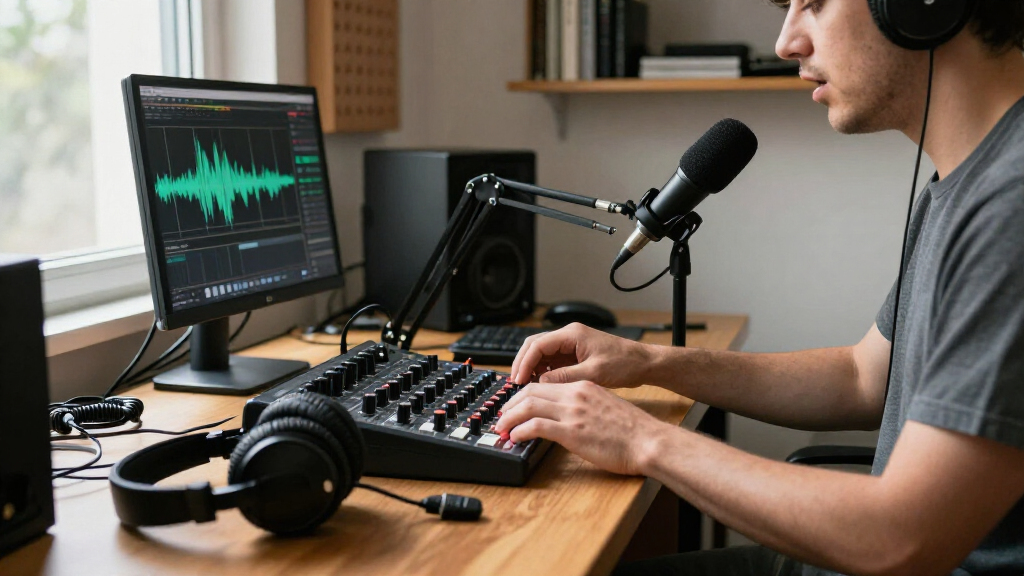
For most podcasters, I’d start with the Zoom LiveTrak L6: it combines a compact footprint with onboard multitrack recording, giving solo hosts and small panels room to grow. The MAONO E2 Gen2 is a more approachable podcast-focused pick, while the RØDE RØDECaster Duo suits creators who want a more capable production hub. The main tradeoff is between simple, low-clutter operation and extra inputs, routing, and recording features that add complexity. Some products here are complete starter bundles; others are mixers or interfaces that expect you to supply microphones and headphones. Read on for the full breakdown and a guide to matching a mixer to your recording habits.

Get audio and creator gear delivered free with Prime
- Fast, free delivery on millions of items
- Prime Video, Amazon Music and more included
- Member-only deals all year
Complete the kit

Key Takeaways
- The Zoom LiveTrak L6 stands out for portable multitrack work: onboard recording gives podcasters a way to capture separate sources without relying entirely on a computer.
- The MAONO E2 Gen2 is a more direct fit for a typical podcast desk: its interface-and-mixer format is less elaborate than a recorder-focused LiveTrak or the RØDECaster Duo.
- Starter bundles trade component choice for convenience: MAONO, OZMI, and Ideanthro packages can simplify getting started, but buyers should check which included parts they actually need.
- Not every compact mixer is a podcast mixer: the Yamaha MG06X and Mackie Mix5 focus on conventional audio mixing, while BEACN Mix Light is aimed more at computer audio control.
- Choose around your recording workflow, not the feature count: multitrack capture, multiple microphones, computer routing, and portability point to different products in this lineup.
| MAONO Podcast Equipment Bundle with Audio Mixer and 3.5 mm Microphone |  | Best Complete Starter Bundle | Channels: 9 | Connectivity: USB Type-C, 3.5 mm, auxiliary, Bluetooth | Audio inputs: Microphone, AUX, Bluetooth | VIEW LATEST PRICE | See Our Full Breakdown |
| OZMI Podcast Equipment Bundle with RGB Audio Mixer, Microphone, Headphones, and Boom Arm |  | Best All-in-One Streaming Desk Kit | Channels: 1 | Connectivity: Bluetooth, USB, OTG/PC, 3.5 mm AUX | Audio input: XLR | VIEW LATEST PRICE | See Our Full Breakdown |
| MAONO E2 Gen2 Podcast Audio Interface and Mixer |  | Best Overall for Two-Mic Podcasts | Inputs: 2 XLR combo inputs | Channels: 10 | Maximum preamp gain: 60 dB | VIEW LATEST PRICE | See Our Full Breakdown |
| FIFINE AmpliGame SC3 Gaming Audio Mixer |  | Best Compact Desktop Mixer | Channels: 4 | Connectivity: USB, XLR microphone input | Power: USB-C | VIEW LATEST PRICE | See Our Full Breakdown |
| Zoom LiveTrak L6 Digital Mixer and Recorder |  | Best for Standalone Multitrack Recording | Channels: 10 | Inputs: 2 XLR/TRS combo inputs and 4 stereo TRS inputs | Recording: 10 tracks plus stereo mix to SD cards up to 1TB | VIEW LATEST PRICE | See Our Full Breakdown |
| BEACN Mix Light USB-C Audio Mixer and Controller with 5-Inch Display |  | Best for Windows Desktop Podcasters | Channels: 4 | Display: 5-inch full-color | Controls: 4 push-button knobs | VIEW LATEST PRICE | See Our Full Breakdown |
| Zoom LiveTrak L-12 Digital Mixer/Recorder |  | Best for Multi-Mic Panel and Remote-Monitoring Sessions | Inputs and tracks: 12 inputs / up to 14 tracks | Recording quality: 24-bit/96kHz | Monitor mixes: 5 individual mixes | VIEW LATEST PRICE | See Our Full Breakdown |
| NearStream AMIX20B Audio Interface and Mixer |  | Best for Portable Phone-and-Mic Podcasting | Channels: 8 | Inputs: XLR, 6.35mm, Bluetooth, AUX | Outputs: Monitoring, audio output, OTG, live output | VIEW LATEST PRICE | See Our Full Breakdown |
| Zoom LiveTrak L6max Digital Mixer and Recorder |  | Best for Portable Multitrack Recording | Channels: 12 | Simultaneous recording: Up to 14 tracks | Inputs: 4 combo inputs with Hi-Z and 8 line inputs | VIEW LATEST PRICE | See Our Full Breakdown |
| Ideanthro C200 Pro Podcast Equipment Bundle with Audio Mixer and Microphone |  | Best Complete Starter Kit | Channels: 2 | Connectivity: Bluetooth | Audio input: TRS / XLR | VIEW LATEST PRICE | See Our Full Breakdown |
| Yamaha MG06X 6-Input Compact Stereo Mixer with Effects |  | Best for Small Multi-Source Setups | Channels: 6 | Microphone preamps: 2 | Stereo line channels: 4 | VIEW LATEST PRICE | See Our Full Breakdown |
| Mackie M-Caster Live Portable Streaming Mixer with RGB Lighting, Black |  | Best for Simple Smartphone Streaming | Channels: 2 | Connectivity: USB | Input: USB audio | VIEW LATEST PRICE | See Our Full Breakdown |
| Saramonic MV-Mixer Dual-Channel USB Audio Interface |  | Best for DAW-Based Podcast Recording | Channels: 2 | Inputs: Two XLR/6.35 mm combo ports | Audio resolution: 24-bit/192 kHz | VIEW LATEST PRICE | See Our Full Breakdown |
| RØDE RØDECaster Duo Compact Audio Production Studio |  | Best Premium Podcast Production Hub | Channels: 4 | Microphone and instrument inputs: 2 Neutrik combo jacks | Preamps: Revolution Preamps, 76 dB gain, -131.5 dBV EIN | VIEW LATEST PRICE | See Our Full Breakdown |
| Mackie Mix5 5-Channel Compact Mixer, Black |  | Best for a Basic One-Mic Desk | Channels: 5 | Inputs: 1 mic/line input, 2 stereo 1/4-inch line inputs, dedicated stereo RCA inputs | Outputs: Main L/R outputs and dedicated stereo RCA outputs | VIEW LATEST PRICE | See Our Full Breakdown |
| compact audio mixers for podcaster | Channels | Connectivity | Weight | Dimensions |
|---|---|---|---|---|
| MAONO Podcast Equipment Bundle | 9 | USB Type-C, 3.5 mm, auxiliary, Bluetooth | 1.3 kg | 9.44 × 5.11 × 1.65 in |
| OZMI Podcast Equipment Bundle | 1 | Bluetooth, USB, OTG/PC, 3.5 mm AUX | — | — |
| MAONO E2 Gen2 Podcast Audio In | 10 | AUX, Bluetooth, USB-C | 0.89 kg | 9.64 × 6.18 × 2.16 in |
| FIFINE AmpliGame SC3 Gaming Au | 4 | USB, XLR microphone input | 0.5 kg | 4.44 × 6.45 × 1.6 in |
| Zoom LiveTrak L6 Digital Mixer | 10 | USB, 3.5 mm MIDI I/O | 526 g | 4.49 × 8.78 × 1.83 in |
| BEACN Mix Light USB-C Audio Mi | 4 | USB | 0.42 kg | — |
| Zoom LiveTrak L-12 Digital Mix | — | USB, XLR, TRS | 5.7 pounds | 11.1 × 17.5 × 2.78 inches |
| NearStream AMIX20B Audio Inter | 8 | — | — | 4.1 × 5.4 × 2 inches |
| Zoom LiveTrak L6max Digital Mi | 12 | — | 2.2 pounds | 13.98 × 6.04 × 2.83 inches |
| Ideanthro C200 Pro Podcast Equ | 2 | Bluetooth | — | — |
| Yamaha MG06X 6-Input Compact S | 6 | — | 900 g | 5.9 × 7.9 × 2.4 in |
| Mackie M-Caster Live Portable | 2 | USB | — | — |
| Saramonic MV-Mixer Dual-Channe | 2 | USB | 1.5 pounds | — |
| RØDE RØDECaster Duo Compact Au | 4 | Dual USB-C, Bluetooth, Wi-Fi, Ethernet, 3.5 mm TRRS | 2 kg | 9.25 × 8.86 × 2.99 in |
| Mackie Mix5 5-Channel Compact | 5 | — | 1.4 pounds | 7.7 × 5.5 × 1.7 in |
More Details on Our Top Picks
MAONO Podcast Equipment Bundle with Audio Mixer and 3.5 mm Microphone
The MAONO Podcast Equipment Bundle suits a new podcaster who wants a mixer, microphone, and basic accessories in one package rather than assembling a setup piece by piece. Its onboard voice effects, recordable sound effects, noise reduction, and reverb give casual streams more production options than the simpler FIFINE AmpliGame SC3, while support for as many as two people and four devices can help when guests or multiple playback sources are involved. The tradeoff is its 3.5 mm microphone input: it does not supply phantom power, so it is not the right foundation for upgrading to a conventional condenser mic that requires it. Its 1.3 kg weight also makes it less travel-friendly than the much lighter Zoom LiveTrak L6. Phone users may need an OTG adapter, which is not included.
Pros:- Includes a microphone, mixer, tripod, windscreen, and connection cables for a ready-to-start setup.
- Supports up to two people, four devices, and four platforms simultaneously.
- Built-in and recordable effects, noise reduction, reverb, and tone controls offer accessible stream customization.
Cons:- The 3.5 mm microphone input does not support phantom power, limiting microphone upgrade options.
- An OTG adapter for phones without a 3.5 mm jack and a 6.35 mm-to-3.5 mm instrument adapter are not included.
- At 1.3 kg, it is heavier than compact portable alternatives such as the Zoom LiveTrak L6.
Best for: First-time podcasters and casual two-person streamers who want a bundled microphone, mixer, and basic recording accessories for computer or phone use.
Not ideal for: Podcasters planning to use phantom-powered XLR condenser microphones or frequently carry their mixer between recording locations.
- Channels:9
- Connectivity:USB Type-C, 3.5 mm, auxiliary, Bluetooth
- Audio inputs:Microphone, AUX, Bluetooth
- Microphone input:3.5 mm; phantom power not supported
- Power source:Battery powered
- Output connectors:1/4 inch, XLR, 3.5 mm audio, USB Type-C
- Dimensions:9.44 × 5.11 × 1.65 in
- Weight:1.3 kg
Our verdict“Choose this bundle for a straightforward two-person podcast setup with a microphone included, but skip it if you need phantom-powered XLR recording.”
OZMI Podcast Equipment Bundle with RGB Audio Mixer, Microphone, Headphones, and Boom Arm
The OZMI Podcast Equipment Bundle is aimed at creators who want the desk setup supplied as a group: mixer, 3.5 mm microphone, headphones, boom arm, and pop filter. That makes it more immediately equipped for a streaming station than the MAONO Podcast Equipment Bundle, which supplies a microphone and tripod but not monitoring headphones or a boom arm. On the mixer, independent level controls, ducking, loopback, customizable sound pads, and voice effects support a more hands-on live workflow; its rechargeable battery and Bluetooth, AUX, and OTG/PC connections add setup flexibility. The main limitation is one channel, which makes it a poor fit for recording two microphone voices independently. Its pitch and voice effects are aimed more at personality-driven streams than clean, straightforward interview recording.
Pros:- Bundles mixer, 3.5 mm microphone, monitoring headphones, boom arm, and pop filter.
- Independent faders, ducking, and loopback provide practical control during compatible live workflows.
- Offers customizable sound pads, pitch settings, voice changer modes, and built-in effects.
- Rechargeable battery plus Bluetooth, AUX, and OTG/PC connections supports flexible setups.
Cons:- The mixer has only one channel, limiting independent multi-microphone recording.
- The listed audio input is XLR, while the included microphone is 3.5 mm; check the connection requirements before relying on the bundle as a complete signal path.
- The Purge Original feature is described for supported stereo music sources, so compatibility may be limited.
Best for: Solo streamers and beginner podcasters building a fixed desk setup who want a microphone, monitoring headphones, boom arm, and pop filter in one bundle.
Not ideal for: Two-host shows that need separate microphone channels or podcasters who prioritize clean dialogue over voice-changing and sound-pad effects.
- Channels:1
- Connectivity:Bluetooth, USB, OTG/PC, 3.5 mm AUX
- Audio input:XLR
- Included components:RGB audio mixer, 3.5 mm condenser microphone, monitoring headphones, boom arm, pop filter
- Battery capacity:3600 mAh
- Pitch effects:12 settings
- Voice changer modes:4
- Custom sound pads:4
Our verdict“Pick the OZMI kit for a solo creator who wants a populated streaming desk, not for a multi-mic podcast or a dialogue-first recording setup.”
MAONO E2 Gen2 Podcast Audio Interface and Mixer
For a compact podcast setup that may grow beyond a solo host, I would put the MAONO E2 Gen2 ahead of the all-in-one bundles here. Its two XLR combo inputs and preamps with up to 60 dB of gain are a more suitable base for two microphone voices than the one-channel OZMI Podcast Equipment Bundle or the 3.5 mm mic input on the MAONO Podcast Equipment Bundle. Customizable effect buttons, loopback, monitoring, and mute controls cover common podcast and livestream needs without requiring a larger recording desk. The built-in battery is rated for up to eight hours, useful for mobile sessions, though the unit cannot charge a connected phone. Its 48 kHz maximum sample rate is adequate for typical podcast work, but less flexible than a recorder built around more extensive standalone multitrack capture.
Pros:- Two XLR combo inputs and up to 60 dB of preamp gain suit common podcast microphones and two-host recording.
- Loopback, monitoring, mute controls, and customizable sound-effect buttons support live and remote workflows.
- Built-in battery is rated for up to eight hours of use.
- Connects with computers, smartphones, and tablets.
Cons:- Does not provide phone charging or USB power delivery.
- Maximum sample rate is 48 kHz.
- It is larger and heavier than a small desktop streaming controller, so it is less suited to minimal travel kits.
Best for: Solo hosts or two-person interview podcasters who need two XLR-capable mic inputs, simple live controls, and a battery-powered compact mixer.
Not ideal for: Creators who need their mixer to charge a phone, record many isolated tracks to removable media, or work above a 48 kHz sample rate.
- Inputs:2 XLR combo inputs
- Channels:10
- Maximum preamp gain:60 dB
- Maximum sample rate:48 kHz
- Connectivity:AUX, Bluetooth, USB-C
- Sound-effect buttons:8 customizable buttons, up to 20 seconds each
- Battery life:Up to 8 hours
- Dimensions:9.64 × 6.18 × 2.16 in
- Weight:0.89 kg
Our verdict“Choose the E2 Gen2 if your compact podcast rig needs two XLR mic inputs and live controls, and you can charge your phone separately.”
FIFINE AmpliGame SC3 Gaming Audio Mixer
The FIFINE AmpliGame SC3 is the smallest, simplest desk-focused choice in this group: at 4.44 × 6.45 inches, it takes up far less space than the MAONO E2 Gen2 and its two-XLR podcast layout. The SC3 instead offers one XLR microphone input with 48V phantom power, plus separate controls for microphone, line-in, headphones, and line-out. That arrangement is useful for a solo podcaster who wants quick level adjustments and front-facing mute and monitoring buttons without carrying a battery-powered field mixer. Sound effects, voice-changing modes, and RGB lighting lean toward gaming and streaming, though they can add character to a casual show. The compromise is a single XLR mic input and no USB-microphone support; it is also USB-C powered, not a standalone battery unit.
Pros:- Compact footprint suits crowded desks and small streaming setups.
- XLR input includes 48V phantom power for compatible condenser microphones.
- Separate controls for microphone, line-in, headphone, and line-out levels.
- Front-facing mute and monitoring buttons make quick live adjustments easier.
Cons:- Does not support USB microphones.
- Only one XLR microphone input, unlike the two-input MAONO E2 Gen2.
- Requires USB-C power and does not offer the standalone battery operation of the MAONO E2 Gen2.
Best for: Solo podcasters and streamers with a small desk, an XLR microphone, and a preference for direct physical controls over multitrack recording.
Not ideal for: Two-host podcasts, USB-microphone owners, or mobile podcasters who need battery operation and standalone recording.
- Channels:4
- Connectivity:USB, XLR microphone input
- Power:USB-C
- Phantom power:48V
- Output connectors:3.5 mm line-out and headphone jacks
- Audio input:XLR
- Dimensions:4.44 × 6.45 × 1.6 in
- Weight:0.5 kg
Our verdict“Choose the SC3 for a compact solo XLR setup with accessible controls, but move to the MAONO E2 Gen2 for two microphones or battery-powered sessions.”
Zoom LiveTrak L6 Digital Mixer and Recorder
The Zoom LiveTrak L6 is the most recording-focused option here: it captures ten individual tracks plus a stereo mix to an SD card, and can record to a computer and card at the same time. That gives an editor more room to rebalance voices and sources after a session than the MAONO E2 Gen2, which emphasizes compact podcast controls and two XLR mic inputs. Per-channel EQ, AUX sends, pan, and built-in effects make the L6 better suited to podcasts with several sources or live music elements, while its 526 g weight keeps the recorder itself easy to transport. The tradeoff is a more involved workflow: standalone recording requires an SD card, and its two XLR/TRS combo inputs may constrain a show with many microphones. For a simple two-person USB podcast, the MAONO is the more direct choice.
Pros:- Records ten individual tracks and a stereo mix to SD cards up to 1TB.
- Can record to an SD card and computer simultaneously.
- Per-channel EQ, AUX sends, pan, and built-in effects offer hands-on mix control.
- Lightweight, battery-powered design supports mobile recording.
Cons:- An SD card is required for standalone recording.
- Only two XLR/TRS combo inputs are provided, which can limit multi-microphone shows.
- Its recording and routing options require a more involved workflow than the podcast-oriented MAONO E2 Gen2.
Best for: Mobile podcasters and small production teams who want separate recorded tracks for editing and can manage an SD-card-based workflow.
Not ideal for: Beginners seeking the simplest two-microphone USB setup or shows that need more than two XLR/TRS microphone inputs.
- Channels:10
- Inputs:2 XLR/TRS combo inputs and 4 stereo TRS inputs
- Recording:10 tracks plus stereo mix to SD cards up to 1TB
- Audio format:32-bit float
- Connectivity:USB, 3.5 mm MIDI I/O
- Effects:Delay, echo, and reverb
- Power source:Battery powered
- Dimensions:4.49 × 8.78 × 1.83 in
- Weight:526 g
Our verdict“Pick the LiveTrak L6 when isolated tracks and standalone SD recording matter more than a simpler two-mic podcast interface.”
BEACN Mix Light USB-C Audio Mixer and Controller with 5-Inch Display
The BEACN Mix Light is a streamlined control surface for podcasters who route several computer audio sources and want to adjust them without hunting through software. Its 5-inch color display and four labeled push-button knobs make source selection more legible than on the compact Ideanthro C200 Pro, while customizable assignments and profiles can keep separate show setups organized. The option to switch between two listening outputs is handy when moving between headphones and speakers. This is a different kind of mixer from the Zoom LiveTrak L-12: it emphasizes USB-based computer audio control rather than multitrack recording from a room full of microphones. That simplicity also limits its scope. Windows-only software rules it out for Mac-based workflows, and its USB-centered design is a poor fit for anyone seeking a standalone recorder or a flexible analog mixer.
Pros:- Color display and labeled controls make four audio sources easier to identify and adjust.
- Custom source assignments and profiles can suit different shows or recording workflows.
- Switches between two listening outputs, such as headphones and speakers.
Cons:- The supporting application is limited to Windows.
- USB-focused connectivity does not offer the standalone recording flexibility of the Zoom LiveTrak L-12.
Best for: Windows-based solo podcasters and streamers who want quick, tactile control of four computer audio sources and two listening outputs.
Not ideal for: Mac users, multitrack field recordists, and podcasters who need a standalone mixer with broad analog input options.
- Channels:4
- Display:5-inch full-color
- Controls:4 push-button knobs
- Connectivity:USB
- Supported operating system:Windows
- Maximum sample rate:192 kHz
- Weight:0.42 kg
Our verdict“Choose the BEACN Mix Light for tactile control of a Windows podcast or streaming setup, not for standalone recording or Mac workflows.”
Zoom LiveTrak L-12 Digital Mixer/Recorder
The Zoom LiveTrak L-12 suits podcasters who need a full recording hub, not just a compact desktop control surface. It records up to 14 tracks directly to an SD card and offers five separate monitor mixes with dedicated headphone outputs, so several guests or contributors can hear tailored mixes without sharing one feed. Compared with the BEACN Mix Light, it handles physical microphones and standalone recording rather than focusing on computer-source control; it also offers more monitor mixes than the NearStream AMIX20B. That capacity comes at a real size and setup cost: at 17.5 inches wide and 5.7 pounds, it is much less convenient for a small desk or grab-and-go kit than the NearStream. Its 12 physical input channels also set a ceiling for larger panels, and battery operation depends on the stated power options rather than making this a pocket-sized recorder.
Pros:- Records up to 14 tracks simultaneously to SD card at 24-bit/96kHz.
- Five individual monitor mixes and dedicated headphone outputs support guest-specific listening.
- USB connectivity supports integration with a computer and DAW.
- Corded or battery power options allow use beyond a fixed studio setup.
Cons:- Its 17.5-inch width and 5.7-pound weight make it less portable than the NearStream AMIX20B.
- Twelve physical input channels may not cover larger band or panel setups.
- The console offers more recording and routing capacity than a simple solo podcast desk usually needs.
Best for: Podcast teams recording multi-mic panels, interviews, or live sessions that need separate headphone mixes and isolated tracks for later editing.
Not ideal for: Solo podcasters with limited desk space or creators who mainly need lightweight control of computer audio sources.
- Inputs and tracks:12 inputs / up to 14 tracks
- Recording quality:24-bit/96kHz
- Monitor mixes:5 individual mixes
- Connectivity:USB, XLR, TRS
- Power source:Corded electric or battery
- Dimensions:11.1 × 17.5 × 2.78 inches
- Weight:5.7 pounds
- Onboard effects:16
Our verdict“Pick the LiveTrak L-12 when isolated multitrack recording and individual headphone mixes matter more than a small footprint.”
NearStream AMIX20B Audio Interface and Mixer
The NearStream AMIX20B is the portable pick for creators who want to combine a microphone, instrument, or accompaniment source and record or stream from a phone, tablet, or computer. Its rechargeable battery runs for up to five hours, and real-time headphone monitoring helps when recording away from a desk. The 48V phantom power also suits compatible XLR condenser microphones, unlike a controller such as the BEACN Mix Light, which is centered on USB computer audio. Its tradeoff is a narrower recording feature set than the Zoom LiveTrak L-12: the NearStream prioritizes a compact, battery-powered live workflow, not isolated multitrack recording to SD. Buyers should also check their microphone connection before choosing it: USB microphones are not supported, and Bluetooth is for accompaniment rather than sending audio out. Its listed maximum sample rate is 20 kHz, so this is better framed as a flexible streaming mixer than a high-resolution recorder.
Pros:- Rechargeable 2600mAh battery supports up to five hours of use.
- 48V phantom power supports compatible condenser microphones.
- Accepts microphone, instrument, Bluetooth, and AUX inputs.
- Real-time headphone monitoring includes adjustable volume.
Cons:- Does not support USB microphones.
- Bluetooth is for accompaniment and does not provide audio output.
- Its listed 20 kHz maximum sample rate and lack of stated multitrack recording make it less suited to detailed post-production than the Zoom LiveTrak L-12.
Best for: Mobile podcasters and livestreamers using an XLR microphone with a phone, tablet, or laptop who want battery power and live headphone monitoring.
Not ideal for: USB-microphone owners, creators who need multitrack SD recording, or anyone expecting Bluetooth to send mixer audio to a speaker.
- Channels:8
- Inputs:XLR, 6.35mm, Bluetooth, AUX
- Outputs:Monitoring, audio output, OTG, live output
- Frequency response:20Hz–20kHz
- Maximum sample rate:20 kHz
- Phantom power:48V
- Battery:2600mAh; up to 5 hours
- Dimensions:4.1 × 5.4 × 2 inches
Our verdict“Choose the AMIX20B for a battery-powered phone or tablet podcast rig with compatible analog microphones, not for USB mics or multitrack editing.”
Zoom LiveTrak L6max Digital Mixer and Recorder
The Zoom LiveTrak L6max brings multitrack recording into a more portable format than the L-12, weighing 2.2 pounds and measuring about 14 inches wide. It records up to 14 tracks to SD cards up to 2 TB, and 32-bit float recording on channels 1–4 is designed to handle a wider range of input levels without requiring the same level of gain precision during capture. Four combo inputs plus eight line inputs give podcast teams room for microphones and other sources, while AA batteries, USB power, or a mobile battery pack suit location work. Compared with the L-12, the L6max is easier to carry and adds MIDI-synced sound pads, but the L-12 lists five individual monitor mixes, a feature that matters more for larger guest sessions. The L6max still needs a compatible SD card, and the listed XLR audio input connector may leave some buyers wanting clearer connection details.
Pros:- Records up to 14 tracks simultaneously to SD cards up to 2 TB.
- 32-bit float recording on channels 1–4 is designed to accommodate a broad range of input levels.
- AA batteries, USB power, and mobile battery packs offer flexible power options.
- MIDI-synced sound pads add cue and playback options for a show.
Cons:- SD-card recording requires a compatible card.
- The listed XLR audio input connector may not clarify compatibility for every source or cable setup.
- It lacks the five individual monitor mixes specified for the larger Zoom LiveTrak L-12.
Best for: Location podcasters and small production teams who need portable, isolated multitrack recording and more than one microphone input.
Not ideal for: Large panels needing several individual headphone mixes, or buyers who want a simple USB controller rather than a recorder with SD-card workflow.
- Channels:12
- Simultaneous recording:Up to 14 tracks
- Inputs:4 combo inputs with Hi-Z and 8 line inputs
- Recording format:32-bit float on channels 1–4
- Storage:SD cards up to 2 TB
- Power source:AA batteries, USB bus power, or mobile battery pack
- Dimensions:13.98 × 6.04 × 2.83 inches
- Weight:2.2 pounds
Our verdict“Choose the L6max for portable isolated recording and flexible power, but favor the L-12 when multiple customized headphone mixes take priority.”
Ideanthro C200 Pro Podcast Equipment Bundle with Audio Mixer and Microphone
The Ideanthro C200 Pro makes setup easier for a first-time podcaster by bundling a two-channel mixer with a condenser microphone, boom arm, shock mount, pop filter, and cables. Its dual-core DSP adds noise reduction, three-band EQ, voice modes, reverb, and sound pads, giving beginners ways to shape a voice without assembling separate processing tools. Compared with the BEACN Mix Light, it is a more complete microphone-and-accessory package rather than a desktop controller for managing computer audio; compared with the NearStream AMIX20B, it includes the core microphone hardware but is not described as rechargeable. Two channels are enough for a host and one guest, but they leave little room to expand. The corded power requirement also makes it less suitable for mobile recording, and buyers seeking a flexible multitrack recorder should look to the Zoom LiveTrak L6max instead.
Pros:- Includes a condenser microphone, boom arm, shock mount, pop filter, cables, and accessories.
- Dual-core DSP provides noise reduction and three-band EQ.
- Voice modes, sound pads, reverb, and custom effects offer built-in processing options.
- Supports dual microphone and dual headphone monitoring workflows.
Cons:- Two channels limit the setup to a small host-and-guest show.
- Corded electric power makes it less convenient for location recording than the battery-powered NearStream AMIX20B.
- A bundled starter setup offers less multitrack recording capacity than the Zoom LiveTrak L6max.
Best for: New solo podcasters or two-person host-and-guest shows that want a bundled microphone, mounting hardware, and basic voice processing.
Not ideal for: Growing panels, battery-powered mobile recording, or podcasters who already own a microphone kit and need a more expandable multitrack mixer.
- Channels:2
- Connectivity:Bluetooth
- Audio input:TRS / XLR
- Included components:Mixer, condenser microphone, boom arm, shock mount, pop filter, cables, and accessories
- Audio processing:Dual-core DSP, noise reduction, three-band EQ
- Microphone support:Dual microphone support
- Monitoring:Dual headphone monitoring
- Power source:Corded electric
Our verdict“Pick the C200 Pro if you are starting a small podcast and need the microphone and basic accessories in one kit, but skip it if you expect to expand beyond two channels.”
Yamaha MG06X 6-Input Compact Stereo Mixer with Effects
The Yamaha MG06X is the most flexible pick here for a compact podcast desk that needs more than two sources. Its two microphone preamps handle a pair of hosts, while four dedicated stereo line channels can accommodate playback or other line-level gear. That gives it a wider source mix than the two-input Saramonic MV-Mixer, though the Saramonic is the clearer choice when computer recording and high-resolution USB audio are the priority. Yamaha adds EQ and digital effects in a rugged, compact chassis, useful for simple live or recording setups. The tradeoff is its six-channel limit, and the listing does not clarify what its USB connectivity does, so I would not choose it on the assumption that it works as a direct USB recording interface.
Pros:- Two microphone preamps support a two-host setup.
- Four dedicated stereo line channels provide room for additional playback sources.
- Built-in EQ and digital effects add basic sound shaping without separate processors.
- Compact, rugged construction suits a desk or portable live setup.
Cons:- Only two microphone preamps may limit guest-heavy sessions.
- The USB functionality is not specified in the provided product details.
Best for: Two-host podcasters who also need stereo line inputs for playback devices or other audio sources.
Not ideal for: Podcasters who need clearly specified USB recording, multitrack capture, or more than two microphone preamps.
- Channels:6
- Microphone preamps:2
- Stereo line channels:4
- Effects:Digital
- Inputs and outputs:XLR input and output
- Phantom power:48 V
- Dimensions:5.9 × 7.9 × 2.4 in
- Weight:900 g
Our verdict“Choose the MG06X when you need two mic inputs plus several stereo sources in a compact analog mixer, but not when dependable USB recording is a must.”
Mackie M-Caster Live Portable Streaming Mixer with RGB Lighting, Black
The Mackie M-Caster Live is aimed at a different podcast workflow from the Yamaha MG06X: it connects to a smartphone over USB audio and prioritizes quick streaming over accommodating many sources. Its two-channel layout and plug-and-play operation make it a more focused choice for a solo creator or a straightforward two-source stream than the Yamaha’s six-channel analog setup. Channel-based ContourFX gives users quick voice-shaping options without requiring a separate processing chain, while the selectable RGB strip is a visual extra rather than a recording feature. The main compromises are the two-channel ceiling and corded power, which undercut the portable label if you want a battery-powered rig. I would skip it for multi-guest recording or a setup built around several microphones.
Pros:- USB connection supports smartphone streaming and content creation.
- Plug-and-play approach keeps setup straightforward.
- ContourFX presets provide channel-based voice tone shaping.
- Compact form fits a small streaming desk or travel kit.
Cons:- Two channels restrict the number of simultaneous sources.
- Corded electric power limits use away from a powered setup.
Best for: Solo podcasters and two-source creators who stream from a smartphone and want simple voice shaping.
Not ideal for: Interview hosts who need several microphones, or mobile creators who need a mixer that can run without corded power.
- Channels:2
- Connectivity:USB
- Input:USB audio
- Outputs:Auxiliary and USB
- Voice processing:ContourFX presets on each channel
- Lighting:Seven selectable colors
- Power source:Corded electric
- Model:E9MKIEMCASTER
Our verdict“Pick the M-Caster Live for uncomplicated phone-based streaming, not for a growing podcast setup with multiple microphones and sources.”
Saramonic MV-Mixer Dual-Channel USB Audio Interface
For a podcast recorded into computer software, the Saramonic MV-Mixer is the most direct fit among these smaller options. Its two XLR/6.35 mm combo inputs accept microphones as well as instruments or line-level gear, and independent gain controls let a host balance two sources before the signal reaches a DAW. The 24-bit/192 kHz support and separate headphone and speaker controls suit a home recording workflow better than the Mackie M-Caster Live, which is framed around smartphone streaming. It also offers input/playback monitoring, so you can check the source or listen back through headphones. This is an interface rather than a standalone podcast production studio: it depends on a Mac or PC and compatible software, unlike the RØDECaster Duo’s onboard recording options.
Pros:- Two combo inputs accept microphones, instruments, and line-level devices.
- Independent gain controls allow separate adjustment of each input.
- Supports 24-bit/192 kHz audio for computer-based recording.
- Input/playback headphone monitoring and separate stereo output controls support a DAW workflow.
Cons:- Recording depends on a Mac or PC and compatible DAW software.
- Headphone and speaker outputs use 6.35 mm connections, which may require adapters for other gear.
Best for: Two-person podcast teams who record to a Mac or PC using a DAW and want flexible combo inputs with direct monitoring.
Not ideal for: Creators seeking standalone recording, mobile phone-first streaming, or a mixer with more than two inputs.
- Channels:2
- Inputs:Two XLR/6.35 mm combo ports
- Audio resolution:24-bit/192 kHz
- Connectivity:USB
- Compatible devices:Mac and PC computers
- Headphone monitoring:6.35 mm port with input/playback modes
- Outputs:Left and right 6.35 mm ports
- Weight:1.5 pounds
Our verdict“Choose the MV-Mixer if your two-person podcast is recorded on a computer, but pick the RØDECaster Duo for standalone capture and built-in production tools.”
RØDE RØDECaster Duo Compact Audio Production Studio
The RØDECaster Duo is the most complete podcast-focused choice in this group, combining two combo inputs with processing, programmable controls, and recording without requiring a separate DAW for capture. Its Revolution Preamps offer up to 76 dB of gain, while APHEX processing and SMART pads give hosts more control over voice sound and show cues than the simpler Yamaha MG06X. It can record stereo or multitrack to a microSD card, USB storage, or computer, which makes it useful for sessions where a computer is not the only recording destination. That breadth comes with tradeoffs: it has only two microphone/instrument combo inputs, despite four channels listed, and it requires corded power. Its footprint and feature set also exceed what a basic two-mic podcast needs.
Pros:- Records stereo or multitrack to microSD, USB storage, or a computer.
- Two combo inputs use Revolution Preamps with up to 76 dB of gain.
- APHEX processing and programmable SMART pads support voice shaping and show cues.
- Dual USB-C, Bluetooth, Wi-Fi, Ethernet, and TRRS provide varied connection options.
Cons:- Only two microphone and instrument combo inputs are provided.
- Requires corded electric power, limiting untethered recording.
Best for: Podcast hosts who want onboard stereo or multitrack recording, built-in processing, and programmable show controls in one compact studio.
Not ideal for: Budget-conscious or minimalist podcasters who only need basic mixing, and teams needing more than two physical mic or instrument inputs.
- Channels:4
- Microphone and instrument inputs:2 Neutrik combo jacks
- Preamps:Revolution Preamps, 76 dB gain, -131.5 dBV EIN
- Connectivity:Dual USB-C, Bluetooth, Wi-Fi, Ethernet, 3.5 mm TRRS
- Recording formats:Stereo or multitrack
- Recording media:microSD card, USB storage device, or computer
- Dimensions:9.25 × 8.86 × 2.99 in
- Weight:2 kg
Our verdict“Choose the RØDECaster Duo when you want a standalone podcast production hub with several recording destinations, rather than a basic compact mixer like the Yamaha MG06X.”
Mackie Mix5 5-Channel Compact Mixer, Black
The Mackie Mix5 suits a simple podcast desk where one microphone is enough and the remaining sources are line-level playback devices. Its mic/line input, two stereo 1/4-inch line inputs, and dedicated RCA connections make it more accommodating for playback gear than a two-input interface such as the Saramonic MV-Mixer. Phantom power supports a condenser mic, and the metal chassis adds practical durability in a small, straightforward analog mixer. Its limits matter for interviews: there is only one mic/line input, so a second host cannot connect directly as another microphone. The 2-band EQ is also more basic than the Yamaha MG06X’s EQ and digital effects. I would choose this for a fixed, uncomplicated setup, not a show expected to add guests or more nuanced processing.
Pros:- Mic/line, stereo 1/4-inch, and dedicated RCA connections suit a simple mix of sources.
- Phantom power supports a condenser microphone.
- Compact footprint fits a small podcast desk.
- Metal chassis provides a durable build for routine use.
Cons:- One mic/line input prevents direct connection of a second microphone.
- Two-band EQ offers less sound-shaping flexibility than the Yamaha MG06X.
- The provided product details do not specify USB connectivity or computer recording.
Best for: Solo podcasters who use one microphone and need simple stereo or RCA connections for playback sources.
Not ideal for: Two-host or guest-based podcasts that need multiple microphone preamps, or creators seeking USB recording and onboard effects.
- Channels:5
- Inputs:1 mic/line input, 2 stereo 1/4-inch line inputs, dedicated stereo RCA inputs
- Outputs:Main L/R outputs and dedicated stereo RCA outputs
- Equalizer:2-band EQ
- Phantom power:Yes
- Dimensions:7.7 × 5.5 × 1.7 in
- Weight:1.4 pounds
- Chassis:Metal
Our verdict“Choose the Mix5 for a durable, one-microphone analog setup with playback inputs, but move to the Yamaha MG06X if you need two mic preamps and effects.”
How We Picked
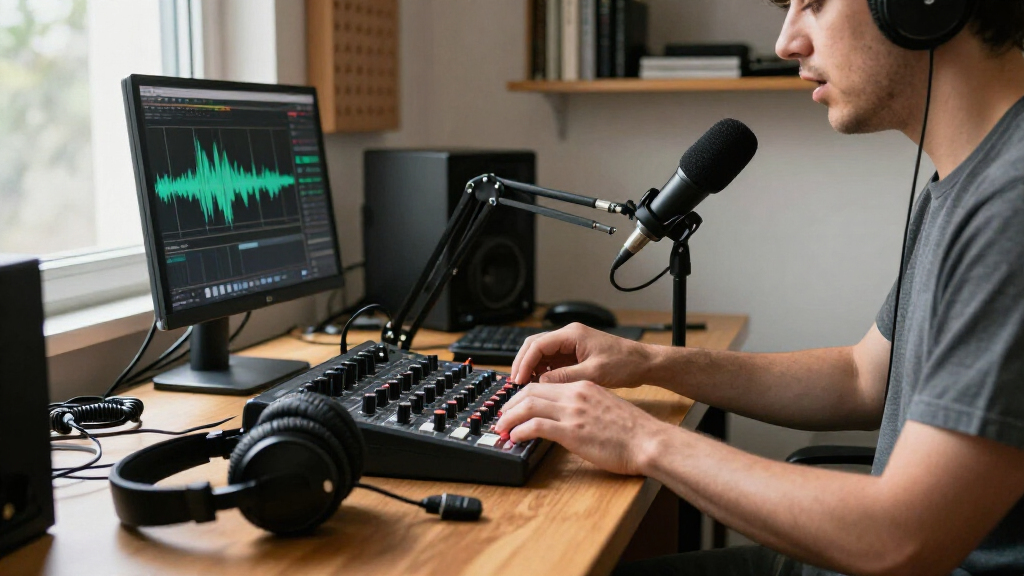
I ranked these options by how well their design supports common podcast workflows: connecting voice microphones, monitoring speakers or headphones, handling more than one contributor, and moving recorded audio into a computer or standalone file. I also weighed footprint, control simplicity, recording and routing flexibility, and whether a product includes useful starter accessories or expects buyers to assemble a setup themselves. A compact device only earns a strong place here if its size comes with a practical benefit for a podcaster.
The order reflects fit for podcasting rather than a feature-count contest. The Zoom LiveTrak L6 leads for its blend of portability and multitrack recording; the MAONO E2 Gen2 earns attention as a more focused podcast interface; and the RØDECaster Duo is a capable premium direction for creators who want a broader production center. General-purpose mixers, streaming controllers, dual-channel interfaces, and bundles rank according to how well their strengths match specific needs—and how much setup or workflow compromise they ask of the buyer.
Factors to Consider When Choosing Compact Audio Mixers For Podcasters
Before choosing a compact mixer, I’d map the equipment and recording process you already have. A small desktop mixer, a USB interface, a standalone recorder, and a streaming controller can look similar in product listings but solve different problems. These checks help separate the useful features from the ones that add cost or setup work without improving your show.
Count microphone inputs for the show you actually record
Count the microphones that need to work at the same time, including a guest who may join later. A device with too few suitable inputs can force you into an extra interface or a second recording session, while unused inputs make a compact setup larger and harder to manage than necessary. Also check the type of microphone connections and whether the mixer supplies phantom power if your microphones require it. Don’t assume a bundled microphone or a stated channel count means every input is designed for a studio mic. If your format is currently solo, decide whether adding a cohost is likely before buying around a one-person setup.
Decide whether you need computer recording, standalone recording, or both
A USB connection can send audio to recording or streaming software, but it doesn’t automatically mean the mixer can record without a computer. Standalone recording can be useful for travel, remote sessions, or a backup copy if a laptop has a problem. Multitrack recording can preserve each voice separately, which makes fixing levels and editing interruptions easier later. A stereo mix is simpler to manage, but it gives you less control after the session. Choose the recording path before focusing on effects: the workflow difference often matters more than a larger set of built-in sound options.
Check monitoring and routing before buying extra features
Podcasters need to hear themselves and their guests clearly, and they may need to route computer playback, remote callers, or music into the show. Identify each source that must reach the recording and each person who needs a separate headphone feed. A mixer can have many controls yet still lack the specific routing your sessions require. Watch for the difference between changing what you hear in headphones and changing what gets recorded. If your show involves remote guests, confirm how call audio enters and leaves the mixer rather than assuming any USB-equipped model handles it automatically.
Treat portability as a complete setup, not a device measurement
A compact mixer is only portable if its power supply, microphones, cables, headphones, and recording device are manageable too. Battery operation or onboard recording can reduce the equipment you need on location, while a small unit that depends on a laptop and multiple adapters may not save much packing space. Bundles can make setup faster, but the included mic, boom arm, or headphones may not suit your room or recording style. Before choosing a package, list what you already own and what it would replace. That check can prevent duplicate accessories and reveal when a standalone mixer is the better fit.
Balance hands-on controls against setup complexity
Physical knobs and faders make it easier to adjust levels during a conversation without searching through software menus. More routing options, effects, and programmable controls can help a polished production, but they also add decisions before recording starts. Beginners often benefit more from clear gain controls and dependable monitoring than from a long list of sound effects. On the other hand, a growing show may outgrow a very simple interface once it adds callers, music, or multiple microphones. Choose the amount of control you can use consistently, not the maximum amount listed on the box.
Plan for the next change in your show
Think ahead to likely changes such as a second host, video streaming, recording on location, or editing each voice separately. Buying for every imaginable future need can push you toward a larger and more complex unit than your current routine calls for. Buying only for today can mean replacing a small interface soon after inviting a regular guest. A useful middle ground is to identify one realistic next step and check that the mixer can support it. Also consider software compatibility and how easily you can move recordings into your editing process; a feature that complicates the handoff may not be a meaningful upgrade.
Frequently Asked Questions
Do I need a standalone recorder if I already record podcasts on a computer?
Not necessarily. If your computer setup is reliable and you only need a stereo feed or USB audio, a mixer or interface that works with your recording software may be enough. Standalone recording can offer a useful backup and can simplify sessions away from a desk. Separate multitrack files also give you more flexibility to correct individual voices during editing. I’d pay attention to this feature when recording reliability, portability, or separate-track editing matters—not just because a product includes it.
Can I use a gaming or streaming mixer for a regular interview podcast?
Sometimes, but check that the connections and routing match your microphones and recording software. Gaming and streaming mixers may prioritize computer audio, quick effects, or control of playback rather than several microphone inputs and independent podcast tracks. That can work for a solo creator who streams and records at the same time. It may be a poor fit for a two-person show or interviews that need separate voice tracks. Before buying, trace where each microphone, computer sound, and headphone feed will connect.
Is a podcast equipment bundle a better choice than buying a mixer alone?
A bundle can reduce the effort of matching basic accessories and may be convenient for a first setup. Its value depends on whether the included microphone, headphones, and mounting hardware suit your voice, room, and desk. Bundled parts can also limit your choices if you already own equipment or plan to upgrade soon. Compare the package contents with a list of what you need rather than treating every included item as a benefit. For a longer-term setup, a mixer alone may let you put more of your equipment budget toward the microphone or monitoring you prefer.
How many microphone inputs should I choose if I might add a cohost later?
Start with the number of people who will speak at the same time, then allow for a likely cohost or recurring guest if that change is realistic. A spare input is useful only if it supports the microphone type and recording workflow you plan to use. More inputs can also mean a larger setup and more controls to manage. If an extra speaker is an occasional guest, a separate remote-call workflow may be easier than carrying a larger mixer. Decide based on simultaneous microphones, not the total number of people who may appear across an episode.
Will a compact mixer work with my existing USB microphone?
Don’t assume so: many mixers and audio interfaces are designed for microphones with analog audio connections, while a USB microphone connects directly to a computer. Some USB microphones can feed audio through a computer routing setup, but that can add configuration and monitoring challenges. Check the mixer’s inputs and your microphone’s output before choosing a device. If you want to keep using a USB mic, a computer audio controller may suit your setup better than a traditional mixer, depending on the routing you need. If you plan to move to an XLR microphone, choose a mixer with the appropriate input and features for that mic.
Conclusion
For a strong balance of portability and recording flexibility, I’d choose the Zoom LiveTrak L6 as the best overall fit. The MAONO E2 Gen2 is my best-value direction for podcasters seeking a focused interface-and-mixer setup, while the RØDE RØDECaster Duo is the best premium pick for creators building a broader production workflow. Beginners who want a more ready-to-start package can look at the MAONO Podcast Equipment Bundle, after checking that its included accessories match their needs. For specific needs, the Zoom LiveTrak L6max and Zoom LiveTrak L-12 merit a closer look when a show calls for a different scale of mixer-and-recorder workflow; the BEACN Mix Light is more relevant to computer audio control than traditional microphone mixing. Choose the simplest option that supports your actual speakers, recording method, and next realistic step.