
For wireless earbuds for music lovers, I’d start with the Sony WF-1000XM6 as the best overall pick, with the Sony WF-C710N a more approachable noise-cancelling alternative and the JBL Live Beam 3 a standout for listeners who value an informative smart case. The main choice is between spending more for advanced noise control and listening features or choosing a simpler pair that covers everyday music without extras. Fit, sound preferences, and whether you listen in noisy places can matter more than a long feature list. The 15 options here range from compact basics to feature-rich models, with real tradeoffs in convenience and capability. Read on for the full breakdown and a recommendation matched to how you listen.

Get audio and creator gear delivered free with Prime
- Fast, free delivery on millions of items
- Prime Video, Amazon Music and more included
- Member-only deals all year
Complete the kit


Key Takeaways
- The Sony WF-1000XM6 leads for all-around listening because this roundup’s ranking prioritizes a blend of music-focused features and noise cancellation, not just low cost or a large spec list.
- The Sony WF-C710N is the more accessible Sony alternative for listeners who want noise cancellation without making the premium model their default choice.
- The JBL Live Beam 3 stands apart for case-based convenience; its smart charging case is a meaningful differentiator for people who want controls and information close at hand.
- Simple JBL Vibe models and Skullcandy Dime 360 favor everyday practicality over the advanced controls and noise-management features found higher in the lineup.
- Several products compete on extras rather than music-first strengths: touchscreen or LED cases and translation features can be useful, but should not outweigh fit, dependable playback, and the way you actually listen.
| Soundcore P30i Noise Cancelling Wireless Earbuds with Charging Case Phone Stand |  | Best Overall for Flexible Listening | Drivers: 10mm | Noise control: Adaptive ANC; transparency mode | Battery life: Up to 10 hours per charge; up to 45 hours with case | VIEW LATEST PRICE | See Our Full Breakdown |
| Bucephalus T20 Wireless Earbuds with Touchscreen Charging Case, ANC, Bluetooth 5.4 |  | Best for On-Case Sound Controls | Drivers: 13mm dynamic | EQ modes: Five | Noise reduction: ANC and ENC | VIEW LATEST PRICE | See Our Full Breakdown |
| Skullcandy Dime 360 True Wireless Earbuds with Clip-Anywhere Case, True Black |  | Best for Portable Everyday Listening | Battery life: Up to 8 hours per charge; up to 28 hours total | Rapid charge: 10 minutes provides up to 2 hours of listening | Water resistance: IPX4 | VIEW LATEST PRICE | See Our Full Breakdown |
| Sony WF-C710N Truly Wireless Noise-Canceling Earbuds, Glass Blue |  | Best for Balanced Noise Control | Driver size: 5mm | Noise control: Noise canceling and Ambient Sound Mode | Battery life: Up to 8.5 hours per charge; up to 30 hours with case | VIEW LATEST PRICE | See Our Full Breakdown |
| Fhumsh A10 Wireless Bluetooth 6.0 Earbuds with LED Display, Rose Gold |  | Best for Workout-Friendly Battery Life | Driver size: 13mm | Bluetooth: Version 6.0 | Battery life: Up to 8 hours per charge; up to 50 hours with case | VIEW LATEST PRICE | See Our Full Breakdown |
| JBL Vibe Buds True Wireless Earbuds, Black |  | Best for Bass-Forward Everyday Listening | Type: True wireless in-ear earbuds | Sound: JBL Deep Bass Sound | Ambient features: TalkThru and Ambient Aware | VIEW LATEST PRICE | See Our Full Breakdown |
| JBL Tune Buds 2 True Wireless Noise-Cancelling Earbuds, Turquoise |  | Best for Customizable, Long-Session Listening | Driver size: 10 mm | Sound: Pure Bass and Spatial Sound | Noise control: Adaptive Noise Cancelling and Smart Ambient | VIEW LATEST PRICE | See Our Full Breakdown |
| TOZO NC9 Hybrid Active Noise Cancelling Wireless Earbuds |  | Best for EQ Experimenters | Drivers: 10 mm | Audio technology: OrigX Acoustic 2.0 | Noise cancellation: Hybrid ANC, up to 45 dB noise reduction | VIEW LATEST PRICE | See Our Full Breakdown |
| Sony WF-1000XM6 Wireless Noise-Cancelling Earbuds, Black |  | Best Premium Pick for Focused Listening | Noise cancelling processor: HD Noise Cancelling Processor QN3e | Microphones: Eight adaptive microphones and dual beamforming microphones | Battery life: Up to 8 hours earbuds; up to 24 hours total with case | VIEW LATEST PRICE | See Our Full Breakdown |
| JBL Tune Flex True Wireless Noise-Cancelling Earbuds, Blue |  | Best for Bass with an Open-Stick Fit | Driver size: 12 mm | Sound: JBL Pure Bass Sound | Noise control: Active Noise Cancelling and Smart Ambient | VIEW LATEST PRICE | See Our Full Breakdown |
| JBL Live Beam 3 True Wireless Noise-Cancelling Earbuds with Smart Charging Case, Black | 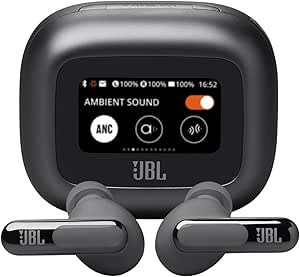 | Best Overall for Feature-Rich Listening | Driver size: 10 mm | Audio features: JBL Signature Sound, Hi-Res Audio Wireless, JBL Spatial Sound | Noise cancellation: True adaptive noise cancelling | VIEW LATEST PRICE | See Our Full Breakdown |
| Fhumsh i17 Wireless Earbuds with Bluetooth 5.4, White |  | Best Simple Starter Pick | Connectivity: Bluetooth 5.4 | Audio: Hi-Fi stereo | Playback: Up to 7–8 hours per charge; up to 50 hours with case | VIEW LATEST PRICE | See Our Full Breakdown |
| JBL Vibe Beam True Wireless Earbuds, Black | 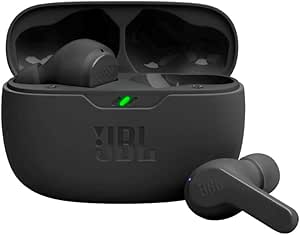 | Best for Bass-Focused Everyday Listening | Driver size: 8 mm | Sound: JBL Deep Bass Sound | Battery life: Up to 8 hours in earbuds; up to 32 hours total with case | VIEW LATEST PRICE | See Our Full Breakdown |
| Skullcandy Mod XT True Wireless Earbuds with Bluetooth 5.2 and USB-C Charging Case |  | Best for Switching Between Devices | Connectivity: Bluetooth 5.2 | Device pairing: Connects to two Bluetooth devices simultaneously | Battery life: Up to 7 hours in earbuds; up to 34 hours total with case | VIEW LATEST PRICE | See Our Full Breakdown |
| Soundcore P31i by Anker Translation Earbuds with Adaptive Noise Cancelling |  | Best for Detail and Noise Control | Audio: Hi-Res Audio with LDAC | Noise cancelling: Adaptive ANC; reduces noise by up to 52 dB | Playback without ANC: Up to 10 hours per charge; up to 50 hours with case | VIEW LATEST PRICE | See Our Full Breakdown |
| wireless earbuds for music lover | Battery life | Microphones | Controls | Water resistance |
|---|---|---|---|---|
| Soundcore P30i Noise Cancellin | Up to 10 hours per charge; up to 45 hours with case | Four with AI-enhanced call processing | — | IP54 |
| Bucephalus T20 Wireless Earbud | Up to 6 hours per charge; up to 48 hours with case | — | — | — |
| Skullcandy Dime 360 True Wirel | Up to 8 hours per charge; up to 28 hours total | — | Touch | IPX4 |
| Sony WF-C710N Truly Wireless N | Up to 8.5 hours per charge; up to 30 hours with case | Dual microphones | — | IPX4 |
| Fhumsh A10 Wireless Bluetooth | Up to 8 hours per charge; up to 50 hours with case | Beamforming microphones | Touch | IPX7 |
| JBL Vibe Buds True Wireless Ea | Up to 8 hours from earbuds; up to 32 hours total with case | — | — | — |
| JBL Tune Buds 2 True Wireless | — | Six | Touch controls and app control | — |
| TOZO NC9 Hybrid Active Noise C | — | Six with ENC | — | IPX8 |
| Sony WF-1000XM6 Wireless Noise | Up to 8 hours earbuds; up to 24 hours total with case | Eight adaptive microphones and dual beamforming microphones | On-ear controls, voice control, and gesture commands | — |
| JBL Tune Flex True Wireless No | Up to 8 hours earbuds and 24 hours case; up to 6 hours earbuds and 18 hours case with ANC | Four | Touch controls | IPX4 |
| JBL Live Beam 3 True Wireless | — | 6 | Touch controls; 1.45-inch touchscreen Smart Charging Case | — |
| Fhumsh i17 Wireless Earbuds wi | — | — | Touch controls | IPX7 |
| JBL Vibe Beam True Wireless Ea | Up to 8 hours in earbuds; up to 32 hours total with case | — | Touch control | — |
| Skullcandy Mod XT True Wireles | Up to 7 hours in earbuds; up to 34 hours total with case | Dual noise-reducing microphones per earbud | App, push button, and touch | — |
| Soundcore P31i by Anker Transl | — | 6 with AI noise reduction and wind-noise reduction | — | IP55 |
More Details on Our Top Picks
Soundcore P30i Noise Cancelling Wireless Earbuds with Charging Case Phone Stand
The Soundcore P30i earns my most versatile pick for music lovers who move between noisy commutes, quiet rooms, and casual video watching. Its adaptive noise cancellation and transparency mode give more listening flexibility than the workout-focused Fhumsh A10, while 10mm drivers with BassUp offer a bass-forward route for playlists that benefit from extra weight. The case’s built-in phone stand is a useful extra for watching a session or video without holding a phone, though it does not improve the audio itself.
Battery life is a strength with ANC off: up to 10 hours per charge and 45 hours total. Switch ANC on and those figures fall to 6 and 25 hours, so frequent noise cancellation means more charging. The four-microphone call system broadens its everyday usefulness, but buyers seeking a highly portable case may find the phone-stand design less pocket-friendly than a simpler charging case.
Pros:- Adaptive ANC and transparency mode accommodate different listening environments.
- 10mm drivers with BassUp provide a bass-focused sound option.
- Up to 45 hours of total playback with ANC off.
- Built-in phone stand and four-microphone call processing add everyday utility.
Cons:- Battery life drops to 6 hours per charge and 25 hours total with ANC enabled.
- The case’s phone-stand feature may make it less convenient for buyers seeking a minimal pocket case.
Best for: Listeners who want bass-forward everyday audio, adjustable noise control, and a case that can prop up a phone for videos.
Not ideal for: Frequent ANC users who need long stretches between charges, or listeners who prefer a small, uncomplicated charging case.
- Drivers:10mm
- Noise control:Adaptive ANC; transparency mode
- Battery life:Up to 10 hours per charge; up to 45 hours with case
- Battery life with ANC:Up to 6 hours per charge; up to 25 hours with case
- Bluetooth:Version 5.4; listed range 10 meters
- Microphones:Four with AI-enhanced call processing
- Water resistance:IP54
- Case feature:Built-in phone stand
Our verdict“Choose the P30i if you want one pair for bass-led listening, adjustable noise control, and handy everyday extras, and can accept shorter battery life with ANC on.”
Bucephalus T20 Wireless Earbuds with Touchscreen Charging Case, ANC, Bluetooth 5.4
The Bucephalus T20 is the pick for listeners who want to change playback and sound settings without reaching for a phone. Its touchscreen charging case handles functions such as volume, calls, noise modes, and five EQ presets, a different approach from the Sony WF-C710N, where sound and ambient customization runs through a companion app. That makes the T20 appealing for quick adjustments, though a screen-equipped case adds complexity compared with a conventional case.
The 13mm drivers and selectable EQ modes give music listeners more ways to shape playback than a basic one-profile setup, while ANC and ENC address noise during listening and calls. Its main compromise is endurance between case visits: playback is listed at up to 6 hours per charge, below the Sony’s 8.5 hours. The 48-hour total depends on recharging from the case, so it is not a substitute for long earbud-only sessions.
Pros:- Touchscreen case provides playback, volume, call, and noise-mode controls.
- Five EQ modes offer several ways to tailor music playback.
- 13mm dynamic drivers and ANC are suited to listeners seeking adjustable, immersive sound.
- Up to 48 hours of combined playback when the case is included.
Cons:- Up to 6 hours of playback per charge is shorter than the Sony WF-C710N’s listed 8.5 hours.
- The 48-hour total relies on recharging with the case rather than uninterrupted earbud use.
- The touchscreen case is more involved than a basic charging case.
Best for: Listeners who like changing EQ and playback settings directly on the case and want multiple sound presets without relying on a phone app.
Not ideal for: People who often listen for long stretches without access to the case, or who prefer simpler, conventional case controls.
- Drivers:13mm dynamic
- EQ modes:Five
- Noise reduction:ANC and ENC
- Battery life:Up to 6 hours per charge; up to 48 hours with case
- Bluetooth:Version 5.4
- Wireless range:33 feet
- Earbud weight:7.08g
- Case dimensions:3.1 × 3 × 1.5 inches
Our verdict“Pick the T20 if hands-on EQ and playback control from the case matter more to you than longer listening between charges.”
Skullcandy Dime 360 True Wireless Earbuds with Clip-Anywhere Case, True Black
The Skullcandy Dime 360 puts portability ahead of elaborate noise cancellation: its clip-on case is made to attach to a bag or other carry point, keeping earbuds close without stowing a loose case in a pocket. That makes it a more convenient carry choice than the Soundcore P30i, whose case doubles as a phone stand but is built around a different kind of everyday utility. For music, the Dime 360 offers app-based EQ, noise isolation, and a stay-aware mode rather than the P30i’s adaptive ANC.
Its 8 hours of earbud playback and 28 hours total are practical for daily use, though the Fhumsh A10 lists a longer 50-hour total. Multipoint pairing is a useful advantage for listeners switching between two devices, and three ear-gel sizes help with fit. The tradeoff is modest water protection: IPX4 covers sweat and splashes, not full submersion, and there is no stated active noise cancellation.
Pros:- Clip-on case makes the earbuds convenient to carry.
- App-based EQ and stay-aware mode offer useful listening adjustments.
- Multipoint pairing connects to two devices.
- Three ear-gel sizes and IPX4 resistance suit everyday and workout use.
Cons:- No active noise cancellation is listed; noise isolation relies on fit.
- IPX4 is not full waterproofing.
- Up to 28 hours total is below the Fhumsh A10’s listed 50 hours.
Best for: Commuters and active listeners who want an easy-to-carry case, app-based EQ, and the ability to connect to two devices.
Not ideal for: Listeners who prioritize active noise cancellation, full waterproofing, or the longest total battery life in this group.
- Battery life:Up to 8 hours per charge; up to 28 hours total
- Rapid charge:10 minutes provides up to 2 hours of listening
- Water resistance:IPX4
- Ear-gel sizes:Small, medium, and large
- Pairing:Multipoint; connects to two devices
- Audio features:Noise isolation, stay-aware mode, app-based EQ, low-latency audio
- Controls:Touch
- Driver type:Dynamic
Our verdict“Choose the Dime 360 if easy carrying and multipoint pairing matter more than ANC or maximum case-assisted battery life.”
Sony WF-C710N Truly Wireless Noise-Canceling Earbuds, Glass Blue
The Sony WF-C710N is the more balanced noise-control choice for listeners who want music to stay central while still being able to hear their surroundings. Its noise canceling and Ambient Sound Mode make it more adaptable than the Skullcandy Dime 360, which lists noise isolation and stay-aware mode but no ANC. Sony also includes DSEE audio enhancement and sound customization, giving music listeners tools to shape playback instead of relying on the T20’s preset EQ modes alone.
Battery life reaches 8.5 hours per charge and 30 hours with the case, with a five-minute quick charge adding up to an hour. That is a stronger earbud-only figure than the Bucephalus T20’s six hours, though the Fhumsh A10 offers a longer stated total with its case. Dual microphones support clearer calls, and multipoint helps with two-device listening. The main catch is that personal sound and ambient adjustments require Sony’s app.
Pros:- Noise canceling and Ambient Sound Mode adapt listening to different surroundings.
- DSEE enhancement and app-based sound customization give music playback more flexibility.
- Up to 8.5 hours per charge and quick charging support daily listening.
- Multipoint connection pairs with two Bluetooth devices simultaneously.
Cons:- Sound and ambient-setting personalization requires the Sony Sound Connect app.
- Up to 30 hours total is less than the Fhumsh A10’s listed 50 hours.
Best for: Music listeners who want ANC, adjustable awareness, sound customization, and multipoint pairing in a lightweight in-ear design.
Not ideal for: Buyers who want to control sound settings without an app, or who place a higher priority on the longest total battery life.
- Driver size:5mm
- Noise control:Noise canceling and Ambient Sound Mode
- Battery life:Up to 8.5 hours per charge; up to 30 hours with case
- Quick charging:5 minutes provides up to 1 hour of playback
- Microphones:Dual microphones
- Multipoint:Connects to two Bluetooth devices simultaneously
- Water resistance:IPX4
- Weight:5.2g
Our verdict“Pick the WF-C710N if adaptable ANC and app-based sound control matter more than maximum case battery life or phone-free settings.”
Fhumsh A10 Wireless Bluetooth 6.0 Earbuds with LED Display, Rose Gold
The Fhumsh A10 is aimed at listeners who want music to follow them through workouts and long days without frequent case charging. Its IPX7 water resistance, earhooks, and three tip sizes make it more exercise-oriented than the Sony WF-C710N, which has IPX4 resistance and no listed earhooks. The A10 also claims up to 50 hours of total playback, the longest stated case-assisted figure in this five-product group, and an LED display shows charge levels for the case and earbuds.
For music, the 13mm drivers offer a larger stated driver size than Sony’s 5mm units, but driver size alone does not establish sound quality. The A10 lists ENC for calls, not active noise cancellation for music, so it is a weaker fit for isolating tracks in noisy places than Sony or Soundcore. Its eight-hour earbud limit and 90-day warranty are meaningful compromises for buyers weighing long-term use.
Pros:- IPX7 water resistance and earhooks suit workout use.
- Up to 50 hours of combined playback is the longest stated total among these five products.
- LED display shows battery levels for the earbuds and case.
- Three silicone tip sizes support fit adjustment.
Cons:- ENC is listed for calls, but active noise cancellation for music is not listed.
- Playback is limited to up to 8 hours per charge.
- The stated warranty is 90 days.
Best for: Workout-focused listeners who want earhooks, higher water resistance, visible battery status, and long case-assisted playback.
Not ideal for: Listeners seeking active noise cancellation for music, or buyers who want a longer stated warranty.
- Driver size:13mm
- Bluetooth:Version 6.0
- Battery life:Up to 8 hours per charge; up to 50 hours with case
- Water resistance:IPX7
- Microphones:Beamforming microphones
- Controls:Touch
- Ear tips:Three sizes: small, medium, and large
- Charging:USB-C; about 1.5 hours
- Warranty:90 days
Our verdict“Choose the A10 for workout-friendly fit, water resistance, and long case-assisted battery life, but choose Sony or Soundcore if ANC for music is a priority.”
JBL Vibe Buds True Wireless Earbuds, Black
JBL Deep Bass Sound gives these earbuds a clear musical identity: they suit listeners who want weighty low end for pop, hip-hop, and workout playlists, rather than a feature-heavy listening setup. Compared with the JBL Tune Buds 2, the Vibe Buds skip adaptive noise cancelling and app-based sound customization, but offer a simpler route to bass-focused listening. Their TalkThru and Ambient Aware modes help with quick conversations or hearing more of your surroundings, while three eartip sizes give buyers options for a secure in-ear fit. The case raises total playback to up to 32 hours, though the earbuds themselves are rated for up to eight hours before returning to the case. Skip them if detailed sound adjustments or stronger noise control are central to your music routine.
Pros:- JBL Deep Bass Sound suits bass-led music and energetic playlists.
- TalkThru and Ambient Aware provide ways to hear more of the surrounding environment.
- Up to 32 hours of combined playback with the charging case.
- Three eartip sizes help accommodate different in-ear fits.
Cons:- No active noise cancelling, unlike the JBL Tune Buds 2 and JBL Tune Flex.
- Earbuds provide up to eight hours before needing a case recharge.
- The sealed in-ear fit can limit awareness when ambient features are off.
Best for: Listeners who favor bass-heavy playlists and want straightforward earbuds for commuting, casual listening, and workouts.
Not ideal for: Listeners who want adaptive noise cancelling, extensive EQ control, or to hear their surroundings without enabling an ambient mode.
- Type:True wireless in-ear earbuds
- Sound:JBL Deep Bass Sound
- Ambient features:TalkThru and Ambient Aware
- Call feature:VoiceAware
- Battery life:Up to 8 hours from earbuds; up to 32 hours total with case
- Earbud charge time:10 minutes
- Resistance:Water- and dust-resistant
- Included eartips:Three sizes
Our verdict“Choose the Vibe Buds for uncomplicated, bass-forward listening, but pick the JBL Tune Buds 2 if you want active noise cancelling and app-based sound adjustments.”
JBL Tune Buds 2 True Wireless Noise-Cancelling Earbuds, Turquoise
The JBL Tune Buds 2 are the more adaptable music pick here: their 10 mm drivers pair Pure Bass and Spatial Sound with Adaptive Noise Cancelling, so you can tune the listening environment as well as enjoy a bass-led presentation. Compared with the simpler JBL Vibe Buds, they add app-based sound and control customization and stronger noise-management options. Their standout endurance is up to 48 hours with ANC off; switching ANC on lowers the total to up to 40 hours, a tradeoff worth noting for frequent travelers. Six microphones also make them more call-focused than the four-microphone JBL Tune Flex. The app is part of the experience, though, so these are less appealing if you prefer to adjust everything directly on the earbuds.
Pros:- Adaptive Noise Cancelling and Smart Ambient let listeners adjust outside sound.
- Up to 48 hours of playback with ANC off, or up to 40 hours with ANC on.
- JBL Headphones app offers sound and control customization.
- Six microphones support calls alongside music listening.
Cons:- Playback falls from up to 48 to up to 40 total hours when ANC is on.
- Some sound and ambient settings depend on the companion app.
- The feature set may be more involved than needed for listeners seeking basic earbuds.
Best for: Listeners who want bass-rich music, adjustable noise control, and long listening stretches between charging.
Not ideal for: Buyers who avoid companion apps or want the longest listed playback time while using noise cancelling.
- Driver size:10 mm
- Sound:Pure Bass and Spatial Sound
- Noise control:Adaptive Noise Cancelling and Smart Ambient
- Microphones:Six
- Playback with ANC off:Up to 12 hours earbuds; up to 48 hours total with case
- Playback with ANC on:Up to 10 hours earbuds; up to 40 hours total with case
- Controls:Touch controls and app control
- Resistance:Water- and dust-resistant
Our verdict“Pick the Tune Buds 2 if you want bass-forward sound with adjustable noise control and strong case endurance; choose the Vibe Buds for a simpler setup.”
TOZO NC9 Hybrid Active Noise Cancelling Wireless Earbuds
For listeners who like shaping their sound, the TOZO NC9 offers a useful distinction from the JBL choices: its app provides 32 EQ options, giving more room to tailor the bass-focused 10 mm driver sound to different genres. Hybrid active noise cancelling, transparency mode, and six microphones broaden its usefulness beyond music, while six eartip sizes provide more fit choices than the three included with the JBL Tune Buds 2. The NC9 also leads this group on stated case endurance, reaching up to 60 hours with ANC off, but that figure drops to up to 40 hours with ANC on. Its IPX8 water resistance suits sweaty or wet routines. The tradeoff is app dependence for EQ, and its sound customization may matter less to listeners who prefer a ready-to-play tuning.
Pros:- Thirty-two app-based EQ options let listeners tailor the bass-focused sound.
- Hybrid ANC and transparency mode suit different listening environments.
- Up to 60 hours total playback with ANC off.
- IPX8 water resistance and six eartip sizes support active use and fit adjustment.
Cons:- The 60-hour total applies with ANC off; ANC-on playback is listed at up to 40 hours.
- EQ customization requires a compatible device and the TOZO app.
- Bass-focused tuning may not suit listeners seeking a more neutral presentation.
Best for: Music fans who enjoy adjusting EQ by genre and want high water resistance plus extended playback for travel or workouts.
Not ideal for: Listeners who want sound settings without a phone app or who expect the maximum listed battery life while using ANC.
- Drivers:10 mm
- Audio technology:OrigX Acoustic 2.0
- Noise cancellation:Hybrid ANC, up to 45 dB noise reduction
- EQ:32 options through the TOZO app
- Playback with ANC off:Up to 14 hours earbuds; up to 60 hours total
- Playback with ANC on:Up to 10 hours earbuds; up to 40 hours total
- Microphones:Six with ENC
- Water resistance:IPX8
- Bluetooth:5.3
Our verdict“Choose the NC9 if hands-on EQ choices and water resistance matter more than app-free simplicity; the JBL Tune Buds 2 are a more straightforward alternative.”
Sony WF-1000XM6 Wireless Noise-Cancelling Earbuds, Black
The Sony WF-1000XM6 stands apart from the JBL and TOZO options by centering the experience on adaptive noise cancellation and sound developed alongside mastering audio engineers. That makes it the most focused choice here for listeners who want to settle into music with fewer environmental interruptions, rather than maximize case endurance or EQ presets. Its HD Noise Cancelling Processor QN3e and eight adaptive microphones support that noise-control emphasis, while four sizes of polyurethane foam tips offer a more tailored seal than the three-size sets included with the JBL Tune Buds 2 and Tune Flex. The tradeoff is battery life: total playback is up to 24 hours, well below the TOZO NC9’s listed maximum. Some sound and ambient controls also rely on Sony’s app, so these suit buyers comfortable with a companion app.
Pros:- Adaptive noise cancellation adjusts to ambient sound and wearing conditions.
- Sound was developed alongside mastering audio engineers.
- Four foam eartip sizes offer fit choices for a secure seal.
- Five-minute quick charge provides up to one hour of playback.
Cons:- Up to 24 hours total playback is lower than the JBL Tune Buds 2 and TOZO NC9.
- Earbuds are rated for up to eight hours per charge before using the case.
- Some sound and ambient controls require the Sony Sound Connect app.
Best for: Listeners who prioritize adaptive noise cancellation, a tailored in-ear fit, and focused music sessions over maximum battery endurance.
Not ideal for: Frequent travelers who want long stretches between case charges or buyers who prefer not to use a companion app.
- Noise cancelling processor:HD Noise Cancelling Processor QN3e
- Microphones:Eight adaptive microphones and dual beamforming microphones
- Battery life:Up to 8 hours earbuds; up to 24 hours total with case
- Quick charge:5 minutes for up to 1 hour of playback
- Controls:On-ear controls, voice control, and gesture commands
- Connectivity:Bluetooth
- Eartips:Four sizes of polyurethane foam
- Warranty:1 year
Our verdict“Choose the Sony WF-1000XM6 for focused listening and adaptive noise control, but opt for the TOZO NC9 if extended battery life is your priority.”
JBL Tune Flex True Wireless Noise-Cancelling Earbuds, Blue
The JBL Tune Flex is the fit-led alternative in this group: its open stick design can appeal to listeners who dislike the more enclosed rounded buds of the JBL Vibe Buds, while 12 mm drivers deliver JBL’s Pure Bass Sound. Active Noise Cancelling and Smart Ambient add listening flexibility, and a 10-minute charge can supply up to two hours of playback—handy when a playlist is cut short by a low battery. Total playback reaches up to 32 hours, though ANC reduces the listed figure to up to 24 hours. That is less than the Tune Buds 2’s ANC-off maximum, and the open design may admit more surrounding sound when isolation is the goal. IPX4 resistance supports sweaty workouts, but it is less protective than the TOZO NC9’s IPX8 rating.
Pros:- 12 mm drivers with JBL Pure Bass Sound suit bass-led music.
- ANC and Smart Ambient provide options for managing surrounding sound.
- A 10-minute speed charge provides up to two hours of playback.
- IPX4 water resistance suits sweat and light exposure to wet weather.
Cons:- Open stick design may let in outside sound when isolation is preferred.
- Total playback drops from up to 32 hours to up to 24 hours with ANC enabled.
- IPX4 resistance is below the TOZO NC9’s IPX8 rating.
Best for: Bass-focused listeners who prefer an open stick-style fit and want ANC, ambient modes, and quick charging for daily use.
Not ideal for: Listeners who need a strongly sealed fit for noise isolation or higher water resistance for wet environments.
- Driver size:12 mm
- Sound:JBL Pure Bass Sound
- Noise control:Active Noise Cancelling and Smart Ambient
- Microphones:Four
- Battery life:Up to 8 hours earbuds and 24 hours case; up to 6 hours earbuds and 18 hours case with ANC
- Speed charging:10 minutes for up to 2 hours of playback
- Water resistance:IPX4
- Controls:Touch controls
- Eartips:Three sizes
Our verdict“Pick the Tune Flex for bass and a less enclosed stick-style fit, but choose the JBL Tune Buds 2 for longer listed playback and a more sealed in-ear design.”
JBL Live Beam 3 True Wireless Noise-Cancelling Earbuds with Smart Charging Case, Black
The JBL Live Beam 3 is the most feature-complete music pick in this group: its 10 mm drivers, Hi-Res Audio Wireless, and JBL Spatial Sound give listeners several ways to shape a fuller, more immersive presentation. Adaptive noise cancelling helps keep outside sound from masking tracks, while the touchscreen case lets you adjust settings without reaching for your phone. That case is the clearest distinction from the simpler JBL Vibe Beam, which offers ambient modes and solid everyday playback but not the same control hub or stated Hi-Res support. The tradeoff is that the Live Beam 3’s headline 48-hour total requires ANC off, and its in-ear fit may not suit every listener. I’d choose it for customization and a broad feature set, not for a relaxed, open-fit feel.
Pros:- Hi-Res Audio Wireless and JBL Spatial Sound offer more listening options than the JBL Vibe Beam.
- Touchscreen Smart Charging Case provides app-free access to controls and features.
- Adaptive noise cancelling can be adjusted for different surroundings.
- Wireless charging, IP55 resistance, and up to 48 hours of total playback with ANC off.
Cons:- The 48-hour total playback figure applies with ANC off.
- The in-ear fit may feel uncomfortable for listeners who prefer less-sealing earbuds.
Best for: Music listeners who want adaptive ANC, sound customization, and convenient controls directly on the case.
Not ideal for: Listeners who dislike in-ear earbuds or expect the maximum 48-hour battery figure while ANC is running.
- Driver size:10 mm
- Audio features:JBL Signature Sound, Hi-Res Audio Wireless, JBL Spatial Sound
- Noise cancellation:True adaptive noise cancelling
- Microphones:6
- Controls:Touch controls; 1.45-inch touchscreen Smart Charging Case
- Playback:Up to 12 hours per charge and 48 hours total with ANC off
- Resistance:IP55 water and dust resistance
- Connectivity and charging:Multipoint connection; wireless charging
Our verdict“Choose the Live Beam 3 if you want flexible, feature-rich music listening and case-based controls, and can accept an in-ear fit and lower runtime with ANC enabled.”
Fhumsh i17 Wireless Earbuds with Bluetooth 5.4, White
The Fhumsh i17 suits listeners who want straightforward wireless playback without paying for a long list of advanced audio features. Its Hi-Fi stereo description, three included ear-tip sizes, and automatic reconnection cover the basics for daily listening, while the case’s LED battery display makes remaining charge easy to check. The stated 50-hour total runtime is competitive with the more feature-heavy Soundcore P31i, but the comparison changes when sound control matters: the P31i specifies adaptive ANC, LDAC, and app EQ, while Fhumsh lists neither active noise cancellation nor high-resolution codec support. Its noise-cancelling microphone is intended for calls, not a promise of quieter music listening. I’d treat this as a basic, moisture-resistant option rather than a detail-focused music upgrade; the short warranty is another reason to keep expectations measured.
Pros:- Includes three ear-tip sizes to help tailor the in-ear fit.
- Charging case has an LED battery display.
- Up to 50 hours of stated playback with the case.
- IPX7 rating is suited to sweat and everyday moisture.
Cons:- Product information does not specify active noise cancellation or advanced music codecs.
- Playback is limited to up to 7–8 hours per charge before returning to the case.
- The stated warranty is 90 days.
Best for: First-time wireless-earbud buyers who want simple listening, visible case-battery status, and a fit they can adjust with multiple tip sizes.
Not ideal for: Listeners seeking active noise cancellation, named high-resolution codecs, or a longer stated warranty.
- Connectivity:Bluetooth 5.4
- Audio:Hi-Fi stereo
- Playback:Up to 7–8 hours per charge; up to 50 hours with case
- Case:LED battery display; Type-C charging
- Controls:Touch controls
- Ear tips:Three sizes
- Water resistance:IPX7
- Warranty:90 days
Our verdict“Pick the i17 for uncomplicated everyday listening and a battery display, but choose the Soundcore P31i if music detail and ANC matter more.”
JBL Vibe Beam True Wireless Earbuds, Black
For listeners who want a familiar, bass-forward sound without paying for a complicated feature set, the JBL Vibe Beam keeps the focus on JBL Deep Bass Sound and simple daily use. Its 8 mm drivers and closed in-ear design are aimed at an enveloping presentation, while Smart Ambient, TalkThru, and Ambient Aware offer ways to hear more around you without taking the buds out. Compared with the JBL Live Beam 3, this model gives up adaptive ANC, stated Hi-Res support, and the touchscreen case; in return, its appeal is more direct and less centered on customization. The tradeoffs are a maximum eight hours from the earbuds themselves and a closed fit that can still feel isolating when ambient modes are off. I’d pick it for accessible bass and practical listening modes, not for fine-grained sound tuning.
Pros:- JBL Deep Bass Sound gives bass-heavy music a clear emphasis.
- Smart Ambient, TalkThru, and Ambient Aware provide options for hearing surroundings.
- Up to 32 hours of total battery life with the charging case.
- A 10-minute charge provides up to two hours of playback.
Cons:- Earbud playback is up to eight hours before recharging in the case.
- The feature set is less advanced than the JBL Live Beam 3, with no stated adaptive ANC or Hi-Res audio.
- The closed in-ear design can limit awareness when ambient modes are not in use.
Best for: Listeners who favor bass-led playlists and want basic ambient listening modes for commuting or everyday errands.
Not ideal for: Audiophiles seeking Hi-Res codecs, advanced sound personalization, or listeners who dislike a closed in-ear fit.
- Driver size:8 mm
- Sound:JBL Deep Bass Sound
- Battery life:Up to 8 hours in earbuds; up to 32 hours total with case
- Charging case battery:Up to 24 hours
- Fast charging:10 minutes of charging provides up to 2 hours of playback
- Listening modes:Smart Ambient, TalkThru, Ambient Aware
- Controls:Touch control
- Resistance:Splash- and dust-resistant
Our verdict“Choose the Vibe Beam for bass-forward music and practical ambient modes; step up to the Live Beam 3 for adaptive ANC and more sound features.”
Skullcandy Mod XT True Wireless Earbuds with Bluetooth 5.2 and USB-C Charging Case
The Skullcandy Mod XT makes the most sense for listeners who move between a phone and a laptop throughout the day. Its multipoint pairing connects to two Bluetooth devices at once, sparing you repeated manual pairing when you switch from music to a call or video. App-based EQ presets and customizable controls also give it a more personal sound-and-control setup than the straightforward JBL Vibe Beam. That flexibility comes with limits: the listed playback is up to seven hours per charge, and its in-ear, noise-isolating fit can reduce awareness unless Stay-Aware Mode is enabled. It also lacks the stated Hi-Res audio support and adaptive ANC found on the Soundcore P31i. I’d rank it for device convenience and adjustable EQ rather than for the most ambitious music-processing features.
Pros:- Multipoint pairing connects to two Bluetooth devices simultaneously.
- App includes EQ presets, customizable controls, and Stay-Aware Mode.
- IP55-rated resistance helps protect against sweat, water, and dust.
- Up to 34 hours total playback, with a 10-minute charge providing up to two hours.
Cons:- Earbuds provide up to seven hours of playback per charge.
- Noise-isolating fit can limit awareness unless Stay-Aware Mode is enabled.
- Product details do not specify Hi-Res audio or adaptive ANC like the Soundcore P31i.
Best for: Listeners who regularly switch between a computer and phone and want app-based EQ and configurable controls.
Not ideal for: Buyers who prioritize long single-charge listening, high-resolution audio support, or awareness of surroundings without enabling a mode.
- Connectivity:Bluetooth 5.2
- Device pairing:Connects to two Bluetooth devices simultaneously
- Battery life:Up to 7 hours in earbuds; up to 34 hours total with case
- Fast charging:10 minutes provides up to 2 hours of playback
- Controls:App, push button, and touch
- Microphones:Dual noise-reducing microphones per earbud
- Resistance:IP55 water and dust resistance
- Fit:In-ear
Our verdict“Choose the Mod XT if seamless switching and adjustable EQ matter more to you than advanced noise cancellation or extended listening between charges.”
Soundcore P31i by Anker Translation Earbuds with Adaptive Noise Cancelling
The Soundcore P31i is the strongest fit here for listeners who want to shape music around both the track and their surroundings. Hi-Res Audio with LDAC gives compatible devices a higher-quality wireless option, while app EQ and HearID let listeners tailor the presentation instead of settling for a fixed tuning. Adaptive ANC, adjustable in the app, helps reduce background noise; the six microphones also support calls and wind-noise reduction. Compared with the JBL Vibe Beam, the P31i offers a more ambitious mix of audio formats and noise control, but its settings depend more heavily on the app. Battery life is up to 10 hours per charge without ANC and up to eight hours with it, so the 50-hour case total falls when noise cancelling is active. Translation is a useful extra, not the main reason to buy it for music.
Pros:- Hi-Res Audio with LDAC supports detailed wireless playback on compatible devices.
- Adaptive ANC, HearID, EQ modes, and Spatial Audio offer broad personalization.
- Up to 10 hours per charge without ANC and up to 50 hours with the case.
- Six microphones support AI noise reduction and wind-noise reduction for calls.
Cons:- Battery life drops to up to eight hours per charge and 40 hours with the case when ANC is used.
- Some listening and personalization features require the Soundcore app.
- The listed charging time is three hours.
Best for: Music listeners with LDAC-compatible devices who want adaptive ANC, app-based EQ, and a longer feature set for listening and calls.
Not ideal for: Buyers who prefer app-free controls or expect the full 50-hour total playback figure while using ANC.
- Audio:Hi-Res Audio with LDAC
- Noise cancelling:Adaptive ANC; reduces noise by up to 52 dB
- Playback without ANC:Up to 10 hours per charge; up to 50 hours with case
- Playback with ANC:Up to 8 hours per charge; up to 40 hours with case
- Fast charging:10-minute charge provides up to 3.5 hours of listening
- Microphones:6 with AI noise reduction and wind-noise reduction
- App features:HearID, EQ modes, Spatial Audio, adjustable ANC, OTA firmware updates
- Water resistance:IP55
- Translation:AI translation in over 100 languages
Our verdict“Choose the P31i if you value LDAC, customizable sound, and adaptive ANC, but look elsewhere if you want a simpler app-free experience.”

How We Picked
I ranked these earbuds around what matters most to music listeners: the likelihood that a pair will make listening enjoyable across different settings, how useful its noise-control and playback features are, and whether the design seems suited to regular use. I also weighed fit and portability, case convenience, connectivity generation where specified, and how much complexity each feature adds. Since the product names and listed features do not establish comparable sound measurements, I avoid claiming that one has objectively better audio quality based on unsupported specifications.
The order gives more weight to music-focused capability and useful everyday versatility than to novelty features alone. That places the Sony WF-1000XM6 first, with other noise-cancelling and feature-rich options ahead of simpler everyday models. Lower-ranked picks can still make better sense for buyers who value a compact case, uncomplicated use, or a particular extra. I treat touchscreen cases, display cases, and translation functions as supporting features—not substitutes for comfortable fit and a listening experience that suits the buyer.
Factors to Consider When Choosing Wireless Earbuds For Music Lovers
Before choosing, I’d separate the features that change how music sounds and feels from the ones that mainly change how you manage the earbuds. These broader checks can help narrow the field before comparing individual models.
Match Noise Cancellation to Your Listening Places
Noise cancellation has the most value when you listen around steady background sound, such as on public transport or in a busy shared space. At home in a quiet room, a comfortable fit and a sound profile you enjoy may matter more than stronger noise control. Buyers sometimes pay for ANC without asking whether they will use it often, or assume that ANC replaces a secure seal from the ear tips. It does not: physical fit still affects comfort and how much outside sound reaches you. If you move between quiet and noisy settings, look for a model whose controls make it easy to change listening modes. If you mostly listen in calm places, a simpler pair may leave fewer features unused.
Treat Fit as Part of the Sound Decision
Earbuds can have appealing audio features and still disappoint if they loosen, press uncomfortably, or fail to seal well. A poor seal can also change the perceived balance of music, especially bass, so fit is not merely a comfort detail. Do not assume that one shape works for every ear, and check what tip sizes or fitting guidance the seller provides. Consider how long you usually listen at a stretch; a design that feels fine for a short commute may become tiring during an album or playlist session. If you can, buy from a retailer with a clear return policy so you can check the fit safely. A stable, comfortable pair is often a better music companion than a feature-packed one that stays in its case.
Prioritize the Controls You Will Actually Use
Touch controls, companion apps, smart cases, and extra listening modes can make daily use smoother, but more options also create more to learn and manage. Think about whether you change tracks and volume from your earbuds, your phone, or another device. A touchscreen case may suit someone who wants controls without reaching for a phone, while a basic case may be easier to carry and charge. Avoid choosing by the length of the feature list alone: an extra matters only if it fits a routine you already have. Check whether key controls can be customized and whether features require an app or a particular phone. Simplicity can be a real advantage when the main goal is to press play and listen.
Choose Features for Your Phone and Listening Routine
Bluetooth version numbers can help describe a product, but they do not, by themselves, tell you how music will sound or whether every feature will work with your devices. Confirm compatibility with your phone and check how pairing, multipoint use, and app features are handled before buying. If you regularly switch between a laptop and phone, connection convenience may matter more than a case display. If you listen mainly from one device, advanced connectivity may add little. Buyers should also distinguish a feature’s presence from its practical benefit: translation functions, for example, serve a different need from music playback. Pick the capabilities that solve a recurring problem rather than paying attention to labels alone.
Decide When Premium Features Are Worth Paying For
A premium pair makes the most sense when its extra noise control, controls, or broader feature set will improve listening frequently. It is harder to justify paying more for a capability you might use once or only in a narrow situation. At the other end, the simplest earbuds can be a sensible choice for casual listening, a backup pair, or a listener who prefers uncomplicated operation. Compare the cost of complexity in time and upkeep too: apps, settings, and additional functions may take more attention than a basic pair. Do not use the case’s display or a long specification list as a shortcut for sound quality. Spend more when the specific upgrade matches your routine, not just because a model sits higher in a product range.
Think About the Case as Part of Everyday Use
The case affects how easy earbuds are to carry, store, and keep ready, so it deserves attention alongside the buds themselves. Compact designs can suit pockets and small bags, while a case with extra controls may be more convenient if you often leave your phone tucked away. Novelty features can also add bulk or become irrelevant if you rarely interact with the case after charging. Check how the case charges and whether its shape suits where you plan to keep it. A clip-friendly design may help prevent a small case from getting lost, but it does not tell you whether the earbuds fit your ears. Choose case features that support your daily habits rather than treating them as a proxy for music performance.
Frequently Asked Questions
Should I choose the Sony WF-1000XM6 or save on the Sony WF-C710N?
I’d choose the WF-1000XM6 if you want the most feature-focused option in this roundup and expect to use its capabilities often. The WF-C710N is the more sensible starting point if you want Sony noise-cancelling earbuds without putting the premium model first. The product names alone do not establish a measurable sound-quality gap, so I would not choose solely on that assumption. Compare the features you will use, how each fits, and the return terms available to you. If everyday comfort is uncertain, a good fit matters more than the model’s position in the range.
Are basic earbuds like the JBL Vibe models enough for serious music listening?
They can be enough if you mostly listen in quiet surroundings and want a straightforward pair for regular playback. The JBL Vibe Buds and Vibe Beam sit on the simpler side of this lineup, so they are less suited to buyers who specifically want advanced noise control or extensive extras. That does not automatically make them poor choices for music; it means you should be clear about which features you would miss. Check the fit and available controls before deciding. If you spend a lot of listening time in noisy places, compare them with the noise-cancelling options first.
Does a smart or touchscreen charging case improve music listening?
A smart case can make controls and information easier to access, especially if you prefer not to take out your phone. It does not, by itself, indicate better sound or a more comfortable fit. In this roundup, the JBL Live Beam 3 and Bucephalus T20 draw attention to case features, but buyers should decide whether those features solve a real inconvenience. If you mostly control music from your phone, a more elaborate case may see little use. Prioritize the earbuds’ fit and listening features, then treat the case as a convenience bonus.
Which earbuds make sense if I mainly listen while commuting?
For a noisy commute, I would begin with the models in this roundup that explicitly list noise cancellation, such as the Sony WF-1000XM6, Sony WF-C710N, or JBL Tune Buds 2. Your ear seal still matters, since noise cancellation cannot compensate for a poor fit. Consider whether the controls are easy to reach while moving and whether the case is convenient to carry. If your commute is quiet or short, a simpler pair may be enough. Match the feature set to your route rather than assuming every commuter needs the most advanced model.
Are translation earbuds a good choice if music is my main priority?
The Soundcore P31i is the clearest fit here for someone who has a regular use for translation alongside listening. If music is your main concern and translation is only an occasional curiosity, that extra function should not decide the purchase. Compare its comfort, playback features, and noise control with music-first alternatives such as the Sony or JBL noise-cancelling models. A specialized feature can justify a compromise only when it solves a frequent need. Otherwise, prioritize fit and the everyday listening experience.
Conclusion
For most music listeners seeking one capable pair, I’d choose the Sony WF-1000XM6 as best overall. The Sony WF-C710N is my best value-style alternative for buyers who want Sony noise cancellation without starting at the premium end, while the WF-1000XM6 is also the best premium pick for listeners who will use its broader feature set. For beginners, I’d look at a straightforward option such as the JBL Vibe Buds or JBL Vibe Beam before paying for controls and extras they may not need. The JBL Live Beam 3 suits buyers drawn to a smart case, and the Soundcore P31i fits people with a real use for translation features. Choose by fit and listening routine first; the best pair is the one whose strengths you will use every day.