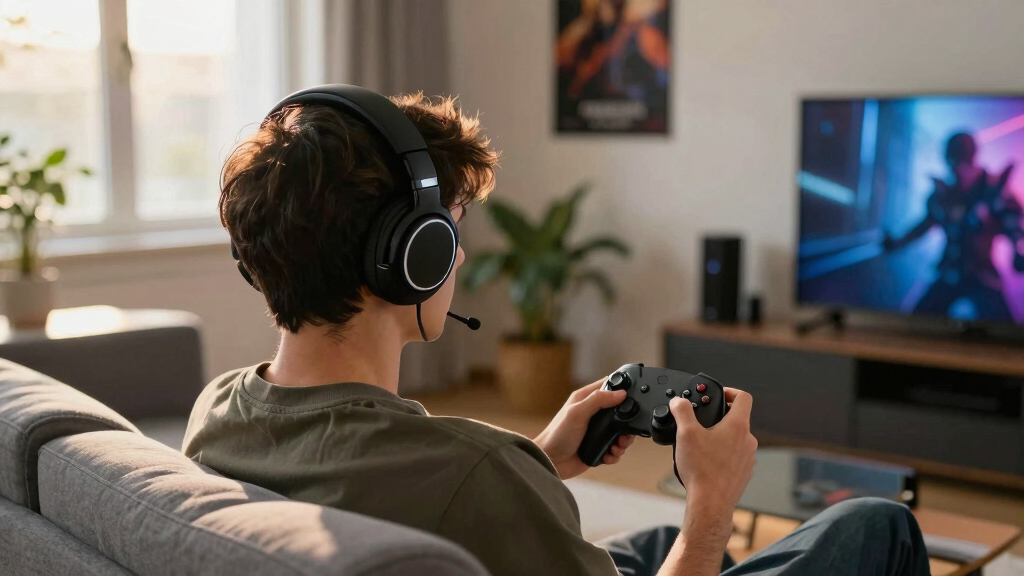

Among these 15 wireless gaming headsets, I rank the HyperX Cloud III S Wireless as the best overall because its multi-platform support, dual wireless connectivity, and 120–200-hour listed battery life create the strongest balance. The Ozeino 2.4GHz Wireless Gaming Headset is my value standout, while the Logitech G Astro A50 is the premium choice for a desk shared by PS5, Xbox, and PC. The main tradeoffs are low-latency 2.4GHz audio versus Bluetooth flexibility, long battery life versus portability, and broad compatibility versus platform-specific controls. The HyperX Cloud Alpha Wireless leads the battery contest at a listed 300 hours, but its PC-focused design makes it less flexible than the Cloud III S. I break down the full ranking below so readers can match the right headset to their platform, budget, and playing habits.

Get audio and creator gear delivered free with Prime
- Fast, free delivery on millions of items
- Prime Video, Amazon Music and more included
- Member-only deals all year
Complete the kit


Key Takeaways
- HyperX Cloud III S Wireless earns the top position because it balances multi-platform connectivity and a 120–200-hour listed battery better than the more specialized alternatives.
- HyperX Cloud Alpha Wireless is the endurance leader with a listed 300-hour battery, but its PC focus gives the Cloud III S wider appeal.
- Logitech G Astro A50 is the premium multi-system pick; its base station suits a permanent PS5, Xbox, and PC setup, though it adds cost and desk clutter.
- Ozeino delivers the clearest value proposition through 2.4GHz connectivity, USB and Type-C support, and a listed 40-hour battery without relying on premium extras.
- Connection flexibility separates this lineup more than surround branding: models with both low-latency wireless and Bluetooth are easier to use across gaming systems, phones, and daily audio.
| NUBWO G06 Wireless Gaming Headset |  | Best 100-Hour Versatility | Connectivity: 2.4GHz wireless, Bluetooth 5.3, 3.5mm wired | Battery Life: Up to 100 hours | Battery Capacity: 1200mAh | VIEW LATEST PRICE | See Our Full Breakdown |
| AOC 2.4GHz Wireless Gaming Headset |  | Best for RGB and Virtual Surround | Wireless Technology: 2.4GHz and Bluetooth 6.0 | Drivers: 50mm | Battery Life: Up to 45 hours | VIEW LATEST PRICE | See Our Full Breakdown |
| HyperX Cloud Alpha Wireless Gaming Headset | 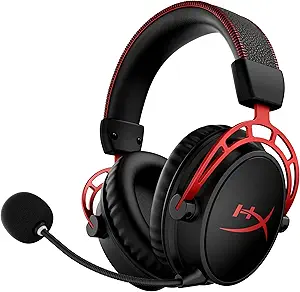 | Best Battery Life | Battery Life: Up to 300 hours | Wireless Connection: 2.4GHz | Frequency Response: 15Hz–21kHz | VIEW LATEST PRICE | See Our Full Breakdown |
| Turtle Beach Stealth 500 Wireless Gaming Headset |  | Best for Easy Device Switching | Battery Life: Up to 40 hours | Connectivity: 2.4GHz wireless and Bluetooth 5.2 | Drivers: 40mm | VIEW LATEST PRICE | See Our Full Breakdown |
| HyperX Cloud III S Wireless Gaming Headset |  | Best Overall | Battery Life via 2.4GHz: Up to 120 hours | Battery Life via Bluetooth: Up to 200 hours | Drivers: 53mm angled drivers | VIEW LATEST PRICE | See Our Full Breakdown |
| Logitech G321 Lightspeed Wireless Bluetooth Gaming Headset |  | Best Lightweight Pick | Weight: 210 g | Battery Life: 20+ hours | Primary Wireless: Lightspeed Wireless | VIEW LATEST PRICE | See Our Full Breakdown |
| Logitech G733 Lightspeed Wireless Gaming Headset |  | Best for RGB Streaming Setups | Wireless Range: Up to 20 meters | Battery Life: Up to 29 hours | Wireless System: Lightspeed Wireless | VIEW LATEST PRICE | See Our Full Breakdown |
| WolfLawS TA2000 Wireless Gaming Headset |  | Best for Connection Flexibility | Connection Modes: 2.4 GHz wireless, Bluetooth, wired | Drivers: 50 mm | Battery Life: Up to 48 hours | VIEW LATEST PRICE | See Our Full Breakdown |
| Turtle Beach Stealth 600 Wireless Gaming Headset |  | Best for Marathon Sessions | Battery Life: Up to 80 hours | Wireless Connection: 2.4 GHz | Bluetooth: Bluetooth 5.2 | VIEW LATEST PRICE | See Our Full Breakdown |
| Wireless Gaming Headset with 7.1 Surround Sound and 100-Hour Battery |  | Best Feature-Packed Endurance Pick | Sound Technology: 7.1 surround sound | Battery Life: 45-100 hours | Wireless Technology: 2.4 GHz and Bluetooth 5.4 | VIEW LATEST PRICE | See Our Full Breakdown |
| Corsair Void Wireless V2 Gaming Headset |  | Best for Dolby Atmos Gaming | Drivers: 50mm neodymium | Frequency Response: 20Hz–20kHz | Wireless Connections: 2.4GHz and Bluetooth 5.3 | VIEW LATEST PRICE | See Our Full Breakdown |
| Ozeino 2.4GHz Wireless Gaming Headset |  | Best Connectivity on a Budget | Wireless: 2.4GHz USB/Type-C and Bluetooth 5.3 | Wired Mode: 3.5mm | Driver Size: 50mm | VIEW LATEST PRICE | See Our Full Breakdown |
| SteelSeries Arctis Nova 5 Wireless Multi-System Gaming Headset |  | Best for Game-Specific Audio Presets | Battery Life: 60 hours | Audio Presets: 100+ | Wireless: 2.4GHz and Bluetooth 5.3 | VIEW LATEST PRICE | See Our Full Breakdown |
| Logitech G Astro A50 Multi-Platform Wireless Gaming Headset |  | Best Premium Multi-Platform Setup | Wireless: 2.4GHz LIGHTSPEED and Bluetooth | Platforms: PS5, Xbox, PC, Mac, and Nintendo Switch | Drivers: 40mm PRO-G graphene | VIEW LATEST PRICE | See Our Full Breakdown |
| Razer BlackShark V3 X HyperSpeed Wireless Gaming Headset |  | Best Lightweight PC Pick | Drivers: 50mm | Sound: 7.1 surround sound | Wireless: 2.4GHz HyperSpeed and Bluetooth | VIEW LATEST PRICE | See Our Full Breakdown |
| wireless gaming headset | Battery Life | Microphone | Compatibility | Drivers |
|---|---|---|---|---|
| NUBWO G06 Wireless Gaming Head | Up to 100 hours | — | PS5, PS4, PC; Xbox and Switch via wired connection | — |
| AOC 2.4GHz Wireless Gaming Hea | Up to 45 hours | Detachable, noise-canceling | PS5, PS4, PC, Switch, and mobile devices | 50mm |
| HyperX Cloud Alpha Wireless Ga | Up to 300 hours | Detachable noise-canceling microphone | — | 50mm dual-chamber drivers |
| Turtle Beach Stealth 500 Wirel | Up to 40 hours | Omnidirectional, flip-to-mute | PS5, PS4, PC, and mobile | 40mm |
| HyperX Cloud III S Wireless Ga | — | Detachable 10mm boom mic with LED mute indicator | PC, PS5, PS4, Switch, Mac, mobile, and Bluetooth devices | 53mm angled drivers |
| Logitech G321 Lightspeed Wirel | 20+ hours | — | PC, PS4, PS5, Nintendo Switch, mobile | — |
| Logitech G733 Lightspeed Wirel | Up to 29 hours | Blue VO!CE | PC, PS5, PS4, Nintendo Switch | PRO-G |
| WolfLawS TA2000 Wireless Gamin | Up to 48 hours | Noise-canceling | PS5, PS4, PC, Mac, Switch, mobile, Xbox One, Xbox Series X|S | 50 mm |
| Turtle Beach Stealth 600 Wirel | Up to 80 hours | Flip-to-mute with A.I.-based noise reduction | Xbox Series X|S, Xbox One, PS5, PS4, Windows PC, Steam Deck, mobile | 50 mm Nanoclear |
| Wireless Gaming Headset with 7 | 45-100 hours | Retractable omnidirectional noise-canceling microphone | PC, PS5, PS4, Mac, Switch, mobile devices | — |
| Corsair Void Wireless V2 Gamin | Up to 70 hours | — | — | 50mm neodymium |
| Ozeino 2.4GHz Wireless Gaming | 40 hours | Flip microphone | PC, PS4, PS5, Switch, Mac, laptop, and mobile | — |
| SteelSeries Arctis Nova 5 Wire | 60 hours | ClearCast Gen2.X retractable | PC, PS5, PS4, Switch, and mobile | Neodymium magnetic |
| Logitech G Astro A50 Multi-Pla | 24 hours | 48kHz full-bandwidth | — | 40mm PRO-G graphene |
| Razer BlackShark V3 X HyperSpe | Up to 70 hours | Detachable HyperClear cardioid 9.9mm | — | 50mm |
More Details on Our Top Picks
NUBWO G06 Wireless Gaming Headset
I rank the NUBWO G06 as the Best 100-Hour Versatility pick because it balances endurance with three connection paths: 2.4GHz for gaming, Bluetooth 5.3 for everyday devices, and 3.5mm when wireless is unavailable. The 100-hour battery lasts more than twice as long as the AOC headset’s 45-hour rating, although it cannot match the HyperX Cloud Alpha Wireless at 300 hours. Its 50mm drivers and low-latency link are aimed at synchronized game audio, making it a stronger marathon choice than the AOC when RGB and a detachable mic matter less. I would skip it for wireless Xbox play, since Xbox is wired-only, and the four-hour recharge is a real interruption if the battery runs flat. The orange-only emphasis also gives buyers less style flexibility than the white AOC.
Pros:- 100-hour battery supports extended play between charges
- 2.4GHz, Bluetooth 5.3, and 3.5mm connections cover varied devices
- 50mm drivers provide a broad, immersive presentation
- Low-latency wireless keeps game sound synchronized
Cons:- Xbox consoles require a wired connection
- Four-hour charging time creates a lengthy delay when fully depleted
- Orange styling offers limited visual flexibility
Best for: PS5, PS4, and PC players who want very long battery life plus Bluetooth and wired fallback connections
Not ideal for: Xbox players seeking a fully wireless headset or buyers who want several color choices
- Connectivity:2.4GHz wireless, Bluetooth 5.3, 3.5mm wired
- Battery Life:Up to 100 hours
- Battery Capacity:1200mAh
- Wireless Range:10 meters
- Driver Size:50mm
- Compatibility:PS5, PS4, PC; Xbox and Switch via wired connection
- Color:Orange
- Warranty:1 year
Our verdict“I recommend the NUBWO G06 to multi-device players who value 100-hour endurance more than wireless Xbox support or understated styling.”
AOC 2.4GHz Wireless Gaming Headset
For players who want presentation and positional effects without giving up connection flexibility, I give the AOC Wireless Gaming Headset the Best for RGB and Virtual Surround role. Its 7.1 virtual surround and 50mm drivers make directional game cues a bigger focus than on the simpler Turtle Beach Stealth 500, while the detachable noise-canceling mic is easier to remove for music or travel. Battery life reaches 45 hours with lighting off, beating the Stealth 500 by five hours but falling far behind the NUBWO G06. The main penalty is that RGB cuts runtime to 20 hours, so its headline battery figure depends on leaving a signature feature disabled. I also flag platform connection limits: PlayStation requires the USB dongle or cable rather than Bluetooth, and Xbox Series use is restricted to 3.5mm wiring.
Pros:- Low-latency 2.4GHz connection suits competitive game audio
- 7.1 virtual surround and 50mm drivers emphasize directional sound
- Detachable noise-canceling microphone adds flexibility
- Breathable memory-protein cushions support longer sessions
Cons:- RGB lighting reduces rated battery life from 45 to 20 hours
- PlayStation consoles do not accept its Bluetooth audio connection
- Xbox Series compatibility is limited to 3.5mm wired mode
Best for: PS5, PC, and Switch players who want virtual surround, removable voice hardware, and optional RGB lighting
Not ideal for: Xbox players wanting wireless audio or RGB fans unwilling to accept the drop from 45 to 20 battery hours
- Wireless Technology:2.4GHz and Bluetooth 6.0
- Drivers:50mm
- Battery Life:Up to 45 hours
- Battery Life with RGB:Up to 20 hours
- Recharge Time:3 hours
- Microphone:Detachable, noise-canceling
- Compatibility:PS5, PS4, PC, Switch, and mobile devices
- Design:White over-ear design with breathable memory-protein earmuffs
Our verdict“I favor the AOC for players seeking surround processing and RGB, provided they accept shorter illuminated runtime and platform-specific connection limits.”
HyperX Cloud Alpha Wireless Gaming Headset
I put the HyperX Cloud Alpha Wireless in the Best Battery Life slot for a simple reason: its 300-hour rating outlasts every other model in this batch, including the HyperX Cloud III S at 120 hours over 2.4GHz. That gap means far fewer charging interruptions for a PC setup. Battery life is not its only advantage; dual-chamber 50mm drivers separate frequency ranges to promote cleaner detail, while DTS Headphone:X adds spatial processing. The aluminum frame also gives it a more durable foundation than many plastic-heavy alternatives. Its biggest sacrifice is connection flexibility. Unlike the Cloud III S or NUBWO G06, it lacks a listed Bluetooth mode, making it less convenient for phones and rapid device changes. I would also weigh its higher price positioning and the possibility of 2.4GHz interference in crowded wireless environments.
Pros:- Class-leading battery rating of up to 300 hours
- Dual-chamber drivers promote clearer separation across frequencies
- DTS Headphone:X supplies spatial audio processing
- Aluminum frame and memory foam combine durability with comfort
Cons:- No listed Bluetooth connection for phones or casual device switching
- Higher price positioning may exceed the needs of occasional players
- 2.4GHz performance may face interference in crowded wireless spaces
Best for: PC-focused players who want weeks of play between charges and favor durable construction over Bluetooth flexibility
Not ideal for: Phone and multi-device users who need Bluetooth or budget shoppers who do not need a 300-hour battery
- Battery Life:Up to 300 hours
- Wireless Connection:2.4GHz
- Frequency Response:15Hz–21kHz
- Drivers:50mm dual-chamber drivers
- Spatial Audio:DTS Headphone:X
- Microphone:Detachable noise-canceling microphone
- Construction:Aluminum frame with plush memory foam
Our verdict“I would choose the Cloud Alpha Wireless for a PC-first setup where maximum battery endurance outweighs Bluetooth convenience and lower cost.”
Turtle Beach Stealth 500 Wireless Gaming Headset
The Turtle Beach Stealth 500 makes the most sense when moving between console gaming and phone audio matters more than record-setting runtime. I assign it the Best for Easy Device Switching role because 2.4GHz wireless and Bluetooth 5.2 cover low-latency play and everyday listening without the wired fallback Xbox requires from the NUBWO G06. Its floating headband and memory foam target pressure relief, while the flip-to-mute mic is quicker to manage than the detachable microphone on the AOC. Custom EQ presets and Superhuman Hearing also give players more control over game cues. The tradeoff is a 40-hour battery ceiling, the shortest standard rating in this batch. Some audio extras are software-dependent or reduced in Bluetooth mode, and the earcup design may still feel bulky despite the lightweight headband. Buyers wanting stronger endurance should move toward NUBWO or either HyperX model.
Pros:- 2.4GHz and Bluetooth 5.2 support convenient device switching
- Floating headband and memory foam reduce concentrated pressure
- Flip-to-mute microphone makes voice control immediate
- EQ presets and Superhuman Hearing allow game-focused tuning
Cons:- 40-hour battery rating trails every other headset in this batch
- Some advanced features depend on software and are limited over Bluetooth
- Earcup design may feel bulky during long sessions
Best for: PS5 or PC players who frequently alternate between game audio and Bluetooth phone listening
Not ideal for: Travelers prioritizing maximum battery life or players who want every audio feature available without companion software
- Battery Life:Up to 40 hours
- Connectivity:2.4GHz wireless and Bluetooth 5.2
- Drivers:40mm
- Microphone:Omnidirectional, flip-to-mute
- Comfort:Memory foam cushions and floating headband
- Compatibility:PS5, PS4, PC, and mobile
- Audio Features:Custom EQ presets and Superhuman Hearing
Our verdict“I recommend the Stealth 500 for players who prioritize simple console-to-phone switching over the longest battery life or fully self-contained controls.”
HyperX Cloud III S Wireless Gaming Headset
I place the HyperX Cloud III S Wireless at the top because it offers the best balance of battery life, platform reach, construction, and connection choice in this group. Its 120-hour 2.4GHz runtime cannot beat the Cloud Alpha Wireless, but Bluetooth raises the rating to 200 hours and makes the headset far easier to pair with phones and portable devices. Angled 53mm drivers are larger than the 40mm units in the Turtle Beach Stealth 500, while the detachable 10mm boom mic targets clearer team communication. USB-A and USB-C support also give it broader modern-device coverage than the PC-centered Cloud Alpha. I rank it above those specialists because it asks for fewer major compromises. Still, bulk and connector juggling may frustrate frequent travelers, and the customizable magnetic earcup plates cost extra. Buyers focused only on maximum battery life can save this role for the Cloud Alpha instead.
Pros:- Up to 120 hours over 2.4GHz and 200 hours over Bluetooth
- Broad compatibility across consoles, computers, Switch, and mobile devices
- Angled 53mm drivers and spatial audio support immersive game sound
- Aluminum frame and memory foam balance durability and cushioning
Cons:- Larger construction may feel bulky for some users
- Full device coverage may require switching between USB-A and USB-C connectors
- Custom magnetic earcup plates are sold separately
Best for: Multi-platform players who want long battery life, Bluetooth, USB-A and USB-C support, and a durable frame in one headset
Not ideal for: Minimalist travelers who dislike bulky headsets, extra adapters, or separately sold cosmetic parts
- Battery Life via 2.4GHz:Up to 120 hours
- Battery Life via Bluetooth:Up to 200 hours
- Drivers:53mm angled drivers
- Microphone:Detachable 10mm boom mic with LED mute indicator
- Compatibility:PC, PS5, PS4, Switch, Mac, mobile, and Bluetooth devices
- Connectors:USB-A and USB-C
- Materials:Memory foam, leatherette, and aluminum frame
- Additional Features:Spatial audio and customizable magnetic earcup plates
Our verdict“I rate the Cloud III S as the strongest all-around choice for multi-platform players who accept extra bulk in return for long runtime and broad connectivity.”
Logitech G321 Lightspeed Wireless Bluetooth Gaming Headset
I place the Logitech G321 in this lineup for players who value low weight more than decorative extras. At 210 grams, it should feel less burdensome during long sessions than the bulkier Logitech G733, while knit fabric and memory foam add a softer contact point. Lightspeed handles latency-sensitive play, and Bluetooth makes switching to a phone or tablet easier than with the G733’s single wireless system. The 20+ hour battery is adequate, but it falls well behind the Turtle Beach Stealth 600 and its 80-hour rating. Its lightweight construction may also give buyers less confidence about long-term toughness. I rank it as the comfort-focused choice, not the durability or endurance leader, and its 16 kHz flip-to-mute microphone is aimed at game chat rather than polished recording.
Pros:- Low 210-gram weight reduces pressure during extended sessions
- Lightspeed wireless supports responsive gaming audio
- Bluetooth adds convenient mobile-device connectivity
- Knit fabric and memory foam favor long-session comfort
Cons:- 20+ hour battery life trails several alternatives in the roundup
- Lightweight construction may feel less robust than heavier designs
- Bluetooth can introduce latency during competitive play
Best for: Players who want a very light headset for long PC, PlayStation, Switch, and mobile gaming sessions
Not ideal for: Frequent travelers and heavy users who prioritize rugged construction or multi-day battery life
- Weight:210 g
- Battery Life:20+ hours
- Primary Wireless:Lightspeed Wireless
- Secondary Wireless:Bluetooth
- Microphone Frequency:16 kHz
- Microphone Control:Flip-to-mute boom
- Compatibility:PC, PS4, PS5, Nintendo Switch, mobile
- Ear Cushions:High-elasticity knit fabric and memory foam
Our verdict“I recommend the G321 to comfort-first players who will accept average battery endurance for a lighter fit.”
Logitech G733 Lightspeed Wireless Gaming Headset
The Logitech G733 earns its role through presentation and voice customization rather than broad connectivity. Its Lightsync RGB lighting, suspension headband, Blue VO!CE microphone processing, and PRO-G drivers suit a coordinated PC streaming setup better than the understated Logitech G321. Battery life reaches 29 hours, giving it more breathing room than the G321, though the Turtle Beach Stealth 600 lasts much longer. I would rank the G733 above simpler headsets for buyers who will use its software-driven lighting and microphone tools. I would rank it below dual-wireless models for device switching because it lacks Bluetooth and depends on its wireless receiver. The suspension design spreads pressure across the head, but the larger frame may feel bulky. This is a style-and-streaming specialist, not the most flexible travel headset.
Pros:- Blue VO!CE processing provides extensive microphone customization
- PRO-G drivers are designed for clear, detailed game audio
- Suspension headband distributes pressure during longer sessions
- Lightsync supports 16.8 million RGB colors
Cons:- No Bluetooth connection for direct mobile pairing
- Bulkier design may not suit smaller heads or travel bags
- 29-hour battery life is modest beside newer endurance-focused models
Best for: PC and console streamers who want customizable lighting, processed voice chat, and a pressure-distributing suspension headband
Not ideal for: Mobile-focused players who need Bluetooth or buyers who prefer a compact headset without RGB
- Wireless Range:Up to 20 meters
- Battery Life:Up to 29 hours
- Wireless System:Lightspeed Wireless
- Drivers:PRO-G
- Microphone:Blue VO!CE
- Lighting:Lightsync RGB, 16.8 million colors
- Headband:Suspension design
- Compatibility:PC, PS5, PS4, Nintendo Switch
- Color:Black
Our verdict“I favor the G733 for streamers who value RGB and voice processing more than Bluetooth or maximum battery life.”
WolfLawS TA2000 Wireless Gaming Headset
I give the WolfLawS TA2000 the flexibility role because its 2.4 GHz, Bluetooth, and 3.5 mm modes cover more connection scenarios than the wireless-only Logitech G733. The wired option also provides a route to Xbox consoles, while the low-latency wireless link serves PC and PlayStation players. Its 48-hour battery beats both Logitech models here, although the Turtle Beach Stealth 600 offers far longer endurance and more developed app controls. Large 50 mm drivers and an adjustable noise-canceling microphone make the feature set attractive for mixed-device households. The tradeoff is uneven convenience: Bluetooth does not work directly with PS5 or PS4, and Xbox requires a cable. Limited evidence about microphone performance also makes this a less certain choice for frequent team chat. I rank it for connectivity breadth, not seamless wireless support everywhere.
Pros:- Three connection modes cover a wide range of devices
- Up to 48 hours of battery life exceeds both Logitech picks
- 50 mm drivers support a broad, immersive presentation
- Two-year warranty adds ownership reassurance
Cons:- Xbox consoles require a wired connection
- Bluetooth mode does not connect directly to PS5 or PS4
- Microphone performance is less established than on better-known alternatives
Best for: Multi-device households that need one headset for PC, PlayStation, Switch, mobile, and wired Xbox play
Not ideal for: Xbox players seeking a fully wireless connection or PlayStation owners expecting direct Bluetooth support
- Connection Modes:2.4 GHz wireless, Bluetooth, wired
- Drivers:50 mm
- Battery Life:Up to 48 hours
- Microphone:Noise-canceling
- Microphone Adjustment:120 degrees
- Compatibility:PS5, PS4, PC, Mac, Switch, mobile, Xbox One, Xbox Series X|S
- Listed Weight:0.85 ounces
- Warranty:2 years
Our verdict“I recommend the TA2000 when connection variety matters more than having wireless support on every listed console.”
Turtle Beach Stealth 600 Wireless Gaming Headset
The Turtle Beach Stealth 600 ranks highest among these five for sustained everyday gaming because it balances an 80-hour battery with 2.4 GHz wireless, Bluetooth 5.2, and glasses-friendly memory foam. It lasts much longer than the Logitech G733 while offering easier phone pairing, and its established control suite feels more purposeful than the generic 100-hour headset’s feature-heavy approach. The 50 mm Nanoclear drivers, built-in EQ modes, and Superhuman Hearing give players several ways to shape positional cues. Swarm II also opens deeper audio, microphone, and button settings. That flexibility creates the main drawback: casual players may find the app and layered controls excessive. Its 80-hour rating is also lower than the 100-hour maximum claimed by the RGB model. I favor the Stealth 600 for buyers seeking the stronger balance of endurance, comfort, and customization.
Pros:- 80-hour battery supports several long sessions between charges
- Glasses-friendly memory foam reduces pressure around eyewear
- 2.4 GHz wireless and Bluetooth 5.2 support gaming and mobile use
- Swarm II provides detailed audio, microphone, and control customization
Cons:- Advanced setup depends on the Swarm II app
- Numerous modes and controls may overwhelm casual users
- Battery rating trails the 100-hour maximum of the endurance-focused RGB model
Best for: Glasses-wearing multiplatform players who game frequently and want long battery life with adjustable audio controls
Not ideal for: Casual players who want plug-and-play operation without companion software or multiple sound settings
- Battery Life:Up to 80 hours
- Wireless Connection:2.4 GHz
- Bluetooth:Bluetooth 5.2
- Drivers:50 mm Nanoclear
- Microphone:Flip-to-mute with A.I.-based noise reduction
- Compatibility:Xbox Series X|S, Xbox One, PS5, PS4, Windows PC, Steam Deck, mobile
- Cushions:Glasses-friendly memory foam
- Audio Features:Built-in EQ modes and Superhuman Hearing
- Customization:Swarm II app and customizable buttons
Our verdict“I see the Stealth 600 as the most balanced choice here for frequent players who will use its long battery life and app controls.”
Wireless Gaming Headset with 7.1 Surround Sound and 100-Hour Battery
This 100-hour wireless gaming headset claims the longest battery life among these five, making it the battery-first alternative to the Turtle Beach Stealth 600. It also combines virtual 7.1 surround sound, Bluetooth 5.4, 2.4 GHz wireless, a 3.5 mm cable, and RGB lighting in one package. That breadth suits players who move between PC, PlayStation, Switch, Mac, and mobile devices. I place it below the Stealth 600 for buyers who value a more defined software ecosystem and platform-specific features, but above the Logitech G321 for raw endurance. Compatibility has caveats: PS5 wireless play requires the 2.4 GHz dongle, and Xbox Series consoles do not support its wireless mode. The quoted battery range also varies widely from 45 to 100 hours. Its retractable noise-canceling microphone keeps the silhouette tidy, though RGB may be distracting and can work against battery-focused use.
Pros:- Battery rating reaches up to 100 hours
- 2.4 GHz, Bluetooth 5.4, and 3.5 mm modes provide flexible connections
- Virtual 7.1 surround sound targets directional gaming audio
- Retractable microphone stores neatly when not needed
Cons:- Wireless mode is not compatible with Xbox Series consoles
- PS5 requires the 2.4 GHz dongle rather than Bluetooth
- The broad 45-to-100-hour battery range makes real charging intervals harder to predict
Best for: PC and PlayStation players who want long battery life, RGB, surround processing, and both wireless and wired connection choices
Not ideal for: Xbox Series owners seeking wireless play or minimalists who dislike lighting and broad battery estimates
- Sound Technology:7.1 surround sound
- Battery Life:45-100 hours
- Wireless Technology:2.4 GHz and Bluetooth 5.4
- Wired Connection:3.5 mm cable
- Microphone:Retractable omnidirectional noise-canceling microphone
- Compatibility:PC, PS5, PS4, Mac, Switch, mobile devices
- RGB Lighting:Steady and gradient modes
- Recharge Time:2-3 hours
- PS5 Wireless Mode:2.4 GHz dongle only
Our verdict“I recommend this model to feature-focused PC and PlayStation players who prioritize battery range and connection choice over streamlined operation.”
Corsair Void Wireless V2 Gaming Headset
I rank the Corsair Void Wireless V2 as my spatial-audio specialist because Dolby Atmos and 50mm drivers favor positional detail and a broad presentation for PC play. Its 70-hour battery lasts longer than the SteelSeries Arctis Nova 5’s 60-hour rating, while Bluetooth 5.3 adds a convenient path to phones and tablets alongside the low-latency 2.4GHz connection. That versatility comes with physical and software tradeoffs. At 303g, it is heavier than the 270g Razer BlackShark V3 X, which may matter during long sessions despite Corsair’s breathable memory-foam cushions. NVIDIA Broadcast microphone processing also needs a compatible RTX graphics card, limiting one of its more appealing voice features. I favor this model for immersive PC audio and infrequent charging, but portability-focused players have lighter choices.
Pros:- Dolby Atmos supports clearer positional placement in compatible PC games
- Up to 70 hours of battery life reduces charging interruptions
- 2.4GHz wireless and Bluetooth 5.3 cover gaming and everyday mobile listening
- Breathable memory-foam cushions support longer sessions
Cons:- The 303g weight is heavier than several competing headsets
- NVIDIA Broadcast microphone features require a compatible GeForce RTX graphics card
- The microphone’s 2.2k-ohm impedance may not suit every connected device
Best for: PC and PlayStation players who want Dolby Atmos, long battery life, and Bluetooth for secondary devices
Not ideal for: Weight-sensitive players or buyers without a compatible RTX graphics card who expect access to NVIDIA Broadcast microphone processing
- Drivers:50mm neodymium
- Frequency Response:20Hz–20kHz
- Wireless Connections:2.4GHz and Bluetooth 5.3
- 2.4GHz Range:Up to 50 feet (15m)
- Battery Life:Up to 70 hours
- Microphone Frequency Response:100Hz–10kHz
- Weight:303g
- Dimensions:105 x 170.5 x 193mm
Our verdict“I recommend the Corsair Void Wireless V2 to players who prioritize Dolby Atmos and battery endurance over a lightweight frame.”
Ozeino 2.4GHz Wireless Gaming Headset
I place the Ozeino 2.4GHz Wireless Gaming Headset in the value-oriented connectivity slot. Its USB and Type-C wireless support, Bluetooth 5.3, and 3.5mm mode give buyers more fallback options than the Razer BlackShark V3 X lists, while the 50mm drivers and 40-hour battery cover the basics for regular gaming. The compromises explain why it sits below the more polished SteelSeries Arctis Nova 5. Ozeino’s wireless range is only 15 feet, and its battery rating trails the SteelSeries model by 20 hours. Bluetooth also cannot connect directly to several listed gaming platforms without an extra adapter, so the 2.4GHz dongle remains the practical choice there. I see this as a flexible entry-level pick, though buyers wanting effortless switching or broad Xbox support should spend elsewhere.
Pros:- Low-latency 2.4GHz connection is better suited to gaming than ordinary Bluetooth
- USB, Type-C, Bluetooth, and 3.5mm modes provide useful connection flexibility
- 50mm drivers support a fuller gaming presentation
- A 40-hour battery is ample for several sessions between charges
Cons:- Bluetooth needs an additional adapter for direct use with several listed platforms
- The 15-foot range is much shorter than Corsair’s stated 50-foot 2.4GHz range
- Controls may feel complicated to buyers seeking a simple plug-and-play headset
Best for: Budget-focused PC, PlayStation, and Switch players who want wireless gaming plus a 3.5mm backup connection
Not ideal for: Xbox households or buyers who expect direct Bluetooth operation with PC, Mac, PS4, or PS5
- Wireless:2.4GHz USB/Type-C and Bluetooth 5.3
- Wired Mode:3.5mm
- Driver Size:50mm
- Battery Life:40 hours
- Charge Time:2.98 hours
- Wireless Range:15 feet
- Microphone:Flip microphone
- Compatibility:PC, PS4, PS5, Switch, Mac, laptop, and mobile
Our verdict“I would choose the Ozeino for affordable connection flexibility, provided Xbox support and direct cross-platform Bluetooth are not priorities.”
SteelSeries Arctis Nova 5 Wireless Multi-System Gaming Headset
The SteelSeries Arctis Nova 5 Wireless earns my preset-focused role by offering more than 100 sound profiles, letting players tailor tuning to particular games instead of relying on one general EQ. That makes it more adaptable than the Corsair Void Wireless V2, while its quick wireless switching is better suited to moving between a gaming system and a phone. Battery life reaches 60 hours, and a 15-minute USB-C charge adds six hours, giving it a stronger recovery option than the Ozeino headset’s nearly three-hour full charge. The downside is complexity: 100-plus presets can feel excessive for someone who wants one dependable sound. It also costs more than casual players may wish to spend. I rank it highly for multi-system flexibility, though Corsair offers ten additional rated battery hours.
Pros:- More than 100 audio presets provide game-specific tuning options
- Quick switching between 2.4GHz wireless and Bluetooth 5.3 suits multi-device setups
- A 60-hour battery supports extended use across several days
- USB-C fast charging supplies six hours of use from 15 minutes
Cons:- The large preset library adds a learning curve
- Its price may be difficult to justify for occasional gaming
- The 60-hour battery trails the 70-hour ratings of the Corsair and Razer models
Best for: Players who rotate among PC, PlayStation, Switch, and mobile games and want tailored sound profiles
Not ideal for: Casual players who prefer one simple audio profile and do not want to pay for a large preset library
- Battery Life:60 hours
- Audio Presets:100+
- Wireless:2.4GHz and Bluetooth 5.3
- Microphone:ClearCast Gen2.X retractable
- Drivers:Neodymium magnetic
- Fast Charging:6 hours from a 15-minute USB-C charge
- Compatibility:PC, PS5, PS4, Switch, and mobile
Our verdict“I recommend the Arctis Nova 5 to multi-system players who will use its extensive preset library and fast wireless switching.”
Logitech G Astro A50 Multi-Platform Wireless Gaming Headset
I give the Logitech G Astro A50 the premium multi-platform role because its base station connects a shared headset setup across PS5, Xbox, and PC, a wider console mix than the SteelSeries Arctis Nova 5 officially lists. The 40mm PRO-G graphene drivers, 24-bit PC audio path, and 48kHz microphone target buyers who care about both playback detail and cleaner team chat. Its magnetic dock also gives the headset a dedicated storage and charging point. Convenience has limits, however: the 24-hour battery is far behind the 60-hour SteelSeries and 70-hour Corsair ratings, and charging depends on the bulky base station. G HUB, the mobile app, ten-band EQ, and noise-gate controls may also overwhelm newcomers. I see the A50 as a desk-centered system, not the best travel companion or value choice.
Pros:- Base station supports switching across PS5, Xbox, and PC setups
- PRO-G graphene drivers and 24-bit PC audio target detailed sound reproduction
- A 48kHz full-bandwidth microphone supports clearer voice capture
- Ten-band EQ and noise-gate settings provide extensive customization
Cons:- The premium positioning makes it less accessible to budget-focused buyers
- Its 24-hour battery is much shorter than the other featured headsets
- Charging relies on a base station that adds desk clutter and reduces portability
Best for: Players with PS5, Xbox, and PC hardware who want one premium desk-based headset system with detailed audio controls
Not ideal for: Traveling players, beginners seeking simple controls, or anyone unwilling to keep a charging base station on the desk
- Wireless:2.4GHz LIGHTSPEED and Bluetooth
- Platforms:PS5, Xbox, PC, Mac, and Nintendo Switch
- Drivers:40mm PRO-G graphene
- PC Audio:Up to 24-bit/48kHz
- Microphone:48kHz full-bandwidth
- Battery Life:24 hours
- Charging:Magnetic base station
- Audio Controls:10-band EQ and noise gate through G HUB and G App
Our verdict“I would buy the Astro A50 for a permanent multi-console desk setup, not for maximum battery life or portable use.”
Razer BlackShark V3 X HyperSpeed Wireless Gaming Headset
The Razer BlackShark V3 X HyperSpeed is my lightweight PC pick, pairing a 270g frame with the same 70-hour battery rating as the heavier Corsair Void Wireless V2. That 33g weight advantage can reduce pressure during long competitive sessions, while 2.4GHz HyperSpeed handles gaming and Bluetooth covers everyday devices. Its 50mm drivers and 7.1 surround sound also place positional audio at the center of the package. Compared with the SteelSeries Arctis Nova 5, however, Razer supplies no stated library of game presets or six-hour quick-charge claim. The detachable cardioid microphone offers flexibility, but it may capture less cleanly in noisy rooms. Platform documentation is also less explicit than Logitech’s A50 support list. I favor it for long PC sessions, while cross-console households should choose a model with clearer system coverage.
Pros:- The 270g build is lighter than the Corsair Void Wireless V2
- Up to 70 hours of battery life suits long gaming schedules
- 2.4GHz HyperSpeed and Bluetooth cover gaming and mobile listening
- 50mm drivers and 7.1 surround sound support positional awareness
Cons:- The cardioid microphone may struggle to isolate speech in noisy rooms
- Cross-console compatibility is less clearly specified than on the Astro A50
- No 3.5mm wired fallback is listed, unlike the Ozeino headset
Best for: PC players who spend long sessions in competitive games and want low weight, surround sound, and a 70-hour battery
Not ideal for: Noisy households or multi-console buyers who need clearly documented PlayStation and Xbox support
- Drivers:50mm
- Sound:7.1 surround sound
- Wireless:2.4GHz HyperSpeed and Bluetooth
- Connectivity:USB, Bluetooth, and 2.4GHz wireless
- Microphone:Detachable HyperClear cardioid 9.9mm
- Battery Life:Up to 70 hours
- Weight:270g
Our verdict“I recommend the BlackShark V3 X HyperSpeed for PC-first buyers who value low weight and battery life more than broad documented console support.”
How We Picked
I ranked these wireless gaming headsets by connection performance and platform fit first, followed by comfort, microphone design, battery life, build quality, controls, and price-to-feature value. I gave 2.4GHz wireless priority for active gaming because latency and connection stability matter more during play than Bluetooth convenience. Bluetooth, detachable or flip microphones, and broad adapter support earned extra credit when they expanded how a headset could be used. I treated manufacturer battery figures as comparison ceilings, since volume, lighting, connection mode, and age can alter actual runtime.
My ordering favors models that solve several buyer needs without creating a major weakness. That is why the HyperX Cloud III S ranks above the Cloud Alpha: the Alpha offers greater listed endurance, while the Cloud III S has the more adaptable feature mix. SteelSeries Arctis Nova 5 and Corsair Void Wireless V2 rank as versatile alternatives, while Razer BlackShark V3 X HyperSpeed has a clearer PC-focused role. Logitech G Astro A50 receives the premium designation rather than the top overall position because its base station and multi-system reach serve a narrower buyer. Budget models from Ozeino, NUBWO, WolfLawS, AOC, and the unbranded 100-hour option were judged more cautiously when ambitious specifications were not paired with equally clear ecosystem or build advantages.
Factors to Consider When Choosing Wireless Gaming Headsets
I would choose a wireless gaming headset by starting with the primary gaming system, then narrowing the list by connection method, comfort, microphone needs, and realistic charging habits. A long feature sheet cannot compensate for an adapter that blocks a neighboring port or a headset that lacks chat support on the intended console. The sections below explain the tradeoffs that affect daily ownership, including several details that product titles often leave unclear.
Match the Wireless Connection to the Platform
I treat platform compatibility as more than receiving game audio. A headset may connect to a console while losing microphone chat, software controls, surround processing, or volume adjustment. Xbox support deserves particular scrutiny because a USB transmitter made for PlayStation or PC may not work with an Xbox console. Nintendo Switch buyers should check both docked and handheld use, since those modes may need different ports or adapters. For phones and tablets, Bluetooth is usually easier than carrying a USB transmitter. I recommend verifying audio, microphone, and control support separately for every system that will share the headset.
Understand 2.4GHz, Bluetooth, and Dual Wireless
2.4GHz wireless is my preferred mode for gaming because a dedicated transmitter usually offers lower latency than standard Bluetooth. Bluetooth remains useful for music, calls, mobile games, and devices without a spare USB port. The phrase dual wireless can mean either switching between these connections or playing audio from both at once, and those are very different capabilities. Simultaneous audio helps anyone who wants game sound from a console and voice chat from a phone, while simple switching is mainly a convenience feature. A base station can make system changes easier, but it occupies desk space and reduces portability. I would pay extra for simultaneous connections only when that workflow is genuinely useful.
Choose Battery Life Around Charging Habits
A listed battery figure can range from one weekend to several weeks, yet more hours do not automatically produce a better headset. Players who routinely charge accessories may find 40 to 70 hours ample, while forgetful users gain more from the 120–300-hour HyperX options. Lighting, high volume, Bluetooth use, and battery age can reduce the advertised figure. I also check whether a headset can keep playing while connected to power and whether its charge status is easy to read. For most buyers, convenient USB-C charging and predictable alerts matter more than chasing the largest number.
Prioritize Imaging and Microphone Usability Over Labels
I would not choose between these models based on 7.1 or spatial-audio branding alone. Accurate left-to-right placement, controlled bass, and clear dialogue can help more than an aggressive virtual-surround effect. Software processing may also be limited to one platform, which reduces its value in a multi-system setup. For team play, microphone placement, mute feedback, monitoring, and background-noise control shape daily use more than the words noise canceling on a listing. A flip-to-mute boom is convenient, while a detachable microphone makes the headset easier to wear away from a desk. Buyers who rarely use chat can place more weight on music balance and removable hardware.
Judge Comfort by Design, Not Weight Alone
Weight distribution can matter as much as total weight during long sessions. Suspension headbands such as the Logitech G733 design spread pressure differently from conventional padded bands, while aluminum frames such as the Cloud Alpha favor rigidity. Clamp force, ear-cup depth, pad material, glasses, and room temperature can each change the fit. Large cups may feel spacious but make a headset less convenient for travel or reclining. I also favor replaceable pads and cables where available because wear parts often fail before the drivers.
Know When Premium Pricing Pays Off
I see premium pricing as worthwhile when it buys better multi-system handling, stronger construction, or a cleaner daily workflow. The Astro A50 base station makes sense for someone regularly moving among several fixed gaming systems, but it is excessive for a single laptop. Midrange models often provide the best balance when dependable 2.4GHz audio, Bluetooth, and solid battery life are the real priorities. Budget headsets can work well for occasional play, though ambitious battery and surround claims should not outweigh warranty coverage, replacement options, or clear compatibility information. RGB lighting has little practical value unless appearance is part of the purchase goal. I recommend paying for features used every week, not the longest specification list.
Frequently Asked Questions
Is 2.4GHz Wireless Better Than Bluetooth for Gaming?
I prefer 2.4GHz wireless for competitive and action games because a dedicated USB transmitter usually reduces audio delay. Bluetooth is more convenient for phones, tablets, music, and casual games where small delays are less distracting. A headset offering both modes provides greater flexibility, but buyers should check whether it can mix both sources or merely switch between them. Console players also need a transmitter made for their specific system. For most mixed-use setups, 2.4GHz for play and Bluetooth for daily audio is the most practical combination.
Which Headset Makes the Most Sense for PS5, Xbox, and PC?
The Logitech G Astro A50 is my premium recommendation for a fixed PS5, Xbox, and PC setup because its base station is built around multi-system use. The SteelSeries Arctis Nova 5 is a more portable alternative for buyers who do not want a permanent dock, though exact console compatibility must match the selected version. Product listings that mention PlayStation and PC should never be assumed to support Xbox. I would verify chat, microphone, and wireless-control support on each platform before buying. The right choice depends on whether easy system switching or lower cost and portability matters more.
How Much Battery Life Is Enough for a Wireless Gaming Headset?
I view 40 to 70 hours as enough for most players, provided charging is fast and the headset can operate while plugged in. A 120–300-hour model is better suited to buyers who travel, play daily, or regularly forget to charge accessories. Extremely long battery life should not outweigh comfort, connection quality, or platform support. Advertised runtime can fall when lighting is active or volume is high. The Cloud Alpha’s listed 300 hours is the standout for endurance, while the Cloud III S offers a stronger balance of runtime and versatility.
Does Virtual 7.1 Surround Sound Improve Competitive Gaming?
Virtual 7.1 can widen the presentation, but it does not guarantee more accurate enemy placement. Some games already include their own spatial-audio processing, and stacking another surround mode can make direction cues less precise. I value clear stereo imaging and controlled bass before software surround. Buyers should also check whether the advertised processing works on consoles or only through a PC application. I would treat surround sound as an optional tuning mode, not the deciding feature.
Should I Buy a Budget Headset or Pay for a Premium Model?
A budget model such as the Ozeino 2.4GHz headset makes sense for straightforward PS5, PS4, or PC use when core wireless audio matters more than software and system switching. A premium model becomes easier to justify when several consoles share one desk, the headset is worn daily, or durable materials and refined controls carry real value. The Astro A50 addresses the multi-system desk better than a basic USB headset, but its extra hardware has little benefit for a single-device player. Midrange options such as the Cloud III S or Arctis Nova 5 often give mixed-platform buyers a better balance. I recommend choosing the lowest-priced model that meets the actual connection, comfort, and microphone requirements.
Conclusion
For the broadest mix of buyers, my best overall choice is the HyperX Cloud III S Wireless because it combines multi-platform flexibility with far longer listed battery life than many rivals. The Ozeino 2.4GHz model is my best-value recommendation for straightforward USB and Type-C gaming, while the Logitech G321 is the beginner-friendly pick for someone seeking Lightspeed and Bluetooth without a base-station setup. I would choose the Logitech G Astro A50 as the premium option for a permanent PS5, Xbox, and PC desk, but not for a buyer who values portability. The HyperX Cloud Alpha Wireless is the clear endurance specialist, and the Razer BlackShark V3 X HyperSpeed is better suited to a PC-centered setup. For flexible multi-system use away from a dock, the SteelSeries Arctis Nova 5 is the stronger alternative; for console-focused play, the Turtle Beach Stealth 600 deserves attention in the correct platform version. My final choice would come down to Cloud III S for balance, Ozeino for savings, A50 for multi-system convenience, or Cloud Alpha for maximum battery life.
Fall Picks
fall essentials
As an affiliate, we earn on qualifying purchases.