Wireless open-back headphones are a specialized choice: they keep your ears connected to the room around you, trading privacy and noise isolation for a more breathable, open listening experience. In this group, I’d start with the beyerdynamic MMX 130 Wireless for its unusually long battery life and flexible connections, the Turtle Beach Atlas Air for gaming comfort and detailed software controls, or the JLab JBuds Open for multipoint pairing and straightforward everyday listening. The main decision is whether you want a gaming-first headset with a dedicated low-latency link, or a lighter-purpose Bluetooth headphone that can switch between devices. All four options let outside sound in, but their battery endurance, microphones, connection choices, and stated water protection differ sharply.

Get audio and creator gear delivered free with Prime
- Fast, free delivery on millions of items
- Prime Video, Amazon Music and more included
- Member-only deals all year
I rank the MMX 130 first because it combines wireless gaming features, a replaceable battery, and broad wired connectivity in one package. The Atlas Air follows for buyers who value an adjustable, glasses-friendly fit and PC audio tools. The two JBuds Open entries are closely related everyday alternatives: the white version is the better-supported choice for extended wear and app control, while the black listing adds call microphones and water resistance in its supplied specifications. Neither JLab model matches the gaming-oriented connection flexibility of the first two picks.
Complete the kit


Key Takeaways
- beyerdynamic MMX 130 Wireless is the strongest gaming-oriented all-rounder here, with a low-latency dongle, wired options, and over 80 hours of battery life.
- Turtle Beach Atlas Air suits long gaming sessions where glasses-friendly cushions, adjustable fit, a flip-to-mute mic, and PC EQ tools matter more than minimum weight.
- JLab JBuds Open White is the simpler everyday pick, pairing up to 24 hours of playtime with app EQ and multipoint for two connected devices.
- The black JBuds Open listing specifies water resistance and noise-canceling microphones, unlike the white listing, but it has no headphone jack.
- Every model has an open-back sound-leakage tradeoff: surrounding noise stays audible, and nearby people may hear what you are playing.
| beyerdynamic MMX 130 Wireless Open-Back Gaming Headset, Black |  | Best Overall for Wireless Gaming Versatility | Design: Open-back, over-ear | Drivers: 40 mm dynamic, titanium-coated | Connections: USB-C low-latency dongle, Bluetooth 6.0, USB-C wired, 3.5 mm analog | VIEW LATEST PRICE | See Our Full Breakdown |
| Turtle Beach Atlas Air Wireless Open-Back Gaming Headset |  | Best for Adjustable Gaming Comfort | Design: Wireless open-back gaming headset | Drivers: 40 mm | Connections: Low-latency 2.4 GHz wireless, Bluetooth, or wired | VIEW LATEST PRICE | See Our Full Breakdown |
| JLab JBuds Open Wireless Headphones, White |  | Best Everyday Pick for Multipoint and App EQ | Design: Over-ear, open-back | Drivers: 35 mm and 12 mm dynamic | Battery life: 24+ hours | VIEW LATEST PRICE | See Our Full Breakdown |
| JLab JBuds Open Wireless Headphones, Black | 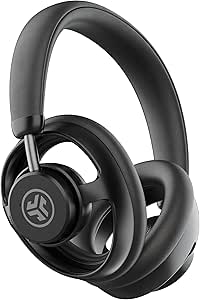 | Best for Calls and Casual Use Where Water Resistance Matters | Design: Over-ear, open-back | Drivers: 35 mm + 12 mm dual coaxial | Battery life: Up to 24 hours | VIEW LATEST PRICE | See Our Full Breakdown |
| wireless open-back headphone | Design | Drivers | Battery life | Weight |
|---|---|---|---|---|
| beyerdynamic MMX 130 Wireless | Open-back, over-ear | 40 mm dynamic, titanium-coated | Over 80 hours; user-replaceable battery | 265 g |
| Turtle Beach Atlas Air Wireles | Wireless open-back gaming headset | 40 mm | Up to 50 hours | 301 g with microphone attached |
| JLab JBuds Open Wireless Headp | Over-ear, open-back | 35 mm and 12 mm dynamic | 24+ hours | 252 g |
| JLab JBuds Open Wireless Headp | Over-ear, open-back | 35 mm + 12 mm dual coaxial | Up to 24 hours | 252 g |
More Details on Our Top Picks
beyerdynamic MMX 130 Wireless Open-Back Gaming Headset, Black
The MMX 130 Wireless makes the strongest case for a buyer who wants open-back headphones but does not want to give up gaming-ready connections. Its USB-C low-latency dongle is rated under 30 ms, while Bluetooth 6.0 and wired USB-C and 3.5 mm options cover phones, computers, and consoles. Compared with the Bluetooth-focused JBuds Open models, this gives the beyerdynamic a clearer role at a desk or on a console, where connection delay and the ability to plug in can matter more than app-based convenience.
The other standout is endurance: the stated over-80-hour battery life is the longest among these four, and the battery is user-replaceable. That combination may suit buyers who use a headset often and want to avoid treating a depleted battery as the end of the product’s life. The 265 g weight and dual-layer velour pads also make it lighter than the Atlas Air with its microphone attached, although individual fit still depends on head shape and preference.
Its detachable META VOICE microphone and included adapter and cables make it the most connection-ready package in this roundup. The tradeoff is that its open-back design offers little isolation, just like the other three, and the listing notes a Switch limitation: Bluetooth microphone use is not supported. It is also not water resistant. I’d choose it over the Atlas Air for connection flexibility and battery life; I’d choose the Atlas Air instead if glasses-friendly cushions and its described floating-earcup fit are the priority. Buyers seeking a compact casual Bluetooth headphone should compare it with the simpler JLab options rather than pay attention to gaming extras they will not use.
Pros:- USB-C dongle, Bluetooth, USB-C wired, and 3.5 mm connections provide broad flexibility.
- Stated battery life exceeds 80 hours, and the battery is replaceable.
- Detachable microphone and useful connection accessories are included.
- At 265 g, it is lighter than the Atlas Air with its microphone attached.
Cons:- Open-back construction lets surrounding sound in and audio out.
- Bluetooth microphone use is not supported on Switch.
- It is not water resistant.
Best for: PC and console players who want a low-latency wireless option, a detachable mic, wired fallbacks, and long battery life.
Not ideal for: People who need isolation, water resistance, or Bluetooth microphone support on Switch; casual listeners who will not use its gaming connections.
- Design:Open-back, over-ear
- Drivers:40 mm dynamic, titanium-coated
- Connections:USB-C low-latency dongle, Bluetooth 6.0, USB-C wired, 3.5 mm analog
- Dongle latency:Under 30 ms
- Battery life:Over 80 hours; user-replaceable battery
- Microphone:Detachable META VOICE
- Weight:265 g
- Materials:Aluminum, plastic, stainless steel, and velour
Our verdict“I rank the MMX 130 first for buyers who want the most adaptable wireless gaming setup and the longest stated battery life in this group.”
Turtle Beach Atlas Air Wireless Open-Back Gaming Headset
The Atlas Air is aimed at players who put fit and sound adjustment ahead of having the most connection types. Its floating earcups, adjustable headband, and glasses-friendly memory foam cushions are designed to make long sessions more manageable, especially for wearers who find ordinary gaming pads press against their frames. By comparison, the beyerdynamic is lighter and has more connection routes, while Turtle Beach gives more explicit attention to fit adjustment and gaming-focused software.
For PC users, the 24-bit audio mode at 96 kHz and Swarm II software with a 10-band EQ offer more room to tailor playback than the JLab app’s listed EQ presets and customization. The headset also supports low-latency 2.4 GHz wireless, Bluetooth, and wired use, and its detachable flip-to-mute microphone gives players an easy physical mute option. Up to 50 hours of battery life is substantial, though it falls short of the MMX 130’s stated figure. At 301 g with the microphone attached, it is also the heaviest listed headset here.
This is the better fit for someone who wants an open-back gaming headset with a comfort-oriented design and PC tuning tools, not for someone who needs the longest battery claim or the lightest build. Its open construction still allows room noise through, so it is a poor match for loud shared spaces or private listening. The custom headband and ear cushion mod pack is sold separately, which may matter to buyers hoping to change the fit or look without extra accessories. I place it behind the beyerdynamic because its battery and weight are less favorable, but ahead of the JBuds for gaming-specific microphone and wireless features.
Pros:- Glasses-friendly memory foam cushions and adjustable floating earcups target extended-session comfort.
- Low-latency 2.4 GHz wireless, Bluetooth, and wired connectivity are supported.
- Detachable flip-to-mute microphone and Swarm II EQ provide gaming-focused controls.
- Up to 50 hours of battery life is ample for extended use between charges.
Cons:- At 301 g with the microphone attached, it is the heaviest option listed.
- Open-back construction does not block surrounding noise.
- The custom headband and cushion mod pack is sold separately.
Best for: PC and console gamers who wear glasses or want adjustable fit, a detachable flip-to-mute mic, and detailed PC EQ controls.
Not ideal for: Buyers who prioritize the lightest headset, the longest stated battery life, noise isolation, or included fit-mod accessories.
- Design:Wireless open-back gaming headset
- Drivers:40 mm
- Connections:Low-latency 2.4 GHz wireless, Bluetooth, or wired
- PC audio:24-bit mode, 96 kHz sampling rate
- Battery life:Up to 50 hours
- Microphone:Detachable, unidirectional flip-to-mute
- Weight:301 g with microphone attached
- Software:Swarm II desktop and mobile software with 10-band EQ
Our verdict“I’d pick the Atlas Air over the JLab models for gaming comfort and software control, but choose the lighter, longer-lasting MMX 130 for broader connectivity.”
JLab JBuds Open Wireless Headphones, White
The white JBuds Open is the most straightforward everyday-listening option in this group. Its open-back over-ear fit, cushioned adjustable earcups, and up to 24 hours of playtime are aimed at people who want wireless audio without the gaming headset emphasis of the MMX 130 or Atlas Air. Multipoint Bluetooth pairing connects two devices at once, so a listener can keep a laptop and phone linked without treating a dedicated gaming dongle as part of the setup.
JLab lists dual 35 mm and 12 mm drivers with LabBoost technology and app-based EQ customization. Those features give buyers ways to adjust playback, though the supplied details do not establish a particular sound signature or show that it will outperform the larger gaming-oriented models. At 252 g, it is the lightest of the four by the listed weights. That may appeal to people who want a less gear-heavy option for music, calls, or general computer use, though the cushions and fit will still be personal.
The tradeoffs are clear beside the other picks. There is no low-latency dongle or wired audio option listed, and the white model is not water resistant. Its open construction will not quiet a noisy commute or keep audio private in a shared room. Compared with the black JBuds listing, this version has more clearly specified adjustable cushioned earcups and the same two-device pairing, while the black listing claims noise-canceling microphones and water resistance. I’d choose the white model when app EQ and extended-wear comfort lead the decision; skip it if gaming latency, isolation, or weather protection is required.
Pros:- Up to 24 hours of playtime supports a full day of typical listening.
- Multipoint pairing connects two devices at once.
- App-based EQ offers presets and customization.
- At 252 g, it has the lowest listed weight in this roundup.
Cons:- Open-back design does not isolate the listener from surrounding sound.
- Not water resistant.
- No low-latency dongle or wired connection is listed.
Best for: Everyday listeners who want an airy over-ear fit, app-based EQ, multipoint pairing, and a lighter alternative to gaming headsets.
Not ideal for: Gamers who need a low-latency dongle or wired fallback, and anyone seeking noise isolation or water resistance.
- Design:Over-ear, open-back
- Drivers:35 mm and 12 mm dynamic
- Battery life:24+ hours
- Connectivity:Bluetooth 6
- Multipoint:Connects to two devices
- Controls:App and touch
- Weight:252 g
- Water resistance:Not water resistant
Our verdict“I recommend the white JBuds Open for everyday wireless use when multipoint and app EQ matter more than gaming connections or environmental protection.”
JLab JBuds Open Wireless Headphones, Black
The black JBuds Open has the same broad everyday-listening purpose as the white variant, with a few listing details that give it a distinct use case. It specifies noise-canceling microphones for calls and lists water resistance, two features not stated for the white model. For someone choosing between these near-identical-looking entries, those claims make the black version the more suitable one to investigate for calls and casual use where exposure to moisture is a concern. The supplied listing does not provide a water-resistance rating, so I would not infer protection for a particular activity or level of exposure.
Its core conveniences remain Bluetooth multipoint for two devices, up to 24 hours of playtime, and app EQ. Those features put it closer to the white JBuds than to the gaming headsets: it is a simpler Bluetooth option, not a replacement for the beyerdynamic’s low-latency dongle or the Atlas Air’s gaming-oriented microphone and PC sound controls. The listing gives a 35 mm plus 12 mm dual-coaxial driver description and button-and-app controls, while the white version lists app and touch controls. Buyers should check the exact item details for the specific finish and configuration they intend to order.
The black model’s biggest drawback is that its feature list states no headphone jack, and its open-back design still lets ambient sound in. That limits it for private listening and noisy environments, regardless of the microphone claims. The supplied information also gives a less specific fit description than the white listing’s adjustable cushioned earcups. I’d choose black over white if the black listing’s stated water resistance and call microphones fit the need; otherwise, the white option has a clearer comfort description, and the gaming headsets offer stronger tools for play.
Pros:- Listing specifies noise-canceling microphones for calls.
- Water resistance is listed, unlike on the white JBuds model.
- Bluetooth multipoint connects two devices at once.
- Up to 24 hours of wireless playtime and app EQ are provided.
Cons:- No headphone jack is listed.
- Open-back design lets surrounding sounds remain audible.
- The listing does not specify a water-resistance rating.
Best for: Casual listeners who want multipoint Bluetooth and call-focused microphones, and who value the black listing’s stated water resistance.
Not ideal for: Buyers needing a headphone jack, confirmed protection for demanding outdoor use, noise isolation, or a dedicated gaming connection.
- Design:Over-ear, open-back
- Drivers:35 mm + 12 mm dual coaxial
- Battery life:Up to 24 hours
- Connectivity:Bluetooth 6
- Multipoint:Connects to two devices
- Microphones:Noise-canceling microphones for calls
- Weight:252 g
- Water resistance:Listed as water resistant; rating not specified
Our verdict“I’d choose the black JBuds over the white variant for its listed call microphones and water resistance, but not for gaming or private listening.”
How We Picked
I ranked these options by how well they deliver the central promise of wireless open-back headphones, rather than by treating wireless connectivity or gaming features as a substitute for an open design. I looked at the stated fit, driver setup, battery life, supported connection methods, microphone details, customization, and the practical limits buyers are likely to encounter. Since open-back headphones leave the ear area open to surrounding sound, I also gave weight to whether a model’s intended setting makes that tradeoff manageable.
The order reflects differences in versatility. The MMX 130 Wireless earns the lead through its USB-C low-latency dongle, Bluetooth, two wired connection options, long battery claim, and replaceable battery. The Atlas Air is next because it is tailored to gaming comfort, microphone use, and adjustable PC sound, though it is heavier and has fewer connection details than the beyerdynamic. The JBuds entries rank below those headsets because their Bluetooth-first feature set is more suited to everyday listening and calls than competitive gaming. Between them, the white model’s listed fit, app controls, and multipoint pairing make it the more balanced general-use pick; the black model gets a distinct call-and-casual-use role based on its listing’s water-resistance and microphone claims.
I have not treated color variants as separate acoustic designs without evidence. The supplied details identify both as JBuds Open models, while some listed specifications differ, so I call out those differences rather than assuming one version has a different sound. Product descriptions and feature lists cannot settle questions such as sound signature, fit for every head shape, or microphone performance in a noisy room. My recommendations stay within the information provided and emphasize the tradeoffs buyers can verify.
| wireless open-back headphone | Design | Connections | Microphone | Water resistance |
|---|---|---|---|---|
| beyerdynamic MMX 130 Wireless | Open-back, over-ear | USB-C low-latency dongle, Bluetooth 6.0, USB-C wired, 3.5 mm analog | Detachable META VOICE | — |
| Turtle Beach Atlas Air Wireles | Wireless open-back gaming headset | Low-latency 2.4 GHz wireless, Bluetooth, or wired | Detachable, unidirectional flip-to-mute | — |
| JLab JBuds Open Wireless Headp | Over-ear, open-back | — | — | Not water resistant |
| JLab JBuds Open Wireless Headp | Over-ear, open-back | — | — | Listed as water resistant; rating not specified |
Factors to Consider When Choosing Wireless Open-back Headphones
I’d make this choice by starting with the setting, not the driver count. Open-back construction changes where these headphones work well: it can feel more breathable and leaves you aware of nearby sounds, but it also means less privacy and little help against ambient noise. Once that tradeoff suits your routine, compare connection type, microphone needs, comfort details, and battery expectations.
Decide whether an open-back design fits your setting
An open-back headphone is not meant to seal the listener away from the room. That can be welcome at home or at a desk when you want to hear someone speaking nearby, but it is a poor match for a loud commute, a shared office where sound leakage could bother others, or any situation that calls for isolation. All four picks share this basic compromise, so it should be a first filter rather than a minor specification. If you need private listening or strong noise blocking, these products do not solve that need.
The two gaming headsets add microphones and gaming connections, but those features do not change their acoustic openness. The JBuds entries are more oriented to general listening and calls, yet they also leave room sound audible. I’d choose among them based on comfort and connectivity only after deciding that the open fit is appropriate for the places where the headphones will be used.
Match the wireless connection to your device and activity
Connection flexibility separates the lineup more than the shared open-back design does. The MMX 130 Wireless offers a low-latency USB-C dongle, Bluetooth, USB-C wired audio, and a 3.5 mm connection, making it the most adaptable pick for switching among supported devices. The Atlas Air includes low-latency 2.4 GHz wireless, Bluetooth, and wired use, a strong set for gaming and mobile listening. The product details provided do not describe the Atlas Air’s wired connector as specifically as the MMX 130’s, so check device compatibility if that connection is central to your choice.
Both JBuds models list Bluetooth 6 and multipoint for two devices, which is convenient for moving between a phone and a computer. Neither listing supplies a gaming dongle or wired option, and the black model explicitly has no headphone jack. If you play games where delay matters, the gaming-oriented headsets are a safer fit based on their stated low-latency wireless modes. Switch users should note that the MMX 130 does not support Bluetooth microphone use on that console.
Compare battery life with long-term ownership
Battery claims vary widely here: the MMX 130 is rated for over 80 hours, the Atlas Air for up to 50 hours, and both JBuds listings for about 24 hours. The first two figures better suit frequent gaming or long stretches away from a charger; the JLab figure may be enough for regular daily listening, depending on volume and use. These are manufacturer-stated figures, not a guarantee of identical results in every setup.
The MMX 130 has another ownership detail the others do not list: its battery is user-replaceable. That may matter to someone planning to keep a headset for years. The Atlas Air supports quick charging according to the product description, but no charge duration is supplied. If battery replacement, recharge behavior, or battery life is a key requirement, verify the exact details for the specific model before buying.
Choose comfort features that match your fit
Comfort cannot be judged by weight alone, but the listed figures offer a useful starting point. The white JBuds Open is lightest at 252 g, followed by the MMX 130 at 265 g; the Atlas Air is listed at 301 g with its microphone attached. The Turtle Beach counters its higher weight with glasses-friendly memory foam cushions, an adjustable headband, and floating earcups. The beyerdynamic includes velour ear pads, while the white JLab listing calls out cushioned adjustable earcups.
Those details point to different priorities rather than a universal winner. I’d look to the Atlas Air if glasses comfort and adjustment matter most, and to the lighter JLab or beyerdynamic if lower listed weight is more appealing. Cushion materials and fit descriptions cannot predict pressure points for every person, so buyers with a strong fit preference should pay close attention to return terms and the exact product configuration.
Separate gaming microphones from everyday call features
The gaming models have clearer headset microphone designs: the MMX 130’s microphone detaches, while the Atlas Air’s microphone detaches and flips to mute. These details are useful when a player wants a mic on hand for multiplayer and out of the way for listening. The Atlas Air also lists a unidirectional microphone frequency range, while the supplied beyerdynamic details identify the detachable META VOICE microphone without the same range information.
The black JBuds listing claims noise-canceling microphones for calls, and the white model emphasizes app EQ and multipoint rather than a detachable boom mic. That makes the black version a more call-oriented casual pick on paper, but the supplied details do not establish how well it handles background noise. Buyers who need a boom microphone and low-latency gaming connection should favor the gaming headsets; buyers who mainly take occasional calls can compare the JLab models’ convenience and fit.
Read the JLab variant details carefully
The white and black JBuds Open listings share the model name, Bluetooth 6, two-device multipoint, up to 24 hours of playtime, and app EQ. Their supplied descriptions are not identical: the white version states that it is not water resistant and describes cushioned adjustable earcups, while the black version lists water resistance and noise-canceling microphones but no headphone jack. The white listing describes app and touch controls; the black listing says buttons and app.
I would not treat those differences as proof of different sound or build quality without more product information. If you are choosing by color, confirm the exact listing’s controls, microphone details, and water-resistance claim before ordering. In particular, the black entry supplies no water-resistance rating, so it should not be assumed suitable for swimming, heavy rain, or any specific activity.
Use customization as a tiebreaker, not a substitute for fit
Each product offers a different level of audio adjustment. Both JBuds entries list app-based EQ, with presets or personalization described in their product information. The Atlas Air has Swarm II software with a 10-band EQ and a specified PC 24-bit mode at 96 kHz. The supplied MMX 130 details focus more on connection flexibility and battery life than on software tuning. EQ is useful when you want to shape playback, but it does not make an open-back headset private or guarantee that its default sound will suit every listener.
If detailed PC control is part of your gaming setup, the Atlas Air has the most explicit software tools in the provided specifications. If simple personal adjustments and multipoint matter more, JLab is the more direct route. I would still rank fit, connection compatibility, and the open-back tradeoff ahead of software feature counts, because those affect daily use regardless of settings.
Frequently Asked Questions
What is the main tradeoff with wireless open-back headphones?
They let surrounding sound reach your ears, which can make it easier to stay aware of a room and may feel more breathable than a sealed design. The same construction provides little noise isolation and can let audio leak to people nearby. All four models in this guide share that limitation, so I would not choose any of them for a noisy commute or private listening in a quiet shared space.
Which option is best suited to wireless gaming?
I’d start with the beyerdynamic MMX 130 Wireless because it has a low-latency USB-C dongle rated under 30 ms, plus Bluetooth and wired connection options. The Turtle Beach Atlas Air is another gaming-focused choice, with 2.4 GHz wireless, a detachable flip-to-mute microphone, and PC software controls. The JLab models are better suited to general Bluetooth listening than to gaming where a dedicated low-latency connection is desired.
Which headset has the longest stated battery life?
The MMX 130 Wireless has the longest claim in this comparison at over 80 hours, and its battery is user-replaceable. The Atlas Air is rated for up to 50 hours, while both JLab listings state up to or over 24 hours. Battery life can vary with use, so I treat these as stated figures rather than a promise of identical runtime for every listener.
Are the two JLab JBuds Open versions different?
The supplied listings share several core features, including Bluetooth 6, multipoint for two devices, app EQ, and roughly 24 hours of playtime. They also list different details: the white version says it is not water resistant and describes cushioned adjustable earcups, while the black listing specifies water resistance and noise-canceling microphones but no headphone jack. I would verify the exact variant’s product details rather than assume every specification applies to both colors.
Can I use these headphones outdoors or around other people?
You can use open-back headphones outdoors, but outside sound will remain audible and your audio may be heard by people nearby. The black JBuds listing says it is water resistant but does not provide a rating, while the white JBuds and beyerdynamic listings say they are not water resistant; no specific water-resistance claim is supplied for the Atlas Air. I would not infer protection for rain or exercise from missing or unspecific details, and I would choose a closed-back design if sound privacy or isolation is necessary.
Conclusion
For the widest gaming and device flexibility, I’d choose the beyerdynamic MMX 130 Wireless: it has the most connection options, a replaceable battery, and the longest stated runtime. If your main priority is a gaming fit that accounts for glasses and adjustable earcups, the Turtle Beach Atlas Air is the more tailored choice, though it is heavier and its battery claim is shorter. For everyday Bluetooth listening with multipoint and app EQ, I’d pick the white JLab JBuds Open. If the black listing’s call microphones and stated water resistance are more relevant, choose that version after checking its exact specifications. I would skip all four if I needed strong noise isolation, and I would not treat the black JLab’s unspecified water-resistance rating as permission for demanding wet conditions.