
Wireless headphones for music production can be useful for composing, editing, and checking mixes, but Bluetooth latency and processing make many models less suited to critical monitoring. I’d put the AKG K361-BT first for its wired-and-wireless flexibility, while the Audio-Technica ATH-M50xBT2 is a strong alternative for a more feature-rich listening and production setup. For DJ-focused use, the AlphaTheta HDJ-F10-TX stands apart with its dedicated SonicLink transmitter. The main tradeoff is convenience versus a dependable, low-latency wired signal, so I’d use wireless for creation and reference checks rather than assume it replaces studio monitors or a cable. Read on for the full breakdown and a guide to choosing by workflow.

Get audio and creator gear delivered free with Prime
- Fast, free delivery on millions of items
- Prime Video, Amazon Music and more included
- Member-only deals all year
Complete the kit


Key Takeaways
- Wired fallback matters: The AKG K361-BT and ATH-M50xBT2 can serve wireless listening and wired studio work, making them more adaptable than models aimed mainly at DJ use.
- Bluetooth is not a universal monitoring solution: Wireless latency and codec processing can affect timing, so a cable remains the safer choice for recording, editing to picture, and precise mix decisions.
- The HDJ-F10-TX is a specialist pick: Its SonicLink transmitter targets low-latency DJ monitoring, a different job from general-purpose Bluetooth production listening.
- Several products share a brand, not a role: The ATH-M50xBT2 is the wireless model; the ATH-M50x is a wired-only option, while the ATH-M20xBTWH offers a simpler entry point.
- DJ-focused OneOdio models prioritize flexibility: Studio Max 1 and Studio Max 2 suit varied listening and DJ workflows, but buyers should compare their studio-monitoring needs rather than assume DJ features mean neutral mix translation.
| AKG K361-BT Wireless and Wired Over-Ear Studio Headphones |  | Best for Portable Studio Work | Type: Over-ear, closed-back headphones | Connectivity: Bluetooth and wired | Driver size: 50 mm | VIEW LATEST PRICE | See Our Full Breakdown |
| Audio-Technica ATH-M50xBT2 Wireless Over-Ear Headphones, Black |  | Best Wireless All-Rounder | Type: Wireless over-ear headphones | Driver size: 45 mm | Battery life: Up to 50 hours | VIEW LATEST PRICE | See Our Full Breakdown |
| OneOdio Studio Max 1 Wireless DJ and Wired Studio Headphones |  | Best for DJ Monitoring and Long Sessions | Connectivity: Bluetooth and wired | Bluetooth version: 5.2 in specs; description lists 5.3 | Bluetooth range: 10 meters | VIEW LATEST PRICE | See Our Full Breakdown |
| Audio-Technica ATH-M50x Professional Studio Monitor Headphones | 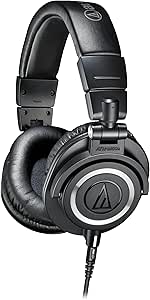 | Best for Wired Studio Monitoring | Type: Over-ear, circumaural studio monitor headphones | Driver type: Dynamic | Driver size: 45 mm | VIEW LATEST PRICE | See Our Full Breakdown |
| Audio-Technica ATH-M20xBTWH Wireless Over-Ear Headphones, White |  | Best for Entry-Level Wireless Flexibility | Connectivity: Bluetooth wireless; optional wired connection | Driver size: 40 mm | Battery life: Up to 60 hours | VIEW LATEST PRICE | See Our Full Breakdown |
| AlphaTheta HDJ-F10-TX Wireless DJ Headphones with SonicLink Transmitter |  | Best for Low-Latency DJ Monitoring | Driver size: 40 mm PEEK | Included transmitter: HP-TX01 | SonicLink latency: 9 ms | VIEW LATEST PRICE | See Our Full Breakdown |
| OneOdio Studio Max 2 Wireless DJ Headphones |  | Best for Long Wireless Sessions | Driver size: 45 mm | Latency: 9 ms | Audio codec: LDAC | VIEW LATEST PRICE | See Our Full Breakdown |
| PreSonus Eris HD6BT Wireless Over-Ear Headphones |  | Best for Closed-Back Studio Listening | Design: Over-ear, closed-back | Connectivity: Bluetooth 5 | Noise control: Active noise cancellation | VIEW LATEST PRICE | See Our Full Breakdown |
| wireless headphones for music production | Driver size | Connectivity | Battery life | Warranty |
|---|---|---|---|---|
| AKG K361-BT Wireless and Wired | 50 mm | Bluetooth and wired | — | — |
| Audio-Technica ATH-M50xBT2 Wir | 45 mm | — | Up to 50 hours | One-year limited end-user warranty |
| OneOdio Studio Max 1 Wireless | 50 mm | Bluetooth and wired | Up to 120 hours in Bluetooth mode; 50 hours with dongle | 2 years |
| Audio-Technica ATH-M50x Profes | 45 mm | — | — | — |
| Audio-Technica ATH-M20xBTWH Wi | 40 mm | Bluetooth wireless; optional wired connection | Up to 60 hours | One-year limited |
| AlphaTheta HDJ-F10-TX Wireless | 40 mm PEEK | SonicLink, Bluetooth, wired | Up to 9 hours with SonicLink; up to 30 hours with Bluetooth | 2 years |
| OneOdio Studio Max 2 Wireless | 45 mm | 2.4 GHz wireless, Bluetooth 6.0, 3.5 mm and 6.35 mm wired | Up to 120 hours | — |
| PreSonus Eris HD6BT Wireless O | — | Bluetooth 5 | Up to 60 hours | 2 years |
More Details on Our Top Picks
AKG K361-BT Wireless and Wired Over-Ear Studio Headphones
The AKG K361-BT suits producers who want one foldable pair for wired sessions and casual Bluetooth listening. Its 50 mm drivers and stated 15 Hz–28 kHz response give you a broad listening range, while the wired option is the more practical choice when monitoring a production source. Compared with the Audio-Technica ATH-M50xBT2, the AKG is easier to pack away, but it gives up that model’s longer stated battery life and multipoint pairing. The K361-BT’s 24-hour battery is useful for travel, though closed-back earcups may feel warm over extended sessions. Gesture controls and a built-in microphone add convenience for everyday use, but they do not replace the value of a wired connection when latency and dependable monitoring matter.
Pros:- Bluetooth and wired connectivity support both casual listening and wired production work.
- Foldable design is convenient for carrying between studio and location.
- 50 mm drivers and a stated 15 Hz–28 kHz frequency response provide a broad listening range.
- Built-in microphone and earcup gesture controls add everyday convenience.
Cons:- The closed-back over-ear design may feel warm during extended sessions.
- Listed 24-hour battery life is shorter than the ATH-M50xBT2 and ATH-M20xBTWH.
- Bluetooth is less suitable than a wired connection when monitoring latency-sensitive audio.
Best for: Mobile producers who need foldable headphones for wired editing at a desk and Bluetooth listening while commuting.
Not ideal for: Producers who wear headphones for long, warm studio sessions or need the longest battery life in this group.
- Type:Over-ear, closed-back headphones
- Connectivity:Bluetooth and wired
- Driver size:50 mm
- Frequency response:15 Hz–28 kHz
- Bluetooth battery life:24 hours
- Design features:Foldable earcups, built-in microphone, earcup gesture controls
Our verdict“Choose the K361-BT if portability and having both wired and Bluetooth listening matter more than maximum battery life or long-session ventilation.”
Audio-Technica ATH-M50xBT2 Wireless Over-Ear Headphones, Black
The ATH-M50xBT2 is the strongest fit here for producers who want wireless convenience without giving up an included audio cable for wired listening. Its 45 mm drivers are described as delivering clear sound with deep, accurate bass, and the long battery life reduces interruptions between sessions. Compared with the wired ATH-M50x, this model adds Bluetooth, multipoint pairing and app-based EQ, though the wired version is the more straightforward choice if you want to avoid wireless monitoring altogether. A 10-minute charge adds up to three hours of use, helpful when the battery runs low, but a full charge takes 3.5 hours. For production, I’d favor the included audio cable for monitoring and treat Bluetooth as a convenient option for reference listening and calls.
Pros:- Includes an audio cable for wired listening alongside Bluetooth.
- Up to 50 hours of stated battery life supports extended use between charges.
- Multipoint pairing connects to two devices at once.
- Beamforming microphones and app EQ add call and listening flexibility.
Cons:- A full charge takes 3.5 hours.
- For latency-sensitive production monitoring, the wired ATH-M50x is the simpler option.
- Closed-back over-ear headphones may feel warm during long sessions.
Best for: Home-studio producers who want one familiar over-ear pair for wired monitoring, Bluetooth reference listening and switching between two devices.
Not ideal for: Buyers who need open-back headphones, or who want wireless listening without planning around charging and wired monitoring.
- Type:Wireless over-ear headphones
- Driver size:45 mm
- Battery life:Up to 50 hours
- Rapid charging:Up to 3 hours of use from a 10-minute charge
- Bluetooth pairing:Connects to two devices at once
- Charging connection:USB-C
- Included accessories:USB charging cable, audio cable, pouch
- Warranty:One-year limited end-user warranty
Our verdict“Pick the ATH-M50xBT2 if you want a versatile wireless pair with a wired fallback, long battery life and easy switching between devices.”
OneOdio Studio Max 1 Wireless DJ and Wired Studio Headphones
The OneOdio Studio Max 1 makes the most sense for producers who also DJ and value flexible monitoring over a more conventional studio setup. Its 180-degree rotating earcups support single-ear monitoring, while Bluetooth and wired connections let you adapt to different sources. The listed 20 ms latency and included transmitter are aimed at DJ mixing and other low-latency uses; for critical production monitoring, I would still choose a wired connection. Compared with the AKG K361-BT, the Studio Max 1 offers far longer stated playback and a 6.35 mm connector, but it is a more feature-heavy choice, and its Bluetooth version is inconsistent in the supplied information: 5.2 in the specs and 5.3 in the description. The very long battery life is a clear convenience, though it does not by itself establish monitoring accuracy.
Pros:- 180-degree rotating earcups support single-ear monitoring.
- Bluetooth and wired connections, with both 3.5 mm and 6.35 mm connectors listed.
- Up to 120 hours of Bluetooth playback and quick-charge support reduce charging interruptions.
- Listed 20 ms latency and a transmitter target DJ mixing and similar use.
Cons:- The supplied information conflicts on Bluetooth version, listing 5.2 in the specs and 5.3 in the description.
- Wireless features do not replace a wired connection for latency-sensitive production monitoring.
- DJ-oriented swiveling and transmitter features may be unnecessary for producers seeking a simpler studio pair.
Best for: DJ-producers who need rotating earcups for one-ear cueing, wired connectivity options and long playback between charges.
Not ideal for: Studio mixers focused on dependable wired monitoring who do not need DJ-style swiveling cups or wireless features.
- Connectivity:Bluetooth and wired
- Bluetooth version:5.2 in specs; description lists 5.3
- Bluetooth range:10 meters
- Latency:20 ms
- Driver size:50 mm
- Battery life:Up to 120 hours in Bluetooth mode; 50 hours with dongle
- Connectors:3.5 mm and 6.35 mm
- Features:LDAC, LC3 decoding, dual-mic ENC, 180° rotating earcups
- Warranty:2 years
Our verdict“Choose the Studio Max 1 if you DJ as well as produce and want rotating cups, multiple wired connector sizes and especially long playback.”
Audio-Technica ATH-M50x Professional Studio Monitor Headphones
Although the ATH-M50x is not wireless, it earns a place in a roundup about wireless headphones for music production as the wired reference point: it avoids Bluetooth monitoring and keeps the signal path simple. Its 45 mm dynamic drivers, sound-isolating earcups and detachable cable suit studio monitoring, while the 90-degree swiveling cups are handy for one-ear cueing. Compared with the wireless ATH-M50xBT2, this version gives up Bluetooth and app EQ in favor of a direct wired design. That makes it a better fit for producers who prioritize a cable connection over listening away from the desk, but a weaker choice for anyone who specifically needs wireless freedom. The closed-back build can also feel warm, and no water resistance is listed. I’d choose it for wired sessions, not as a Bluetooth replacement.
Pros:- Wired connection avoids Bluetooth monitoring latency.
- Sound-isolating over-ear design helps limit outside noise during sessions.
- Detachable cable makes cable replacement or setup changes easier.
- 90-degree swiveling earcups support one-ear monitoring.
Cons:- No wireless connectivity is listed.
- No water resistance is listed.
- Closed-back earcups may feel warm during extended use.
Best for: Studio producers who want a wired, closed-back monitoring pair and do not need Bluetooth playback.
Not ideal for: Buyers whose main requirement is wireless listening, or producers who need headphones suited to sweaty or wet environments.
- Type:Over-ear, circumaural studio monitor headphones
- Driver type:Dynamic
- Driver size:45 mm
- Frequency response:20 Hz–28,000 Hz
- Impedance:38 ohm
- Sensitivity:99 dB
- Cable:Detachable
- Earcup swivel:90 degrees
Our verdict“Choose the ATH-M50x if dependable wired monitoring matters more than wireless convenience.”
Audio-Technica ATH-M20xBTWH Wireless Over-Ear Headphones, White
The ATH-M20xBTWH is a practical entry-level pick for producers who want Bluetooth convenience and the option to plug in, rather than a headphone built around specialist monitoring features. Its included 1.2 m cable provides a wired alternative for production work, while multipoint pairing makes it easy to switch between a computer and phone. The stated battery life reaches 60 hours, exceeding the AKG K361-BT and ATH-M50xBT2 figures supplied here, and a short USB-C charge can add up to three hours of use. Its low-latency mode is aimed at video and gaming, but the supplied data does not establish it as a substitute for wired monitoring. The 40 mm drivers are tuned for enhanced bass, which may not suit producers seeking a neutral reference. Its over-ear build may also feel bulky.
Pros:- Included 1.2 m cable allows optional wired listening.
- Up to 60 hours of battery life with quick charging via USB-C.
- Multipoint pairing connects to two Bluetooth devices.
- Low-latency mode and built-in microphone support video calls and general media use.
Cons:- Drivers are described as tuned for enhanced bass, which may be less suitable for neutral production decisions.
- The over-ear design may feel bulky for some users.
- Low-latency mode does not remove the case for wired monitoring during production.
Best for: Newer producers who want a Bluetooth headphone for everyday use, multipoint pairing and an included cable for wired sessions.
Not ideal for: Mix engineers seeking a neutral reference sound or buyers who need a compact, low-profile headphone.
- Connectivity:Bluetooth wireless; optional wired connection
- Driver size:40 mm
- Battery life:Up to 60 hours
- Fast charging:Up to 3 hours of use from a 10-minute charge via USB-C
- Pairing:Multipoint pairing with two devices
- Special features:Low-latency mode, built-in microphone and controls
- Included cable:1.2 m (3.9 ft)
- Weight:261 g
- Warranty:One-year limited
Our verdict“Pick the ATH-M20xBTWH if you want an everyday wireless pair with long battery life and a cable option, rather than a neutral-first studio reference.”
AlphaTheta HDJ-F10-TX Wireless DJ Headphones with SonicLink Transmitter
The HDJ-F10-TX is the strongest fit here for monitoring a live DJ set wirelessly: its included HP-TX01 transmitter sends audio over SonicLink at 9 ms latency, reducing the timing lag that can make cueing feel unreliable. Unlike the OneOdio Studio Max 2, which offers several wireless formats and a much longer stated battery life, this package is built around a dedicated transmitter and a specific DJ workflow. Bluetooth and wired modes add flexibility for casual listening or a direct studio connection, while noise cancelling and transparency mode help adapt to different environments. The tradeoffs are its 2.3-pound weight and up to 9 hours of SonicLink use, which makes it less appealing for long production sessions. I’d choose it for DJ monitoring, not as my default mixing reference.
Pros:- Included HP-TX01 transmitter enables 9 ms SonicLink monitoring
- SonicLink, Bluetooth, and wired connections suit different listening tasks
- Noise cancelling and transparency modes add flexibility in noisy settings
- MIL-STD-810H shock-tested durability
Cons:- SonicLink battery life is limited to up to 9 hours
- At 2.3 pounds, it is substantially heavy for extended production sessions
- Its DJ-focused wireless system is less compelling for buyers who mainly mix through a wired connection
Best for: DJs who want a ready-to-use, low-latency wireless monitoring system with Bluetooth and wired fallback options.
Not ideal for: Producers seeking lightweight headphones for long mixing sessions or wireless monitoring that lasts beyond a typical workday.
- Driver size:40 mm PEEK
- Included transmitter:HP-TX01
- SonicLink latency:9 ms
- Connectivity:SonicLink, Bluetooth, wired
- Battery life:Up to 9 hours with SonicLink; up to 30 hours with Bluetooth
- Features:Active Noise Cancelling, Transparency mode
- Weight:2.3 pounds
- Durability:MIL-STD-810H shock-tested
- Warranty:2 years
Our verdict“Choose the HDJ-F10-TX if low-latency DJ cueing matters more than light weight or all-day SonicLink battery life.”
OneOdio Studio Max 2 Wireless DJ Headphones
The Studio Max 2 makes the most sense for producers and DJs who want to work wirelessly for long stretches without planning around frequent charging. Its stated up to 120-hour battery life far exceeds the HDJ-F10-TX’s 9 hours in SonicLink mode, though the conditions behind that figure aren’t specified. A 9 ms latency claim and 2.4 GHz wireless make it better suited to monitoring than ordinary Bluetooth-only headphones, while LDAC and Bluetooth 6.0 add options for music playback. Compared with the PreSonus Eris HD6BT, this OneOdio offers more connection formats, a broad accessory set, and a stated low-latency mode; the PreSonus instead emphasizes noise cancelling and closed-back listening. I’d favor the Studio Max 2 for flexible wireless use, but not treat its playback specifications as proof of neutral mix translation.
Pros:- 9 ms latency is suited to responsive monitoring and editing
- Supports 2.4 GHz wireless, Bluetooth 6.0, and wired connections
- LDAC support and 45 mm drivers broaden its wireless listening options
- Includes 3.5 mm and 6.35 mm cables plus an EVA case
Cons:- The up-to-120-hour battery claim does not specify usage conditions
- Wireless convenience does not establish a neutral sound for critical mix decisions
- The many connection modes may be unnecessary for producers who work mainly wired
Best for: DJs and home producers who want multiple connection options, low-latency wireless monitoring, and fewer charging interruptions.
Not ideal for: Mix engineers who need a clearly documented reference tuning or buyers who prefer a compact, lightweight pair for long sessions.
- Driver size:45 mm
- Latency:9 ms
- Audio codec:LDAC
- Frequency response:20 Hz–40 kHz
- Connectivity:2.4 GHz wireless, Bluetooth 6.0, 3.5 mm and 6.35 mm wired
- Battery life:Up to 120 hours
- Charging:5 minutes for up to 9 hours of playback
- Ear placement:Over-ear
- Included accessories:USB-C charging cable, 3.5 mm to 3.5 mm and 6.35 mm cables, EVA case
Our verdict“Pick the Studio Max 2 for versatile, long-running wireless DJ and production sessions, while keeping critical mix checks wired or on trusted monitors.”
PreSonus Eris HD6BT Wireless Over-Ear Headphones
The Eris HD6BT is the most studio-oriented pick of these three for buyers who want closed-back headphones that can also handle wireless everyday listening. Its Bluetooth 5 connection and active noise cancellation make it a more convenient companion away from the desk than a strictly wired studio model, while the supplied audio cable and 1/4-inch adapter provide a direct connection for recording or monitoring. That wired fallback matters more for production than Bluetooth alone, since the listed specs do not give a low-latency wireless figure. Compared with the OneOdio Studio Max 2, the PreSonus trades extensive wireless formats and a much longer stated battery life for a straightforward closed-back design and ANC. Its 40 mm drivers and 32-ohm impedance describe the hardware, but don’t guarantee mix neutrality; I’d use it for tracking and general listening, then cross-check mixes elsewhere.
Pros:- Closed-back design is suited to recording and monitoring tasks
- Active noise cancellation helps limit distractions during everyday listening
- Includes an audio cable and 1/4-inch adapter for wired studio connections
- Up to 60 hours of playback supports extended use between charges
Cons:- No low-latency wireless specification is provided for production monitoring
- Bluetooth 5 offers fewer stated connection options than the OneOdio Studio Max 2
- The listed frequency response is given as 20,000 Hz without a lower limit
Best for: Home producers who need closed-back headphones for recording and monitoring, with Bluetooth and ANC for listening outside the studio.
Not ideal for: DJs who require a stated low-latency wireless link or mix engineers looking for documented reference tuning.
- Design:Over-ear, closed-back
- Connectivity:Bluetooth 5
- Noise control:Active noise cancellation
- Battery life:Up to 60 hours
- Driver:40 mm dynamic
- Impedance:32 ohm
- Weight:1.4 pounds
- Included accessories:1/8-inch audio cable, 1/4-inch adapter, protective case
- Warranty:2 years
Our verdict“Choose the Eris HD6BT for closed-back wired monitoring with ANC and Bluetooth convenience, but not for latency-sensitive wireless cueing.”
How We Picked
I ranked these headphones by how well they fit real production tasks: dependable wired operation, useful wireless capability, comfort for extended sessions, practical controls and connections, and versatility across editing, composing, reference listening, and DJ work. I gave more weight to a credible wired fallback than to wireless convenience alone, since Bluetooth delay can interfere with recording and timing-sensitive tasks. I also treated dedicated low-latency DJ systems as specialist tools rather than direct replacements for conventional studio monitoring.
The order reflects those differences. The AKG K361-BT leads for balancing wireless use with a straightforward wired option; the ATH-M50xBT2 follows as a capable all-round alternative. The wired ATH-M50x remains relevant for buyers who value a direct connection, while the M20xBTWH makes more sense as an approachable starting point. The OneOdio models and PreSonus Eris HD6BT serve distinct feature and listening priorities, and the AlphaTheta HDJ-F10-TX ranks as a premium specialist for wireless DJ monitoring—not as the default pick for every producer.
| wireless headphones for music production | Battery life |
|---|---|
| AKG K361-BT Wireless and Wired | — |
| Audio-Technica ATH-M50xBT2 Wir | Up to 50 hours |
| OneOdio Studio Max 1 Wireless | Up to 120 hours in Bluetooth mode; 50 hours with dongle |
| Audio-Technica ATH-M50x Profes | — |
| Audio-Technica ATH-M20xBTWH Wi | Up to 60 hours |
| AlphaTheta HDJ-F10-TX Wireless | Up to 9 hours with SonicLink; up to 30 hours with Bluetooth |
| OneOdio Studio Max 2 Wireless | Up to 120 hours |
| PreSonus Eris HD6BT Wireless O | Up to 60 hours |
Factors to Consider When Choosing Wireless Headphones For Music Production
For production, the right headphones depend less on whether they are wireless and more on which tasks you expect them to handle. I’d decide how often you need a cable, whether you record while wearing headphones, and how much of your work depends on timing or mix translation before choosing a feature set.
Decide Which Jobs Need a Cable
Wireless playback is convenient for arranging, casual reference listening, and moving around a workspace, but it is a poor default for every studio task. Bluetooth delay can make software instruments feel disconnected and can complicate recording against a live input. A wired mode is useful only if you can connect it to the source you use and the headphones function passively or reliably when their battery is depleted. Check whether the supplied cable suits your interface, controller, or laptop adapter needs. A common mistake is buying wireless headphones for production and then discovering that the most timing-sensitive parts of the workflow still call for a cable. Treat wireless as an added mode, not a guarantee of studio-grade real-time performance.
Separate Low Latency From Bluetooth Convenience
Bluetooth codec support can affect audio quality and delay, but compatible devices at both ends matter; a headphone’s listed codec does not make every computer or phone use it. Dedicated wireless systems can reduce latency for particular workflows, though they may require a transmitter and may not connect as broadly as Bluetooth headphones. Before paying for a low-latency feature, identify whether you need it for DJ cueing, performance, or simply relaxed listening. For recording vocals or instruments, a direct wired connection is usually the simpler path. For editing and rough arrangement, modest delay may be tolerable if you are not monitoring live input. Match the wireless system to a specific task rather than treating all wireless links as interchangeable.
Prioritize Mix Translation Over Exciting Sound
A headphone sound that makes bass or treble feel dramatic can be enjoyable but may lead you to compensate incorrectly in a mix. Production decisions benefit from a response you can learn and compare with other listening systems, not just a pleasing first impression. No single headphone reveals every problem, so use familiar reference tracks and check important balances on speakers, another headphone, or a trusted playback device. Closed-back designs can help limit sound leakage into a microphone, while their isolation and tonal presentation may differ from open-back studio headphones. Do not infer neutrality from a studio or DJ label alone. If mixing is a major use, value consistency and repeatable references above extra wireless features.
Check Comfort, Fit, and Isolation for Your Session Length
Headband pressure, ear-pad depth, weight, and heat become more noticeable over long sessions than during a brief audition. A tight seal can help with tracking and noisy rooms, but it may feel tiring or change how bass is perceived when the fit shifts. If you wear glasses, pay close attention to clamping force and pad softness; small fit differences can affect both comfort and isolation. Replaceable pads can extend a headphone’s working life, so check availability before treating them as a disposable part. For long editing days, comfort can matter more than a feature you will rarely use. Where possible, try the fit with the glasses or headwear you normally use.
Compare Power, Controls, and Connection Details
Wireless headphones introduce battery management into a studio setup, so check how they charge, whether they can play while charging, and what happens when the battery runs out. Physical controls are useful when you are away from the computer, but touch controls can be less predictable during focused work. Look at cable type, connector size, included adapters, and whether the headphones fold or pack well if you move between a home studio and another workspace. Multipoint pairing can help switch between a computer and phone, though it is not a substitute for dependable audio routing during production. A longer feature list is not automatically better if it adds setup steps or depends on accessories you do not own. Pick the functions that fit your actual desk and session habits.
Pay More for a Specific Workflow, Not for Wireless Alone
A higher-end wireless system makes the most sense when its special capability solves a recurring problem, such as low-latency DJ monitoring or frequent movement away from the workstation. If most sessions happen at a desk, a well-fitting wired-capable model may serve better than paying extra for a transmitter or advanced wireless functions. Beginners should keep enough of their budget for an audio interface, a microphone, or room treatment if those are bigger limits on their work. A dedicated DJ model may be excellent for cueing yet less suitable as the only reference for mixing. Consider the cost of replacement pads, cables, and batteries as part of long-term ownership. Buy for the bottleneck in your workflow, not the most impressive specification sheet.
Frequently Asked Questions
Can I mix a finished track using Bluetooth headphones?
You can make rough balance and arrangement decisions over Bluetooth, but I would not rely on it as the only check for a finished mix. Wireless processing and the headphone’s tuning can shape what you hear, and Bluetooth delay can make timing-sensitive work awkward. Use a wired connection when the model supports it, then compare the mix on speakers or another familiar playback system. Reference tracks help you judge tonal balance more consistently. If wireless is your only option, treat the result as one perspective rather than a final authority.
Should I choose the wireless ATH-M50xBT2 or the wired ATH-M50x?
Choose the ATH-M50xBT2 if you want wireless listening as well as a wired connection for production tasks. The wired ATH-M50x is the simpler fit if you do not need Bluetooth and prefer a headphone that stays connected to your interface or computer. Neither choice removes the need to check mixes on other playback systems. Think about whether you will genuinely use wireless away from the desk, rather than paying for a mode that stays unused. Also check the exact cable and adapter connections your setup requires.
Is the AlphaTheta HDJ-F10-TX a good choice for a home studio?
It can make sense if your work includes DJ monitoring and you specifically want the low-latency SonicLink transmitter system. That focus sets it apart from general Bluetooth headphones, but it does not automatically make it a better all-purpose mixing headphone. A producer who mainly edits and mixes at a desk may get more practical value from a model with a straightforward wired mode. Consider whether the transmitter fits your equipment and whether you will use the DJ features regularly. If you need only routine music production monitoring, its specialist focus may be more than your setup needs.
Are DJ headphones suitable for mixing and mastering?
They can be useful for editing, tracking, and checking material, but DJ headphones are often designed around isolation, durability, and monitoring in loud environments. Those priorities do not guarantee the balanced presentation many people want for mix decisions. Use familiar reference tracks to learn how a pair presents bass, vocals, and high frequencies, then check your work on other systems. If you are buying one pair for both DJ work and production, wired connectivity and comfort deserve close attention. For mastering, avoid relying on any single headphone as your only reference.
What should a beginner prioritize when choosing wireless production headphones?
Start with fit, a dependable wired option, and compatibility with your computer or interface. Those basics affect more sessions than advanced wireless features, especially when you are learning to record or edit with software instruments. The ATH-M20xBTWH is the more approachable choice in this lineup, while the AKG K361-BT offers a more flexible path between wireless listening and wired work. Do not assume a beginner needs a DJ transmitter or multiple wireless modes. Set aside time to compare your mixes with reference tracks so you learn the headphone’s sound rather than expecting it to make decisions for you.
Conclusion
Best overall: I’d choose the AKG K361-BT for a practical balance of wireless convenience and wired production use. Best alternative all-rounder: the ATH-M50xBT2 suits buyers who want wireless features alongside a cable-ready option. Best value: the OneOdio Studio Max 1 is worth a close look for buyers who want a flexible DJ-and-studio style headset, while keeping in mind that DJ versatility is not the same as neutral mix monitoring. Best for beginners: the ATH-M20xBTWH offers a simpler starting point. Best premium and specific need: choose the AlphaTheta HDJ-F10-TX if dedicated low-latency DJ monitoring is your priority; for a strictly wired studio setup, the ATH-M50x remains the straightforward pick. If you mainly mix, prioritize a wired fallback and reliable references over wireless features alone.