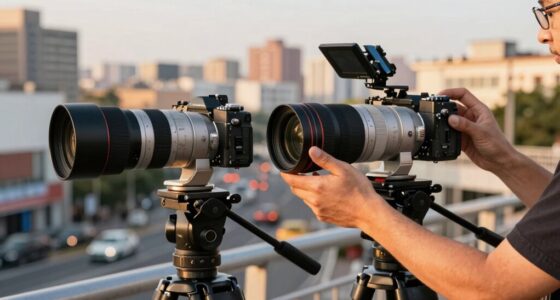
Camera stabilizers help smooth handheld video, but the right choice depends on whether you film with a phone, a lightweight camera, or a heavier mirrorless or DSLR setup. I’d choose the DJI RS 5 as the best overall for camera operators who want a dedicated 3-axis gimbal, while the DJI Osmo Mobile 7 is a stronger fit for phone creators and the FeiyuTech SCORP Mini 2 Kit offers useful tracking and lighting features in a compact kit. The main tradeoffs are gimbal smoothness versus simpler grip-based support, and extra features versus added weight, setup, and camera compatibility limits. A stabilizer built for a phone will not carry a camera rig, and a mechanical grip will not provide the same powered correction as a gimbal. Read on for the full breakdown of all 13 camera stabilizers and how I’d match each one to a filming setup.

Get audio and creator gear delivered free with Prime
- Fast, free delivery on millions of items
- Prime Video, Amazon Music and more included
- Member-only deals all year
Complete the kit


Key Takeaways
- Camera type determines the shortlist: the Hohem iSteady X3 SE, DJI Osmo Mobile 7, and COMITOK L7C Pro are phone-focused, while the RS and SCORP models are designed for camera rigs.
- Powered 3-axis gimbals and handheld grips solve different problems: the DJI and FeiyuTech gimbals actively correct movement; the ChromLives, PULUZ, and Zeadio grips offer a simpler hold but do not provide motorized stabilization.
- The RS 5 leads for a dedicated camera setup, while the RS 4 and RS 4 Mini provide alternatives for buyers whose priorities are a larger camera rig or a more compact build.
- Tracking and accessories set the SCORP kits apart: the SCORP Mini 2 combines AI tracking, a fill light, and a touchscreen; the SCORP 2 is the more camera-oriented option with a stated 2.5 kg payload.
- Compactness has a real tradeoff: phone gimbals and mini camera gimbals are easier to carry, but buyers still need to check device fit, camera-and-lens weight, and the demands of their planned shots.
| Hohem iSteady X3 SE 3-Axis Gimbal Stabilizer for iPhone & Android, Black |  | Best Compact Smartphone Stabilizer | Stabilization technology: iSteady 8.0, 3-axis | Compatibility: iPhone and Android smartphones | Payload capacity: 0.66 lbs | VIEW ON AMAZON | See Our Full Breakdown |
| DJI RS 5 Gimbal Stabilizer for Camera, Compatible with Canon, Sony, Nikon, Fujifilm |  | Best for Automated Setup and Subject Tracking | Compatibility: Canon, Sony, Nikon, and Fujifilm cameras | Battery runtime: Up to 14 hours | Charging time: 1 hour | VIEW ON AMAZON | See Our Full Breakdown |
| DJI RS 4 Mini Gimbal Stabilizer |  | Best Lightweight Camera Gimbal | Maximum payload: 2 kg (4.4 lbs) | Axis locks: 2nd-generation automated | Vertical shooting: 3rd-generation native vertical shooting | VIEW ON AMAZON | See Our Full Breakdown |
| ChromLives Universal Camera Handle Grip with 1/4″ Male Screw for DSLR, Camcorder, Action Camera, LED Light and Phone |  | Best Budget-Style Handheld Grip | Device compatibility: Camcorder, camera, cellphone, DSLR, action camera, and LED light | Mounting thread: 1/4-inch male screw | Maximum recommended weight: 360 g | VIEW ON AMAZON | See Our Full Breakdown |
| DJI RS 4 Gimbal Stabilizer for Camera (Canon/Sony/Nikon/Fujifilm) |  | Best for Heavier Camera Rigs | Payload capacity: 3 kg (6.6 lbs) | Compatibility: Canon, Sony, Nikon, and Fujifilm mirrorless cameras | Battery runtime: 12–29.5 hours with BG70 grip | VIEW ON AMAZON | See Our Full Breakdown |
| DJI Osmo Mobile 7 Gimbal Stabilizer for iPhone & Android |  | Best for Smartphone Creators | Brand: DJI | Model number: DS307 | Compatibility: iPhone and Android | VIEW ON AMAZON | See Our Full Breakdown |
| PULUZ Video Action Handheld Stabilizer with Cold-Shoe Mount and U/C Shape Grip |  | Best Value Handheld Rig | Brand: PULUZ | Model name: U/C Shape | Stabilization type: Mechanical | VIEW ON AMAZON | See Our Full Breakdown |
| Zeadio Handheld Stabilizer with Triple Cold Shoe Grip for Cameras and Smartphones |  | Best for Accessory-Heavy Action Rigs | Brand: Zeadio | Model: DV-TGRIP | Model number: DV-HDE-TG17 | VIEW ON AMAZON | See Our Full Breakdown |
| DJI RS 3 Mini Camera Gimbal Stabilizer |  | Best Compact Camera Gimbal | Brand: DJI | Weight, portrait mode: 795 g (1.75 lb) | Weight, horizontal arm: 850 g (1.8 lb) | VIEW ON AMAZON | See Our Full Breakdown |
| Zeadio Video Action Stabilizing Handle Grip Handheld Stabilizer with Cold-Shoe Mount for All DSLR Camera Camcorder |  | Best Simple Camera Handle | Brand: Zeadio | Model: DV-U-GRIP | Maximum recommended weight: 500 g | VIEW ON AMAZON | See Our Full Breakdown |
| COMITOK L7C Pro Gimbal Stabilizer for Smartphone |  | Best Compact Phone Gimbal | Model: L7C Pro | Stabilization: 3-axis | Battery capacity: 2600 mAh | VIEW ON AMAZON | See Our Full Breakdown |
| FeiyuTech SCORP Mini 2 Kit Gimbal – 3‑Axis Camera Stabilizer with AI Tracker, Fill Light, 1.3‑inch Touch Screen (White) |  | Best Multi-Device Value | Model: SCORP Mini 2 Kit | Stabilization: 3-axis | Payload capacity: 1.2 kg | VIEW ON AMAZON | See Our Full Breakdown |
| FeiyuTech SCORP 2 Gimbal Stabilizer for DSLR and Mirrorless Cameras – Integrated AI Tracking Sensor, 3‑Axis, 2.5 kg Payload, Touchscreen, Vertical Shooting |  | Best for Heavier Camera Rigs | Model: Feiyu SCORP 2 | Stabilization: 3-axis | Maximum payload: 2.5 kg (2500 g) | VIEW ON AMAZON | See Our Full Breakdown |
| camera stabilizer | Compatibility | Weight |
|---|---|---|
| Hohem iSteady X3 SE 3-Axis Gim | iPhone and Android smartphones | 0.79 lbs |
| DJI RS 5 Gimbal Stabilizer for | Canon, Sony, Nikon, and Fujifilm cameras | — |
| DJI RS 4 Mini Gimbal Stabilize | — | — |
| ChromLives Universal Camera Ha | — | 3.63 ounces |
| DJI RS 4 Gimbal Stabilizer for | Canon, Sony, Nikon, and Fujifilm mirrorless cameras | — |
| DJI Osmo Mobile 7 Gimbal Stabi | iPhone and Android | 300 g |
| PULUZ Video Action Handheld St | — | — |
| Zeadio Handheld Stabilizer wit | — | 350 g |
| DJI RS 3 Mini Camera Gimbal St | — | — |
| Zeadio Video Action Stabilizin | Cameras and camcorders with 1/4-20 thread | 344 g |
| COMITOK L7C Pro Gimbal Stabili | Phones under 7 in and up to 0.62 lb | 0.8 lb |
| FeiyuTech SCORP Mini 2 Kit Gim | Mirrorless cameras, DSLRs, smartphones, action cameras | 852 g |
| FeiyuTech SCORP 2 Gimbal Stabi | — | — |
More Details on Our Top Picks
Hohem iSteady X3 SE 3-Axis Gimbal Stabilizer for iPhone & Android, Black
The Hohem iSteady X3 SE is the most travel-friendly choice here for phone creators: its foldable design and 0.79-pound weight make it easier to carry than the camera-focused DJI RS 4 Mini or RS 4. Its three-axis iSteady 8.0 stabilization is suited to smoother walking shots, while the detachable magnetic remote lets you start and control filming when the phone is out of reach. An 11-hour battery also supports long days of casual shooting. The tradeoff is its 0.66-pound payload limit, which rules out heavier phone setups, and full functionality relies on the Hohem Joy app. Choose this over a larger camera gimbal when portability matters more than interchangeable-camera support or higher payload capacity.
Pros:- Foldable, lightweight design is easy to carry between shoots.
- Three-axis iSteady 8.0 stabilization helps smooth handheld phone footage.
- Up to 11 hours of battery life supports extended filming days.
- Detachable magnetic remote adds flexibility for solo shots.
Cons:- 0.66-pound payload limits heavier phones and accessory setups.
- Full functionality depends on learning and using the Hohem Joy app.
Best for: Phone vloggers and travelers who want a foldable stabilizer, remote control, and long battery life for everyday iPhone or Android filming.
Not ideal for: Creators using a heavy phone with accessories or a mirrorless camera; the payload is limited to 0.66 pounds and the gimbal is designed for smartphones.
- Stabilization technology:iSteady 8.0, 3-axis
- Compatibility:iPhone and Android smartphones
- Payload capacity:0.66 lbs
- Weight:0.79 lbs
- Battery life:Up to 11 hours
- Remote:Detachable magnetic remote
- App support:Hohem Joy
- Orientation modes:Horizontal and vertical
- Foldable:Yes
Our verdict“Choose the Hohem iSteady X3 SE for portable, long-running smartphone stabilization, but pick a camera gimbal such as the DJI RS 4 Mini for heavier gear.”
DJI RS 5 Gimbal Stabilizer for Camera, Compatible with Canon, Sony, Nikon, Fujifilm
The DJI RS 5 is aimed at camera operators who value a faster, more guided setup over the lighter footprint of the DJI RS 4 Mini. Automated axis locks and fine-tuning knobs help streamline setup and balancing, while the Z-Axis indicator offers another cue when refining movement. Its enhanced intelligent tracking can help keep a single subject framed, making it useful for solo filming, though the feature is limited to specific scenarios and is not a substitute for flexible multi-subject tracking. The included electronic briefcase handle supports a different grip for low or close angles. Up to 14 hours of runtime and a one-hour charging time suit long production days, but camera compatibility varies, and some functions may require separate purchases or firmware updates.
Pros:- Automated axis locks help speed setup and packing.
- Intelligent tracking can keep a single subject framed in supported scenarios.
- Up to 14 hours of runtime and one-hour charging support demanding shooting schedules.
- Electronic briefcase handle offers an alternate grip for low-angle work.
Cons:- Tracking is limited to single subjects and specific scenarios.
- Some features may require separate purchases or firmware updates.
- Compatibility can vary by camera model.
Best for: Camera creators using supported Canon, Sony, Nikon, or Fujifilm setups who want automated setup aids, single-subject tracking, and a briefcase-style handle.
Not ideal for: Buyers who want a compact phone-first stabilizer or need dependable tracking across multiple subjects and every shooting situation.
- Compatibility:Canon, Sony, Nikon, and Fujifilm cameras
- Battery runtime:Up to 14 hours
- Charging time:1 hour
- Tracking:Enhanced intelligent tracking
- Handle:Electronic briefcase handle
- Balancing:Fine-tuning knobs
- Axis locks:Automated
- Indicator:Z-Axis indicator
- Included items:Quick-Open Tripod and BG33 Battery Grip
Our verdict“Pick the DJI RS 5 if setup assistance and single-subject tracking matter more than the smaller, simpler footprint of the RS 4 Mini.”
DJI RS 4 Mini Gimbal Stabilizer
The DJI RS 4 Mini makes sense for creators who want camera-gimbal capabilities without moving up to the larger DJI RS 4. Its 2 kg (4.4 lb) payload supports compatible mirrorless cameras and smartphones, while the compact design is easier to carry between locations. Automated axis locks speed up setup, and Teflon-enhanced balancing helps reduce friction when adjusting the camera. Native vertical shooting is a practical advantage for portrait-format video without needing a separate orientation accessory. The tradeoff is less payload capacity than the RS 4’s 3 kg limit, so heavier camera-and-lens combinations may be a poor fit. Android users should also note that the DJI Ronin app is not available on Google Play and requires a manual download.
Pros:- 2 kg payload accommodates compatible mirrorless cameras and smartphones.
- Automated axis locks make setup and packing quicker.
- Native vertical shooting supports portrait-format content without extra hardware.
- Teflon-enhanced balancing helps make camera adjustments smoother.
Cons:- Lower payload capacity than the DJI RS 4 limits heavier camera rigs.
- Android users must manually download the DJI Ronin app.
Best for: Traveling mirrorless-camera creators and phone filmmakers who need native vertical shooting in a lighter gimbal with a moderate payload limit.
Not ideal for: Operators carrying heavier camera-and-lens combinations that approach or exceed 2 kg, or Android users who want to install the control app through Google Play.
- Maximum payload:2 kg (4.4 lbs)
- Axis locks:2nd-generation automated
- Vertical shooting:3rd-generation native vertical shooting
- Balancing technology:Teflon-enhanced
- Supported devices:Compatible mirrorless cameras and smartphones
- Included item:Tripod
- Included item:Quick-release plate
- Included item:USB-C charging cable
- Included item:L-shaped control cable and screw kit
Our verdict“Choose the RS 4 Mini for a lighter camera gimbal with native vertical shooting, and move to the RS 4 if your rig needs its higher 3 kg payload.”
ChromLives Universal Camera Handle Grip with 1/4″ Male Screw for DSLR, Camcorder, Action Camera, LED Light and Phone
The ChromLives Handle Grip is the simplest and lightest option in this group, but it is a handheld grip rather than a motorized stabilizer. Its metal body, rubber anti-slip surface, and standard 1/4-inch screw give compatible cameras and accessories a more secure-feeling handle for basic handheld shooting. At 3.63 ounces, it is easier to pack than a powered gimbal such as the DJI RS 4 Mini, but it cannot actively correct camera movement or keep a horizon level. The 360 g recommended weight limit also narrows its use, and phone or action-camera users need to supply their own compatible mount. I’d choose it for a light camera or accessory when a straightforward grip is enough; anyone seeking stabilized walking footage should choose a powered gimbal instead.
Pros:- Standard 1/4-inch screw works with a range of compatible cameras and accessories.
- Metal construction provides a sturdy-feeling handle.
- Rubber anti-slip surface supports a more secure grip.
- At 3.63 ounces, it is easy to carry compared with powered gimbals such as the DJI RS 4 Mini.
Cons:- It is a grip, not a motorized stabilizer, so it does not actively counter camera movement.
- Phone and action-camera clamps or mounts are not included.
- Maximum recommended device weight is 360 g.
Best for: Creators with a camera or accessory under 360 g who want a lightweight handhold for basic handheld filming and already own the needed mount.
Not ideal for: Filmmakers seeking motorized shake correction, stabilization while walking, or an all-in-one phone or action-camera mounting kit.
- Device compatibility:Camcorder, camera, cellphone, DSLR, action camera, and LED light
- Mounting thread:1/4-inch male screw
- Maximum recommended weight:360 g
- Weight:3.63 ounces
- Dimensions:1.18 × 1.18 × 3.94 inches
- Construction:Metal body with anti-slip rubber surface
- Color:Black
- Warranty:1 year
Our verdict“Choose this grip for lightweight, basic handheld support, not for the active shake reduction offered by a powered gimbal.”
DJI RS 4 Gimbal Stabilizer for Camera (Canon/Sony/Nikon/Fujifilm)
For creators with a larger mirrorless setup, the DJI RS 4 offers more headroom than the RS 4 Mini: its 3 kg (6.6 lb) payload is better suited to heavier compatible camera-and-lens combinations. Native second-generation vertical shooting makes portrait-format work possible without an extra bracket, and Teflon-coated axis arms help with balancing adjustments. The RS 4 also supports the RSA communication port for expanded accessory control. Its listed runtime ranges from 12 to 29.5 hours with the optional BG70 grip, while the included BG21 grip is part of the standard package; buyers should not assume the maximum runtime applies without that larger grip. Compared with the RS 4 Mini, this model trades a lighter carry for more payload capacity and expansion options. Switching shooting orientation still calls for rebalancing.
Pros:- 3 kg payload supports heavier compatible camera setups than the DJI RS 4 Mini.
- Native second-generation vertical mode avoids extra hardware for portrait shooting.
- Teflon-coated axes support smoother balancing adjustments.
- RSA communication port allows expanded accessory control.
Cons:- Switching between horizontal and vertical shooting requires rebalancing.
- The maximum 29.5-hour runtime depends on the optional BG70 grip.
- DJI Ronin app is not available on Google Play and requires a manual download.
Best for: Mirrorless-camera operators with heavier compatible rigs who need a 3 kg payload, native vertical shooting, and accessory-control expansion.
Not ideal for: Travelers prioritizing the lightest kit, phone-only creators, or anyone who wants to switch between landscape and portrait without rebalancing.
- Payload capacity:3 kg (6.6 lbs)
- Compatibility:Canon, Sony, Nikon, and Fujifilm mirrorless cameras
- Battery runtime:12–29.5 hours with BG70 grip
- Included battery grip:BG21
- Vertical shooting:2nd-generation native vertical mode
- Joystick modes:PF, PTF, FPV, 3D Roll 360, and Custom
- Control port:RSA communication port
- Included accessories:Quick-release plate
- Included accessories:Extended grip/tripod
Our verdict“Choose the DJI RS 4 for a heavier camera rig and expansion options, but favor the RS 4 Mini when lower carry weight matters more than payload.”
DJI Osmo Mobile 7 Gimbal Stabilizer for iPhone & Android
The Osmo Mobile 7 is the strongest fit here for phone-first creators who want electronic three-axis stabilization rather than a handle that relies on grip and movement technique. Its foldable build and built-in tripod make it easier to carry and set up for solo filming, while ActiveTrack 7.0 can help keep a moving subject in frame. Compared with the DJI RS 3 Mini, this model is simpler and lighter for a smartphone, but it cannot support a mirrorless camera. The up-to-10-hour battery is useful for long shooting days, though some advanced functions may require separate accessories. A software wrinkle is that DJI Mimo must be downloaded from DJI’s website, and older or unusual phone models may not fit or work as expected.
Pros:- Three-axis electronic stabilization smooths phone footage while walking or moving.
- Foldable design with an integrated tripod is convenient for travel and solo recording.
- ActiveTrack 7.0 helps keep a moving subject in frame.
- Up to 10 hours of battery life, with phone-charging capability.
Cons:- DJI Mimo requires downloading from DJI’s website rather than the usual app-store route.
- Some advanced functions may require separately purchased accessories.
- Compatibility can be limited with older or non-standard smartphones.
Best for: iPhone and Android creators who want a portable gimbal for walking videos, travel clips, and solo subject tracking.
Not ideal for: Mirrorless-camera owners or users with older or unusually sized smartphones that may not be compatible.
- Brand:DJI
- Model number:DS307
- Compatibility:iPhone and Android
- Stabilization:3-axis gimbal
- Battery life:Up to 10 hours
- Weight:300 g
- Tracking:ActiveTrack 7.0
- Included accessories:Magnetic phone clamp, USB-C to USB-C power cable, and storage pouch
Our verdict“Choose the Osmo Mobile 7 for stabilized smartphone filming and tracking; choose the DJI RS 3 Mini if you need to carry a mirrorless camera.”
PULUZ Video Action Handheld Stabilizer with Cold-Shoe Mount and U/C Shape Grip
The PULUZ is a practical pick for shooters who want a mechanical handgrip and accessory mounts, not motorized stabilization. Its U/C-shaped handle and triple cold shoes give room for items such as a light or microphone, while the sliding 1/4-inch screw supports compatible cameras, camcorders, and smartphones. Compared with the Zeadio DV-TGRIP, the PULUZ’s stated folded dimensions make its packed shape easy to gauge, but the Zeadio offers dual handles and a removable grip for more shooting configurations. Both rely on the operator to steady the shot: neither matches the motion correction of the DJI Osmo Mobile 7 or DJI RS 3 Mini. The PULUZ’s mechanical design avoids gimbal motors and setup, but it is not water resistant and won’t deliver the same smoothness on rough movement.
Pros:- Triple cold-shoe mounts provide places to attach compatible accessories.
- U/C-shaped grip offers a straightforward handheld support setup.
- Compatible with cameras, camcorders, and smartphones using suitable mounting hardware.
- Folded dimensions are specified for easier packing decisions.
Cons:- Mechanical support cannot correct movement as smoothly as a powered gimbal.
- Not water resistant, limiting use in rain or wet action settings.
- Smartphone and camera setups may need separate mounting accessories.
Best for: Action-video shooters who want a simple grip with accessory mounts for a compatible camera, camcorder, or phone.
Not ideal for: Creators who need electronic stabilization for walking footage, or anyone filming in wet conditions.
- Brand:PULUZ
- Model name:U/C Shape
- Stabilization type:Mechanical
- Compatible devices:Camera, camcorder, and smartphone
- Mount:Standard 1/4-inch sliding screw
- Accessory mounts:Triple cold shoe
- Folded size:25 × 20.5 × approximately 4 cm
- Water resistance:Not water resistant
Our verdict“Pick the PULUZ for an accessory-ready handheld grip on a straightforward budget-conscious rig, not for gimbal-smooth walking shots.”
Zeadio Handheld Stabilizer with Triple Cold Shoe Grip for Cameras and Smartphones
The Zeadio DV-TGRIP stands out among the handheld rigs for its dual handles, removable grip, and three cold shoes. Those options let an operator change how the rig is held or attach several accessories, which can be useful for low-angle action footage and multi-piece camera setups. It supports cameras and camcorders with a standard 1/4-20 thread, while smartphones are supported through the wireless shutter setup. Compared with the PULUZ U/C grip, Zeadio offers more handle configurations; the PULUZ is the simpler choice if a basic grip is all you need. Neither is an electronic gimbal, so operator technique still determines smoothness. The added mounting points also mean a bulkier package, and its lack of water resistance makes wet rides or surf-side filming a poor match.
Pros:- Dual handles and removable grip allow varied holding positions and shooting angles.
- Triple cold shoes accommodate multiple compatible accessories.
- Standard 1/4-20 thread supports a broad range of cameras and camcorders.
- Designed for low-angle moving footage and action-oriented filming.
Cons:- Bulkier than a simple handheld grip, especially when configured with accessories.
- Provides mechanical support rather than powered gimbal stabilization.
- Not water resistant for wet-weather or water-sport use.
Best for: Action shooters who want a configurable handheld rig for a camera or phone, plus room for lights, microphones, or other accessories.
Not ideal for: Travelers seeking a compact stabilizer, or creators who need electronic motion correction or water resistance.
- Brand:Zeadio
- Model:DV-TGRIP
- Model number:DV-HDE-TG17
- Weight:350 g
- Camera compatibility:Cameras and camcorders with standard 1/4-20 thread
- Smartphone control:Wireless shutter
- Accessory mounts:Triple cold shoe
- Folded size:12 × 4 × 3 inches
- Water resistance:Not water resistant
Our verdict“Choose the Zeadio DV-TGRIP when handle flexibility and accessory capacity matter more than compact packing or motorized stabilization.”
DJI RS 3 Mini Camera Gimbal Stabilizer
The DJI RS 3 Mini brings three-axis electronic stabilization to a more travel-friendly camera setup than a full-size rig, with a stated payload capacity of up to 2 kg. Its native vertical shooting mode is useful for social video without relying on a separate orientation workaround, and the 1.4-inch touchscreen puts key controls on the gimbal. Compared with the DJI Osmo Mobile 7, the RS 3 Mini is the better match for supported mirrorless cameras, but it is heavier and needs camera balancing and setup. Compared with the larger camera-stabilizer options in this roundup, its appeal is portability rather than capacity for every possible rig. The 795 g portrait-mode weight is travel-friendly for a camera gimbal, though horizontal-arm use raises it to 850 g. DJI’s Ronin app also requires manual download rather than installation through Google Play.
Pros:- Up to 2 kg payload capacity in a compact camera-gimbal format.
- Native vertical shooting supports social-video framing.
- 1.4-inch full-color touchscreen provides on-device control.
- Lighter in portrait mode than many full-size camera gimbals.
Cons:- Weight increases from 795 g in portrait mode to 850 g with the horizontal arm.
- The 2 kg payload limit excludes heavier camera-and-lens setups.
- The DJI Ronin app requires manual download rather than installation through Google Play.
Best for: Solo travel creators using compatible Canon, Sony, Nikon, or Fujifilm mirrorless cameras within the 2 kg payload limit.
Not ideal for: Smartphone-only creators, owners of heavier camera builds, or users who want an app available directly through Google Play.
- Brand:DJI
- Weight, portrait mode:795 g (1.75 lb)
- Weight, horizontal arm:850 g (1.8 lb)
- Payload capacity:2 kg (4.4 lb)
- Touchscreen:1.4-inch full-color
- Camera compatibility:Canon, Sony, Nikon, and Fujifilm mirrorless cameras
- Shooting orientation:Native vertical shooting mode
- Included accessories:Quick-release plate, tripod, L-shaped multi-camera control cable, and USB-C charging cable
Our verdict“Choose the RS 3 Mini for stabilized travel footage with a compatible lightweight mirrorless camera; choose the Osmo Mobile 7 for a simpler phone setup.”
Zeadio Video Action Stabilizing Handle Grip Handheld Stabilizer with Cold-Shoe Mount for All DSLR Camera Camcorder
This Zeadio handle is the most straightforward option in the group for a compatible camera: a cushioned grip, 1/4-20 connection, and cold shoe without the larger frame of the DV-TGRIP or the PULUZ U/C rig. At 344 g, it keeps the support itself relatively light, which can help when carrying a camera during extended handheld takes. The key limit is its 500 g maximum weight recommendation, so the camera and attached equipment need to stay within that capacity. Compared with the Zeadio DV-TGRIP, this model is simpler and less configurable; compared with the DJI RS 3 Mini, it cannot actively correct camera movement. It suits controlled handheld movement, but it is not a substitute for a motorized gimbal on walking shots, and it lacks water resistance for wet filming.
Pros:- Cushioned handle supports a comfortable handheld grip.
- Compatible with cameras and camcorders using a standard 1/4-20 thread.
- Built-in cold shoe provides a mounting point for a compatible accessory.
- 344 g weight keeps the handle itself relatively light.
Cons:- 500 g maximum weight recommendation restricts heavier camera and accessory setups.
- Handheld support does not provide electronic motion correction.
- Not water resistant for filming in wet conditions.
Best for: DSLR and camcorder owners with a light setup under 500 g who want a basic, cushioned handheld support grip.
Not ideal for: Users with heavier camera builds, those seeking electronic stabilization, or anyone filming in wet conditions.
- Brand:Zeadio
- Model:DV-U-GRIP
- Maximum recommended weight:500 g
- Compatibility:Cameras and camcorders with 1/4-20 thread
- Weight:344 g
- Dimensions:9.45 × 3.58 × 8.46 inches
- Folded size:240 mm
- Mount:Cold shoe
Our verdict“Choose this Zeadio grip for a light, simple camera setup; step up to the DJI RS 3 Mini if electronic stabilization is a requirement.”
COMITOK L7C Pro Gimbal Stabilizer for Smartphone
The COMITOK L7C Pro is the most travel-friendly choice here for phone-only filming: it weighs 0.8 lb and folds to 6 × 4.3 × 1.8 inches, so it takes less room than the multi-camera FeiyuTech SCORP Mini 2 Kit. Its 3-axis stabilization and AI tracking suit solo creators who want steadier walking footage or help keeping a subject in frame, while setup without leveling cuts down on balancing steps. The tradeoff is its narrow fit: it supports phones under 7 inches and up to 0.62 lb, not cameras or heavier phone setups. Full functionality also depends on the app, unlike the SCORP Mini 2’s built-in tracker, and the charging adapter is not included. Choose it for compact phone filming, not a system that can grow to support cameras.
Pros:- Lightweight, foldable design is easy to carry between shoots.
- Three-axis stabilization helps smooth handheld phone footage.
- AI face and object tracking can help keep a moving subject in frame.
- Setup does not require leveling.
Cons:- Limited to phones under 7 inches and 0.62 lb.
- Full functionality requires the app.
- Charging adapter is not included.
Best for: Phone-first creators who travel light and want AI tracking and foldable stabilization for compatible phones.
Not ideal for: Filmmakers using mirrorless cameras, phones over 7 inches, or phone rigs heavier than 0.62 lb; its app dependence may also frustrate buyers who want standalone controls.
- Model:L7C Pro
- Stabilization:3-axis
- Battery capacity:2600 mAh
- Charging time:80 minutes
- Weight:0.8 lb
- Folded dimensions:6 × 4.3 × 1.8 in
- Expanded dimensions:10.2 × 5.1 × 3.5 in
- Compatibility:Phones under 7 in and up to 0.62 lb
- Included items:Gimbal, grip tripod, USB Type-C cable, user manual, wrist strap
Our verdict“Choose the L7C Pro for compact, app-assisted phone filming; pick the FeiyuTech SCORP Mini 2 Kit instead if you need broader device compatibility.”
FeiyuTech SCORP Mini 2 Kit Gimbal – 3‑Axis Camera Stabilizer with AI Tracker, Fill Light, 1.3‑inch Touch Screen (White)
The FeiyuTech SCORP Mini 2 Kit stands apart from phone-only stabilizers such as the COMITOK L7C Pro by supporting mirrorless cameras, DSLRs, smartphones, and action cameras, with a stated payload of up to 1.2 kg. That flexibility makes it a practical choice for creators who switch between devices but do not need the heavier capacity of the SCORP 2. Its built-in AI tracker works without an app, and the 1.3-inch touchscreen, joystick, and included wireless fill light provide hands-on control and a more complete filming kit. The compromise is capacity: 1.2 kg rules out many larger professional camera setups, while the SCORP 2 supports up to 2.5 kg. Runtime is not specified, so buyers planning long shoots have less battery information to work with.
Pros:- Supports several device types, including mirrorless cameras, DSLRs, phones, and action cameras.
- 1.2 kg payload offers more flexibility than phone-only gimbals.
- Built-in AI tracking works without a separate app.
- Kit includes a carrying case, wireless fill light, extension rod, and mounting accessories.
Cons:- The 1.2 kg payload is below the SCORP 2’s 2.5 kg capacity and may not suit larger camera builds.
- Battery runtime is not specified in the provided product details.
Best for: Hybrid creators who alternate among a compact mirrorless camera, phone, and action camera and want tracking and accessories in one kit.
Not ideal for: Operators with larger professional camera builds or buyers who need published battery-runtime details before planning long shoots.
- Model:SCORP Mini 2 Kit
- Stabilization:3-axis
- Payload capacity:1.2 kg
- Weight:852 g
- Dimensions:9.21 × 2.32 × 8.43 in
- Touchscreen:1.3 in
- Compatibility:Mirrorless cameras, DSLRs, smartphones, action cameras
- Included accessories:Carrying case, wireless fill light, extension rod, tripod, smartphone clamp, GoPro adapter, cable, fixed plate
Our verdict“Choose the SCORP Mini 2 Kit if you want one portable stabilizer for several device types, but step up to the SCORP 2 for heavier camera rigs.”
FeiyuTech SCORP 2 Gimbal Stabilizer for DSLR and Mirrorless Cameras – Integrated AI Tracking Sensor, 3‑Axis, 2.5 kg Payload, Touchscreen, Vertical Shooting
Among these three, the FeiyuTech SCORP 2 is the clear pick for a more substantial camera setup: its 2.5 kg payload exceeds the SCORP Mini 2 Kit’s 1.2 kg limit and leaves more headroom for compatible DSLR or mirrorless builds. The integrated AI tracking sensor starts tracking with gestures, so you can follow a subject without adding a separate tracker. Its quick-install vertical shooting system is useful for creators switching to portrait framing, while the 1.3-inch touchscreen and multifunction knob offer direct adjustments. The tradeoff is that this capacity-oriented option may be less convenient to carry than the lighter, phone-focused COMITOK L7C Pro. Its controls and app connections also bring a learning curve, making it a less straightforward choice for beginners who only need basic stabilization.
Pros:- 2.5 kg maximum payload accommodates heavier compatible camera builds than the SCORP Mini 2 Kit.
- Integrated AI tracking can be activated with gestures without an extra tracking accessory.
- Quick-install mounting system supports vertical shooting.
- Touchscreen, multifunction knob, and Bluetooth or cable connections provide several control options.
Cons:- Its camera-rig focus makes it less convenient for buyers seeking a compact phone gimbal like the COMITOK L7C Pro.
- Advanced controls and app features may take time for new users to learn.
- The supplied product details do not specify the stabilizer’s weight.
Best for: DSLR and mirrorless shooters with compatible camera builds up to 2.5 kg who want gesture tracking and quick portrait-video setup.
Not ideal for: Phone-only creators seeking the smallest, simplest carry option, or new gimbal users who do not need advanced tracking and camera controls.
- Model:Feiyu SCORP 2
- Stabilization:3-axis
- Maximum payload:2.5 kg (2500 g)
- Tracking:Integrated AI tracking sensor with gesture control
- Screen:1.3 in touchscreen
- Vertical shooting:Quick-install system with L-shaped mounting plates and quick-release slider
- Connectivity:Bluetooth and cable connections; Feiyu SCORP app support
- Warranty:1 year
Our verdict“Pick the SCORP 2 for compatible heavier camera rigs and portrait shooting; choose the SCORP Mini 2 Kit for a lighter setup across more device types.”
How We Picked
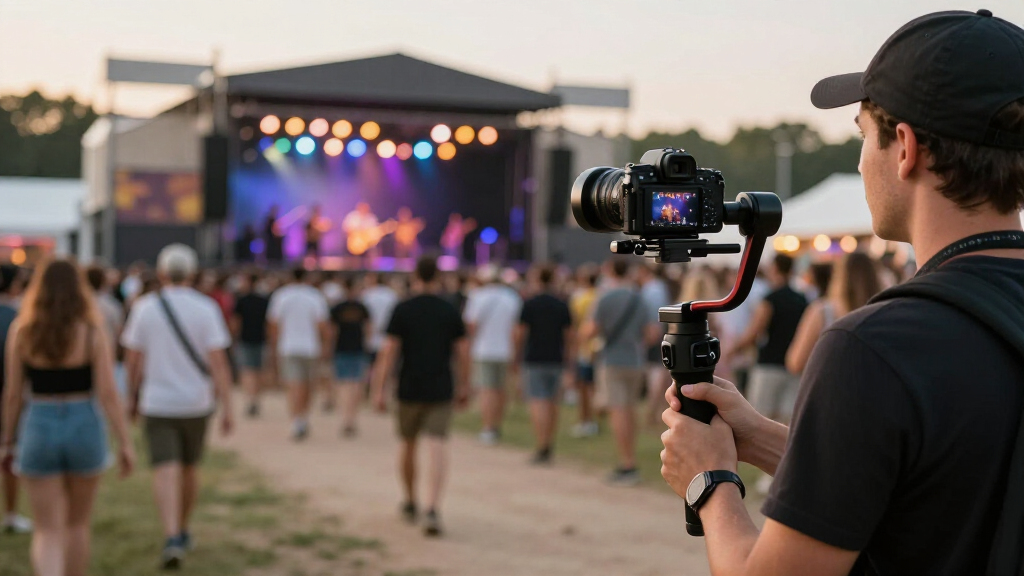
I grouped the 13 options by the job they can do: phone gimbals, camera gimbals, and non-motorized handheld grips. I compared each on its stabilization approach, intended device fit, portability, and practical controls or extras. For camera gimbals, payload and the need to balance a camera-and-lens combination matter more than a model name or a broad claim of compatibility. For phone gimbals, I focused on phone-focused handling and features that can support mobile filming. For grips, I treated their lighter, simpler construction as a distinct use case, not as a substitute for powered stabilization.
The order gives priority to useful stabilization for the widest relevant group of buyers, followed by fit for specific setups and the value of added features. That puts the DJI RS 5 first as the dedicated-camera pick, while phone-focused options and compact gimbals earn places for portability and ease of use. The manual grips sit lower because they add a holding point and accessory mounts rather than active correction. A stabilizer can only suit a setup if its device compatibility, payload, and balance requirements match, so buyers should verify those details before choosing.
Factors to Consider When Choosing Camera Stabilizers
Before picking a model, I’d start with the device you plan to stabilize and the shots you actually make. Stabilizer labels can blur together, but a powered gimbal, a phone gimbal, and a passive handle offer different kinds of control. These broader checks can help prevent a mismatch that no feature list can fix.
Match the stabilizer to the device
Start with the exact phone, camera body, and lens you expect to use, not just the category name on the package. Phone gimbals are built around mobile devices, whereas camera gimbals need to support and balance a camera rig. A universal-looking grip may accept multiple devices through a mount, but that does not make it a motorized stabilizer. Check how the phone or camera attaches and whether your accessories change the fit. Common mistakes include buying for a camera body alone and forgetting the weight of a larger lens, microphone, or cage. If you switch between phone and camera shooting, decide whether one device is the priority or whether you need separate tools.
Check payload and balance as a complete rig
For a camera gimbal, payload is only one part of compatibility: the mounted rig also has to balance within the gimbal’s adjustment range. Add the lens, plate, filter, microphone, and any other gear you intend to leave on during a shot. A setup that is close to a stated capacity may leave less room for accessories or changes in lens choice. Balance can affect motor effort and whether the camera can move through the angles you need. Confirm the manufacturer’s compatibility details rather than relying on body weight alone. If your kit changes often, a little extra capacity and straightforward balancing can be more useful than a smaller carrying size.
Choose powered correction or a simpler grip
A 3-axis gimbal uses motors to counter movement, which makes it the relevant choice for controlled walking shots and moving camera work. A handheld grip can improve leverage and give you places to attach accessories, but it does not actively cancel motion. That simpler design may suit static filming, low-cost support, or action-camera handling where you mainly want a steadier hold. Do not expect a handle to produce the same results as a gimbal during a walk or run. Also think about the kind of movement you want: a stabilizer can smooth camera shake, but it cannot make every pan or footstep look intentional. Choose based on the movement you need to control, not on the word “stabilizer” alone.
Weigh portability against setup demands
Smaller stabilizers are easier to pack and carry, but compact size does not automatically mean faster setup. Camera gimbals may need balancing before a shoot, especially when the camera or lens changes, while phone gimbals and grips generally target simpler mobile use. If you film short clips on the move, carrying and setup time may matter more than advanced control options. For longer shoots, comfort and the time spent adjusting the rig can shape the experience more than a small difference in packed size. Check how the stabilizer folds or stores and whether its controls are reachable while filming. A tool left at home because it is awkward to carry is a poor match, even if its feature set looks appealing.
Pay for features you will actually use
Tracking, touchscreens, fill lights, and accessory mounts can make a stabilizer more useful, but each adds another feature to manage. AI tracking may suit solo creators who need to stay in frame, while a fill light is relevant only if your shooting conditions call for extra illumination. Cold-shoe mounts can help organize a filming setup, though they do not improve stabilization by themselves. Decide which jobs the stabilizer should handle before paying attention to bundled extras. If you rarely film alone or already own lighting, a simpler model may be a better fit. Conversely, a creator who needs tracking and light in one compact kit may value those additions more than the lightest possible build.
Plan around your shooting habits and support needs
Think about whether you record vertical video, long takes, fast action, or mostly stationary scenes. Vertical shooting support can matter for social clips, while an easier grip or mounted accessory may matter more for a fixed position. Review how the controls and balance adjustments work for the kinds of changes you make during a shoot. A stabilizer is not a replacement for a tripod, and a grip does not offer the same hands-free support. Buyers who alternate between moving footage and locked-off shots may need to plan for more than one support tool. Choosing for your most frequent shooting situation usually gives a better result than trying to make one device cover every possible job.
Frequently Asked Questions
Can I use a phone gimbal with a mirrorless camera?
No: the phone-focused models in this roundup, including the Hohem iSteady X3 SE, DJI Osmo Mobile 7, and COMITOK L7C Pro, are intended for smartphones rather than mirrorless camera rigs. A camera and lens are heavier and need a different mounting and balancing system. For a mirrorless setup, compare camera gimbals such as the DJI RS models or the FeiyuTech SCORP 2 against your complete rig. Check payload and compatibility for the exact camera and lens combination. A phone clamp or a generic mount does not change a phone gimbal’s load limits.
Will a handheld stabilizer grip smooth walking footage like a gimbal?
No. The ChromLives, PULUZ, and Zeadio products are handle-style supports, so they can give you a more secure hold but do not use motors to counter camera movement. They may help with control when filming from a fixed position or carrying an action camera, but walking footage will still show movement from your steps and hands. A powered 3-axis gimbal is a better fit when active correction is the goal. Choose a grip for simpler handling and mounting options, not as a low-cost equivalent to motorized stabilization.
How do I know whether a camera gimbal can carry my lens and accessories?
Weigh the complete setup you plan to mount: camera body, lens, plate, cage, microphone, and any accessories that stay attached. Compare that total with the gimbal’s stated payload, then check the manufacturer’s compatibility information and balancing range for your setup. Payload alone does not guarantee that a long or unusually shaped lens will balance or clear the gimbal arms. Leave some headroom if you expect to change lenses or add equipment later. If the setup is near the limit, a model with more capacity may be a safer match than relying on a bare-body weight estimate.
Should I choose a compact camera gimbal or a full-size model?
Choose a compact model when low carry weight and a smaller camera setup are central to your work; choose a larger option when your camera-and-lens rig needs more support or you want room for accessories. A smaller gimbal can be easier to pack, but it may narrow the setups it can balance. A full-size model can offer more headroom, though it may take up more space and require more effort to carry. Compare the rig you use most often with the gimbal’s payload and supported shooting positions. Do not buy based on size alone if your lens or add-ons will push the compact option beyond its intended fit.
Is AI tracking a reason to choose a gimbal with a tracking sensor?
AI tracking is most useful when you film alone and need the camera to follow your position without another operator adjusting the frame. It is less compelling for scripted shots, interviews with a fixed frame, or filming where a camera operator already controls composition. Tracking also does not replace stabilization; it addresses subject framing while the gimbal’s motors handle camera movement. In this roundup, the FeiyuTech SCORP Mini 2 Kit and SCORP 2 list AI tracking features, while the phone and camera models vary in their listed functions. Decide whether hands-free framing is a regular need before treating tracking as a must-have.
Conclusion
For a dedicated camera setup, I’d start with the DJI RS 5 as the best overall; it leads this roundup for buyers seeking a camera-focused 3-axis gimbal. The best value depends on your device: the DJI Osmo Mobile 7 is a phone-focused option, while the DJI RS 4 Mini offers a compact route for camera users who have confirmed their rig fits. For a premium feature set, consider the FeiyuTech SCORP 2 for its stated 2.5 kg payload and AI tracking, or the SCORP Mini 2 Kit if its tracking, fill light, and touchscreen suit your workflow. Beginners filming on a phone can start with the Hohem iSteady X3 SE or DJI Osmo Mobile 7; beginners with a camera should check compatibility and balance needs before buying a gimbal. For specific needs, choose the ChromLives, PULUZ, or Zeadio grips when you want a simpler handle rather than motorized correction. Match the product to your device and shooting style first, then decide which extras are worth carrying.
Halloween Picks
halloween
As an affiliate, we earn on qualifying purchases.