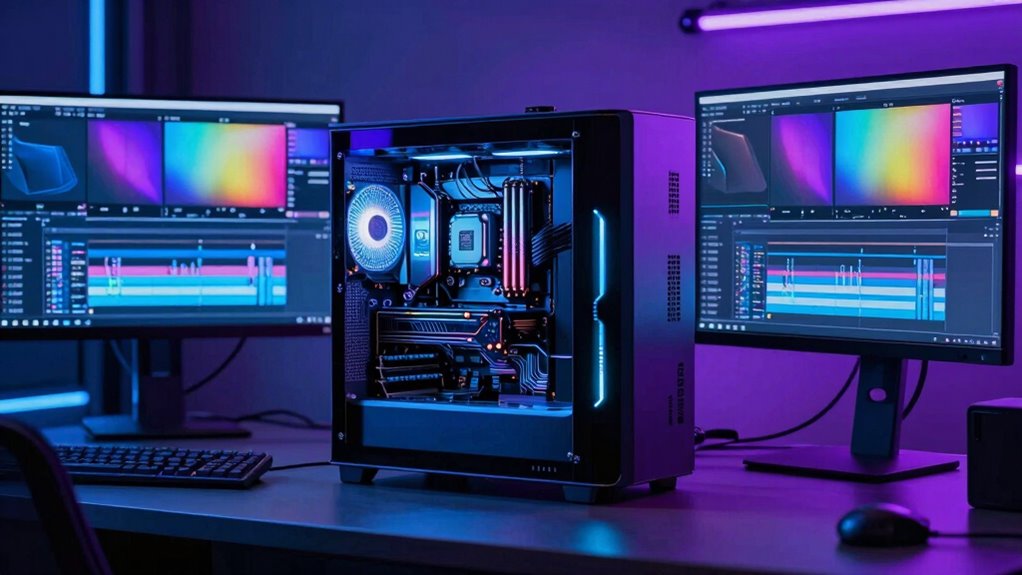

When selecting a cpu for high-end video editing, performance, core count, and compatibility are critical. The Intel Core i9-14900KF stands out as the best overall choice thanks to its balanced high core count and robust performance. The AMD Ryzen 9 9950X3D offers excellent multi-threading for intensive tasks, while the AMD Ryzen Threadripper PRO 3955WX provides unparalleled workstation-level power. Readers face tradeoffs between raw speed, core count, and price, making it essential to choose a CPU aligned with their workflow needs. Continue reading for a detailed breakdown of each option and help narrowing down the best fit for your high-end video editing setup.

Get audio and creator gear delivered free — and shop member deals
- Fast, free delivery on millions of items
- Access to Prime Big Deal Days deals on October 6–7
- Prime Video, Amazon Music and more included
Complete the kit


Key Takeaways
- High core counts significantly improve rendering and multitasking in video editing workflows.
- Performance per dollar varies; premium CPUs deliver top speeds but come at a steep price.
- Threadripper models excel for workstation tasks, but mainstream options can be sufficient for many users.
- Power efficiency and thermal management become more critical with high-performance CPUs.
- Compatibility with existing hardware and software optimization can influence real-world gains.
| Intel Core i9-14900KF 14th Gen Gaming Desktop Processor, 24 Cores |  | Best Overall High-End CPU for Video Editing | Cores: 24 (8 P-cores + 16 E-cores) | Threads: 32 | Max Clock Speed: 6.0 GHz | VIEW ON AMAZON | See Our Full Breakdown |
| AMD Ryzen 9 9950X3D 16-Core Processor | 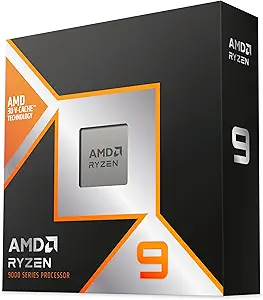 | Best for Gaming and Content Creation with High Boost Speeds | Processor Speed: Up to 5.7 GHz | Cores: 16 | Threads: 16 | VIEW ON AMAZON | See Our Full Breakdown |
| AMD Ryzen 9 5900XT 16-Core, 32-Thread Unlocked Desktop Processor |  | Best for Overclockers and Budget-Conscious High-End Users | Processor Speed: 4.8 GHz Max Boost | Cores: 16 | Threads: 32 | VIEW ON AMAZON | See Our Full Breakdown |
| AMD Ryzen Threadripper PRO 3955WX 16-core, 32-Thread Desktop Processor |  | Best for Heavy-Duty Workstations and Extensive I/O | Cores: 16 | Threads: 32 | Max Boost Frequency: 4.3 GHz | VIEW ON AMAZON | See Our Full Breakdown |
| Intel Core Ultra 9 Processor 285K, 24 Cores (8 P-cores + 16 E-cores), Up to 5.7 GHz |  | Best for Future-Proofing and Latest Technology | Cores: 24 (8 P-cores + 16 E-cores) | Threads: 24 | Base Clock: Up to 5.7 GHz | VIEW ON AMAZON | See Our Full Breakdown |
| AMD Ryzen Threadripper PRO 7000 7955WX 16-Core Processor |  | Best High-End Workstation Powerhouse | Processor Manufacturer: AMD | Processor Core: Hexadeca-core (16 Core) | Clock Speed: 4.50 GHz | VIEW ON AMAZON | See Our Full Breakdown |
| AMD Ryzen 7 9800X3D 8-Core, 16-Thread Desktop Processor |  | Best for Gaming Heavy Video Editing | Cores: 8 | Threads: 16 | Cache: 96MB L3 | VIEW ON AMAZON | See Our Full Breakdown |
| AMD Ryzen Threadripper PRO 5955WX 16-core 32-thread Desktop Processor |  | Best for Demanding Professional Workflows | Cores: 16 | Threads: 32 | Base Clock: 4 GHz | VIEW ON AMAZON | See Our Full Breakdown |
| Intel Core i9-12900KF Gaming Desktop Processor, 16 Cores (8P+8E), Up to 5.2 GHz, Unlocked, LGA1700, 125W |  | Best for Versatile High-Performance Editing and Gaming | Cores: 16 (8P+8E) | Base Clock: up to 5.2GHz | Cache: 30 MB L3 | VIEW ON AMAZON | See Our Full Breakdown |
| cpu for video editing high end | Cores | Threads | Socket | Cache |
|---|---|---|---|---|
| Intel Core i9-14900KF 14th Gen | 24 (8 P-cores + 16 E-cores) | 32 | — | — |
| AMD Ryzen 9 9950X3D 16-Core Pr | 16 | 16 | AM5 | 144 MB (including 3D V-Cache) |
| AMD Ryzen 9 5900XT 16-Core | 16 | 32 | AM4 | 8 MB L3 |
| AMD Ryzen Threadripper PRO 395 | 16 | 32 | — | — |
| Intel Core Ultra 9 Processor 2 | 24 (8 P-cores + 16 E-cores) | 24 | — | 40MB |
| AMD Ryzen Threadripper PRO 700 | — | — | sTR5-350 | — |
| AMD Ryzen 7 9800X3D 8-Core | 8 | 16 | AM5 | 96MB L3 |
| AMD Ryzen Threadripper PRO 595 | 16 | 32 | sTR5 | — |
| Intel Core i9-12900KF Gaming D | 16 (8P+8E) | — | LGA1700 | 30 MB L3 |
More Details on Our Top Picks
Intel Core i9-14900KF 14th Gen Gaming Desktop Processor, 24 Cores
This Intel Core i9-14900KF stands out for its remarkable combination of core count, high clock speeds, and modern platform compatibility. With 24 cores split between P-cores and E-cores, it handles demanding multi-threaded tasks like 4K rendering and multi-layer editing more efficiently than many competitors, including the AMD Ryzen 9 5900XT. Its maximum turbo speed of 6.0 GHz ensures fast rendering and smooth timeline playback. The tradeoff is that it requires a discrete graphics card, adding to the overall system cost, and some motherboards may need BIOS updates for optimal stability. Compared to the AMD Ryzen Threadripper options, it offers a more mainstream, less power-hungry solution with excellent performance for high-end editing workflows.
Pros:- High core and thread count for intensive multitasking
- Maximum clock speed of 6.0 GHz for swift processing
- Compatibility with DDR4 and DDR5 platforms
Cons:- Requires a discrete graphics card, increasing total build cost
- Potential BIOS update needed for some motherboards
Best for: Professional video editors who need top-tier multitasking and fast rendering without stepping into workstation-class territory.
Not ideal for: Budget-conscious creators or those who prefer integrated graphics, as it demands a dedicated GPU and a high-end motherboard.
- Cores:24 (8 P-cores + 16 E-cores)
- Threads:32
- Max Clock Speed:6.0 GHz
- Socket Compatibility:Intel 600-series and 700-series
- Memory Support:DDR4 and DDR5
Our verdict“This CPU suits professional editors who need speed and multitasking capacity without investing in a dedicated workstation processor.”
AMD Ryzen 9 9950X3D 16-Core Processor
The AMD Ryzen 9 9950X3D offers a compelling choice for creators who also game heavily, thanks to its 16 cores and 2nd gen 3D V-Cache technology. Its boost clock of up to 5.7 GHz rivals Intel’s high-end models like the i9-14900KF, making it well-suited for fast rendering and real-time editing tasks. Compared to the Ryzen 9 5900XT, the 9950X3D’s cache size and clock speed give it an edge in performance, especially in cache-sensitive editing workflows. However, its high power draw at 170W means cooling solutions must be robust, and limited information about its series makes it slightly less transparent. It’s a strong choice for those who want top performance, but it demands a well-cooled system and a compatible AM5 motherboard.
Pros:- High core count with fast boost speeds
- Advanced 3D V-Cache technology boosts efficiency
- Excellent for multi-tasking and demanding workloads
Cons:- High power consumption requiring strong cooling
- Limited detailed platform info available
Best for: Content creators who want a CPU that balances editing and gaming performance on a high-end platform.
Not ideal for: Casual editors or users with limited cooling capacity, as the CPU’s wattage and thermal requirements are high.
- Processor Speed:Up to 5.7 GHz
- Cores:16
- Threads:16
- Socket:AM5
- Cache:144 MB (including 3D V-Cache)
Our verdict“Ideal for creators seeking a blend of high clock speeds and large cache in a gaming-friendly CPU.”
AMD Ryzen 9 5900XT 16-Core, 32-Thread Unlocked Desktop Processor
The Ryzen 9 5900XT is a versatile choice for those who want strong performance at a slightly lower price point compared to newer models. Its 16 cores and 32 threads provide ample power for rendering, exporting, and multitasking, outperforming some older Intel options like the i9-12900KF in multi-core tasks. Its max boost clock of 4.8 GHz ensures quick processing, though it lags behind the 5.7 GHz top speeds of the AMD 9950X3D or Intel’s latest offerings. As an unlocked processor, it allows overclocking for extra performance, but users must invest in a capable cooling solution. Compared to the Threadripper series, it offers excellent value for high-end consumer builds but falls short in raw bandwidth and expansion options.
Pros:- Strong multi-core and multi-threaded performance
- Unlocked for overclocking
- Supports PCIe 4.0 and DDR4-3200
Cons:- Cooler not included, requiring additional purchase
- Higher power usage compared to lower-tier CPUs
Best for: Enthusiast creators who want high performance with overclocking flexibility on a mid-range budget.
Not ideal for: Power-hungry workstations or users needing extensive I/O and memory bandwidth, as it lacks support for multi-channel DDR4 and extensive PCIe lanes.
- Processor Speed:4.8 GHz Max Boost
- Cores:16
- Threads:32
- Socket:AM4
- Cache:8 MB L3
Our verdict“Great for enthusiasts who want high-end performance and overclocking potential without the cost of a Threadripper.”
AMD Ryzen Threadripper PRO 3955WX 16-core, 32-Thread Desktop Processor
The Threadripper PRO 3955WX offers a substantial step up in core and thread count, with 16 cores and 32 threads paired with a high 72MB cache. It excels in workflows requiring massive memory bandwidth and extensive I/O, supporting eight-channel DDR4 and 128 PCIe 4.0 lanes—features that surpass most consumer CPUs, including the i9-14900KF. Its 4.3 GHz boost frequency is lower than some desktop parts, but the overall bandwidth and scalability make it ideal for large-scale video projects, complex compositing, and multi-camera editing. The main drawback is its high power draw at 280W and lack of included cooling, making it less suitable for casual or small-scale builds. This processor is purpose-built for professional-grade editing stations.
Pros:- Exceptional multi-core and multi-threaded performance
- Supports extensive memory and PCIe lanes
- High cache size for large projects
Cons:- High power consumption at 280W
- Cooling solution not included, increasing overall build complexity
Best for: High-end professional editing workstations with extensive memory and I/O demands.
Not ideal for: Casual or small-scale creators who do not need such massive bandwidth or multi-channel memory support.
- Cores:16
- Threads:32
- Max Boost Frequency:4.3 GHz
- Memory Support:Eight-channel DDR4
- PCIe Lanes:128
Our verdict“Best suited for professional editors with demanding workflows and the need for maximum bandwidth and scalability.”
Intel Core Ultra 9 Processor 285K, 24 Cores (8 P-cores + 16 E-cores), Up to 5.7 GHz
The Intel Core Ultra 9 285K combines a hybrid architecture with 24 cores, making it one of the most versatile options for demanding video editing workflows. Its support for PCIe 5.0 and 4.0, along with Intel Optane Memory, positions it as a future-proof choice, especially for users aiming to leverage the latest connectivity standards. Its high core and thread count are comparable to the i9-14900KF, but the 285K’s integrated graphics provide a bonus for basic display needs, reducing overall system complexity. However, it lacks a thermal solution, pushing buyers to allocate additional funds for cooling. Compared to the AMD options, it offers a more modern platform with advanced memory and PCIe support but at a premium price and higher cooling requirements.
Pros:- High core and thread count with hybrid architecture
- Supports latest PCIe standards for faster data transfer
- Unlocked for overclocking with integrated graphics
Cons:- No thermal solution included, requiring additional cooling investment
- Potentially overkill for casual editing needs
Best for: Innovative creators who want cutting-edge features and future compatibility in their builds.
Not ideal for: Budget-conscious builders or those who prefer integrated graphics-only setups, as cooling and costs add up quickly.
- Cores:24 (8 P-cores + 16 E-cores)
- Threads:24
- Base Clock:Up to 5.7 GHz
- Cache:40MB
- Compatibility:Intel 800 series chipset
Our verdict“Ideal for early adopters and high-end users seeking cutting-edge technology for demanding editing tasks.”
AMD Ryzen Threadripper PRO 7000 7955WX 16-Core Processor
The AMD Ryzen Threadripper PRO 7000 7955WX stands out for its high core count and excellent overclocking ability, making it ideal for intensive video editing and 3D rendering workflows. Compared to the AMD Ryzen Threadripper PRO 5955WX, it offers a higher base clock and larger cache, translating into faster processing times for demanding tasks. However, this power comes at a steep price and requires a compatible high-end motherboard, plus its power consumption may be significant. For professionals working on large-scale projects, this processor provides the raw horsepower needed to handle complex editing tasks efficiently. The large cache sizes further boost performance when working with high-resolution files or multiple streams. The main tradeoff: it’s an expensive investment and overkill for casual or semi-professional editors. If you need a processor designed solely for maximum performance on demanding workloads, this pick makes the most sense.Pros:- High core and cache counts optimize multi-threaded workloads
- Excellent overclocking headroom for performance tuning
- Designed for demanding professional applications
Cons:- Expensive, making it less accessible for casual users
- Requires a high-end, compatible motherboard and robust power supply
Best for: Professional video editors and CGI artists requiring peak performance and overclocking potential.
Not ideal for: Budget-conscious editors or those with less demanding workflows, due to its high cost and power demands.
- Processor Manufacturer:AMD
- Processor Core:Hexadeca-core (16 Core)
- Clock Speed:4.50 GHz
- Overclocking Speed:5.30 GHz
- L1 Cache:1 MB
- L3 Cache:64 MB
- Socket:sTR5-350
- Process Technology:5 nm
Our verdict“This processor is a top choice for professionals needing maximum power, despite its high price and power consumption.”
AMD Ryzen 7 9800X3D 8-Core, 16-Thread Desktop Processor
The AMD Ryzen 7 9800X3D offers a compelling blend of gaming prowess and solid video editing performance thanks to its Zen 5 architecture and 96MB L3 cache. Compared with the AMD Ryzen Threadripper PRO 5955WX, it has fewer cores but excels in single-threaded tasks and offers better thermal efficiency, making it suitable for workstations that double as gaming rigs. Its high clock speeds up to 5.2GHz and large cache improve rendering times, especially with software optimized for high clock speeds. Still, it lacks the raw multi-core power needed for the most demanding multi-threaded workflows, and it requires an AM5 socket motherboard, which might involve additional upgrades. This CPU makes sense for editors who need a versatile processor that handles both demanding editing and gaming without the bulk and cost of high-core-count options. Its main tradeoff: less multi-core horsepower than professional-grade chips, limiting performance on heavy multi-threaded projects. If you want a balanced processor for gaming and high-level editing, this pick fits well.Pros:- Large 96MB L3 cache boosts rendering and preview speeds
- High boost clock speeds up to 5.2GHz for snappy performance
- Excellent thermal efficiency and power management
Cons:- Requires new AM5 motherboard, increasing overall upgrade cost
- Fewer cores than professional-grade CPUs limits multi-threaded capacity
Best for: Enthusiast editors who also game and want a versatile, high-speed CPU without the hefty price tag of high-core count models.
Not ideal for: Pro video editors working on large-scale projects requiring maximum multi-threaded performance, who should consider higher core count options like the Threadripper PRO 7000.
- Cores:8
- Threads:16
- Cache:96MB L3
- Base Clock:up to 5.2GHz
- Socket:AM5
- Process Technology:Unknown
Our verdict“Ideal for prosumers seeking a fast, versatile CPU that balances editing and gaming, with some limitations on multi-core heavy tasks.”
AMD Ryzen Threadripper PRO 5955WX 16-core 32-thread Desktop Processor
The AMD Ryzen Threadripper PRO 5955WX is tailored for heavy-duty professional editing and rendering tasks, offering 16 cores and 32 threads at 4 GHz. It significantly outperforms the AMD Ryzen 7 9800X3D in multi-threaded workloads, making it a strong choice for multi-stream 8K editing or complex compositing. Compared to the 7955WX, it supports DDR4 3200 RAM, which may be less cutting-edge than newer DDR5 options but still provides ample bandwidth for professional editing. The main limitations include limited details on integrated graphics—meaning a discrete GPU is essential—and its high power draw can increase operational costs. This processor excels in environments where maximum multi-core processing is vital, though it might be overkill for lighter editing workflows. If your projects demand the utmost in multi-threaded throughput, this CPU offers a robust foundation.Pros:- High core and thread count for intensive multitasking
- Fast 4 GHz base clock supports demanding workflows
- Supports DDR4 3200 RAM for memory-intensive editing
Cons:- Limited info on integrated graphics, requiring discrete GPU
- Potentially high power consumption and operational costs
Best for: High-end professional editors working on multi-layered, high-resolution projects requiring maximum core and thread count.
Not ideal for: Editors with budget constraints or those who prioritize integrated graphics, as this CPU does not focus on integrated GPU features.
- Cores:16
- Threads:32
- Base Clock:4 GHz
- Memory Support:DDR4 3200
- Socket:sTR5
- Process Technology:5 nm
Our verdict“Designed for demanding professional environments, this CPU offers exceptional multi-core performance at the expense of higher power use.”
Intel Core i9-12900KF Gaming Desktop Processor, 16 Cores (8P+8E), Up to 5.2 GHz, Unlocked, LGA1700, 125W
The Intel Core i9-12900KF excels in delivering high clock speeds and a balanced core architecture, making it suitable for high-end video editing with a focus on multitasking and speed. Its hybrid architecture, with 8 performance cores and 8 efficiency cores, allows it to handle demanding editing tasks while managing background processes smoothly. Compared to the AMD Ryzen 7 9800X3D, it offers more cores and better multitasking capability, yet it requires a discrete GPU for gaming, adding to overall system costs. The 125W power profile is efficient considering its high performance, and its unlocked multiplier makes overclocking straightforward. However, it relies on a compatible motherboard with Intel 600 or 700 series chipsets, which could involve additional upgrades. This CPU makes sense for editors who need a versatile, overclockable chip with strong multitasking performance.Pros:- High core count and hybrid architecture optimize multitasking
- Unlocked for overclocking for extra performance headroom
- Power-efficient design with 125W TDP
Cons:- Requires a compatible, potentially costly motherboard
- Discrete GPU needed for gaming and high-end display output
Best for: Professional editors who need a flexible, overclockable CPU capable of handling multitasking and high-speed workflows.
Not ideal for: Budget-conscious users or those who prefer integrated graphics, as the processor requires a discrete GPU for gaming and high-end editing.
- Cores:16 (8P+8E)
- Base Clock:up to 5.2GHz
- Cache:30 MB L3
- Socket:LGA1700
- Power:125W
- Architecture:Intel 7
Our verdict“A versatile, high-performance CPU suited for editors who value speed and multitasking, with some added system upgrade costs.”
How We Picked
I evaluated each CPU based on core count, clock speed, multi-threaded performance, compatibility with editing software, power consumption, and price. The goal was to identify options that provide the most reliable and fastest processing for demanding video editing tasks while considering value and future-proofing. Products were ranked to reflect their suitability for high-end workflows, balancing raw power with usability and cost. This approach ensures the list caters to professionals and enthusiasts seeking top-tier performance without sacrificing stability or efficiency.| cpu for video editing high end | Socket |
|---|---|
| Intel Core i9-14900KF 14th Gen | — |
| AMD Ryzen 9 9950X3D 16-Core Pr | AM5 |
| AMD Ryzen 9 5900XT 16-Core | AM4 |
| AMD Ryzen Threadripper PRO 395 | — |
| Intel Core Ultra 9 Processor 2 | — |
| AMD Ryzen Threadripper PRO 700 | sTR5-350 |
| AMD Ryzen 7 9800X3D 8-Core | AM5 |
| AMD Ryzen Threadripper PRO 595 | sTR5 |
| Intel Core i9-12900KF Gaming D | LGA1700 |
Factors to Consider When Choosing Cpu For Video Editing High End
Choosing the right high-end CPU for video editing involves understanding several key factors. Beyond raw power, considerations like core and thread count, clock speed, and compatibility influence your editing experience. Paying attention to these factors helps avoid bottlenecks and ensures smooth performance, especially when working with 4K or higher resolution footage. It’s equally important to evaluate your existing hardware and software needs to make a balanced investment. Let’s explore the top considerations for selecting a CPU that meets the demands of high-end video editing.Core Count and Multi-Threading
For high-end video editing, more cores and threads generally translate to faster rendering and smoother multitasking. CPUs with 16 or more cores, like the AMD Ryzen 9 9950X3D or Threadripper options, excel at multi-threaded workloads. However, more cores also mean higher cost and power consumption, so balance your needs with your budget and cooling capacity. Remember, some editing software is optimized for higher core counts, but others may not see significant gains beyond a certain point. Understanding your workflow helps determine whether investing in ultra-high core counts is worth it.
Clock Speed and Single-Core Performance
While core count is important, high clock speeds (measured in GHz) boost responsiveness during editing and playback. CPUs like the Intel Core i9-14900KF or i9-12900KF offer high base and boost speeds, which benefit tasks that rely on single-thread performance. For real-time editing and preview rendering, faster cores often matter more than sheer core count. The tradeoff is that high-speed CPUs can generate more heat and may require better cooling solutions, increasing overall system complexity and cost.
Compatibility and Platform Support
Matching your CPU with a compatible motherboard, RAM, and GPU is essential. High-end CPUs often require premium motherboards with advanced VRMs and features like PCIe 4.0 or 5.0 support, which can influence overall system performance. Compatibility with your editing software and hardware acceleration features also matters; some CPUs optimize better for specific workflows. Ensuring your system supports the latest standards helps future-proof your investment and reduces upgrade costs down the line.
Power Consumption and Cooling
High-performance CPUs consume significant power and generate heat, demanding robust cooling solutions. Failing to manage thermals can throttle performance and reduce longevity. Consider the power supply capacity and cooling options—air coolers, liquid cooling, or specialized heatsinks—when choosing a CPU. For workstations running 24/7, efficiency and thermal management become even more critical to prevent overheating and ensure stability during long editing sessions.
Budget and Future-Proofing
High-end CPUs come with premium prices, but investing in a slightly more powerful chip can extend the useful life of your system. Think about your long-term workflow and whether current hardware will support upcoming software updates or higher-resolution projects. Sometimes, spending more upfront on a top-tier CPU like the Threadripper series yields better value over time, especially for professional workflows, while casual or semi-professional editors can often find excellent performance in mid-range options.
Frequently Asked Questions
Is it worth paying extra for a Threadripper CPU for video editing?
Investing in a Threadripper CPU can provide significant benefits for large, complex projects that involve 4K or 8K footage, multiple layers, and intensive rendering tasks. These chips offer higher core counts and better multi-threaded performance, which reduces rendering times and improves multitasking. However, they also come with higher costs, increased power consumption, and the need for compatible motherboards. For professional editors handling demanding workloads regularly, the investment can be justified, but casual users might find similar performance in high-end mainstream CPUs at a lower price.
How important is single-core performance in a CPU for video editing?
Single-core performance influences how smoothly your editing software runs during real-time previews, timeline scrubbing, and effects processing. While multi-core capabilities accelerate rendering and exporting, fast single-core speeds improve responsiveness during editing. CPUs with higher clock speeds often deliver better single-threaded performance, making tasks feel more immediate and reducing lag. Striking a balance between core count and clock speed is essential for a fluid editing experience, especially when working with demanding effects or complex timelines.
Should I prioritize power efficiency over raw performance?
Power efficiency becomes relevant if you run your editing workstation for long hours or need a quieter setup. More efficient CPUs generate less heat and reduce cooling costs, which can translate into lower overall system noise and energy bills. However, sacrificing some performance for efficiency might mean settling for slightly longer rendering times or lower responsiveness. For professional workflows where time is money, prioritizing raw power might be more beneficial, but for home or semi-professional setups, efficiency can offer a practical advantage.
Can a mid-range CPU handle high-end video editing tasks?
While mid-range CPUs can manage high-end editing to some extent, they often struggle with very demanding projects, longer rendering times, and multitasking across multiple applications. They may suffice for 4K editing with optimized workflows, but pushing into higher resolutions or complex effects could reveal bottlenecks. Upgrading to a higher-core, higher-speed CPU is advisable if you regularly work on intensive projects or need to maximize productivity. For occasional or less demanding editing, a high-end mid-range processor can be a reasonable compromise.
What is the best CPU for future-proofing my high-end editing setup?
Choosing a CPU with the latest architecture, higher core counts, and support for emerging standards like PCIe 5.0 and DDR5 RAM helps extend your system’s relevance. CPUs like the AMD Ryzen Threadripper PRO 7000 series or Intel’s latest flagship models are designed with future software and hardware advancements in mind. Investing in a high-end platform with room for upgrades ensures you can adapt to evolving editing tools and higher-resolution footage without replacing the entire system soon. Balancing current needs with future scalability offers the best long-term value.
Conclusion
For demanding professional editors working on complex projects, the Intel Core i9-14900KF offers the best overall performance thanks to its high core count and speed. Those seeking the best value may find the AMD Ryzen 9 5900XT provides excellent performance at a more accessible price point. Creative professionals who prioritize maximum power should consider the AMD Ryzen Threadripper PRO 7000 series, though it comes with a premium cost. Beginners or casual editors can start with high-end mainstream options like the Intel Core i9-12900KF, which still delivers impressive speed without breaking the bank. Ultimately, your choice should align with your workload, budget, and future plans to ensure a smooth editing experience for years to come.
Fall Picks
fall essentials
As an affiliate, we earn on qualifying purchases.