For generator use, the best refrigerator is not automatically the one with the largest capacity or the lowest advertised energy figure. I would start with the BODEGA 23 Cu.Ft reach-in for a commercial-size cabinet with a stated daily consumption of 1.29 kWh, the Sharp SJB1255GS for a compact household refrigerator with a published annual energy figure, and the EUHOMY 31QT when portability and battery operation matter more than family-size storage. Those picks solve different problems, and the available specifications do not provide comparable startup-watt or running-watt figures for every model.

Get audio and creator gear delivered free with Prime
- Fast, free delivery on millions of items
- Prime Video, Amazon Music and more included
- Member-only deals all year
That leaves a real tradeoff: upright refrigerators store far more food but need a generator sized for compressor startup and sustained cooling, while portable 12-volt units can be easier to pair with a battery or small generator but hold much less. I rank these options by how clearly their stated features support generator planning, then by capacity, usable power flexibility, and operating detail. I treat energy claims cautiously: a claimed efficiency improvement is not the same as a measured kWh-per-day figure.
Complete the kit


Key Takeaways
- The BODEGA 23 Cu.Ft is the most planning-friendly commercial pick here because its listing states 1.29 kWh per day; confirm voltage and compressor startup demand before choosing a generator.
- The Sharp SJB1255GS provides a household-style 11.5 cu.ft. cabinet and a stated 397 kWh annual consumption figure, but it is an AC refrigerator rather than a dedicated 12-volt model.
- The EUHOMY 31QT is the most directly portable choice, with battery, AC, and DC power options; its stated six-hour battery life makes it better for short outages or travel than extended backup without recharging.
- The EUHOMY 58QT offers more than 31QT of capacity, but its listing gives no energy-use figure, so buyers must verify actual draw before sizing a generator.
- The 49 cu.ft. commercial refrigerator claims 40% lower energy consumption, yet provides no kWh baseline; its huge capacity and installation demands make it a specialized choice, not a default home-backup option.
| BODEGA Single Door Commercial Reach-in Refrigerator, 23 Cu.Ft, 33-41°F |  | Best Overall for Generator Planning | Capacity: 23 cu.ft. | Energy use: 1.29 kWh/day listed | Temperature range: 33°F–41°F | VIEW ON AMAZON | See Our Full Breakdown |
| Sharp SJB1255GS 11.5 cu.ft. Counter Depth 24 in. 2 Door Refrigerator |  | Best Household Refrigerator with Published Annual Use | Capacity: 11.5 cu.ft. | Annual energy: 397 kWh/year listed | Dimensions: 27 × 23.6 × 72.8 in. | VIEW ON AMAZON | See Our Full Breakdown |
| EUHOMY 31QT 12 Volt Portable Refrigerator with Battery and App Control | 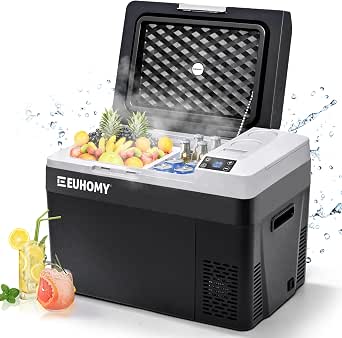 | Best for Portable Backup and Short Outages | Capacity: 31 quarts | Voltage: 12 volts | Temperature range: -4°F to 68°F | VIEW ON AMAZON | See Our Full Breakdown |
| 54″ W Commercial Reach-In Upright Refrigerator – Double Doors, Stainless Steel, 49 Cu.ft Capacity |  | Best for Maximum Commercial Capacity | Capacity: 49 cu.ft. | Dimensions: 32.09 × 54.13 × 83.11 in. | Doors: 2, with left/right orientation | VIEW ON AMAZON | See Our Full Breakdown |
| EUHOMY 58QT 12 Volt Portable Refrigerator and Cooler -4°F to 68°F | 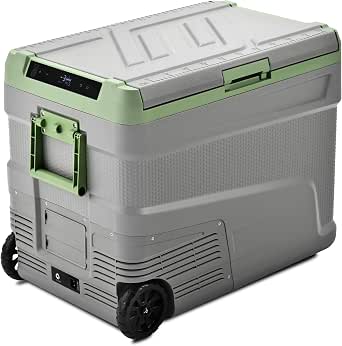 | Best Larger Portable Cooler | Capacity: 58 quarts (55 liters) | Temperature range: -4°F to 68°F | Voltage: 12 volts | VIEW ON AMAZON | See Our Full Breakdown |
| energy efficient refrigerators for generator | Capacity | Dimensions | Temperature range | Cooling |
|---|---|---|---|---|
| BODEGA Single Door Commercial | 23 cu.ft. | 27.01 × 33.94 × 80.94 in. | 33°F–41°F | Compressor |
| Sharp SJB1255GS 11.5 cu.ft. Co | 11.5 cu.ft. | 27 × 23.6 × 72.8 in. | — | — |
| EUHOMY 31QT 12 Volt Portable R | 31 quarts | — | -4°F to 68°F | Compressor |
| 54" W Commercial Reach-In Upri | 49 cu.ft. | 32.09 × 54.13 × 83.11 in. | — | Compressor |
| EUHOMY 58QT 12 Volt Portable R | 58 quarts (55 liters) | 16.38 × 27.24 × 20.02 in. | -4°F to 68°F | — |
More Details on Our Top Picks
BODEGA Single Door Commercial Reach-in Refrigerator, 23 Cu.Ft, 33-41°F
The BODEGA is my leading pick for buyers who need a commercial upright but still want a concrete energy number to use in planning. Its listed consumption is 1.29 kWh per day, and its 23 cu.ft. cabinet is large enough for substantial food storage without reaching the 49 cu.ft. scale of the double-door commercial model. That figure gives a better starting point for estimating daily energy than the other commercial listing’s unspecific 40% reduction claim.
The digital temperature control, automatic defrost, LED lighting, and three adjustable shelves support routine operation, while casters and a door lock help in a working kitchen. However, daily kWh does not tell the full generator story: compressor startup can demand a brief surge, and the listing does not provide that value. I would verify the unit’s electrical requirements and startup load with the seller or manufacturer before buying a generator around it.
Compared with the Sharp, the BODEGA stores about twice as much food but is far larger and intended for commercial spaces. Compared with the 49 cu.ft. model, it sacrifices capacity while offering a clearer energy-use figure. It is a strong fit for a restaurant, bakery, or shared food-storage area with room for an upright cabinet, but excessive for a small home or a portable backup setup.
Pros:- Lists energy consumption at 1.29 kWh per day
- 23 cu.ft. capacity with adjustable shelves
- Digital temperature control and automatic defrost
- Casters, LED lighting, and a lock support practical commercial use
Cons:- Large commercial footprint requires dedicated space
- Startup wattage and full electrical requirements are not supplied
- Single door offers less access separation than a double-door cabinet
Best for: Commercial kitchens or food businesses that need a 23 cu.ft. cabinet and want a stated daily energy figure for generator planning.
Not ideal for: Small homes, vehicle use, or buyers who need confirmed startup-watt data before selecting a generator.
- Capacity:23 cu.ft.
- Energy use:1.29 kWh/day listed
- Temperature range:33°F–41°F
- Dimensions:27.01 × 33.94 × 80.94 in.
- Shelves:3 adjustable shelves
- Defrost:Automatic
- Cooling:Compressor
- Door:Single door with lock
Our verdict“I would choose the BODEGA when commercial storage and a stated daily energy figure matter more than portability.”
Sharp SJB1255GS 11.5 cu.ft. Counter Depth 24 in. 2 Door Refrigerator
The Sharp is the most conventional home-kitchen option in this group, and its stated 397 kWh annual energy consumption gives buyers a useful reference point that most of the listings do not offer. It combines an 11.5 cu.ft. total capacity with a 24-inch width and counter-depth design, a practical compromise for a compact kitchen or second home where a commercial cabinet would dominate the room.
For generator use, the distinction is that this is a household AC refrigerator, not a 12-volt cooler. The Eco and Vacation modes give some flexibility, and Vacation Mode can turn off the refrigerator cavity while leaving the freezer running. That may help during a long absence, but the supplied details do not state how much energy the modes save or give compressor startup demand. I would check the appliance’s electrical label and consult the generator maker’s capacity guidance rather than infer compatibility from its annual figure.
Compared with the BODEGA, the Sharp is smaller, more suited to a home, and has annual rather than daily energy data. Compared with the EUHOMY portable models, it offers more familiar household storage and a separate freezer, but lacks their stated DC and battery operation. The 4.2 cu.ft. freezer, Multi Air Flow, and adjustable Fresh Converter drawer make it versatile; the tradeoff is reliance on an appropriate AC supply during an outage.
Pros:- Lists annual consumption of 397 kWh
- Compact 24-inch counter-depth format
- Vacation Mode can keep the freezer on while switching off the refrigerator cavity
- Separate 4.2 cu.ft. freezer and flexible fresh-food drawer
Cons:- Requires AC power rather than offering a stated 12-volt input
- Startup wattage is not supplied
- Smaller total storage than either commercial upright
Best for: Households or second-home owners who want a compact, full-featured refrigerator and can match it to an AC generator.
Not ideal for: Campers or buyers who need native 12-volt operation, battery operation, or confirmed low startup wattage.
- Capacity:11.5 cu.ft.
- Annual energy:397 kWh/year listed
- Dimensions:27 × 23.6 × 72.8 in.
- Width:23.6 in.
- Freezer capacity:4.2 cu.ft.
- Power style:Freestanding household refrigerator; confirm electrical label
- Refrigerant:R-600a
- Features:Vacation Mode, Eco Mode, automatic defrost
Our verdict“I would pick the Sharp for household use when published annual consumption and compact dimensions matter more than direct battery compatibility.”
EUHOMY 31QT 12 Volt Portable Refrigerator with Battery and App Control
The 31QT EUHOMY is the most flexible choice for buyers whose generator setup is mobile or modest in scale. It accepts battery, AC, and DC power, so it can serve in a vehicle, at a campsite, or as a compact backup cooler at home. Its compressor can cool across a stated range of -4°F to 68°F, which means it can function as a refrigerator or freezer depending on the setting.
The biggest generator-related advantage is not a published low-watt number—the listing does not provide one—but the choice of power sources. DC operation can avoid running an AC generator continuously if paired with a suitable battery system. The stated battery life is about six hours, though real runtime depends on ambient temperature, set point, ventilation, and opening frequency. That makes it better for short interruptions or a planned battery-and-generator arrangement than for unattended, multi-day backup on its own.
Compared with the 58QT EUHOMY, this model holds less but includes a stated battery and app control. Compared with the Sharp, it is dramatically easier to move and can use DC power, but the 31-quart capacity is nowhere near household-fridge scale. I would favor it for essential food, medicines that permit this temperature range, or travel supplies—not as the sole refrigerator for a large family.
Pros:- Battery, AC, and DC power options
- Portable 31-quart capacity with compressor cooling
- App control and LED lighting
- Stated temperature range supports fridge or freezer use
Cons:- Battery life is listed at about six hours
- Small capacity compared with upright refrigerators
- Power consumption and compressor startup demand are not specified
Best for: Campers, van users, and households needing a small backup refrigerator with battery, AC, and DC options.
Not ideal for: Families replacing a full-size refrigerator or anyone needing multi-day battery runtime without recharging.
- Capacity:31 quarts
- Voltage:12 volts
- Temperature range:-4°F to 68°F
- Power options:Battery, AC, and DC
- Battery life:About 6 hours listed
- Cooling:Compressor
- Control:App and touch control
- Other features:LED light, anti-shake design
Our verdict“I would choose the 31QT for portable, short-duration backup where power-source flexibility matters more than storage volume.”
54″ W Commercial Reach-In Upright Refrigerator – Double Doors, Stainless Steel, 49 Cu.ft Capacity
This 49 cu.ft. double-door refrigerator is the capacity leader, built for restaurants and commercial kitchens that need substantial chilled storage. The listing claims it reduces energy consumption by 40%, but gives no kWh-per-day figure or comparison baseline. I treat that claim as a reason to request more data, not as proof that it will use less generator power than the BODEGA, whose listing supplies a daily consumption number.
Six adjustable wire shelves, automatic defrost, digital thermostat control, LED lighting, and lockable doors suit a busy food-storage operation. Its stainless-steel exterior and four wheels add practical durability and maneuverability, although the cabinet measures over seven feet tall and is more than four feet wide. The size also makes delivery, placement, ventilation, and electrical setup more involved than with the Sharp or either portable EUHOMY.
Compared with the BODEGA, this model more than doubles storage capacity and adds a second door, but it is harder to plan around because its energy claim lacks a measurable baseline. Compared with the Sharp, it is a commercial-scale appliance rather than a domestic fit. I would shortlist it only when volume is the priority and the buyer can obtain the voltage, running watts, and startup requirements before settling on a generator.
Pros:- Very large 49 cu.ft. capacity
- Double doors and six adjustable shelves
- Automatic defrost and digital thermostat control
- Lockable stainless-steel cabinet with wheels
Cons:- The 40% energy-reduction claim has no stated baseline or kWh figure
- Large, heavy cabinet needs substantial installation space
- Generator startup and running demands are not supplied
Best for: Restaurants and commercial kitchens that need very high refrigerated capacity and can verify electrical requirements before purchase.
Not ideal for: Small households, portable setups, or generator buyers who need a clear kWh figure to estimate operating needs.
- Capacity:49 cu.ft.
- Dimensions:32.09 × 54.13 × 83.11 in.
- Doors:2, with left/right orientation
- Shelves:6 adjustable wire shelves
- Cooling:Compressor
- Defrost:Automatic
- Energy claim:40% lower consumption claimed; baseline not stated
- Warranty:Compressor 5 years; other components 2 years
Our verdict“I would choose this model only when commercial storage volume outweighs the lack of a verifiable energy-use figure.”
EUHOMY 58QT 12 Volt Portable Refrigerator and Cooler -4°F to 68°F
The 58QT EUHOMY is the capacity step-up for buyers who like the portable format but need more room than the 31QT model offers. Its 58-quart capacity, -4°F to 68°F range, and AC, DC, and battery power options make it adaptable for road trips, outdoor work, or emergency food storage. The 45 dB noise figure and three-level battery protection are useful details for a unit that may run near people or connect to a vehicle battery.
Its limitations are the same ones that matter most for generator planning: no stated kWh-per-day, running-watt, or compressor-start figure, and no battery runtime in the supplied specifications. The 36.4-pound weight is manageable for a portable appliance but still substantial when loaded. Buyers should verify the power draw and battery compatibility rather than assume that the 12-volt label alone guarantees long runtime.
Compared with the 31QT, this model offers more than 80% additional listed capacity, but the smaller unit has a stated six-hour battery life and app control. Compared with the Sharp, the 58QT is easier to power from DC and move, but it offers much less storage and no separate household-style compartments. I see it as a travel and supplemental backup appliance, not a replacement for a family refrigerator.
Pros:- 58-quart storage in a portable format
- AC, DC, and battery power options
- Temperature range reaches below freezing
- 45 dB noise rating and three-level battery protection
Cons:- No energy-use or battery-runtime figure is supplied
- Weighs 36.4 pounds before contents are added
- Capacity remains far below a household upright refrigerator
Best for: Travelers and households seeking a larger portable cooler for supplemental or short-term generator-backed storage.
Not ideal for: Buyers needing documented energy consumption, a known battery runtime, or full household refrigerator capacity.
- Capacity:58 quarts (55 liters)
- Temperature range:-4°F to 68°F
- Voltage:12 volts
- Power options:DC, AC, and battery
- Dimensions:16.38 × 27.24 × 20.02 in.
- Weight:36.4 pounds
- Noise:45 dB listed
- Battery protection:3-level
Our verdict“I would pick the 58QT over the 31QT when portable storage volume is the priority and power draw can be checked separately.”

How We Picked
I ranked these five refrigerators for the specific job of running from a generator, not as general kitchen appliances. I gave more weight to published energy-use information, power-source flexibility, and features that let a buyer manage cooling during an outage. Where the listing supplies only broad language such as “energy efficient,” I do not treat that as a substitute for a measured consumption figure.
I also separated full-size AC appliances from portable compressor coolers. A 12-volt unit with DC input can pair with a vehicle battery or compatible power station in ways a commercial upright cannot, but its storage capacity is much smaller. Conversely, a commercial cabinet can preserve far more food, but its compressor startup load, circuit requirements, and generator compatibility need direct confirmation. The supplied descriptions do not give startup amperage or watts for most models, so I avoid claiming that any particular generator size will run them.
My order reflects practical choice rather than a claim that all five are equally suitable. BODEGA ranks first for its useful daily energy figure and substantial but not oversized commercial capacity. Sharp follows for clearly stated household energy use and a smaller footprint. The portable EUHOMY units come next for flexible power options, with the 31QT ahead because its battery operation is explicit; the larger commercial 49 cu.ft. unit and 58QT cooler serve narrower needs where scale or extra capacity matters more than transparent consumption data.
Factors to Consider When Choosing Energy Efficient Refrigerators For Generators
I would match the refrigerator to the generator and outage plan as a system. Capacity, annual energy use, daily energy use, and compressor startup demand describe different parts of that decision; one number cannot stand in for all the others.Separate running energy from startup demand
A refrigerator compressor cycles on and off, so the generator must handle the brief startup surge as well as the appliance’s ongoing draw. Annual consumption, such as the Sharp’s listed 397 kWh per year, helps estimate energy over time, but it does not disclose startup watts. Likewise, BODEGA’s stated 1.29 kWh per day describes energy consumption, not the generator’s required surge capacity. I would check the product label or manufacturer documentation for voltage, running amps or watts, and startup requirements before choosing a generator.
Treat efficiency claims according to their detail
A measured figure gives a more useful comparison than a general efficiency phrase. The BODEGA provides a daily kWh figure, while Sharp provides an annual one; neither is a direct apples-to-apples comparison without accounting for capacity, operating conditions, and test methods. The 49 cu.ft. refrigerator’s claimed 40% consumption reduction lacks a stated baseline, so I would request a kWh figure before relying on it. The portable EUHOMY listings give no comparable energy-use numbers, even though they describe compressor cooling or energy efficiency.
Choose AC or DC around your backup equipment
The Sharp and commercial uprights are conventional refrigerator formats, while both EUHOMY models list 12-volt use and multiple power options. A DC-capable portable unit may pair with a vehicle battery or compatible power station and can reduce the need to keep an AC generator running continuously. Confirm the exact supplied cables, acceptable input voltage, and battery limits. Do not assume that a 12-volt label means the appliance has a low total energy need or will run all night on any battery.
Size capacity to the outage, not just the household
The 49 cu.ft. and 23 cu.ft. commercial units serve bulk storage and business use; the Sharp’s 11.5 cu.ft. cabinet is more at home in a compact kitchen. The 31QT and 58QT portable models are better for selected essentials, camping, or supplemental cold storage. A smaller, well-organized backup unit may be easier to support than a large refrigerator that must cool mostly empty space. I would also plan for safe food temperatures and avoid frequent door opening during an outage.
Check the installation and operating environment
Large upright refrigerators need space for delivery, door swing, ventilation, and a suitable electrical connection. The 49 cu.ft. model is especially demanding because it is over seven feet tall and more than four feet wide. Portable units are simpler to relocate, but heat, direct sun, poor ventilation, and repeated lid or door openings can increase compressor runtime. Read each manufacturer’s placement and ambient-temperature guidance, and keep the generator outdoors in a safe location with proper separation from living areas.
Plan runtime using realistic conditions
Generator runtime depends on the refrigerator’s actual cycling, ambient temperature, food load, and other connected appliances. A unit’s daily energy figure can help with fuel or battery estimates, but it cannot establish an exact runtime for a generator without the generator’s fuel use at that load. The 31QT’s stated six-hour battery life is a listing estimate, not a promise for every setting or environment. I would leave headroom for startup surges and other essential loads rather than sizing the system right at its nominal limit.
Frequently Asked Questions
Which refrigerator in this comparison gives the clearest energy-use figure?
The BODEGA 23 Cu.Ft lists 1.29 kWh per day, while the Sharp lists 397 kWh per year. Both figures are more specific than the 49 cu.ft. unit’s percentage-reduction claim or the portable models’ general efficiency descriptions, but they use different reporting periods and do not directly establish generator startup requirements. I would use them as planning inputs, then verify electrical specifications with the manufacturer.
Can I select a generator using only a refrigerator’s kWh figure?
No. A kWh figure describes energy over time, while generator sizing also depends on voltage, normal running load, and the compressor’s startup surge. The product details here do not give complete startup data for every refrigerator. Check the appliance rating label or manufacturer documentation and account for other appliances connected to the generator at the same time.
Are the EUHOMY portable refrigerators better for generator use?
They can be a better fit when 12-volt, DC, or battery operation is useful, particularly for travel and short outages. Their smaller capacity limits them as replacements for a household refrigerator, and the 58QT model does not list battery runtime or energy consumption in the supplied details. The 31QT lists about six hours of battery life, so I would still plan a way to recharge it for longer interruptions.
Is the 49 cu.ft. refrigerator the most energy efficient because it claims a 40% reduction?
Not from the supplied information alone. The listing does not explain the comparison baseline or provide a daily or annual kWh figure, so I cannot compare its claim directly with BODEGA’s 1.29 kWh per day or Sharp’s 397 kWh per year. Its capacity is much larger, and its generator compatibility should be checked through the actual electrical and startup specifications.
Which option makes the most sense for a small home backup setup?
The Sharp is the most household-like choice, with 11.5 cu.ft. of capacity and a stated annual energy figure, provided the generator can support its AC electrical needs. If the backup system is based on DC or a battery, the 31QT EUHOMY is more flexible but holds far less. I would choose between them based on the amount of food that must stay cold and the power equipment already available.
Conclusion
For a commercial kitchen, I would start with the BODEGA 23 Cu.Ft because its daily energy figure makes generator planning more grounded, while still leaving startup demand to verify. For a compact home or second residence with an AC generator, the Sharp SJB1255GS offers the clearest household fit and published annual consumption. Campers and people protecting a small amount of food during brief outages should look at the EUHOMY 31QT; choose the 58QT instead when extra portable capacity is more useful than its missing energy data.
The 49 cu.ft. commercial model is for buyers who truly need bulk storage and can confirm its electrical requirements before committing. Across all five, I would not buy on an efficiency slogan or capacity alone: compare measured energy use where available, get compressor startup information, and match both to the generator’s real output and the length of the outage.