
TL;DR
A report on Jayden’s Blog describes an LLM-assisted Rockbox port for the $9.71 YP3 MP3 player, whose undocumented hardware has just 512 KiB of SRAM. The player boots Rockbox and plays audio, but its memory limits mean some features are absent or reduced; the author says further testing and another port are planned.
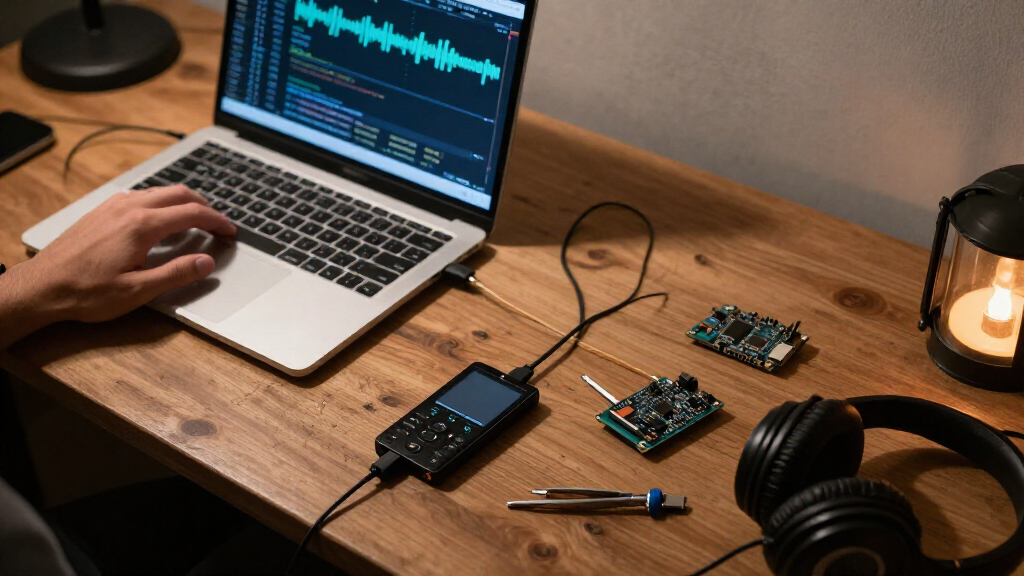
A developer has ported Rockbox to an undocumented $9.71 YP3 MP3 player with help from large language models, according to a report published on Jayden’s Blog on Nov. 14. The player can boot Rockbox and play audio despite having only 512 KiB of SRAM, but fitting the firmware required substantial feature and memory cuts.

Get audio and creator gear delivered free with Prime
- Fast, free delivery on millions of items
- Prime Video, Amazon Music and more included
- Member-only deals all year
Jayden’s report says the YP3’s processor, identified in the device as a Smartlink SL6801, is largely undocumented online. The player has two Cortex-M4 cores, 2 MB of flash, a 128-by-160 color display and five buttons. It also has USB-C and Bluetooth, though the Bluetooth software stack is undocumented. The report describes the hardware identification as uncertain, rather than independently verified documentation.
The port initially took about a week to reach a booting build, followed by roughly another month of tuning and bug fixes, Jayden wrote. A key obstacle was memory: the report says the YP3 has 512 KiB of SRAM, while the smallest existing Rockbox target required 2 MiB. The resulting build can play audio, but codecs and plugins share a 128 KiB arena, so launching a plugin stops music playback.
Other reported limitations include no voice support, English-only support, no pitch or speed control, and reduced database functions. Directory listings and playlists are capped, with the report giving a default limit of 256 entries for large folders and a 400-song playlist cap. Jayden says many audio formats are supported, but several codecs and features available on fuller Rockbox builds are missing. The developer credits Ilya Kurdyukov with working out how to enter the player’s ROM download mode and writing a tool to dump and write flash.
A Low-Cost Test of AI-Assisted Porting
The project offers a practical example of how LLMs may help with reverse engineering and embedded software: a developer used them to work through a device whose processor and software interfaces were not readily documented. Jayden says the first port led to a reusable toolkit called auto-rockbox, intended to support future attempts.
The report also makes clear that AI assistance did not remove the engineering constraints. The YP3’s small memory, slow flash execution and undocumented hardware shaped what could run. A successful boot is not the same as feature parity, and the port’s trade-offs matter to anyone considering the player as a Rockbox device. Jayden says another player, the TS47, was brought up in four hours using Claude and the toolkit, but that timing and result are the author’s account, not an independent test.
Products Worth Considering

Apple Watch SE 3 GPS 40mm Smartwatch

Bose QuietComfort Ultra Earbuds (2nd Gen), Wireless Noise-Cancelling Earbuds, Black

Samsung Galaxy Tab S12+ 256GB Wi-Fi Android Tablet with Galaxy AI and S Pen, Gray
As an affiliate, we earn on qualifying purchases.
Why the YP3 Was a Difficult Target
Rockbox is an open-source alternative firmware for a range of portable music players. In Jayden’s account, the YP3 stood out because it was inexpensive and outside the project’s existing support, while its internal platform had little public documentation. The author bought the unit for $9.71 including shipping and describes it as an unbranded model sold under different names.
The player’s recovery path was part of the work. According to the report, holding a button combination while connecting USB accesses a ROM-based download mode, allowing flash and RAM interaction. Kurdyukov’s utility made it possible to work with the device without soldering, Jayden said. The report also notes that the stock firmware can crash during USB transfers, adding a practical reason to investigate an alternative while making recovery methods relevant to users.
“The LLM said “trust me bro I can make it happen””
— Jayden, describing the first attempt
Testing and Hardware Details Still Open
The report is a developer’s account; the source material does not include independent testing, a hardware teardown or a published compatibility review. Jayden says they are not aware of hardware functions that do not work, but does not provide a full test matrix or define the scope of that assessment. The chip’s identity and the details of its Bluetooth stack also remain poorly documented in the report.
It is not clear how the port performs across different YP3 units sold under varying brands, or how reliable it is in extended everyday use. Jayden describes the build as stable after tuning, while also noting that the project still needs acceptance testing. The report does not specify whether every listed codec and peripheral has been tested across all relevant conditions.
Acceptance Tests and More Ports
Jayden says the YP3 build needs more acceptance testing and has published a project site and the auto-rockbox toolkit for further work. The author also says another, similar player with 4 MiB of PSRAM is booting and stable, but still needs more testing; it was expected to be ready in roughly a week or two from the report’s publication. Those are the author’s plans and estimates, not confirmed release dates.
The developer says a stack of other inexpensive MP3 players is also intended for future porting attempts. Whether the toolkit can reproduce the YP3 result on those devices, and how much manual hardware investigation each will require, remains to be seen.
Key Questions
What is the YP3?
It is a low-cost, unbranded MP3 player that Jayden says is sold under different names. Its About menu identifies it as yp3_2.0.43, according to the report.
What does the Rockbox port support?
The reported build boots, plays audio and supports many formats, including MP3, AAC, FLAC, Opus and Ogg Vorbis. It lacks or limits some functions, including voice support, non-English language support, pitch and speed controls, and background music playback while running plugins.
How were LLMs used?
Jayden says LLMs assisted with the porting work and later helped create a reusable toolkit. The report does not provide a detailed task-by-task breakdown or an independent measure of the models’ contribution.
Is the YP3 port fully tested?
No. Jayden describes it as stable after about a month of tuning, but says it still needs acceptance testing. The report does not establish compatibility or reliability across all versions of the player.
What is expected next?
The developer says more testing is planned for the YP3 and another similar player with more PSRAM, alongside attempts to port Rockbox to other inexpensive players. No later release date or independent test result is provided in the source material.
Source: jayd.ml