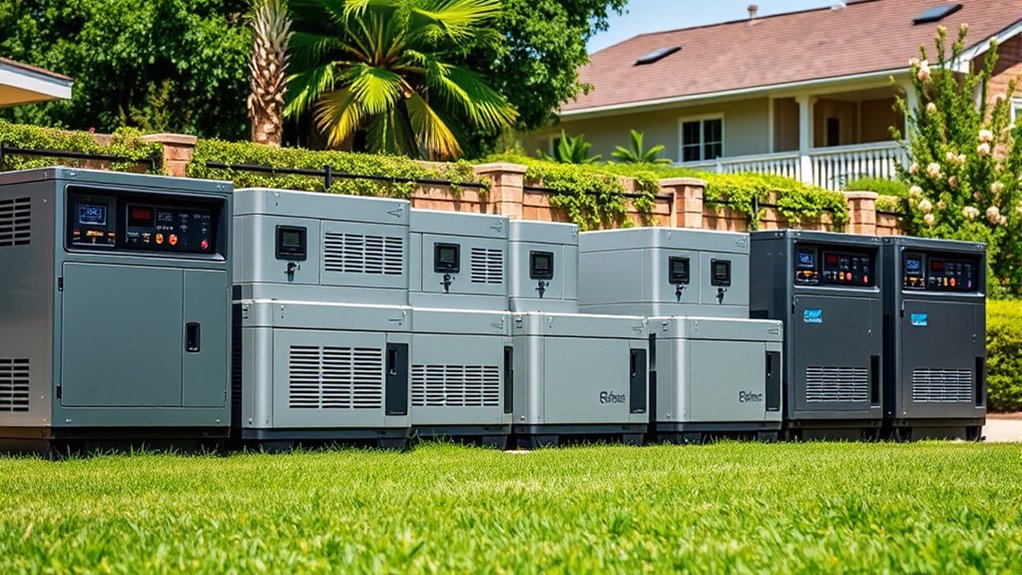

When power outages strike, a reliable home generator becomes essential for maintaining comfort and safety. The best backup generators vary widely in size, fuel type, and features, making it important to choose one that fits your specific needs. The Westinghouse 13500 Peak Watt Tri-Fuel Portable Generator stands out as the overall best for its versatility and power, while the Anker SOLIX S2000 Portable Power Station offers clean, quiet energy perfect for smaller homes or RV use. Buyers often face tradeoffs between capacity, fuel efficiency, noise levels, and upfront cost. Continue reading for a detailed analysis to help you pick the right generator for your home backup needs.

Get audio and creator gear delivered free with Prime
- Fast, free delivery on millions of items
- Prime Video, Amazon Music and more included
- Member-only deals all year
Complete the kit


Key Takeaways
- Top-performing models balance high wattage capacity with fuel flexibility, ensuring reliable power during outages.
- Quiet operation is a key factor for those who want minimal disruption, especially in residential settings.
- Inverter generators tend to be more compact and produce cleaner power, making them suitable for sensitive electronics.
- Dual-fuel options provide flexibility in fuel choice, but often come with higher initial costs and complexity.
- Price ranges vary significantly, with premium models offering enhanced features at a premium cost, while budget options focus on essential backup power.
| Westinghouse 13500 Peak Watt Tri-Fuel Portable Generator with Remote Electric Start |  | Best Versatile Power Flexibility | Peak Watts: 13,500 | Running Watts (Gasoline): 10,500 | Fuel Tank Capacity: 9.5 gallons | VIEW ON AMAZON | See Our Full Breakdown |
| Westinghouse 6500 Watt Dual Fuel Portable Generator with Transfer Switch and CO Sensor |  | Best Compact Dual-Fuel Power for Moderate Needs | Peak Watts: 6500 | Running Watts (Gasoline): 5300 | Fuel Tank Capacity: 4.7 gallons | VIEW ON AMAZON | See Our Full Breakdown |
| Westinghouse 12500 Watt Dual Fuel Portable Generator with Remote Electric Start |  | Best High-Power Dual Fuel Backup | Peak Watts (Gasoline): 12500 | Running Watts (Gasoline): 9500 | Fuel Tank Capacity: 6.6 gallons | VIEW ON AMAZON | See Our Full Breakdown |
| Anker SOLIX S2000 Portable Power Station, 2010Wh, 3000W Peak |  | Best Compact Home Backup and Outdoor Power Station | Capacity: 2010Wh | Peak Power: 3000W | Continuous Power: 1500W | VIEW ON AMAZON | See Our Full Breakdown |
| DuroStar DS13000MXT 13,000-Watt Tri Fuel Portable Generator with Remote Electric Start |  | Best Heavy-Duty Whole-Home Power | Power Output: 13,000 watts | Fuel Types: Gasoline, Propane, Natural Gas | Start Type: Remote Electric Start | VIEW ON AMAZON | See Our Full Breakdown |
| Westinghouse 14500 Peak Watt Dual Fuel Portable Generator with Remote Electric Start | 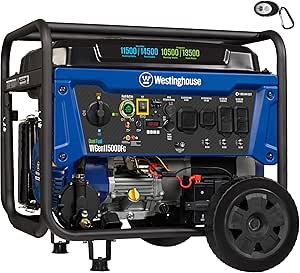 | Best Overall for Large Home Backup and Heavy-Duty Use | Peak Watts: 14,500 | Running Watts: 11,500 | Fuel Type: Gasoline, Propane | VIEW ON AMAZON | See Our Full Breakdown |
| Westinghouse 14500 Peak Watt Tri-Fuel Portable Generator with Remote Electric Start |  | Best for Versatile Fuel Options and Sensitive Electronics | Peak Watts: 14,500 | Running Watts: 11,500 (gasoline), 13,500 (propane), 12,000 (natural gas) | Engine: 550cc 4-Stroke OHV | VIEW ON AMAZON | See Our Full Breakdown |
| DuroStar DS13000MX 13,000-Watt Dual Fuel Portable Generator with Electric Start and Transfer Switch Ready |  | Best for Whole-Home Backup and Heavy-Duty Reliability | Wattage: 13,000 watts | Fuel Type: Gasoline, Propane | Tank Volume: 8.3 gallons | VIEW ON AMAZON | See Our Full Breakdown |
| DuroMax XP13000EH 13,000-Watt Dual Fuel Portable Generator |  | Best for Heavy-Duty Home Backup with Portability | Power Output: 13,000 watts | Fuel Type: Gas & Propane | Start Type: Electric | VIEW ON AMAZON | See Our Full Breakdown |
| Jackery HomePower 3600 Plus with 2x200W Solar Panels, 3584Wh Portable Power Station |  | Best for Portable, Quiet, and Renewable Backup Power | Capacity: 3584Wh | Output Wattage: 3600W | Charging Time: 2 hours via hybrid AC+DC | VIEW ON AMAZON | See Our Full Breakdown |
| Oxseryn 4400-Watts Inverter Generator, Gas Powered, Emergency Home Backup, RV Ready 30A Outlet |  | Best Portable Power for Emergency and RV Use | Peak Watts: 4400 | Running Watts: 3400 | Fuel Tank Capacity: 2 gallons | VIEW ON AMAZON | See Our Full Breakdown |
| Oxseryn Power Equipment 4400 Watts Inverter Generator Gas Powered, Portable Open Frame Generator, Low Noise with ECO Mode, RV Ready, Emergency Home Backup |  | Best Quiet Operation and Long Runtime for Home Backup and RV Travel | Peak Watts: 4400 | Running Watts: 3400 | Fuel Tank Capacity: 2 gallons | VIEW ON AMAZON | See Our Full Breakdown |
| home generators for backup power | Peak Watts | Fuel Tank Capacity |
|---|---|---|
| Westinghouse 13500 Peak Watt T | 13,500 | 9.5 gallons |
| Westinghouse 6500 Watt Dual Fu | 6500 | 4.7 gallons |
| Westinghouse 12500 Watt Dual F | — | 6.6 gallons |
| Anker SOLIX S2000 Portable Pow | — | — |
| DuroStar DS13000MXT 13,000-Wat | — | — |
| Westinghouse 14500 Peak Watt D | 14,500 | — |
| Westinghouse 14500 Peak Watt T | 14,500 | 9.5 gallons |
| DuroStar DS13000MX 13,000-Watt | — | — |
| DuroMax XP13000EH 13,000-Watt | — | — |
| Jackery HomePower 3600 Plus wi | — | — |
| Oxseryn 4400-Watts Inverter Ge | 4400 | 2 gallons |
| Oxseryn Power Equipment 4400 W | 4400 | 2 gallons |
More Details on Our Top Picks
Westinghouse 13500 Peak Watt Tri-Fuel Portable Generator with Remote Electric Start
This model stands out for its ability to run on three different fuels—gasoline, propane, or natural gas—offering unmatched flexibility during prolonged outages or on remote job sites. Compared with the DuroStar DS13000MXT, it provides a longer runtime of up to 19 hours and remote start convenience, but it is considerably heavier and bulkier, making transport more challenging. The multiple outlets and transfer switch readiness make it an excellent choice for those who need dependable, versatile backup power with minimal setup fuss, provided they can handle its size and weight. The automatic CO sensor adds a safety layer often missing in less advanced models.
Pros:- Tri-fuel operation offers maximum fuel flexibility
- Remote electric start for effortless operation
- Impressive runtime of up to 19 hours on a full tank
- Multiple outlets including transfer switch compatibility
Cons:- Heavy and bulky, difficult to move without assistance
- Complex setup for first-time users
- Higher price compared to single-fuel options
Best for: Homeowners needing long-lasting, flexible fuel options for extended outages or remote work sites
Not ideal for: Users seeking a lightweight, easily portable generator for quick, occasional use around the house
- Peak Watts:13,500
- Running Watts (Gasoline):10,500
- Fuel Tank Capacity:9.5 gallons
- Run Time:up to 19 hours
- Engine:500cc 4-Stroke OHV
- Outlets:GFCI 120V 5–20R, Transfer Switch Ready 120V L14-30R, RV Ready 120/240V 14–50R
Our verdict“This generator suits those who prioritize fuel versatility and long runtime but can manage its size and weight for backup power needs.”
Westinghouse 6500 Watt Dual Fuel Portable Generator with Transfer Switch and CO Sensor
This generator offers a practical balance between power and portability, with 5300 running watts on gasoline and nearly 4800 on propane, making it suitable for most home backup scenarios. Compared to the larger DuroStar DS13000MXT, it is more manageable in size and weight, though it provides slightly less power, which may limit its ability to handle larger appliances simultaneously. Its 4.7-gallon tank supports up to 14.5 hours of runtime, and its built-in CO sensor enhances safety during extended use. This model is ideal for users who want reliable power without the bulk of larger units but still need enough capacity to run essentials efficiently.
Pros:- Dual-fuel capability for fuel flexibility
- Relatively lightweight for its class
- Long runtime of up to 14.5 hours
- Includes built-in CO sensor for safety
Cons:- Heavy and bulky relative to smaller portable models
- Residual odor from factory testing may linger
- Limited power output for larger appliances
Best for: Small to medium households seeking a portable, dual-fuel generator with built-in safety features
Not ideal for: People needing to power high-wattage appliances or entire homes during outages
- Peak Watts:6500
- Running Watts (Gasoline):5300
- Fuel Tank Capacity:4.7 gallons
- Run Time:up to 14.5 hours
- Engine:274 CC Westinghouse 4-Stroke OHV
- Outlets:120V 20A duplex, RV 30A, Transfer switch 30A
Our verdict“This generator is a solid choice for moderate backup needs, balancing power, safety, and portability.”
Westinghouse 12500 Watt Dual Fuel Portable Generator with Remote Electric Start
This model delivers robust power, with 9,500 running watts on gasoline and 8,500 on propane, supported by a 6.6-gallon tank that provides up to 12 hours of runtime. Its remote electric start adds convenience, especially during emergencies when quick startup is needed. Compared to the DuroStar DS13000MXT, it offers less peak wattage but is more refined in operation and features a digital display for monitoring. It’s best suited for users who need substantial power for home backup but prefer slightly easier handling than much larger units. The presence of multiple outlet options including transfer switch readiness enhances its versatility.
Pros:- Powerful dual-fuel capability for flexibility
- Remote electric start for quick operation
- Long runtime of up to 12 hours
- Multiple outlets including transfer switch ready
Cons:- Heavy and bulky, not ideal for frequent moving
- Fuel odor may persist after storage
- Price premium for high wattage
Best for: Homeowners seeking a high-capacity, dual-fuel generator with remote start for whole-house backup
Not ideal for: Those with limited space or requiring lightweight, portable units for occasional use
- Peak Watts (Gasoline):12500
- Running Watts (Gasoline):9500
- Fuel Tank Capacity:6.6 gallons
- Run Time:up to 12 hours
- Engine:457cc Westinghouse 4-Stroke OHV
- Outlets:GFCI 120V 5–20R, 120V L14-30R, 120/240V 14–50R
Our verdict“This generator is well-suited for users who need reliable, high wattage backup power with remote start convenience and don’t mind its size.”
Anker SOLIX S2000 Portable Power Station, 2010Wh, 3000W Peak
The Anker SOLIX S2000 offers a compact yet powerful alternative to traditional gas generators, with a 2010Wh battery and 3000W peak power. It excels for homeowners who want clean, quiet energy that can be easily transported or used during outdoor activities. Unlike the larger gas models like the DuroMax XP13000EH, it doesn’t emit fumes or require fuel, but its runtime depends heavily on the connected appliances, making it less suitable for enduring prolonged outages. The support for solar input adds a sustainable edge, though its limited outlets and absence of DC ports may restrict certain device types. This makes it perfect for smaller, critical loads or outdoor use but less so for whole-home backup.
Pros:- High-capacity battery with a long lifespan of 10,000 cycles
- Lightweight and portable at just over 35 lbs
- Supports solar, AC, and car charging methods
- Clean, quiet operation with no fumes
Cons:- Limited outlets and no 12V DC port for certain devices
- Runtime varies widely depending on load
- Not suitable for powering high-wattage appliances continuously
Best for: Emergency preparedness for small appliances and outdoor power needs with portability
Not ideal for: Powering large appliances or entire homes during extended outages
- Capacity:2010Wh
- Peak Power:3000W
- Continuous Power:1500W
- Battery Type:LiFePO4
- Weight:35.7 lbs
- Solar Input:up to 400W
Our verdict“This power station is ideal for critical small loads and outdoor use where quiet, portable power is preferred over high wattage backup.”
DuroStar DS13000MXT 13,000-Watt Tri Fuel Portable Generator with Remote Electric Start
The DuroStar DS13000MXT is designed for serious backup power, offering 13,000 watts peak and the ability to run on gasoline, propane, or natural gas. It’s comparable to the Westinghouse tri-fuel models but prioritizes raw power over compactness or ease of use. The remote electric start and CO alert add layers of convenience and safety, making it suitable for whole-home backup during extended outages. However, it is quite heavy and requires proper ventilation, which may complicate installation or temporary outdoor setups. Its bulk and cost make it less suitable for casual or infrequent use but perfect for those who need an all-in-one, high-capacity generator for critical backup.
Pros:- Provides ample power for entire homes
- Flexible fuel options (gasoline, propane, natural gas)
- Remote start for convenience
- Built-in CO Alert enhances safety
Cons:- Heavy and difficult to move without assistance
- Requires proper ventilation during operation
- Higher cost compared to smaller models
Best for: Homeowners seeking a high-capacity, reliable, whole-house backup generator with multi-fuel flexibility
Not ideal for: People who need a lightweight, portable generator for occasional or short-term use
- Power Output:13,000 watts
- Fuel Types:Gasoline, Propane, Natural Gas
- Start Type:Remote Electric Start
- Outlets:Multiple, including 50 amp transfer switch-ready
- CO Alert:Yes
Our verdict“This generator is best suited for those with a need for substantial, reliable power during prolonged outages, despite its size and weight.”
Westinghouse 14500 Peak Watt Dual Fuel Portable Generator with Remote Electric Start
The Westinghouse WGen11500DFc stands out for its impressive power output, making it ideal for running multiple large appliances during outages. Compared to the slightly smaller Westinghouse 13500 Peak Watt Tri-Fuel, this model offers higher peak wattage, providing more headroom for demanding devices. Its dual fuel capability adds flexibility—allowing use of gasoline or propane—while the electric and remote start features enhance convenience. However, this generator is quite heavy, which can complicate transport or positioning without assistance. Its long runtime of up to 19 hours on a full tank makes it well-suited for extended outages, but the setup process may be complex for less experienced users.
Pros:- High power output suitable for large appliances and electronics
- Dual fuel capability offers flexible fuel options
- Electric and remote start for added convenience
- Long runtime of up to 19 hours on gasoline
Cons:- Heavy and potentially difficult to transport without assistance
- No specific weight information provided
- Setup may be challenging for beginners
Best for: Families or small businesses needing reliable, high-capacity power during prolonged outages
Not ideal for: Users seeking a lightweight or portable model for occasional emergency use or outdoor activities
- Peak Watts:14,500
- Running Watts:11,500
- Fuel Type:Gasoline, Propane
- Tank Capacity:9.5 gallons
- Runtime:Up to 19 hours
- Engine:550cc 4-Stroke OHV
- Start Type:Electric and remote start
- Transfer Switch Ready:Yes
Our verdict“This generator is best suited for those who prioritize power and runtime over portability and are comfortable handling a heavy unit.”
Westinghouse 14500 Peak Watt Tri-Fuel Portable Generator with Remote Electric Start
The Westinghouse 14500 Peak Watt Tri-Fuel Generator excels in offering versatile fuel choices—gasoline, propane, or natural gas—making it suitable for varied backup scenarios. Compared to the dual fuel DuroStar DS13000MX, this model’s tri-fuel capability extends its flexibility, especially if access to natural gas lines is available. It maintains a high peak wattage of 14,500, ensuring ample power for most home needs, with a long runtime of up to 19 hours on gasoline. Its low THD makes it safe for sensitive electronics, a feature not always present in larger models. The tradeoff is its weight and size, which can hinder portability, and residual odors after factory testing might be a concern for some users.
Pros:- Tri-fuel capability for maximum flexibility
- High wattage suitable for whole-home backup
- Low THD safe for sensitive electronics
- Long runtime on gasoline
Cons:- Heavy and less portable
- Residual fuel or oil odor after testing
- Complex setup for inexperienced users
Best for: Homeowners who want flexibility in fuel sources and safe power for electronics
Not ideal for: Users prioritizing portability or needing a lightweight unit for frequent transport
- Peak Watts:14,500
- Running Watts:11,500 (gasoline), 13,500 (propane), 12,000 (natural gas)
- Engine:550cc 4-Stroke OHV
- Fuel Tank Capacity:9.5 gallons
- Runtime:Up to 19 hours on gasoline
- Power Quality:Low THD
Our verdict“Ideal for homeowners who value fuel flexibility and low-distortion power for sensitive devices but can handle a heavier, less portable unit.”
DuroStar DS13000MX 13,000-Watt Dual Fuel Portable Generator with Electric Start and Transfer Switch Ready
The DuroStar DS13000MX offers a robust 13,000-watt peak output, making it a solid choice for powering entire homes during outages. Its dual fuel capability provides operational flexibility, similar to the DuroMax XP13000EH, but with a focus on durability through all-metal construction. The electric start and transfer switch readiness streamline setup and safe connection to your home system. However, its weight and size make it less portable, and the high power output could be overkill for small or light use. Regular maintenance is necessary to sustain performance, especially given its all-metal build.
Pros:- Powerful 13,000-watt output for whole-home backup
- Dual fuel flexibility (gasoline and propane)
- Electric start and transfer switch ready
- All-metal construction for durability
Cons:- Heavy and difficult to move
- May be excessive for small needs
- Requires regular maintenance for optimal functioning
Best for: Homeowners seeking a durable, high-capacity generator for whole-house backup during extended power outages
Not ideal for: Individuals needing a lightweight or highly portable generator for occasional use or outdoor activities
- Wattage:13,000 watts
- Fuel Type:Gasoline, Propane
- Tank Volume:8.3 gallons
- Engine Displacement:500 cc
- Total Power Outlets:5
- Engine Power:Maximum 13 KW
Our verdict“This generator fits those who need reliable, heavy-duty backup power and are prepared to handle its weight and maintenance needs.”
DuroMax XP13000EH 13,000-Watt Dual Fuel Portable Generator
The DuroMax XP13000EH balances high power with portability, making it suitable for those who want whole-home backup without the bulk of larger units. Its 13,000-watt peak capacity is comparable to the DuroStar DS13000MX, but the XP13000EH’s push-button start and multiple outlets—including a transfer switch-ready 50-amp outlet—enhance user convenience. Built with durable all-metal construction, it’s designed for heavy-duty use in storm or disaster scenarios. However, it remains heavy, limiting mobility for some users, and no noise level data is provided, which could be a concern for residential settings.
Pros:- Powerful 13,000-watt output suitable for entire homes
- Dual fuel capability adds flexibility
- Push-button electric start and multiple outlets
- All-metal rugged construction
Cons:- Heavy and less portable than smaller models
- No specified noise level, potential concern for residential use
- Price not specified, may be expensive
Best for: Homeowners needing a powerful, portable generator capable of whole-house backup and outdoor use
Not ideal for: Those who prefer ultra-lightweight models or have noise restrictions, as the noise level is unspecified
- Power Output:13,000 watts
- Fuel Type:Gas & Propane
- Start Type:Electric
- Outlets:Multiple, including transfer switch-ready 50A
- Construction:All-metal
Our verdict“This generator suits those needing heavy-duty, portable backup power with easy operation but must accept the weight and potential noise concerns.”
Jackery HomePower 3600 Plus with 2x200W Solar Panels, 3584Wh Portable Power Station
The Jackery HomePower 3600 Plus offers a different approach to backup power, relying on a large 3584Wh lithium battery and solar charging. Compared to fuel-based generators like the DuroMax XP13000EH, this station provides silent, emissions-free operation, ideal for quiet environments or outdoor activities. Its multiple charging options—including solar panels, AC, and even a gas generator—add versatility. However, at 77.2 pounds, it’s heavy to carry manually, and solar panels are sold separately, adding to the total cost. Its high price may also be a barrier for budget-conscious users, but it excels for those seeking a portable, renewable energy source for critical devices.
Pros:- High-capacity 3584Wh battery for prolonged use
- Multiple charging options including solar, AC, and generator
- Lightweight design with wheels and telescopic handle
- Silent operation and emissions-free
Cons:- Heavy at 77.2 pounds, difficult to carry manually
- Solar panels sold separately, increasing total cost
- Expensive compared to smaller portable stations
Best for: Homeowners or outdoor enthusiasts needing portable, quiet backup with solar expandability
Not ideal for: Individuals requiring high surge capacity or running large appliances, due to limited inverter power
- Capacity:3584Wh
- Output Wattage:3600W
- Charging Time:2 hours via hybrid AC+DC
- Battery Type:LFP (Lithium Iron Phosphate)
- Weight:77.2 pounds
Our verdict“This portable power station suits those prioritizing quiet, renewable backup power over high surge capacity or large appliances.”
Oxseryn 4400-Watts Inverter Generator, Gas Powered, Emergency Home Backup, RV Ready 30A Outlet
This Oxseryn inverter generator stands out for its combination of power and portability, offering 4400 peak watts and 3400 running watts, which is sufficient for most essential home appliances during outages. Compared to larger models like the Westinghouse 6500 Watt, it sacrifices some capacity for easier transport, weighing just 56 lbs. Its inverter technology ensures clean power suitable for sensitive electronics, and the inclusion of an RV-ready 30A outlet makes it a versatile choice for outdoor adventures. However, the generator’s runtime at higher loads is limited, and it may emit a faint gas smell initially, which could concern some users. It’s perfect for those needing reliable emergency power on the go but not for powering heavy household loads continuously.
Pros:- Lightweight and highly portable at 56 lbs
- Sufficient power for most emergency needs and RV use
- Includes inverter technology and eco mode for fuel efficiency
- Multiple outlets including RV-ready 30A port
Cons:- Limited runtime at higher loads, around 14 hours at 25% load
- May emit a slight smell of gas upon receipt, which could concern sensitive users
Best for: Individuals seeking a lightweight, portable generator for emergency backup and RV trips where ease of transport is a priority.
Not ideal for: Homeowners who need to run high-wattage appliances or entire house systems during outages, as this unit’s runtime and capacity are limited.
- Peak Watts:4400
- Running Watts:3400
- Fuel Tank Capacity:2 gallons
- Runtime at 25% load:14 hours
- Ports:2x120V AC, 1x30A RV, 1x12V DC
- Weight:56 lbs
- EPA Compliant:Yes
Our verdict“This generator is ideal for users who prioritize mobility and moderate power for emergencies or RV adventures but not for continuous high-demand household use.”
Oxseryn Power Equipment 4400 Watts Inverter Generator Gas Powered, Portable Open Frame Generator, Low Noise with ECO Mode, RV Ready, Emergency Home Backup
This Oxseryn inverter generator is ideal for those who value quiet operation without sacrificing power, providing 4400 peak watts and 3400 running watts in a lightweight, 56-pound package. It compares favorably to models like the Westinghouse 13500 Peak Watt generator, which offers significantly more capacity but is heavier and less portable. The low noise level, under 72 dBA, makes it suitable for camping, outdoor gatherings, or neighborhood use during outages. Its long runtime of up to 14 hours at 25% load enhances its appeal for extended use. However, it may emit a slight gas smell upon arrival and might require initial setup, which could be a minor inconvenience for some users. This pick makes the most sense for those needing reliable, quiet power for RV or emergency home use, especially in noise-sensitive environments.
Pros:- Low noise level under 72 dBA for discreet operation
- Long runtime of up to 14 hours at 25% load
- Lightweight and portable at 56 lbs
- Includes multiple outlets, including RV-ready port
Cons:- May emit a slight smell of gas upon receipt, requiring initial inspection
- Limited capacity for high-demand appliances or whole-house backup
Best for: Campers, RV owners, or homeowners who need quiet, portable backup power with long runtime for extended outages.
Not ideal for: Users who need to power large household appliances continuously or require higher wattage capacity for whole-house backup.
- Peak Watts:4400
- Running Watts:3400
- Fuel Tank Capacity:2 gallons
- Runtime at 25% load:14 hours
- Noise Level:Under 72 dBA
- Weight:56 lbs
- Ports:2x120V AC, 1x12V DC, RV port
Our verdict“This generator is best suited for quiet, portable power needs during RV trips or small-scale home emergencies where noise and runtime are key concerns.”

How We Picked
I evaluated these home generators based on several critical factors that influence real-world performance and usability. Performance was measured by wattage capacity and fuel efficiency, ensuring the generators could handle typical household loads during outages. Usability factors such as ease of start, noise levels, and portability were also key, along with build quality and safety features like CO sensors. Maintenance and fuel versatility were considered for long-term reliability, while value was assessed by balancing features against price. These criteria helped rank the options to suit different needs, from basic backup to premium, feature-rich models.Factors to Consider When Choosing Home Generators For Backup Power
Choosing the right home generator involves considering several factors that impact performance, safety, and convenience. Beyond just wattage, it’s important to understand how fuel type, noise, size, and features align with your home’s needs. Making the wrong choice can lead to insufficient power, high operating costs, or inconvenience during outages. Here’s a breakdown of key considerations to guide your decision.Power Capacity and Load Needs
Determining the right wattage capacity is fundamental. Consider your essential appliances—refrigerator, heating system, lights, and electronics—and add their wattages to estimate your total needs. Overestimating capacity means paying for unnecessary power, while underestimating risks insufficient backup. For most homes, a generator with at least 7,000 to 10,000 watts covers essential loads, but larger households or those with high-energy appliances may require more. Always plan for a buffer to accommodate starting surges of motors and compressors.
Fuel Type and Efficiency
Generators run on various fuels—gasoline, propane, diesel, or dual-fuel systems—each with its pros and cons. Gasoline is widely available but less efficient and has a shorter shelf life. Propane offers cleaner burning and longer storage but may require additional tanks or hookups. Dual-fuel models provide flexibility, especially during extended outages, but tend to be more expensive upfront. Consider your local fuel availability, storage space, and maintenance needs when choosing the right type for your home.
Noise Levels and Size
Quiet operation is a significant consideration, particularly in residential neighborhoods. Inverter generators typically produce less noise and are more compact, making them suitable for frequent use or smaller spaces. Larger, open-frame models tend to be louder and bulkier but provide higher wattage. Balance your need for power with the practicality of placement—think about where the generator will sit and whether noise could disturb your household or neighbors.
Ease of Use and Safety Features
Features like electric start, remote operation, and user-friendly interfaces can simplify operation during stressful outages. Safety features such as automatic shutoff for low oil, transfer switch compatibility, and carbon monoxide sensors are essential for protecting your household. Inverter generators often include built-in safety mechanisms to prevent damage to sensitive electronics, which is a plus for modern homes. Consider how much effort you want to put into setup and ongoing maintenance.
Cost and Long-Term Value
While budget models may suffice for occasional use, investing in a higher-quality generator can pay off through better durability, efficiency, and safety. Premium models often include features like longer run times, better fuel economy, and quieter operation, which improve the overall experience. Remember to factor in ongoing costs such as fuel, maintenance, and potential repairs. A well-chosen generator provides peace of mind and reliable backup power for years, making the higher initial investment worthwhile for many homeowners.
Frequently Asked Questions
How much power do I need for essential home appliances during an outage?
Most homes require a generator with at least 7,000 to 10,000 watts to run essential appliances like a refrigerator, lights, and heating or cooling systems. To determine your specific needs, add up the wattages of your critical devices and consider the starting wattage for motors or compressors. This ensures your generator can handle the initial surge and continuous load, providing reliable backup during outages.
Is a dual-fuel generator worth the extra cost?
Dual-fuel generators offer significant flexibility by allowing you to switch between fuels, which can be invaluable during extended outages when fuel supply might become limited. They tend to be more expensive upfront but can save money and hassle over time by enabling you to choose the most available or economical fuel source. If you live in an area prone to long outages or want maximum reliability, a dual-fuel model often makes sense.
How loud are inverter generators compared to traditional models?
Inverter generators generally produce much less noise than traditional open-frame models, making them more suitable for residential settings. They tend to operate at lower RPMs, resulting in quieter and smoother power output. This reduced noise level can be a decisive factor if you want to keep disturbances to a minimum during outages or outdoor use. However, they may have lower wattage capacity compared to larger open-frame units.
What maintenance is required to keep a home generator reliable?
Regular maintenance includes checking and changing oil, inspecting air filters, and ensuring fuel systems are clean and free of debris. For fuel-powered generators, it’s important to run them periodically to prevent fuel from degrading. Some models feature automatic shutdowns or alerts for low oil or maintenance needs, which help protect the engine. Proper upkeep extends the lifespan of your generator and guarantees readiness when needed most.
Can I install a generator myself, or should I hire a professional?
While some smaller portable generators can be set up by knowledgeable homeowners, installing a standby generator or connecting a portable unit to your home’s electrical system typically requires a licensed electrician. Professional installation ensures compliance with local codes, safety standards, and proper transfer switch setup. Skipping professional help might lead to safety hazards, code violations, or damage to your home’s electrical system, so consider your skill level carefully.
Conclusion
For most homeowners seeking reliable backup power, the Westinghouse 13500 Peak Watt Tri-Fuel Portable Generator offers an excellent balance of capacity, versatility, and ease of use, making it the best overall choice. Budget-conscious buyers or those with smaller needs might find the Anker SOLIX S2000 perfect for quieter, cleaner power, especially in RVs or small homes. Those looking for premium features and maximum reliability should consider high-capacity models like the DuroMax XP13000EH, which excel in durability and fuel flexibility. Beginners or occasional users benefit from portable, easy-start models, while households with extended outage concerns should prioritize dual-fuel options and larger wattage capacity. Tailor your choice based on your specific power needs, budget, and safety preferences to stay powered during emergencies.
As an affiliate, we earn on qualifying purchases.Halloween Picks
halloween