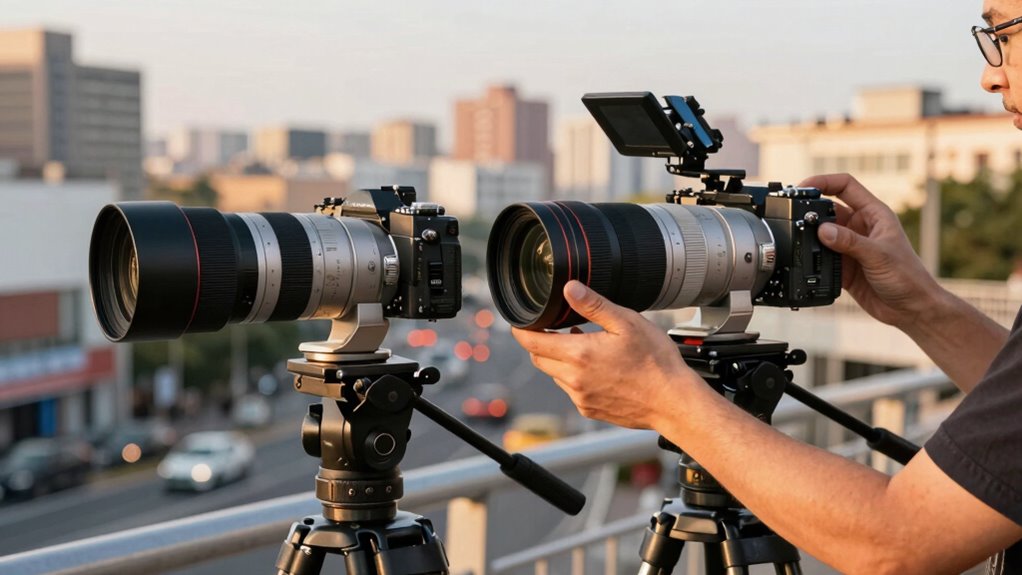
Choosing the right lenses for documentary filmmaking requires balancing optical precision with the rugged adaptability needed for unpredictable environments. My top recommendation for most independent filmmakers is the DZOFILM Catta Ace 35-80mm T2.9, which offers the rare combination of zoom convenience and cine-grade consistency without breaking the bank. For those prioritizing low-light performance and a distinct cinematic character, the DZOFilm Arles 35mm T1.4 stands out as a premium prime option that handles skin tones beautifully. The central tradeoff in this category often lies between the versatility of zoom lenses and the superior speed of primes; documentaries frequently demand speed, but run-and-gun scenarios often favor the framing flexibility of a zoom. Continue reading to see how these eleven options stack up against each other in real-world shooting scenarios.

Get audio and creator gear delivered free with Prime
- Fast, free delivery on millions of items
- Prime Video, Amazon Music and more included
- Member-only deals all year
Complete the kit


Key Takeaways
- Zoom lenses like the DZOFILM Catta Ace series offer better framing speed for interviews than primes, though they sacrifice some low-light capability.
- Anamorphic options from SIRUI are increasingly viable for documentaries due to improved autofocus, challenging the traditional manual-focus-only workflow.
- PL mount remains the industry standard for rental houses, but EF and Sony E mounts are becoming preferred for solo operators needing lightweight rigs.
- Macro capabilities, such as those in the DZOFilm VESPID 90mm, add unexpected narrative value by allowing detailed B-roll of small subjects.
- Manual focus remains dominant in high-end cine glass, meaning documentary shooters must prioritize focus aids like peaking or external monitors.
| SIRUI Astra 50mm 1.33x Full-Frame Autofocus Anamorphic Cine Lens |  | Best for Modern Hybrid Workflows | Mount: Sony E-Mount | Focal Length: 50mm | Aperture: T1.8 – T22 | VIEW ON AMAZON | See Our Full Breakdown |
| DZOFilm Arles 35mm T1.4 FF/VV Prime Cine Lens (ARRI PL) |  | Best Low-Light Prime | Mount: ARRI PL | Focal Length: 35mm | Aperture: T1.4 – T22 | VIEW ON AMAZON | See Our Full Breakdown |
| DZOFILM Catta Ace Cine 3-Lens Bundle |  | Best Versatile Zoom Set | Focal Lengths: 18-35mm, 35-80mm, 70-135mm | Aperture: T2.9 Constant | Mounts: PL, Canon EF | VIEW ON AMAZON | See Our Full Breakdown |
| DZOFILM Vespid 2 18mm T1.9 Cinema Prime Lens |  | Best Wide-Angle for Tight Spaces | Mount: ARRI PL (EF compatible) | Focal Length: 18mm | Aperture: T1.9 – T22 | VIEW ON AMAZON | See Our Full Breakdown |
| DZOFILM Vespid Prime 12mm T2.8 Cine Lens |  | Best Ultra-Wide for Context | Mounts: PL, Canon EF | Focal Length: 12mm | Aperture: T2.8 | VIEW ON AMAZON | See Our Full Breakdown |
| DZOFILM Catta Ace 35-80mm T2.9 Cine Lens |  | Best Versatile Zoom | Focal Length: 35-80mm | Aperture: T2.9 – T22 | Mount Compatibility: PL, Canon EF (Interchangeable) | VIEW ON AMAZON | See Our Full Breakdown |
| DZOFILM Vespid Prime 35mm T2.1 Cinema Lens |  | Best Compact Prime | Focal Length: 35mm | Aperture: T2.1 | Mount Compatibility: ARRI PL, Canon EF | VIEW ON AMAZON | See Our Full Breakdown |
| SIRUI 50mm T2.9 1.6X Full-Frame Anamorphic Lens |  | Best for Cinematic Flare | Focal Length: 50mm | Aperture: T2.9 | Squeeze Factor: 1.6x | VIEW ON AMAZON | See Our Full Breakdown |
| SIRUI VP-1 Vision Prime 1 T1.4 Cine Lens Set |  | Best Premium Prime Set | Focal Lengths: 24mm, 35mm, 50mm | Aperture: T1.4 | Mount Compatibility: Sony E, Canon RF, Nikon Z, Leica L | VIEW ON AMAZON | See Our Full Breakdown |
| DZOFilm VESPID 90mm Macro T2.8 Lens |  | Best for Detail Shots | Focal Length: 90mm | Aperture: T2.8 | Mount Compatibility: ARRI PL, Canon EF | VIEW ON AMAZON | See Our Full Breakdown |
| SIRUI Night Walker 35mm T1.2 Manual Focus Cine Lens |  | Best Value Low-Light Cine Lens | Mount: Sony E-Mount | Focal Length: 35mm (S35/APS-C) | Max Aperture: T1.2 | VIEW ON AMAZON | See Our Full Breakdown |
| lenses for documentary filmmaking | Aperture | Focal Length | Weight |
|---|---|---|---|
| SIRUI Astra 50mm 1.33x Full-Fr | T1.8 – T22 | 50mm | 621 g |
| DZOFilm Arles 35mm T1.4 FF/VV | T1.4 – T22 | 35mm | — |
| DZOFILM Catta Ace Cine 3-Lens | T2.9 Constant | — | — |
| DZOFILM Vespid 2 18mm T1.9 Cin | T1.9 – T22 | 18mm | 2.9 lbs |
| DZOFILM Vespid Prime 12mm T2.8 | T2.8 | 12mm | 725g |
| DZOFILM Catta Ace 35-80mm T2.9 | T2.9 – T22 | 35-80mm | 3.6 lbs |
| DZOFILM Vespid Prime 35mm T2.1 | T2.1 | 35mm | — |
| SIRUI 50mm T2.9 1.6X Full-Fram | T2.9 | 50mm | 2.37 lbs |
| SIRUI VP-1 Vision Prime 1 T1.4 | T1.4 | — | ~600g per lens |
| DZOFilm VESPID 90mm Macro T2.8 | T2.8 | 90mm | — |
| SIRUI Night Walker 35mm T1.2 M | — | 35mm (S35/APS-C) | ~500g |
More Details on Our Top Picks
SIRUI Astra 50mm 1.33x Full-Frame Autofocus Anamorphic Cine Lens
The SIRUI Astra 50mm stands out as the only autofocus anamorphic option in this lineup, making it a game-changer for documentary filmmakers who need speed. While most cine lenses here, like the DZOFilm Arles 35mm, rely entirely on manual focus, the Astra’s AF capability allows you to keep up with unpredictable subjects without missing the shot. The 1.33x squeeze provides a native widescreen look, but be aware that the fixed 50mm focal length forces you to move your feet rather than zoom. It is not water-resistant, so rain or dust requires careful planning. This lens suits those who prioritize autofocus reliability and cinematic character over the flexibility of a zoom system.Pros:- Autofocus capability is rare for anamorphic lenses, aiding fast-paced shooting
- Fast T1.8 aperture allows for shooting in dimly lit environments
- Selectable flare options let you tailor the aesthetic on the fly
Cons:- Fixed 50mm focal length limits framing options compared to zooms
- No image stabilization requires rigid support or steady hands
- Lack of weather sealing poses risks in outdoor environments
Best for: Documentary shooters using Sony E-mount cameras who need autofocus for run-and-gun interviews or vérité events.
Not ideal for: Filmmakers who require zoom flexibility or shoot in harsh weather conditions, as it lacks weather sealing and variable focal lengths.
- Mount:Sony E-Mount
- Focal Length:50mm
- Aperture:T1.8 – T22
- Squeeze Factor:1.33x
- Focus Type:Auto/Manual
- Weight:621 g
- Flare Color:Neutral
Our verdict“Choose this if you need autofocus and a cinematic look in a compact package, but be prepared to move physically to frame your shots.”
DZOFilm Arles 35mm T1.4 FF/VV Prime Cine Lens (ARRI PL)
For documentaries shot in challenging lighting, the DZOFilm Arles 35mm offers a blazing fast T1.4 aperture, surpassing the light-gathering ability of the SIRUI Astra 50mm and the DZOFILM Vespid Prime 12mm. This allows for shallow depth of field and cleaner images at higher ISOs. However, unlike the hybrid-friendly SIRUI, the Arles is strictly manual focus on an ARRI PL mount, demanding a skilled operator and professional camera bodies. The 16-blade iris creates smooth bokeh, which separates subjects from busy documentary backgrounds effectively. It is a specialized tool for those with the budget and skill to manage manual controls in low-light scenarios.Pros:- Extremely fast T1.4 aperture excels in low-light environments
- 16-blade iris produces creamy, cinematic bokeh
- Compatible with Full Frame and Vista Vision sensors for future-proofing
Cons:- Manual focus only requires significant operator skill
- ARRI PL mount limits compatibility to high-end cinema cameras
- No weather resistance for outdoor shoots
Best for: Professional documentary crews using high-end cinema cameras who prioritize low-light performance and shallow depth of field.
Not ideal for: Solo operators or beginners who rely on autofocus, or those using mirrorless cameras without PL mount adapters.
- Mount:ARRI PL
- Focal Length:35mm
- Aperture:T1.4 – T22
- Iris Blades:16
- Focus Rotation:270°
- Front Diameter:95mm
- Gearing:0.8 MOD
Our verdict“This lens is ideal for professionals who need maximum light sensitivity and a specific cinematic aesthetic, provided they can handle manual focus.”
DZOFILM Catta Ace Cine 3-Lens Bundle
The DZOFILM Catta Ace Cine Bundle covers a massive 18mm to 135mm range, offering far more framing flexibility than any single prime in this group, such as the DZOFILM Vespid 2 18mm. The consistent T2.9 aperture ensures exposure remains stable across the zoom range, which is critical for documentary interviews where lighting changes slightly. While it lacks the autofocus of the SIRUI Astra, the zoom capability allows you to adjust composition without moving the camera, a huge advantage in tight spaces. The aluminum build is durable, but the manual focus requirement means you must be attentive. This set is the most practical choice for general documentary work.Pros:- Covers 18mm to 135mm, eliminating the need for multiple prime lenses
- Constant T2.9 aperture maintains consistent exposure while zooming
- Dual mount compatibility (PL and EF) offers camera flexibility
Cons:- Manual focus only makes tracking fast subjects difficult
- Zooming can introduce slight focus shifts if not calibrated well
- Bulkier than individual prime lenses for handheld rigs
Best for: Documentary teams who need a complete focal range from wide to telephoto without breaking the bank.
Not ideal for: Filmmakers who need the absolute fastest apertures for extreme low light or those who require autofocus for run-and-gun shooting.
- Focal Lengths:18-35mm, 35-80mm, 70-135mm
- Aperture:T2.9 Constant
- Mounts:PL, Canon EF
- Focus Type:Manual
- Front Diameter:80mm
- Construction:Aluminum Alloy
- Stabilization:Optical
Our verdict“This bundle is the smartest buy for documentary shooters who value framing flexibility and consistent exposure over ultra-wide apertures.”
DZOFILM Vespid 2 18mm T1.9 Cinema Prime Lens
When shooting documentaries in confined interiors, the DZOFILM Vespid 2 18mm provides a wide perspective that keeps the camera close while capturing context. Compared to the ultra-wide DZOFILM Vespid Prime 12mm, the 18mm offers a more natural field of view with less distortion, making it better for character-driven shots. The T1.9 aperture is faster than the Catta Ace zooms, allowing for better subject isolation. Its compact size makes it ideal for handheld rigs or gimbals, unlike the bulkier PL primes. However, it lacks autofocus and weather sealing, so it requires careful handling in dynamic environments. This lens is a strong companion to a standard zoom for establishing shots.Pros:- Fast T1.9 aperture helps separate subjects from backgrounds
- Minimal focus breathing keeps framing stable during focus pulls
- Lightweight design is friendly for handheld and gimbal work
Cons:- Manual focus only limits speed in chaotic scenes
- No image stabilization requires careful movement
- Not suitable for wet or dusty outdoor conditions
Best for: Documentary filmmakers shooting in small rooms or vehicles who need a wide angle without extreme distortion.
Not ideal for: Those shooting in rain or dusty environments, as it is not weather-sealed, or solo shooters needing autofocus.
- Mount:ARRI PL (EF compatible)
- Focal Length:18mm
- Aperture:T1.9 – T22
- Focus Type:Manual
- Weight:2.9 lbs
- Angle of View:100 degrees
- Metadata:Cooke /i Technology
Our verdict“This lens is perfect for interior documentaries where space is limited and a natural wide angle is preferred over ultra-wide distortion.”
DZOFILM Vespid Prime 12mm T2.8 Cine Lens
The DZOFILM Vespid Prime 12mm is the widest lens in this roundup, offering a 126-degree field of view that captures immense context. While the DZOFILM Vespid 2 18mm is more versatile for general wide shots, the 12mm is a specialized tool for immersive, first-person perspectives or large group scenes in tight spaces. The APO optical design minimizes chromatic aberration, keeping colors accurate even at the edges. However, the T2.8 aperture is slower than the Arles or Vespid 2, requiring more light. Its ultra-wide nature also means distortion is a constant factor to manage. This lens is for specific storytelling needs, not general use.Pros:- APO design delivers exceptional sharpness and color accuracy
- Ultra-wide 12mm focal length captures expansive scenes
- Robust aluminum build feels durable and professional
Cons:- T2.8 aperture is slower, limiting low-light capability
- Ultra-wide angle introduces noticeable distortion
- Manual focus requires precise marking and practice
Best for: Filmmakers who need extreme wide angles for immersive storytelling or capturing large subjects in cramped environments.
Not ideal for: General interview setups or low-light scenes where a faster aperture or normal wide angle would suffice.
- Mounts:PL, Canon EF
- Focal Length:12mm
- Aperture:T2.8
- Optical Design:Apochromatic (APO)
- Field of View:126 degrees
- Weight:725g
- Material:Aluminum Alloy
Our verdict“Buy this lens only if you specifically need an ultra-wide perspective for immersive documentary moments, as it is less versatile than standard wides.”
DZOFILM Catta Ace 35-80mm T2.9 Cine Lens
This zoom stands out for its parfocal design, a critical feature for documentary work where you need to rack focus while zooming without losing sharpness. Unlike the DZOFILM Vespid Prime 35mm, which requires you to swap lenses to change framing, the Catta Ace covers the ‘golden’ 35-80mm range in one unit. This saves significant time in the field, especially when shooting run-and-gun interviews or dynamic observational scenes. The interchangeable PL and EF mounts offer future-proofing, allowing you to adapt to different camera bodies without buying new glass. However, the T2.9 maximum aperture is slower than many primes in this lineup, meaning you will need more light or higher ISOs in dim environments. The polycarbonate body keeps weight down for gimbals, but it lacks the rugged metal feel of the Vespid series.
Pros:- Parfocal design maintains focus while zooming
- Interchangeable PL and EF mounts for camera flexibility
- Lightweight polycarbonate body ideal for gimbals
- Consistent T2.9 aperture throughout zoom range
Cons:- Slower T2.9 aperture limits low-light capability
- Plastic body feels less durable than metal competitors
- No electronic communication for iris or focus data
Best for: Documentary filmmakers who prioritize speed and flexibility over low-light performance, needing to change focal lengths quickly without swapping lenses.
Not ideal for: Shooters working primarily in low-light conditions who need the light-gathering capability of a T1.4 or T2.1 prime lens.
- Focal Length:35-80mm
- Aperture:T2.9 – T22
- Mount Compatibility:PL, Canon EF (Interchangeable)
- Image Circle:43.5mm (Full Frame)
- Focus Rotation:270°
- Weight:3.6 lbs
- Zoom Ratio:2.3x
Our verdict“Choose this if your documentary workflow demands rapid focal length changes and you shoot mostly in controlled lighting.”
DZOFILM Vespid Prime 35mm T2.1 Cinema Lens
This lens is engineered for minimal weight and maximum portability, making it superior to heavier options like the SIRUI VP-1 Vision Prime when shooting handheld or on small drones. The T2.1 aperture allows for cleaner images in lower light compared to the DZOFILM Catta Ace 35-80mm, providing better subject separation with its 16-blade iris. Its compact form factor reduces the burden on stabilizers, which is vital for long documentary shoots where operator fatigue is a concern. The interchangeable mount system offers similar flexibility to the Catta, but the fixed focal length means you must physically move or swap lenses to change perspective. While the build is robust, the lack of electronic contacts means you lose metadata recording for lens and aperture, requiring manual logging in post-production.
Pros:- Extremely lightweight for handheld and gimbal use
- Fast T2.1 aperture for low-light performance
- Smooth 16-blade bokeh for professional look
- Interchangeable PL/EF mounts for versatility
Cons:- Fixed focal length requires physical movement to reframe
- No electronic contacts for metadata or iris control
- Manual focus only, demanding skilled operation
Best for: Solo documentary operators and drone pilots who need a lightweight, fast prime lens for handheld or stabilized shooting.
Not ideal for: Filmmakers who require rapid focal length changes without moving their position, as this fixed 35mm view limits framing options.
- Focal Length:35mm
- Aperture:T2.1
- Mount Compatibility:ARRI PL, Canon EF
- Diaphragm Blades:16
- Focus Rotation:270°
- Image Circle:46.5mm
- Front Diameter:80mm
Our verdict“Ideal for solo shooters who value mobility and low-light capability over the convenience of a zoom.”
SIRUI 50mm T2.9 1.6X Full-Frame Anamorphic Lens
This anamorphic lens offers a distinct 1.6x squeeze factor, creating the horizontal lens flares and oval bokeh that define a ‘movie’ look, setting it apart from the spherical DZOFILM Vespid Prime 35mm. For documentary work, this aesthetic choice adds a layer of artistic interpretation, though it may not suit observational, vérité styles that prefer realism. The T2.9 aperture is comparable to the Catta Ace, but the anamorphic design introduces more optical quirks, such as breathing and distortion, which require careful post-production desqueeze. The L-mount compatibility is specific, limiting camera choices compared to the multi-mount flexibility of DZOFILM options. It is heavier and bulkier, making it less ideal for handheld runs than the compact Vespid series, but it delivers a unique visual signature that standard lenses cannot replicate.
Pros:- Creates distinct anamorphic flares and oval bokeh
- 1.6x squeeze for wider immersive aspect ratios
- Full-frame coverage for high-resolution sensors
- Manual control for precise creative expression
Cons:- Requires desqueezing in post-production
- Heavier and bulkier than spherical primes
- Limited to L-mount cameras without adapters
Best for: Artistic documentary directors seeking a stylized, cinematic look with signature flares and oval bokeh.
Not ideal for: Journalists or vérité shooters who need neutral, distortion-free optics and rapid handheld mobility.
- Focal Length:50mm
- Aperture:T2.9
- Squeeze Factor:1.6x
- Mount Compatibility:Leica L
- Diaphragm Blades:10
- Weight:2.37 lbs
- Construction:16 Elements in 13 Groups
Our verdict“Pick this if your documentary project benefits from a stylized, high-art visual language rather than neutral realism.”
SIRUI VP-1 Vision Prime 1 T1.4 Cine Lens Set
This three-lens set (24/35/50mm) excels in low-light performance with its T1.4 aperture, significantly outperforming the DZOFILM Catta Ace 35-80mm in dim environments. The matched color temperature and gear positions across the set allow for seamless lens swaps without recalibrating matte boxes or adjusting white balance, a major workflow advantage over mixing lenses from different brands. The interchangeable mount system (E/RF/Z/L) offers broader camera compatibility than the DZOFILM Vespid series, which is primarily PL/EF focused. However, buying a full set represents a higher initial investment compared to purchasing a single zoom like the Catta. The aluminum alloy body is durable but heavier than the polycarbonate Catta, potentially taxing smaller stabilizers during extended handheld takes.
Pros:- Fast T1.4 aperture for exceptional low-light capability
- Matched color and gear positions for easy lens swaps
- Interchangeable mounts for E, RF, Z, and L cameras
- Sharp edge-to-edge performance for 8K resolution
Cons:- Higher cost of entry for a three-lens set
- Aluminum body adds weight compared to plastic-zoom alternatives
- Fixed focal lengths require moving to reframe
Best for: Professional documentary crews who need consistent, fast glass for low-light interviews and want matched optics across key focal lengths.
Not ideal for: Budget-conscious solo filmmakers who may not need three primes and prefer the versatility of a single zoom lens.
- Focal Lengths:24mm, 35mm, 50mm
- Aperture:T1.4
- Mount Compatibility:Sony E, Canon RF, Nikon Z, Leica L
- Filter Thread:67mm
- Body Material:Aluminum Alloy
- Weight:~600g per lens
- Resolution Support:8K Ready
Our verdict“The best choice for professionals prioritizing image quality and workflow consistency in challenging lighting.”
DZOFilm VESPID 90mm Macro T2.8 Lens
This lens fills a specific niche in documentary kits: close-up detail work. Its macro capability allows for sharp focus at 0.84 feet, enabling intimate shots of hands, documents, or artifacts that the DZOFILM Catta Ace 35-80mm cannot achieve at its telephoto end. The T2.8 aperture provides decent subject isolation with its 16-blade bokeh, though it is slower than the SIRUI VP-1 primes. The PL and EF mounts ensure compatibility with professional cinema bodies, maintaining the ecosystem synergy of the Vespid line. However, the 90mm focal length is tight for wide establishing shots, meaning you must step back significantly to capture context. It is a specialized tool, not an everyday driver, and should complement rather than replace a standard zoom or wide prime.
Pros:- True macro capability for extreme close-ups
- Smooth 16-blade bokeh for isolated details
- Durable metal housing with standard gears
- Interchangeable PL and EF mounts
Cons:- Tight 90mm field of view limits wide shots
- T2.8 aperture is slower than fast primes
- Specialized use case may see limited field time
Best for: Documentary shooters who need a dedicated lens for macro details, insert shots, and intimate close-ups.
Not ideal for: Generalist shooters looking for a single lens to cover wide to telephoto ranges, as this is strictly for close-up work.
- Focal Length:90mm
- Aperture:T2.8
- Mount Compatibility:ARRI PL, Canon EF
- Min Focus Distance:0.84 ft
- Diaphragm Blades:16
- Focus Rotation:270°
- Housing Material:Metal
Our verdict“Essential for adding texture and intimacy to your documentary B-roll with sharp, detailed close-ups.”
SIRUI Night Walker 35mm T1.2 Manual Focus Cine Lens
This lens stands out for its exceptional low-light capability, making it a strong contender for documentary crews working in dim interiors or night scenes. The T1.2 aperture allows you to keep ISOs low, preserving image quality where faster lenses might struggle with noise. Compared to the DZOFILM Vespid Prime 35mm T2.1, the SIRUI offers significantly more light-gathering power, though it lacks autofocus, demanding precise manual control from the operator. It is lighter than many full-frame cine primes, such as the SIRUI VP-1 Vision Prime, which enhances portability for run-and-gun shooting. However, the APS-C/S35 coverage restricts its use to crop-sensor cameras or Super35 modes, unlike the full-frame options in this roundup. If you prioritize speed and portability over autofocus convenience, this lens delivers professional bokeh and minimal focus breathing at an accessible price point.Pros:- T1.2 aperture provides superior low-light performance with reduced sensor noise.
- Lightweight aluminum construction (~500g) enhances handheld portability.
- 12-blade aperture creates smooth, cinematic bokeh transitions.
- Minimal focus breathing ensures stable framing during focus pulls.
Cons:- Manual focus only, which increases difficulty in fast-moving documentary scenarios.
- Limited to S35/APS-C sensors, rendering it incompatible with full-frame cameras without cropping.
- Lacks water resistance, requiring extra caution in wet environmental conditions.
Best for: Documentary filmmakers using APS-C or Super35 cameras who need a fast, lightweight prime for low-light interviews and atmospheric night shots.
Not ideal for: Shooters requiring autofocus for fast-paced events or those using full-frame cameras without cropping, as the image circle will not cover the sensor.
- Mount:Sony E-Mount
- Focal Length:35mm (S35/APS-C)
- Max Aperture:T1.2
- Focus Type:Manual
- Weight:~500g
- Aperture Blades:12
- Focus Rotation:270 degrees
- Min Focus Distance:0.4m
Our verdict“Choose this lens if you shoot on APS-C or Super35 bodies and prioritize low-light speed and portability over autofocus convenience.”

How We Picked
I selected these lenses by evaluating their suitability for the specific constraints of documentary work: unpredictability, lighting challenges, and the need for rapid reframing. I prioritized lenses that offer consistent color science across focal lengths, a critical factor when cutting between different cameras or lenses in post-production. Build quality was assessed based on whether the lens could withstand handheld operation and rapid setup changes, favoring robust metal constructions over plastic-heavy consumer alternatives.
Ranking was determined by a balance of optical performance, mechanical usability, and value proposition. I weighed the benefit of autofocus in anamorphic lenses against the reliability of manual focus in prime cine lenses. Lenses that offered a clear advantage in low-light environments or provided unique creative looks without excessive distortion were ranked higher, while those with significant color mismatch or poor focus breathing were penalized heavily.
Factors to Consider When Choosing Lenses For Documentary Filmmaking
Selecting glass for documentary work is less about achieving clinical sharpness and more about managing variables. Here are the key factors that should drive your decision.
Primes vs. Zooms: The Framing Tradeoff
Documentary shooters often face the dilemma of whether to carry a set of primes or a single high-quality zoom. Primes generally offer faster apertures (T1.4-T2.8), which is invaluable for shooting in uncontrolled, dim environments like interiors or night scenes. However, switching lenses takes time, which can break the flow of a candid moment. Zooms like the DZOFILM Catta Ace 35-80mm allow you to reframe instantly without changing your position. If your subject moves unpredictably, a zoom is often the safer choice despite the slower aperture. If you have a dedicated assistant or a controlled environment, primes provide superior image quality and light gathering.
Mount Compatibility and Rigging
The mount you choose dictates your camera options and accessory ecosystem. PL mount is the gold standard for professional cinema cameras and rental houses, offering robust locking mechanisms and high precision. However, PL lenses are often heavier and more expensive. For solo documentary filmmakers using mirrorless cameras, Sony E-mount or Canon EF lenses offer a lighter, more compact setup. Consider whether you plan to rent additional lenses later; sticking to a common mount like EF or E ensures easier access to a wider variety of glass for specific shooting days.
Focus Breathing and Rack Focus
In documentary interviews, you often rack focus between the subject and the background to guide the viewer’s attention. Lenses with minimal focus breathing maintain the framing and scale of the subject while shifting focus. Poor breathing causes the image to ‘zoom’ slightly during a rack, which can be distracting and difficult to fix in post. High-end cine lenses are engineered to minimize this, but even within the same brand, there are variations. Always check sample footage for breathing before committing to a lens for interview-heavy projects.
Color Matching Across a Set
If you buy a bundle, such as the DZOFILM Catta Ace 3-Lens Bundle, ensure the lenses are color-matched. In documentary editing, you will cut between wide, medium, and close-up shots. If the color science shifts between lenses, you will spend hours in color grading correcting skin tones and white balance mismatches. A matched set allows for immediate, consistent footage straight out of the camera, streamlining the post-production workflow significantly.
Bokeh Character and Distortion
Not all bokeh is created equal. For documentary portraits, you want a smooth, non-distracting background blur that keeps the subject’s skin tones natural. Some cine lenses produce ‘busy’ or nervous bokeh that draws attention away from the subject. Additionally, check for barrel or pincushion distortion, especially in wide-angle lenses like the DZOFILM Vespid 12mm. While distortion can be corrected in software, it reduces resolution and can alter the geometry of faces, which is rarely desirable in human-centric documentaries.
Frequently Asked Questions
Are anamorphic lenses practical for documentary filmmaking?
Anamorphic lenses were traditionally reserved for narrative features, but modern options like the SIRUI Astra 50mm have made them more accessible. They provide a unique widescreen aesthetic and horizontal flares that can enhance the mood of a documentary. However, they require more light and can introduce distortion that is difficult to correct. They are best used for stylized segments or establishing shots rather than primary interview coverage, where natural perspective and sharpness are usually preferred.
Why do documentary shooters prefer cine lenses over photo lenses?
Cine lenses feature de-clicked aperture rings, allowing you to adjust exposure smoothly during a shot without jumping in stops. They also typically have longer focus throws, which makes manual focusing more precise and repeatable. Photo lenses often have variable aperture rings that click audibly and can cause exposure shifts during recording. For documentary work, where audio and exposure continuity are paramount, the mechanical controls of cine lenses offer a distinct operational advantage.
How important is autofocus for documentary lenses?
Autofocus is becoming increasingly important for solo operators, but it is not a replacement for manual skill. Lenses with reliable autofocus, like the SIRUI Astra, can help when tracking moving subjects, but many cine lenses remain manual-only. If you shoot alone, prioritize lenses with good autofocus or invest in a follow-focus system. If you have a dedicated focus puller, manual lenses often provide more nuanced control and reliability in low-contrast situations where autofocus might hunt.
What is the benefit of a macro cine lens in documentaries?
A macro lens like the DZOFilm VESPID 90mm allows you to capture intimate details, such as textures, hands, or small objects, which are crucial for storytelling B-roll. Standard cine lenses often have a minimum focus distance that prevents close-ups. Having a dedicated macro lens in your kit expands your visual vocabulary, allowing you to tell stories through detail shots that would otherwise be impossible to achieve, adding depth and texture to your narrative.
Should I buy a lens bundle or individual lenses?
Buying a bundle, such as the DZOFILM Catta Ace 3-Lens Bundle, often provides better value and ensures color matching across your primary focal lengths. This is ideal if you know you need a standard set (e.g., 24mm, 35mm, 50mm) for general coverage. However, if your shooting style is niche—focusing heavily on wide angles or telephoto compression—buying individual lenses allows you to allocate your budget more efficiently toward the specific focal lengths you actually use, avoiding the cost of glass that sits in your bag.
Conclusion
Selecting the right glass depends entirely on your workflow and shooting environment. For most independent documentary filmmakers, the DZOFILM Catta Ace 35-80mm T2.9 is the Best Overall choice due to its versatility and zoom convenience. If you prioritize low-light performance and a premium look, the DZOFilm Arles 35mm T1.4 is the Best Premium option. For those on a tighter budget who still want cine aesthetics, the DZOFILM Vespid Prime series offers the Best Value. Solo shooters using mirrorless cameras should look at the SIRUI Night Walker 35mm for its compact size and fast aperture, making it the Best for Beginners or run-and-gun operators. Finally, for those looking to add a stylized flair, the SIRUI Astra provides the Best Anamorphic Experience without the traditional manual-focus hurdles.