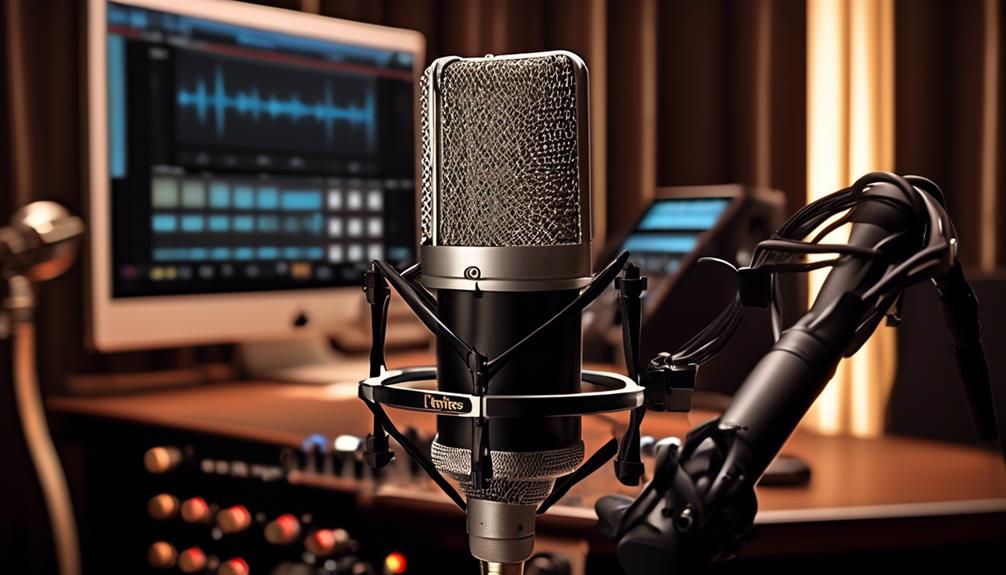

For most singers, I’d choose the Shure SM58 Pro as the best overall live vocal mic: its straightforward XLR design and handheld dynamic format suit everyday stage use. The Shure BETA 58A is a strong alternative for singers who want a supercardioid pickup pattern, while the Sennheiser E 835 gives buyers a different cardioid option. The main tradeoffs are pickup pattern and stage positioning, whether you need an on/off switch, and whether a USB connection is useful beyond live performance. Desktop-focused FIFINE models serve a different setup than conventional handheld stage mics, so they are not interchangeable choices. Read on for the full comparison and guidance on matching a mic to your stage, voice, and equipment.

Get audio and creator gear delivered free with Prime
- Fast, free delivery on millions of items
- Prime Video, Amazon Music and more included
- Member-only deals all year
Complete the kit

Key Takeaways
- The SM58 Pro is the most straightforward stage pick: it prioritizes a familiar handheld XLR setup rather than extra connections or desktop accessories.
- The BETA 58A stands apart by pickup pattern: its supercardioid design makes mic placement and awareness of stage sound more consequential than with cardioid options.
- The E 835 and E 835-S are close alternatives: the key distinction is the E 835-S’s on/off switch, which is useful only when the singer or operator wants that control.
- The two FIFINE models fit a different job: USB/XLR connectivity and desktop-oriented features may suit mixed streaming and recording use, but do not make them direct substitutes for a conventional handheld stage mic.
- Several Shure listings are variations on a familiar choice: compare the SM58, SM58S, and cable bundle by switch and included accessory needs rather than assuming the core buying decision changes.
| Shure Super 55 Deluxe Supercardioid Dynamic Vocal Microphone |  | Best for Vintage Stage Style | Microphone type: Dynamic | Polar pattern: Supercardioid | Connectivity: XLR | VIEW ON AMAZON | See Our Full Breakdown |
| FIFINE XLR/USB Gaming Microphone Set with Boom Arm and RGB Lighting |  | Best Complete Desktop Streaming Kit | Microphone type: Dynamic | Polar pattern: Cardioid | Connectivity: USB and XLR | VIEW ON AMAZON | See Our Full Breakdown |
| Sennheiser E 835-S Dynamic Cardioid Vocal Microphone with On/Off Switch |  | Best for Vocalists Who Want a Mute Switch | Microphone type: Dynamic cardioid | Frequency response: 40–16,000 Hz | Impedance: 350 ohms | VIEW ON AMAZON | See Our Full Breakdown |
| Shure BETA 58A Vocal Microphone – Supercardioid Dynamic Mic for Stage and Studio |  | Best Overall for Stage Performance | Microphone type: Dynamic | Polar pattern: Supercardioid | Application: Stage and studio | VIEW ON AMAZON | See Our Full Breakdown |
| FIFINE USB/XLR Dynamic Microphone for Podcast Recording and Streaming |  | Best for Beginner Home Recording | Microphone type: Dynamic | Frequency response: 50 Hz–16 kHz | Connection types: USB and XLR; separate XLR cable required | VIEW ON AMAZON | See Our Full Breakdown |
| Shure SM58 Pro XLR Dynamic Vocal Microphone |  | Best Overall for Stage Vocals | Connectivity: XLR | Polar pattern: Unidirectional (cardioid) | Frequency response: 50 Hz–15 kHz | VIEW ON AMAZON | See Our Full Breakdown |
| Shure SM58S Pro XLR Dynamic Vocal Microphone with On/Off Switch |  | Best for Performers Who Want On-Mic Muting | Connectivity: Wired XLR | Polar pattern: Unidirectional | Frequency range: 50 Hz–15 kHz | VIEW ON AMAZON | See Our Full Breakdown |
| Sennheiser E 835 Dynamic Cardioid Vocal Microphone |  | Best Alternative for Feedback-Prone Stages | Connectivity: XLR | Polar pattern: Unidirectional (cardioid) | Listed frequency response: 16 kHz | VIEW ON AMAZON | See Our Full Breakdown |
| Shure SM58 Pro Dynamic Vocal Microphone with 25-ft XLR Cable |  | Best Bundle for a Ready-to-Connect Setup | Connectivity: XLR | Polar pattern: Unidirectional (cardioid) | Frequency response: 50 Hz–15 kHz | VIEW ON AMAZON | See Our Full Breakdown |
| live vocal mic | Connectivity | Polar pattern | Microphone type | Weight |
|---|---|---|---|---|
| Shure Super 55 Deluxe Supercar | XLR | Supercardioid | Dynamic | 0.43 kg |
| FIFINE XLR/USB Gaming Micropho | USB and XLR | Cardioid | Dynamic | — |
| Sennheiser E 835-S Dynamic Car | XLR | — | Dynamic cardioid | 11.6 ounces |
| Shure BETA 58A Vocal Microphon | XLR | Supercardioid | Dynamic | — |
| FIFINE USB/XLR Dynamic Microph | — | — | Dynamic | — |
| Shure SM58 Pro XLR Dynamic Voc | XLR | Unidirectional (cardioid) | — | 310 g |
| Shure SM58S Pro XLR Dynamic Vo | Wired XLR | Unidirectional | — | — |
| Sennheiser E 835 Dynamic Cardi | XLR | Unidirectional (cardioid) | — | 11.6 oz |
| Shure SM58 Pro Dynamic Vocal M | XLR | Unidirectional (cardioid) | — | 0.32 kg |
More Details on Our Top Picks
Shure Super 55 Deluxe Supercardioid Dynamic Vocal Microphone
The Shure Super 55 Deluxe pairs a distinctive chrome-and-blue shell with a supercardioid pattern that helps focus pickup on the singer and limit spill from nearby instruments. That makes it a visually prominent choice for stage performances where appearance is part of the act, while its XLR connection suits standard live-sound equipment. Compared with the more conventional Shure BETA 58A, the Super 55 gives up a familiar handheld form for a larger, retro design; the BETA 58A is the more practical pick when understated handling and a straightforward stage mic matter most. The Super 55’s die-cast housing supports regular use, but its XLR-only setup excludes direct USB recording, and no stand or mic clip is included. I’d choose it for vocalists who want focused pickup and a microphone that doubles as a stage visual.
Pros:- Supercardioid pickup helps reduce background sound and feedback.
- Chrome-plated housing with blue accents makes a strong visual statement onstage.
- Die-cast construction and adjustable swivel mount suit performance use.
- XLR connection works with standard live-sound and recording setups.
Cons:- XLR-only connectivity does not connect directly to USB devices.
- No microphone clip or stand is included.
- The retro housing is less discreet and practical than a conventional handheld such as the Shure BETA 58A.
Best for: Singers and on-camera performers using an XLR mixer or interface who want a distinctive vintage look alongside focused vocal pickup.
Not ideal for: USB-only creators, performers seeking a conventional lightweight handheld mic, and buyers who need a stand or clip in the box.
- Microphone type:Dynamic
- Polar pattern:Supercardioid
- Connectivity:XLR
- Enclosure material:Chrome-plated die-cast
- Weight:0.43 kg
- Dimensions:3 x 4 x 10 inches
- Signal-to-noise ratio:55 dB
- Power source:Corded electric
Our verdict“Choose the Super 55 if you want a visually striking XLR stage mic with focused pickup, but skip it if USB convenience or a conventional handheld shape matters more.”
FIFINE XLR/USB Gaming Microphone Set with Boom Arm and RGB Lighting
The FIFINE AM8T is the most desktop-oriented option here: its included boom arm, USB connection, mute button, headphone jack, and adjustable RGB lighting are aimed at streaming and recording from a computer. USB makes setup more direct than with the XLR-only Shure BETA 58A, while the AM8T’s XLR connection also allows use with a mixer when the setup grows. That flexibility does not make it the strongest stage choice, though. Its included arm is designed for a desk, not handheld singing, and the XLR cable is not supplied. The cardioid pattern suits a single voice in a controlled room, but singers looking for a conventional performance mic should compare it with the Sennheiser E 835-S. I’d pick the AM8T for a creator who needs a desktop kit first and an occasional vocal-recording option second.
Pros:- USB and XLR connectivity support computer use and mixer-based setups.
- Included adjustable boom arm and C-clamp provide a desktop mounting solution.
- Mute button, gain control, and headphone jack support convenient streaming workflows.
- Customizable RGB lighting can suit a gaming or on-camera setup.
Cons:- XLR cable is not included.
- The boom arm and desktop format are less suited to handheld stage performance than the Sennheiser E 835-S.
- The clamp only fits desktops up to 2 inches thick.
Best for: Streamers and home creators who want an included desktop boom arm, USB recording, and the option to connect to an XLR mixer later.
Not ideal for: Gigging singers who need a handheld stage microphone, or desktop owners whose work surface is thicker than the clamp’s 2-inch limit.
- Microphone type:Dynamic
- Polar pattern:Cardioid
- Connectivity:USB and XLR
- Sensitivity:-50 dB
- Included accessories:Boom arm stand, C-clamp, USB-C cable, user manual
- Controls and monitoring:Mute button, gain control, headphone jack
- Maximum desktop thickness:2 inches
- Lighting:Customizable RGB
Our verdict“Choose the AM8T for a USB-first streaming desk that may later add XLR, not as your primary handheld mic for stage performances.”
Sennheiser E 835-S Dynamic Cardioid Vocal Microphone with On/Off Switch
The Sennheiser E 835-S brings a practical control to a straightforward live vocal mic: its on/off switch lets a singer or presenter mute the microphone between uses without relying on a mixer operator. Its cardioid pattern and feedback rejection make it a sensible stage option, while the listed 40–16,000 Hz response and minimal proximity effect support consistent vocal reproduction as the singer moves around the mic. Compared with the switch-free Sennheiser E 835 in this roundup, the E 835-S favors hands-on control; the standard version is the cleaner choice for performers who do not want a switch that could be turned off accidentally. The Shure BETA 58A offers a supercardioid pattern instead, a useful distinction for stages where tighter off-axis rejection is the priority. The E 835-S remains XLR-only and has no wireless capability.
Pros:- On/off switch gives the performer direct control over muting.
- Cardioid pickup and feedback rejection suit live vocal use.
- Metal housing and shock-mount system support regular handling.
- Minimal proximity effect helps keep vocals more consistent as mic distance changes.
Cons:- XLR connection requires a compatible mixer or audio interface rather than a direct USB input.
- The switch can be an unwanted extra control for performers who prefer a switch-free mic.
- Wired design offers no wireless mobility.
Best for: Gigging singers, presenters, and event hosts who want a rugged wired mic with an on/off switch for managing quiet moments.
Not ideal for: Performers who prefer a switch-free handheld mic, need wireless operation, or want direct USB connection to a computer.
- Microphone type:Dynamic cardioid
- Frequency response:40–16,000 Hz
- Impedance:350 ohms
- Connectivity:XLR
- Construction:Metal housing
- Weight:11.6 ounces
- Dimensions:1.89 x 7.09 x 1.89 inches
- Control:On/off switch
Our verdict“Choose the E 835-S for wired stage vocals when a performer-controlled mute switch matters more than the tighter supercardioid pattern of the Shure BETA 58A.”
Shure BETA 58A Vocal Microphone – Supercardioid Dynamic Mic for Stage and Studio
For a singer choosing primarily for stage performance, the Shure BETA 58A is the strongest fit in this group. Its supercardioid pickup pattern is designed to reject sound away from the mic, which can help control feedback and reduce spill on busy stages. The rugged dynamic design also suits regular live use, and the included stand adapter and storage bag make it more stage-ready out of the box than the Shure Super 55, which has a larger vintage form and lacks a stand or clip. Compared with the cardioid Sennheiser E 835-S, the BETA 58A offers a tighter pickup pattern but does not list an on/off switch. It is XLR-based rather than a direct-to-USB solution, so computer-first creators may prefer the FIFINE AM8. I’d rank it first for singers prioritizing focused pickup and a conventional professional stage setup.
Pros:- Supercardioid pattern helps limit off-axis sound and feedback onstage.
- Dynamic design and rugged construction suit regular live performance.
- Made for stage and studio vocal use.
- Includes an adjustable stand adapter, thread adapter, and storage bag.
Cons:- XLR setup requires compatible audio equipment rather than a direct USB connection.
- No on/off switch is listed, unlike the Sennheiser E 835-S.
- Buyers wanting desktop mounting and computer controls will need a different option, such as the FIFINE AM8T.
Best for: Gigging vocalists using a mixer or stage sound system who want a rugged dynamic mic with supercardioid feedback rejection.
Not ideal for: USB-only home creators, singers who want an on/off switch on the microphone, or buyers seeking the included desktop arm and controls of the FIFINE AM8T.
- Microphone type:Dynamic
- Polar pattern:Supercardioid
- Application:Stage and studio
- Included accessories:A25D adjustable stand adapter, 5/8-inch to 3/8-inch Euro thread adapter, storage bag
- Connectivity:XLR
- Construction:Rugged construction
Our verdict“For a wired singer who prioritizes feedback control and a conventional stage setup, the BETA 58A is the most balanced choice in this lineup.”
FIFINE USB/XLR Dynamic Microphone for Podcast Recording and Streaming
The FIFINE AM8 is a reasonable entry point for someone who wants one dynamic mic for computer audio now and an XLR mixer setup later. USB adds convenient connection to a PC or Mac, while the XLR option offers a path beyond a desktop recording setup. Its built-in stand, headphone jack, and mute button are useful for streaming and practice, but those conveniences depend on USB: the product data says the mute and RGB controls are unavailable over XLR. That makes the AM8 less consistent as a live vocal tool than the Shure BETA 58A, whose role is more clearly stage-focused, and less fully equipped as a desktop kit than the boom-arm bundle version, the FIFINE AM8T. I’d favor the AM8 for home singers who also stream, rather than performers who need a dedicated handheld stage mic and simple, dependable XLR operation.
Pros:- USB and XLR connections support both computer recording and mixer-based setups.
- Headphone jack enables real-time monitoring.
- Built-in stand supports a basic desktop setup without a separate mount.
- USB operation includes a mute button and configurable RGB lighting.
Cons:- XLR cable is not included.
- Mute button and RGB controls are unavailable when using XLR.
- The built-in stand and desktop features are less suited to stage use than the Shure BETA 58A.
Best for: Beginner home singers and streamers using a PC, Mac, or PS5 who want USB convenience with the option to add an XLR setup.
Not ideal for: Gigging vocalists who need a dedicated handheld stage mic, or XLR users who expect the USB mute and lighting controls to remain available.
- Microphone type:Dynamic
- Frequency response:50 Hz–16 kHz
- Connection types:USB and XLR; separate XLR cable required
- Mute button:Available over USB only
- Headphone jack:Yes
- Built-in stand:Yes
- Compatibility:PC, Mac, PS5
- Mounting threads:3/8 inch and 5/8 inch
- RGB lighting:Three modes, more than 10 colors
Our verdict“Choose the AM8 for USB-first home singing and streaming with an XLR upgrade path, but pick the BETA 58A for a more stage-focused vocal setup.”
Shure SM58 Pro XLR Dynamic Vocal Microphone
The SM58 is my strongest all-around pick for singers who need a dependable wired mic for stage performance. Its cardioid pattern focuses on the vocalist, while the built-in pop filter helps soften breath and plosive noise without extra accessories. Compared with the Sennheiser E 835, the SM58 offers a familiar warm vocal character and rugged metal construction; the E 835 is a close alternative for performers prioritizing feedback rejection. This model keeps the setup straightforward, but it has no switch, wireless option, or USB connection. I’d choose it over the cable-included SM58-CN when I already have an XLR lead, and skip it if I need plug-and-play computer recording.
Pros:- Cardioid pickup helps keep attention on the vocalist and reduce surrounding sound
- Built-in pop filter helps control breath and plosive noise
- Rugged metal construction suits regular transport and stage use
- Handheld design and standard XLR connection fit common live-sound setups
Cons:- Requires an XLR cable and compatible mixer or audio interface
- No on/off switch for quick muting between songs
- Corded design does not support wireless use
Best for: Gigging vocalists who want a durable, corded XLR mic with a focused, warm sound for live sets
Not ideal for: USB-only home recordists or performers who need wireless operation or an on-mic mute switch
- Connectivity:XLR
- Polar pattern:Unidirectional (cardioid)
- Frequency response:50 Hz–15 kHz
- Signal-to-noise ratio:78 dB
- Form factor:Handheld
- Enclosure material:Metal
- Weight:310 g
Our verdict“Choose the SM58 for a proven, straightforward stage vocal setup; look elsewhere if you need a switch, USB, or wireless connectivity.”
Shure SM58S Pro XLR Dynamic Vocal Microphone with On/Off Switch
The SM58S keeps the familiar SM58-style vocal focus but adds an on/off switch, giving a singer or speaker direct control when handing off the mic or pausing between segments. That small difference is the reason I’d pick it over the standard Shure SM58 for events where a mixer operator cannot mute every channel on cue. Its cardioid pattern and durable construction suit live use, while the wired XLR connection remains compatible with conventional stage rigs. The switch adds convenience, not a new sound profile or wireless capability, so performers who leave their mic channel managed at the console may prefer the simpler SM58. Like the Sennheiser E 835, it still needs a cable and suitable audio input.
Pros:- On/off switch gives the performer direct mute control
- Cardioid pickup helps focus sound on the vocalist
- Durable construction is suited to demanding live environments
- XLR connection works with standard stage audio equipment
Cons:- The switch adds a control that can be bumped or left off unintentionally
- Requires an XLR cable and compatible mixer or interface
- No wireless or USB connectivity
Best for: Singers, presenters, and event performers who want to mute their own mic without reaching for the mixer
Not ideal for: Performers who need wireless freedom, USB recording, or a switch-free mic for a minimal live setup
- Connectivity:Wired XLR
- Polar pattern:Unidirectional
- Frequency range:50 Hz–15 kHz
- Impedance:150 ohm
- Special feature:On/off switch
- Signal-to-noise ratio:78 dB
- Power source:Corded electric
Our verdict“Pick the SM58S over the standard SM58 when performer-controlled muting matters more than keeping the mic as simple as possible.”
Sennheiser E 835 Dynamic Cardioid Vocal Microphone
The Sennheiser E 835 is a strong choice when stage feedback control and consistent vocal clarity are higher priorities than matching the familiar SM58 sound. Its cardioid pickup and stated feedback rejection make it a practical fit for loud live setups, and its metal construction is suited to regular stage handling. Compared with the Shure SM58, this mic gives buyers a distinct alternative rather than a switch-equipped version of the same model; the SM58 has a built-in pop filter, while the E 835 package includes a clip and carrying pouch. The supplied product data lists a 16 kHz frequency response but does not provide a full range, so I would avoid choosing it based on that figure alone. It remains a corded XLR mic with no wireless option.
Pros:- Cardioid design is intended to help reject feedback and isolate vocals
- Rugged metal enclosure suits stage use
- Includes an MZQ 800 clip and carrying pouch
- XLR connection fits conventional live-sound systems
Cons:- Requires a cable and compatible XLR input
- No wireless connectivity or on/off switch
- Provided frequency-response specification is incomplete compared with the SM58 listing
Best for: Live vocalists playing loud stages who want a cardioid XLR mic with feedback rejection and included mounting accessories
Not ideal for: USB-only users, wireless performers, or buyers who need a clearly specified full frequency-response range
- Connectivity:XLR
- Polar pattern:Unidirectional (cardioid)
- Listed frequency response:16 kHz
- Enclosure material:Metal
- Weight:11.6 oz
- Dimensions:7 × 3 × 3 in
- Included accessory:MZQ 800 clip
- Warranty:10 years
Our verdict“Choose the E 835 when feedback control and included accessories matter more than the SM58’s built-in pop filter and familiar vocal profile.”
Shure SM58 Pro Dynamic Vocal Microphone with 25-ft XLR Cable
This SM58-CN bundle makes sense when a vocalist needs the familiar SM58 format and a long XLR cable in the same package. The included 25-foot cable can simplify a stage or rehearsal setup by giving the performer room to move without sourcing a lead separately. Its cardioid pickup, built-in spherical filter, and metal body match the core live-use strengths of the standard Shure SM58. The main distinction is convenience, not microphone performance: buyers who already own a suitable cable may get more use from the standalone SM58 or the switched SM58S. The listing specifies AC power, unlike the standalone SM58’s corded description, so I’d check the intended setup before buying. It remains wired XLR, not a USB or wireless solution.
Pros:- Includes a 25-foot XLR cable for flexible placement
- Built-in spherical filter helps reduce wind and breath noise
- Cardioid pickup suits focused live vocal use
- Rugged metal enclosure is appropriate for regular handling
Cons:- The bundled cable adds little value if the buyer already owns one
- XLR connection requires compatible audio equipment
- Product data lists AC power, which may limit portability compared with a simple corded setup
Best for: Singers and small venues assembling a wired vocal setup who need a long XLR cable alongside a stage-ready mic
Not ideal for: Buyers who already have an XLR cable, need wireless mobility, or want USB connection for direct computer use
- Connectivity:XLR
- Polar pattern:Unidirectional (cardioid)
- Frequency response:50 Hz–15 kHz
- Special feature:Built-in spherical filter
- Included cable:25 ft XLR
- Enclosure material:Metal
- Weight:0.32 kg
Our verdict“Choose the SM58-CN when the included 25-foot cable fills a real setup need; otherwise, compare the standalone SM58 or switch-equipped SM58S.”

How We Picked
I ranked these microphones by how well their documented design fits live singing: handheld practicality, dynamic-mic suitability, connection type, pickup pattern, and useful controls. I gave more weight to straightforward XLR stage use than to desktop extras, since the target is a live vocal mic rather than a streaming setup. I also treated pickup patterns as a practical tradeoff: cardioid models offer a more forgiving stage-use profile, while supercardioid options ask for more attention to mic and monitor placement.
The order reflects fit for the broadest range of live vocalists, then narrower needs such as a switch, a bundled cable, a distinctive appearance, or USB connectivity. Closely related models are separated by features that can change day-to-day handling, not by assuming that a switch or accessory makes one mic sound better. Where a product is primarily presented for gaming, podcasting, or streaming, I rank it lower for stage performance because its stated use and form factor are less directly aligned with a conventional handheld vocal setup.
| live vocal mic | Microphone type | Polar pattern | Connectivity |
|---|---|---|---|
| Shure Super 55 Deluxe Supercar | Dynamic | Supercardioid | XLR |
| FIFINE XLR/USB Gaming Micropho | Dynamic | Cardioid | USB and XLR |
| Sennheiser E 835-S Dynamic Car | Dynamic cardioid | — | XLR |
| Shure BETA 58A Vocal Microphon | Dynamic | Supercardioid | XLR |
| FIFINE USB/XLR Dynamic Microph | Dynamic | — | — |
| Shure SM58 Pro XLR Dynamic Voc | — | Unidirectional (cardioid) | XLR |
| Shure SM58S Pro XLR Dynamic Vo | — | Unidirectional | Wired XLR |
| Sennheiser E 835 Dynamic Cardi | — | Unidirectional (cardioid) | XLR |
| Shure SM58 Pro Dynamic Vocal M | — | Unidirectional (cardioid) | XLR |
Factors to Consider When Choosing Live Vocal Mic
Choosing a live vocal mic is less about collecting features and more about matching the mic to the room, performer, and signal chain. These broader checks can help prevent a mismatch that a product list alone cannot resolve.
Match the Pickup Pattern to the Stage
Pickup pattern affects how much sound the mic captures from different directions, so it matters when monitors, other singers, or loud instruments are nearby. Cardioid models are a sensible starting point for many singers because their usual placement is relatively intuitive. A supercardioid mic can offer a tighter pickup area, but its off-axis rejection is not uniform in every direction; monitor placement needs attention. A common mistake is choosing a pattern based only on a claim that it will prevent feedback. Room acoustics, speaker placement, equalization, and mic technique all play a part. If you cannot control where monitors sit, favor a setup you can position consistently rather than relying on the pattern alone.
Check the Whole Signal Chain Before Buying
A microphone’s connector is only one part of a working stage setup. Confirm that the mixer, audio interface, or wireless system accepts the mic’s output and that you have the correct cable and any required accessories. XLR models are a natural fit for many live sound systems, while USB can be convenient for a computer but may not connect directly to a venue’s mixer. Do not assume that a mic bundled with a cable includes the length or connector arrangement your stage requires. If you regularly sing at different venues, prioritize a setup that works with standard equipment you are likely to encounter. That compatibility check can matter more than an extra feature on the mic itself.
Decide Whether an On/Off Switch Helps
A switch can let a singer mute the mic between songs or give a speaker local control without reaching the mixer. It can also be switched accidentally, left in the wrong position, or create confusion when a sound engineer expects to manage muting from the console. For a band with a dedicated operator, an unswitched mic may keep stage handling simpler. For rehearsals, announcements, or shared microphones, a switch may be handy. Think through who controls the mic and when before paying attention to the switch as a deciding feature. The feature is most useful when it fits an agreed stage routine.
Choose Form Factor for How You Perform
Handheld stage mics suit singers who move around, pass a mic between performers, or use a conventional stand. Desktop microphones with boom arms or streaming-oriented accessories are designed around a fixed position, which can be awkward for a vocalist moving across a stage. That does not make USB/XLR models useless; they can make sense for a home setup that combines computer recording with occasional stationary vocal use. The mistake is treating USB capability as an automatic upgrade for live work. Decide whether the mic needs to travel, be held, or stay at a desk before comparing connection options. A form factor that matches your movement is easier to use reliably.
Pay for the Difference You Will Actually Use
Moving to a different model is worthwhile when its pattern, controls, or bundled accessories solve a real problem in your setup. A distinctive finish or extra lighting may matter for a visual streaming space, but those features do little to address stage monitoring or cable compatibility. Likewise, a switch is not an advantage if it complicates a workflow managed by a sound engineer. Before choosing a premium or more feature-rich option, identify the specific limitation you want to fix. If you cannot name one, a simpler stage-focused mic may be the more practical choice. Spend attention on fit and compatibility before paying for features outside your use case.
Frequently Asked Questions
Is the Shure SM58 Pro or the Shure BETA 58A a better choice for a live singer?
I’d start with the SM58 Pro if you want a straightforward handheld XLR mic for general stage use. The BETA 58A’s supercardioid pattern makes it a better match when you specifically want that pickup behavior and can pay attention to monitor and mic placement. Neither pattern guarantees freedom from feedback; the room and sound system matter too. If you are new to live sound, ask the venue engineer which pattern suits the monitor layout. Choose based on your stage conditions, not the assumption that one model is universally better.
Should I get the Sennheiser E 835 or the E 835-S with a switch?
The E 835-S makes sense if you have a clear use for muting the mic at the handle, such as rehearsals or shared announcements. The E 835 avoids that extra control and may be the simpler option when a sound engineer handles muting from the console. Before deciding, check how the switch is operated and agree who controls it during a performance. A switch that is accidentally moved can interrupt a vocal line. If you will not use it, it need not decide between the two.
Can I use a FIFINE USB/XLR microphone as my main stage vocal mic?
That depends on how you perform and what equipment the venue provides. USB is intended for a computer connection, while a venue’s live mixer will generally call for an appropriate XLR connection. The FIFINE models in this roundup are presented around gaming, podcasting, recording, or streaming, so their desktop-oriented features may be less convenient for a singer who moves around with a handheld mic. Check the exact model’s mounting and connection setup before relying on it for stage work. For a fixed position or a home setup that also includes streaming, the mixed-use format may be more appealing.
Does a cardioid mic or a supercardioid mic work better with stage monitors?
Neither pattern is automatically better for every monitor layout. A cardioid mic is often a simpler starting point for singers who want a familiar positioning routine, while a supercardioid mic has a tighter pickup area but can be more sensitive to where sound arrives from behind or beside it. The engineer’s monitor placement and the singer’s habit of turning the mic away from the mouth can change the result. Ask the sound operator to set the monitor position for the selected mic, then keep the mic pointed consistently. Pattern choice is one part of feedback control, not a replacement for good stage setup.
Is the Shure SM58 with a 25-foot XLR cable a better buy than the mic alone?
It is a practical choice if you need a cable of that length and its connectors suit your equipment. If you already own a reliable XLR cable, the bundle may add something you do not need. Also check whether 25 feet gives you enough reach for your stage without leaving excess cable underfoot. Cable quality, routing, and strain relief affect day-to-day reliability even though they do not change the microphone itself. Compare what is included with the accessories you already have before choosing the bundle.
Conclusion
For most stage singers, my best overall pick is the Shure SM58 Pro because its straightforward handheld XLR format fits conventional live setups. The Shure SM58 with the 25-foot cable is my best value choice when that cable is useful, while the Shure BETA 58A is my best premium-style pick for singers seeking a supercardioid option and able to manage placement carefully. For beginners, I’d favor the Sennheiser E 835 as a direct, switch-free cardioid alternative; choose the E 835-S instead if handle-level muting suits your routine. For specific needs, the SM58S adds a switch to the familiar SM58 format, the Super 55 Deluxe suits buyers drawn to its distinctive appearance, and the FIFINE USB/XLR models make more sense for stationary streaming and recording than for a mobile stage performance. Match the mic to how you perform and connect before choosing based on extras.
Columbus Day / Indigenous Peoples' Day Picks
long weekend sales
As an affiliate, we earn on qualifying purchases.