Searching for a Mac Pro for enterprise IT deployments can lead to a mismatch: the options here are not Mac Pro computers or deployment software, but books and guides about managing Apple systems. I rank the Enterprise Mac Administrator’s Guide first for its broad coverage of enterprise administration, security, scripting, and troubleshooting. The Enterprise Mac Administrators Guide is another plausible reference, though its supplied information is too sparse to judge its coverage confidently. The two older deployment titles, focused on Mac OS X 10.5 and 10.6, may offer historical guidance but cannot stand in for current fleet-management documentation.

Get audio and creator gear delivered free with Prime
- Fast, free delivery on millions of items
- Prime Video, Amazon Music and more included
- Member-only deals all year
The central tradeoff is breadth versus version relevance. A broad administration reference can help build operational knowledge, while a release-specific guide may be useful for understanding an old deployment or preserving legacy workflows. None of these listings establishes support for current macOS versions, Apple silicon Mac Pro hardware, or modern management services. I would treat them as learning resources, not as deployment platforms or procurement recommendations.
Complete the kit


Key Takeaways
- Best broad reference: Enterprise Mac Administrator’s Guide has the clearest stated coverage of security policies, scripting, deployment, and troubleshooting.
- Best for legacy deployment study: Mac OS X Deployment v10.6 describes a step-by-step rollout process, but its Snow Leopard focus limits present-day use.
- Also historical: Mac OS X Deployment v10.5 targets Leopard, making it relevant mainly to teams studying or maintaining older environments.
- Most uncertain listing: Enterprise Mac Administrators Guide has no supplied description or specs, so buyers should verify its edition and contents before choosing it.
- Not Mac Pro hardware: These are books or guides; buyers seeking a current Mac Pro workstation or deployment-management software need a different shortlist.
| Enterprise Mac Administrator’s Guide |  | Best Overall Enterprise Administration Reference | Format: Administrator reference book | Primary audience: Professional Mac and IT administrators | Deployment coverage: Enterprise macOS deployment | VIEW ON AMAZON | See Our Full Breakdown |
| Enterprise Mac Administrators Guide |  | Best for Buyers Seeking a Second General Reference | Format: Guide, as indicated by title | Stated audience: Enterprise Mac administrators, inferred from title | Description: Not supplied | VIEW ON AMAZON | See Our Full Breakdown |
| Mac OS X Deployment v10.6 |  | Best for Understanding a Snow Leopard-Era Rollout | Format: Deployment guide | Operating system: Mac OS X Snow Leopard 10.6 | Intended setting: Organization-wide deployment | VIEW ON AMAZON | See Our Full Breakdown |
| Mac OS X Deployment v10.5 | 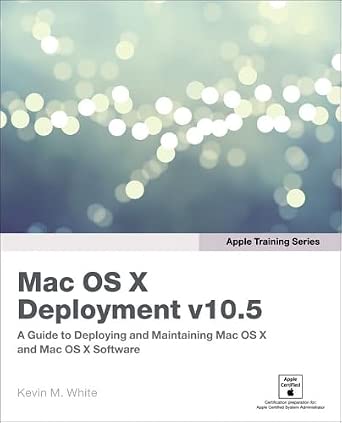 | Best for Leopard-Era Deployment Reference | Format: Deployment resource | Operating system: Mac OS X Leopard 10.5 | Intended audience: IT professionals | VIEW ON AMAZON | See Our Full Breakdown |
| mac pro for enterprise it deployment | Format | Primary limitation | Support coverage | Operating system |
|---|---|---|---|---|
| Enterprise Mac Administrator’s | Administrator reference book | Technical, dense material; currency should be verified | Troubleshooting | — |
| Enterprise Mac Administrators | Guide, as indicated by title | Insufficient product information for a detailed assessment | — | — |
| Mac OS X Deployment v10.6 | Deployment guide | Older OS-specific guidance may not apply to current deployments | Troubleshooting tips | Mac OS X Snow Leopard 10.6 |
| Mac OS X Deployment v10.5 | Deployment resource | Legacy OS focus and unclear feature scope | — | Mac OS X Leopard 10.5 |
More Details on Our Top Picks
Enterprise Mac Administrator’s Guide
This is the strongest fit in the group for an IT professional seeking a broad foundation in enterprise macOS administration. Its description explicitly covers deployment, security policies, scripting, and troubleshooting, and it emphasizes practical instructions and real-world examples. That combination gives it a wider operational scope than either version-specific deployment title: the 10.5 and 10.6 books concentrate on rollout tasks for a particular historical operating system, while this guide is positioned as a reference across several administrator responsibilities.
That breadth is useful when the work extends beyond imaging or installation. A fleet administrator may need to connect deployment choices with security rules, automation, and support procedures; a reference covering those areas can help organize that work. The listed scripts and step-by-step guidance also suggest a more applied resource than a purely conceptual overview. Compared with the other broadly named title, Enterprise Mac Administrators Guide, this listing offers a much clearer account of what the reader gets.
The main caveat is that the description’s claim of information on recent macOS releases does not identify specific versions or establish present-day currency. I would check the edition and publication details against the team’s current systems before relying on its instructions. Its technical language and dense treatment also make it a less comfortable starting point than a beginner-oriented guide. For a current deployment project, pair it with up-to-date Apple and management-platform documentation rather than treating it as the sole authority.
Pros:- Covers several enterprise administration areas rather than deployment alone.
- Includes practical instructions and scripts, according to the supplied description.
- Written for professional administrators and informed by real-world examples.
- Its stated subject range is broader than the 10.5 and 10.6 deployment guides.
Cons:- Dense technical material may be difficult for beginners to use as a first resource.
- The supplied information does not identify exact macOS versions or prove current compatibility.
Best for: Mac administrators who want one substantial reference spanning enterprise deployment, policies, scripts, and troubleshooting.
Not ideal for: Newcomers seeking a light introduction, or teams that need confirmed instructions for a specific current macOS release without checking the edition.
- Format:Administrator reference book
- Primary audience:Professional Mac and IT administrators
- Deployment coverage:Enterprise macOS deployment
- Security coverage:Security policies
- Automation coverage:Scripting and practical examples
- Support coverage:Troubleshooting
- Version information:Recent macOS releases are claimed; exact versions are not supplied
- Primary limitation:Technical, dense material; currency should be verified
Our verdict“I rank this first for its broadest stated enterprise coverage, while recommending a currency check before applying its guidance to a live fleet.”
Enterprise Mac Administrators Guide
The title suggests a general enterprise Mac administration resource, which could make this a useful companion to the more fully described Enterprise Mac Administrator’s Guide. But a title alone cannot tell me whether it covers current macOS management, security, deployment workflows, or scripting. Unlike the first-ranked guide, this listing arrives without a description, specs, pros, or cons. That makes its apparent breadth impossible to verify.
For a buyer choosing from this particular lineup, the distinction is less about confirmed functionality and more about information confidence. The first guide has a stated topic list and practical examples; this entry has only a name. It could appeal to someone comparing editions or searching for a supplementary reference, but the listing does not establish that it contains different or newer material. I would confirm the author, publication date, edition, table of contents, and intended operating-system versions before deciding it adds value.
That missing detail keeps it below the 10.6 guide in practical transparency, even though the latter is old. At least the 10.6 title identifies its subject and describes its coverage of planning, installation, configuration, and troubleshooting. This listing might prove more relevant, but there is not enough supplied evidence to make that case responsibly. I would not buy it as the primary manual for a current enterprise rollout without verifying its contents first.
Pros:- Its title indicates an enterprise Mac administration focus.
- Could be worth checking as a companion reference if edition details are available.
- May suit buyers able to inspect its contents before purchase.
Cons:- No description or specifications are supplied to confirm what it covers.
- The available listing does not establish publication date or macOS version relevance.
- Its practical value cannot be compared confidently with the better-documented broad reference.
Best for: A buyer who can verify the edition and contents and wants to compare an additional enterprise Mac administration reference.
Not ideal for: IT teams that need clearly documented topics, known macOS version coverage, or a dependable primary guide for an active deployment.
- Format:Guide, as indicated by title
- Stated audience:Enterprise Mac administrators, inferred from title
- Description:Not supplied
- Operating-system versions:Not specified
- Deployment topics:Not specified
- Security topics:Not specified
- Technical requirements:Not supplied
- Primary limitation:Insufficient product information for a detailed assessment
Our verdict“I would shortlist this only after confirming its edition and table of contents, since the listing alone cannot support a confident recommendation.”
Mac OS X Deployment v10.6
This guide earns a place for its clearly described, step-by-step approach to deploying Mac OS X Snow Leopard (10.6) across an organization. The listed sequence—planning, installation, configuration, and troubleshooting—gives it a defined purpose and makes it more transparent than the listing with no description. For an organization preserving a historical system, researching older Mac deployment practices, or supporting a legacy estate, that specificity may be more useful than a broad reference that does not focus on one release.
Compared with the Mac OS X Deployment v10.5 title, this is the later of the two legacy-specific choices and its supplied description spells out more of the deployment process. That makes its role easier to judge, but it does not make the material current. Snow Leopard-era guidance predates today’s Apple hardware and management patterns by many generations. A modern enterprise team should not assume its instructions map to current macOS, Apple silicon, or present-day device-management services.
I would choose it for historical or legacy learning, not as the central playbook for a new fleet. The stated troubleshooting coverage is a plus for readers working through older deployments, while the narrow OS focus is a serious limit for present procurement and rollout planning. Relative to the first-ranked administration guide, this one trades broad subject coverage for a more explicit, release-bound deployment sequence.
Pros:- Describes a clear rollout sequence from planning through troubleshooting.
- Its specific Snow Leopard focus makes the intended use easy to identify.
- Offers more explicit process detail than the listing for the 10.5 title.
Cons:- Limited to Mac OS X 10.6, an old operating-system release.
- May not translate to current hardware, macOS, or enterprise management workflows.
Best for: Administrators maintaining Snow Leopard-era systems or readers studying older organization-wide Mac deployment workflows.
Not ideal for: Teams deploying current Macs or seeking instructions for modern macOS releases and management services.
- Format:Deployment guide
- Operating system:Mac OS X Snow Leopard 10.6
- Intended setting:Organization-wide deployment
- Planning coverage:Deployment planning
- Installation coverage:Step-by-step installation guidance
- Configuration coverage:System configuration
- Support coverage:Troubleshooting tips
- Primary limitation:Older OS-specific guidance may not apply to current deployments
Our verdict“I recommend it for legacy Snow Leopard work and historical study, not for planning a present-day Mac Pro deployment.”
Mac OS X Deployment v10.5
Mac OS X Deployment v10.5 is the most narrowly historical option in this set: its stated purpose is to help IT professionals deploy and manage Mac OS X Leopard across multiple systems. That focus may serve an organization documenting an old environment or a reader examining how enterprise Mac rollouts were handled in that era. It is not a substitute for a current deployment tool, and the supplied information does not describe a detailed topic list or specific workflows.
Compared with the 10.6 guide, this title has less documented detail. The Snow Leopard guide names planning, installation, configuration, and troubleshooting; the 10.5 listing says it facilitates deployment but gives limited information about features. Buyers who need a clearly outlined process have a stronger basis for choosing the 10.6 book. Compared with the broad Enterprise Mac Administrator’s Guide, this one also appears much narrower, with no stated coverage of security policies, scripting, or wider troubleshooting topics.
The key drawback is not only age but also limited listing detail. Technical expertise is said to be required, yet the supplied description does not explain what deployment methods or administrative tasks the book addresses. I would consider it only when Leopard itself is the subject of the work. For any current enterprise purchase decision, the version restriction makes it a poor fit, regardless of its historical interest.
Pros:- Its enterprise deployment purpose is stated clearly.
- Targets multi-system administration rather than a single-user setup.
- May provide historical context for Leopard-era fleet workflows.
Cons:- Focused on Mac OS X Leopard, an old release.
- The listing supplies limited information about its features and methods.
- Requires technical expertise and does not establish current-system relevance.
Best for: IT professionals researching, documenting, or supporting a legacy Mac OS X Leopard environment.
Not ideal for: Organizations rolling out current Mac Pro systems or buyers who need well-documented, modern deployment procedures.
- Format:Deployment resource
- Operating system:Mac OS X Leopard 10.5
- Intended audience:IT professionals
- Deployment scope:Multiple systems
- Enterprise use:Described for enterprise IT management
- Feature detail:Limited information supplied
- Skill level:Technical expertise required
- Primary limitation:Legacy OS focus and unclear feature scope
Our verdict“I would choose this only for Leopard-era work, since its limited detail and old OS focus make it the weakest fit for current enterprise deployments.”

How We Picked
I ranked these four options by how directly the supplied information supports an enterprise IT buyer’s real decision: whether a resource can help plan, deploy, secure, or troubleshoot a Mac fleet. I gave the strongest position to the title with the clearest mix of enterprise administration topics and practical guidance. I placed the version-specific deployment books lower because their stated subjects are Mac OS X Leopard and Snow Leopard, releases far removed from current fleet planning.
I also considered the reliability of the available product information. A title with no description, pros, cons, or specs cannot fairly be treated as equivalent to a described reference, even if its name sounds relevant. I call out that uncertainty rather than filling in missing details. This ranking does not claim that any book is current, compatible with present-day management tools, or suitable as a substitute for vendor documentation. The list contains educational resources, not Mac Pro computers; buyers should confirm edition, publication details, and coverage before purchasing.
| mac pro for enterprise it deployment | Format | Support coverage | Primary limitation | Operating system |
|---|---|---|---|---|
| Enterprise Mac Administrator’s | Administrator reference book | Troubleshooting | Technical, dense material; currency should be verified | — |
| Enterprise Mac Administrators | Guide, as indicated by title | — | Insufficient product information for a detailed assessment | — |
| Mac OS X Deployment v10.6 | Deployment guide | Troubleshooting tips | Older OS-specific guidance may not apply to current deployments | Mac OS X Snow Leopard 10.6 |
| Mac OS X Deployment v10.5 | Deployment resource | — | Legacy OS focus and unclear feature scope | Mac OS X Leopard 10.5 |
Factors to Consider When Choosing Mac Pro For Enterprise It Deployments
Before selecting from these titles, I would separate the need for an enterprise reference from the need for a current deployment solution. The books listed here can support learning, documentation, or legacy work, but none is identified as Mac Pro hardware or as a modern fleet-management platform.
Match the resource to the operating-system era
The version-specific titles are useful only when their historical scope matches the work. Mac OS X Deployment v10.5 addresses Leopard, while Mac OS X Deployment v10.6 addresses Snow Leopard. That distinction matters for legacy maintenance and historical research, but neither title should be treated as a guide to current macOS workflows. The broadly titled administrator guides may reach wider topics, but check publication and edition details before applying their guidance to today’s fleet.
Choose breadth or a defined rollout sequence
The first-ranked Enterprise Mac Administrator’s Guide is the clearest choice for readers seeking a mix of deployment, security policies, scripting, and troubleshooting. By contrast, the 10.6 guide has a more clearly defined rollout path, but confines that process to an older OS. I would pick breadth for general administrator learning and a release-specific guide only when the organization has a matching legacy requirement. The other enterprise-titled guide needs verification before its role can be judged.
Check what the listing does not confirm
For enterprise work, missing details can change whether a book is useful. Confirm the author, edition, publication date, table of contents, and exact macOS versions covered. For Mac Pro deployment, also check whether your real need is hardware selection, device enrollment, configuration management, security compliance, or scripted setup. These listings do not establish support for current Mac Pro hardware or contemporary management services, so I would not infer that coverage from an enterprise-oriented title.
Use books alongside current operational documentation
A reference can help explain concepts and provide structured learning, but a production deployment needs current instructions for the hardware, operating system, identity setup, security controls, and management platform in use. Treat the older titles as historical resources and the broader administrator guide as a possible learning reference whose currency must be checked. For a live rollout, verify each procedure against current official and platform-specific documentation before applying it across a fleet.
Frequently Asked Questions
Are these Mac Pro computers or deployment software?
No. The four products are books or guides about Mac administration and deployment. None is a Mac Pro workstation, and the supplied information does not identify a current deployment software platform. Buyers looking for hardware or management tools should build a separate shortlist around their required configuration and operational environment.
Which option is the strongest general enterprise reference?
The Enterprise Mac Administrator’s Guide is the strongest general reference based on the information supplied. Its description covers deployment, security policies, scripting, and troubleshooting, while the other clearly described books focus on older operating-system releases. I would still check its publication details and exact version coverage before using it for current production procedures.
Can the 10.5 or 10.6 deployment guide help with current Mac deployments?
These titles focus on Leopard and Snow Leopard, respectively, so I would not rely on them as current deployment manuals. They may help with legacy systems, historical research, or understanding older rollout practices. Current hardware and management workflows require current documentation, verified against the systems and tools an organization actually uses.
What should I verify about Enterprise Mac Administrators Guide?
The listing supplies no description or specs, so I would confirm the author, edition, publication date, table of contents, and operating-system versions before buying. I would also check whether its content differs from the more fully described Enterprise Mac Administrator’s Guide. Without those details, its enterprise-focused title is not enough to establish its usefulness for a particular deployment.
Which title should a beginner choose?
None is clearly presented as a beginner’s guide. The broad administrator reference is described as technical and dense, and the 10.5 listing says technical expertise is required. A beginner should verify the reading level and contents before choosing, then pair any book with current introductory documentation rather than treating a legacy deployment manual as a current learning path.
Conclusion
For a working administrator who wants the broadest stated coverage, I would start with Enterprise Mac Administrator’s Guide, after checking its edition and macOS relevance. For an organization maintaining Snow Leopard systems, Mac OS X Deployment v10.6 has the clearest legacy rollout outline; Leopard-specific work points to the 10.5 title, though its listing offers less detail. I would consider Enterprise Mac Administrators Guide only after verifying its contents. If your goal is to buy a Mac Pro or plan a current enterprise deployment, none of these products is the complete answer: choose the hardware and management resources separately, and rely on current documentation for production procedures.
Halloween Picks
halloween
As an affiliate, we earn on qualifying purchases.