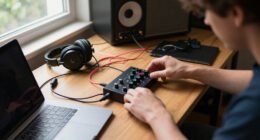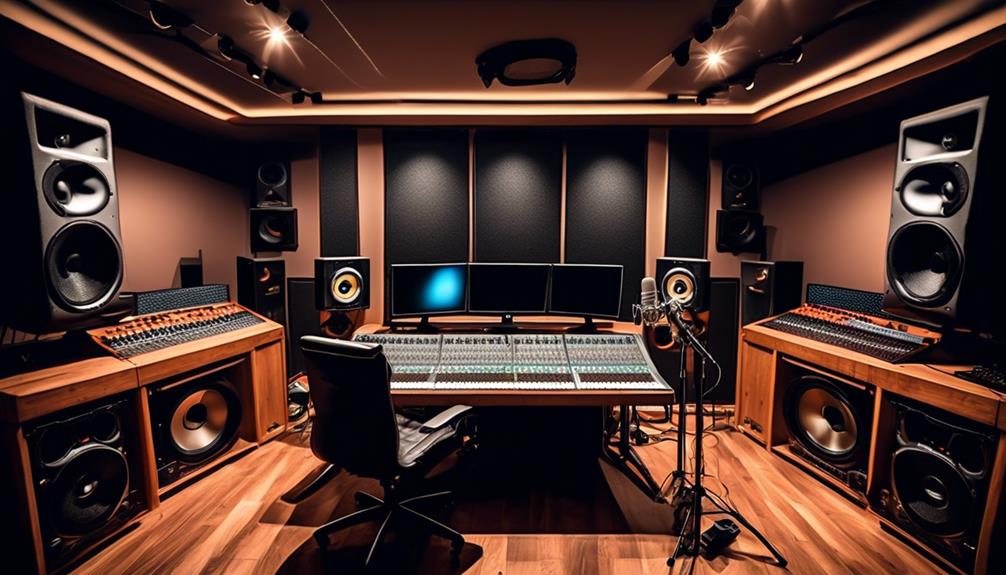
Multi track recorders let you capture separate sources and shape a mix without relying on a computer for every step. My best overall pick is the Zoom R20, whose 16-track workflow suits projects that may grow beyond a simple demo; the Zoom R12 is a more portable music-focused alternative, while the Zoom PodTrak P8 is built for podcast sessions with several guests. The main tradeoffs are track count versus portability, music production features versus podcast controls, and standalone recording versus mixer or interface duties. A field recorder such as the Zoom F3 solves a different problem from a tabletop multitracker, so the right choice depends on how and where you record. Continue reading for the full breakdown and buying advice.

Get audio and creator gear delivered free with Prime
- Fast, free delivery on millions of items
- Prime Video, Amazon Music and more included
- Member-only deals all year
Complete the kit

Key Takeaways
- The Zoom R20 is the broadest music-production pick: its 16-track capacity leaves more room for layered arrangements than the portable R12 and R4.
- Portable music recording favors the R12 or R4: both combine recording tools with effects and rhythm features, while the R4 adds 32-bit-float recording and stereo bouncing in a smaller two-input workflow.
- Podcast-focused controls matter more than music track counts: the PodTrak P8 offers six XLR inputs and sound pads, while the P4 is a smaller interview setup with four headphone outputs and remote-call connections.
- The F3 and H4 Essential fill different field-recording roles: the F3 is a focused two-XLR 32-bit-float recorder, while the H4 Essential is a handheld option for broader musician, podcast, and film use.
- Several models are specialized rather than universal: the LiveTrak L-8 and L6 emphasize mixer-and-recorder workflows, while the BR-80 and BR-600 represent compact, self-contained multitrack approaches.


| multi track recorder | Inputs | Connectivity | Weight |
|---|---|---|---|
| Zoom R8 Multi-Track Recorder | 2 XLR combo inputs | — | — |
| Zoom PodTrak P8 Podcast Record | 6 XLR | — | — |
| Zoom R4 Multi-Track Recorder f | 2 XLR/TRS combo inputs | — | 9.6 ounces |
| Roland BR-80 Portable Digital | — | USB and 3.5mm headphone jack | 16 ounces |
| Zoom F3 Professional Field Rec | 2 XLR | — | — |
| Boss BR-600 Digital Multitrack | — | USB | — |
| Zoom PodTrak P4 Podcast Record | — | — | — |
| Zoom R20 Multi Track Tabletop | 6 XLR and 2 combo XLR/TRS | USB | 4.3 pounds |
| Zoom H4 Essential Handheld Rec | 2 XLR/TRS | USB-C | — |
| Zoom LiveTrak L-8 Recorder/Mix | — | USB | 1500 g |
| Zoom R12 Portable Recorder for | 2 XLR/TRS combo inputs | USB-C, XLR, USB | 16 ounces |
| Zoom LiveTrak L6 Mixer/Recorde | — | USB | 1.4 pounds |
More Details on Our Top Picks
Zoom R8 Multi-Track Recorder, Interface, Controller with 8 Tracks and Built-In Microphones
The R8 is the most balanced choice here for musicians who want a conventional multitrack workflow rather than a recorder built around podcasting or field capture. Its eight simultaneous inputs give it more room for a band or layered session than the two-input R4 and F3, while 16-track playback leaves space to build arrangements beyond the live input count. Built-in stereo microphones also make it possible to capture a quick idea without connecting external mics. The tradeoff is that recording is limited to 16/24-bit, 44.1 kHz WAV, without the R4 or F3’s 32-bit float format. Storage tops out at 32GB SDHC, so buyers planning long or frequent sessions should account for card management. I’d choose it for flexible studio-style work, not for the R4’s lighter, longer-running portable setup.
Pros:- Records up to eight tracks simultaneously, more live inputs than the R4 or F3
- Provides 16 playback tracks for layered arrangements
- Built-in stereo condenser microphones support quick recording without an external mic
- Records WAV audio at 16- or 24-bit and 44.1 kHz
Cons:- Simultaneous recording is limited to eight tracks
- SDHC storage support tops out at 32GB
- Does not offer the 32-bit float recording listed for the R4 and F3
Best for: Songwriters and small bands who want to record several sources at once and arrange up to 16 playback tracks in a self-contained recorder.
Not ideal for: Field recordists who prioritize 32-bit float capture, or musicians who need more than eight simultaneous inputs or higher-capacity storage.
- Tracks:16-track playback; 8-track simultaneous recording
- Inputs:2 XLR combo inputs
- Storage:SDHC cards up to 32GB
- Recording format:16/24-bit, 44.1 kHz WAV
- Built-in microphones:Stereo condenser microphones
- Functions:Recorder, audio interface, and controller
Our verdict“Choose the R8 if you want a flexible multitrack hub with more simultaneous inputs than the compact two-input recorders.”
Zoom PodTrak P8 Podcast Recorder with 6 XLR Inputs and Sound Pads
The PodTrak P8 earns its place by treating a podcast as a multitrack production, not just a collection of microphone inputs. It records and mixes up to 13 tracks simultaneously, offers six XLR inputs and six headphone outputs, and adds sound pads plus onboard editing. That gives a host more direct control of guests, playback, and monitoring than the musician-focused R8. Phone-call and remote-guest support also suits interview shows that would need extra routing work on a general-purpose recorder. The compromise is focus: this control set is tailored to podcast workflows, so a songwriter wanting conventional track-based music recording may prefer the R8 or R4. Its 4.3-inch touchscreen helps manage the many functions, but the feature set may take time to learn, and four AA batteries provide only about two hours of operation.
Pros:- Records and mixes up to 13 tracks simultaneously
- Six XLR inputs and six headphone outputs support multi-person sessions
- Sound pads, onboard editing, and phone or remote-guest recording are built in
- 4.3-inch color touchscreen provides direct control of session functions
Cons:- Podcast-oriented controls are less suited to conventional music multitracking
- Battery operation lasts about two hours with four AA batteries
- Advanced features can make the unit a steeper start for new users
Best for: Podcast hosts and small production teams recording multiple in-person voices, remote guests, and sound cues in one session.
Not ideal for: Musicians seeking a straightforward song multitracker, or mobile crews needing more than about two hours of AA-powered operation.
- Simultaneous tracks:Up to 13
- Inputs:6 XLR
- Headphone outputs:6
- Display:4.3-inch color LCD touchscreen
- Sound pads:36 clips across 4 banks
- USB interface:13-in/2-out
- Battery power:4 AA batteries; up to 2 hours
Our verdict“Pick the PodTrak P8 for a multi-voice podcast studio that needs guest routing and playback controls in one recorder.”
Zoom R4 Multi-Track Recorder for Musicians with 2 XLR/TRS Combo Inputs, 32-Bit Float, Stereo Bouncing, Built-In Microphone, Effects, Rhythms, Battery Powered, USB Audio Interface
The R4 is the songwriting pick for musicians who value portability and quick idea capture over a large input count. Its 32-bit float recording gives more headroom for changing performance levels, while the built-in microphone, effects, and more than 80 rhythm patterns make it useful before a full recording setup is available. At 9.6 ounces, it is much easier to carry than the R8, and its roughly 14-hour battery life is a practical advantage over the PodTrak P8’s short AA-powered runtime. The tradeoff is just two simultaneous XLR/TRS inputs, so it cannot capture a full band in one pass like the R8 can handle with more sources. The small display also makes detailed editing less comfortable; this is best as a portable sketchpad and focused recorder, not a large-session command center.
Pros:- 32-bit float recording accommodates wide changes in performance level
- Built-in microphone, effects, and over 80 rhythm patterns support self-contained songwriting
- Light 9.6-ounce design with about 14 hours of battery life
- Works as a USB audio interface and can run on USB-C power
Cons:- Only two XLR/TRS inputs allow two-source simultaneous recording
- Small display can make detailed editing awkward
- SD card storage is required for extended recording
Best for: Traveling songwriters and solo performers who want to capture vocals or instruments, build ideas with rhythms, and record without a large setup.
Not ideal for: Bands needing several microphones recorded at once, or producers who want a large screen for detailed editing and session control.
- Inputs:2 XLR/TRS combo inputs
- Recording format:WAV, 32-bit float
- Built-in microphone:Yes
- Effects:Yes
- Rhythms:Over 80 patterns
- Storage:SD cards up to 1TB
- Power and battery life:4 AA batteries or USB-C; approximately 14 hours
- Weight:9.6 ounces
Our verdict“Choose the R4 for portable songwriting and two-source recording, rather than the R8 if you need more live inputs.”
Roland BR-80 Portable Digital Recorder
The BR-80 is the most practice-oriented option in this group. Its three modes—multitrack recording, eBand backing tracks, and live recording—let a musician move between building a part and playing along with existing material without carrying a larger setup. Stereo condenser microphones provide a simple way to capture rehearsals or musical ideas, while effects add useful onboard shaping. Compared with the Zoom R4, the BR-80 offers a dedicated backing-track mode, but the R4 is the stronger fit for buyers who want 32-bit float recording, two combo inputs, and a much longer stated battery life. The BR-80’s 2-inch screen limits how comfortably users can manage detailed sessions, and its storage is capped at 32GB. I’d treat it as a compact practice and capture tool rather than a high-capacity production hub.
Pros:- Three modes cover multitrack work, backing-track practice, and live recording
- Built-in stereo condenser microphones capture quick musical ideas
- Effects support basic onboard sound shaping
- Portable 16-ounce design with up to 12 hours of stated recording time
Cons:- 2-inch screen is restrictive for detailed navigation
- Memory capacity is limited to 32GB
- Does not list the 32-bit float recording available on the Zoom R4
Best for: Musicians who want a pocketable practice companion for backing tracks, quick rehearsal recordings, and simple multitrack work.
Not ideal for: Producers building long, complex sessions or mobile users who need high-capacity storage and a larger, easier-to-read display.
- Modes:MTR, eBand, and Live Recorder
- Memory capacity:32GB
- Built-in microphone:Stereo condenser
- Recording time:Up to 12 hours
- Battery:1 AAA battery required
- Display:2 inches
- Connectivity:USB and 3.5mm headphone jack
- Weight:16 ounces
Our verdict“Pick the BR-80 if backing-track practice and quick portable captures matter more than extensive editing or large-session capacity.”
Zoom F3 Professional Field Recorder with 2 XLR Inputs and 32-Bit Float Recording
The F3 is the specialist choice here: a compact two-input recorder for clean location capture, rather than a self-contained music multitracker. Its 32-bit float WAV recording and low-noise preamps suit unpredictable sound levels, while dual XLR inputs provide secure connections for external microphones. That makes it a better fit than the R4 when the priority is a microphone-focused field rig, but the R4 is more accommodating for songwriting thanks to its built-in microphone, effects, and rhythm patterns. The F3’s stated storage support reaches 512GB, and its small 8.48-ounce body is easy to add to a kit. The cost of that focus is limited input count and fewer built-in creative tools; buyers wanting several live tracks or onboard music arrangement should look to the R8 instead.
Pros:- 32-bit float WAV recording supports a wide range of incoming levels
- Two XLR inputs suit external microphone-based field rigs
- Low-noise preamps are intended for clear capture in demanding environments
- Compact 8.48-ounce body and support for up to 512GB of storage
Cons:- Two inputs limit simultaneous capture compared with the R8 and PodTrak P8
- Focused on microphone recording rather than onboard multitrack arrangement
- Small 2-inch screen offers limited space for monitoring and control
Best for: Filmmakers, location sound recordists, and musicians capturing two microphone sources who need compact, high-headroom recording.
Not ideal for: Bands needing multiple simultaneous tracks or songwriters who want built-in microphones, rhythms, and effects for arranging.
- Inputs:2 XLR
- Recording format:WAV, 32-bit float
- Preamps:Ultra-low-noise
- Storage:MicroSD; listed capacity up to 512GB
- Headphone jack:3.5mm
- Display:2 inches
- Power:2 AA batteries required
- Weight and dimensions:8.48 ounces; 3.04 x 2.95 x 1.88 inches
Our verdict“Choose the F3 for compact two-microphone field recording, not for a recorder that needs to build full multitrack music arrangements.”
Boss BR-600 Digital Multitrack Recorder
The BR-600 is a compact, battery-powered choice for musicians who want to build a song without bringing a computer or separate mic. Its eight playback tracks, built-in stereo microphone, drum machine, and guitar and vocal effects support basic sketching and arrangement in one unit. Compared with the Zoom R20, it gives up track capacity and a touchscreen workflow, but is designed to be easier to carry for quick ideas away from a desk. That portability comes with limits: 128 MB of memory allows only 2 hours and 16 minutes of digital recording time, so longer sessions require careful file management. Its small display and need for four 9V batteries also make it less convenient than newer portable options. Choose it for simple mobile songwriting, not large sessions or detailed editing.
Pros:- Eight playback tracks support layered song sketches
- Built-in stereo microphone enables recording without an external mic
- Drum machine and guitar and vocal effects add useful creation tools in one device
- USB connectivity supports transferring recordings
Cons:- 128 MB memory limits recording time to 2 hours and 16 minutes
- Small 2.7-inch display offers less room for navigating and editing than the R20 touchscreen
- Requires four 9V batteries for portable operation
Best for: Songwriters who want a battery-powered recorder with a built-in stereo mic, rhythm backing, and effects for capturing arrangements away from a computer
Not ideal for: Musicians recording long sessions or managing many tracks who need generous storage, a modern editing interface, or fewer batteries to carry
- Playback tracks:8
- Memory storage:128 MB
- Digital recording time:2 hours and 16 minutes
- Built-in microphone:Stereo
- Effects:Guitar and vocal effects; pitch corrector
- Power:4 x 9V batteries
- Display:2.7 inches
- Connectivity:USB
- Headphone jack:3.5 mm
Our verdict“Pick the BR-600 for portable, self-contained songwriting, but choose the Zoom R20 if you need more tracks and a larger editing interface.”
Zoom PodTrak P4 Podcast Recorder with 4 XLR Mic Inputs, 4 Headphone Outputs, Phone & USB Input for Remote Interviews, Sound Pads, 2-In/2-Out USB Audio Interface, Battery Powered
The PodTrak P4 earns its place by focusing on conversation rather than general-purpose music production. Four XLR inputs with phantom power let a small panel use suitable microphones, while four headphone outputs with individual volume control make it easier for guests to monitor without sharing a feed. Phone and USB inputs, plus automatic mix-minus, address remote interviews directly; the BR-600, by contrast, is better suited to songwriting with onboard rhythms and instrument effects. Sound pads add a way to trigger cues during a show. The tradeoff is a narrower role: its WAV recording and podcast-oriented controls do not make it a substitute for the Zoom R20 when arranging multitrack music. It runs on two AA batteries for up to 3.5 hours, and the supplied information lists no built-in storage, so plan around external storage or a computer.
Pros:- Four XLR inputs with phantom power accommodate compatible microphones
- Four headphone outputs provide individual volume control
- Phone and USB inputs with automatic mix-minus support remote interviews
- Portable design runs on two AA batteries
Cons:- Battery life is listed as up to 3.5 hours
- No built-in storage is specified, requiring external storage or a computer
- Podcast-focused workflow is less suited to music arrangement than the Zoom R20
Best for: Podcast hosts recording up to four in-person microphone sources alongside phone or USB remote guests, especially when each guest needs a separate headphone level
Not ideal for: Musicians seeking a flexible song-production recorder, or traveling podcasters who need longer battery sessions without a power plan
- Microphone inputs:4 XLR with phantom power
- Headphone outputs:4
- Input types:Phone and USB
- Recording modes:Multi-track, sound pads, automatic mix-minus
- Battery:2 AA batteries
- Battery life:Up to 3.5 hours
- Supported format:WAV
- USB connectivity:USB 2.0
- Screen:2 inches
Our verdict“Choose the PodTrak P4 for portable, multi-person podcasts and remote interviews, not for broad music-production duties.”
Zoom R20 Multi Track Tabletop Recorder with Touchscreen and 16 Tracks
For musicians who want to record and shape a full arrangement without relying on a computer, the R20 is the most production-oriented choice in this group. Its 16 tracks and six XLR plus two combo inputs give a band more room to capture sources than the Boss BR-600, while the touchscreen brings recording, editing, and mixing into a larger visual workspace. Built-in effects, drum loops, and an onboard synth add ways to develop parts on the unit; USB also lets it connect to a computer when needed. The tradeoff is portability: at 4.3 pounds and 15 inches wide, it is a tabletop machine rather than a pocket recorder. Its 44.1 kHz sample rate may also be limiting for buyers whose workflow calls for higher rates, and its editing tools are not a full replacement for a DAW.
Pros:- Sixteen tracks provide more arrangement capacity than the BR-600
- Six XLR and two combo inputs accommodate multiple recording sources
- Touchscreen supports on-device recording, editing, and mixing
- Built-in effects, drum loops, synth, and USB connection widen its production uses
Cons:- 44.1 kHz sample rate may not fit workflows requiring higher rates
- 15-inch width and 4.3-pound weight make it less convenient to carry
- Onboard editing is less advanced than a dedicated DAW
Best for: Solo producers and small bands who need multiple inputs, 16 tracks, and onboard arrangement tools for computer-free recording at a fixed workspace
Not ideal for: Traveling musicians who prioritize a compact battery-powered recorder, or producers who need sample rates above 44.1 kHz and advanced DAW editing
- Tracks:16
- Inputs:6 XLR and 2 combo XLR/TRS
- Sample rate:44.1 kHz
- Dimensions:8 x 15 x 2 inches
- Weight:4.3 pounds
- Connectivity:USB
- Computer compatibility:Windows and macOS
- Warranty:1 year
Our verdict“The R20 is the strongest fit here for building larger music arrangements on a tabletop, provided portability and higher sample rates are not priorities.”
Zoom H4 Essential Handheld Recorder for Musicians, Podcasters & Filmmakers
The H4 Essential makes the most sense when a recorder needs to capture sound quickly in the field, rather than manage a large arrangement. Its built-in stereo microphones are ready for ambient audio, while two XLR/TRS inputs let a musician, podcaster, or filmmaker add external sources. USB-C supports computer recording and streaming, and SD-card backup adds a second copy of recordings according to the product description. That makes it a more adaptable handheld capture tool than the BR-600 for location work, though its four-track limit is far below the R20’s 16 tracks. Spoken menu guidance may help with operation, but users new to audio gear may still find the controls unfamiliar. Choose it for portable recording flexibility; skip it if you need a mixer-style setup or extensive track layering.
Pros:- Built-in stereo microphones allow immediate location recording
- Two XLR/TRS inputs support external microphones and instruments
- USB-C supports recording and streaming connections
- SD-card backup adds another recording destination
Cons:- Four-track capacity can constrain layered music sessions compared with the R20
- Audio-equipment controls may take time for beginners to learn
- Handheld format is less suited to managing several performers and headphone feeds
Best for: Musicians, podcasters, and filmmakers who need a handheld recorder with built-in microphones, two external inputs, and SD-card recording for location work
Not ideal for: Bands or producers who need more than four tracks at once, or beginners looking for a simple tabletop mixer workflow
- Tracks:4
- Built-in microphones:Stereo
- Inputs:2 XLR/TRS
- Connectivity:USB-C
- Storage:SD card
- Recording and streaming:USB connection
Our verdict“Choose the H4 Essential for flexible handheld capture on location, but select the R20 for substantially larger multitrack music sessions.”
Zoom LiveTrak L-8 Recorder/Mixer for Musicians & Podcasters
The LiveTrak L-8 is the lineup’s clearest fit for buyers who need a mixer and recorder working together, rather than a handheld device or a track-first tabletop workstation. It provides eight channels, onboard effects, and the ability to record to an SD card and computer at the same time, giving live performers and podcasters a practical capture-and-streaming setup. Multiple headphone outputs with independent mixes also help participants hear a useful monitor balance. Compared with the PodTrak P4, the L-8 is aimed at a broader blend of music and podcast work; the P4 is more specifically equipped for remote interviews with phone and USB inputs and automatic mix-minus. The L-8’s eight-channel ceiling can restrict larger groups, and portable use depends on batteries. Its onboard effects may also be basic for users expecting extensive processing.
Pros:- Records simultaneously to SD card and computer
- Multiple headphone outputs provide independent mixes
- Eight channels suit compact live and podcast setups
- Battery-powered portability supports recording away from a fixed studio
Cons:- Eight channels may not accommodate larger ensembles
- Portable operation requires batteries
- Onboard effects may be too limited for users who want extensive processing
Best for: Small bands and podcast teams that want hands-on mixing, independent headphone mixes, and simultaneous SD-card and computer recording
Not ideal for: Large ensembles needing more than eight channels, or interview-focused podcasters who want the P4’s phone and USB remote-interview features
- Channels:8
- Connectivity:USB
- Power source:Battery powered
- Output connectors:XLR and TRS
- Audio recording:Simultaneous SD-card and computer recording
- Frequency:20 Hz
- Noise level:54 dB
- Dimensions:11.1 x 10.55 x 2.91 inches
- Weight:1500 g
Our verdict“Pick the LiveTrak L-8 for compact live mixing with dual-destination recording, while the PodTrak P4 is the more targeted option for remote interviews.”
Zoom R12 Portable Recorder for Musicians with 8 Tracks, FX & Drum Loops
The R12 is a self-contained songwriting workspace for musicians who want to record away from a computer. Its color touchscreen, onboard editing, effects, and 150 drum loops make it easier to build an arrangement on the unit than on a simpler recorder such as the Zoom R4. Two combo inputs, phantom power, and Hi-Z support accommodate microphones and direct-instrument recording, while USB-C adds interface and control-surface duties at a desk.
The tradeoff is capacity: eight tracks can feel restrictive once a project grows, especially beside the Zoom R20 and its 16 tracks. Battery operation supports mobile sessions, but up to five hours may not cover a long recording day without a power plan. The touchscreen also offers more editing flexibility than a basic interface, with a learning curve to match.
Pros:- Battery-powered design supports recording away from a fixed studio.
- Touchscreen editing and effects allow basic production on the recorder.
- Phantom-powered combo inputs and Hi-Z support work with microphones and direct instruments.
- 150 drum loops and 18 FM synths provide built-in material for developing arrangements.
Cons:- Eight tracks can limit larger arrangements compared with the Zoom R20.
- Battery life is listed at up to five hours, which may not cover extended sessions.
- Advanced touchscreen editing features may take time to learn.
Best for: Songwriters and solo musicians who want battery-powered multitrack recording, built-in arrangement tools, and the option to connect to a computer later.
Not ideal for: Bands recording complex, many-microphone sessions or musicians who need more than eight tracks and longer untethered sessions.
- Tracks:8
- Inputs:2 XLR/TRS combo inputs
- Built-in drum loops:150
- MIDI instruments:18 FM synths
- Display:Full-color LCD touchscreen
- Power:4 AA batteries; up to 5 hours
- Connectivity:USB-C, XLR, USB
- Dimensions:12.44 x 6.5 x 2.76 inches
- Weight:16 ounces
Our verdict“Choose the R12 for portable songwriting with onboard creative tools, but pick the R20 if your projects need more tracks.”
Zoom LiveTrak L6 Mixer/Recorder for Musicians & Podcasters
The LiveTrak L6 suits musicians and podcasters who need a mixer and recorder in the same compact setup. Its 10 channels, onboard effects, sound pads, and MIDI give it a live-production focus that differs from the Zoom R12, which is geared more toward touchscreen editing and building songs on the unit. The L6 records to an SD card and can capture to a computer at the same time, a useful workflow for keeping a local recording while sending audio to a session.
32-bit float recording offers more room to handle changes in input level without the same clipping concerns as fixed-level recording. That flexibility does not replace sound checks or good gain practice, and the supplied details leave DAW compatibility less clear. Its mixer-first layout may also suit live routing better than detailed, track-by-track editing; buyers focused on hands-on song production may prefer the R12.
Pros:- Ten channels support a broader live setup than the R12’s two physical inputs.
- 32-bit float recording provides flexibility when input levels vary.
- Can record to an SD card and a computer at the same time.
- Battery power, onboard effects, MIDI, and sound pads support mobile production.
Cons:- The available product details do not specify compatibility across DAWs.
- A mixer-oriented workflow may be less convenient for detailed onboard track editing than the R12’s touchscreen approach.
- The listed specifications do not clarify the supported software-update process.
Best for: Musicians and podcasters who need a portable mixer for live sources, onboard effects, and simultaneous SD-card and computer recording.
Not ideal for: Songwriters seeking an editing-centered recorder with a touchscreen, or buyers who need confirmed compatibility with a particular DAW before purchase.
- Channels:10
- Recording format:32-bit float
- Audio inputs:XLR/TRS combo and TRS
- Recording media:SD cards up to 1TB
- Connectivity:USB
- Power:Battery powered
- Output connector:TRS
- Dimensions:4.49 x 8.78 x 1.83 inches
- Weight:1.4 pounds
Our verdict“Pick the LiveTrak L6 for portable live mixing and dual-destination recording; choose the R12 if touchscreen song editing matters more.”

How We Picked
I ranked these multi track recorders by how well their features serve distinct recording jobs: building music arrangements, recording podcasts with multiple speakers, capturing live sessions, or gathering sound away from a studio. I weighed usable inputs and track capacity alongside workflow clarity, portability, standalone functions, and the ability to serve as an audio interface or mixer. A larger track count only helps when the device also fits the way a buyer records and manages sessions.
The order favors versatility for common multitrack music work, which puts the R20 first, then gives portable music production and dedicated podcast recording strong placements for their clear strengths. Specialized field recorders and legacy-style portable recorders sit lower because they suit narrower workflows, not because they are poor at their intended jobs. I also treated role differences as a ranking factor: a podcast console should not be judged by the same priorities as a music recorder, and a field recorder is not a substitute for a full tabletop multitracker.
| multi track recorder | Connectivity |
|---|---|
| Zoom R8 Multi-Track Recorder | — |
| Zoom PodTrak P8 Podcast Record | — |
| Zoom R4 Multi-Track Recorder f | — |
| Roland BR-80 Portable Digital | USB and 3.5mm headphone jack |
| Zoom F3 Professional Field Rec | — |
| Boss BR-600 Digital Multitrack | USB |
| Zoom PodTrak P4 Podcast Record | — |
| Zoom R20 Multi Track Tabletop | USB |
| Zoom H4 Essential Handheld Rec | USB-C |
| Zoom LiveTrak L-8 Recorder/Mix | USB |
| Zoom R12 Portable Recorder for | USB-C, XLR, USB |
| Zoom LiveTrak L6 Mixer/Recorde | USB |
Factors to Consider When Choosing Multi Track Recorders
Before choosing a recorder, map your sessions rather than comparing feature lists in isolation. The right machine is the one that can handle your sources, monitoring, and editing habits without adding workarounds you will use every time.
Plan how projects leave the recorder
Standalone recording is convenient, but many projects eventually move to a computer for editing, mixing, or sharing. Check how the device transfers files, whether its USB interface role fits your software setup, and whether the session format suits your preferred workflow. If you expect to finish mixes on the recorder, prioritize editing and effects controls; if you will use a computer, dependable transfer and interface functions may matter more. Buyers sometimes focus on recording features and discover later that exporting or organizing sessions takes too many steps. Decide where the final mix will happen before choosing between an all-in-one approach and a capture-first device.
Frequently Asked Questions
Do I need an audio interface if my multitrack recorder has USB?
Not necessarily, but USB functions vary by device. Some recorders can act as an audio interface, letting you connect to recording software, while others may support a more limited computer workflow. Check how many input and output channels the device sends over USB and whether that matches your intended sessions. A recorder that only transfers files may still work well if you prefer to record on hardware and mix later. Confirm the computer and software connection details before treating a USB port as proof that it can replace a dedicated interface.
Conclusion
For one recorder that covers layered music projects and leaves room to expand, I recommend the Zoom R20 as best overall. The Zoom R12 is my best value-style pick for portable music making with effects and drum loops, while the R4 is best for beginners who want a compact two-input path into multitrack recording. For a more capable music-production setup, choose the R20 as the best premium option in this lineup. Podcasters should match guest count to the PodTrak P4 or P8; buyers focused on location capture should look at the F3, and those wanting a mixer-recorder workflow should compare the LiveTrak L-8 and L6. The best choice comes down to the sources you record at once and whether you want to build, mix, or simply capture the session.