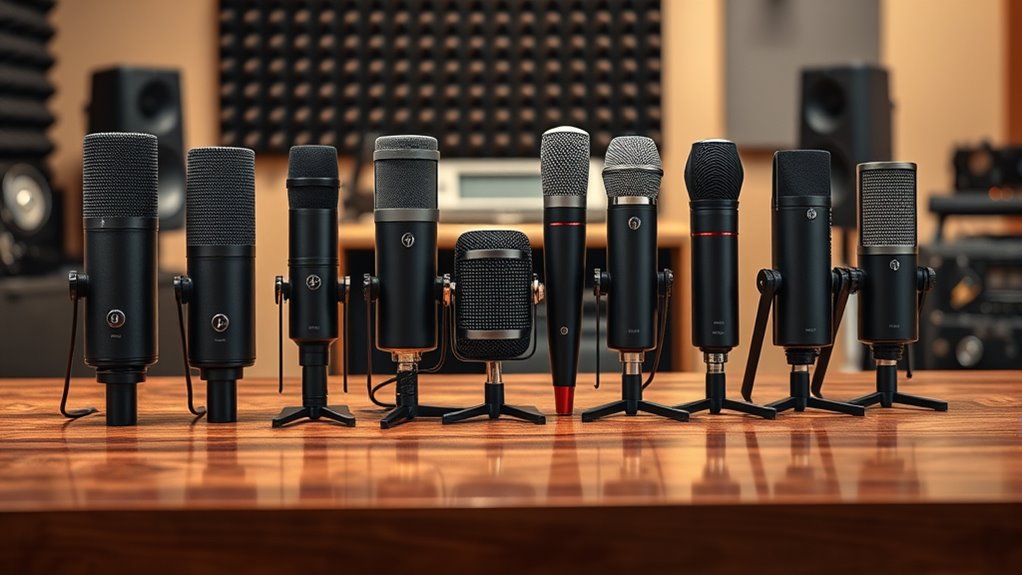

Professional microphones range from rugged stage mics to studio condensers and wireless systems, so the best choice depends on where and how you record. I’d name the Shure SM58-LC best overall for its straightforward, dependable approach to live vocals, while the Shure SM7B stands out for controlled studio and broadcast setups and the Phenyx Pro PTU-5000-4H for multi-mic wireless use. The main tradeoffs are wired simplicity versus wireless flexibility, dynamic durability versus condenser detail, and easy connections versus more demanding audio gear. A microphone that suits a stage may not be the best fit for a treated studio or a computer desk. Read on for the full breakdown and help matching each option to your setup.

Get audio and creator gear delivered free with Prime
- Fast, free delivery on millions of items
- Prime Video, Amazon Music and more included
- Member-only deals all year
Complete the kit


Key Takeaways
- The Shure SM58-LC is the most adaptable wired vocal choice here, while the SM58S adds a body-mounted switch for users who want direct mute control.
- The Shure SM7B prioritizes studio control over plug-and-play convenience; buyers should check their preamp and connection needs before choosing it.
- The RØDE NT1 Signature Series offers a different studio approach from the dynamic Shure models, making room sound and recording technique bigger parts of the decision.
- Wireless systems solve a different problem than handheld wired mics: the Phenyx Pro PTU-5000-4H supports four handheld transmitters, while the PTU-71-2H and JBL system serve two-mic setups.
- The Blue Yeti is the most computer-oriented option, while the E 835 and e 935 are wired stage-focused alternatives that require an appropriate audio connection.
| Phenyx Pro PTU-5000-4H 4-Channel UHF Wireless Microphone System |  | Best for Four-Person Wireless Vocals | Model: PTU-5000-4H | Channels: 4 | Wireless frequencies: 541.9 MHz, 546.3 MHz, 561.6 MHz, 568.65 MHz | VIEW ON AMAZON | See Our Full Breakdown |
| Sennheiser E 835 Dynamic Cardioid Vocal Microphone |  | Best for Consistent Live Vocals | Model: E 835 | Microphone type: Dynamic handheld | Polar pattern: Cardioid (unidirectional) | VIEW ON AMAZON | See Our Full Breakdown |
| Shure SM58-LC Cardioid Dynamic Vocal Microphone |  | Best for Rugged, Versatile Vocal Work | Microphone type: Dynamic | Polar pattern: Cardioid (unidirectional) | Connectivity: XLR | VIEW ON AMAZON | See Our Full Breakdown |
| Logitech Blue Yeti USB Condenser Microphone, Blackout | 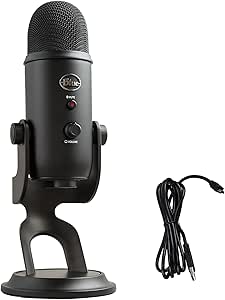 | Best for Desktop Recording Flexibility | Connectivity: USB | Microphone design: Tri-capsule array | Pickup patterns: Cardioid, omnidirectional, bidirectional, stereo | VIEW ON AMAZON | See Our Full Breakdown |
| JBL Wireless Two-Microphone System with Dual-Channel Receiver |  | Best for JBL PartyBox Karaoke | Channels: 2 | Connectivity: USB, wireless | Frequency range: 65–15,000 Hz | VIEW ON AMAZON | See Our Full Breakdown |
| Shure SM58S XLR Dynamic Vocal Microphone with On/Off Switch |  | Best for Stage Muting | Microphone type: Dynamic | Polar pattern: Cardioid (unidirectional) | Connection: Wired XLR | VIEW ON AMAZON | See Our Full Breakdown |
| Shure SM7B Dynamic Vocal Microphone |  | Best for Broadcast and Voice Work | Microphone type: Dynamic | Polar pattern: Unidirectional (cardioid) | Connection: XLR | VIEW ON AMAZON | See Our Full Breakdown |
| RØDE NT1 Signature Series Studio Condenser Microphone, Black |  | Best for Detailed Studio Recording | Capsule: HF6 1-inch true condenser | Polar pattern: Cardioid (unidirectional) | Connection: XLR | VIEW ON AMAZON | See Our Full Breakdown |
| Phenyx Pro PTU-71-2H Dual UHF Wireless Handheld Microphone System |  | Best for Two-Person Wireless Events | System channels: 2 | Selectable frequencies: 100 per channel | Channel 1 frequency range: 536.57–561.32 MHz | VIEW ON AMAZON | See Our Full Breakdown |
| Sennheiser e 935 Cardioid Dynamic Vocal Microphone |  | Best for Vocals That Need to Cut Through | Model: e 935 | Microphone type: Dynamic | Polar pattern: Cardioid (unidirectional) | VIEW ON AMAZON | See Our Full Breakdown |
| professional microphone | Polar pattern | Microphone type | Weight |
|---|---|---|---|
| Phenyx Pro PTU-5000-4H 4-Chann | — | Handheld dynamic, cardioid | — |
| Sennheiser E 835 Dynamic Cardi | Cardioid (unidirectional) | Dynamic handheld | 11.6 ounces |
| Shure SM58-LC Cardioid Dynamic | Cardioid (unidirectional) | Dynamic | — |
| Logitech Blue Yeti USB Condens | — | — | — |
| JBL Wireless Two-Microphone Sy | Unidirectional | — | — |
| Shure SM58S XLR Dynamic Vocal | Cardioid (unidirectional) | Dynamic | 10.5 ounces |
| Shure SM7B Dynamic Vocal Micro | Unidirectional (cardioid) | Dynamic | 2.7 pounds |
| RØDE NT1 Signature Series Stud | Cardioid (unidirectional) | — | 313 g |
| Phenyx Pro PTU-71-2H Dual UHF | Cardioid (unidirectional) | Handheld dynamic | — |
| Sennheiser e 935 Cardioid Dyna | Cardioid (unidirectional) | Dynamic | 355 g |
More Details on Our Top Picks
Phenyx Pro PTU-5000-4H 4-Channel UHF Wireless Microphone System
For events that need four simultaneous handheld microphones, this Phenyx Pro set is a more direct fit than the two-mic JBL Wireless Two-Microphone System. Its receiver provides four individual XLR outputs plus a 6.35 mm jack, so a mixer or compatible PA can handle voices separately rather than as a single blended source. The stated range of up to 260 feet offers room to move around a larger venue, while the metal receiver and individual volume controls suit a basic live setup. The tradeoff is that this is a system, not a complete sound rig: an amplifier or speaker is required. Its fixed frequencies also provide less flexibility than a setup designed for frequency changes, particularly when multiple wireless systems operate nearby.
Pros:- Four microphones and channels support group vocals or multiple presenters.
- Four XLR outputs allow separate connections to compatible audio equipment.
- Stated wireless range reaches up to 260 feet.
- Individual volume controls and an LCD display make receiver adjustments accessible.
Cons:- Requires an amplifier or speaker for sound output.
- Fixed frequencies limit flexibility when coordinating multiple wireless systems.
- Included AA batteries provide up to eight hours of operation, so longer events may need spare batteries.
Best for: Event hosts, presenters, and small performance groups who need four wireless handheld mics and already have a mixer, amplifier, or PA system.
Not ideal for: Buyers seeking a standalone microphone or users who need to coordinate several wireless systems with flexible frequency selection.
- Model:PTU-5000-4H
- Channels:4
- Wireless frequencies:541.9 MHz, 546.3 MHz, 561.6 MHz, 568.65 MHz
- Range:Up to 260 ft
- Microphone type:Handheld dynamic, cardioid
- Outputs:4 XLR outputs; 6.35 mm jack
- Power:8 included AA batteries; up to 8 hours of operation
- Construction:Metal receiver
- Sound output requirement:Amplifier or speaker required
Our verdict“Choose this system for four-person wireless coverage when you have a compatible PA or mixer and can work with its fixed frequencies.”
Sennheiser E 835 Dynamic Cardioid Vocal Microphone
The Sennheiser E 835 is a strong choice for a singer who wants a corded, stage-ready dynamic microphone with a forgiving vocal pickup. Its cardioid pattern helps reduce feedback, and the description notes consistent response when a performer shifts slightly off axis. That makes it a more straightforward live-vocal option than the Logitech Blue Yeti, whose multiple patterns and USB controls are aimed more at desk recording than a conventional XLR stage chain. Metal construction and internal damping address the knocks and handling noise common in live use. The tradeoff is simple but significant: it is not wireless, and it needs compatible XLR equipment. The Shure SM58-LC is another established cardioid dynamic alternative; buyers choosing between them should weigh their preferred handling and vocal response rather than expecting USB convenience.
Pros:- Cardioid pickup helps limit feedback and unwanted sound from other directions.
- Consistent response on and off axis accommodates natural movement while performing.
- Metal enclosure and internal damping support demanding live use.
- Includes an MZQ 800 clip and carrying pouch.
Cons:- Corded XLR connection requires compatible audio equipment and limits movement.
- Does not provide USB connectivity or onboard recording controls.
Best for: Vocalists and presenters who need a durable handheld XLR microphone for live sound and want consistent pickup as they move.
Not ideal for: Streamers or home-recording beginners who want direct USB connection, built-in desktop controls, or a wireless setup.
- Model:E 835
- Microphone type:Dynamic handheld
- Polar pattern:Cardioid (unidirectional)
- Connector:3-pin XLR-M
- Frequency response:Up to 16 kHz (as listed)
- Enclosure material:Metal
- Weight:11.6 ounces
- Included accessories:MZQ 800 clip and carrying pouch
- Warranty:10-year manufacturer warranty
Our verdict“Pick the E 835 for dependable wired stage vocals; choose a USB mic such as the Blue Yeti if direct computer recording matters more.”
Shure SM58-LC Cardioid Dynamic Vocal Microphone
The Shure SM58-LC earns its place through a practical mix of cardioid vocal focus, built-in pop protection, and a rugged metal body. Its integrated filter helps soften plosives and breath noise without adding a separate accessory, which is useful for live vocals and close-miked speech. Compared with the Sennheiser E 835, the SM58-LC is also presented for a wider range of jobs, including podcasting, streaming, recording, and broadcast; both are wired dynamic cardioid mics, so the choice is less about connectivity than workflow and preferred vocal character. This model still needs an XLR connection and compatible audio gear, unlike the USB Blue Yeti. The supplied data lists a 19-pound weight, an unusually high figure for a handheld microphone, so I would treat that specification cautiously rather than use it to judge portability.
Pros:- Cardioid pattern helps reduce background pickup and feedback.
- Integrated pop filter helps limit plosives, breath, and wind noise.
- Rugged metal construction suits demanding performance settings.
- Designed for vocals across live performance, podcasting, streaming, and broadcast.
Cons:- Requires an XLR connection and compatible audio equipment.
- The listed 19-pound weight appears questionable and makes the spec less useful for portability comparisons.
- A single handheld dynamic mic does not provide the multiple pickup patterns or onboard controls of the Blue Yeti.
Best for: Performers and speech creators who want one durable XLR dynamic mic for live vocals and close-miked recording tasks.
Not ideal for: Buyers who need USB plug-and-play operation, wireless mobility, or dependable weight information before selecting a handheld mic.
- Microphone type:Dynamic
- Polar pattern:Cardioid (unidirectional)
- Connectivity:XLR
- Form factor:Handheld
- Frequency response:50 Hz–15 kHz
- Channels:1
- Enclosure material:Metal
- Dimensions:10.31 × 4.92 × 3.31 inches
- Listed weight:19 pounds
Our verdict“Choose the SM58-LC for a rugged, XLR vocal workhorse, but opt for the Blue Yeti if you need direct USB recording and pattern choices.”
Logitech Blue Yeti USB Condenser Microphone, Blackout
The Blue Yeti stands apart from the handheld XLR microphones here because it connects directly to a Mac or PC over USB and offers four pickup patterns. Cardioid suits a solo streamer, while omnidirectional, bidirectional, and stereo modes let the same desk mic serve interviews or broader recordings. Its onboard mute, gain, and headphone-volume controls, plus no-latency monitoring, put useful adjustments within reach without an external mixer. Compared with the Sennheiser E 835 and Shure SM58-LC, it is easier to place in a computer-centered workflow, but it is a desktop condenser rather than a rugged handheld stage mic. The adjustable stand is convenient, though the corded USB connection ties it to the computer, and Blue VO!CE effects require Logitech G HUB rather than working as a built-in feature.
Pros:- Four pickup patterns accommodate solo speech, interviews, and stereo recording.
- USB connection supports plug-and-play use with Mac or PC.
- Onboard mute, gain, and headphone-volume controls simplify desk recording.
- No-latency monitoring and an adjustable desktop stand are included.
Cons:- Corded USB connection limits placement and depends on a nearby computer.
- Blue VO!CE effects require Logitech G HUB.
- Desktop design is less suited to conventional live-stage use than the E 835 or SM58-LC.
Best for: Podcasters, streamers, and home creators who record at a computer and want multiple pickup patterns with accessible controls.
Not ideal for: Touring vocalists or users who need a handheld XLR microphone, wireless movement, or a setup that avoids computer software for effects.
- Connectivity:USB
- Microphone design:Tri-capsule array
- Pickup patterns:Cardioid, omnidirectional, bidirectional, stereo
- Frequency response:20 Hz–20 kHz
- Channels:2
- Impedance:16 ohms
- Color:Blackout
- Power source:Corded electric
- Software requirement:Logitech G HUB required for Blue VO!CE effects
Our verdict“Choose the Blue Yeti for flexible computer-based recording, not as a substitute for a handheld XLR stage microphone.”
JBL Wireless Two-Microphone System with Dual-Channel Receiver
This JBL set is aimed at a specific use: adding two wireless voices to select JBL PartyBox speakers with minimal setup. The dual-channel receiver handles both microphones, and plug-and-play operation avoids the separate mixer and receiver configuration associated with the four-channel Phenyx Pro PTU-5000-4H. That makes the JBL a simpler match for karaoke or casual announcements, but it is much less adaptable as a general professional wireless system. Compatibility is limited to select PartyBox speakers, and the supplied information does not describe the multi-output routing offered by the Phenyx receiver. Playback lasts up to six hours, while the microphones depend on replaceable AA batteries. Buyers who need broad PA or mixer compatibility should look at the Phenyx system instead; those with a supported PartyBox get the more convenient pairing here.
Pros:- Includes two wireless microphones and a dual-channel receiver.
- Plug-and-play setup suits straightforward karaoke and announcements.
- Receiver provides up to six hours of playback.
- Rechargeable receiver and USB-C charging cable are included.
Cons:- Compatible only with select JBL PartyBox speakers.
- Microphones require replaceable AA batteries.
- Offers two channels, fewer than the four-channel Phenyx Pro PTU-5000-4H.
Best for: Owners of compatible JBL PartyBox speakers who need two wireless microphones for karaoke, announcements, or small gatherings.
Not ideal for: Performers seeking a wireless system for a broad range of PA speakers, mixers, or professional multi-mic routing.
- Channels:2
- Connectivity:USB, wireless
- Frequency range:65–15,000 Hz
- Polar pattern:Unidirectional
- Microphone batteries:Replaceable AA batteries
- Receiver battery:Lithium polymer
- Playback time:Up to 6 hours
- Compatible devices:Select JBL PartyBox speakers
- Included items:USB-C cable, wireless receiver, 2 wireless microphones, quick start guide, safety sheet, warranty card
Our verdict“Choose this JBL set for a supported PartyBox and simple two-mic use; choose the Phenyx system for more channels and broader stated connections.”
Shure SM58S XLR Dynamic Vocal Microphone with On/Off Switch
The SM58S brings the familiar, stage-focused approach of the SM58-LC, with one practical difference: its on/off switch lets a singer or presenter mute the mic at the handle. Its cardioid dynamic capsule and built-in filtering help limit off-axis sound, plosives, and handling noise, while the metal body suits regular rehearsal and performance use. Compared with the Sennheiser e 935, this Shure adds direct manual muting but does not list the e 935’s high-output design or 10-year warranty. The tradeoff is a wired XLR connection, so it needs compatible audio gear and does not offer the freedom of the Phenyx Pro wireless system. Choose it for straightforward vocal work where a physical mute matters; skip it if you need wireless movement or a studio condenser’s detail.
Pros:- Cardioid pickup helps reduce sound from the sides and rear.
- On/off switch offers quick, local muting.
- Built-in filtering helps manage plosives and handling noise.
- Metal construction is suited to regular stage and rehearsal use.
Cons:- Requires a wired XLR connection and compatible audio equipment.
- The switch adds a control that can be accidentally moved during handling.
- Does not provide the wireless range or two-microphone setup of the Phenyx Pro PTU-71-2H.
Best for: Vocalists, presenters, and rehearsal leaders who want a durable XLR handheld with a physical mute switch.
Not ideal for: Performers who need wireless mobility, or recording buyers who want a large-diaphragm condenser for detailed studio capture.
- Microphone type:Dynamic
- Polar pattern:Cardioid (unidirectional)
- Connection:Wired XLR
- Frequency range:50 Hz–15 kHz
- Impedance:150 ohms
- Special feature:On/off switch
- Enclosure:Metal
- Weight:10.5 ounces
Our verdict“Choose the SM58S for rugged wired vocals when a built-in mute is useful; choose a wireless system for greater stage movement.”
Shure SM7B Dynamic Vocal Microphone
The Shure SM7B is the most studio-oriented dynamic option here, built for close-miked podcasting, broadcasting, streaming, and vocal recording. Its cardioid pattern, shock isolation, pop filtering, and electromagnetic shielding target common recording distractions, while the warm vocal character suits speech-forward production. Compared with the live-ready SM58S, the SM7B is a larger studio mic without a handheld switch, but it adds integrated pop control and a frequency response extending to 20 kHz. That setup calls for an interface or mixer with XLR and at least 60 dB of gain; buyers with a modest preamp may need additional gain equipment. It does not require phantom power. Pick it for a treated or controlled recording position, not for a performer who needs a light handheld mic or wireless mobility.
Pros:- Warm vocal presentation suits speech and close-miked recording.
- Shock isolation and cardioid pickup help reduce unwanted room and handling sound.
- Built-in pop filtering and detachable windscreen help control plosives and breath noise.
- Electromagnetic shielding and a metal enclosure support studio use.
Cons:- Requires an XLR interface or mixer.
- At least 60 dB of gain is recommended, which may call for a capable preamp or added gain equipment.
- Its 2.7-pound, studio-oriented form is less suited to handheld stage use than the SM58S.
Best for: Podcasters, broadcasters, and streamers with an XLR interface or mixer capable of providing at least 60 dB of gain.
Not ideal for: Mobile performers and entry-level recording setups whose preamps cannot supply the recommended gain.
- Microphone type:Dynamic
- Polar pattern:Unidirectional (cardioid)
- Connection:XLR
- Frequency response:50–20,000 Hz
- Recommended gain:At least 60 dB
- Phantom power:Not required
- Impedance:150 ohms
- Weight:2.7 pounds
Our verdict“Choose the SM7B for controlled speech and vocal recording if your XLR setup can supply the recommended gain.”
RØDE NT1 Signature Series Studio Condenser Microphone, Black
The RØDE NT1 Signature is the lineup’s clearest fit for studio buyers who want a condenser for vocals and instruments rather than a dynamic handheld for stage work. Its 1-inch HF6 capsule and 4 dB self-noise support quiet, detailed recording, while the included shock mount, pop filter, XLR cable, and dust cover give buyers a useful starting set. Against the dynamic Shure SM7B, the NT1 is supplied with more mounting and cable accessories and lists exceptionally low self-noise; the SM7B instead avoids phantom power and is built around dynamic vocal recording. The NT1 still needs an audio interface and an appropriate condenser-mic power setup. Its cardioid pattern is also less suited to capturing a room or multiple performers at once. Choose it for controlled voice, instrument, or streaming sessions, not wireless performance.
Pros:- 4 dB self-noise supports quiet source recording.
- HF6 1-inch condenser capsule suits vocals and instruments.
- Package includes an SM6 shock mount with pop filter, a 6 m XLR cable, and a dust cover.
- High SPL handling supports recording loud sources.
Cons:- Requires an audio interface and a suitable condenser-mic power setup.
- Wired XLR use limits mobility compared with the Phenyx Pro PTU-71-2H wireless system.
- Cardioid pickup is less suited to group or room recording than a microphone designed for broader coverage.
Best for: Home-studio musicians, voiceover artists, and streamers who want a low-self-noise XLR condenser with key recording accessories included.
Not ideal for: Stage performers who need a handheld or wireless mic, and buyers without an interface and suitable condenser-mic power.
- Capsule:HF6 1-inch true condenser
- Polar pattern:Cardioid (unidirectional)
- Connection:XLR
- Self-noise:4 dB
- Signal-to-noise ratio:78 dB
- Weight:313 g
- Enclosure:Metal
- Included accessories:SM6 shock mount with pop filter, 6 m XLR cable, dust cover
Our verdict“Choose the NT1 Signature for detailed, quiet studio capture when you have an interface and want useful mounting accessories in the package.”
Phenyx Pro PTU-71-2H Dual UHF Wireless Handheld Microphone System
For an event host sharing a stage with a second speaker, the Phenyx Pro PTU-71-2H offers something the wired SM58S and Sennheiser e 935 do not: two handheld microphones and a dual-channel receiver in one system. Auto scan, selectable UHF frequencies, and IR synchronization help users set up the channels, while the stated line-of-sight range reaches up to 328 feet. That reach is a system specification, not a promise of the same coverage through walls or in every venue. Compared with the wired vocal mics, it adds mobility and simultaneous use but also brings a receiver, antennas, and battery management into the setup. The microphones use AA batteries, and professional buyers should plan around local frequency conditions and their sound system’s inputs. It makes the most sense for presentations, DJs, and events needing two wireless voices, not a single-mic studio setup.
Pros:- Two handheld microphones and a dual-channel receiver support simultaneous use.
- Auto scan and selectable UHF frequencies aid channel setup.
- Stated line-of-sight operating range reaches up to 328 feet.
- Metal construction and replaceable microphone heads support event use.
Cons:- Both microphones require AA batteries.
- The stated maximum range is for line-of-sight operation and may not reflect obstructed venues.
- Receiver, antennas, and frequency setup add equipment and coordination compared with a wired XLR mic.
Best for: Event hosts, DJs, and organizations that need two handheld wireless microphones for speakers or performers on the same system.
Not ideal for: Studio vocalists seeking a single high-detail recording mic, or buyers who want to avoid batteries and receiver setup.
- System channels:2
- Selectable frequencies:100 per channel
- Channel 1 frequency range:536.57–561.32 MHz
- Channel 2 frequency range:562.37–587.12 MHz
- Maximum operating range:328 ft line of sight
- Microphone type:Handheld dynamic
- Polar pattern:Cardioid (unidirectional)
- Power and battery life:AA batteries; up to 16 hours
Our verdict“Choose the PTU-71-2H when two speakers need wireless movement and you can manage receiver setup, batteries, and venue conditions.”
Sennheiser e 935 Cardioid Dynamic Vocal Microphone
The Sennheiser e 935 is aimed at live singers who need a wired vocal mic with strong output to help a voice hold its place in a busy mix. Its cardioid pickup, shock-mounted capsule, and hum-compensating coil address stage spill, handling vibration, and electrical hum, while the all-metal casing is suited to repeated performance use. Compared with the Shure SM58S, the e 935 emphasizes output and stage-noise control rather than a built-in on/off switch; the SM58S is the more direct choice if a physical mute is part of the job. The e 935 remains a wired XLR microphone, so it offers no wireless freedom and needs compatible audio equipment. Its included clamp and pouch are useful for transport, but this microphone is less compelling for a buyer whose main goal is a studio condenser or two-person wireless setup.
Pros:- High output is designed to help vocals stand out in a mix.
- Cardioid pattern helps limit pickup from other stage sources.
- Shock-mounted capsule and hum-compensating coil address stage vibration and interference.
- Metal casing and included clamp and pouch suit regular transport and performance.
Cons:- Wired XLR connection limits movement compared with the Phenyx Pro wireless system.
- No on/off switch is specified, unlike the Shure SM58S.
- Requires compatible audio equipment and is not a complete wireless or recording setup.
Best for: Live vocalists who use an XLR stage rig and want a dynamic mic designed to help vocals cut through a mix.
Not ideal for: Performers who need wireless mobility or a built-in mute, and studio buyers looking for a condenser microphone.
- Model:e 935
- Microphone type:Dynamic
- Polar pattern:Cardioid (unidirectional)
- Connection:Wired XLR
- Signal-to-noise ratio:72 dB
- Special features:100% metal casing, hum-compensating coil, shock-mounted capsule
- Weight:355 g
- Included items:MZQ 800 microphone clamp, pouch, user manual
Our verdict“Choose the e 935 for wired live vocals that need to cut through a mix, and choose the SM58S if a built-in mute matters more.”

How We Picked
I compared these professional microphones by the job they are designed to do rather than treating every model as a direct substitute. The main criteria were vocal capture and pickup pattern, connection and equipment requirements, ease of setup, handling and stage practicality, and suitability for live sound, studio recording, streaming, or multi-person use. I also considered how much flexibility each product offers when a buyer’s needs change, and what tradeoffs come with that flexibility.
The ranking puts versatility and a clear use case first, then weighs convenience against the equipment and setup demands. That favors a broadly useful wired vocal mic near the top, while specialized studio models and multi-channel wireless systems rank for the buyers who need their particular strengths. The Blue Yeti remains relevant for direct computer use, but it is not ranked as a replacement for a stage or XLR studio microphone. These positions reflect product fit, not a claim that one microphone is best for every voice or room.
| professional microphone | Microphone type | Polar pattern |
|---|---|---|
| Phenyx Pro PTU-5000-4H 4-Chann | Handheld dynamic, cardioid | — |
| Sennheiser E 835 Dynamic Cardi | Dynamic handheld | Cardioid (unidirectional) |
| Shure SM58-LC Cardioid Dynamic | Dynamic | Cardioid (unidirectional) |
| Logitech Blue Yeti USB Condens | — | — |
| JBL Wireless Two-Microphone Sy | — | Unidirectional |
| Shure SM58S XLR Dynamic Vocal | Dynamic | Cardioid (unidirectional) |
| Shure SM7B Dynamic Vocal Micro | Dynamic | Unidirectional (cardioid) |
| RØDE NT1 Signature Series Stud | — | Cardioid (unidirectional) |
| Phenyx Pro PTU-71-2H Dual UHF | Handheld dynamic | Cardioid (unidirectional) |
| Sennheiser e 935 Cardioid Dyna | Dynamic | Cardioid (unidirectional) |
Factors to Consider When Choosing Professional Microphones
Before choosing among these microphones, I’d start with the complete recording or performance setup, not the microphone name alone. These picks include USB, XLR, and wireless options, each of which changes what else you need and how you can work.
Match the connection to your existing equipment
A microphone only helps if it can connect cleanly to the gear you already own. A USB model such as the Blue Yeti is aimed at direct computer use, while XLR microphones usually need an audio interface, mixer, or suitable preamp. Wireless systems add a receiver and require you to plan for channel connections at the mixer. A common mistake is choosing by sound category alone and discovering that the rest of the setup cannot accept the microphone’s output. Before buying, map the signal path from microphone to computer, speaker system, or recorder. Spending on a higher-end mic may not improve results if the interface or gain staging is the limiting factor.
Choose dynamic or condenser for the room and performance
Dynamic and condenser designs respond differently to their surroundings, so room conditions matter as much as the source. Dynamic vocal microphones are often a practical fit for stage use and less-controlled spaces, where close technique and rejection of surrounding sound are useful. Condensers can suit detailed studio work, but they may capture more room reflections and background noise than a buyer expects. A frequent misstep is buying a sensitive mic to solve a poor-room problem; it can reveal the room more clearly rather than make it sound treated. Consider distance from the mic, nearby fans or traffic, and whether you can control reflections. Paying more for studio detail makes sense when the recording environment can support it.
Decide how many people need to speak or sing at once
For a solo performer, a single wired mic keeps the setup simple and avoids coordinating radio channels. A wireless system becomes more useful when presenters or singers need to move freely, but the receiver, batteries, and radio environment become part of the job. Two-mic and four-mic systems are not interchangeable: count simultaneous users, then check how many receiver outputs your mixer or sound system can handle. Buyers sometimes focus on the number of handheld microphones and overlook the receiver’s connection needs. Also plan for battery changes and a backup microphone at events where a missed moment matters. Choose the smallest system that covers the real number of simultaneous users rather than paying in complexity for unused channels.
Think about feedback, mic technique, and stage conditions
Live performance quality depends on placement and technique as well as microphone design. Cardioid pickup helps focus on the singer or speaker, but it does not make a loud stage immune to feedback. Monitor placement, speaker volume, mic distance, and how the performer moves all affect usable gain. A handheld mic with a switch can be convenient for muting between turns, though a switch may also be bumped or left off when a performer is moving quickly. For shared events, a simple, durable wired mic can be easier to manage than a wireless setup with more components. If several people will handle the mic, prioritize a repeatable setup and clear operating instructions.
Budget for the full signal chain and practical accessories
The microphone is only one part of a usable recording or performance setup. XLR models may call for a cable, stand, interface or mixer, and sometimes a pop filter or windscreen depending on the application. Wireless options add receivers and battery planning, while a computer-centered USB setup may still benefit from a stable stand and a way to reduce desk noise. A common buying error is putting the entire budget into the mic and leaving no room for the gear that makes it function well. Check what is included and what you already own before comparing models. It can make sense to spend more on the microphone when the rest of the chain is ready; otherwise, a balanced system is usually the more useful purchase.
Prioritize portability or studio control based on your workflow
A microphone that stays in one treated recording space can be selected for sound and compatibility, while a mic taken between venues needs to survive transport and quick setup. Wired handheld models reduce receiver and battery logistics, whereas wireless systems trade extra preparation for freedom of movement. Studio broadcast microphones can also require more careful placement and gain setup than a desk-friendly USB model. Buyers often underestimate how much setup time matters for interviews, classrooms, and events with frequent speaker changes. Think about who will connect, position, and troubleshoot the equipment when you are not there. Choose for the least controlled part of your workflow, not only the best-case recording session.
Frequently Asked Questions
Can I use an XLR professional microphone directly with my computer?
Usually, an XLR microphone needs an audio interface or mixer between it and a computer. That device converts the signal and gives you the right input and gain controls. Some dynamic microphones may need more gain than a basic interface provides, so check the interface specifications before choosing a studio model. A USB microphone such as the Blue Yeti is the more direct route if you do not want extra hardware. Choose XLR when you want to build a flexible recording chain, not just because the connector seems more professional.
Should I choose the Shure SM58-LC or the SM58S?
Both are wired dynamic vocal microphones from the SM58 family, so the main practical distinction is the SM58S on/off switch. That switch can help when a performer or presenter needs to mute the mic without reaching for a mixer. The SM58-LC avoids that extra control and may suit setups where the engineer handles muting or where a simple body is preferred. A switch is not a substitute for a proper mute procedure, especially in a fast-moving live setting. Pick based on who controls the signal and how often the mic needs to be muted.
Is a wireless microphone system a better choice for live events?
Wireless is better when performers need to move around or when a cable would restrict the event, but it is not automatically the better live option. You must manage the receiver, batteries, radio conditions, and channel setup, and the system still needs to connect to the venue’s mixer or sound system. A wired microphone is often simpler for a fixed position or a small setup. For multiple simultaneous speakers, compare the number of transmitters and receiver outputs with the actual event plan. If reliability and quick troubleshooting matter more than movement, wired may be the safer fit.
Will the Shure SM7B work well in an untreated room?
The SM7B is a dynamic studio microphone, but its microphone type alone cannot correct room echo or background noise. Its close-use approach can help keep the voice prominent, yet placement, vocal technique, and the recording space still shape the result. Check that your interface or preamp can supply enough clean gain for your voice and working distance. If the room is noisy or reflective, improving the recording position or treating the nearby surfaces may matter more than switching microphones. Buyers seeking a quick, direct computer setup may find a USB option easier to operate.
What should I buy for a two-person podcast or interview?
Start by deciding whether both people need to speak at the same time and whether they will sit at a fixed desk or move around. A two-mic wireless system supports movement, while two wired XLR microphones can offer a straightforward fixed-seat arrangement if your interface or mixer has enough inputs. The Blue Yeti is a computer-oriented option, but a single microphone’s pickup pattern and placement may not suit two speakers equally well. Check the number of inputs, how each voice will be recorded, and whether you need separate tracks for editing. For interviews in changing locations, simplicity and a backup recording plan can matter more than adding extra microphone features.
Conclusion
For a broadly useful wired vocal microphone, I’d start with the Shure SM58-LC as the best overall pick; the SM58S is the better fit when a built-in switch matters. The best value for a simple stage setup is the Sennheiser E 835, while the best premium studio choice for buyers ready to build around it is the Shure SM7B. For beginners who want a direct computer connection, the Blue Yeti is the most approachable starting point in this lineup. Choose the Phenyx Pro PTU-5000-4H for four wireless handhelds, the PTU-71-2H or JBL system for a two-mic wireless setup, and the RØDE NT1 Signature Series when a studio condenser suits your room and recording style. The Sennheiser e 935 is another strong wired stage option for buyers comparing higher-end vocal microphones. Match the mic to your room, connections, and number of users before choosing by reputation alone.