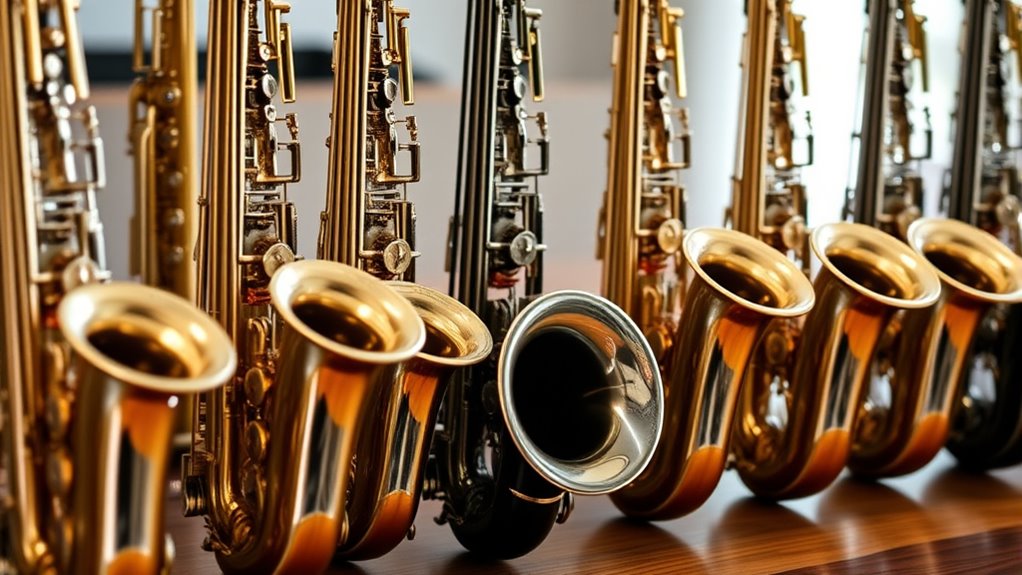
For most players seeking a first dependable alto saxophone, I’d start with the Yamaha YAS-280 for its student-focused design; the Yamaha YAS-62III is the standout for advancing players who want a professional-level instrument, while the Eastar TS-II gives tenor players a dedicated option. This lineup ranges from established Yamaha and Jean Paul models to budget-oriented beginner kits that bundle reeds, cases, and cleaning supplies. The main tradeoff is between a better-supported instrument that can serve for years and a lower-cost starter package with more accessories but less certainty about setup and long-term service. I’ll compare the nine options by instrument type, playing level, and practical ownership needs so you can find the saxophone that fits your next step.

Get audio and creator gear delivered free with Prime
- Fast, free delivery on millions of items
- Prime Video, Amazon Music and more included
- Member-only deals all year
Complete the kit


Key Takeaways
- The Yamaha YAS-280 leads for student alto players because it is purpose-built for learning, while the lower-cost kits compete more on included accessories than on established student-instrument positioning.
- The Yamaha YAS-62III is the clear premium choice for advancing alto players; its professional focus makes it a different investment from the student and beginner models, not simply a more accessorized starter sax.
- The Eastar TS-II is the only tenor saxophone in this lineup, so players who specifically want tenor should compare it with tenor instruments elsewhere rather than treating the alto models as substitutes.
- Most of the remaining picks are E-flat alto beginner kits, including Cadway, Glory, Eastar, and two generic starter listings; their included reeds and care items may reduce initial shopping, but do not establish playing quality by themselves.
- Jean Paul AS-400 occupies a useful middle ground for buyers seeking an alto from a named instrument brand without choosing either Yamaha’s student model or its professional YAS-62III.


| saxophone | Instrument key | Finish | Brand | Model |
|---|---|---|---|---|
| Cadway Gold Alto Saxophone in | E♭ | Polished | CADWAY | — |
| Eastar Tenor Saxophone Beginne | B♭ | Gold lacquer | — | TS-II |
| E Flat Alto Saxophone | E♭ | Gold lacquer | HOGSN | HS-A50 |
| Glory Gold Lacquer E-Flat Alto | E♭ | Polished gold lacquer | Glory | — |
| Yamaha YAS-280 Student Alto Sa | E♭ | Gold lacquer | Yamaha | YAS-280 |
| Yamaha YAS-62III Professional | E-flat | Gold lacquer | Yamaha | Yamaha YAS-62III Professional Alto Saxophone |
| Beginner Alto Saxophone | — | Gold lacquer | — | — |
| Eastar Alto Saxophone Beginner | E-flat | — | Eastar | — |
| Jean Paul AS-400 Alto Saxophon | E-flat | Lacquered | Jean Paul USA | AS-400 |
More Details on Our Top Picks
Cadway Gold Alto Saxophone in E♭ – Beginner Package with Case, Brush, Glove and Accessories
The Cadway is the most bundle-focused choice here: its E♭ alto format and included case, brush, neck strap, glove, and cleaning cloth give a new player several practical starting items in one package. Compared with the Yamaha YAS-280, it emphasizes included accessories rather than documented playability details such as auxiliary keys and a stable neck receiver. Its polished brass body also offers the familiar saxophone build and appearance, but the product information does not specify the mouthpiece quality or provide much warranty detail. That makes it harder to judge how confidently it will serve as a long-term school instrument. I’d shortlist it for a beginner prioritizing a ready-to-start kit, not for a buyer who values established setup details over bundle contents.
Pros:- Includes a canvas suitcase, neck strap, brush, glove, and wipe cloth.
- E♭ alto configuration suits common student and beginner use.
- Polished brass construction gives it a conventional saxophone finish.
Cons:- Mouthpiece quality is not specified, leaving an important part of the playing setup unclear.
- Warranty information is limited.
- The listing provides fewer playability details than the Yamaha YAS-280.
Best for: First-time alto saxophone buyers who want a case and basic cleaning and playing accessories included with an E♭ instrument.
Not ideal for: School-band students or parents who want clearly documented playability features, mouthpiece specifications, or warranty coverage.
- Brand:CADWAY
- Instrument key:E♭
- Material:Brass
- Finish:Polished
- Color:Gold
- Included case:Canvas suitcase
- Other included components:Brush, glove, cork plaster, wipe cloth, neck strap, and other accessories
Our verdict“Choose the Cadway if an accessory-rich starter package matters more to you than documented setup features or warranty detail.”
Eastar Tenor Saxophone Beginner Bb Flat Sax, Golden Full Kit, TS-II
The Eastar TS-II earns a distinct place in this lineup because it is a B♭ tenor saxophone, not another E♭ alto. Its lower-register voice and larger format suit players who specifically want a tenor for jazz, blues, or ensemble parts; it is not a direct substitute for the Yamaha YAS-280 if a school or teacher calls for an alto. The listing describes a warm, expressive sound and includes a full kit, giving beginners a way to start while leaving room for more experienced tenor players. The tradeoff is substantial carrying weight: at 8.69 kg, it is much heavier than a comfortable student alto is likely to feel. It also calls for regular maintenance, so this is a better fit for committed tenor buyers than for someone choosing the easiest first saxophone to carry.
Pros:- B♭ tenor configuration gives buyers an alternative to the E♭ altos in this roundup.
- Described as having a warm, expressive tone suited to jazz and blues.
- Full kit includes accessories for playing and maintenance.
- One-year warranty is specified.
Cons:- At 8.69 kg, it may be cumbersome to carry and hold for some players.
- Requires proper ongoing maintenance to support long-term performance.
- Its tenor key and size make it a poor replacement for an alto required by a class or ensemble.
Best for: Players who specifically need a B♭ tenor for jazz, blues, or tenor parts and are prepared to manage a heavier instrument.
Not ideal for: Young students, frequent commuters, or beginners whose lessons or school band require an E♭ alto rather than a tenor.
- Model:TS-II
- Instrument key:B♭
- Instrument type:Tenor saxophone
- Material type:Copper
- Finish:Gold lacquer
- Weight:8.69 kg
- Warranty:1 year
Our verdict“Pick the Eastar TS-II when you want a B♭ tenor and can handle its weight, rather than when you need a portable E♭ student alto.”
E Flat Alto Saxophone – Beginner & Professional, Belt Box, Whistle, Cleaning Kit
The HOGSN HS-A50 combines a full accessory kit with several stated playability details, including a high F♯ key and precision-carved tone holes. Those details give a prospective player more to evaluate than the Cadway listing, which focuses chiefly on its starter accessories. The included case, neck strap, cleaning tools, and reeds also make this a practical package for someone who wants supplies on hand from the start. Its H68 copper-core construction and gold-painted finish are presented as durability features, though the listing also identifies the instrument as relatively heavy. That weight may make it less appealing for younger students than the Yamaha YAS-280, which is described as lightweight and ergonomically shaped. The broad beginner-to-professional positioning is less useful than the concrete feature list; I’d favor it for buyers who value included equipment and the named key features.
Pros:- High F♯ key and precision-carved tone holes are specifically identified.
- Includes a protective case, neck strap, reeds, gloves, and cleaning items.
- Gold lacquer finish is described as multi-layer and fade-resistant.
- E♭ alto format suits buyers seeking a standard alto rather than a tenor.
Cons:- The solid copper body is described as relatively heavy.
- Only a golden finish is listed.
- Its broad suitability claims do not provide the same concrete beginner-playability description as the Yamaha YAS-280.
Best for: Students or adult beginners who want an E♭ alto with a broad care kit and specifically listed high F♯ and tone-hole features.
Not ideal for: Younger players or anyone prioritizing a lightweight saxophone, since this model is described as relatively heavy.
- Brand:HOGSN
- Model:HS-A50
- Instrument key:E♭
- Material:Brass with H68 copper core
- Finish:Gold lacquer
- Dimensions:25.19 × 11.81 × 6.49 inches
- Included components:Protective case, neck strap, whistle, 8 dental pads, cleaning cloth, inner-wall brush, gloves, and reeds
Our verdict“Choose the HOGSN if its specified key features and included care supplies matter more than keeping instrument weight to a minimum.”
Glory Gold Lacquer E-Flat Alto Saxophone with 11 Reeds, 8 Pad Cushions, Case and Care Kit
The Glory stands out for the sheer amount of saxophone-specific maintenance and playing gear included: 11 reeds, 8 pad cushions, a hard-shell case, mouthpiece, and care tools. That makes its bundle more targeted than the Cadway’s general accessory set, especially for a buyer who wants reeds and replacement pad cushions supplied from the outset. The adjustable key-height screws and described ergonomic layout also give it a more feature-led pitch than a basic starter package. Still, this is not automatically the easier choice for a child: the listed weight is 4.38 kg, and the package’s many parts do not remove the need to learn proper saxophone setup and care. Compared with the Yamaha YAS-280, the Glory emphasizes included supplies, while Yamaha highlights lightweight ergonomics, intonation, and auxiliary keys. I’d choose based on which of those priorities matters more.
Pros:- Includes 11 reeds and 8 pad cushions alongside a mouthpiece and hard-shell case.
- Adjustable key-height screws are listed as a setup feature.
- Hand-engraved bell decoration gives the instrument a distinctive finish.
- Care kit includes tools and cleaning items.
Cons:- Listed weight of 4.38 kg may be challenging for younger beginners.
- Available in E♭ only.
- Its accessory-heavy package does not provide the lightweight and intonation details highlighted for the Yamaha YAS-280.
Best for: Adult beginners or families who value a hard case, mouthpiece, reeds, pad cushions, and basic care tools in one E♭ alto package.
Not ideal for: Younger students who may find a 4.38 kg instrument difficult to manage, or buyers seeking an instrument in a key other than E♭.
- Brand:Glory
- Model number:B00OET2ICG
- Instrument key:E♭
- Material:Brass
- Finish:Polished gold lacquer
- Weight:4.38 kg
- Included accessories:11 reeds, 8 pad cushions, hard-shell case, mouthpiece, neck strap, grease, screwdriver, cleaning cloth and rod, and gloves
Our verdict“The Glory suits buyers who want reeds and care supplies bundled with an E♭ alto, provided its weight is manageable for the player.”
Yamaha YAS-280 Student Alto Saxophone, E♭, Gold Lacquer
The Yamaha YAS-280 is my strongest all-around student pick because its listed strengths focus on the playing experience rather than a large accessory bundle: lightweight ergonomics, excellent intonation, and a stable neck receiver. Those details matter to beginners who need an instrument that feels manageable and supports consistent note production as they learn. The high F♯ and front F auxiliary keys also add flexibility beyond the basic setup described for the Cadway. Unlike the Glory, Yamaha includes only a case, so buyers may need to source reeds and care supplies separately. Its stated 13.2-pound weight is also worth checking against the player’s comfort, despite the product’s lightweight description. Compared with the HOGSN, this model makes a clearer student-focused case through its ergonomic and intonation claims, while the HOGSN offers more included accessories. I’d choose Yamaha for the instrument-first brief, not the biggest starter kit.
Pros:- Ergonomically shaped and described as lightweight for student use.
- Excellent intonation and a stable neck receiver are specified.
- High F♯ and front F auxiliary keys add playing flexibility.
- Protective case is included.
Cons:- Only a case is listed as included, unlike the accessory-rich Glory and HOGSN packages.
- At 13.2 pounds, its stated weight may not feel light to every student.
- The description says it may lack the tonal depth and advanced features sought by professional players.
Best for: Beginning alto students and school-band players who prioritize manageable ergonomics, reliable intonation, and named auxiliary keys over a large accessory bundle.
Not ideal for: Buyers looking for a complete supply kit, or advanced players seeking the tonal depth and features of a professional saxophone.
- Brand:Yamaha
- Model:YAS-280
- Instrument key:E♭
- Finish:Gold lacquer
- Weight:13.2 pounds
- Dimensions:29.92 × 9.84 × 14.96 inches
- Listed features:High F♯ key, front F auxiliary key, stable neck receiver
- Included component:Case
Our verdict“Choose the YAS-280 for a student-focused alto with stated ergonomic and intonation features, and plan to obtain playing and care supplies separately.”
Yamaha YAS-62III Professional Alto Saxophone – Gold Lacquer
The Yamaha YAS-62III is the lineup’s clearest step toward a professional instrument: its stated versatility across classical, jazz, and other styles suits players who need one alto for varied music. The included 4C mouthpiece and durable case make it a more performance-oriented package than the beginner-focused Eastar EB134, while the Eastar supplies more practice accessories. Its brass body and gold lacquer give it a traditional build and appearance, but the listed 14-pound weight is a serious tradeoff for students who carry an instrument daily. Compared with the Jean Paul AS-400, this Yamaha is positioned for more advanced playing, while the Jean Paul emphasizes a student setup and a high F# key. I’d choose the YAS-62III for a player ready to prioritize versatility and craftsmanship over low carrying weight.
Pros:- Designed for versatility across classical, jazz, and other genres
- Includes Yamaha’s 4C mouthpiece and a durable case
- Brass construction with gold lacquer finish
- Professional-series positioning suits players moving beyond student instruments
Cons:- Listed weight of 14 pounds may make regular transport tiring
- Offers fewer listed starter accessories than the Eastar EB134 kit
- Professional-level positioning may be more instrument than a first-time player needs
Best for: Advancing alto players who perform across genres and want a professional-level instrument with a case and Yamaha 4C mouthpiece included
Not ideal for: New students or frequent commuters who need a lighter instrument; its listed 14-pound weight may be cumbersome, and its professional positioning may exceed a beginner’s needs
- Brand:Yamaha
- Model:Yamaha YAS-62III Professional Alto Saxophone
- Instrument key:E-flat
- Body material:Brass
- Finish:Gold lacquer
- Included components:Case, 4C mouthpiece
- Listed weight:14 pounds
- Listed dimensions:30 x 10 x 15 inches
Our verdict“Choose the YAS-62III if you are an advancing player seeking a versatile professional alto and can manage its heavier listed weight.”
Beginner Alto Saxophone, E Flat – Complete Starter Kit with Case & 10 Reeds, for Adults & Students, Easy to Play for School Band & Practice
For a first-time player who wants the basics gathered into one purchase, this beginner E-flat alto kit makes a practical entry point. Its 10 reeds, mouthpiece, neck strap, case, and maintenance accessories give students more immediate practice supplies than the Jean Paul AS-400, whose listed package includes a case. At five pounds, it is also far lighter on paper than the Yamaha YAS-62III, making it easier to carry between home and school. The tradeoff is a 90-day warranty, shorter than the Eastar EB134’s 12-month coverage, and the supplied reeds will eventually need replacing. Its warm-tone and accurate-intonation claims are not accompanied by detailed setup specifications, so I’d favor it for a budget-conscious beginner’s needs rather than a player seeking the refinement or established professional positioning of the Yamaha.
Pros:- Starter package includes a case, mouthpiece, neck strap, maintenance accessories, and 10 reeds
- Listed five-pound weight is lighter than the Yamaha YAS-62III’s listed weight
- Ergonomic key placement is intended to suit new players
- E-flat alto format is suited to school-band and practice use
Cons:- 90-day warranty is shorter than the Eastar EB134’s 12-month warranty
- Reeds are consumables and will need replacement
- Product description notes its sound may be less refined than professional models
Best for: Adult beginners or students who want a lightweight E-flat alto with reeds, a case, and basic care accessories for starting lessons and school practice
Not ideal for: Players seeking a longer warranty or a more refined instrument for advanced performance; its warranty is 90 days and its sound is described as less refined than professional models
- Instrument type:Alto saxophone
- Key:E-flat
- Body material:Brass
- Finish:Gold lacquer
- Listed weight:5 pounds
- Included reeds:10 reeds, strengths 1.5–2.5
- Included accessories:Case, mouthpiece, neck strap, maintenance accessories
- Warranty:90 days
Our verdict“Pick this kit if you are starting alto saxophone and value a light instrument with reeds and basic accessories included over a longer warranty or professional-level refinement.”
Eastar Alto Saxophone Beginner Student Eb Sax, Golden Full Kit
The Eastar EB134 stands out among the student options for a broad practice-ready bundle: alongside the saxophone and case, it includes straps, four reeds, gloves, cleaning supplies, and a stand. That is a wider set of listed extras than the beginner kit’s 10 reeds and basic maintenance accessories, although the beginner kit is substantially lighter on the stated figures. Eastar’s ergonomic keys and leather pads are aimed at comfortable daily practice, and its 12-month warranty gives it a longer stated coverage period than the beginner kit’s 90 days. Its 3.2 kg weight, however, makes portability a compromise, especially for students carrying it often. I’d choose the EB134 when the stand and care items matter; for a player focused on performance progression, the Yamaha YAS-62III has a more professional role, though it includes fewer accessory types.
Pros:- Full kit includes a case, straps, four reeds, gloves, cleaning kit, and stand
- 12-month product warranty
- Ergonomic keys and leather pads are specified for comfortable practice
- Gold lacquer finish and copper-based construction
Cons:- Listed weight of 3.2 kg may be cumbersome for regular transport
- Includes fewer reeds than the beginner kit’s 10-reed package
- Student positioning is less suited to buyers seeking a professional-series instrument like the Yamaha YAS-62III
Best for: Beginning or advancing students who want a practice-focused alto bundle with a stand, cleaning kit, straps, reeds, and a 12-month warranty
Not ideal for: Students who carry their saxophone long distances or prioritize a lighter option; the listed 3.2 kg weight is heavier than the beginner kit’s five-pound listing
- Brand:Eastar
- Model number:EB134-FBA-CA
- Instrument key:E-flat
- Material:Advanced copper with lacquer finish
- Finish color:Golden
- Listed weight:3200 g
- Included components:Saxophone, case, neck strap, shoulder straps, gloves, 4 reeds, cleaning kit, stand
- Warranty:12 months
Our verdict“Choose the Eastar EB134 if a wide range of included practice accessories and a 12-month warranty matter more than keeping your instrument lightweight.”
Jean Paul AS-400 Alto Saxophone – Golden Brass Lacquered
The Jean Paul AS-400 earns its place for buyers who want a student alto described as professionally set up and play-tested, rather than a kit centered on a large accessory bundle. Its high F# key adds access to a higher note than is specified for the beginner kit, while the stated precise intonation supports its use as a first instrument that can serve an advancing student. The case is included, but unlike the Eastar EB134, this listing does not describe a stand, reeds, or cleaning kit, so expect to source additional practice supplies. Its one-year manufacturer’s warranty is longer than the beginner kit’s 90-day coverage. One naming caveat: the listing calls the finish golden brass lacquered but also gives the color as yellow. I’d favor it over the accessory-heavy Eastar when setup and range matter more than extras.
Pros:- Professionally set up and play-tested according to the product description
- High F# key adds range for higher notes
- One-year manufacturer’s warranty
- Includes a fabric-covered ABS case
Cons:- Listed package includes a case but does not specify reeds, a stand, or cleaning accessories
- Color is listed as yellow despite the golden brass lacquered title
- Student model may lack features sought by professional players
Best for: Beginners and advancing students who want a play-tested E-flat alto, a high F# key, and a one-year manufacturer’s warranty
Not ideal for: New players who want reeds and maintenance tools included, or professionals seeking advanced features beyond a student instrument
- Brand:Jean Paul USA
- Model:AS-400
- Instrument key:E-flat
- Body material:Brass
- Finish:Lacquered
- Listed weight:4.3 pounds
- Included components:Case
- Warranty:1 year manufacturer’s warranty
Our verdict“Choose the AS-400 if you want a play-tested student alto with a high F# key and case, and are comfortable sourcing practice accessories separately.”

How We Picked
I ranked these saxophones by instrument fit, player level, and likely ownership needs, rather than by the number of accessories in the box. I gave priority to whether a model has a clear role—student, advancing player, or tenor specialist—and whether its stated features support that role. Build and setup matter because a saxophone that is difficult to play can frustrate a beginner even when its package includes plenty of reeds and cleaning supplies.
The Yamaha YAS-280 ranks first as the most clearly defined student alto, while the YAS-62III earns the premium position for players ready for a professional model. Jean Paul AS-400 follows as a distinct branded alto alternative; the Eastar TS-II ranks as a useful tenor-specific choice, despite serving a different instrument preference. The other beginner kits are grouped by their broad overlap: they offer E-flat altos and bundled accessories, but their listings provide less basis for separating them on instrument performance alone. Buyers should verify setup, service access, and what each package actually includes before choosing among them.
| saxophone | Brand | Instrument key | Finish | Model |
|---|---|---|---|---|
| Cadway Gold Alto Saxophone in | CADWAY | E♭ | Polished | — |
| Eastar Tenor Saxophone Beginne | — | B♭ | Gold lacquer | TS-II |
| E Flat Alto Saxophone | HOGSN | E♭ | Gold lacquer | HS-A50 |
| Glory Gold Lacquer E-Flat Alto | Glory | E♭ | Polished gold lacquer | — |
| Yamaha YAS-280 Student Alto Sa | Yamaha | E♭ | Gold lacquer | YAS-280 |
| Yamaha YAS-62III Professional | Yamaha | E-flat | Gold lacquer | Yamaha YAS-62III Professional Alto Saxophone |
| Beginner Alto Saxophone | — | — | Gold lacquer | — |
| Eastar Alto Saxophone Beginner | Eastar | E-flat | — | — |
| Jean Paul AS-400 Alto Saxophon | Jean Paul USA | E-flat | Lacquered | AS-400 |
Factors to Consider When Choosing Saxophones
Before choosing a model, I’d settle the questions that can’t be answered by comparing accessory lists: which saxophone family you need, how much room the player has to grow, and who will handle setup and repairs. Those decisions often matter more than small differences between beginner kits.
Choose Alto or Tenor Before Comparing Brands
Alto and tenor saxophones are not interchangeable versions of the same purchase: they use different sizes, mouthpieces, and playing positions. This lineup is heavily weighted toward E-flat alto models, with the Eastar TS-II as the sole tenor option. Follow the band director’s or instructor’s recommendation before buying, since a school may specify an instrument type. If the player is choosing independently, try both sizes through a music shop or teacher when possible; comfort, reach, and sound preference can influence whether practice sticks. A tenor listing should not rank above an alto simply because it is a different instrument—the right choice depends on the player’s actual need.
Match the Instrument to the Player’s Next Few Years
A first saxophone should be playable now, but it should also suit the player’s likely progress. For a school beginner, a student-oriented model such as the Yamaha YAS-280 may make more sense than paying for professional features the player may not use. An advancing player with consistent practice may value the YAS-62III’s higher-level positioning and avoid replacing a starter instrument soon. A common mistake is buying either the cheapest available kit or a professional model without considering lessons, practice habits, and future needs. Ask a teacher whether the student is likely to remain on alto and whether the current instrument is holding back progress. The best fit is the one that supports learning without paying for a level the player has not reached.
Treat Included Accessories as Convenience, Not Proof of Quality
Starter bundles may include reeds, a case, and cleaning items, which can make the first weeks of ownership simpler. But more accessories do not guarantee a better-playing saxophone, and reed counts say little about whether the instrument is properly adjusted. Check that the case protects the instrument and that the kit contains the practical basics the player needs. Reeds are consumables, and beginners may need a different strength as their embouchure develops, so a large bundle can still lead to additional purchases. A poorly set-up saxophone can cost time and repair work even when the package looks complete. Prioritize reliable playability and support, then treat extras as a useful bonus.
Plan for Setup, Maintenance, and Repair Access
A new saxophone may need adjustment before it plays smoothly across its range, and routine care will not prevent every mechanical issue. Before buying, find out whether a local repair technician will service the instrument and how the seller handles setup problems. This is especially relevant when comparing lesser-known beginner kits with established student and professional models. Beginners can mistake leaks or sticky pads for a failure of their own technique, so dependable access to a teacher or repair shop has real value. Ask about the return period and warranty terms rather than assuming they are the same across brands. A modest instrument with accessible service may be a better ownership choice than a bundle that is difficult to maintain.
Compare the Full Cost of Getting Ready to Play
The saxophone itself is only part of a player’s setup. Reeds, a comfortable neck strap, a music stand, lessons, and periodic service can all add to the total commitment. A kit that supplies a case and basic care items may reduce the number of immediate purchases, while an established model may be worth prioritizing if dependable support matters more. Avoid choosing based on a single bundled item; the reed strength, mouthpiece, and case fit need to suit the player. Ask what a teacher recommends and what the package omits before deciding. This wider view helps distinguish a genuinely convenient starter setup from a box that still needs substantial additions.
Frequently Asked Questions
Should a beginner choose the Yamaha YAS-280 or a bundled starter saxophone?
I’d choose based on the value of student-focused design and support versus bundled convenience. The YAS-280 is the clearest student-model pick in this group, while kits from Cadway, Glory, Eastar, and the generic listings emphasize included accessories. A bundle may be appealing if it contains the items the student needs immediately, but accessory quantity does not tell you how well the saxophone is adjusted. Ask the teacher which models they can help maintain and whether the player can try the instrument. If reliable setup and room to develop matter most, lean toward the student-oriented option; if you choose a bundle, confirm service and return arrangements first.
Is the Eastar TS-II suitable if my school band requires an alto saxophone?
No: the Eastar TS-II is a tenor saxophone, while most of this roundup’s instruments are E-flat altos. They differ in size and musical role, so an alto request should not be met with a tenor simply because it is also a saxophone. Confirm the required instrument with the band director before ordering, especially if the student is joining a class with assigned parts. If the director approves tenor, the TS-II is the lineup’s dedicated tenor pick. Otherwise, compare the alto options, such as the YAS-280 or Jean Paul AS-400.
When does it make sense to buy the Yamaha YAS-62III instead of a student saxophone?
The YAS-62III makes more sense for an advancing player who practices regularly and wants an instrument positioned for professional-level use. A first-time student may gain little from that level if basic technique, lessons, and consistent practice are still the main priorities. I’d ask the player’s teacher whether the current instrument limits progress and whether the musician is ready to benefit from a higher-level model. The YAS-280 provides the more clearly student-focused choice in this roundup. Choose the YAS-62III when the player’s ability and commitment justify its professional role, not simply as a precaution against outgrowing a beginner sax.
Do beginner saxophone kits include everything needed to start playing?
They can include useful basics such as a case, reeds, and cleaning supplies, but “complete kit” does not always mean ready for every player. The saxophone may need a setup check, and the included reed strength may not suit the student. Players may also need a teacher-approved mouthpiece or strap, sheet music, and access to repairs. Check the package contents item by item and ask an instructor what is needed for the first lesson. A kit is convenient when its contents match the player’s needs; it should not replace a playability check.
Which matters more for a first saxophone: extra reeds or access to repairs?
Access to a repair technician usually matters more than receiving a large supply of reeds. Reeds wear out and beginners may change strengths, but a saxophone with a leak or poor adjustment can make practice frustrating and confusing. Before buying, identify a local shop or technician who will service the model and check the seller’s support terms. Extra reeds are still useful, especially for school practice, but they are easy to replace later. A smaller, practical accessory bundle paired with reliable setup support can be a stronger first purchase than a larger kit with uncertain service.
Conclusion
For best overall, I recommend the Yamaha YAS-280 to a student alto player who wants a clearly defined learning instrument. The best premium pick is the Yamaha YAS-62III for an advancing alto player ready for a professional-level model, while Jean Paul AS-400 is a sensible middle-ground alternative for buyers seeking a named-brand alto outside the Yamaha choices. For a beginner focused on bundled accessories, compare the Cadway, Glory, Eastar Alto, and other starter kits by their package contents and service support rather than assuming one has better playability from its accessory count. If you need a tenor, the Eastar TS-II is the lineup’s specific option—but only choose it when tenor is the required instrument. My simplest decision rule: match the saxophone type to the player’s assignment, then choose the level and support that fit their experience.