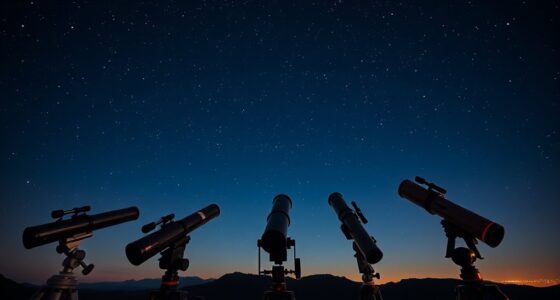
Capturing the Milky Way requires a wide, fast lens that can deliver sharp images with minimal distortion in low-light conditions. Among the top choices, the Viltrox AF 14mm f/4 stands out for its lightweight design and excellent optical correction, making it ideal for handheld astrophotos. The Laowa 10mm f/2.8 Zero-D offers an ultra-wide 130° view with near-zero distortion, perfect for expansive night sky shots. However, tradeoffs exist: the Viltrox’s slower f/4 aperture limits low-light performance, while the Laowa’s fixed 10mm focal length can be restrictive for framing. This guide compares these options and more, helping you find the best lens for your Milky Way photography needs.

Get audio and creator gear delivered free with Prime
- Fast, free delivery on millions of items
- Prime Video, Amazon Music and more included
- Member-only deals all year
Complete the kit


Key Takeaways
- The Viltrox AF 14mm f/4 is ideal for lightweight, handheld astrophotography and landscape shots, thanks to its compact design.
- Laowa’s 10mm f/2.8 Zero-D offers an ultra-wide 130° view with minimal distortion, making it perfect for expansive night sky captures.
- The Canon RF16mm F2.8 is suited for videographers and vloggers seeking a bright, compact lens with good low-light performance.
- Faster apertures like f/2.8 significantly improve low-light and astrophotography results but often come at a higher price.
- Manual focus lenses like the Rokinon FE14M-C deliver high sharpness but may be less convenient for quick framing.
| Viltrox AF 14mm f/4.0 Air Prime Full-Frame Lens for Sony FE Mount |  | Best Overall for Lightweight, Versatile Astrophotography | Focal Length: 14mm | Maximum Aperture: f/4.0 | Mount: Sony FE (E-mount) | VIEW ON AMAZON | See Our Full Breakdown |
| Laowa 10mm f/2.8 Zero-D Full-Frame Autofocus Ultra-Wide Lens (Sony FE) |  | Best for Ultra-Wide, Distortion-Free Night Sky Shots | Focal Length: 10mm | Max Aperture: f/2.8 | Mount: Sony FE | VIEW ON AMAZON | See Our Full Breakdown |
| Canon RF16mm F2.8 STM Ultra Wide-Angle Prime Lens for EOS R Mirrorless Cameras |  | Best for Video and Vlogging in Nightscapes | Focal Length: 16mm | Maximum Aperture: f/2.8 | Mount: Canon RF | VIEW ON AMAZON | See Our Full Breakdown |
| AstrHori 6mm f/2.8 Full-Frame Circular Fisheye Lens for Canon RF Mount |  | Best for Creative, Full-Sky Fisheye Shots | Focal Length: 6mm | Max Aperture: f/2.8 | Field of View: 220° | VIEW ON AMAZON | See Our Full Breakdown |
| Rokinon FE14M-C 14mm F2.8 Ultra Wide Lens for Canon |  | Best for Sharpness and Durability in Landscape and Astrophotography | Focal Length: 14mm | Maximum Aperture: f/2.8 | Mount: Canon EF | VIEW ON AMAZON | See Our Full Breakdown |
| wide field lenses for milky way photography | Focal Length | Mount | Weight | Maximum Aperture |
|---|---|---|---|---|
| Viltrox AF 14mm f/4.0 Air Prim | 14mm | Sony FE (E-mount) | 170g / 6oz | f/4.0 |
| Laowa 10mm f/2.8 Zero-D Full-F | 10mm | Sony FE | 0.93 lb | — |
| Canon RF16mm F2.8 STM Ultra Wi | 16mm | Canon RF | Approx. 165g | f/2.8 |
| AstrHori 6mm f/2.8 Full-Frame | 6mm | Canon RF | — | — |
| Rokinon FE14M-C 14mm F2.8 Ultr | 14mm | Canon EF | 31.7oz | f/2.8 |
More Details on Our Top Picks
Viltrox AF 14mm f/4.0 Air Prime Full-Frame Lens for Sony FE Mount
The Viltrox 14mm f/4 Air stands out for its lightweight build—just 170g—making it one of the easiest lenses to carry during long night shoots. Its 112.6° field of view captures expansive sky scenes without distortion, thanks to advanced optical elements like HR, ED, and ASPH. It is particularly suitable for those who want a portable option for handheld astrophotography or landscape work. The quiet STM autofocus with face/eye detection adds value for video shooters, although the f/4 aperture limits low-light performance compared to faster lenses. Filters need to be purchased separately, which may increase overall cost. Compared with the Laowa 10mm, the Viltrox offers autofocus and a smaller size, but the slower aperture makes it less ideal for deep-sky astrophotography in very dark conditions.
Pros:- Ultra-lightweight and compact for easy carrying
- Excellent optical correction reduces aberrations
- Quiet autofocus suitable for video
Cons:- Maximum aperture of f/4 limits low-light performance
- Filters sold separately
Best for: Travelers and landscape photographers seeking a lightweight, all-in-one astrophotography lens.
Not ideal for: Deep-sky astrophotographers needing the brightest possible aperture.
- Focal Length:14mm
- Maximum Aperture:f/4.0
- Mount:Sony FE (E-mount)
- Field of View:112.6°
- Weight:170g / 6oz
- Optical Construction:9 groups, 12 elements
- Autofocus:STM with face/eye detection
- Minimum Focus Distance:5 inches
- Filter Thread:58mm
Our verdict“A versatile, portable lens ideal for general landscape and astrophotography where weight and size matter.”
Laowa 10mm f/2.8 Zero-D Full-Frame Autofocus Ultra-Wide Lens (Sony FE)
The Laowa 10mm f/2.8 Zero-D offers an astonishing 130.4° view, making it excellent for capturing vast sections of the Milky Way without the distraction of distortion. Its near-zero distortion design ensures straight lines of buildings or horizon remain true, which is especially valuable for landscape astrophotography. The lens’s fast f/2.8 aperture enhances low-light performance, while its compact 7cm body makes it highly portable. The 15-element optical design with aspherical and ED elements maintains sharpness across the frame, though edge softness can appear at wide apertures. Its manual focus design might not be ideal for those wanting quick adjustments, but autofocus is present. Compared to the Rokinon, the Laowa’s wider field and better correction make it more suitable for astrophotography, though its fixed 10mm focal length may limit versatility.
Pros:- Extremely wide 130° view captures the entire night sky
- Near-zero distortion creates natural-looking images
- Fast f/2.8 aperture boosts low-light capability
Cons:- Fixed focal length limits framing options
- Edge softness at wide apertures
Best for: Astrophotographers seeking an ultra-wide, distortion-free shot of the night sky.
Not ideal for: Photographers needing a zoom or more framing flexibility.
- Focal Length:10mm
- Max Aperture:f/2.8
- Mount:Sony FE
- Angle of View:130.4°
- Weight:0.93 lb
- Optical Construction:15 elements in 9 groups
- Autofocus:Yes
- Minimum Focus Distance:12cm
- Filter Thread:77mm
Our verdict“Ideal for capturing expansive, distortion-free Milky Way shots with minimal editing.”
Canon RF16mm F2.8 STM Ultra Wide-Angle Prime Lens for EOS R Mirrorless Cameras
The Canon RF16mm F2.8 STM offers a bright f/2.8 aperture and a 108° field of view, making it a strong choice for both astrophotography and video work. Its compact, lightweight design simplifies extended night shoots or vlogging under the stars. The STM autofocus is smooth and quiet, perfect for capturing starry scenes with minimal noise. The close focusing distance of just over 5 inches enables interesting foreground compositions with stars in the background. However, the fixed 16mm focal length can be limiting for framing options, and the digital stabilization isn’t as effective as optical. Compared with wider lenses, this lens is slightly narrower in view but excels in low-light video scenarios.
Pros:- Bright f/2.8 aperture for low-light shooting
- Compact and lightweight for portability
- Quiet autofocus ideal for video
Cons:- Fixed focal length limits framing options
- Digital stabilization less effective than optical
Best for: Vloggers and videographers looking for a lightweight, fast lens for night videos.
Not ideal for: Still photographers who want ultra-wide views or zoom flexibility.
- Focal Length:16mm
- Maximum Aperture:f/2.8
- Mount:Canon RF
- Angle of View:108°
- Filter Size:43mm
- Weight:Approx. 165g
- Autofocus Motor:STM
- Minimum Focusing Distance:5.11 inches
- Image Stabilization:Digital
Our verdict“A versatile, low-light-ready lens perfect for night vlogging and landscapes in a compact form.”
AstrHori 6mm f/2.8 Full-Frame Circular Fisheye Lens for Canon RF Mount
The AstrHori 6mm f/2.8 Fisheye is a unique choice for those wanting a 220° ultra-wide, hemispherical view of the night sky. Its circular fisheye distortion creates dramatic, immersive images of the Milky Way, making it ideal for astrophotography with a creative twist. The fast f/2.8 aperture supports low-light conditions, and the super-close 0.08m focusing allows macro-style fisheye shots. It is well-suited for creative projects, urban nightscapes, and POV videos. However, the extreme fisheye effect means it’s less practical for traditional landscape or portrait work, limiting its versatility. Build details are sparse, so durability and weather sealing are uncertain.
Pros:- 220° field of view captures entire night sky
- Fast aperture handles low-light conditions
- Close focusing for macro fisheye shots
Cons:- Extreme distortion limits use for normal photography
- Lack of detailed build specs
Best for: Creative astrophotographers seeking dramatic, spherical night sky images.
Not ideal for: Anyone wanting standard landscape or portrait shots—distortion is too extreme.
- Focal Length:6mm
- Max Aperture:f/2.8
- Field of View:220°
- Minimum Focusing Distance:0.08m
- Mount:Canon RF
- Supported Resolution:Up to 61MP
Our verdict“Perfect for creative, immersive astrophotography with a fisheye perspective, though limited for conventional scenes.”
Rokinon FE14M-C 14mm F2.8 Ultra Wide Lens for Canon
The Rokinon FE14M-C 14mm F2.8 is favored for its exceptional sharpness and robust construction, making it a reliable choice for serious astrophotographers. Its 115.7° field of view captures broad night sky scenes, and the fast f/2.8 aperture provides good low-light performance. Manual focus may be less convenient but allows precise control for astrophotography. The lens’s durable build ensures it can handle challenging conditions, making it a favorite among professionals. Compared with the Viltrox, it lacks autofocus but compensates with higher optical quality and a heavier, more stable feel. This lens is especially suitable for those who prioritize image quality and durability over autofocus convenience.
Pros:- Exceptional sharpness and clarity
- Durable construction for outdoor use
- Wide 115.7° field of view
Cons:- Manual focus may be less convenient
- Heavier at 31.7oz
- No autofocus
Best for: Dedicated astrophotographers who value sharpness and ruggedness.
Not ideal for: Vloggers or casual shooters preferring autofocus and lightweight designs.
- Focal Length:14mm
- Maximum Aperture:f/2.8
- Mount:Canon EF
- Weight:31.7oz
- Dimensions:6.0 x 3.5 x 3.7 inches
- Focus Type:Manual
- Closest Focus Distance:10.8 inches
Our verdict“An excellent choice for serious astrophotographers demanding high optical quality and ruggedness.”

How We Picked
Our selection process focused on lenses specifically designed for full-frame sensors, ensuring they can adequately capture the vastness of the night sky. We prioritized aperture speed, field of view, optical quality, and size/weight for ease of handling in astrophotography scenarios. Price and build quality also played roles, with an emphasis on balancing performance with value. Additionally, we compared autofocus capabilities, filter compatibility, and overall versatility for landscape, astrophotography, and low-light shooting to recommend lenses suitable for a range of Milky Way photographers.
| wide field lenses for milky way photography | Maximum Aperture | Mount |
|---|---|---|
| Viltrox AF 14mm f/4.0 Air Prim | f/4.0 | Sony FE (E-mount) |
| Laowa 10mm f/2.8 Zero-D Full-F | — | Sony FE |
| Canon RF16mm F2.8 STM Ultra Wi | f/2.8 | Canon RF |
| AstrHori 6mm f/2.8 Full-Frame | — | Canon RF |
| Rokinon FE14M-C 14mm F2.8 Ultr | f/2.8 | Canon EF |
Factors to Consider When Choosing Wide Field Lenses For Milky Way Photography
Choosing the right wide field lens for Milky Way photography depends on several key factors. First, consider the focal length: wider lenses like 10mm or 14mm are generally preferred for capturing expansive night skies, but your framing needs may influence your choice. Aperture speed is crucial—f/2.8 or faster significantly improves your ability to shoot in low light with clear, bright images. Size and weight matter if you plan to shoot handheld or travel extensively; lightweight options like the Viltrox favor portability. Autofocus can be a bonus, especially for video or fast framing, but many astrophotographers prefer manual focus for precision. Finally, optical quality—including distortion correction and sharpness—can make the difference between a good night sky shot and a great one, especially when dealing with star trails or detailed Milky Way features.Focal Length and Field of View
For astrophotography, especially Milky Way shots, ultra-wide lenses—typically 10mm to 16mm—are favored because they allow you to capture more of the sky in a single frame. The wider the field of view, the more dramatic your images can be, but extremely wide lenses like fisheyes introduce distortion that can be distracting. Deciding between a 10mm, 14mm, or 16mm depends on whether you prefer a broader sky or more control over composition. Remember, a fixed focal length limits flexibility, so consider your preferred framing style before choosing.
Aperture Speed and Low-Light Performance
Aperture size directly impacts your ability to shoot in dark conditions. Lenses with f/2.8 or faster are best for Milky Way photography because they allow more light to reach the sensor, resulting in brighter, clearer images with less noise. Slower apertures like f/4 or f/4.5 may require longer exposures or higher ISO settings, which can introduce noise and reduce image quality. For night sky work, prioritize lenses with at least f/2.8 for reliable low-light performance, especially if you plan to shoot in very dark environments.
Size, Weight, and Handling
If portability and ease of handling matter to you, lightweight lenses like the Viltrox AF 14mm are appealing because they reduce fatigue and are easier to carry during outdoor shoots. Heavier lenses, such as the Rokinon, offer higher optical quality but can be cumbersome for long nights or travel. Manual focus lenses are generally more compact but require more skill to use effectively in low light. Balance your needs for mobility versus optical perfection when selecting a lens.
Optical Quality and Distortion
Optical correction plays a significant role in astrophotography. Lenses like the Laowa 10mm Zero-D are prized for their minimal distortion, which preserves straight lines and simplifies post-processing. Conversely, fisheye lenses introduce dramatic distortion, which can be creatively appealing but less useful for traditional Milky Way shots. Sharpness across the frame and the ability to handle chromatic aberration and flare are also critical, especially when capturing star details or wide landscapes illuminated by the night sky.
Frequently Asked Questions
What focal length is best for Milky Way photography?
Focal lengths between 10mm and 16mm are generally considered optimal because they offer a wide enough view to capture the expansive sky while maintaining manageable distortion. The choice depends on whether you prefer ultra-wide, panoramic shots or more controlled framing. For most enthusiasts, 14mm strikes a good balance between field of view and flexibility.
Why is aperture speed so important for astrophotography?
Aperture speed determines how much light your lens can gather in a given time. Faster apertures like f/2.8 or wider are essential for Milky Way photography because they enable shorter exposures, reducing star trail effects and noise. Slower lenses require longer exposures, which can introduce motion blur or noise, especially in very dark conditions.
Should I prioritize autofocus or manual focus for night sky shots?
While autofocus can be helpful for general photography, manual focus is often preferred in astrophotography because it allows precise control over focus points, especially in low-light conditions where autofocus might struggle. Many astrophotographers rely on live view and focus peaking to achieve sharp star images, making manual focus the more reliable choice.
Are fisheye lenses suitable for Milky Way photography?
Fisheye lenses like the AstrHori 6mm are excellent for creative, immersive shots of the night sky, but their extreme distortion limits their use for traditional Milky Way photography. They are better suited for artistic or panoramic projects rather than standard astrophotography where straight lines and minimal distortion are desired.
How important is lens build quality for astrophotography?
Build quality matters because astrophotography often involves long exposures and outdoor conditions. A durable, weather-sealed lens can withstand dew, dust, and temperature fluctuations, reducing the risk of damage or malfunction. Optical quality is equally important, as high-quality glass minimizes aberrations and enhances image sharpness, making your night sky images clearer and more detailed.
Conclusion
For those who prioritize portability and ease of use, the Viltrox AF 14mm f/4 offers a compelling mix of lightweight design and optical performance, though its slower aperture limits low-light capabilities. Serious astrophotographers seeking maximum image quality and minimal distortion should consider the Laowa 10mm f/2.8 Zero-D, which excels at capturing wide, sharp night sky scenes. Vloggers and videographers will find the Canon RF16mm F2.8 a versatile, low-light option with a compact form factor. Creative shooters interested in dramatic fisheye effects can explore the AstrHori 6mm, but it’s less suited for traditional Milky Way shots. Overall, your choice will depend on your specific needs—whether that’s portability, optical perfection, or creative experimentation—each lens offers a different way to frame the night sky in 2026.
Halloween Picks
halloween
As an affiliate, we earn on qualifying purchases.