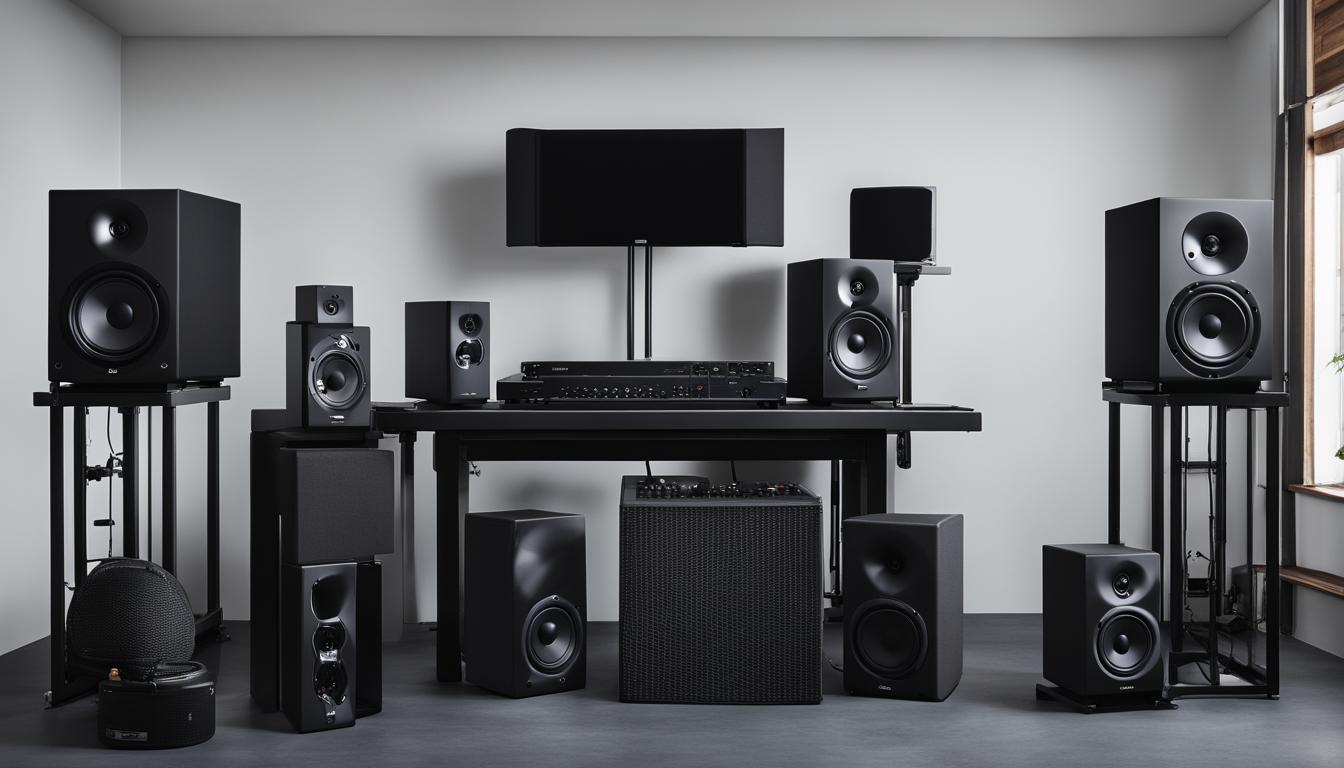

The Yamaha HS80M is discontinued, so buyers searching for one often need to choose among current HS-series monitors instead. My best overall pick is the Yamaha HS8 Studio Monitor Pair: its 8-inch drivers make it the closest match here for users who want substantial low-frequency output from a two-way monitor. The HS7 pair is a more room-friendly middle ground, while the HS5 pairs suit compact workspaces but provide less bass extension. The main tradeoff is low-frequency reach versus room size, placement flexibility, and the need for a separate subwoofer. Read on for the full comparison of all ten listings and guidance on choosing the right HS80M alternative.

Get audio and creator gear delivered free with Prime
- Fast, free delivery on millions of items
- Prime Video, Amazon Music and more included
- Member-only deals all year
Complete the kit


Key Takeaways
- The HS8 pair is the closest listed alternative to the HS80M for buyers prioritizing an 8-inch two-way monitor, though it is a newer model rather than a direct replacement.
- The HS7 pair is the practical middle choice when an HS8 may overwhelm a small room but an HS5 feels limited for bass-heavy work.
- HS5 listings are similar in core speaker size; the meaningful differences are listing format and finish, not a larger driver or deeper low end.
- The HS8 subwoofer listing is not a stereo monitor pair; it serves a different role and should not be confused with the HS8 full-range monitors.
- Pack size and model identity matter: several listings describe single monitors, pairs, or two-packs, so verify quantity and exact product before ordering.
| Yamaha HS5 Powered Studio Monitor, Pair |  | Best Compact Nearfield Pair | Number of monitors: 2 | Woofer size: 5 inches | Tweeter size: 1 inch | VIEW ON AMAZON | See Our Full Breakdown |
| Yamaha HS5 W 5-Inch Powered Studio Monitor (White, 2-Pack) |  | Best White Finish for Small Studios | Number of items: 2 | Color: White | Speaker size: 5 inches | VIEW ON AMAZON | See Our Full Breakdown |
| Yamaha HS8 Studio Subwoofer, Black |  | Best Bass Extension Add-On | Driver size: 8 inches | Amplifier power: 150W | Frequency response: 22 Hz–150 Hz | VIEW ON AMAZON | See Our Full Breakdown |
| Yamaha HS Series HS8W – 8 Inch 2-Way Bi-Amplified Nearfield Studio Monitor (Pair) in White |  | Best for Larger Studio Rooms | Number of speakers: 2 | Woofer diameter: 8 inches | Tweeter diameter: 1 inch | VIEW ON AMAZON | See Our Full Breakdown |
| Yamaha HS8 Studio Monitor Pair – Slate Grey |  | Best Style-Focused HS8 Pair | Model number: HS8 | Number of items: 2 | Speaker size: 8 inches | VIEW ON AMAZON | See Our Full Breakdown |
| Yamaha HS7 7-Inch Powered Studio Monitor Pair |  | Best Middle Ground for HS80M Alternatives | Speaker size: 7 inches | Tweeter diameter: 1 inch | Frequency response: 43Hz–30kHz | VIEW ON AMAZON | See Our Full Breakdown |
| YAMAHA HS8 Studio Monitor, Black, 8 Inch (Pack of 2) |  | Best HS80M-Style Pair for Bass Reach | Pack quantity: 2 monitors | Woofer diameter: 8 inches | Tweeter diameter: 1 inch | VIEW ON AMAZON | See Our Full Breakdown |
| Yamaha HS5 Pair 2-Way Bass-Reflex Bi-Amplified Studio Monitors with 5-inch Woofers | | Best Compact Alternative | Number of monitors: 2 | Type: 2-way bass-reflex | Woofer size: 5 inches | VIEW ON AMAZON | See Our Full Breakdown |
| YAMAHA HS8 Studio Monitor, Black, 8 Inch |  | Best Single-Monitor Expansion | Quantity: 1 monitor | Woofer diameter: 8 inches | Tweeter diameter: 1 inch | VIEW ON AMAZON | See Our Full Breakdown |
| Yamaha HS8 8-Inch Powered Studio Monitor Pair – Black |  | Best for XLR-Only Studio Rigs | Pack quantity: Pair | Woofer size: 8 inches | Tweeter size: 1 inch | VIEW ON AMAZON | See Our Full Breakdown |
| yamaha hs80m | Frequency response | Color |
|---|---|---|
| Yamaha HS5 Powered Studio Moni | 54 Hz–30 kHz | — |
| Yamaha HS5 W 5-Inch Powered St | — | White |
| Yamaha HS8 Studio Subwoofer | 22 Hz–150 Hz | Black |
| Yamaha HS Series HS8W | 38 Hz–30 kHz | White |
| Yamaha HS8 Studio Monitor Pair | — | Grey |
| Yamaha HS7 7-Inch Powered Stud | 43Hz–30kHz | Black |
| YAMAHA HS8 Studio Monitor | 38Hz–30kHz | — |
| Yamaha HS5 Pair 2-Way Bass-Ref | — | — |
| YAMAHA HS8 Studio Monitor | 38Hz–30kHz | Black |
| Yamaha HS8 8-Inch Powered Stud | 38Hz–30kHz | Black |
More Details on Our Top Picks
Yamaha HS5 Powered Studio Monitor, Pair
The HS5 pair is the most space-conscious choice here for buyers comparing options around the Yamaha HS80M. Its 5-inch woofers and nearfield design suit a desk or small control room, where listening close to the speakers can make detailed balance judgments practical without filling the room with larger monitors. Balanced and unbalanced XLR/TRS inputs add flexibility for different interfaces. Compared with the HS8W pair, the HS5 takes up less space but gives up bass extension and output headroom, so low-end decisions may need a subwoofer or reference headphones. Its response begins at 54 Hz, which also makes it less revealing at the deepest bass frequencies than the HS8 Studio Subwoofer can be as part of a system. Choose it for compact mixing, not large-room playback.
Pros:- Pair of bi-amplified monitors with a stated 70W total per monitor
- XLR and TRS inputs support balanced or unbalanced connections
- 54 Hz–30 kHz response suits a range of nearfield mixing tasks
- Smaller footprint than the HS8W pair
Cons:- Limited low-bass output compared with the HS8 models
- Nearfield design is a poor fit for large listening spaces
- Placement affects response, so desk and room setup matter
Best for: Home-studio producers mixing at a desk or in a small, treated room who need a matched pair of compact monitors.
Not ideal for: Producers working in a large room or making bass-critical decisions without headphones or a subwoofer; the 5-inch drivers and nearfield focus limit low-frequency reach and room coverage.
- Number of monitors:2
- Woofer size:5 inches
- Tweeter size:1 inch
- Frequency response:54 Hz–30 kHz
- Power:45W LF + 25W HF; 70W total
- Inputs:XLR and TRS, balanced/unbalanced
Our verdict“Choose the HS5 pair for compact, close-range mixing, but opt for the HS8W pair if you need more bass reach and room-filling output.”
Yamaha HS5 W 5-Inch Powered Studio Monitor (White, 2-Pack)
This white HS5 two-pack offers the same compact-monitor proposition as the black HS5 pair, with a finish that may suit a bright room or a carefully coordinated desktop setup. The available product data identifies two powered 5-inch monitors but does not provide the detailed power, input, or frequency-response figures listed for the B075Q5T7Q1 HS5 pair, so buyers who need those specifications should compare the listings closely. Against the HS8W pair, this bundle is easier to fit into a small workspace but is less suited to judging deep bass or producing at higher levels across a larger room. The white finish is a visual distinction, not a performance upgrade. It makes the most sense for a small-room buyer who values that look and wants a matched pair, rather than a larger-driver monitor.
Pros:- Two powered monitors are included as a matched pair
- 5-inch format is easier to place in a small studio than the HS8W
- White finish offers a distinct alternative to the black HS5 listing
- Designed for accurate monitoring and music production
Cons:- Provided specifications omit power, frequency response, and input details
- 5-inch drivers offer less deep-bass capability than the HS8 models
- No stands or other accessories are listed as included
Best for: Home producers furnishing a compact, bright-colored studio who want a matched pair of white 5-inch powered monitors.
Not ideal for: Buyers who need documented detailed power and frequency-response specifications, or who mix bass-heavy material in a large room; the supplied listing data is limited and the drivers are compact.
- Number of items:2
- Color:White
- Speaker size:5 inches
- Type:Powered studio monitor
- Bundle configuration:2-pack
- Intended use:Mixing and music production
Our verdict“Pick this bundle if a white finish and compact paired setup matter most, but compare its limited listing specifications with the more fully specified HS5 pair before buying.”
Yamaha HS8 Studio Subwoofer, Black
The HS8 Studio Subwoofer is not a substitute for the HS80M or a pair of full-range monitors; it is a low-frequency addition for a compatible studio setup. Its 22 Hz–150 Hz response reaches well below the HS5 pair’s stated 54 Hz lower limit, helping a producer hear more of the bass and sub-bass content that compact monitors can miss. Adjustable low- and high-cut controls allow the subwoofer to be tailored to the rest of the system, though that flexibility brings setup and calibration work. Compared with the HS8W pair, this model adds bass extension rather than providing a complete stereo monitoring pair. It also cannot fix poor room acoustics, and placement can strongly affect bass response. Choose it when an existing monitor pair needs low-end support, not as a standalone monitor purchase.
Pros:- 22 Hz–150 Hz response extends below the HS5 pair’s stated low end
- 150W amplifier is specified for dedicated bass output
- Adjustable low- and high-cut controls allow system matching
- Bass-reflex design supports low-frequency reproduction
Cons:- A subwoofer alone does not provide a stereo monitoring system
- Calibration and placement require care for balanced bass
- Studio-focused design may not suit general home-entertainment use
Best for: Producers who already own suitable stereo monitors and need to hear deep bass and sub-bass during mixing.
Not ideal for: First-time monitor buyers seeking a complete left-and-right speaker setup, or listeners expecting a simple home-entertainment subwoofer.
- Driver size:8 inches
- Amplifier power:150W
- Frequency response:22 Hz–150 Hz
- Enclosure design:Bass-reflex
- Low-frequency control:Adjustable low cut
- High-frequency control:Adjustable high cut
- Color:Black
Our verdict“Add the HS8 subwoofer to an existing monitor system when low-bass detail is missing, but choose the HS8W pair if you need complete stereo monitors.”
Yamaha HS Series HS8W – 8 Inch 2-Way Bi-Amplified Nearfield Studio Monitor (Pair) in White
For buyers seeking a step up from an HS80M-style reference, the HS8W pair offers 8-inch woofers, 120W total power per monitor, and a stated 38 Hz–30 kHz response. Those specifications point to greater bass reach and headroom than the HS5 pair, making the HS8W better suited to larger rooms and mixes that depend on fuller low end. Balanced XLR inputs support a studio connection, but the listing does not specify TRS inputs, unlike the HS5 product data. These are still wired nearfield monitors, not room-independent speakers: placement and acoustic conditions shape what you hear. The white finish sets this pair apart visually from the black HS8 subwoofer, but the subwoofer serves a different role by extending bass rather than replacing full-range stereo monitors.
Pros:- Pair of 8-inch, two-way bi-amplified monitors
- 38 Hz–30 kHz stated frequency response extends lower than the HS5 pair
- 120W total power per monitor provides more specified output than the HS5
- Balanced XLR input and white finish
Cons:- Larger monitors can be difficult to place in compact workspaces
- Wired connectivity only; no wireless option is specified
- Room placement and acoustics can affect low-frequency accuracy
Best for: Studio owners with enough space for 8-inch nearfield monitors who need more low-frequency reach and headroom than an HS5 pair provides.
Not ideal for: Desk-only setups, small untreated rooms, or buyers who need clearly specified TRS connectivity; the larger cabinets need suitable placement and room space.
- Number of speakers:2
- Woofer diameter:8 inches
- Tweeter diameter:1 inch
- Frequency response:38 Hz–30 kHz
- Power output:75W LF + 45W HF; 120W total
- Bi-amplification:Yes
- Input type:XLR
- Color:White
Our verdict“Choose the HS8W pair for more bass reach and headroom in a suitable studio, while the HS5 pair is the more practical fit for a small desk setup.”
Yamaha HS8 Studio Monitor Pair – Slate Grey
This slate-grey HS8 pair is the visual alternative to the white HS8W pair, with 8-inch drivers and XLR/TRS connectivity listed for connection to studio interfaces and other sources. The product data describes a 120W output and customizable room and high-trim controls, features that can help tailor playback to a space; however, its frequency-response entry is only 24 KHz, which does not provide a full range or low-frequency limit for a sound comparison. The HS8W listing gives a clearer 38 Hz–30 kHz range, so buyers who prioritize documented response details may prefer that pair. At 28.8 pounds, this set is also less convenient to move than the compact HS5 pair. The grey finish is the main differentiator, while room placement remains a real factor for any 8-inch monitor.
Pros:- Pair of 8-inch HS8 monitors with 120W output listed
- XLR and TRS connectivity accommodates common studio connections
- Room and high-trim adjustments offer sound-shaping options
- Slate-grey finish differs from the white HS8W pair
Cons:- Frequency-response data is incomplete at 24 kHz and gives no low-end limit
- Listed weight of 28.8 pounds may make repositioning cumbersome
- Plastic enclosure may be less robust than some alternative cabinet materials
Best for: Producers who want 8-inch HS8 monitors in a slate-grey finish and need XLR/TRS input options for a desktop or studio setup.
Not ideal for: Buyers who need a clearly documented full frequency-response range or plan to move monitors often; the listing provides an incomplete response figure and specifies a 28.8-pound weight.
- Model number:HS8
- Number of items:2
- Speaker size:8 inches
- Power output:120 watts
- Frequency response listing:24 kHz
- Connectivity:XLR and TRS
- Enclosure material:Plastic
- Color:Grey
- Weight:28.8 pounds
Our verdict“Choose the slate-grey HS8 pair for its finish and listed XLR/TRS options, but favor the HS8W pair if clear frequency-response specifications are a priority.”
Yamaha HS7 7-Inch Powered Studio Monitor Pair
If the HS80M’s larger-monitor approach appeals but your room or bass needs point toward something smaller, the HS7 pair is a practical middle ground. Its 7-inch woofer sits between the HS5’s compact presentation and the HS8’s deeper stated low-frequency reach, while XLR and TRS inputs suit common studio connections. The bi-amped design gives the woofer and tweeter dedicated amplification, supporting clear monitoring for editing and mixing. Compared with the HS8 pair, this option is less focused on extended bass; compared with the HS5 pair, it offers a larger woofer. The tradeoff is that the supplied listing gives less detail on room-tuning controls than some HS8 entries, and its listed weight and dimensions call for sturdy, carefully planned placement.
Pros:- 7-inch woofer offers a middle size between the HS5 and HS8 options
- Bi-amplification supports separate woofer and tweeter operation
- XLR and TRS inputs fit common studio gear
- Listed frequency response reaches 30kHz
Cons:- Its listed weight of 20.9 kg makes placement a substantial commitment
- The supplied specifications do not list room-tuning controls
- Requires a suitable powered, professionally arranged studio setup
Best for: Home-studio mixers who want a step up from a 5-inch monitor but do not need the HS8’s 8-inch woofer.
Not ideal for: Producers who need the deepest listed bass response or buyers with a very small desk and no sturdy monitor stands.
- Speaker size:7 inches
- Tweeter diameter:1 inch
- Frequency response:43Hz–30kHz
- Power amplification:95W
- Amplification:Bi-amplified
- Inputs:XLR and TRS phone jack
- Weight:20.9 kg
- Color:Black
Our verdict“Choose the HS7 pair if you want a larger alternative to the HS5 without moving up to the HS8’s 8-inch woofer.”
YAMAHA HS8 Studio Monitor, Black, 8 Inch (Pack of 2)
For buyers drawn to the HS80M’s substantial low-end presentation, this HS8 pair is the closest fit in this group by woofer size and stated bass extension. The 8-inch woofer and 38Hz lower response figure make it better suited than the HS5 pair to mixes where kick, bass, and low synth energy need more audible support. Bi-amplification, level control, and EQ switches add useful adjustment options, though they cannot compensate for poor speaker placement or room acoustics. Compared with the single HS8 listing, this is explicitly a two-monitor pack, so it is the clearer choice for building a stereo setup from one purchase. Its larger cabinets and listed 20.4 kg weight make it a harder fit for cramped desks, and the low-end reach may be more than a small untreated room can handle comfortably.
Pros:- Two-monitor pack supports a stereo setup
- 8-inch woofer and 38Hz stated lower frequency response
- EQ switches and level control offer room and output adjustment
- XLR and TRS inputs support common studio connections
Cons:- Large cabinets and listed 20.4 kg weight can complicate placement
- Low-frequency output may be difficult to manage in small rooms
- Requires power and careful setup rather than portable use
Best for: Stereo mixing and production setups that have room for full-size monitors and need more low-frequency reach than the HS5 provides.
Not ideal for: Desk-bound beginners in small or untreated rooms who cannot accommodate large, heavy monitors or manage room bass.
- Pack quantity:2 monitors
- Woofer diameter:8 inches
- Tweeter diameter:1 inch
- Frequency response:38Hz–30kHz
- Power consumption:120W total (75W LF + 45W HF)
- Inputs:XLR and TRS
- Controls:Level control and EQ switches
- Weight:20.4 kg
Our verdict“Pick this HS8 pair if you want an HS80M-like larger-monitor direction and need two speakers with room-tuning controls.”
Yamaha HS5 Pair 2-Way Bass-Reflex Bi-Amplified Studio Monitors with 5-inch Woofers
The HS5 pair is the compact, room-conscious counterpoint to the HS80M and HS8 models. Its 5-inch woofers are a better fit when desk space and nearby walls make large monitors awkward, while the Room Control and High Trim options allow some response adjustment for the listening position. Like the HS8 products here, it uses bi-amplification and offers XLR and TRS connectivity; unlike those 8-inch models, it is not the choice for strong low-bass monitoring. That limitation matters when balancing sub-bass-heavy electronic music or judging deep kick fundamentals. Compared with the HS7, the HS5 takes up less space but gives up woofer size. It suits detail-focused nearfield work in smaller rooms, provided the buyer accepts that a subwoofer or another reference may be needed for the lowest frequencies.
Pros:- 5-inch woofer suits compact desks and nearfield placement
- Room Control and High Trim provide response adjustments
- Bi-amplified design separates woofer and tweeter amplification
- Pair includes XLR and TRS connectivity
Cons:- Smaller woofers offer less low-frequency reach than the HS7 and HS8
- Deep-bass work may call for a subwoofer or another monitoring reference
- Room placement and calibration still affect what the listener hears
Best for: Home-studio producers and editors working close to their speakers in a small room who value placement flexibility over deep bass.
Not ideal for: Bass-focused mixers who need to judge sub-bass directly from the monitors without adding a subwoofer or alternate reference.
- Number of monitors:2
- Type:2-way bass-reflex
- Woofer size:5 inches
- Amplification:Bi-amplified
- Response controls:Room Control and High Trim
- Connectivity:XLR and TRS
- Noise reduction:Advanced noise reduction technology
Our verdict“Choose the HS5 pair for limited-space monitoring, but favor an HS7 or HS8 if low-frequency mix decisions are a priority.”
YAMAHA HS8 Studio Monitor, Black, 8 Inch
This HS8 is the most flexible pick for someone who already owns one monitor or is building a system in stages: the listing is for a single powered speaker, not a pair. Its 8-inch woofer and 38Hz–30kHz response put it closer to the HS80M’s larger-monitor territory than the HS5 or HS7, and the listed EQ and high-trim adjustments can help tailor its output to a room. Compared with the two HS8 pair listings, this is better suited to replacing one speaker or expanding an existing setup, but it is not a complete stereo purchase by itself. XLR and TRS inputs add connection flexibility. The tradeoffs are the lack of a supplied second monitor, no wireless connection, and limited enclosure details in the product data.
Pros:- 8-inch woofer and 38Hz stated lower frequency response
- Bi-amplification supports clear output across woofer and tweeter
- XLR and TRS inputs offer connection flexibility
- Adjustable room and high-trim response controls are listed
Cons:- Single monitor listing does not provide a stereo pair
- Wired inputs only, with no wireless option listed
- Product data gives limited enclosure-material detail
Best for: Studio owners replacing one failed monitor or adding a matching HS8 to an existing single-speaker setup.
Not ideal for: First-time buyers who need a complete stereo pair in one package or listeners seeking wireless monitoring.
- Quantity:1 monitor
- Woofer diameter:8 inches
- Tweeter diameter:1 inch
- Frequency response:38Hz–30kHz
- Power consumption:120W total (75W LF + 45W HF)
- Inputs:XLR and TRS phone jack
- Warranty:1 year manufacturer warranty
- Color:Black
Our verdict“Buy this single HS8 when you need one full-size monitor to complement an existing setup, not when you need a ready-made pair.”
Yamaha HS8 8-Inch Powered Studio Monitor Pair – Black
This HS8 pair makes the most sense for a buyer who wants two 8-inch monitors and connects through XLR. Its stated 38Hz–30kHz response and dedicated 75W LF + 45W HF bi-amp system place it in the same larger-monitor category as the HS80M, with more low-frequency reach on paper than the HS5 pair. Unlike the HS8 pack that lists both XLR and TRS plus EQ switches, this product data names XLR connectivity only, so it is a narrower match for rigs that rely on balanced XLR outputs. The pair format avoids the single-monitor limitation of the other HS8 listing, but the buyer should check that their interface or mixer has suitable outputs before choosing it. Large-monitor placement and careful room setup remain part of the commitment.
Pros:- Pair provides two matching monitors for stereo monitoring
- 8-inch woofer offers a larger-monitor alternative to the HS5 and HS7
- Bi-amp power is specified separately for low and high frequencies
- Stated frequency response extends from 38Hz to 30kHz
Cons:- Product data lists XLR connectivity only, limiting connection options
- Large 8-inch monitors need more space and deliberate placement
- Professional setup and room conditions affect monitoring results
Best for: Producers with balanced XLR outputs who want a matched stereo pair of 8-inch monitors for mixing.
Not ideal for: Buyers whose interface uses TRS-only outputs or who need compact speakers for a tight desk or untreated small room.
- Pack quantity:Pair
- Woofer size:8 inches
- Tweeter size:1 inch
- Frequency response:38Hz–30kHz
- Power amplification:75W LF + 45W HF
- Amplification:Bi-amplified
- Connectivity:XLR
- Color:Black
Our verdict“Choose this HS8 pair if your studio is XLR-equipped and you want two larger monitors rather than a single speaker or compact HS5 pair.”

How We Picked
I ranked these listings by how well they answer the likely intent behind “Yamaha HS80M”: finding a comparable Yamaha nearfield monitor for studio mixing. The main criteria were monitor size and likely low-frequency reach, whether the listing is a single speaker or a stereo pair, practical fit for different room sizes, and how clearly the product is identified. I treated the HS8 full-range monitors as the closest family alternatives, the HS7 as a more moderate-size option, and the HS5 as a compact choice with less bass extension. The HS8 subwoofer ranks separately because it cannot serve as a direct stereo-monitor substitute on its own.
Repeated listings do not represent distinct acoustic designs when they identify the same model and configuration. I therefore distinguish products by their stated size, finish, and pack format rather than implying that color or listing wording changes sound. Where titles conflict or leave quantity unclear, I flag that as a buying risk instead of making unsupported claims. This ranking favors functional similarity to the HS80M first, then room flexibility and clarity of fit for the buyer.
Factors to Consider When Choosing Yamaha Hs80m
Choosing an HS80M alternative is less about finding a monitor with the same name and more about matching its role in your setup. I would start with your room, listening distance, and need for bass information, then verify the exact model and quantity in the listing.
Match Monitor Size to the Room
A larger woofer can reproduce more low-frequency content, but that does not automatically make it the better choice for every desk or room. In a small, untreated space, strong bass can interact with walls and corners, making low end harder to judge accurately. Before selecting an HS8, check whether you can place it away from boundaries and sit at a sensible listening distance. The HS7 can be a useful compromise when space is limited but an HS5 seems too modest for your work. Avoid buying by driver size alone; room behavior matters as much as the speaker’s capability.
Decide Whether You Need Full-Range Monitors or a Subwoofer
The HS8 monitor listings and the HS8 subwoofer listing serve different purposes. A pair of full-range monitors provides left and right playback, while a subwoofer handles low frequencies as part of a larger monitoring system. A subwoofer by itself is not a replacement for a stereo pair, and adding one without managing crossover, placement, and level can make bass judgments less reliable. If your mixes depend on very low frequencies, plan the complete system rather than treating the sub as a shortcut. Many buyers are better served by choosing suitable monitors first and adding a sub only when their room and workflow support it.
Verify Pair, Single, and Pack Details
These listings use similar names but do not all state quantities in the same way. A product described as a pair should provide left and right monitors, while a singular HS8 listing may be one speaker; a “pack of 2” can also describe the same basic stereo setup in different wording. Check the included quantity, exact model, and whether the listing refers to monitors or a subwoofer before placing an order. Do not assume that two listings are separate sound options just because their titles differ. This check is especially useful when comparing the black, white, and slate grey HS8 listings.
Choose the Right Tradeoff Between HS5, HS7, and HS8
The HS5 prioritizes a compact footprint, the HS7 sits between compact and larger monitoring, and the HS8 offers the largest woofer among these full-range choices. That progression is useful, but it is not a simple quality ladder: a monitor that is too large for your room can be less helpful than a smaller model placed and positioned well. Buyers who mix bass-heavy material should pay closer attention to low-frequency coverage and room treatment. For general editing or a tight desk setup, the HS5 may leave more room and reduce placement pressure. Choose the largest model your room can support, not the largest model the listing offers.
Treat Finish as a Secondary Choice
The white and slate grey HS-series listings appear to offer finish variations rather than a different monitoring role from their black counterparts. Color can matter if the speakers need to fit a visible workspace, but it should come after model, quantity, and room fit. Confirm that the finish listed matches the actual product and that the stated configuration is still a pair. Do not pay more or accept a different model simply because a color option looks more distinctive. For sound decisions, focus on HS5, HS7, or HS8 and the way the monitor fits your setup.
Frequently Asked Questions
Which product in this roundup is closest to the Yamaha HS80M?
The HS8 studio monitor pair is the closest match among these listings by broad role: it is a two-way Yamaha monitor with an 8-inch woofer. It is not the same model as the discontinued HS80M, so buyers should not assume identical tuning, controls, or performance. The HS7 is a sensible alternative if an 8-inch monitor is too large for the room. If you need the closest family resemblance, focus on the full-range HS8 pair rather than the HS8 subwoofer.
Should I choose the HS8 pair or the HS7 pair for a small home studio?
I would choose based on room layout and listening distance, not the idea that a larger speaker is always better. The HS8 can offer more low-frequency output, but a small room with close wall placement may make its bass harder to judge. The HS7 is a middle-ground option when you want more scale than the HS5 without committing to the largest full-range monitor listed here. If you cannot position the speakers and treat the room appropriately, the smaller option may lead to more dependable decisions.
Can I use the Yamaha HS8 subwoofer as my only monitor?
No: the HS8 subwoofer listing is not a stereo pair of full-range monitors. It is intended to add low-frequency reproduction to a monitoring setup that already has left and right speakers. On its own, it will not provide the complete frequency range or stereo image needed for ordinary mixing. Check the exact listing type carefully, since “HS8” appears in both the monitor and subwoofer names in this roundup. If you need a complete setup, select a monitor pair first.
Are the different HS5 and HS8 listings different speakers or just different packages?
Several entries appear to repeat the same monitor family while changing the finish, wording, or stated quantity. For example, HS5 listings describe 5-inch monitors, while HS8 listings describe 8-inch monitors; a pair or two-pack normally indicates two speakers, but a singular listing may indicate one. The white and slate grey descriptions do not by themselves establish a different acoustic design. Compare the exact model number, finish, and included quantity rather than treating every title as a distinct speaker. When a listing is ambiguous, verify its product details before deciding.
Is an HS5 pair a sensible choice if I am replacing HS80Ms?
It can make sense if your priority has shifted to a compact setup, but it is not the closest size match in this roundup. The HS5 pair takes less space than the HS7 or HS8 options, while offering less low-frequency reach than the larger monitors. That difference matters when mixing bass-heavy material or when you rely on speakers to judge the bottom end. If you mainly edit, record, or work in a constrained room, the HS5 may fit better; otherwise, compare the HS7 or HS8 before deciding.
Conclusion
Best overall: I would start with the Yamaha HS8 Studio Monitor Pair for the closest role to an HS80M among these options. Best value in practical fit: the HS7 pair is the balanced choice for buyers who want a step up from the HS5 without opting for the largest monitor. Best for beginners: the HS5 pair suits compact setups and straightforward stereo monitoring, provided its bass range meets the work. Best premium-size option: choose an HS8 pair when your room can accommodate it and low-frequency output matters. Best for specific needs: consider the HS8 subwoofer only as an addition to full-range monitors, not as a standalone replacement. Before buying, confirm whether the listing includes one speaker or two and whether it is a monitor or subwoofer.
Halloween Picks
halloween
As an affiliate, we earn on qualifying purchases.