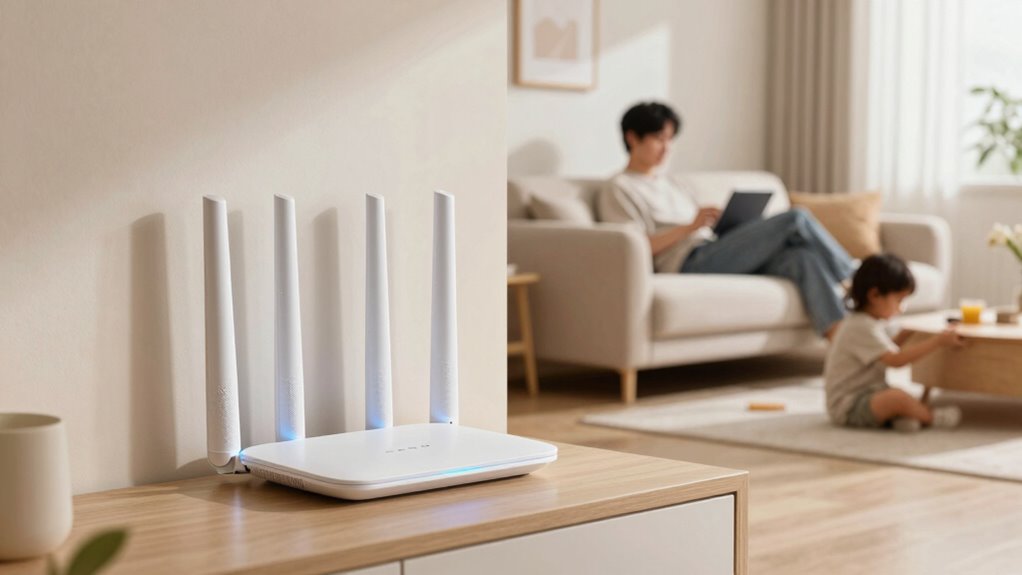

Mesh systems need fewer nodes than you might think because they intelligently manage signals, optimize placement, and adapt to interference, reducing the need for many units. Proper placement near the center of your space helps coverage, and smart features like traffic management keep everything running smoothly. Obstructions and interference are common issues that can be minimized with strategic positioning. Stay tuned—discover how to maximize your Wi-Fi performance with fewer components.

Get audio and creator gear delivered free with Prime
- Fast, free delivery on millions of items
- Prime Video, Amazon Music and more included
- Member-only deals all year
Key Takeaways
- Proper placement and strategic positioning of nodes maximize coverage, reducing the need for multiple units.
- Mesh systems use intelligent traffic management and dynamic features to extend coverage with fewer nodes.
- Obstructions and interference often limit signal range more than the number of nodes needed.
- Upgrading hardware and optimizing existing nodes can improve coverage without adding more units.
- Overestimating range leads to unnecessary nodes; understanding system capacity prevents overbuying.
mesh Wi-Fi system with fewer nodes
As an affiliate, we earn on qualifying purchases.
As an affiliate, we earn on qualifying purchases.
How Do Mesh Systems Work?

Mesh systems work by connecting multiple nodes that communicate directly with each other to create a seamless network. This setup guarantees your devices stay connected without interruptions, even as you move around your home. Each node helps extend Wi-Fi coverage, reducing dead zones. Mesh security is embedded into the system, encrypting data between nodes and protecting your network from threats. Node synchronization is vital; it keeps all nodes working together efficiently, sharing information instantly to maintain a stable connection. As you add more nodes, the system intelligently manages traffic, balancing loads and optimizing performance. This dynamic coordination means fewer nodes are necessary to cover your entire space effectively. Additionally, understanding the capacity of your mesh system helps ensure it can handle your household’s internet demands. Proper calibration of nodes can further enhance performance and reliability. To maximize your network’s efficiency, it’s important to consider the hardware capabilities of each node, ensuring they meet your household’s specific needs. Regularly updating firmware can also improve system security and overall performance. Overall, mesh systems deliver reliable, secure Wi-Fi while simplifying setup and maintenance.
Can You Cover Your Entire Home With Fewer Mesh Nodes?
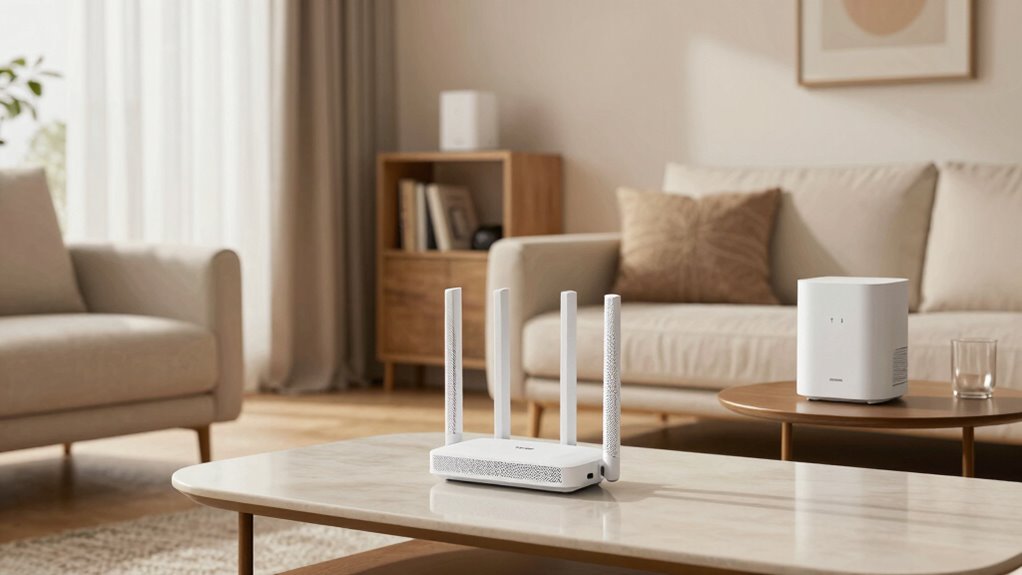
By optimizing signal strength and placing your mesh nodes strategically, you can often cover your entire home with fewer units. Proper placement guarantees each node communicates effectively, reducing the need for extra devices. When you focus on these points, you’ll get reliable coverage without overcomplicating your setup. Additionally, understanding aromatherapy benefits can enhance your overall wellness routine alongside your home network setup. Ensuring your mesh network is properly configured can also prevent dead zones, making your coverage even more efficient. Considering digital concepts in your setup can help you better adapt your network to your specific space and needs. Using efficient system design principles can further optimize your mesh network’s performance and coverage. Paying attention to law updates related to home networking can help you stay compliant and make informed choices about your setup.
Signal Strength Optimization
Ever wonder if you really need multiple nodes to get strong Wi-Fi coverage throughout your entire home? Optimizing signal strength is essential. Start by placing your main node centrally to maximize coverage and minimize dead zones. To improve performance, consider interference management—keep your mesh nodes away from thick walls, microwaves, or cordless phones that can disrupt signals. Ensuring device compatibility is also vital; some gadgets may struggle with certain mesh systems, reducing overall strength. Use your router’s app or management interface to monitor signal levels and adjust nodes accordingly. Regularly update firmware, as manufacturers often release improvements for signal stability. Additionally, understanding signal propagation can help you position nodes more effectively. With these steps, fewer nodes can deliver robust, reliable Wi-Fi coverage, saving you money and simplifying your network setup.
Strategic Node Placement
Strategic node placement is key to covering your entire home with fewer mesh nodes. Position your main node near your modem, ideally in a central, open area to maximize coverage. Place secondary nodes where your Wi-Fi signal weakens, such as far rooms or dead zones, assuring they’re within range of the primary node. Avoid placing nodes behind thick walls or large metal objects, which can hinder mesh security and device compatibility. Use a Wi-Fi analyzer app to identify weak spots. Keep nodes elevated and unobstructed for excellent performance. Proper placement reduces the number of nodes needed, simplifying your network. With fewer nodes, you also minimize potential security vulnerabilities, enhancing mesh security. This strategic approach ensures reliable coverage without overcomplicating your setup.
Placing Mesh Nodes Effectively for Better Coverage
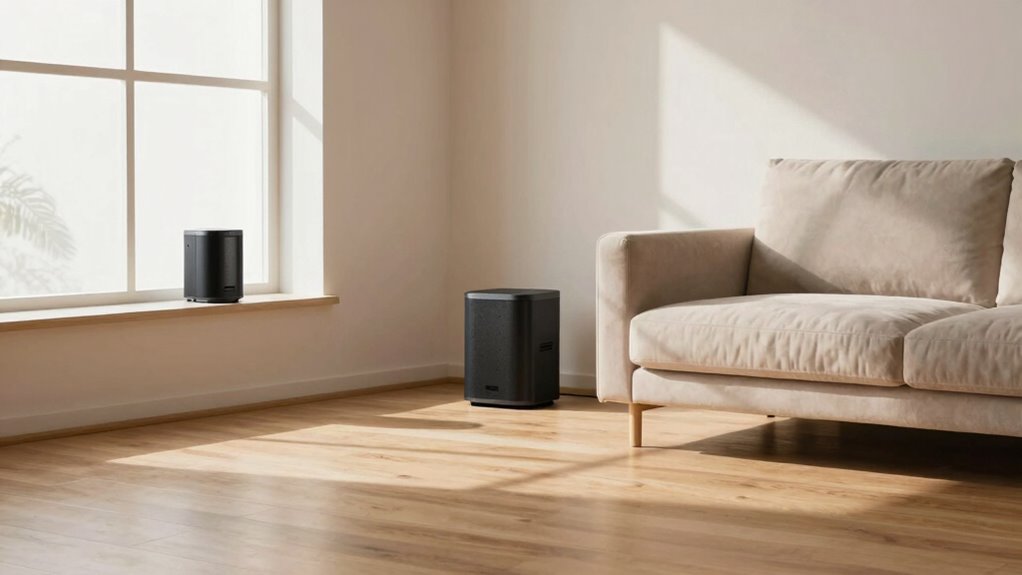
Placing mesh nodes thoughtfully can considerably improve your Wi-Fi coverage and performance. To achieve best signal optimization, position nodes centrally in your home, avoiding thick walls or large metal objects. Keep nodes within a few rooms of each other to guarantee strong connections. Avoid placing them near microwaves or cordless phones, which can interfere with signals. Use the following table to help plan your mesh placement:
| Ideal Placement Tips | Common Mistakes |
|---|---|
| Central, open locations | Corners or basements |
| Elevated positions (shelves, walls) | Placing near electronic interference |
| Keep nodes within 30-50 feet | Clustering nodes too close |
| Avoid obstructions like walls | Blocking signals with furniture |
Effective mesh placement enhances coverage, reducing the number of nodes needed for a strong network. Proper router placement is essential for maximizing your mesh system’s effectiveness, especially since network coverage can depend heavily on placement strategies. Additionally, understanding market trends can help in making informed decisions about device placement and network upgrades. Regularly reviewing wireless interference sources can further improve your setup’s performance.
Key Factors Affecting Mesh Wi-Fi Performance
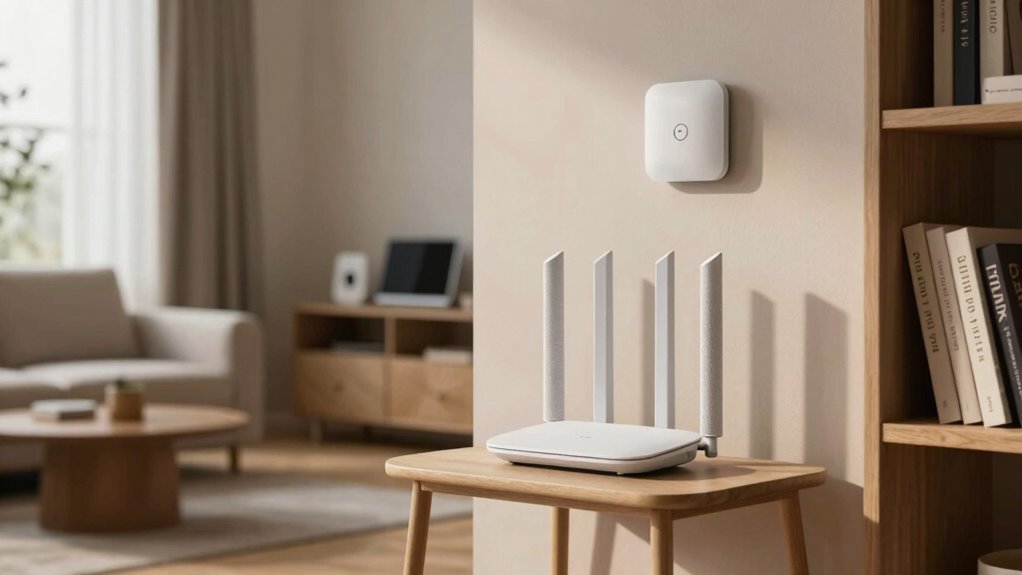
Several key factors can considerably influence your mesh Wi-Fi’s performance, and understanding them can help you maximize your network effectively. Interference sources, such as cordless phones, microwaves, and neighboring Wi-Fi networks, can disrupt your signal and reduce speeds. To minimize this, place your nodes away from these sources and select less congested channels. Device compatibility is also vital; ensure your devices support the mesh system’s standards, like Wi-Fi 5 or Wi-Fi 6, for peak performance. Additionally, older devices or those with outdated hardware may slow down your network. By managing interference sources and verifying device compatibility, you can greatly improve your mesh Wi-Fi’s reliability, coverage, and speed, reducing the need for excessive nodes and creating a smoother online experience. Understanding the importance of AI ethics in technology development can also influence how future mesh systems are designed to prioritize security and user trust. Moreover, being mindful of network security practices can help protect your network from unauthorized access and ensure a more stable connection. Recognizing the impact of natural environment factors such as landscaping and building materials can further optimize your setup. Incorporating knowledge about wireless standards can also guide you in choosing the most compatible and efficient devices for your network. Additionally, considering environmental interference like weather conditions can help maintain consistent performance in various climates.
Debunking Myths About Mesh System Range
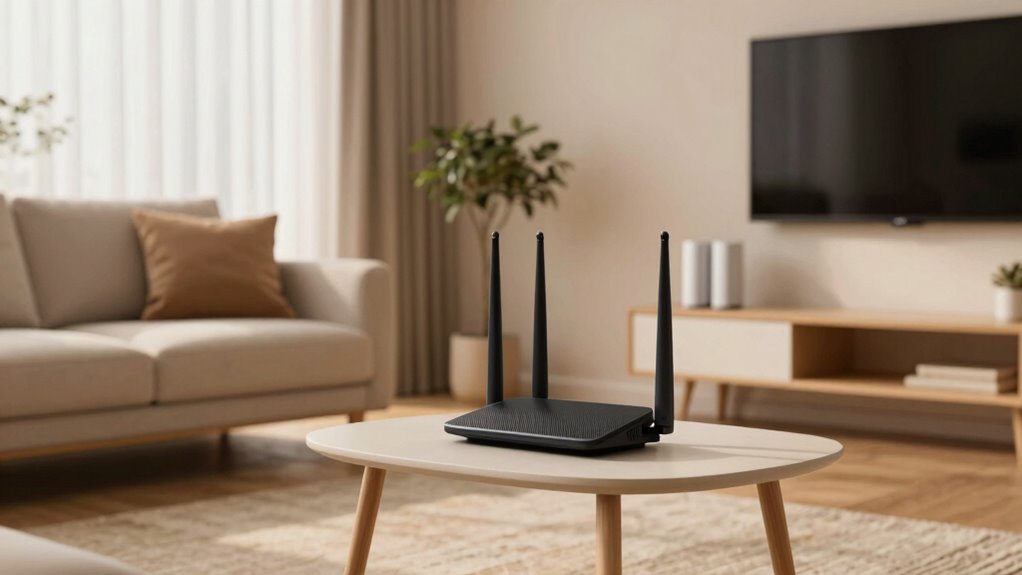
Many people overestimate how far a mesh system’s signal can reach, assuming it covers entire homes effortlessly. In reality, obstructions like walls and furniture can considerably cut down the effective range. Understanding these limits helps you set realistic expectations and optimize your mesh network. Additionally, factors such as signal strength and interference can further influence coverage, making it important to consider these elements when designing your network. For example, just as electric dirt bikes like the KTM can produce substantial horsepower with lightweight designs, a mesh system’s performance depends on its hardware quality to deliver reliable coverage. Recognizing the hardware limitations of your mesh nodes can help prevent overestimating their range and ensure better network performance. Moreover, selecting the right mesh system components can significantly impact overall coverage and reliability. Being aware of hardware constraints allows you to choose the most suitable setup for your space, ensuring optimal safety and comfort.
Range Overestimations Common
It’s common for people to overestimate how far a mesh system’s Wi-Fi signal can reach, leading to unrealistic expectations. Many assume the signal covers the entire home without issues, but signal interference can considerably reduce effective range. Devices that aren’t compatible with your mesh system may also struggle to connect properly, causing dead zones or weak spots. Overestimating the range often results in adding more nodes unnecessarily, complicating your setup and increasing costs. Remember that wireless signals weaken over distance, and obstacles or interference further limit coverage. Instead of relying on exaggerated range claims, consider your home’s layout and device compatibility. Proper planning ensures fewer nodes are needed, providing reliable coverage without overestimating your mesh system’s capabilities. Additionally, understanding signal interference can help you optimize placement and avoid unnecessary nodes.
Obstructions Reduce Effectiveness
Have you ever wondered why your mesh Wi-Fi seems weaker in certain areas? Obstruction effects and material interference are common culprits. Thick walls, metal furniture, and appliances can block signals, reducing mesh system effectiveness. Dense materials like concrete or brick cause significant interference, forcing signals to weaken or drop. Even glass or mirrors can reflect Wi-Fi signals, decreasing coverage. While mesh systems are designed to cover large spaces, obstructions can limit their reach. To improve performance, minimize obstacles between nodes and avoid placing them behind dense materials. Keep in mind that even small obstructions can impact signal strength, so strategic placement is key. Understanding material interference helps you optimize your mesh network and guarantees better coverage throughout your space.
How Smart Mesh Features Improve Coverage
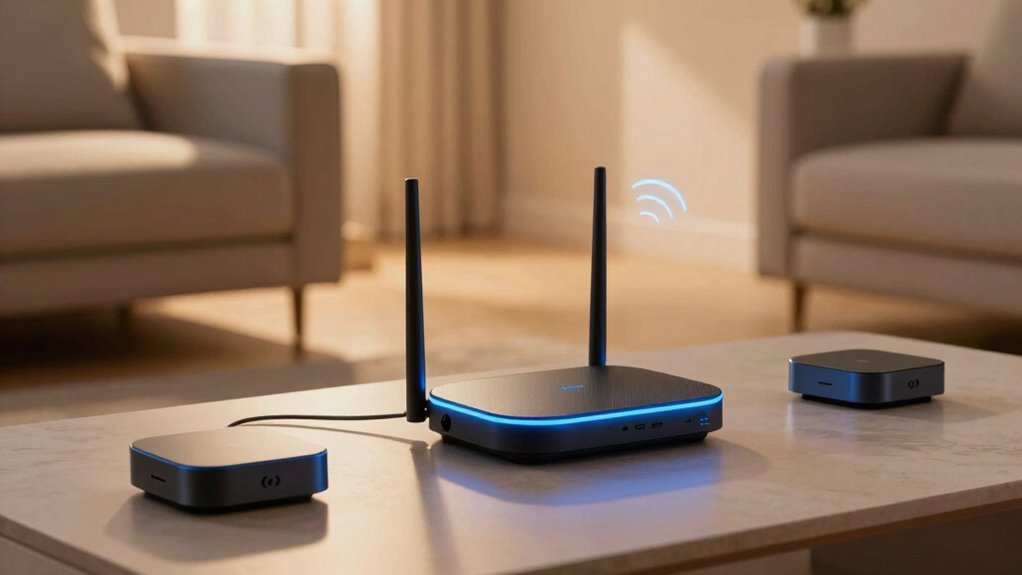
Smart mesh features considerably enhance coverage by dynamically optimizing the network in real-time. They use smart features like automatic band steering, channel selection, and traffic management to guarantee your devices stay connected efficiently. When a device moves or encounters interference, these features adjust the network instantly, rerouting data through the best path. This coverage enhancement means you don’t need as many nodes to blanket your space with strong Wi-Fi. Instead, your mesh system intelligently manages traffic, reducing dead zones and buffering issues. By constantly monitoring and adjusting, smart mesh features keep your network stable and fast across your entire home or office. Ultimately, this real-time adaptability minimizes the need for additional nodes, providing seamless coverage with fewer components.
Do You Need More Mesh Nodes?
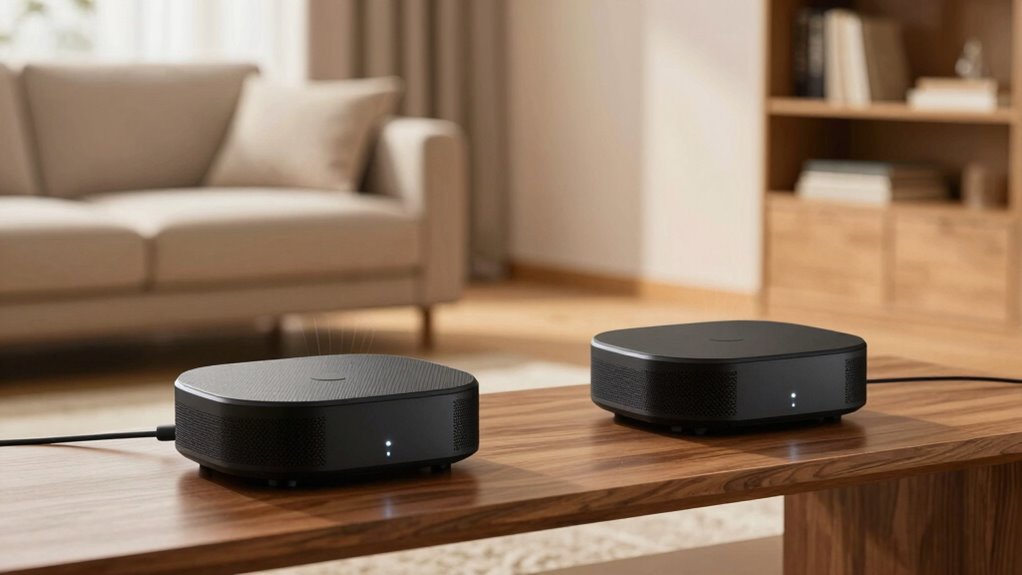
You might wonder if adding more mesh nodes will improve your signal strength and coverage, but more isn’t always better. Too many nodes can increase network complexity and cause stability issues. Before adding more, consider your current setup’s performance and whether adjusting existing nodes could solve your problems.
Signal Strength and Coverage
Even if your mesh network appears to be working fine, issues with signal strength and coverage can still occur. Interference issues from devices like microwaves, cordless phones, or neighboring Wi-Fi networks can weaken signals, creating dead zones. Sometimes, your current nodes might not provide ideal coverage due to placement or device compatibility problems. If you notice slow connections or areas with weak signals, adding more nodes might not always be the solution. Instead, try repositioning your existing nodes to higher or more central locations, away from potential interference sources. Ensuring your devices are compatible with your mesh system is also essential. Sometimes, outdated firmware or incompatible gadgets can cause coverage issues. Proper placement and device compatibility often fix coverage problems without increasing the number of nodes needed.
Network Complexity and Stability
Network stability often depends more on how well your existing mesh nodes are configured and interconnected than simply adding more units. Proper bandwidth management ensures each device gets enough speed without overwhelming the network. Prioritizing essential devices, like work laptops or streaming setups, helps maintain a stable connection during peak times. Instead of rushing to add more nodes, optimize your current setup by adjusting these settings. This reduces network complexity and prevents congestion that often causes instability. Overloading your mesh network with unnecessary nodes can introduce more points of failure, making stability harder to maintain. Focus on fine-tuning your existing nodes for better performance before expanding. A well-managed, streamlined network can handle your household’s demands more efficiently than just increasing node count.
How to Choose the Best Mesh Wi-Fi System for Your Home or Office
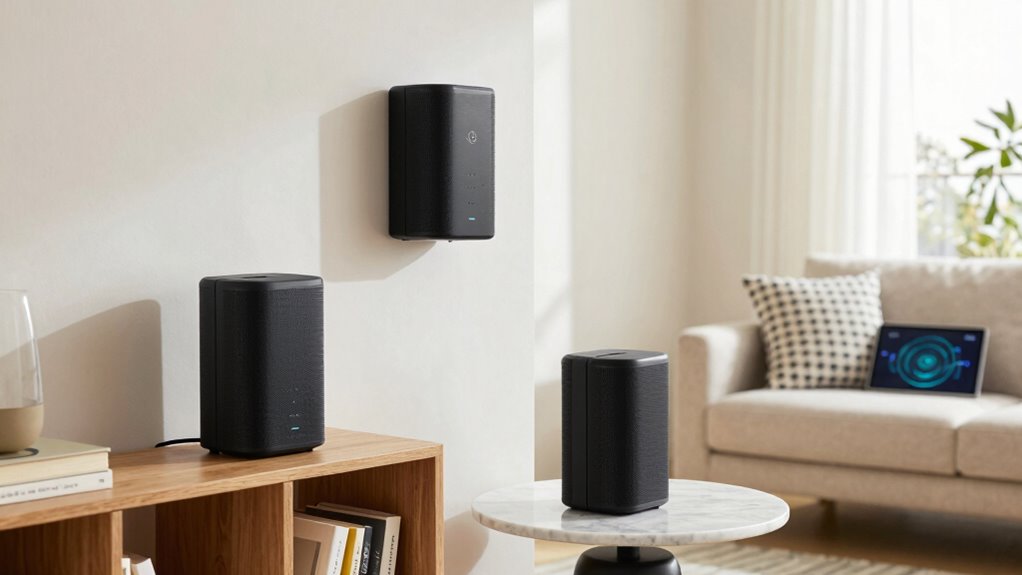
Choosing the right mesh Wi-Fi system involves considering your specific needs and the layout of your space. Start by evaluating the size and structure of your home or office to determine how many nodes you’ll need. Pay attention to wireless interference from other devices or neighboring networks, as this can affect performance. Ensuring device compatibility is also essential; check if your existing gadgets work seamlessly with the system you choose. Look for systems that support your preferred features, like smart home integration or parental controls. Consider the ease of setup and management, especially if you’re not tech-savvy. Ultimately, selecting a system that aligns with your space’s demands and your device ecosystem will provide a reliable, fast connection across your entire area.
Tips to Maximize Wi-Fi Coverage Without Adding More Nodes
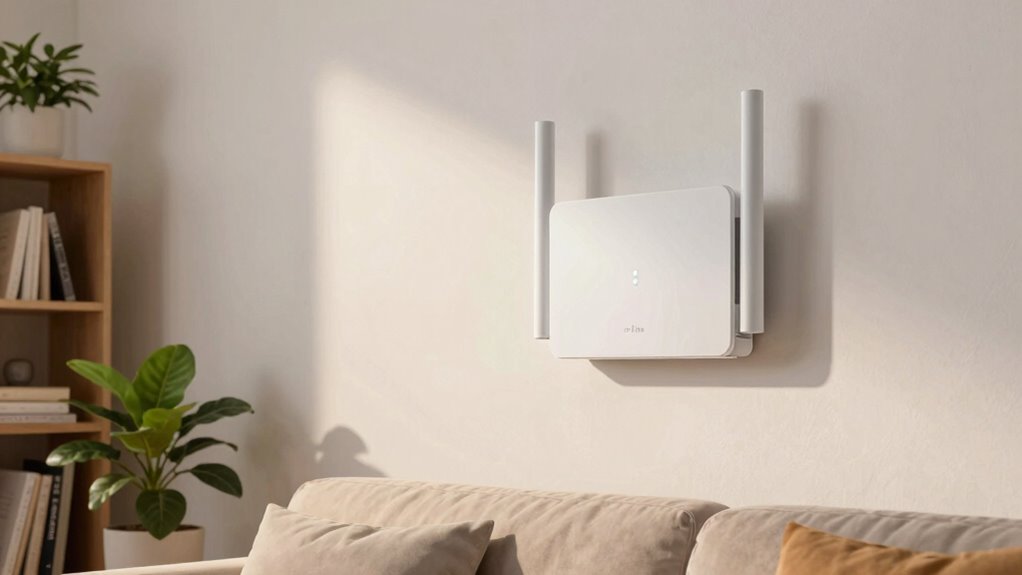
Maximizing your Wi-Fi coverage doesn’t always mean adding more nodes; instead, it’s about enhancing what you already have. Start by placing your nodes in central locations, away from thick walls or metal objects, to boost mesh durability and signal strength. Keep nodes elevated and unobstructed for better coverage. Consider the node aesthetics—placing them in visible spots isn’t necessary if you prefer discreet setups; many models blend seamlessly into home decor. Regularly update your firmware to ensure top performance and security. Avoid placing nodes near appliances or electronics that can cause interference. Also, reposition nodes periodically to identify the best spots for coverage. With these tips, you’ll enhance your mesh network’s reliability without cluttering your space with additional nodes.
Troubleshooting and Optimizing Your Mesh Network
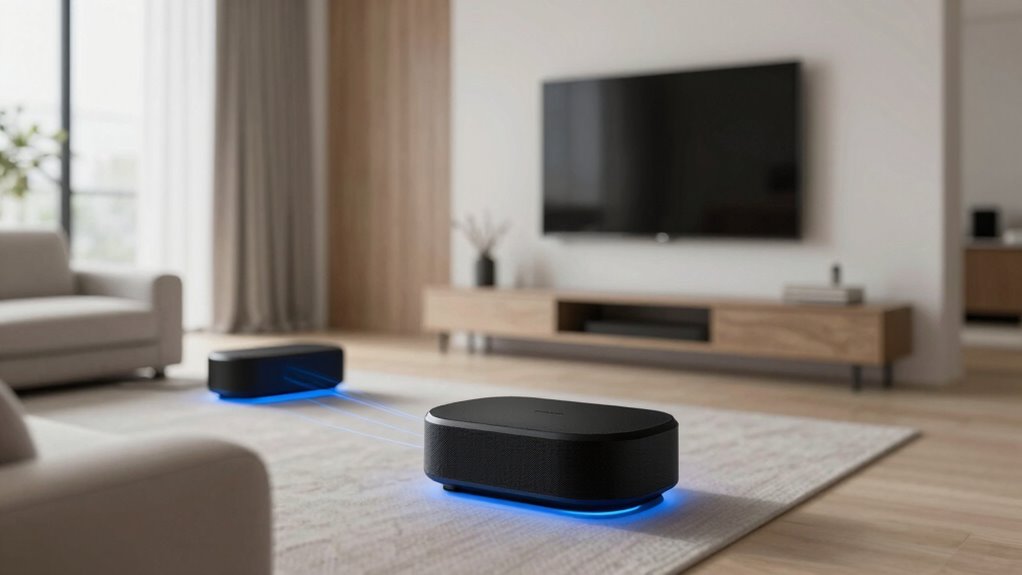
Troubleshooting and optimizing your mesh network can considerably improve your Wi-Fi experience, especially when issues arise unexpectedly. Start by identifying interference sources like microwaves, cordless phones, or neighboring Wi-Fi networks that may disrupt signal quality. Adjust your router placement to minimize obstacles and interference. Check device compatibility; older devices might struggle with your mesh system’s frequency bands, causing slow or dropped connections. Update firmware on your nodes regularly to fix bugs and enhance performance. If certain areas experience weak signals, consider repositioning nodes or using wired backhauls to strengthen connectivity. Running speed tests and monitoring network traffic can reveal bottlenecks. By addressing interference sources and ensuring device compatibility, you’ll optimize your mesh network’s performance and reduce the need for additional nodes.
Frequently Asked Questions
How Does the Size of a Home Impact the Number of Mesh Nodes Needed?
The size of your home directly impacts the number of mesh nodes you need for maximum coverage. Larger homes require more nodes to guarantee the entire coverage area is strong and reliable. As home size increases, you might need additional nodes to eliminate dead zones and maintain fast internet speeds everywhere. Keep in mind, the goal is to match your home’s size and coverage area with enough nodes for seamless connectivity.
Can Existing Wi-Fi Routers Be Upgraded to Mesh Systems?
Think of your existing Wi-Fi router as the foundation of your digital city. Upgrading to a mesh system is possible if your router is compatible; check compatibility first. Sometimes, firmware updates can transform your current device into a more effective hub. If your router isn’t compatible or lacks updates, investing in a dedicated mesh system guarantees seamless coverage and smarter connectivity, like adding new streets to your city’s map.
Do Mesh Systems Work Equally Well for Streaming and Gaming?
Yes, mesh systems work well for streaming and gaming. They efficiently handle bandwidth sharing, ensuring your devices get enough speed, even during heavy use. Plus, mesh networks reduce signal interference by intelligently routing data through ideal nodes, which keeps your connection stable and low-latency. This means smoother gameplay and better streaming quality, making a mesh system a reliable choice for high-demand activities in your home.
Are There Differences in Mesh System Performance Based on Home Layout?
Yes, your home layout affects mesh system performance. Interference issues from thick walls, appliances, or metal surfaces can weaken signals, requiring strategic node placement. Aesthetic considerations also matter; you might prefer discreet nodes to blend with your decor. By placing nodes thoughtfully—away from interference sources and in visible spots you’re comfortable with—you’ll guarantee ideal coverage and performance tailored to your home’s unique layout.
How Do Mesh Systems Handle Multiple Devices Simultaneously?
Mesh systems handle multiple devices simultaneously by intelligently managing device load and reducing network congestion. They prioritize traffic, ensuring each device gets adequate bandwidth, which maintains smooth performance even when many devices connect. The system dynamically routes data through the most suitable nodes, balancing the load efficiently. This way, you experience fewer drops and faster speeds, regardless of how many devices are online, providing a seamless connected experience.
Conclusion
So, next time you’re tempted to splurge on more mesh nodes, remember—less is often more. Your Wi-Fi doesn’t need a sprawling army of nodes; it just needs the right placement and a touch of savvy. After all, who knew that boosting your home’s Wi-Fi could be as simple as a few well-placed nodes and a dash of patience? Less clutter, fewer headaches—now that’s a modern miracle worth celebrating.
Halloween Picks
halloween
As an affiliate, we earn on qualifying purchases.