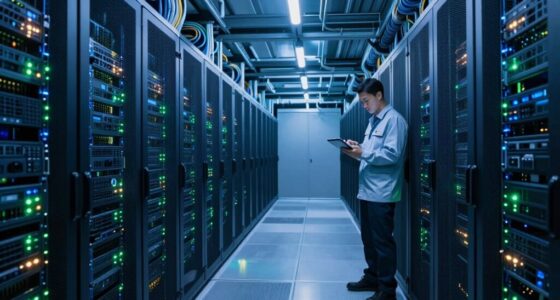

You often underestimate power, cooling, and facility constraints because you’re focused on immediate needs and short-term growth projections, ignoring how infrastructure evolves. You may assume current systems will handle future demands, without considering scalability or airflow optimization. Overlooking these factors can lead to unexpected outages, thermal issues, and costly upgrades. If you keep these pitfalls in mind, you’ll be better equipped to plan for sustainable facility growth and avoid costly disruptions.

Get audio and creator gear delivered free — and shop member deals
- Fast, free delivery on millions of items
- Access to Prime Big Deal Days deals on October 6–7
- Prime Video, Amazon Music and more included
Key Takeaways
- Teams focus on immediate needs, overlooking future growth and increasing demands.
- They assume existing cooling and power systems will scale without upgrades.
- Short-term data and current capacity often overshadow comprehensive future planning.
- Lack of visualization tools leads to underestimated airflow, heat, and layout challenges.
- Underestimating infrastructure complexity results from insufficient awareness of exponential growth impacts.
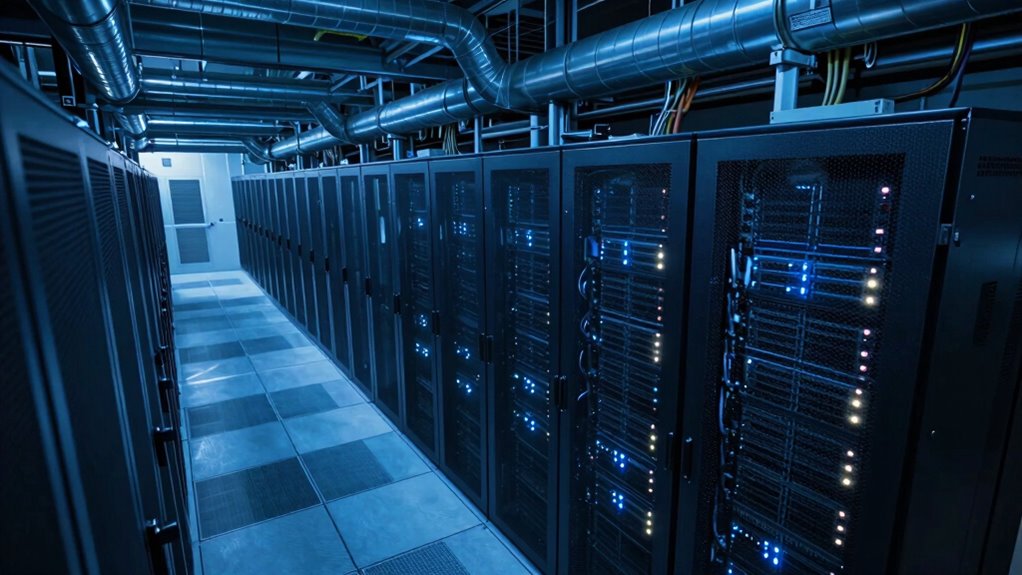
Have you ever underestimated how much power, cooling, and facility space your data center truly needs? It’s a common mistake, one that often stems from focusing too narrowly on immediate needs or initial growth projections. But overlooking the true demands of infrastructure planning can lead to serious issues down the line. When you don’t accurately account for energy efficiency and future expansion, you risk bottlenecks, increased operational costs, and even system failures. The challenge is that data centers are complex ecosystems, and their requirements grow quickly once you factor in all the components—servers, networking equipment, storage, and the cooling systems that keep everything running smoothly.
Many teams underestimate power needs because they consider only current or short-term demands. But data centers aren’t static. As your infrastructure scales, so does the power requirement, often exponentially. Without an all-encompassing understanding of energy efficiency principles, you might install power systems that seem sufficient initially but become strained as your operations grow. This can cause unexpected outages or force costly upgrades that disrupt your business. Proper infrastructure planning involves anticipating future expansions and incorporating scalable power solutions from the start. It’s about designing with flexibility and efficiency in mind, ensuring your facility can support growth without compromising performance or incurring unnecessary expenses.
Scalable power solutions are essential to support future growth and avoid costly upgrades or outages.
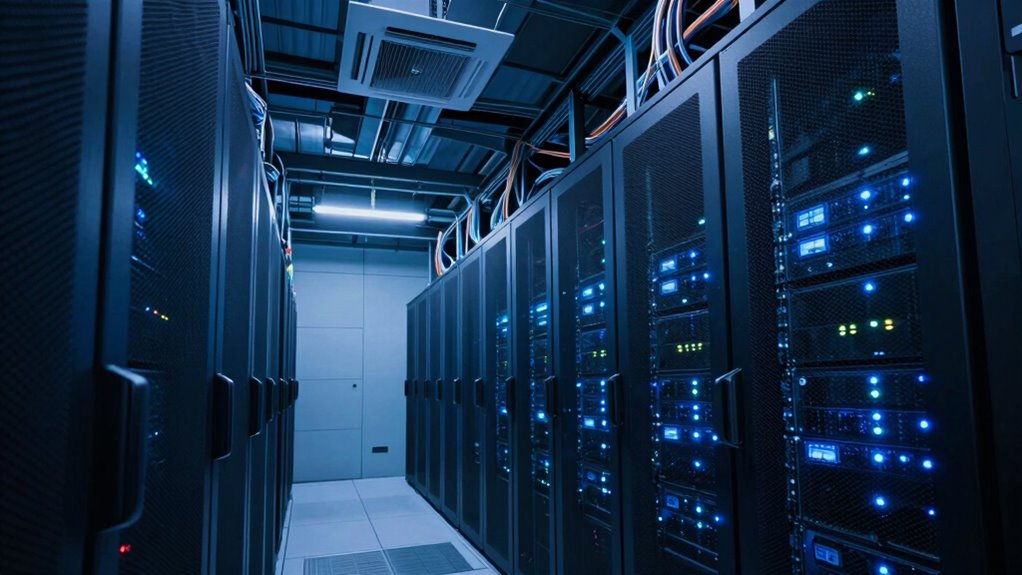
Cooling is another often overlooked aspect. It’s tempting to assume existing cooling systems will handle future loads, but that’s rarely the case. Cooling capacity must be carefully assessed and integrated into your infrastructure planning. Overlooking this can lead to overheating, equipment failures, and increased downtime. More energy-efficient cooling solutions can help, but only if they’re included in your initial design. You need to think about how airflow, heat densities, and cooling redundancies will work in tandem with your power systems. This way, you prevent thermal issues that could compromise your entire data center’s reliability. Additionally, understanding symbolism of shapes and patterns can help visualize and optimize airflow and heat flow within your facility. Furthermore, neglecting to plan for facility layout can also hinder effective cooling and space utilization. Proper planning should also account for future equipment upgrades, ensuring your cooling and power infrastructure can adapt to evolving technology needs. Recognizing the importance of system scalability early on can make the difference between smooth expansion and costly retrofits.
scalable data center power supply
As an affiliate, we earn on qualifying purchases.
As an affiliate, we earn on qualifying purchases.
Frequently Asked Questions
How Can Teams Better Predict Future Infrastructure Needs?
To better predict future infrastructure needs, you should conduct regular future trend analysis, considering factors like growth and technological advancements. Incorporate technology integration insights to understand how new systems might impact power, cooling, and facilities. Engage cross-functional teams early, gather data, and update your forecasts frequently. This proactive approach guarantees your infrastructure scales effectively, avoiding surprises and supporting ongoing expansion and innovation.
What Are Common Signs of Underestimated Facility Constraints?
You’ll know your facility constraints are underestimated when power audits reveal more capacity issues than expected, and space utilization hits a wall, causing bottlenecks. Overcrowded racks and frequent cooling failures are glaring signs. If your team constantly fights for space or struggles with unexpected power demands, it’s a clear warning. These signs highlight that your infrastructure planning needs a serious upgrade before your operations become an unstoppable chaos.
How Do Cooling Requirements Vary With Different Hardware Types?
Cooling requirements vary with different hardware types due to hardware diversity, which impacts heat output and energy consumption. High-performance servers generate more heat, demanding advanced cooling solutions, while networking equipment may need less intensive cooling. Cooling variability depends on the hardware’s design and workload. You must assess each hardware type’s specific needs to guarantee efficient cooling, avoid overheating, and optimize facility capacity, preventing potential operational disruptions.
What Role Does Energy Efficiency Play in Capacity Planning?
Energy efficiency acts as your guiding light in capacity planning, especially with renewable integration and peak load considerations. You need to keep your eyes on how efficiently your systems use power, reducing waste and costs. By doing so, you prevent overestimating your needs and guarantee your facility can handle fluctuations. It’s like putting your money where your mouth is—smart planning saves you from surprises and keeps everything running smoothly.
How Can Teams Improve Collaboration With Facility Management?
To improve collaboration with facility management, you should address communication barriers openly and regularly. Share clear, detailed information about your team’s needs and constraints, and listen to their insights. By fostering transparency and understanding, you can streamline resource allocation, ensuring power and cooling systems meet your requirements. Building a partnership based on mutual respect and open dialogue helps prevent issues and optimizes facility operations for everyone involved.
Conclusion
You must recognize the limits of power, cooling, and facilities to avoid costly mistakes. You need to plan carefully, communicate clearly, and stay informed. You should assess your infrastructure, anticipate your needs, and adapt your strategies. By doing so, you prevent oversights, avoid disruptions, and guarantee efficiency. In understanding these constraints, you empower your team, enhance your operations, and secure your success. Remember, awareness and preparation are your best tools for overcoming these challenges.
Fall Picks
fall essentials
As an affiliate, we earn on qualifying purchases.