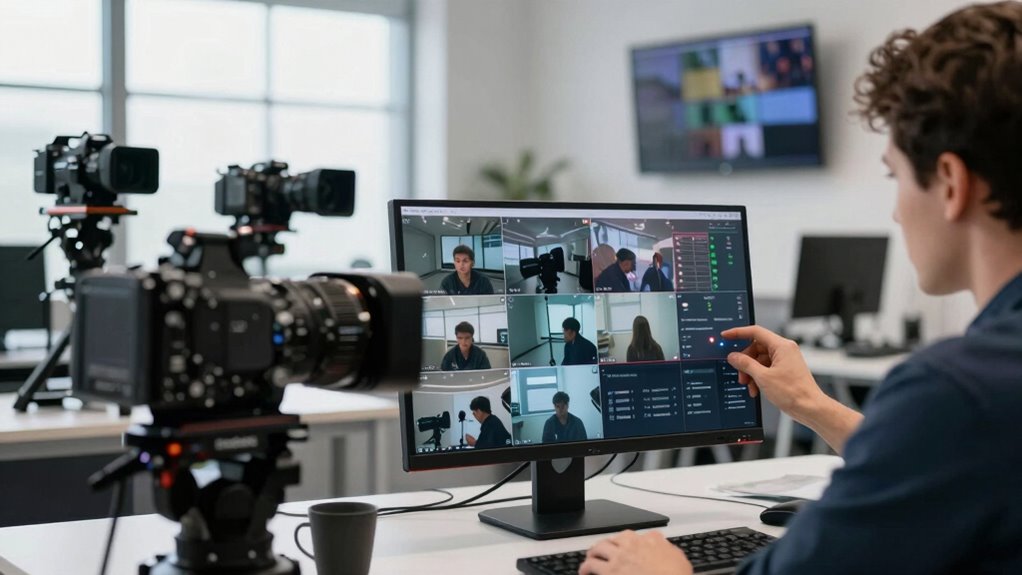

To prevent lost takes, make monitoring a consistent habit during filming. Check framing, focus, and exposure frequently, and verify audio are synced because catching issues early saves time and costs. Use reliable monitors and remote apps to review footage in real-time, and keep equipment calibrated. Stay attentive and minimize distractions behind the camera. Mastering these routines guarantees your shots meet quality standards. Keep going, and you’ll discover how technology and crew training can elevate your monitoring practice even further.
Key Takeaways
- Regularly review footage during takes to catch technical flaws early and avoid costly reshoots.
- Continuously check focus, framing, and lighting to ensure shot quality and prevent missed or unusable takes.
- Use remote monitoring tools to observe footage in real-time from a distance, enabling immediate adjustments.
- Maintain consistent camera settings and background conditions to prevent discrepancies that could lead to lost takes.
- Train crew to recognize and address potential issues quickly, ensuring smooth shooting and reducing the risk of lost takes.
As an affiliate, we earn on qualifying purchases.
Why Monitoring Your Camera During Takes Matters
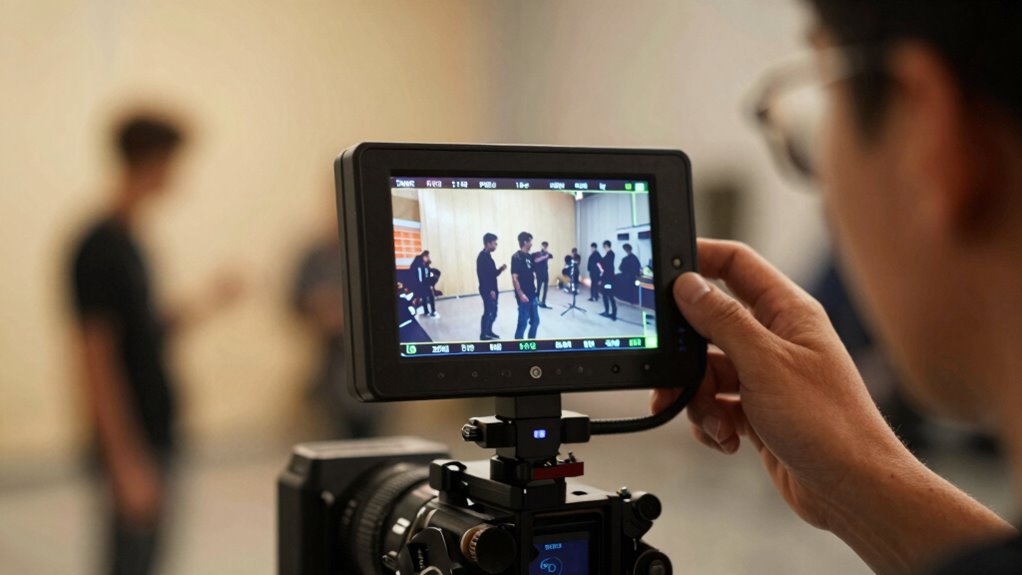
Monitoring your camera during takes is crucial because it allows you to catch issues immediately and guarantee everything looks right before moving on. When you keep an eye on the shot framing, you ensure the subject stays correctly positioned within the frame, preventing costly reshoots. Checking camera focus is equally important; if the focus drifts, the footage can lose clarity and impact, forcing you to redo scenes. By actively monitoring, you catch these problems early, saving time and effort later. This habit also helps you verify that lighting and background elements remain consistent. Additionally, understanding the importance of contrast ratio can help ensure your footage maintains depth and clarity in different lighting conditions. Paying attention to camera accessories can further enhance your monitoring process, giving you better control over the shot quality. Proper lighting techniques are also essential for maintaining visual consistency and quality. Incorporating real-time feedback into your workflow allows for immediate adjustments, further improving shot accuracy. Being aware of production design elements can help you anticipate potential visual inconsistencies before they occur. Overall, staying attentive during takes keeps the quality high and reduces the risk of overlooked mistakes, making your filming process smoother and more efficient.
What Equipment You Need for Effective Camera Monitoring
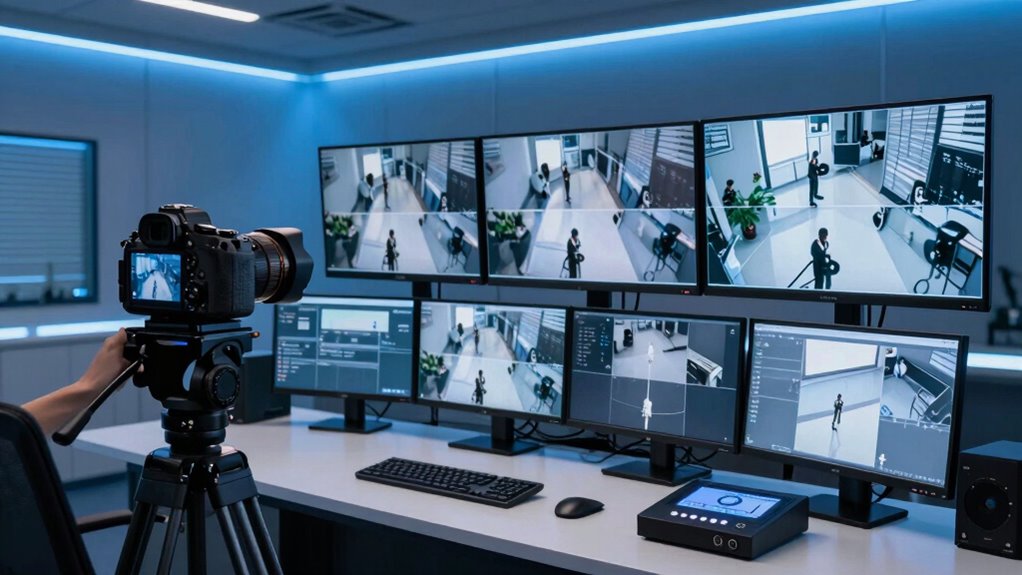
To monitor your camera effectively, you’ll need the right equipment, including essential camera types suited for your needs and reliable monitoring tools. You should also consider power supply options to guarantee continuous operation without interruptions. With the right setup, you can maintain a seamless monitoring process and catch issues early. Incorporating accurate measurement tools, such as testing accuracy, can help ensure your equipment performs reliably over time. Additionally, understanding urban traffic confidence can help you select the most effective camera angles and placements for your environment. Ensuring your monitoring system accounts for early detection signs can significantly enhance your ability to spot potential problems before they escalate. Selecting the appropriate best makeup products for women over 50 can also enhance the clarity of footage by reducing glare and improving visibility in various lighting conditions. Considering large number conversions can further aid in interpreting data, especially when analyzing extensive footage or reports.
Essential Camera Types
Choosing the right camera types is essential for effective monitoring, as each serves a specific purpose depending on your needs. Your selection should consider camera ergonomics for comfortable use and lens compatibility to guarantee clear visuals. Different cameras excel in various environments, from fixed-position security units to portable handheld models. Additionally, understanding sauna safety tips can inform how you monitor sensitive or high-temperature areas effectively. Incorporating the right camera technology can also help you recognize spiritual awakening and enlightenment, supporting your overall vigilance and awareness. Recognizing different wall art trends can also enhance the monitoring environment, making it more conducive to your specific needs. Considering the integration of landscaping or outdoor features can also improve the effectiveness of outdoor surveillance setups, especially when monitoring backyard transformation essentials. Regular training and auditory processing exercises can further enhance your ability to interpret surveillance data accurately, ensuring you stay alert and responsive.
Reliable Monitoring Tools
Selecting the right camera types sets a strong foundation for effective surveillance, but having the proper monitoring tools is what keeps everything running smoothly. You need a reliable monitor or device to view footage clearly, allowing you to perform creative framing and spot issues quickly. High-resolution screens enable detailed checks, reducing missed shots. A good pair of headphones helps you catch audio cues, while adjustable lighting controls allow you to make lighting adjustments for ideal image quality. Consider using a remote monitoring app for quick access from anywhere, ensuring you stay alert without being physically present. These tools help you maintain a sharp eye on your footage, preventing lost takes and ensuring your shoot stays on track. Reliable monitoring tools keep your workflow efficient and your footage secure, much like verifying lubricant specs ensures equipment runs smoothly and avoids costly failures. Incorporating real-time feedback from monitoring devices can further enhance your ability to respond promptly to issues as they arise. Regular calibration and equipment maintenance are essential to maintaining accurate and reliable footage quality, preventing potential errors caused by equipment drift or malfunction.
Power Supply Considerations
A stable and reliable power supply is vital for effective camera monitoring, ensuring your equipment stays operational throughout shoots. To prevent interruptions, use battery backups to maintain power during outages or fluctuations. These backups provide peace of mind, especially on location shoots where power sources might be limited or unstable. Always verify that your cameras and monitors have appropriate power sources, whether through dedicated outlets or portable batteries. Consider investing in uninterruptible power supplies (UPS) for critical equipment, which can bridge power gaps and protect against surges. Having reliable power sources guarantees continuous monitoring, minimizes lost takes, and keeps your workflow smooth. Proper power management is an essential aspect of maintaining consistent, high-quality camera monitoring. Additionally, understanding power supply considerations can help optimize performance and extend equipment lifespan, much like how body-based healing methods support sustained recovery in somatic therapy. Using fuel choices such as gas or propane can also be crucial for portable power solutions in remote locations. Being aware of power fluctuations can help you take proactive steps to safeguard your equipment from damage, especially when considering the importance of affiliate disclosures and other transparency measures that promote trust and accountability in your workflow.
How to Set Up Your Camera Monitoring System on Set
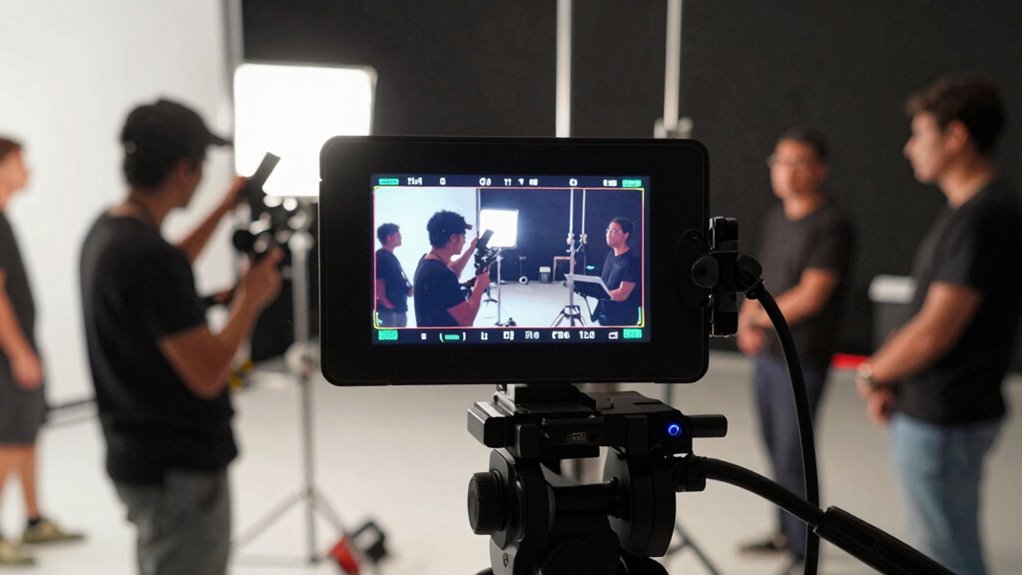
When setting up your camera monitoring system, start by choosing the right equipment that matches your needs and budget. Position your cameras strategically to cover all critical angles without blind spots, ensuring clear visibility for the crew. Keep these points in mind to create an efficient setup that helps you monitor effectively throughout production.
Equipment Selection Tips
Ensuring you choose the right equipment is essential for a smooth camera monitoring setup on set. Start with a high-quality monitor that offers accurate color reproduction and sufficient resolution. Proper lens calibration ensures the image on your monitor matches what’s captured by the camera, preventing misjudgments during takes. Focus on ergonomic equipment—lightweight monitors and adjustable mounts—so you can set up for long shooting days without strain. Compatibility is key; verify that your monitor connects seamlessly with your camera system and supports necessary inputs and outputs. Consider durability for rugged set conditions. Investing in reliable, well-designed gear reduces setup time and minimizes the risk of technical issues, helping you maintain a steady, effective monitoring process throughout the shoot.
Optimal Camera Placement
Have you ever wondered how the right camera placement can make or break a shot? Proper positioning is key to achieving creative framing that enhances your scene’s storytelling. Placing cameras at the right angles guarantees you capture the desired perspective while maintaining lighting consistency across takes. Position your monitors so you can easily see the framing and focus without disrupting the crew’s workflow. Consider how different angles influence the visual composition and how they align with your director’s vision. Good placement also minimizes shadows or glare that could compromise lighting quality. By thoughtfully setting up your camera system, you reduce the risk of missed details and ensure a smooth, efficient shoot. This careful setup ultimately supports your goal of capturing perfect, consistent footage every time.
Best Practices for Camera Monitoring During a Shoot
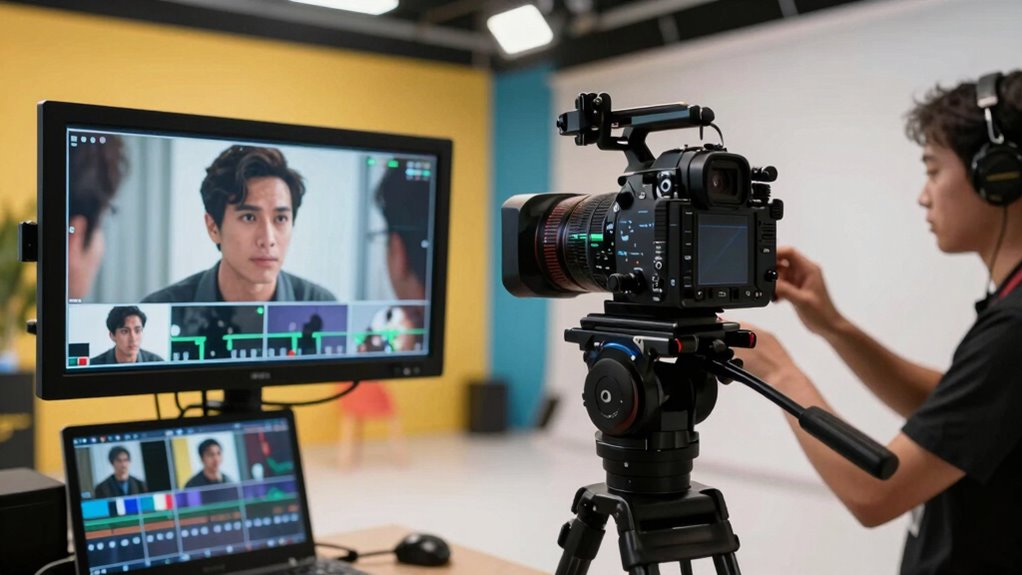
Effective camera monitoring during a shoot requires attentiveness and a proactive approach. You should regularly check framing and focus, ensuring lighting techniques enhance the scene without creating shadows or glare. Consistently verify sound synchronization, making sure audio levels are consistent and clear, preventing costly re-dubs or reshoots. Keep an eye on monitor settings to avoid color or exposure issues that could compromise footage quality. Stay alert to changes in lighting conditions and adjust camera settings accordingly. Communicate with your team to confirm that lighting and sound cues are aligned. By maintaining vigilance throughout the shoot, you reduce the risk of missed takes or unusable footage, saving time and resources while ensuring the final product meets your standards.
How Technology Can Improve Your Camera Monitoring
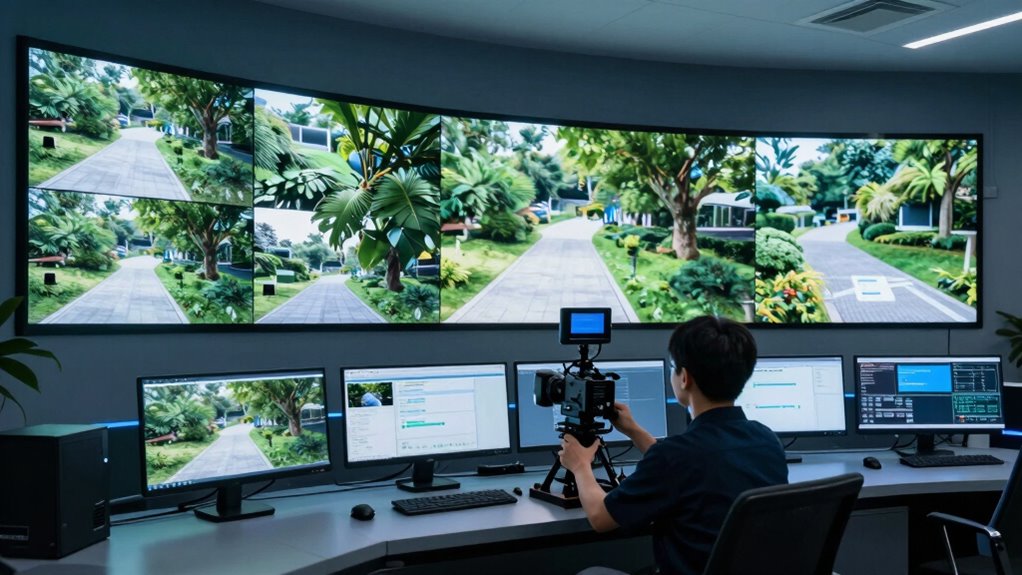
Advances in technology have revolutionized camera monitoring, giving you tools that enhance precision and efficiency on set. With remote control and wireless connectivity, you can manage your camera setups effortlessly. This allows you to:
- Adjust focus, zoom, and framing remotely, saving time during shoots.
- Monitor footage in real-time from a distance, ensuring shot accuracy.
- Switch between multiple cameras seamlessly using wireless links.
- Receive instant notifications of technical issues or misalignments.
These features reduce the need for physical adjustments and continuous checks, minimizing disruptions. Wireless connectivity ensures you stay connected with your camera system anywhere on set. Overall, technology streamlines your workflow, keeps you informed, and helps prevent lost takes by maintaining peak camera performance.
Common Mistakes to Avoid When Monitoring Your Camera
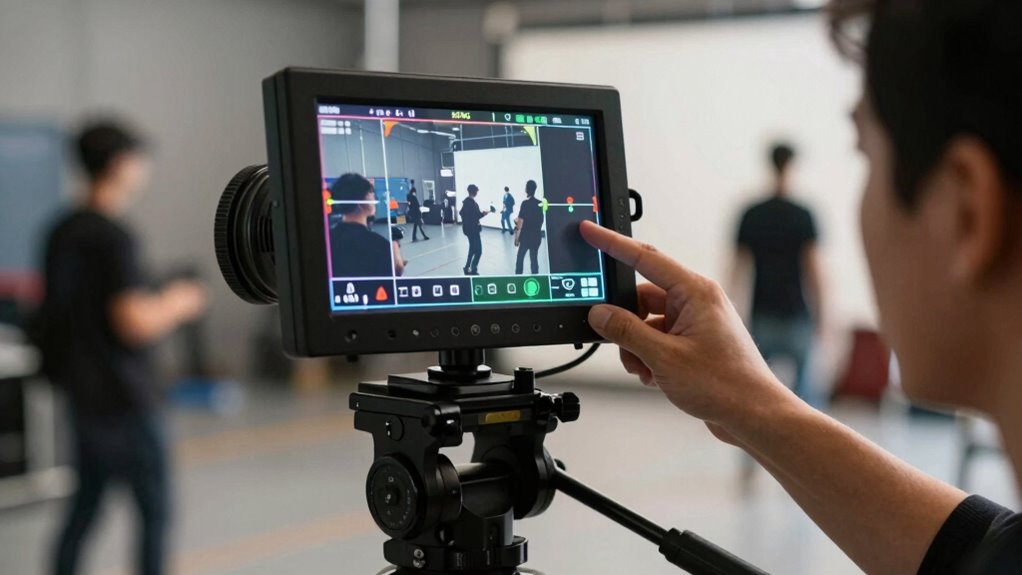
While technology provides powerful tools for camera monitoring, it’s easy to fall into common pitfalls that can compromise your shot quality. One mistake is neglecting lighting consistency, which can cause uneven exposure or distracting shadows. Another is poor audio synchronization, leading to lag or mismatched sound and visuals. To prevent this, stay attentive to both visual and audio cues during shoots. Use the table below to keep your focus clear:
| Mistake | Solution |
|---|---|
| Ignoring lighting issues | Regularly check and adjust lighting |
| Overlooking audio sync | Monitor audio levels and sync in real-time |
| Failing to review footage | Frequently review shots to catch issues |
| Not maintaining equipment | Regularly service cameras and mics |
| Distractions during monitoring | Minimize interruptions for focus |
Avoid these pitfalls to ensure seamless shots and professional results.
Training Your Crew to Monitor Cameras Effectively
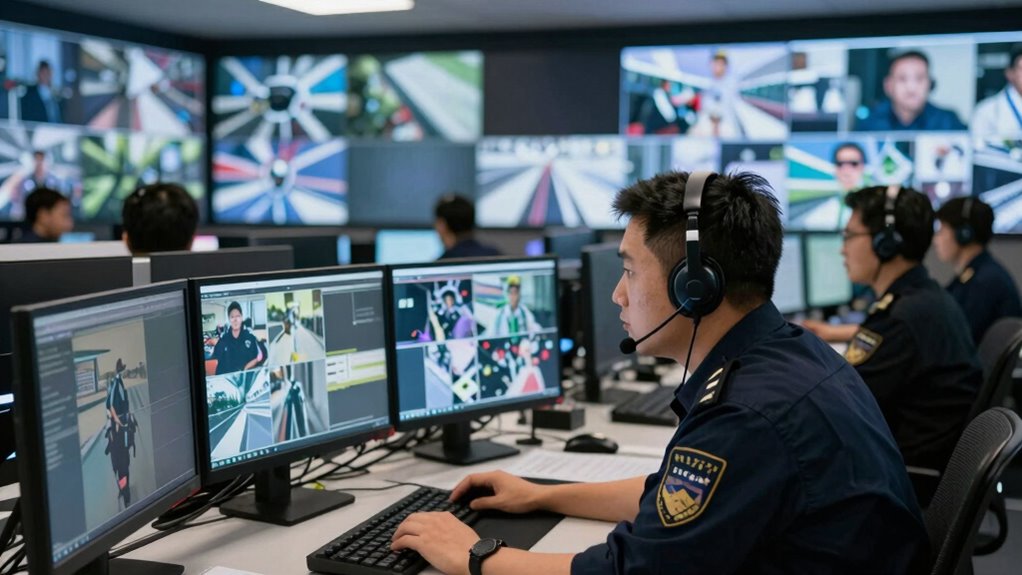
- Provide hands-on training on camera controls and settings.
- Encourage constant communication among crew members for real-time updates.
- Teach crew members to recognize signs of malfunction or missed shots early.
- Stress the importance of proper ergonomics to maintain alertness during long shoots.
How Camera Monitoring Boosts Shooting Efficiency
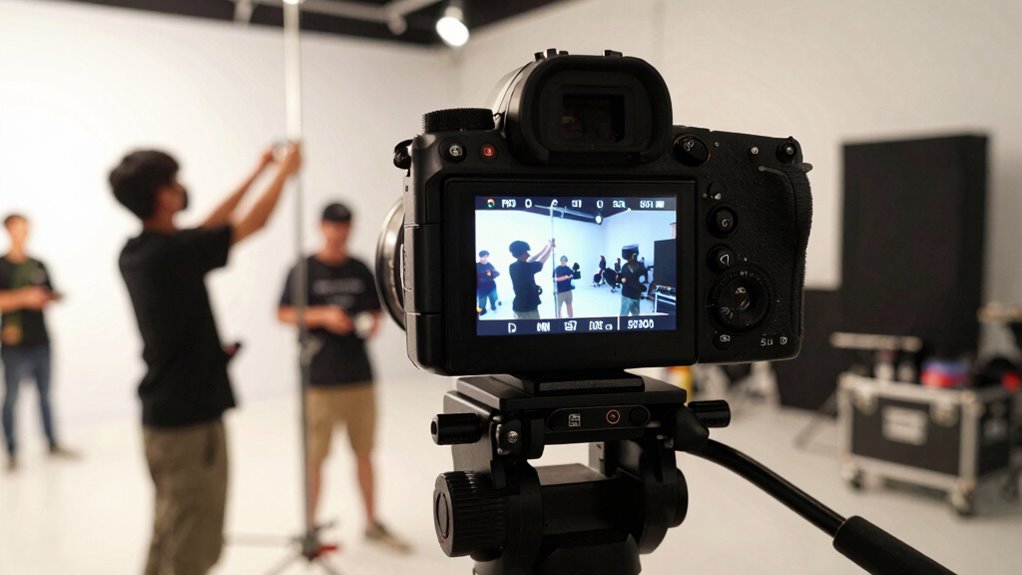
Effective camera monitoring directly enhances shooting efficiency by allowing you to catch issues early and make quick adjustments. With vigilant monitoring, you can identify lighting technique problems, such as inconsistent exposure or unwanted shadows, before they ruin a shot. It also helps guarantee sound synchronization stays intact, preventing costly retakes. By regularly checking footage, you avoid wasting time on scenes with technical flaws. This proactive approach minimizes delays, keeps production on schedule, and reduces re-shoots. Additionally, monitoring enables real-time feedback on framing and focus, saving time during editing. Overall, staying attentive through camera monitoring streamlines your workflow, maintains high-quality standards, and maximizes shooting productivity, ensuring every take contributes effectively to your project.
Frequently Asked Questions
How Do I Choose the Best Camera Monitoring System for My Budget?
To choose the best camera monitoring system within your budget, start with a cost comparison of different options, considering features and affordability. Research brand reputation to guarantee reliability and good customer support. Look for systems that offer essential features without unnecessary extras, and read reviews to see how they perform in real-world scenarios. Balancing cost and quality helps you find a dependable system that fits your needs and budget.
Can Remote Camera Monitoring Increase Safety on Set?
Remote camera monitoring acts like a safety net, catching issues before they become problems. By providing remote visibility, you can spot potential hazards or mistakes in real time, allowing quick intervention. This safety enhancement keeps everyone alert and reduces accidents on set. With remote monitoring, you gain peace of mind knowing you’re actively managing safety, even from afar, ultimately creating a safer, more efficient environment for your cast and crew.
What Are the Signs of Ineffective Camera Monitoring?
You’ll notice ineffective camera monitoring when you miss camera blind spots or overlook issues during shots. Signs include frequent missed cues, delayed responses, and signs of monitoring fatigue, such as distraction or inattention. If you’re not actively checking all angles or catching potential problems early, it indicates your focus is waning. Staying alert, rotating monitors, and taking breaks can help you maintain sharpness and prevent vital moments from slipping by unnoticed.
How Often Should Crew Members Be Trained on Monitoring Techniques?
You should train your crew on monitoring techniques at least every three months, as studies show frequent refreshers boost attention and reduce errors. Consistent crew training keeps skills sharp, ensuring monitoring frequency remains high during shoots. Regular updates foster better communication and quicker problem-solving. By maintaining a steady training schedule, you prevent lapses, keep everyone alert, and minimize the chances of missed takes, ultimately saving time and resources on set.
What Are the Latest Innovations in Camera Monitoring Technology?
You should explore the latest innovations like drone surveillance and AI-powered analytics. Drones now provide real-time aerial views, offering a broader perspective and quick access to hard-to-reach areas. AI analytics help you detect issues instantly, analyze footage faster, and improve decision-making. Together, these technologies enhance camera monitoring, reduce errors, and prevent lost takes by giving you more control and better insights during filming.
Conclusion
By mastering camera monitoring, you paint a vivid picture of each shot, ensuring every detail is captured flawlessly. With attentive eyes and the right tools, you create a seamless flow on set—like a conductor guiding an orchestra. When you stay vigilant, you prevent lost takes and preserve your story’s integrity. In this dance of lights and lenses, your careful oversight transforms chaos into artistry, leaving you with a finished masterpiece that speaks with clarity and purpose.