
📊 Full opportunity report: Acoustic Dampening, Placement, and the “Rig in the Closet” Setup on ThorstenMeyerAI.com — validation score, market gap, and execution plan.

Get audio and creator gear delivered free with Prime
- Fast, free delivery on millions of items
- Prime Video, Amazon Music and more included
- Member-only deals all year
TL;DR
This article explains how moving AI workstations out of direct reach and using proper placement techniques, including the ‘rig in the closet’ setup, can significantly reduce noise. It emphasizes the importance of ventilation and structural decoupling for effective noise management.
Moving high-power AI workstations into separate rooms or closets, combined with proper ventilation, is emerging as the most effective way to reduce noise without compromising performance, according to recent expert guidance.
Experts emphasize that the most impactful method to reduce noise from AI workstations is to increase the physical distance between the machine and the user. Placing the rig in another room or a closet, and accessing it remotely over a network, eliminates the need for extensive acoustic treatment.
The ‘rig in the closet’ setup is effective but requires careful ventilation. Sealed spaces trap heat, which can cause thermal throttling and increased fan noise. Proper airflow, either passive or active, is essential to prevent overheating. Purpose-built soundproof cabinets with temperature-controlled exhaust systems offer a solution for maintaining both silence and cooling.
Additional measures include structural decoupling, such as rubber feet or anti-vibration pads, to reduce structure-borne noise, and strategic placement to minimize airborne sound transmission. These techniques collectively maximize noise reduction while maintaining hardware safety and performance.
Acoustic dampening
& the rig in the closet.
The most powerful noise fix isn’t a material — it’s a floor plan. A rig you can’t hear because it’s in another room beats any amount of foam. Tap the approaches in Part 1 to see what actually works.
(another room)
(levers 1–4)
(door / barrier)
(acoustic foam)
Contain the noise, not the heat
Why Proper Placement and Ventilation Are Critical
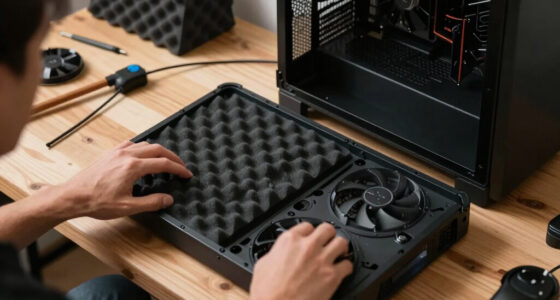
Effective noise management in AI workstations enhances workspace comfort and reduces distractions, especially when hardware is placed in shared environments. Proper placement and ventilation also prevent overheating, which can damage equipment and impair performance. These strategies are cost-effective and scalable, making them essential for anyone deploying high-power AI rigs in office or home settings.soundproof computer server cabinet
As an affiliate, we earn on qualifying purchases.
As an affiliate, we earn on qualifying purchases.
The Evolution of Noise Reduction Strategies for AI Rigs
Traditionally, noise mitigation focused on acoustic foam and soundproofing within the workspace. Recent guidance highlights that the most effective approach is to move the hardware out of the immediate environment. This shift aligns with the growing use of remote access for AI inference tasks, where the physical location of the machine is less relevant. The 'rig in the closet' concept has gained popularity, but it requires balancing noise reduction with thermal management, as high-performance GPUs generate significant heat that must be vented properly."The most effective noise reduction isn't acoustic foam but distance. Moving your rig into another room or closet and accessing it remotely is often the simplest and most effective solution."
— Thorsten Meyer
Uncertainties About Long-Term Use of Closet Setups
While placing AI rigs in closets is effective for noise reduction, questions remain about long-term thermal management and hardware longevity. The optimal ventilation solutions and their integration with soundproof enclosures are still evolving, and costs can be significant for purpose-built cabinets.
Next Steps for Implementing Quiet AI Workstations
Future developments may include more affordable, integrated soundproof and cooling cabinets tailored for high-power GPUs. Ongoing research and industry innovations aim to improve ventilation solutions and reduce costs, making 'rig in the closet' setups more accessible. Users are advised to carefully evaluate ventilation strategies and monitor temperatures regularly when deploying this approach.
Key Questions
Is placing my AI rig in a closet safe?
Yes, if proper ventilation and temperature controls are implemented. Sealing the space without airflow can cause overheating, so ventilation is essential for safety and hardware longevity.
What are the best ventilation options for a closet setup?
Passive vents combined with quiet exhaust fans or purpose-built soundproof cabinets with integrated cooling systems are recommended. Regular temperature monitoring is also advised.
Can acoustic foam alone significantly reduce noise?
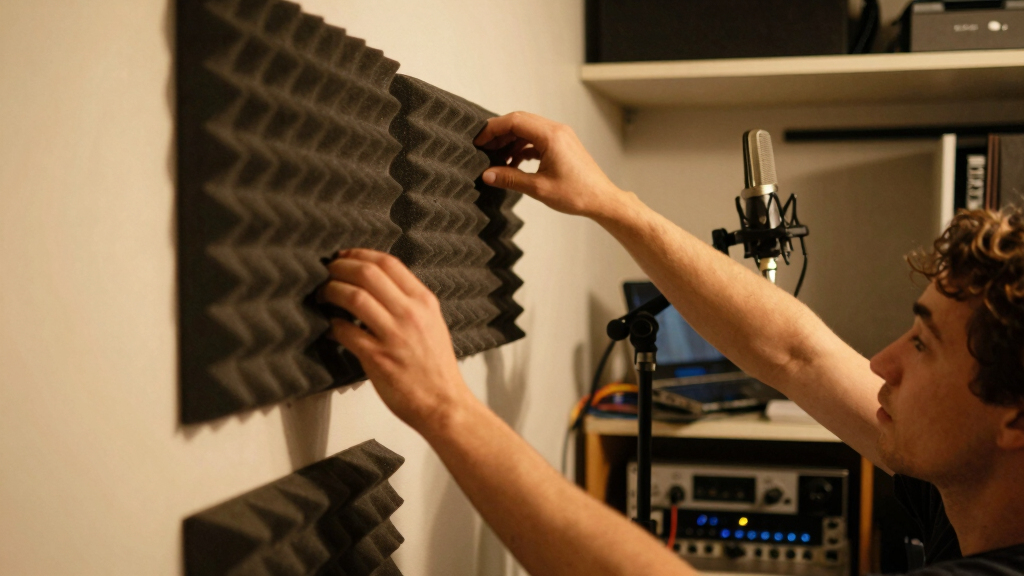
No, acoustic foam mainly reduces echo and reflections within a room but does not block airborne or structure-borne noise. Placement and barriers are more effective for noise reduction.
Does moving the rig out of the room affect workflow?
Not necessarily. Most AI inference tasks are performed remotely over a network, so the physical location of the rig is less critical. Users can operate comfortably from a different room or even a different building.
Source: ThorstenMeyerAI.com
Halloween Picks
halloween
As an affiliate, we earn on qualifying purchases.