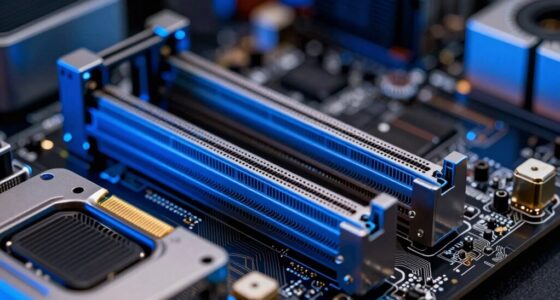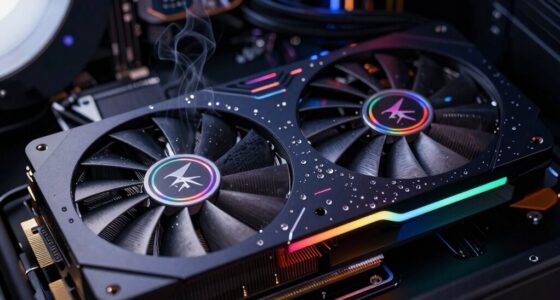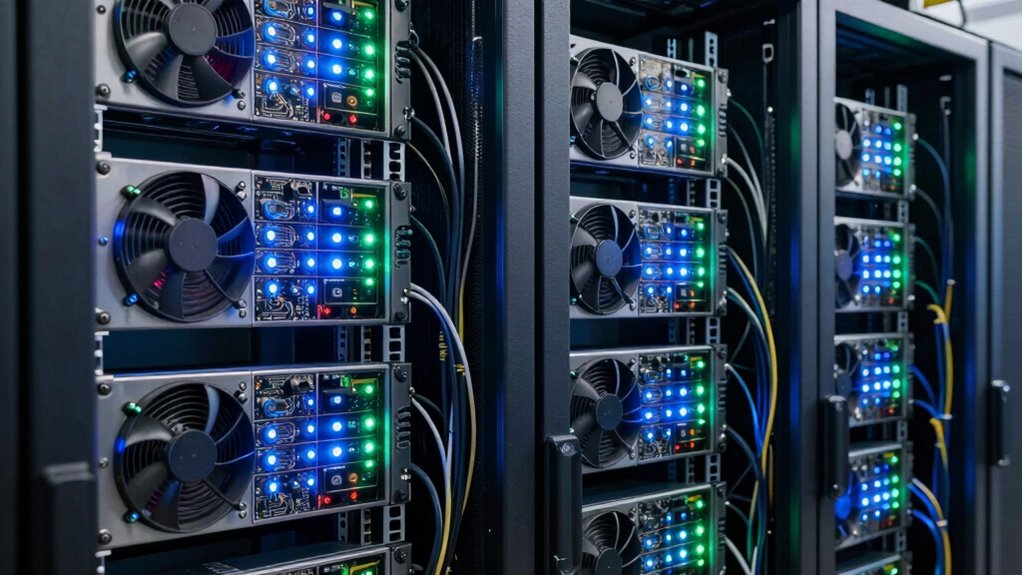

Overstuffed GPU hosts break inference reliability by causing resource contention and hardware bottlenecks. Filling GPUs with unnecessary models or data streams slows down data transfer and memory access, leading to processing delays and inconsistent results. This overloading can make your system unpredictable and unreliable. To prevent this, you need proper optimization and resource management. Keep going to uncover more effective strategies that guarantee your system remains stable and accurate under load.
Key Takeaways
- Overloading GPU hosts with excessive models or data causes resource contention, leading to hardware bottlenecks.
- Hardware bottlenecks slow data transfer and processing, resulting in unreliable inference outputs.
- Skipping model optimization and hardware-aware tuning increases the risk of system delays and inconsistencies.
- Adding more GPUs without proper workload management can worsen resource competition and degrade performance.
- Strategic resource management and optimization prevent bottlenecks, ensuring inference reliability.
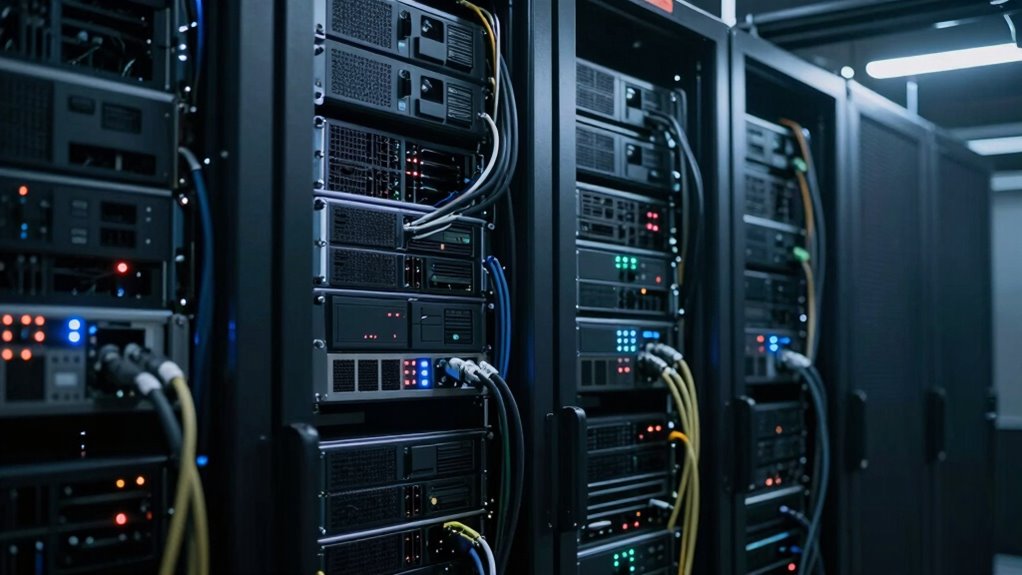
Have you ever wondered why cutting corners in data analysis can lead to flawed conclusions? When it comes to deploying machine learning models, especially in inference tasks, the temptation to skip essential steps like thorough model optimization can seem tempting. But neglecting this process often introduces hidden issues, such as hardware bottlenecks, that undermine your system’s reliability. Overstuffed GPU hosts are a prime example. They appear efficient at first glance—more GPUs mean more power, right? But in reality, stuffing too many models or data streams into a limited hardware environment can cause severe bottlenecks that slow down processing and distort results, making your inferences unreliable.
Model optimization is designed to fine-tune your models for the hardware they run on, guaranteeing that resources are used efficiently. When you ignore this step, you risk overloading your GPU hosts, which leads to hardware bottlenecks. These bottlenecks occur when the system’s capacity is exceeded, causing delays or failures in data movement, memory access, or computation. Instead of improving performance, overstuffed GPU hosts create a congested environment where data transfer becomes sluggish, and processing becomes inconsistent. This inconsistency directly impacts inference reliability because the model’s output can vary depending on resource contention, making results less predictable and less accurate. Additionally, resource contention can further exacerbate these issues by causing unpredictable delays, which undermine the stability of inference results. Recognizing the importance of hardware-aware optimization is crucial for maintaining system stability and efficiency. Proper system tuning can help prevent these bottlenecks and improve overall inference consistency.
You might think throwing more GPUs at the problem will solve it, but that’s often a flawed approach. It’s tempting to believe that scaling hardware automatically scales performance, yet without proper model optimization, you just fill your system with more competition for limited resources. This leads to inefficient utilization, increased latency, and, ultimately, unreliable inferences. Instead, focus on balancing your workload. Optimize models to minimize resource consumption, streamline data pipelines, and fine-tune hardware utilization to prevent bottlenecks. This way, you create a more stable environment where each inference is more consistent and dependable.
When hardware bottlenecks occur due to overstuffed GPU hosts, it’s usually because of poor resource management rather than hardware limitations alone. Addressing this requires a strategic approach—reducing unnecessary model complexity, batching data efficiently, and leveraging hardware-aware optimization techniques. These steps ensure that your system doesn’t just run faster but also produces more reliable, accurate results. Cutting corners might seem like a shortcut, but in the world of inference, it often leads to compromised integrity. Instead, investing in proper model optimization and mindful hardware management pays off in trustworthy, consistent outcomes that you can rely on. Additionally, understanding the importance of hardware bottlenecks and their impact on inference performance can help guide better system design. When hardware resources are managed thoughtfully, you significantly enhance your system’s overall inference reliability.

COEZFE Graphics Card Support Bracket, Adjustable Anti Sag GPU Support Bracket, Aluminum Anti Sag Video Card Holder Stand with Hidden Magnet and Anti-Slip Pad (Black)
All-Aluminum metal material: Our all-aluminium GPU holders use all-aluminium metal instead of plastic, which is strong, durable, avoids…
As an affiliate, we earn on qualifying purchases.
As an affiliate, we earn on qualifying purchases.
Frequently Asked Questions
How Do Overstuffed GPUS Affect Model Training Speed?
Overstuffed GPUs slow down your model training because they push GPU memory beyond capacity, causing frequent memory swaps. This overload reduces inference stability, leading to errors or crashes during training. When you pack too much onto a GPU, it struggles to efficiently process data, resulting in longer training times. To improve speed, monitor GPU memory usage and avoid overstuffing, ensuring smoother, faster model training without compromising inference stability.
Are There Specific GPU Models More Prone to Inference Issues?
Some GPU models, especially older or budget-friendly ones, are more prone to inference issues due to memory fragmentation and hardware limitations. Ironically, these “powerful” devices can stumble under the weight of overstuffed setups, making inference unreliable. You’ll notice that high-end models with robust memory management handle larger loads better, but even they aren’t immune if you push past their hardware limits. Prioritize GPUs with better memory architecture for reliable inference.
What Alternative Strategies Exist to Prevent Inference Reliability Loss?
To prevent inference reliability loss, you should focus on dynamic memory management and workload balancing. By dynamically allocating memory, you avoid overstuffing your GPU hosts, ensuring smoother inference processes. Additionally, balancing workloads across multiple GPUs prevents any single device from becoming overwhelmed. These strategies help maintain inference accuracy and stability, reducing the risk of bottlenecks and performance degradation during intensive computational tasks.
How Does Memory Overuse Impact Model Accuracy?
Did you know that memory fragmentation and cache thrashing can reduce model accuracy by up to 15%? When you overuse GPU memory, it causes fragmentation, which hampers efficient data access, and cache thrashing, leading to frequent data swapping. These issues delay computation and introduce errors, ultimately degrading inference reliability. To optimize accuracy, you need to manage memory usage carefully, avoiding overstuffing and ensuring efficient data flow within the GPU.
Can Software Optimizations Mitigate GPU Overstuffing Effects?
Yes, software optimizations can help mitigate GPU overstuffing effects, but they have limits. You can reduce memory leakage and optimize memory management to prevent hardware bottlenecks, which improves inference reliability. Techniques like gradient checkpointing, mixed precision, and efficient memory allocation help manage resources better. However, if hardware bottlenecks are severe, hardware upgrades might be necessary, as software alone can’t fully compensate for physical limitations.
GPU resource management software
As an affiliate, we earn on qualifying purchases.
As an affiliate, we earn on qualifying purchases.
Conclusion
Just like overstuffed shelves can topple under pressure, overloading GPU hosts can break your inference reliability. When you cram too much onto a single GPU, it’s like trying to fit a flood into a teacup—you risk losing accuracy and performance. To keep your AI running smoothly, avoid shortcuts that compromise capacity and stability. Instead, balance your resources wisely, ensuring your system remains as reliable as a steady lighthouse guiding ships through stormy seas.
model optimization for GPU inference
As an affiliate, we earn on qualifying purchases.
As an affiliate, we earn on qualifying purchases.
high-performance GPU servers
As an affiliate, we earn on qualifying purchases.
As an affiliate, we earn on qualifying purchases.