
📊 Full opportunity report: When One Agent Isn’t Enough: Claude Now Builds Its Own Team Of Agents On The Fly on ThorstenMeyerAI.com — validation score, market gap, and execution plan.

Get audio and creator gear delivered free with Prime
- Fast, free delivery on millions of items
- Prime Video, Amazon Music and more included
- Member-only deals all year
TL;DR
Anthropic’s Claude has introduced a new feature called dynamic workflows, allowing it to create and orchestrate its own team of agents for complex tasks. This development aims to improve performance on high-value, multi-step projects by addressing limitations of single-agent operation.
Anthropic’s Claude has introduced a new capability called dynamic workflows, enabling the AI to build and coordinate its own team of agents during complex, high-value tasks. This development addresses known limitations of single-agent operation, such as partial work, bias, and goal drift, by allowing Claude to orchestrate specialized subagents tailored to each part of a task.
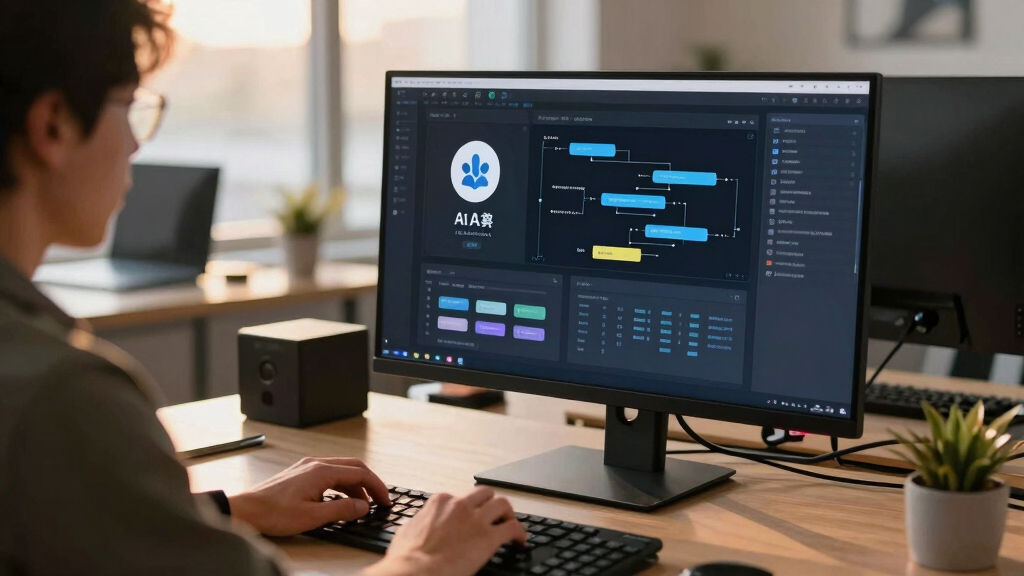
The new feature, part of Anthropic’s ongoing work on multi-agent orchestration, lets Claude write and execute small JavaScript programs that spawn and coordinate multiple subagents. These subagents can be assigned specific roles, such as dispatchers, specialists, or reviewers, and can operate in isolated contexts to prevent interference. This approach improves the AI’s ability to handle lengthy, complex projects that require parallel processing, verification, or adversarial review.
According to Anthropic, the technique is especially useful for tasks that involve multiple steps, high stakes, or require independent validation. The system can dynamically decide which model to use for each subtask, switch between different orchestration patterns, and resume interrupted workflows. The feature is built to support high-value applications, such as code refactoring, research synthesis, and large-scale fact-checking, where single-agent limitations are most apparent.
When one agent isn’t enough: Claude now builds its own team on the fly
Skills package what you know; loops decide how far you delegate over time. Dynamic workflows are the third axis — within a single task, Claude writes its own harness and assembles a temporary team of subagents. Think of it as Claude drawing an org chart for one job.
The shift is from prompting a worker to commissioning a team — more output, more cost, and a manager’s judgment required. Reach for a workflow when a task is big, parallel, adversarial, or judgment-heavy — and when you can feel a single agent getting lazy, grading its own homework, or losing the plot. Bound it (token budgets, pilot first) — workflows can spawn hundreds of agents and burn far more tokens. For everything else, don’t hire five people to change a lightbulb.
Enhanced Performance in Complex, High-Value Tasks
This development matters because it represents a significant step forward in AI autonomy and reliability. By enabling Claude to create its own team of specialized agents, it can better address issues like incomplete work, bias, and goal drift that occur when a single agent handles complex projects. This approach aligns with broader efforts to improve AI robustness and reduce human oversight in high-stakes environments, potentially transforming how organizations deploy AI for research, development, and operational tasks.
AI multi-agent orchestration software
As an affiliate, we earn on qualifying purchases.
As an affiliate, we earn on qualifying purchases.
Evolution of Multi-Agent AI and Workflow Orchestration
Anthropic’s work on multi-agent systems has been progressing through a series of innovations, with this latest feature completing a trilogy of capabilities. Previously, Claude could perform skills-based tasks and manage loops for delegation, but the new dynamic workflow enables the AI to write its own orchestration code, effectively assembling a custom team for each job. This builds on prior research into agent collaboration and high-level task management, aiming to overcome the limitations of monolithic single-agent models in complex applications.
The concept mirrors human team management, where dividing work among specialists and independent reviewers leads to higher quality outcomes. The development also responds to challenges observed in large language models, such as early stopping, bias, and goal erosion, which become more pronounced in long, complicated projects.
“Claude’s ability to write and execute its own harnesses marks a new chapter in autonomous AI orchestration, especially for complex, high-value tasks.”
— Thorsten Meyer, Anthropic
Unanswered Questions About Deployment and Limitations
It is not yet clear how widely this feature will be adopted or integrated into commercial products. Details about performance benchmarks, safety measures, and potential limitations in real-world settings remain under development. Additionally, the impact on resource consumption, such as token usage and computational cost, is acknowledged but not fully quantified. The extent to which this approach can replace or augment human oversight in critical tasks is still being evaluated.
Next Steps for Testing and Broader Adoption
Anthropic is expected to continue testing the dynamic workflow feature across various high-stakes applications, including research, code development, and verification tasks. Further updates may include performance metrics, safety protocols, and integration guidelines for enterprise users. Observers anticipate that, if successful, this capability could become a standard part of Claude’s toolkit, enabling more autonomous and reliable AI operations in complex environments.
Key Questions
How does Claude build its own team of agents?
Claude writes and executes small JavaScript programs, called workflows, that spawn and coordinate multiple subagents, each with specific roles and isolated contexts.
What types of tasks benefit most from dynamic workflows?
High-value, multi-step projects such as research synthesis, code refactoring, fact-checking, and complex decision-making processes benefit most, especially when tasks are lengthy or require independent validation.
Does this increase resource usage or costs?
Yes, using multiple agents and writing custom workflows mean higher token consumption and computational resources, which Anthropic acknowledges as a trade-off for higher reliability in complex tasks.
Is this feature ready for commercial deployment?
It is currently in testing and early deployment phases. Broader adoption will depend on further validation, safety assessments, and performance benchmarks.
Can this approach replace human oversight entirely?
While it enhances AI autonomy, experts suggest human oversight remains essential, especially for critical or sensitive tasks, until the technology proves fully reliable at scale.
Source: ThorstenMeyerAI.com
Halloween Picks
halloween
As an affiliate, we earn on qualifying purchases.