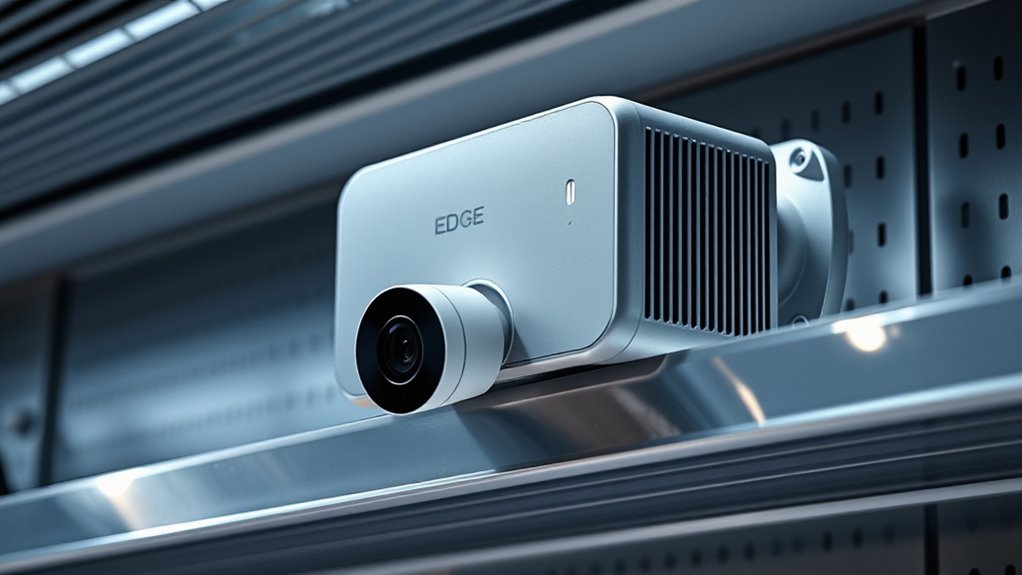

When designing smart camera and retail solutions, you should focus on integrating edge AI gateways that bring intelligence directly to the network’s edge. These gateways handle complex tasks like machine learning, data preprocessing, and real-time analysis locally, which reduces latency and bandwidth usage. By supporting robust hardware and efficient data handling, they enable faster, smarter decisions without relying heavily on cloud processing. Continuing further will uncover how to optimize these systems for your specific needs.
Key Takeaways
- Integrate robust hardware and machine learning frameworks for real-time image and data analysis at the network edge.
- Implement efficient data preprocessing to filter noise, detect motion, and enhance data quality before transmission.
- Deploy trained AI models locally to enable instant recognition of objects, behaviors, and events.
- Design solutions that support low latency and high reliability for applications like security cameras and retail monitoring.
- Leverage edge gateways to reduce bandwidth, lower operational costs, and maintain functionality during network disruptions.
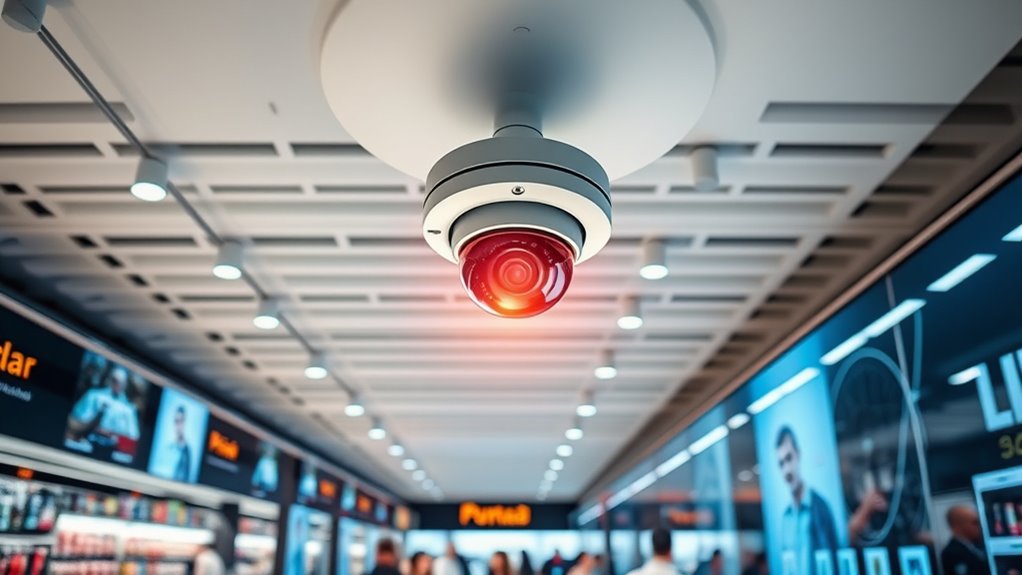
Edge AI gateways are transforming how businesses process data by bringing intelligence directly to the network’s edge. Instead of relying on cloud-based servers or centralized data centers, these gateways enable you to analyze data locally, reducing latency and bandwidth use. This shift is especially impactful in applications like smart cameras and retail solutions, where real-time decision-making is vital. When you deploy an edge AI gateway, it acts as a mini-computer that can handle complex tasks, including machine learning algorithms, right at the source of data generation. This means you can process video feeds or sensor data immediately, without waiting for cloud uploads or extensive data transmission.
One of the key advantages of edge AI gateways is their ability to perform data preprocessing before sending information onward. Data preprocessing involves cleaning, filtering, and organizing raw data to make it suitable for analysis. When you preprocess data locally, you eliminate irrelevant or redundant information early on, which streamlines subsequent processing stages. For example, in a smart security camera setup, the gateway can filter out background noise, adjust lighting conditions, or detect motion, ensuring that only meaningful events are flagged for further review. This not only saves bandwidth but also enhances the accuracy of machine learning models by providing cleaner, more relevant data for analysis. Additionally, integrating machine learning directly into edge AI gateways allows you to build smarter, more autonomous systems. You can train models to recognize specific patterns, objects, or behaviors and deploy these models on the gateway itself. As a result, your cameras can identify suspicious activity instantly, or your retail sensors can detect product shortages without waiting for external processing. The ability to run machine learning models locally means your systems become faster and more reliable, especially in environments where internet connectivity might be limited or unreliable. Furthermore, this setup reduces the load on centralized servers, lowering operational costs and improving scalability.
Designing effective smart camera and retail solutions with edge AI gateways requires careful planning around hardware capabilities and software integrations. You’ll want gateways that support robust machine learning frameworks and efficient data preprocessing routines. This ensures your devices operate seamlessly, providing real-time insights that matter. As you develop these solutions, remember that the combination of local data preprocessing, machine learning, and edge processing creates a powerful ecosystem — one that enables your business to act swiftly, improve operational efficiency, and deliver enhanced customer experiences. Ultimately, edge AI gateways empower you to harness the full potential of intelligent, autonomous systems right at the point of data collection. Understanding predictive analytics can further enhance your ability to forecast trends and optimize your operations effectively.
edge AI gateway for smart cameras
As an affiliate, we earn on qualifying purchases.
As an affiliate, we earn on qualifying purchases.
Frequently Asked Questions
How Do Edge AI Gateways Handle Data Privacy Concerns?
You handle data privacy concerns by ensuring edge AI gateways prioritize data encryption, keeping sensitive information secure during transmission and storage. You also obtain user consent before collecting or processing any personal data, respecting privacy rights. These gateways process data locally, reducing exposure risks and enhancing security. By combining data encryption with clear user consent, you create a trustworthy environment that safeguards personal information while leveraging smart camera and retail solutions.
What Are the Power Consumption Considerations for Edge AI Gateways?
You should prioritize power efficiency and energy management when designing edge AI gateways. They typically run continuously, so using low-power processors and optimizing software helps reduce energy consumption. Incorporate energy-saving features like dynamic voltage scaling and efficient cooling. By focusing on these considerations, you guarantee your gateways operate reliably without excessive power use, extending device lifespan and minimizing operational costs.
Can Edge AI Gateways Support Multiple Camera Feeds Simultaneously?
Yes, edge AI gateways can support multiple camera feeds at once, acting like a busy conductor managing a symphony. To do this smoothly, you need effective camera synchronization and bandwidth management, ensuring each feed gets the attention it deserves without overwhelming the system. Proper hardware and optimized data handling keep everything running seamlessly, so you get real-time insights without missing a beat.
How Scalable Are Edge AI Gateway Deployments in Retail Environments?
You’ll find that edge AI gateway deployments in retail environments are highly scalable when you address scalability challenges with effective deployment strategies. By planning for network capacity, processing power, and data management upfront, you can expand your smart camera systems smoothly. Regularly updating hardware and optimizing software helps maintain performance. With proactive planning, your deployment can grow seamlessly, supporting more cameras and data streams as your retail needs evolve.
What Maintenance Is Required for Edge AI Gateway Hardware?
You need to regularly check hardware durability, clean components, and guarantee proper cooling to keep your edge AI gateways running smoothly. Firmware updates are essential—they improve security, add features, and fix bugs. You should also monitor performance, replace any worn-out parts, and keep backups of configurations. Doing these routine maintenance tasks helps prolong hardware lifespan, maintain peak performance, and ensure your smart camera and retail solutions stay reliable and efficient.
retail edge AI processing device
As an affiliate, we earn on qualifying purchases.
As an affiliate, we earn on qualifying purchases.
Conclusion
Think of edge AI gateways as the lighthouse guiding ships through foggy waters. They illuminate the path with smart insights, enabling your cameras and retail solutions to navigate complex environments confidently. Just as a lighthouse ensures safe passage, these gateways keep your data secure and decisions swift. Embrace them as your beacon, transforming your space into a well-lit harbor of innovation where every decision is clear and timely.
machine learning edge gateway
As an affiliate, we earn on qualifying purchases.
As an affiliate, we earn on qualifying purchases.
real-time data preprocessing device
As an affiliate, we earn on qualifying purchases.
As an affiliate, we earn on qualifying purchases.