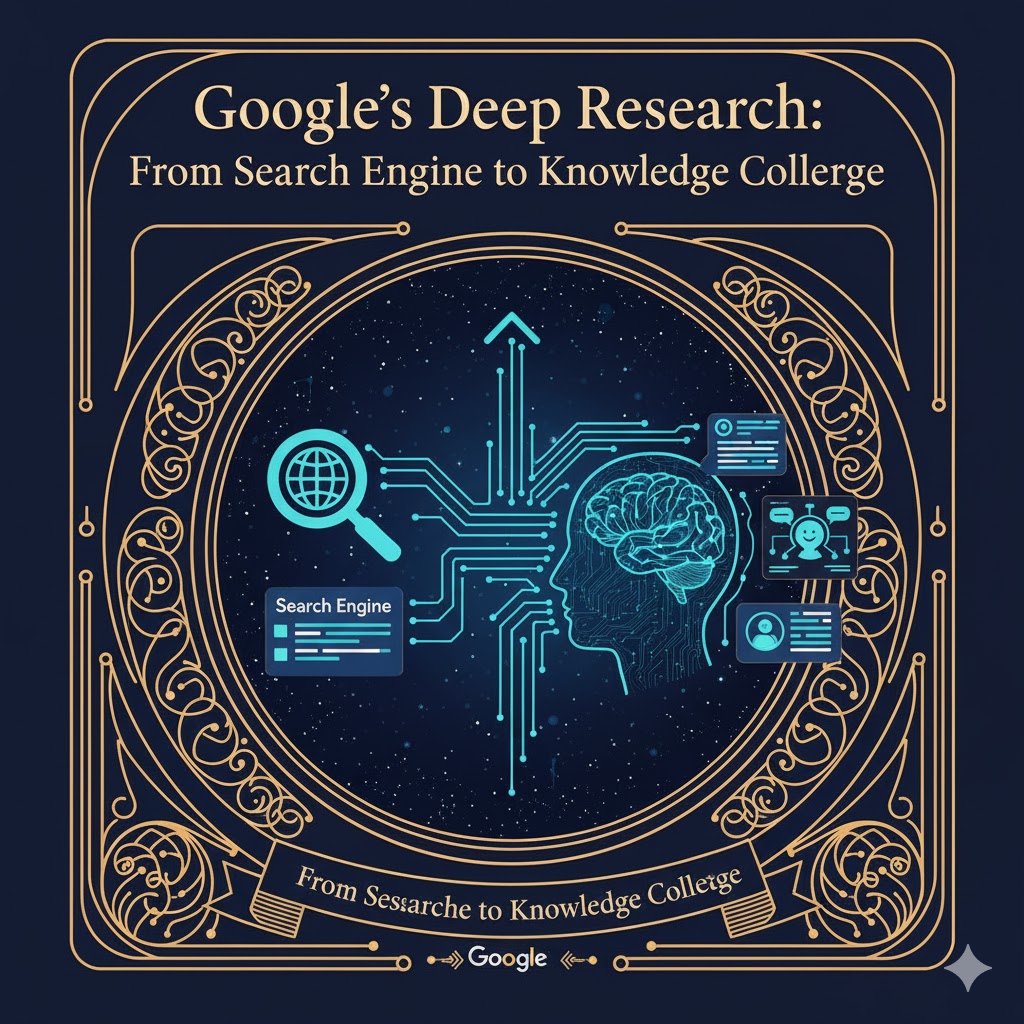

Google’s latest update to its Gemini “Deep Research” feature quietly redefines how enterprise users interact with information. The tool can now analyze Gmail, Drive, and Chat data — transforming Workspace into an agentic research platform.
What once required manual search now unfolds as AI-driven synthesis. Users can request “summaries of all client updates in Q3” or “patterns across internal feedback,” and Deep Research will assemble context-aware responses using private Workspace data plus web sources.
Why it matters:
This marks Google’s pivot from a search-and-retrieve model to a reason-and-interpret paradigm. For enterprises, it eliminates knowledge silos. For regulators, it raises questions: how will consent, data residency, and auditability evolve when AI sees everything?
StrongMocha Analysis:
Deep Research is a precursor to autonomous business intelligence agents — tools that continuously learn from organizational data. Its adoption curve will depend less on features and more on trust frameworks.

As an affiliate, we earn on qualifying purchases.

Financial Intelligence, Revised Edition: A Manager's Guide to Knowing What the Numbers Really Mean
As an affiliate, we earn on qualifying purchases.
As an affiliate, we earn on qualifying purchases.

Agent-Powered Growth: Deploy AI Agents That Build Your Marketing Pipeline 24/7
As an affiliate, we earn on qualifying purchases.
As an affiliate, we earn on qualifying purchases.

Quick Bind–Silicone Cable Ties Reusable, Cord Organizer for Charging Cables, Data Cables & Computer Wires, Multipurpose Elastic Cable Management Straps for Home,Office,Travel(16pcs,colorful)
Durable & Reusable Design:These silicone cable ties resist wear and are designed to retain their shape through repeated…
As an affiliate, we earn on qualifying purchases.
As an affiliate, we earn on qualifying purchases.