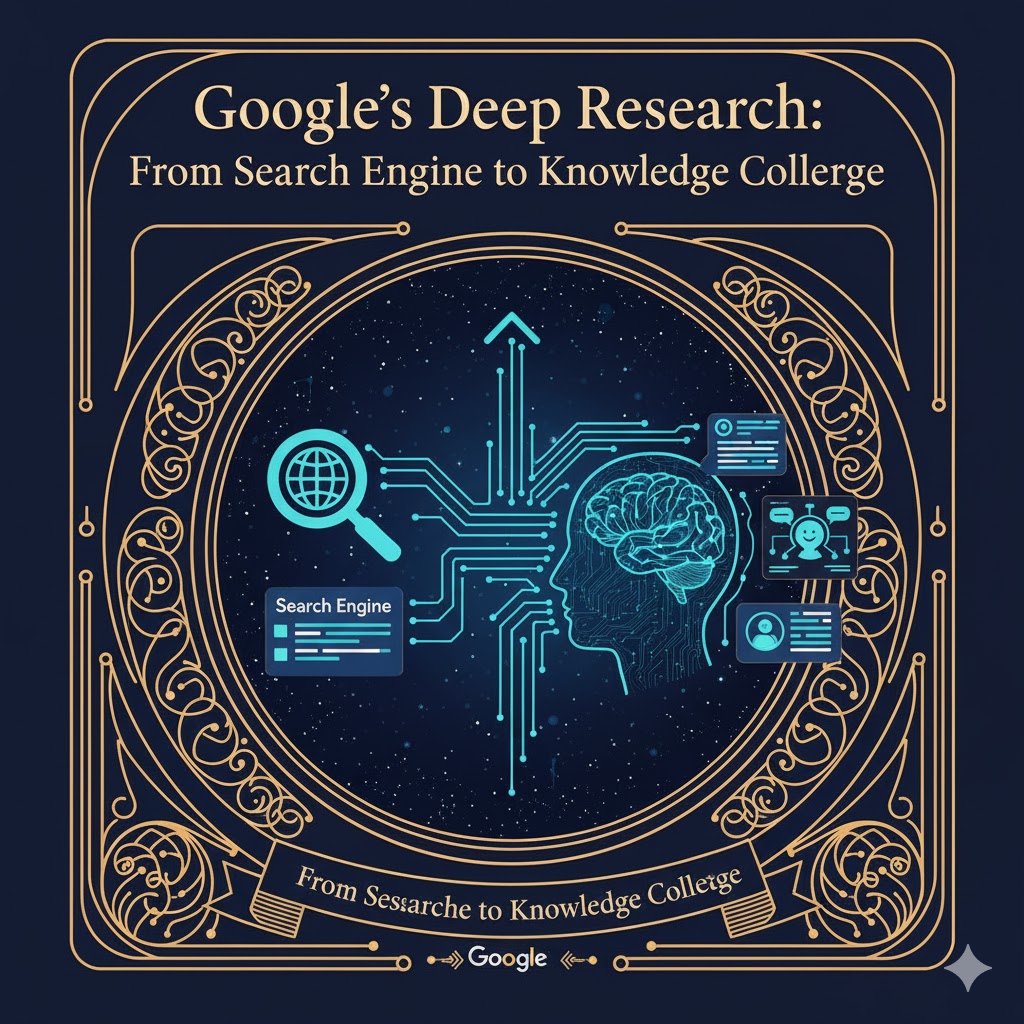

Google’s latest update to its Gemini “Deep Research” feature quietly redefines how enterprise users interact with information. The tool can now analyze Gmail, Drive, and Chat data — transforming Workspace into an agentic research platform.

Get audio and creator gear delivered free with Prime
- Fast, free delivery on millions of items
- Prime Video, Amazon Music and more included
- Member-only deals all year
What once required manual search now unfolds as AI-driven synthesis. Users can request “summaries of all client updates in Q3” or “patterns across internal feedback,” and Deep Research will assemble context-aware responses using private Workspace data plus web sources.
Why it matters:
This marks Google’s pivot from a search-and-retrieve model to a reason-and-interpret paradigm. For enterprises, it eliminates knowledge silos. For regulators, it raises questions: how will consent, data residency, and auditability evolve when AI sees everything?
StrongMocha Analysis:
Deep Research is a precursor to autonomous business intelligence agents — tools that continuously learn from organizational data. Its adoption curve will depend less on features and more on trust frameworks.
enterprise AI data analysis software
As an affiliate, we earn on qualifying purchases.
As an affiliate, we earn on qualifying purchases.
Halloween Picks
halloween
As an affiliate, we earn on qualifying purchases.