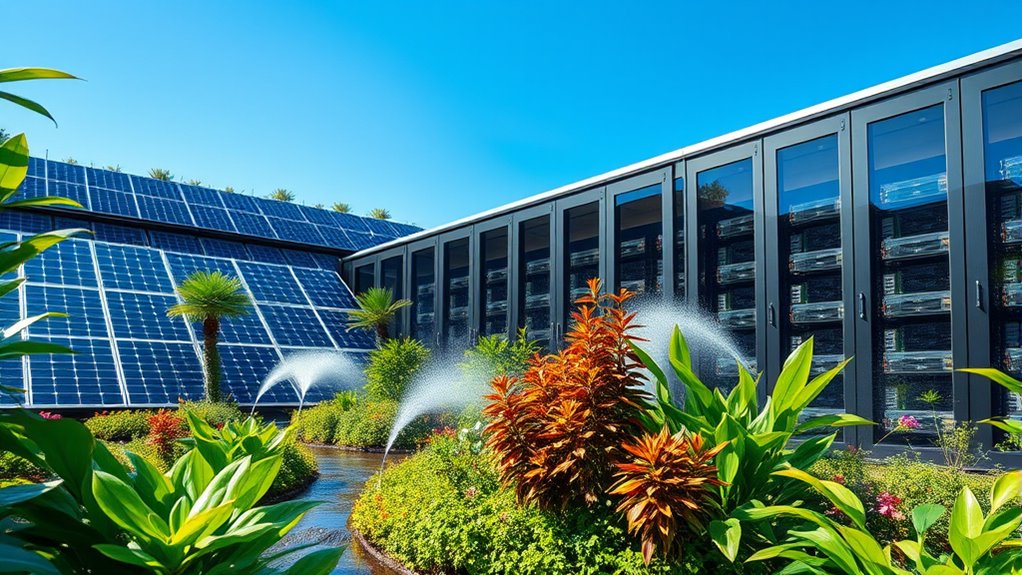

To build a sustainable AI infrastructure, focus on using renewable energy sources like solar, wind, and hydropower to power your systems, which reduces greenhouse emissions and your environmental footprint. Implement water-efficient cooling methods such as liquid cooling or free cooling to minimize water use in data centers. Regular monitoring and smart management help optimize resource efficiency, while integrating these practices shows a strong commitment to responsible technology. Keep exploring to discover more ways to advance sustainable AI solutions.
Key Takeaways
- Prioritize renewable energy sources like solar, wind, and hydropower to power AI systems sustainably.
- Implement water-efficient cooling techniques such as liquid cooling and free cooling to minimize water consumption.
- Use real-time monitoring and predictive analytics to optimize resource use and reduce waste.
- Schedule computations during peak renewable energy availability to maximize green energy utilization.
- Adopt adaptive cooling and automation to continually improve energy and water efficiency in data centers.
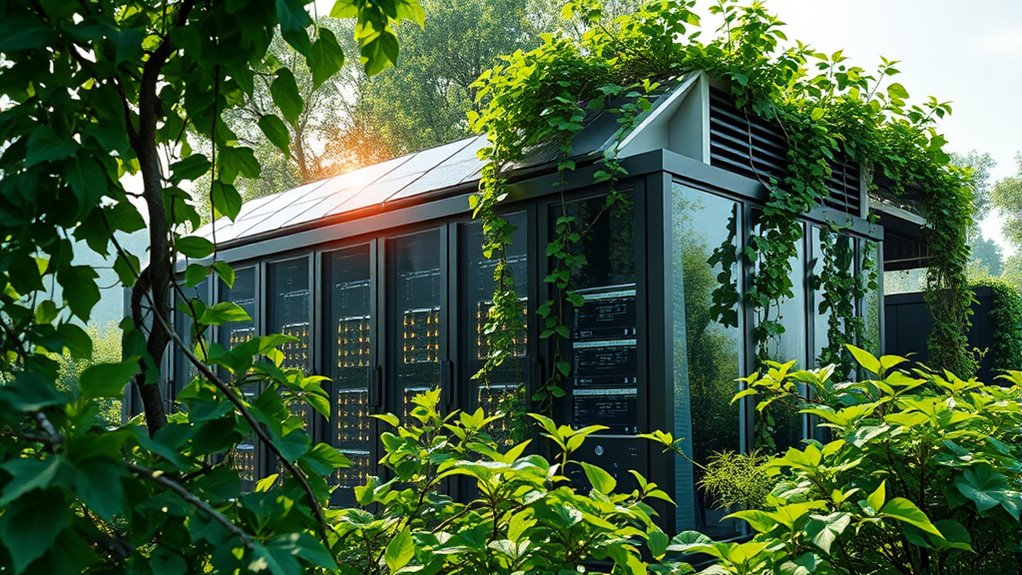
As artificial intelligence becomes more integral to everyday life, building sustainable AI infrastructure has never been more critical. Your focus should be on reducing the environmental footprint of data centers and computational resources. One of the most effective ways to do this is by prioritizing renewable energy sources. Moving to solar, wind, or hydropower ensures that the electricity powering AI systems isn’t contributing to greenhouse gas emissions. Not only does this cut down on carbon footprints, but it also makes your AI operations more resilient and aligned with global sustainability goals. When you choose renewable energy, you’re actively supporting a cleaner, more sustainable future, which is essential given the increasing energy demands of AI workloads.
Prioritize renewable energy to build resilient, sustainable AI infrastructure that reduces carbon footprints and supports global environmental goals.
Alongside renewable energy, water conservation plays a crucial role in sustainable AI infrastructure. Data centers, especially those handling large-scale computations, consume significant amounts of water for cooling purposes. To minimize water use, you should explore innovative cooling techniques such as liquid cooling or using outside air for free cooling whenever possible. These methods can drastically cut water consumption compared to traditional cooling towers. Implementing water-efficient practices not only conserves this precious resource but also reduces operational costs. As water becomes scarcer in many regions, integrating water conservation strategies into your AI infrastructure guarantees you’re not only reducing your environmental impact but also improving the long-term viability of your operations. Incorporating renewable energy sources into the infrastructure further enhances sustainability and reduces reliance on fossil fuels.
You can also adopt smarter management systems that monitor energy and water use in real-time, allowing for adjustments that optimize resource efficiency. Regular audits, predictive analytics, and automation help identify waste and streamline processes. For example, scheduling intensive computations during periods of abundant renewable energy availability maximizes green energy use and reduces reliance on fossil fuels. Similarly, employing advanced cooling systems that adapt to environmental conditions can save water and energy simultaneously. By embedding these practices into your infrastructure, you make sure that your AI activities are sustainable and scalable in the long run.
In essence, building sustainable AI infrastructure isn’t just about using greener energy sources; it’s about creating a holistic approach that conserves water, reduces emissions, and enhances efficiency. Your commitment to renewable energy and water conservation directly influences the environmental impact of AI, making your operations more responsible and future-proof. As technology advances, investing in sustainable infrastructure today will set a precedent for the industry, demonstrating that innovation and environmental stewardship go hand in hand. Through these efforts, you can help shape a future where AI drives progress without compromising the health of our planet.
solar power data center equipment
As an affiliate, we earn on qualifying purchases.
As an affiliate, we earn on qualifying purchases.
Frequently Asked Questions
How Can AI Models Be Optimized for Lower Energy Consumption?
To optimize AI models for lower energy consumption, you should focus on improving algorithm efficiency and applying model compression techniques. By streamlining algorithms, you reduce computational complexity, and with model compression, you shrink the model size without sacrificing accuracy. These strategies help lower power demands, making your AI systems more sustainable and environmentally friendly while maintaining high performance.
What Are the Most Water-Efficient Cooling Technologies for Data Centers?
You should consider liquid cooling and free cooling technologies for water-efficient data center cooling. Liquid cooling uses minimal water compared to traditional methods, efficiently removing heat directly from hardware. Free cooling leverages outside air when conditions are suitable, reducing water and energy use markedly. Combining these methods optimizes cooling efficiency, cuts water consumption, and supports your sustainability goals while maintaining reliable data center operations.
How Does AI Infrastructure Impact Local Ecosystems and Biodiversity?
AI infrastructure impacts local ecosystems and biodiversity by disrupting habitats, altering urban biodiversity, and stressing ecosystems. It can lead to ecosystem disruption through increased energy consumption, water use, and land development. You might notice reduced green spaces, changes in wildlife patterns, and loss of native species. To minimize these impacts, you should support eco-friendly design, prioritize renewable energy, and implement measures that protect and restore local biodiversity.
Can Renewable Energy Fully Power Large-Scale AI Operations Sustainably?
Renewable energy can substantially power large-scale AI operations, but it might not fully meet their needs without careful planning. As AI scalability increases, energy demands grow, so relying solely on renewables requires expanding infrastructure and storage solutions. You need to optimize energy efficiency and diversify renewable sources to guarantee sustainability. While challenging, with the right investments, renewable energy can support large-scale AI sustainably, reducing environmental impact.
What Policies Encourage Sustainable Water and Energy Use in AI Development?
Think of policies as the compass guiding sustainable AI development. You can champion water conservation by supporting regulations that mandate efficient cooling systems and water recycling. Policy incentives, like tax breaks or grants, motivate companies to adopt renewable energy sources and reduce water and energy waste. By pushing for these policies, you help guarantee AI innovation doesn’t drain our planet’s resources, making sustainability a natural part of technological progress.
water-efficient liquid cooling system
As an affiliate, we earn on qualifying purchases.
As an affiliate, we earn on qualifying purchases.
Conclusion
By adopting sustainable AI infrastructure, you can substantially cut energy and water consumption, helping protect our planet. Did you know that data centers alone account for about 1% of global electricity use? That’s equivalent to the entire country of the Netherlands! By implementing eco-friendly practices, you can contribute to reducing this impact and promote a greener future. Small changes in your AI systems can make a big difference—so start now and be part of the sustainable solution.
renewable energy monitoring device
As an affiliate, we earn on qualifying purchases.
As an affiliate, we earn on qualifying purchases.
adaptive cooling system for servers
As an affiliate, we earn on qualifying purchases.
As an affiliate, we earn on qualifying purchases.