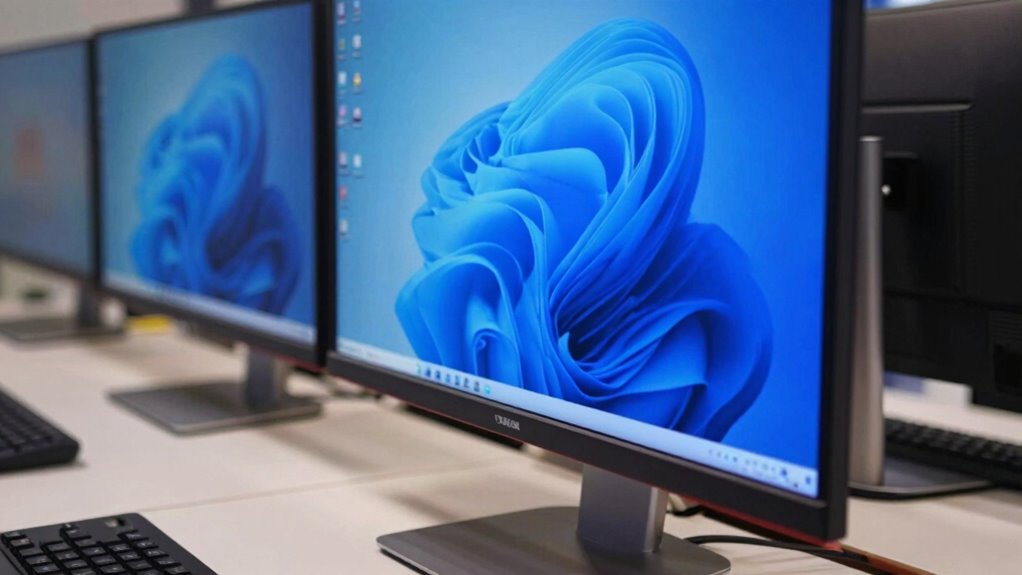

Many multi-monitor users underestimate how essential monitor size and placement are for comfort and productivity. Choosing monitors that are too large or too small can cause eye strain, awkward neck positions, and reduced workspace efficiency. Proper sizing depends on your space, task, and viewing distance. When you get this right, your setup feels more natural and boosts your focus. Stick around to discover how to optimize your monitor choices for the best experience.
Key Takeaways
- Many users choose monitor sizes based on aesthetics rather than optimal viewing distance and workspace ergonomics.
- Overestimating needed screen size can lead to neck strain and inefficient use of desk space.
- Users often neglect to test monitor size in their actual workspace before purchasing.
- The ideal monitor size depends on viewing distance, workspace size, and intended tasks, not just personal preference.
- Larger monitors aren’t always better; proper sizing and placement are key to reducing eye and physical strain.

HUANUO 17-32 Inch Dual Monitor Stand, Vertical Dual Monitor Mount, Monitor Stand 2 Monitors, Ergonomic Adjustable Tilt/Swivel/Rotate, Weight Max 19.8 lbs, VESA 75/100mm
Fit for Your Monitors – Ensure Compatibility Before Purchase Your monitor must meet all three conditions to be…
As an affiliate, we earn on qualifying purchases.
As an affiliate, we earn on qualifying purchases.
How to Choose the Best Monitor Size for Your Multi-Monitor Setup

Choosing the right monitor size for your multi-monitor setup is vital to guarantee a comfortable and efficient workspace. Larger screens can boost productivity, but they need proper balance with your desk space. Consider how you’ll use each monitor—if you’re doing detailed color work, prioritize good color calibration for accurate visuals. For gaming or fast-paced tasks, a higher refresh rate becomes essential, ensuring smooth motion. Think about viewing distance too; bigger screens require you to sit farther back. Ensure the monitors’ sizes complement each other to create a seamless experience. Ultimately, selecting the appropriate size involves balancing your workspace, tasks, and monitor features like color calibration and refresh rate for peak performance. Additionally, understanding screen size considerations can help you make more informed decisions about your setup, especially as artificial intelligence continues to influence display technology. Incorporating ergonomic principles into your setup can further enhance comfort and reduce strain during long hours of use. Recognizing the importance of monitor ergonomics can also lead to a healthier and more productive workspace.

Amazon Basics 24-inch Full HD IPS Monitor, 75 Hz, 1080P, HDMI, Display Port and VGA Input, Adjustable Stand, VESA Compatible, Built-in Speakers for Office and Home, Black
Full HD monitor with 1920×1080 resolution and AOC brand technology; ideal for webinars, meetings, digital work, entertainment, and…
As an affiliate, we earn on qualifying purchases.
As an affiliate, we earn on qualifying purchases.
Assess Your Space Before Picking a Monitor
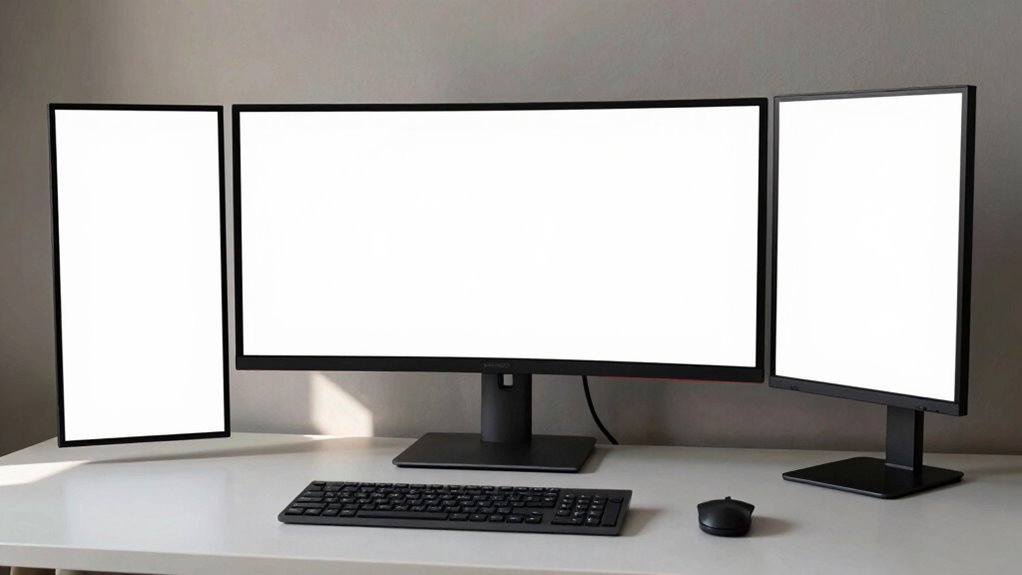
Before selecting a monitor, you need to evaluate the space you have available. Measure your desk’s dimensions and consider nearby obstacles like shelves or speakers. Proper space guarantees your monitor fits comfortably and allows for good cable management, preventing clutter. Additionally, think about how color calibration might influence your setup, especially if you work with visuals. A monitor placed too close or in poor lighting can distort colors and strain your eyes. Use the table below to assess your space:
| Aspect | Consideration |
|---|---|
| Desk size | Fits your monitor and accessories |
| Viewing distance | Comfortable for your monitor size |
| Cable placement | Easy to manage with minimal clutter |
| Lighting conditions | Avoid glare and ensure proper calibration |
And remember, understanding your available space can help you choose the right monitor size and setup for a more comfortable and efficient workspace. Being aware of ergonomic principles can further enhance your comfort and reduce fatigue during extended use, especially when considering proper placement to optimize your viewing experience. A good understanding of AI tools can also assist in optimizing your workspace and productivity.
Additionally, considering lighting conditions can help prevent glare and improve overall visual comfort during long work sessions.

ASUS ProArt CaliContrO MCA02 3-in-1 Colorimeter – Professional Color Calibrator, Hardware/Software Monitor Calibration Up to 10000nits, Display OSD Control, Dial, Adobe Software Compatible
3-in-1 multiple function with Colorimeter, Display OSD control and ASUS Dial features
As an affiliate, we earn on qualifying purchases.
As an affiliate, we earn on qualifying purchases.
Why Resolution and Viewing Distance Are Key Factors
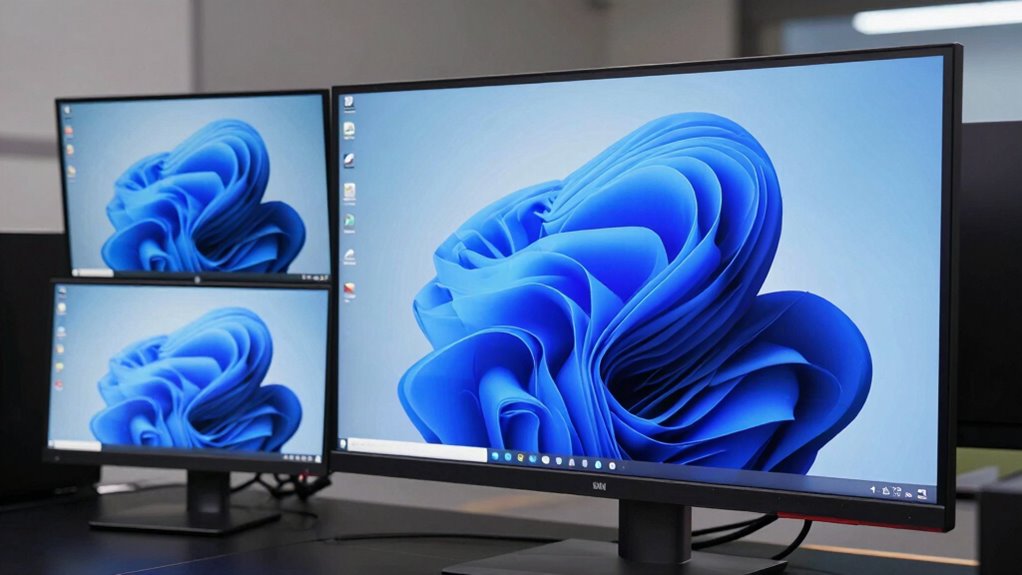
Resolution and viewing distance directly impact your visual experience and comfort. Higher resolution displays provide sharper images, reducing eye strain, especially when you’re sitting closer. Proper color calibration ensures accurate colors, making your work and entertainment more vibrant and less tiring for your eyes. Viewing distance affects how well you see details without squinting or losing clarity, so adjust your position accordingly. When considering multi-monitor setups, keep in mind that ideal resolution combined with the right distance enhances seamless transitions between screens. Additionally, audio integration plays a role; clear sound minimizes the need to strain your eyes or adjust your focus. Balancing resolution, viewing distance, color calibration, and audio setup creates a more comfortable, immersive experience with less fatigue over long periods. Incorporating ergonomic principles can further optimize your setup for visual comfort and overall well-being. Paying attention to ergonomic setup ensures your workspace supports healthy viewing habits, reducing long-term strain.

SANSUI 32 Inch Curved 240Hz Gaming Monitor High Refresh Rate, FHD 1080P Gaming PC Monitor HDMI DP1.4, Curved 1500R, 1Ms MPRT, HDR,Metal Stand,VESA Compatible(DP Cable Incl.)
32 Inch curved 1500R gaming monitor, 240Hz high refresh rate for gameplay
As an affiliate, we earn on qualifying purchases.
As an affiliate, we earn on qualifying purchases.
Avoid These Common Mistakes When Selecting Monitor Sizes
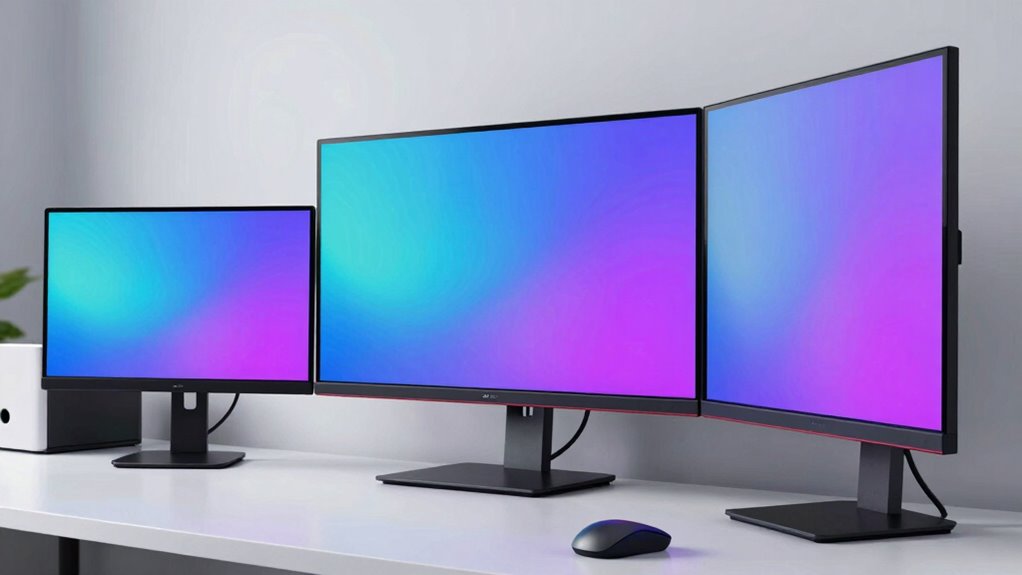
When choosing monitor sizes, you might overlook your desk space or forget how far you sit from the screen. Neglecting resolution compatibility can also lead to blurry images or scaling issues. Make sure to take these factors into account to avoid costly mistakes and improve your setup. Considering AI trends in display technology can help you stay informed about innovative solutions that enhance multi-monitor setups. Staying aware of ergonomic considerations can further ensure your work environment remains comfortable and healthy over time. Additionally, understanding monitor resolution can help you select the best display quality for your needs. Being mindful of hardware compatibility ensures that your chosen monitors work seamlessly with your existing system and peripherals. Incorporating knowledge about screen size ergonomics can also prevent discomfort and eye strain during extended use.
Ignoring Desk Space Limits
Ignoring your desk space limits is a common mistake that can lead to a cramped or cluttered workspace. Oversized monitors can quickly eat up valuable surface area, making it harder to keep your desk organized. When choosing screens, consider how much space you have and plan for enough room to avoid desk clutter. A well-sized monitor can improve your overall style and appearance, making your workspace look more professional and inviting. Poor cable management becomes a bigger issue as larger monitors often require more connections, increasing cable tangles. Measure your desk before buying and think about how the monitors will fit alongside other essential equipment. Failing to account for space can force you to compromise comfort and productivity. Incorporating sound healing science into your workspace can also promote relaxation and focus during long work sessions. Prioritizing proper size guarantees your setup remains functional and tidy, preventing a cluttered workspace from hampering your workflow. Additionally, selecting the right workspace and tech gear can optimize your entire setup for comfort and efficiency. Paying attention to monitor specifications such as size and resolution ensures your workspace remains both comfortable and productive. Being mindful of ergonomic considerations can further enhance comfort and reduce strain during extended work hours.
Overlooking Viewing Distance
Many people overlook how far they sit from their monitors, but this distance is vital when choosing the right size. Sitting too close can make large screens overwhelming, while sitting too far can diminish detail and impact color calibration. Consider your typical viewing distance to select a monitor that provides clarity without causing eye strain. Proper monitor sizing ensures you get the most out of your display, whether for gaming, work, or creative tasks, without sacrificing comfort or visual quality. Also, pay attention to bezel design; thinner bezels create a more immersive experience, especially on larger screens. If your monitor sits close, a smaller size with minimal bezels might be better. Conversely, for farther viewing distances, larger screens enhance visibility and detail. Proper sizing ensures you get the most out of your display, whether for gaming, work, or creative tasks, without sacrificing comfort or visual quality. Additionally, understanding digital safety can help you protect your eyes and personal information while using your monitor for extended periods. Being aware of display calibration can further optimize your viewing experience and reduce eye fatigue over time. Recognizing monitor ergonomics can also prevent strain and discomfort during long sessions.
Neglecting Resolution Compatibility
Choosing the right monitor size isn’t just about screen dimensions; it also depends heavily on resolution. If your monitors don’t have compatible resolutions, you’ll face issues with image sharpness and color calibration, which can affect your work or gaming experience. Mismatched resolutions can cause inconsistent visuals across screens, leading to eye strain and difficulty focusing. Additionally, consider the refresh rate—pairing monitors with different refresh rates can result in uneven motion clarity. Ensuring your monitors support similar resolutions and refresh rates helps maintain seamless visuals and consistent color calibration. By prioritizing resolution compatibility, you prevent visual discrepancies, improve overall display quality, and create a more cohesive multi-monitor setup. This attention to detail enhances your productivity and immersion, especially during long sessions.
Balancing Workspace and Comfort: Finding the Sweet Spot
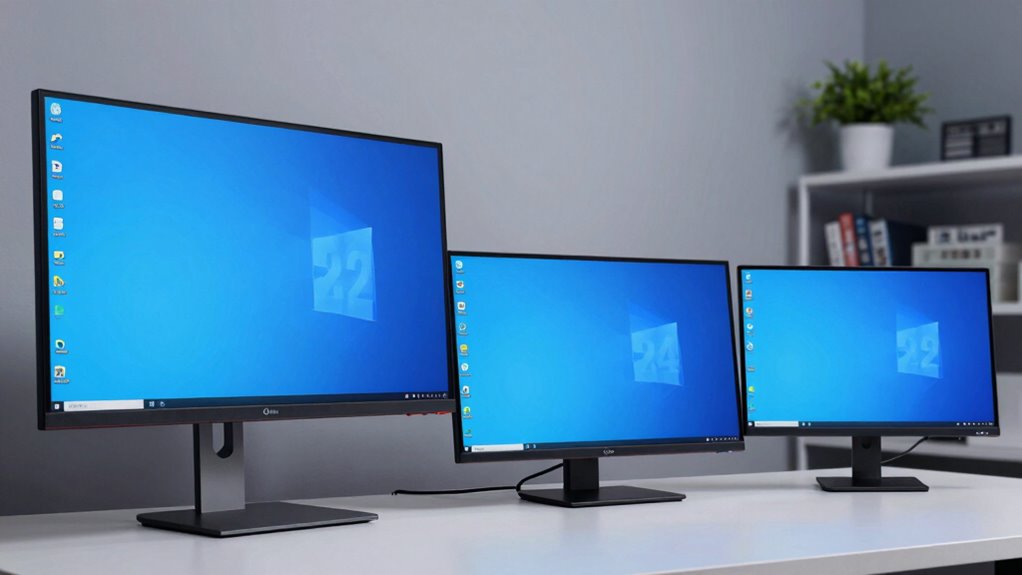
To stay comfortable and productive, you need to find the right distance from your screens and arrange your workspace ergonomically. Keep monitors at eye level and about an arm’s length away to reduce strain. Small adjustments can make a big difference in preventing fatigue and boosting your overall comfort.
Optimal Distance From Screens
Finding the right distance from your screens is essential for maintaining comfort and productivity. Position your monitors so that your eyes are level with the top of the screen, about an arm’s length away. This helps reduce eye strain and makes it easier to focus, especially when working on tasks requiring color accuracy or a high refresh rate.
| Distance | Benefit | Consideration |
|---|---|---|
| Closer | Better detail, color accuracy | Risk of eye strain |
| Arm’s length | Comfortable viewing | Slightly less immersive |
| Further | Reduced eye fatigue | Possible difficulty seeing fine details |
Adjust based on your monitor size and resolution. Finding this balance minimizes discomfort while optimizing visual clarity.
Ergonomic Arrangement Tips
Achieving an ergonomic workspace involves more than just placing monitors at the right height; it requires a careful balance between comfort and productivity. To optimize your setup, consider adjusting your monitors for proper color calibration, ensuring images are clear and reducing eye strain. Use monitors with a suitable refresh rate to prevent flickering and fatigue during long sessions. Position your screens so they’re directly in front of you, with the top at eye level, and keep your distance consistent. Keeping your keyboard and mouse within easy reach maintains good posture. Regularly take breaks and stretch to prevent discomfort.
- Align monitors for seamless viewing, minimizing neck strain
- Use adjustable stands for personalized positioning
- Calibrate color accuracy for visual comfort
- Select monitors with a high refresh rate for smooth visuals
Test Different Monitor Sizes Before Making a Decision

Before settling on a specific monitor size, it’s essential to test different options in your actual workspace. Don’t rely solely on specifications; instead, see how each size feels during your daily tasks. Pay attention to color calibration, making sure the display meets your visual needs, especially if color accuracy matters. Also, check the refresh rate to guarantee smooth motion, particularly if you work with fast-moving content or gaming. Handling multiple monitors can alter your perception of size, so testing in real conditions helps you avoid surprises later. Bring home a few options if possible, and spend time using them for work, entertainment, and multitasking. This hands-on approach assures you choose a monitor size that’s comfortable, functional, and tailored to your workflow.
How Aspect Ratio and Curvature Impact Your Setup

Ever wondered how your choice of aspect ratio and curvature can transform your multi-monitor setup? These factors influence immersion, workspace, and comfort. A wider aspect ratio, like 21:9, offers more horizontal space, ideal for multitasking and immersive gaming. Curved monitors reduce glare and distortions, creating a more natural viewing experience, especially when using multiple screens. They help your eyes flow seamlessly across displays, minimizing fatigue.
Choosing the right aspect ratio and curvature enhances immersion, comfort, and productivity in your multi-monitor setup.
- Choose aspect ratios that match your workflow for better productivity
- Opt for monitor curvature if you want a more immersive, comfortable view
- Be mindful that ultra-wide screens can distort images or text if not calibrated
- Consider how curvature affects the distance between your eyes and the monitor edges
When a Smaller Monitor Is Better Than a Larger One
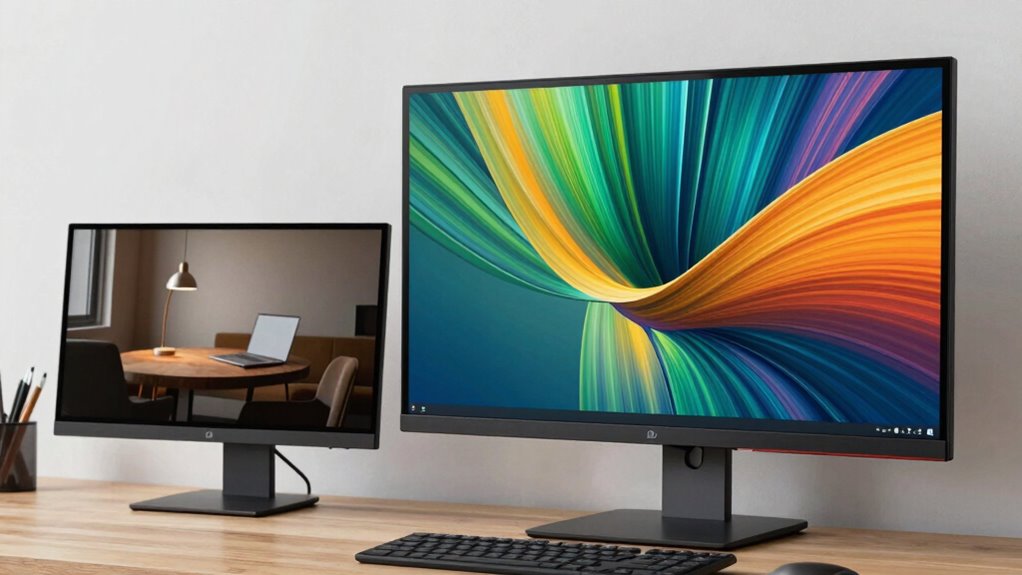
Sometimes, a smaller monitor can actually be the smarter choice, especially when space is limited or you value better ergonomics. A compact size allows you to position it closer, reducing eye strain and improving focus. Smaller monitors often require less effort in color calibration, ensuring accurate visuals without extensive adjustments. They’re easier to set up with a sturdy monitor stand that provides flexible tilt and height options, enhancing comfort during long work sessions. If you prioritize a clutter-free desk or need to move your setup frequently, a smaller screen offers portability without sacrificing essential performance. Plus, they tend to be more affordable, making them a practical option for those who want efficiency without the bulk. Ultimately, choosing a smaller monitor can enhance your productivity and comfort in tight spaces.
Adjust Your Setup for Different Tasks and Environments
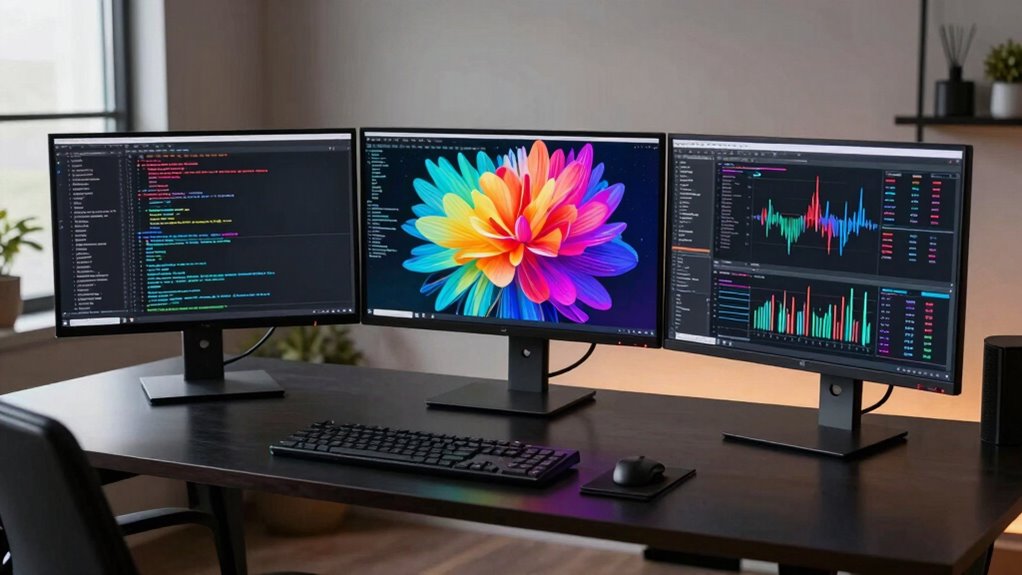
Adapting your monitor setup to match different tasks and environments can considerably boost your productivity and comfort. For example, when working on color-sensitive tasks, make sure your monitor is properly color calibrated for accurate visuals. If you’re gaming or engaging in fast-paced activities, a higher refresh rate can provide smoother motion. Adjusting your setup based on the environment also matters—use darker themes or reduced brightness in dim settings to minimize eye strain. Keep in mind, different tasks may require specific configurations, so don’t hesitate to switch monitor settings as needed.
Adjust your monitor settings for different tasks and environments to enhance comfort and boost productivity.
- Calibrate colors regularly for accuracy
- Adjust refresh rate for peak performance
- Use ambient lighting to reduce glare
- Customize display profiles for different tasks
Tips to Protect Your Eyes and Boost Productivity With the Right Monitor Size

Choosing the right monitor size is essential for protecting your eyes and enhancing your productivity. A well-sized monitor reduces eye strain by allowing you to maintain a comfortable viewing distance and avoid excessive head or eye movement. Proper color calibration ensures that images and text appear clear and accurate, reducing eye fatigue over long periods. Additionally, selecting a monitor with energy-efficient features helps lower power consumption, making your setup more sustainable and cost-effective. Larger screens can boost productivity by providing more space for multitasking, but they must be positioned correctly to prevent neck and eye strain. Ultimately, balancing monitor size with ergonomic placement, color calibration, and energy efficiency creates a comfortable, healthy, and efficient workspace.
Frequently Asked Questions
How Does Monitor Bezel Size Affect Multi-Monitor Productivity?
Monitor bezel size impacts your productivity by affecting bezel visibility and seamless viewing. Larger bezels create noticeable gaps, disrupting your workflow and making shifts between screens less smooth. Smaller bezels minimize distractions, enhancing your focus. Additionally, bezel size can influence color calibration, as tight-fitting monitors often align better for consistent visuals. To optimize multi-monitor setups, choose monitors with thin bezels for a more immersive and efficient experience.
What Are the Ergonomic Considerations for Multi-Monitor Setups?
You might think multi-monitor setups are just about screen size, but ergonomic considerations are vital. Make sure your monitors are at eye level to prevent neck strain, and keep a consistent screen resolution for smooth visuals. Proper color calibration reduces eye fatigue, especially during long work sessions. Adjust your chair and desk height to maintain good posture, and position monitors close enough to avoid unnecessary head movement, boosting comfort and productivity.
Can Monitor Height and Tilt Influence User Comfort?
Yes, monitor height and tilt greatly influence your ergonomic posture and visual comfort. When your monitor is at eye level and tilted to reduce glare, you maintain a natural head and neck position, preventing strain. Proper adjustment minimizes eye fatigue and encourages an ergonomic posture, helping you stay comfortable during long hours. Regularly tweaking monitor height and tilt ensures ideal visual comfort and supports overall ergonomic health.
How Do Different Monitor Brands Compare in Size Accuracy?
You notice that monitor brands vary in size accuracy like a symphony of shapes, each with subtle differences. Some brands, like Dell and ASUS, tend to be more precise, ensuring your display matches the advertised dimensions. When comparing, also consider color calibration and refresh rate, which influence visual quality. Accurate sizing combined with consistent color and smooth refresh rates creates an immersive, harmonious viewing experience, making your multi-monitor setup truly seamless.
What Role Does Monitor Weight Play in Multi-Monitor Arrangements?
Monitor weight impacts your setup’s stability and ease of adjustment. Lighter monitors are easier to move, but may lack stability, especially in multi-monitor arrangements. Heavier monitors, with better weight stability, stay firmly in place, reducing wobbling or shifting during use. When stacking or aligning multiple screens, consider monitor weight to guarantee a secure, balanced setup that’s comfortable and reliable for extended use.
Conclusion
Choosing the right monitor size is like tuning a fine instrument—you’ll find harmony only when each piece fits perfectly. Your setup isn’t just about pixels; it’s about creating a symphony of comfort, clarity, and productivity. When you select wisely, you’re not just adjusting a screen—you’re orchestrating an environment where focus and ease lead to your best performance. Remember, the right size isn’t just seen; it’s felt—deeply and effortlessly.