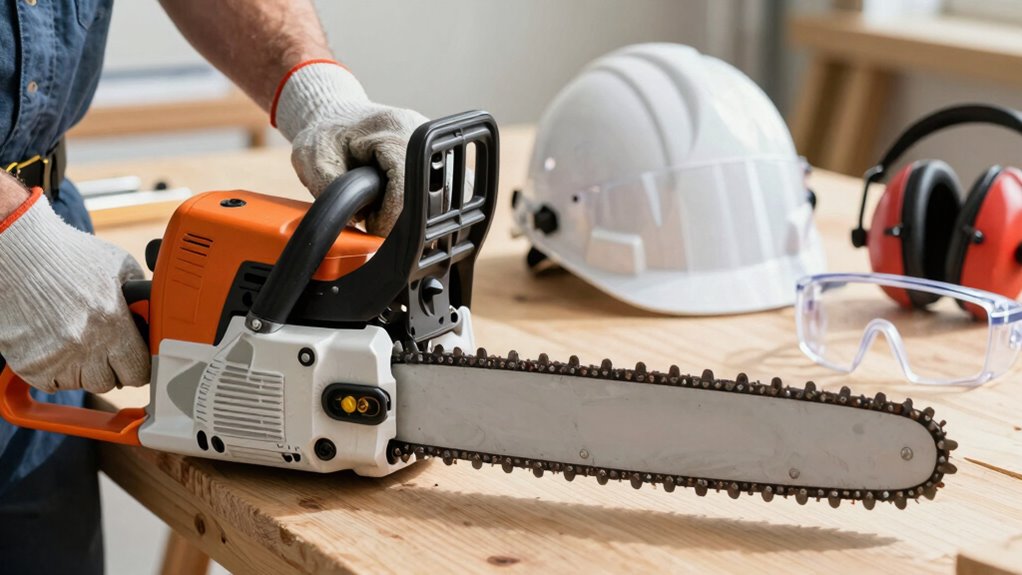

Your chainsaw safety begins before the first cut with proper planning, inspection, and preparation. You need to understand your saw’s safety features, inspect for damage, and verify it’s well-maintained. Assess the work area for hazards and plan your cuts carefully. Wearing the right PPE and handling the saw correctly reduces risks. Taking these steps sets a solid foundation for safe operation. Keep going to discover how to make every cut safely and confidently.

Get audio and creator gear delivered free with Prime
- Fast, free delivery on millions of items
- Prime Video, Amazon Music and more included
- Member-only deals all year
Key Takeaways
- Proper assessment of the worksite identifies hazards and plans safe cutting strategies before starting the chainsaw.
- Ensuring the chainsaw is well-maintained reduces the risk of malfunctions during operation.
- Wearing appropriate PPE minimizes injury risk from unexpected debris or accidents before making the first cut.
- Familiarity with chainsaw features and safety mechanisms ensures quick activation or deactivation when needed.
- Developing a clear cutting plan and understanding safety protocols prevent accidents and promote safe operation from the outset.
As an affiliate, we earn on qualifying purchases.
Get to Know Your Chainsaw and Its Safety Features
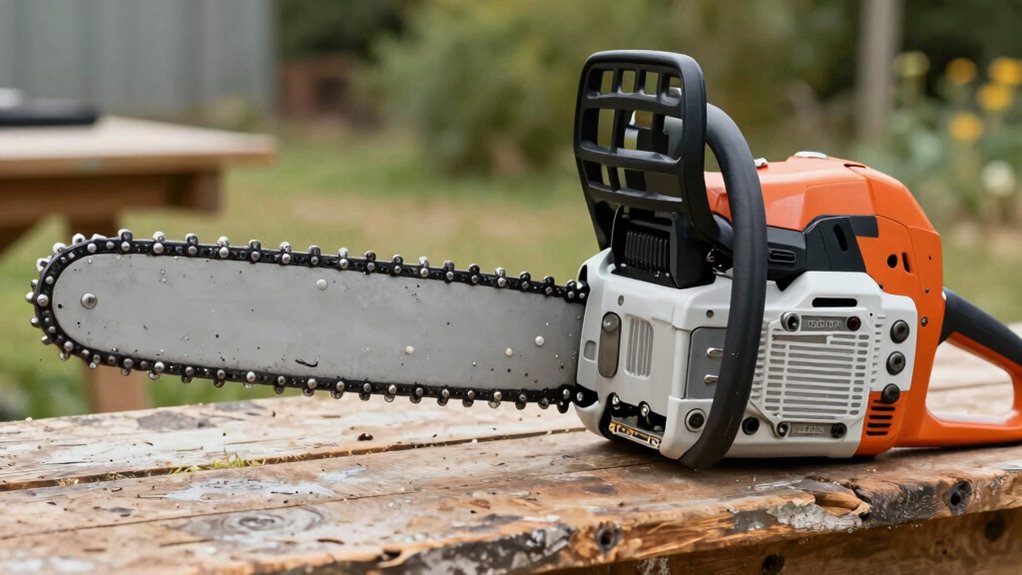
Before you start cutting, it’s essential to become familiar with your chainsaw and its safety features. Understanding chainsaw ergonomics helps you hold and maneuver the tool comfortably, reducing fatigue and the risk of accidents. Check that the handles are secure and positioned for maximum control. Pay close attention to safety labels on your chainsaw—they provide crucial instructions and warnings that safeguard you during operation. These labels often highlight important features like chain brakes, throttle locks, and kickback prevention mechanisms. Familiarizing yourself with these safety features ensures you know how to activate or disable them quickly if needed. Taking time to understand your chainsaw’s design and safety labels allows you to operate confidently and reduces the chance of injuries. Additionally, knowing how to inspect and maintain your chainsaw properly can prevent many common hazards. Being aware of the safety features and how they function is essential for safe operation. Moreover, understanding the proper handling techniques can significantly improve your safety during use. Familiarity with chainsaw technology can also help you anticipate and respond effectively to potential issues during operation. Developing a good understanding of chainsaw safety labels can further enhance your preparedness and safety awareness.
Assess Your Worksite for Hazards
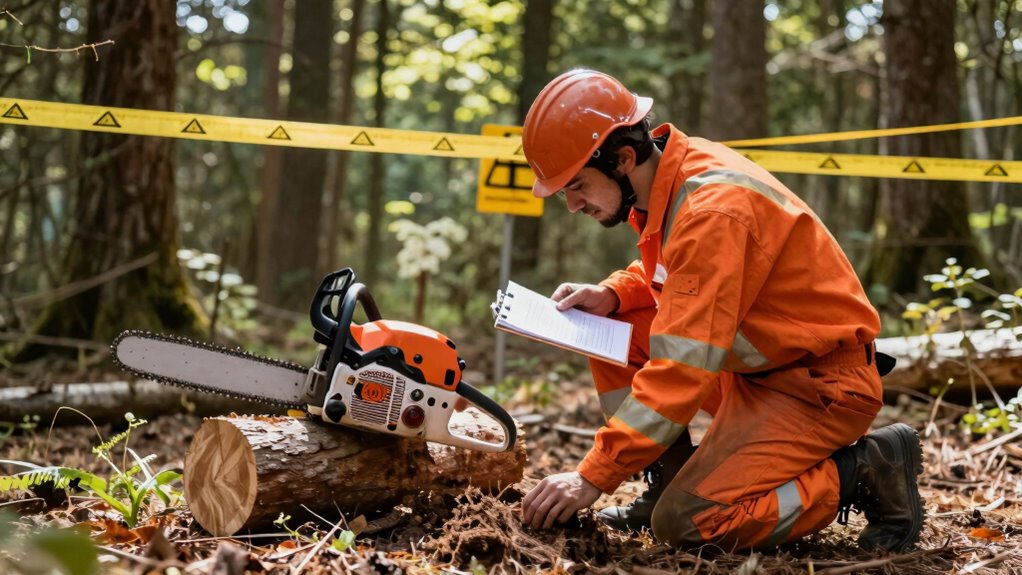
Before you start cutting, take a moment to examine your worksite for potential risks. Look for loose branches, unstable ground, or nearby power lines that could cause accidents. Checking environmental conditions helps you work safely and avoid surprises. Incorporating awareness of hazard identification techniques can further enhance your safety precautions. Additionally, understanding cookie management options can improve your online safety while researching safety tips. Being aware of Indigenous wellness practices and their emphasis on community and environment can also remind you to stay connected to your surroundings and approach your work with respect for nature.
Identify Potential Risks
To identify potential risks on your worksite, you need to thoroughly assess the environment for hazards that could cause accidents or injuries. Developing risk awareness helps you recognize dangers before they become problems. Look for sharp objects, unstable ground, or overhead branches that could fall. Check for clutter or debris that might trip you or interfere with your movement. Pay attention to nearby power lines or other utilities that could pose electrical risks. Remember, hazard identification isn’t just about spotting obvious dangers; it’s about being alert to anything that could compromise safety during your work. Carefully evaluating your surroundings allows you to plan safer cutting techniques and decide whether additional precautions are necessary before you start your chainsaw. Additionally, understanding power consumption insights can help prevent electrical hazards related to equipment use.
Check Environmental Conditions
Evaluating your worksite for hazards involves thoroughly examining the environment for conditions that could affect your safety. Check the weather conditions to verify they’re suitable for cutting—avoid work during heavy rain, thunderstorms, or snow. Wind hazards are especially dangerous; strong gusts can destabilize trees or debris, increasing risk. Look around for potential obstacles like loose branches or unstable ground. Consider the terrain’s slope and surface stability to prevent slips or falls. Additionally, assessing environmental conditions helps you plan your work safely and effectively. Being aware of home safety considerations can further enhance your safety precautions during outdoor tasks.
Wear Proper PPE to Stay Safe
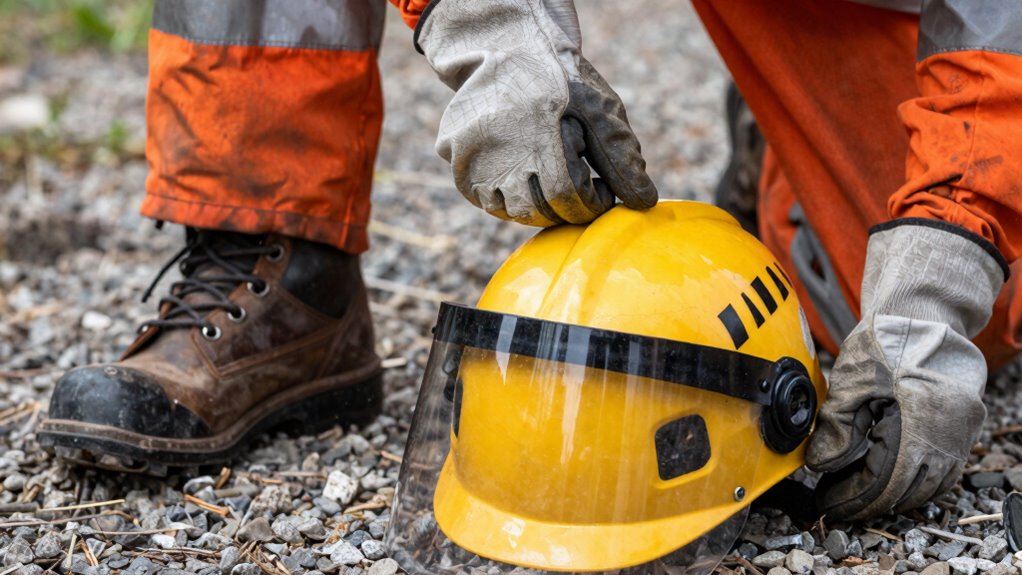
Are you fully aware of the protective gear you need when using a chainsaw? Wearing proper safety attire is essential for preventing injuries. Your PPE should include:
- A hard hat to protect your head from falling debris.
- Safety glasses or a face shield to guard your eyes.
- Ear protection to reduce noise-induced hearing loss.
- Gloves and chainsaw chaps to shield your hands and legs from accidental cuts.
Ensuring you wear these items keeps you safe and minimizes risks. Protective gear acts as your first line of defense against common chainsaw hazards. Always double-check your safety attire before starting work, and never compromise on PPE—it’s your best protection when handling a powerful tool like a chainsaw.
Plan Your Cuts Carefully
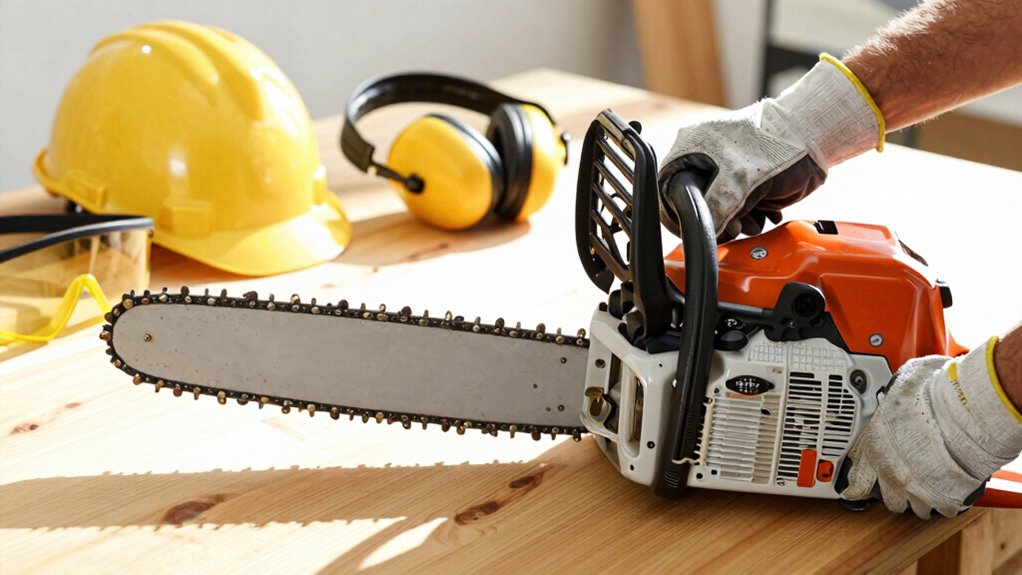
Having the right protective gear in place is just the beginning; effective chainsaw use also depends on how well you plan your cuts beforehand. First, assess the tree’s height and determine the safest direction for it to fall. Consider the natural lean and any obstacles around you. When planning your cuts, think about the appropriate cutting angles to control the fall and prevent kickback. Make a clear, strategic plan for each cut, including notching and back cuts, to guide the tree safely down. Visualize the entire process, so you’re prepared for unexpected shifts. Proper planning reduces the risk of accidents and guarantees a smoother, safer cutting experience. Remember, careful planning is your first line of defense against hazards. Additionally, understanding the cultural significance of nearby landmarks can help you stay aware of your surroundings and potential distractions while working. Incorporating a sound healing science approach by remaining calm and focused can further enhance your safety and decision-making during the process.
Check and Maintain Your Chainsaw Before Use
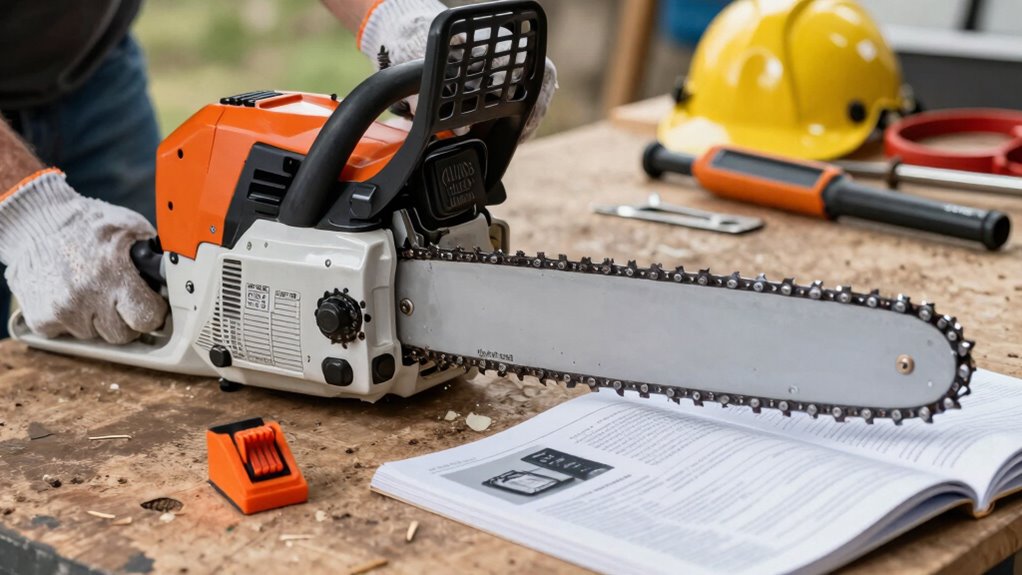
Before using your chainsaw, you need to check all its components to make certain they’re in good shape. Regular maintenance, like sharpening the chain and inspecting the bar, keeps your saw running smoothly. Taking a few minutes for these steps can prevent accidents and improve your cutting efficiency. Incorporating visual and auditory cues can also aid in ensuring proper operation and safety checks. Additionally, understanding regional flavors and safety standards related to outdoor power equipment can help in selecting the right tools and accessories. Being aware of risk management strategies can further enhance your safety and preparedness during operation. Regularly reviewing safety protocols ensures you stay informed about best practices and potential hazards.
Inspect Chainsaw Components
How can you guarantee your chainsaw operates safely and efficiently? Start by inspecting its components thoroughly. First, check the chain tension—make sure it’s neither too tight nor too loose, as improper tension can cause kickback or damage. Second, examine the chain for dull or damaged links, and sharpen or replace it as needed. Third, ensure the chain is well-lubricated; proper chain lubrication reduces friction and prevents overheating. Fourth, inspect the guide bar for wear or damage, making sure it’s aligned correctly. Regularly maintaining these parts ensures safer operation. Additionally, proper maintenance practices can help you identify other important precautions to take before starting your work. By focusing on chain tension, chain condition, lubrication, and guide bar integrity, you minimize risks and keep your chainsaw running smoothly.
Perform Regular Maintenance
Are you confident your chainsaw is ready for safe and efficient operation? Performing regular maintenance is key. Before each use, check the chain tension and sharpen it using proper sharpening techniques to ensure clean cuts and reduce kickback risk. Inspect the air filter and clean or replace it if clogged. Proper chainsaw storage is essential—store it in a dry, secure place to prevent rust and damage. Regularly examine the spark plug and replace it if needed to keep the engine running smoothly. Keeping your chainsaw well-maintained not only extends its lifespan but also guarantees safety during operation. Additionally, chainsaw safety should be a continuous priority to protect yourself during each job. Understanding shipwreck preservation techniques can also provide insights into long-term equipment care and environmental impact. Incorporating preventive maintenance practices can significantly reduce the likelihood of malfunctions that could lead to accidents, making every cut safer and more effective. Engaging in routine inspections can further identify potential issues before they escalate into safety hazards.
Handle and Start Your Chainsaw Safely
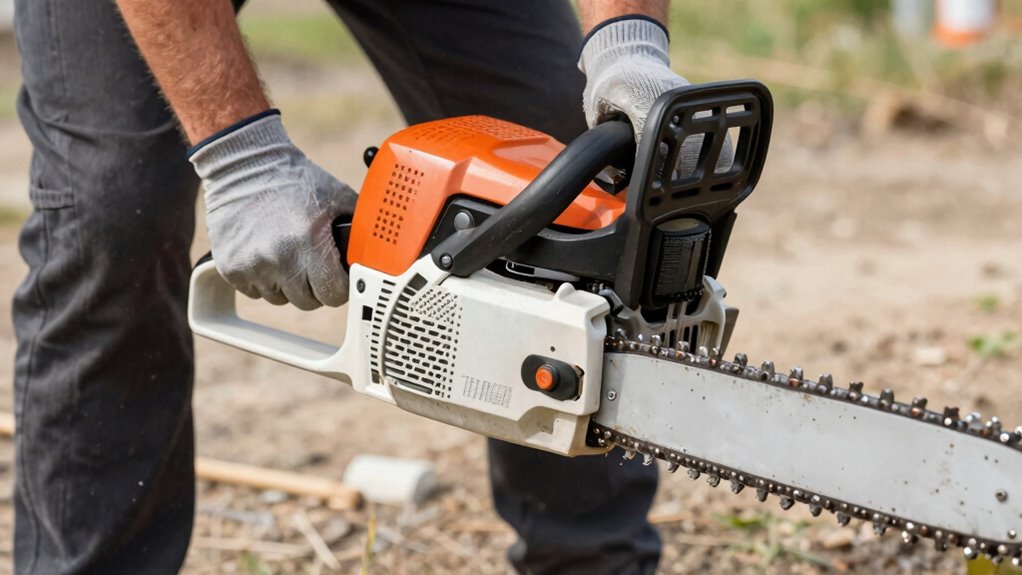
Handling and starting your chainsaw safely is essential to prevent accidents and guarantee smooth operation. First, always check your fuel handling to verify the chainsaw is off, cool, and filled correctly to prevent leaks or fires. Next, familiarize yourself with emergency preparedness by keeping a first aid kit nearby and knowing how to shut off the saw quickly if needed. When starting, follow these steps:
- Place the chainsaw on a flat surface.
- Engage the chain brake.
- Prime the carburetor if applicable.
- Pull the starter cord firmly but smoothly.
Make Safe Cuts and Avoid Common Mistakes
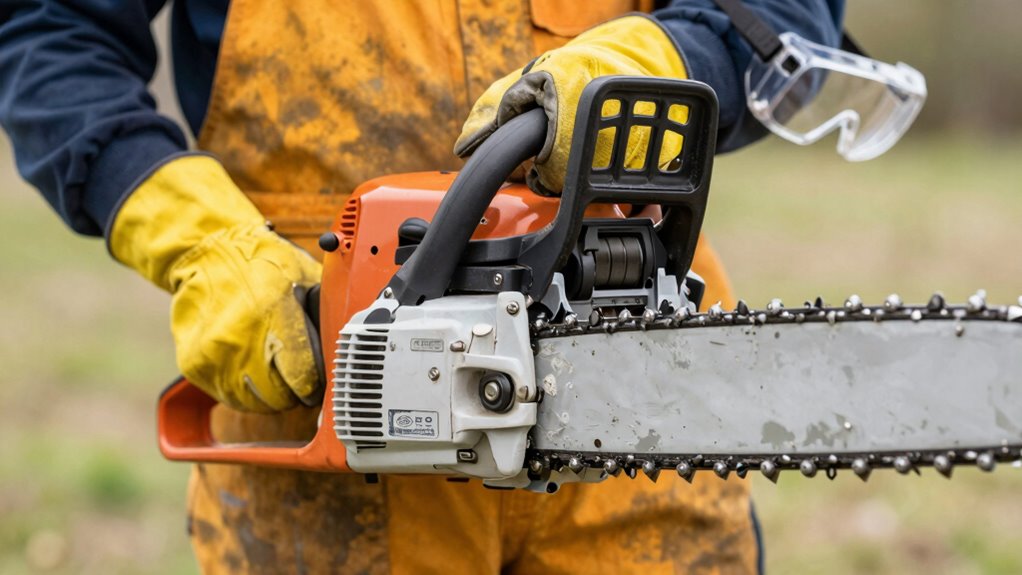
To make safe cuts and prevent accidents, it’s essential to plan your work carefully and choose the right cutting techniques. Start by maintaining a proper grip on the chainsaw, keeping both hands firmly on the handles to control the tool effectively. Use smooth, controlled cutting techniques, avoiding force or rushing through cuts. Always cut at a steady pace, letting the chainsaw do the work, and be mindful of the wood’s tension to prevent pinching or kickback. Make certain your footing is secure and clear the area of obstructions. Avoid common mistakes such as cutting above shoulder height or cutting without a stable stance. By focusing on proper grip and correct cutting techniques, you reduce the risk of accidents and ensure safer, more efficient work. Additionally, being aware ofchainsaw safety tips can help prevent injuries and maintain a secure work environment.
Review and Follow Your Safety Checklist

Before starting any chainsaw task, it’s vital to review and follow your safety checklist thoroughly. This guarantees you’re prepared and minimizes risks. Your checklist should include key safety training and emergency preparedness steps. Here are four critical items to confirm:
Always review your safety checklist before operating a chainsaw to stay prepared and reduce risks.
- Confirm you’re wearing proper PPE, like gloves, ear protection, and eye gear.
- Inspect the chainsaw for damage, ensuring blades are sharp and secure.
- Review emergency procedures, including how to shut down quickly if needed.
- Check your work area for hazards and clear a safe cutting zone.
Following this checklist keeps safety at the forefront, prevents accidents, and boosts your confidence. Regularly reviewing it ensures you’re always prepared to handle unexpected situations effectively.
Frequently Asked Questions
What Training Is Recommended Before Using a Chainsaw?
Before using a chainsaw, you should undergo proper training that covers essential safety measures. This includes learning how to wear protective gear like gloves, eye protection, and chainsaw chaps, and understanding emergency procedures in case of accidents. Training teaches you safe handling techniques, proper starting methods, and how to assess potential hazards. Being well-trained helps prevent injuries and guarantees you operate the chainsaw confidently and responsibly.
How Often Should I Inspect My Chainsaw for Safety?
You should inspect your chainsaw before every use, guaranteeing all safety features and protective gear are in place. Check the chain tension, sharpness, and oil levels, and look for any damage. Regular inspections help prevent accidents and ensure emergency prep is ready if needed. By making these checks routine, you reduce risks, keep your gear safe, and stay prepared for any unexpected situations while operating your chainsaw.
Are There Specific Safety Features to Look for on a Chainsaw?
Did you know that 30% of chainsaw injuries happen because safety features aren’t used or fail? When choosing a chainsaw, look for essential safety features like a protective chain brake, which stops the chain instantly during kickbacks, and an emergency stop button for quick power shutdowns. Always wear protective gear like gloves and eye protection, and make certain these safety features are working properly before you start cutting.
What Should I Do if I Encounter a Power Outage During Cutting?
If you encounter a power outage during cutting, stay calm and turn off the chainsaw immediately to prevent accidents. Follow emergency preparedness and power outage protocols by setting the saw aside on a stable surface, ensuring it’s off, and unplugging it if applicable. Wait until power is restored and it’s safe to continue. Always review safety procedures beforehand to handle unexpected interruptions confidently.
How Can I Safely Transport a Chainsaw to the Worksite?
Imagine gripping your chainsaw like a trusted tool, not a dangerous weapon. To transport it safely, first, guarantee it’s off and cooled down. Secure it with protective gear like gloves and eye protection, then place it in a sturdy case or on a flat surface, avoiding loose parts. Use both hands for safe handling, keeping the chain covered, so you arrive at your worksite ready and protected.
Conclusion
Remember, safety starts before you even pick up your chainsaw. By taking the time to understand your tool, assess hazards, wear proper PPE, and plan your cuts, you greatly reduce the risk of accidents. Did you know that most chainsaw injuries happen because of improper preparation or handling? Staying vigilant and following safety steps can make all the difference. Prioritize safety every time—you’re not just protecting your hands, but your entire well-being.
Halloween Picks
halloween
As an affiliate, we earn on qualifying purchases.